
Emily Conrad's Blog, page 5
December 14, 2017
A Tale of Many Jade Plants
by Emily Conrad
I have a really large jade plant. My in-laws, gardeners extraordinaire, gave it to us last year, and I gave it a home on our heated front porch, where it could soak up sunshine year-round.
And for a year, the plant didn’t seem to need much more than that sunshine. It’s a succulent, after all.
The jade does, however, have a habit of dropping leaves. After about a year, I noticed some rather sparse-looking branches. Looking closer, I saw that some sections of branches had shriveled and dried up, breaking though some of the leaves on the end were still alive.
The thing was shrinking faster than it was growing, and I began to wonder how—if my plant was healthy—other people ever grew those jade plants I saw for sale at the farmer’s market or in stores.
I started watering it a little more often—but not too much, because the plant had survived a year with only a handful of waterings, and I’ve killed plants before by overacting when I change their care routines.
I took a few of those orphaned sections of jade and planted them in smaller pots. Because they had no roots, I watered them frequently.

The little buggers flourished. Bright green new leaves appeared, not just one or two at a time, but in clusters.
Lesson learned, I started watering the larger plant once a week, and wouldn’t you know, that flourished, too.
A branch that had become bare during the drought is now home to a new collection of little promising little petals. Other light green growth has appeared on many, many of the branches. A few of the broken-off sections which I stuck in the dirt of the main plant have taken root and shot up.
Here's 65-pound Luther next to the main plant.
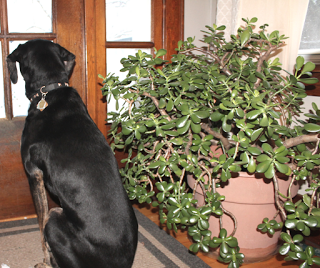 With care, I went from having one jade plant to having many.
Sometimes my marriage and my relationship with Jesus seem a lot like that jade plant.
They don’t need much special care. Left on auto-pilot, they take care of themselves. Or at least, that's how it seems until I let it go too long and then take a close look.
Without maintenance, relationships like marriage and faith and friendships die back like plants do.
Ongoing is vital, preferably before things start to come apart, but definitely when we notice a disconnect.
In my marriage, care is the water of communication, the food of time and prayer. My spiritual life depends on much of the same.
Watered and fed, our relationships grow. But when they’re growing, the effort starts to seem less vital. By treating something strong and resilient as if it's indestructible, we weaken it little by little. As we miss more and more maintenance, damage sets in.
It may not be apparent at first, but dry seasons take their toll. When life jostles what we have not maintained, it knocks loose what’s barely hanging on. Maybe a whole branch doesn’t fall off, but all those petals add up. Or maybe a branch does hit the ground once in a while.
Thankfully, our God is the Way, the Truth, and the Life. When I let things shrivel, He calls me back to the old care routines. He uses them to breathe new life into what was dying back, and often that life returns much more quickly than watering coaxes new leaves from a jade plant.

Not that a fast recovery is guaranteed in every situation. Still, God calls us to be faithful and to draw close to Him, our hope. He’s the Life-Giver, Healer, and Redeemer.
For Him and Him alone, nothing is too far gone.
With Him and Him alone, though other things may die, our souls can claim the promise of eternal life.
Jesus said to her, “I am the resurrection and the life. The one who believes in me will live even if he dies, and the one who lives and believes in me will never die." John 11:25-26a, NET

Without new growth, relationships like #marriage and #faith and friendships die back like plants do. via @emilyrconrad
I have a really large jade plant. My in-laws, gardeners extraordinaire, gave it to us last year, and I gave it a home on our heated front porch, where it could soak up sunshine year-round.
And for a year, the plant didn’t seem to need much more than that sunshine. It’s a succulent, after all.
The jade does, however, have a habit of dropping leaves. After about a year, I noticed some rather sparse-looking branches. Looking closer, I saw that some sections of branches had shriveled and dried up, breaking though some of the leaves on the end were still alive.
The thing was shrinking faster than it was growing, and I began to wonder how—if my plant was healthy—other people ever grew those jade plants I saw for sale at the farmer’s market or in stores.
I started watering it a little more often—but not too much, because the plant had survived a year with only a handful of waterings, and I’ve killed plants before by overacting when I change their care routines.
I took a few of those orphaned sections of jade and planted them in smaller pots. Because they had no roots, I watered them frequently.

The little buggers flourished. Bright green new leaves appeared, not just one or two at a time, but in clusters.
Lesson learned, I started watering the larger plant once a week, and wouldn’t you know, that flourished, too.
A branch that had become bare during the drought is now home to a new collection of little promising little petals. Other light green growth has appeared on many, many of the branches. A few of the broken-off sections which I stuck in the dirt of the main plant have taken root and shot up.
Here's 65-pound Luther next to the main plant.
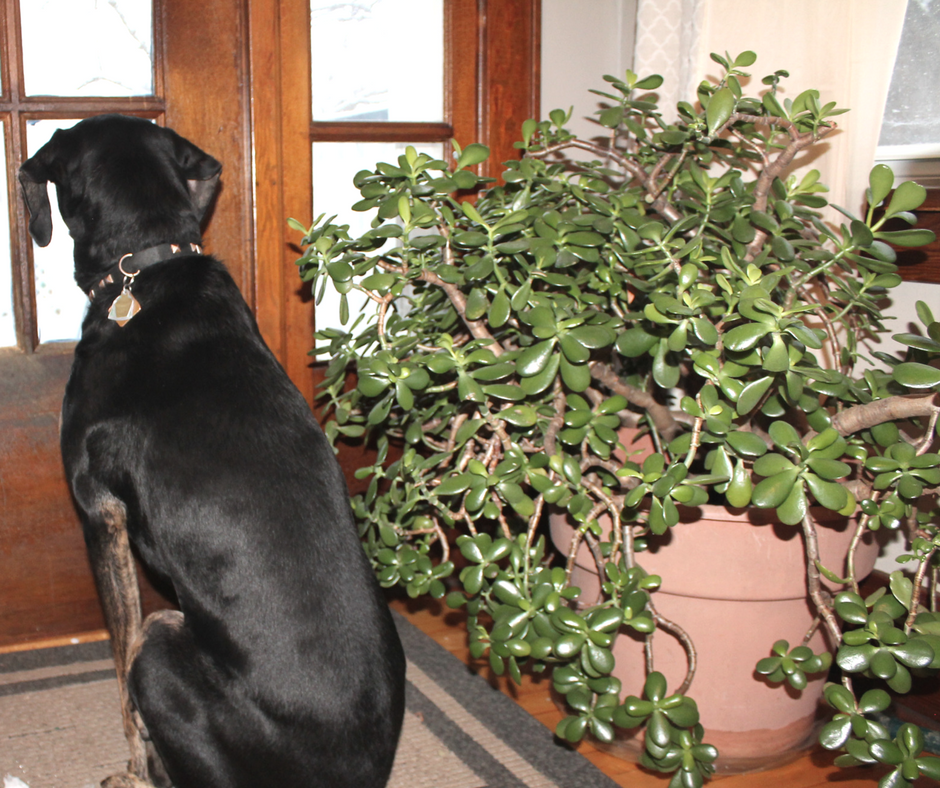 With care, I went from having one jade plant to having many.
Sometimes my marriage and my relationship with Jesus seem a lot like that jade plant.
They don’t need much special care. Left on auto-pilot, they take care of themselves. Or at least, that's how it seems until I let it go too long and then take a close look.
Without maintenance, relationships like marriage and faith and friendships die back like plants do.
Ongoing is vital, preferably before things start to come apart, but definitely when we notice a disconnect.
In my marriage, care is the water of communication, the food of time and prayer. My spiritual life depends on much of the same.
Watered and fed, our relationships grow. But when they’re growing, the effort starts to seem less vital. By treating something strong and resilient as if it's indestructible, we weaken it little by little. As we miss more and more maintenance, damage sets in.
It may not be apparent at first, but dry seasons take their toll. When life jostles what we have not maintained, it knocks loose what’s barely hanging on. Maybe a whole branch doesn’t fall off, but all those petals add up. Or maybe a branch does hit the ground once in a while.
Thankfully, our God is the Way, the Truth, and the Life. When I let things shrivel, He calls me back to the old care routines. He uses them to breathe new life into what was dying back, and often that life returns much more quickly than watering coaxes new leaves from a jade plant.

Not that a fast recovery is guaranteed in every situation. Still, God calls us to be faithful and to draw close to Him, our hope. He’s the Life-Giver, Healer, and Redeemer.
For Him and Him alone, nothing is too far gone.
With Him and Him alone, though other things may die, our souls can claim the promise of eternal life.
Jesus said to her, “I am the resurrection and the life. The one who believes in me will live even if he dies, and the one who lives and believes in me will never die." John 11:25-26a, NET

Without new growth, relationships like #marriage and #faith and friendships die back like plants do. via @emilyrconrad


December 12, 2017
A Grace Problem
by Emily Conrad

I stood across a display table from a famous Bible teacher, whose books I’ve read and video studies I’ve watched. In a one-on-one conversation, I tried to describe some of the fear I face as I pursue my calling.
“When you’re a writer…” I trailed off with the realization I was speaking to a more famous writer than I am likely to ever be. I redirected. “When your book comes out, everything you think is out there for everyone to read and critique. You know how it is. Maybe I just don’t have the confidence to be a writer.”
With unflinching eye contact, the Bible teacher replied, “You don’t have a confidence problem. You have a grace problem.”
“Write about God’s love. Tell people how wonderful it is to be in relationship with Jesus. If you do that, how can you go wrong? How could anyone fault you for that? And even if they did, how could God be anything but pleased? You are so covered in His grace, and He loves you so much, nothing people can think or say will ever change your standing with Him. When you understand that grace, grace that catches you even when you fail, grace that restores you and bestows on you the status of daughter of the ultimate King, how could you be anything but confident?”
I knew he was right. By saying I didn’t have confidence, I hadn’t gotten to the root of the problem. The root of the problem was where I wanted to base my confidence: on my own performance and on how that performance was received by people.
As a perfectionist, I tend toward thinking that if I can just eliminate my faults, I’ll have reason to be confident. I vow to try harder, to work longer, to go further, but it’s always a lost cause. I’ll never be perfect. Not in my writing, not in my understanding of God, not in my actions. But I so desperately want to be confident before people and before God.
The Bible teacher pointed me toward grace because the search for confidence without it is futile.
I felt empowered, freed, renewed. I wished it had happened years before. The exchange freed me from the compulsion to attain personal perfection before I proceeded in my calling with confidence.
Yes, of course, I aim to please and obey God and grow in my relationship with Him, but my confidence was never meant to be grounded in my own perfection at doing so. Instead, it is to be grounded in a better understanding of grace.
I hurried to write down the exchange, bits of it fast fading from my memory.
And then I woke up. The whole thing was a dream, and like sand through an hour glass, more and more of the words were disappearing. I typed in my phone what I could and have had to fill in the rest.

Hungry to examine the dream, I compared it to what I found in the Bible, and I believe Romans 7:21-8:39 speaks to the same topics of fear and confidence and grace. I encourage you to read the passage if you struggle to move in your calling with confidence, but for now, here are some excerpts:
There is therefore now no condemnation for those who are in Christ Jesus. For the law of the life-giving Spirit in Christ Jesus has set you free from the law of sin and death. For God achieved what the law could not do because it was weakened through the flesh. By sending his own Son in the likeness of sinful flesh and concerning sin, he condemned sin in the flesh, so that the righteous requirement of the law may be fulfilled in us, who do not walk according to the flesh but according to the Spirit. Romans 8:1-4, NET
For all who are led by the Spirit of God are the sons of God. For you did not receive the spirit of slavery leading again to fear, but you received the Spirit of adoption, by whom we cry, “Abba, Father.” The Spirit himself bears witness to our spirit that we are God’s children. And if children, then heirs (namely, heirs of God and also fellow heirs with Christ) – if indeed we suffer with him so we may also be glorified with him. Romans 8:14-17, NET
Your calling may or may not be writing, but maybe like me, you sometimes wonder if you've got what it takes.
If a lack of confidence hinders you like it sometimes hinders me, maybe the truth is you don't have a confidence problem but a grace problem.
When we truly understand the grace lavished on us when we turned to Jesus to save us, we’ll be empowered by it, sent forth in it, and freed through it to be who we were called to be by Jesus, our Savior.
We’re not perfect, but in Jesus, we stand faultless before God. There is no condemnation for those who are in Christ. He is mighty to save an imperfect sinner like me.
Mercy, love, and grace like this solve the confidence problem once and for all. They are life-changing, and if we’ve turned ourselves over to Jesus, we needn’t wait another day or another hour to let them take effect.
We haven’t received a spirit leading to fear and confidence problems. Instead we’ve received the Holy Spirit, who enables us to cry out to God as our Daddy.
Because of Jesus, we can be confident in grace today, tomorrow, forever. And confident in grace, we can move freely into the work God is calling us to.
We haven’t received a spirit leading to #fear and #confidence problems. Instead we’ve received the Holy Spirit, who enables us to cry out to God as our Daddy. #grace via @emilyrconrad
Photo Credits
Book display table photo by Clem Onojeghuo on Unsplash
Folded hands photo by Olivia Snow on Unsplash
Book with hand turning page by Liana Mikah on Unsplash

I stood across a display table from a famous Bible teacher, whose books I’ve read and video studies I’ve watched. In a one-on-one conversation, I tried to describe some of the fear I face as I pursue my calling.
“When you’re a writer…” I trailed off with the realization I was speaking to a more famous writer than I am likely to ever be. I redirected. “When your book comes out, everything you think is out there for everyone to read and critique. You know how it is. Maybe I just don’t have the confidence to be a writer.”
With unflinching eye contact, the Bible teacher replied, “You don’t have a confidence problem. You have a grace problem.”
“Write about God’s love. Tell people how wonderful it is to be in relationship with Jesus. If you do that, how can you go wrong? How could anyone fault you for that? And even if they did, how could God be anything but pleased? You are so covered in His grace, and He loves you so much, nothing people can think or say will ever change your standing with Him. When you understand that grace, grace that catches you even when you fail, grace that restores you and bestows on you the status of daughter of the ultimate King, how could you be anything but confident?”
I knew he was right. By saying I didn’t have confidence, I hadn’t gotten to the root of the problem. The root of the problem was where I wanted to base my confidence: on my own performance and on how that performance was received by people.
As a perfectionist, I tend toward thinking that if I can just eliminate my faults, I’ll have reason to be confident. I vow to try harder, to work longer, to go further, but it’s always a lost cause. I’ll never be perfect. Not in my writing, not in my understanding of God, not in my actions. But I so desperately want to be confident before people and before God.
The Bible teacher pointed me toward grace because the search for confidence without it is futile.
I felt empowered, freed, renewed. I wished it had happened years before. The exchange freed me from the compulsion to attain personal perfection before I proceeded in my calling with confidence.
Yes, of course, I aim to please and obey God and grow in my relationship with Him, but my confidence was never meant to be grounded in my own perfection at doing so. Instead, it is to be grounded in a better understanding of grace.
I hurried to write down the exchange, bits of it fast fading from my memory.
And then I woke up. The whole thing was a dream, and like sand through an hour glass, more and more of the words were disappearing. I typed in my phone what I could and have had to fill in the rest.

Hungry to examine the dream, I compared it to what I found in the Bible, and I believe Romans 7:21-8:39 speaks to the same topics of fear and confidence and grace. I encourage you to read the passage if you struggle to move in your calling with confidence, but for now, here are some excerpts:
There is therefore now no condemnation for those who are in Christ Jesus. For the law of the life-giving Spirit in Christ Jesus has set you free from the law of sin and death. For God achieved what the law could not do because it was weakened through the flesh. By sending his own Son in the likeness of sinful flesh and concerning sin, he condemned sin in the flesh, so that the righteous requirement of the law may be fulfilled in us, who do not walk according to the flesh but according to the Spirit. Romans 8:1-4, NET
For all who are led by the Spirit of God are the sons of God. For you did not receive the spirit of slavery leading again to fear, but you received the Spirit of adoption, by whom we cry, “Abba, Father.” The Spirit himself bears witness to our spirit that we are God’s children. And if children, then heirs (namely, heirs of God and also fellow heirs with Christ) – if indeed we suffer with him so we may also be glorified with him. Romans 8:14-17, NET
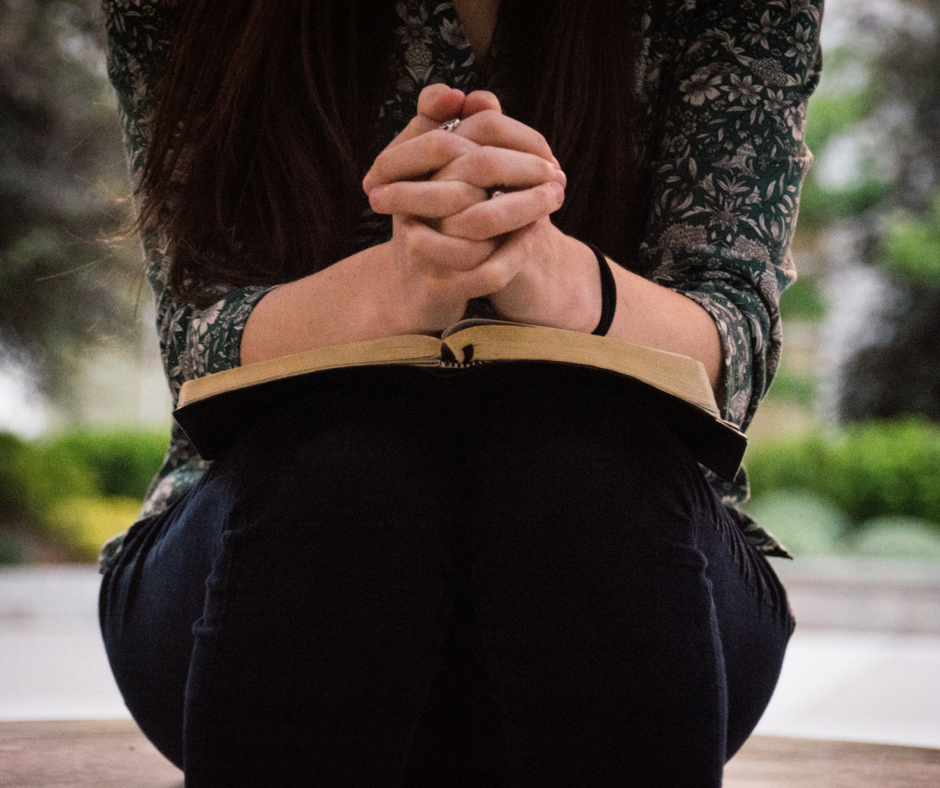
Your calling may or may not be writing, but maybe like me, you sometimes wonder if you've got what it takes.
If a lack of confidence hinders you like it sometimes hinders me, maybe the truth is you don't have a confidence problem but a grace problem.
When we truly understand the grace lavished on us when we turned to Jesus to save us, we’ll be empowered by it, sent forth in it, and freed through it to be who we were called to be by Jesus, our Savior.
We’re not perfect, but in Jesus, we stand faultless before God. There is no condemnation for those who are in Christ. He is mighty to save an imperfect sinner like me.
Mercy, love, and grace like this solve the confidence problem once and for all. They are life-changing, and if we’ve turned ourselves over to Jesus, we needn’t wait another day or another hour to let them take effect.
We haven’t received a spirit leading to fear and confidence problems. Instead we’ve received the Holy Spirit, who enables us to cry out to God as our Daddy.
Because of Jesus, we can be confident in grace today, tomorrow, forever. And confident in grace, we can move freely into the work God is calling us to.
We haven’t received a spirit leading to #fear and #confidence problems. Instead we’ve received the Holy Spirit, who enables us to cry out to God as our Daddy. #grace via @emilyrconrad
Photo Credits
Book display table photo by Clem Onojeghuo on Unsplash
Folded hands photo by Olivia Snow on Unsplash
Book with hand turning page by Liana Mikah on Unsplash
December 7, 2017
When Your Calling No Longer Seems Like a Sure Bet
by Emily Conrad

When I invest in my calling, I want that time and energy to appreciate immediately, my returns to increase in a steady, dependable manner.
Instead, looking back, I see a jagged line of returns.
By the way, in case you were wondering, the title image is NOT from my stats. My average daily viewers range from 8 (hey, friends!) to 45, depending on what service the stats come from. That's a fun discrepancy, isn't it? But I digress...
Regardless of what data I'm looking at to judge my effectiveness as a writer, signs of positive impact--page views, comments, shares, notes--spike and fall.
Sure, I seem to be growing closer to Jesus as the line of following my calling progresses, but am I making a difference? Am I reaching people? Does anybody care?
Whether your calling is in words or something else, you wonder these things, too, don't you?
Give up, Doubt says. Invest in a sure bet.
Read more »
December 5, 2017
Walking in the Light Instead of Counting Light Bulbs
by Emily Conrad

Between the 400 bulbs on the artificial Christmas tree, the string of icicle lights hanging inside the window, the four-bulb light fixture, and the two-wick candle, there are approximately five hundred lights glowing in this room, and I’m not sure it’s enough.
The morning is dark, and I’m insecure.
I quit a church committee recently. The group does good work and has been a lot of fun, but I’ve also taken on other commitments recently and needed to make some hard choices.
I am not good at quitting things—jobs, committees, other tasks. I delay the decision. I deal with the stress. I stay on longer. In the case of this committee, I stayed on an entire extra year and still faced insecurity about my decision.
My hesitation stems from my habit of counting light bulbs.
Read more »

Between the 400 bulbs on the artificial Christmas tree, the string of icicle lights hanging inside the window, the four-bulb light fixture, and the two-wick candle, there are approximately five hundred lights glowing in this room, and I’m not sure it’s enough.
The morning is dark, and I’m insecure.
I quit a church committee recently. The group does good work and has been a lot of fun, but I’ve also taken on other commitments recently and needed to make some hard choices.
I am not good at quitting things—jobs, committees, other tasks. I delay the decision. I deal with the stress. I stay on longer. In the case of this committee, I stayed on an entire extra year and still faced insecurity about my decision.
My hesitation stems from my habit of counting light bulbs.
Read more »
November 30, 2017
A Taste of Heaven on Earth
by Emily Conrad

What do rice, taxes, retirement savings, chilis in oil, and family expectations all have in common?
They are all among things that my exchange student tells me are different here than in her home country. And, of course, we each prefer how things are done in our own homeland. Understandably.
Though I haven’t lived overseas for an extended period, my sister has. From her, I know how precious it is to obtain food from one’s home country while overseas.
Though she hasn’t seemed homesick, I wanted to give my exchange student some of that kind of comfort. However, when I offered to take her to an Asian grocery store in town, she declined. She’d already been to one. It was small, and what she’d bought there wasn’t like what she was used to.
It's not like her home here, and many attempts to create the illusion of home don’t come close enough to be worthwhile.
Read more »

What do rice, taxes, retirement savings, chilis in oil, and family expectations all have in common?
They are all among things that my exchange student tells me are different here than in her home country. And, of course, we each prefer how things are done in our own homeland. Understandably.
Though I haven’t lived overseas for an extended period, my sister has. From her, I know how precious it is to obtain food from one’s home country while overseas.
Though she hasn’t seemed homesick, I wanted to give my exchange student some of that kind of comfort. However, when I offered to take her to an Asian grocery store in town, she declined. She’d already been to one. It was small, and what she’d bought there wasn’t like what she was used to.
It's not like her home here, and many attempts to create the illusion of home don’t come close enough to be worthwhile.
Read more »
November 28, 2017
Drawing God
by Emily Conrad

According to one drawing I saw recently, God is a Moses-like figure with a halo, looming with his hands stretched out over the planet.
The illustration was in a drawing app I’ve been playing since I downloaded it while waiting for Dad’s surgery. (He's doing well, by the way. No signs that the cancer spread.) The app showed me the picture and my job was to label it. I knew what word it wanted immediately.
When I first saw the drawing, I thought the artist had given the drawing a smile. I saw it again later and realized it wasn't so much a smile as a neutral mouth, but still, the idea of God smiling struck me.
This isn't the first time I've thought about whether or not God is happy, smiling. Here’s a snatch of a conversation from the manuscript I finished a couple of weeks ago:
Read more »

According to one drawing I saw recently, God is a Moses-like figure with a halo, looming with his hands stretched out over the planet.
The illustration was in a drawing app I’ve been playing since I downloaded it while waiting for Dad’s surgery. (He's doing well, by the way. No signs that the cancer spread.) The app showed me the picture and my job was to label it. I knew what word it wanted immediately.
When I first saw the drawing, I thought the artist had given the drawing a smile. I saw it again later and realized it wasn't so much a smile as a neutral mouth, but still, the idea of God smiling struck me.
This isn't the first time I've thought about whether or not God is happy, smiling. Here’s a snatch of a conversation from the manuscript I finished a couple of weeks ago:
Read more »
November 23, 2017
A Thanksgiving Pause
by Emily Conrad
My schedule is unusually full, my thoughts unusually scattered, drawn away from writing in strange ways. Or, perhaps, in normal ways that seem strange to me because distraction doesn't usually come quite this way to me, with a strong urge to find blank space.
But I find this stress opens the door to gratitude this Thanksgiving. As I look for relief, I recognize my need to pause, and the pressures becomes a launch pad for a few moments of recognizing I've been given much.
Thanksgiving dinner conversation moves too fast for this kind of reflection--at least in my family. Also, over Thanksgiving dinner, we tend toward the phrase, "I'm thankful for..." speaking to each other instead of directing our gratitude straight toward the One two whom it is due.
Sharing this way is good, I know. But now, before I prepare the meal or sit with others, I seek a few moments that are more than busyness. I want to prepare my heart, find words for blessings, dig a little deeper than I can over turkey and three different kinds of potatoes and cranberry sauce.
Read more »
My schedule is unusually full, my thoughts unusually scattered, drawn away from writing in strange ways. Or, perhaps, in normal ways that seem strange to me because distraction doesn't usually come quite this way to me, with a strong urge to find blank space.
But I find this stress opens the door to gratitude this Thanksgiving. As I look for relief, I recognize my need to pause, and the pressures becomes a launch pad for a few moments of recognizing I've been given much.
Thanksgiving dinner conversation moves too fast for this kind of reflection--at least in my family. Also, over Thanksgiving dinner, we tend toward the phrase, "I'm thankful for..." speaking to each other instead of directing our gratitude straight toward the One two whom it is due.
Sharing this way is good, I know. But now, before I prepare the meal or sit with others, I seek a few moments that are more than busyness. I want to prepare my heart, find words for blessings, dig a little deeper than I can over turkey and three different kinds of potatoes and cranberry sauce.
Read more »
November 21, 2017
Me and the Sidelines: A story of trying to fit in by sitting out
by Emily Conrad
The pitcher paused before rolling the kickball toward me to call to the rest of the team. “Everybody move up!”
The outfielders obeyed, coming into the infield because I was up to kick, and everybody knew the ball wouldn’t exactly fly.
One glorious time, I managed to launch the ball back out and over the pitcher’s head, but that fluke didn’t negate all my other kickball experiences.
I was learning a belief about myself: I’m not good at sports.
Oh, and also: I don’t like people to notice I’m bad at something.
Oh, and also: People are more likely to notice I'm bad at sports than other things like art or academics.
Read more »

The pitcher paused before rolling the kickball toward me to call to the rest of the team. “Everybody move up!”
The outfielders obeyed, coming into the infield because I was up to kick, and everybody knew the ball wouldn’t exactly fly.
One glorious time, I managed to launch the ball back out and over the pitcher’s head, but that fluke didn’t negate all my other kickball experiences.
I was learning a belief about myself: I’m not good at sports.
Oh, and also: I don’t like people to notice I’m bad at something.
Oh, and also: People are more likely to notice I'm bad at sports than other things like art or academics.
Read more »
November 16, 2017
Waiting Is Better When
5 Waiting Room Observations
by Emily Conrad

On Friday at about 7 AM, I traveled with my younger brother to Chicago. My mom, dad, and sister had left in a separate car about fifteen minutes before.
If you follow me on Instagram or Facebook, you may know why we made the three-hour drive: my dad was having surgery to remove his cancerous prostate.
The days leading up to the trip were emotionally tense and jam-packed. For my part, I was making travel arrangements for Chicago, but I was also preparing a church event (for which I was the committee chair) and helping our exchange student get ready for an overnight trip with school.
The morning we left, we were running late. We remembered needing quarters for tolls at the last minute. My sister called to arrange last-minute details. So there I was, counting quarters, talking on the phone with my sister, waiting for my brother, when I hear the exchange student call my name urgently.
Read more »
by Emily Conrad

On Friday at about 7 AM, I traveled with my younger brother to Chicago. My mom, dad, and sister had left in a separate car about fifteen minutes before.
If you follow me on Instagram or Facebook, you may know why we made the three-hour drive: my dad was having surgery to remove his cancerous prostate.
The days leading up to the trip were emotionally tense and jam-packed. For my part, I was making travel arrangements for Chicago, but I was also preparing a church event (for which I was the committee chair) and helping our exchange student get ready for an overnight trip with school.
The morning we left, we were running late. We remembered needing quarters for tolls at the last minute. My sister called to arrange last-minute details. So there I was, counting quarters, talking on the phone with my sister, waiting for my brother, when I hear the exchange student call my name urgently.
Read more »
November 14, 2017
Signing on to Do God's Work
by Emily Conrad
Yesterday, I sat in a coffee shop with a friend who goes to a different church. I asked how things were going there, and she mentioned people have started to volunteer for things around the church. It seemed that there had been some kind of collective realization about the importance of joining in the work in a more involved way.
This stood out to me because "be strong and courageous and do God's work" is the theme in a book I just read.
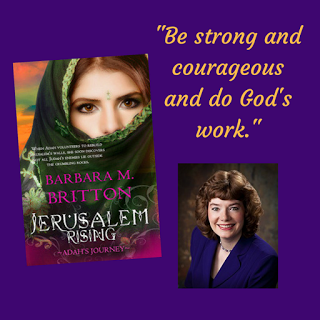
Last week, Barbara Britton launched Jerusalem Rising, a novel that explores the first six chapters of Nehemiah. I was part of her launch team, so I was privy to an early copy, and you can read my review on Goodreads or Amazon.
I didn't commit to doing a blog post about the book, but I found the story inspiring, so here we are!
The heroine in Jerusalem Rising encourages her family to participate in rebuilding the wall. Part of her reason for doing so is so that their names would be recorded with the others as having joined in the work and in God’s plan for His people.
One of my favorite parts of Biblical fiction is the renewed sense of curiosity it gives me for the Bible, so this morning, I took another look at those first few chapters of Nehemiah.
It turns out that I’d gotten some of the events of Nehemiah switched with those in Ezra—I won’t spoil anything for anyone who’d like to read the book without remembering specifics first, but I will say I was in for some surprises.
When I read the actual account in Nehemiah, I picked out the verse that Barbara mentioned to me when she described the inspiration for the novel:
Shallum son of Hallohesh, head of a half-district of Jerusalem, worked on the section adjacent to him, assisted by his daughters. - Nehemiah 3:12, NET
I also looked for the names of other characters, and I found one among all the other names of those who pitched in to do the work God had inspired.
Because of my whole Nehemiah/Ezra confusion, I did some reading in Ezra, too. Ezra ends with a list of its own, but this list is tragic, rather than inspiring.
It’s a list of those who disobeyed God. They took foreign wives who served other gods and were likely to lead their husbands and any children they had toward doing the same.
All of this together has me thinking about what I’ve signed up for. All and only because of Jesus, my name is in the Book of Life, but where else might my name be found?
Though there is no condemnation for those who are in Christ Jesus, we’re still called to obey, and I still fail. What list might I end up on if a record like the one in Ezra were created today?
But as I seek to remove sin from my life, what am I doing in a positive direction?

The church, Christ's body, still needs volunteers. Each of us has been created with a purpose, and, as Adah from Jerusalem Rising might say, Woe to anyone who would ignore the call of God in their life. What of our work will withstand the fire of judgement described in 1 Corinthians 3:12-15?
None of us can do everything, but all of us are called to something. What work have I signed on to do? Where have you signed your name?
Picturing my name signed to a scroll, boldly written as a volunteer who won't shy back when the going gets tough, lends accountability and a sense of community.
We don't sign on to do the work alone. We're a part of a larger body, of which there are many members. There may be opposition, as Nehemiah and the people of Jerusalem faced, but with Christ as our head, we will not fail because Christ does not fail.
P.S. The links to Amazon in this post are affiliate links. This adds nothing to your cost, but using the link lets Amazon know who directed you to them. If you make a purchase using the link, I receive a small percentage from Amazon as a thank you.
Photo credits
Title image photo by Les Anderson on Unsplash, text added on Canva.com
Stone wall on mountainside photo by John Salzarulo on Unsplash
"Be strong and courageous and do God's work" - a lesson from @BarbaraMBritton's #JerusalemRising via @emilyrconrad
Yesterday, I sat in a coffee shop with a friend who goes to a different church. I asked how things were going there, and she mentioned people have started to volunteer for things around the church. It seemed that there had been some kind of collective realization about the importance of joining in the work in a more involved way.
This stood out to me because "be strong and courageous and do God's work" is the theme in a book I just read.
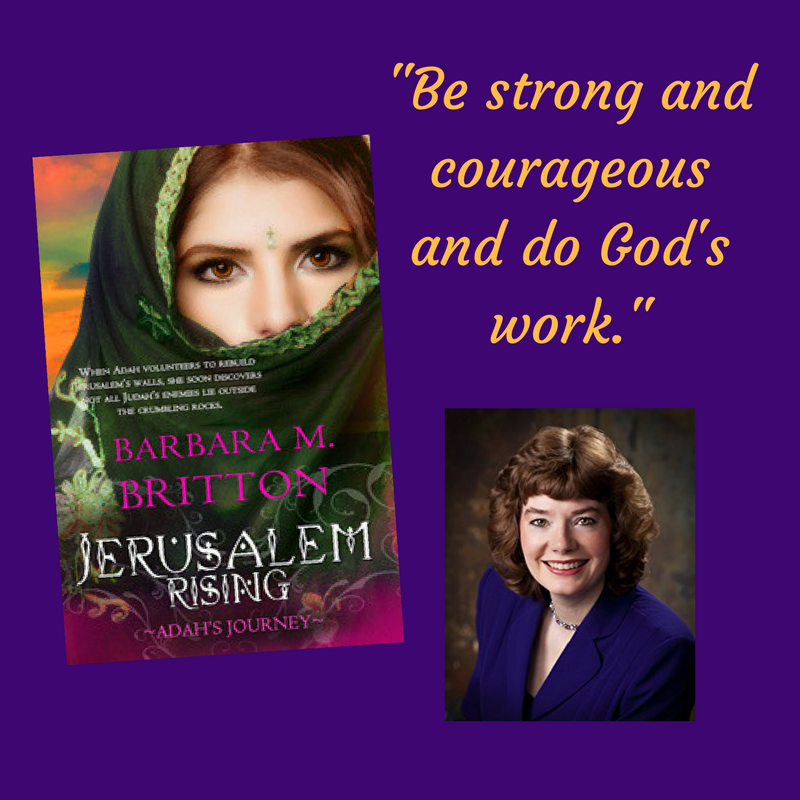
Last week, Barbara Britton launched Jerusalem Rising, a novel that explores the first six chapters of Nehemiah. I was part of her launch team, so I was privy to an early copy, and you can read my review on Goodreads or Amazon.
I didn't commit to doing a blog post about the book, but I found the story inspiring, so here we are!
The heroine in Jerusalem Rising encourages her family to participate in rebuilding the wall. Part of her reason for doing so is so that their names would be recorded with the others as having joined in the work and in God’s plan for His people.
One of my favorite parts of Biblical fiction is the renewed sense of curiosity it gives me for the Bible, so this morning, I took another look at those first few chapters of Nehemiah.
It turns out that I’d gotten some of the events of Nehemiah switched with those in Ezra—I won’t spoil anything for anyone who’d like to read the book without remembering specifics first, but I will say I was in for some surprises.
When I read the actual account in Nehemiah, I picked out the verse that Barbara mentioned to me when she described the inspiration for the novel:
Shallum son of Hallohesh, head of a half-district of Jerusalem, worked on the section adjacent to him, assisted by his daughters. - Nehemiah 3:12, NET
I also looked for the names of other characters, and I found one among all the other names of those who pitched in to do the work God had inspired.
Because of my whole Nehemiah/Ezra confusion, I did some reading in Ezra, too. Ezra ends with a list of its own, but this list is tragic, rather than inspiring.
It’s a list of those who disobeyed God. They took foreign wives who served other gods and were likely to lead their husbands and any children they had toward doing the same.
All of this together has me thinking about what I’ve signed up for. All and only because of Jesus, my name is in the Book of Life, but where else might my name be found?
Though there is no condemnation for those who are in Christ Jesus, we’re still called to obey, and I still fail. What list might I end up on if a record like the one in Ezra were created today?
But as I seek to remove sin from my life, what am I doing in a positive direction?

The church, Christ's body, still needs volunteers. Each of us has been created with a purpose, and, as Adah from Jerusalem Rising might say, Woe to anyone who would ignore the call of God in their life. What of our work will withstand the fire of judgement described in 1 Corinthians 3:12-15?
None of us can do everything, but all of us are called to something. What work have I signed on to do? Where have you signed your name?
Picturing my name signed to a scroll, boldly written as a volunteer who won't shy back when the going gets tough, lends accountability and a sense of community.
We don't sign on to do the work alone. We're a part of a larger body, of which there are many members. There may be opposition, as Nehemiah and the people of Jerusalem faced, but with Christ as our head, we will not fail because Christ does not fail.
P.S. The links to Amazon in this post are affiliate links. This adds nothing to your cost, but using the link lets Amazon know who directed you to them. If you make a purchase using the link, I receive a small percentage from Amazon as a thank you.
Photo credits
Title image photo by Les Anderson on Unsplash, text added on Canva.com
Stone wall on mountainside photo by John Salzarulo on Unsplash
"Be strong and courageous and do God's work" - a lesson from @BarbaraMBritton's #JerusalemRising via @emilyrconrad


