
Emily Conrad's Blog, page 15
December 27, 2016
Christmas isn’t over yet: 3 ways for Christians to celebrate all year round
by Emily Conrad

Now that Christmas is over, what are we left with?
I’m writing this on December 23rd. My Christmas tree glows next to me and my wintery table cloth sparkles beneath my laptop. The presents sit, neatly wrapped under the tree. An uncharacteristic variety of goodies sit in my kitchen—sugar cookies, caramels, marshmallows, all homemade.
But by the time you read this, I’ll be strategizing about how to best dismantle the tree without overlooking a stray ornament. I’ll be debating over whether or not the tablecloth should stay until New Years’ Day. The presents will be unwrapped and aging. The treats will be vanishing.
What part of my celebrations lasts? What morsel of Christmas will power you through the next year? Does anything we just spent all that time and money on still matter?
If looking back forces us to confess lasting meaning's scarcity, there is hope.
If you're one who can look back on your gifts and action and see lasting meaning, well done! But you're job isn't done yet, either.
As followers of Christ, we're called to carry the Christmas spirit every day, through every season, on every holiday and every routine Monday through Friday, every weekend.

Here are three challenges I want to take from Christmas and apply to my life year-round. Care to join me?
Generosity—dare I say, sacrificial giving—ought to be a regular part of our lives. The unemployed still wonder how to scrape together rent. The missionaries still rely on provision to continue their work. The hungry must still be fed.
The requests for special Christmas offerings and the bell ringers may have vanished with the passing of December 25th, but needs still abound, and when we don't have the financial strain of gift-giving traditions looming so large, we're in an even better position to meet those needs.
Family, community and relationships take effort, but we’ll miss out on so much if we wait until Christmas comes again to reach out. A happy introvert, I sometimes fail at maintaining friendships. My best friendships tend to be with those who stay after me about getting in touch and spending time, and it's a blessing I sometimes fail to pay forward by pursuing relationships with those I care about. The biggest miss this year? I received a newsletter from a friend, forwarded from the address we moved out of back in May. Though I know she doesn't get on social media much to see the updates about moving, I’d never informed her of this big life event, and even worse, this is a local friend I could get in touch with so easily.
Family may have gone back home, and we may be taking down the Christmas newsletters from friends, but those relationships must still be maintained. Since my December calendar sometimes gets jam-packed, this is another area where I'm in a good position to follow through as my schedule returns to normal.
Meaningful discussions about the Good News are fitting any time of year. We no longer have the easy option of saying “Merry Christmas” to let people know what we believe, but how effective was that at sharing the Good News anyway?
Yes, maybe people are a little more receptive to hearing about Jesus when Christmas rolls around, but the reasons we need Christ’s birth, death, and resurrection fill our lives every single day. People I care about are hurting and looking for answers. Maybe not consciously every day, but as I invest in them, I generally find the time will come when we'll end up naturally discussing Christ and when that happens, I've found people pretty open to listening and discussing any time.

We worship a God whose mercies are new not just on Christmas morning, but every morning.
As His people, we, too, should be representatives of peace and joy and love and reconciliation with God through Christ not just on Christmas, but every day of the year.
What aspect of Christmas can you practice, even though the holiday is past?

Christmas isn't over yet: 3 ways to celebrate all year round via @novelwritergirl

Now that Christmas is over, what are we left with?
I’m writing this on December 23rd. My Christmas tree glows next to me and my wintery table cloth sparkles beneath my laptop. The presents sit, neatly wrapped under the tree. An uncharacteristic variety of goodies sit in my kitchen—sugar cookies, caramels, marshmallows, all homemade.
But by the time you read this, I’ll be strategizing about how to best dismantle the tree without overlooking a stray ornament. I’ll be debating over whether or not the tablecloth should stay until New Years’ Day. The presents will be unwrapped and aging. The treats will be vanishing.
What part of my celebrations lasts? What morsel of Christmas will power you through the next year? Does anything we just spent all that time and money on still matter?
If looking back forces us to confess lasting meaning's scarcity, there is hope.
If you're one who can look back on your gifts and action and see lasting meaning, well done! But you're job isn't done yet, either.
As followers of Christ, we're called to carry the Christmas spirit every day, through every season, on every holiday and every routine Monday through Friday, every weekend.

Here are three challenges I want to take from Christmas and apply to my life year-round. Care to join me?
Generosity—dare I say, sacrificial giving—ought to be a regular part of our lives. The unemployed still wonder how to scrape together rent. The missionaries still rely on provision to continue their work. The hungry must still be fed.
The requests for special Christmas offerings and the bell ringers may have vanished with the passing of December 25th, but needs still abound, and when we don't have the financial strain of gift-giving traditions looming so large, we're in an even better position to meet those needs.
Family, community and relationships take effort, but we’ll miss out on so much if we wait until Christmas comes again to reach out. A happy introvert, I sometimes fail at maintaining friendships. My best friendships tend to be with those who stay after me about getting in touch and spending time, and it's a blessing I sometimes fail to pay forward by pursuing relationships with those I care about. The biggest miss this year? I received a newsletter from a friend, forwarded from the address we moved out of back in May. Though I know she doesn't get on social media much to see the updates about moving, I’d never informed her of this big life event, and even worse, this is a local friend I could get in touch with so easily.
Family may have gone back home, and we may be taking down the Christmas newsletters from friends, but those relationships must still be maintained. Since my December calendar sometimes gets jam-packed, this is another area where I'm in a good position to follow through as my schedule returns to normal.
Meaningful discussions about the Good News are fitting any time of year. We no longer have the easy option of saying “Merry Christmas” to let people know what we believe, but how effective was that at sharing the Good News anyway?
Yes, maybe people are a little more receptive to hearing about Jesus when Christmas rolls around, but the reasons we need Christ’s birth, death, and resurrection fill our lives every single day. People I care about are hurting and looking for answers. Maybe not consciously every day, but as I invest in them, I generally find the time will come when we'll end up naturally discussing Christ and when that happens, I've found people pretty open to listening and discussing any time.

We worship a God whose mercies are new not just on Christmas morning, but every morning.
As His people, we, too, should be representatives of peace and joy and love and reconciliation with God through Christ not just on Christmas, but every day of the year.
What aspect of Christmas can you practice, even though the holiday is past?

Christmas isn't over yet: 3 ways to celebrate all year round via @novelwritergirl


December 22, 2016
What we can do when we can't fix others' heartaches
by Emily Conrad

A mechanical whir woke me just before 3 AM. As I listened to determine if the noise emanated from within the house, the furnace shut off, and with it, the noise ceased.
I couldn't sleep in the silence. The furnace is old and for these last months, I've taken comfort in its rumblings, each sound meaning it was hanging in there. But this whirring was not the reliable rumble I'd come to appreciate. Twenty minutes and a few normal-sounding cycles of the furnace later, I smelled something hot.
I went to the basement to investigate, realized the furnace either had quit or really ought to, and woke my husband, my mechanical knowledge exhausted.
Though I recognized something was wrong, I was helpless to fix it. Thankfully, my husband diagnosed the issue. The part will arrive tomorrow.
In the meantime, the furnace is not the only problem I recognize but cannot fix.

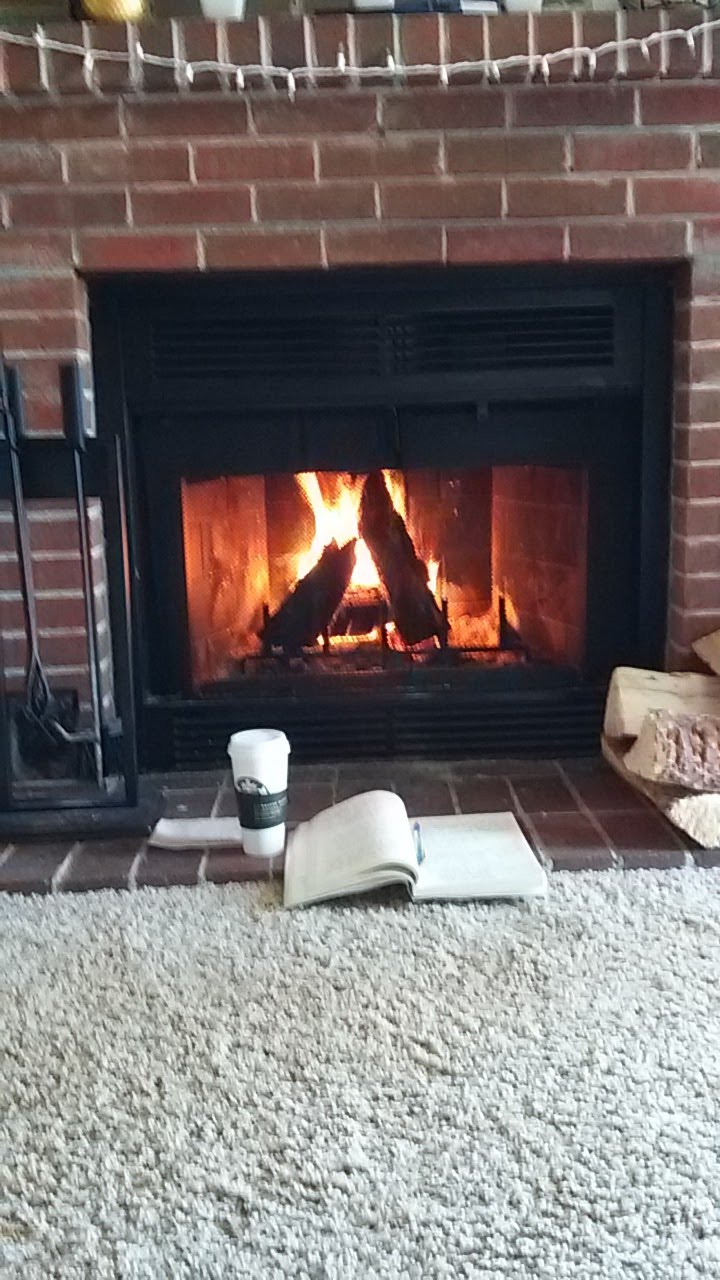
Hearts, too, seem to be losing their warmth in the long night. This time of year, especially, it seems, but in other seasons, too. I hear it in person, over Skype, in emails, on social media, and in hesitant silences (some of them my own). Voices whir differently than they would if all were well. We shiver for different things, for home, relationship, community, employment, meaning, worth, healing, and love. We each try but can't produce heat.
Who can we wake?
Not Jesus. He is already awake; He never closed His eyes in the first place. He has already diagnosed the issue, our great needs. He meets them Himself, but there is a part He's ordered: each of us.
We are just the part He ordered for those around us, individuals who make up a larger whole, meant to work together to produce warmth.

But how, when we have exhausted our knowledge long before finding a solution?
Perhaps the warmth doesn't come from the solutions we have in mind. Perhaps it comes from a listening ear. From a nod of understanding. Perhaps it comes from encouraging each other to continually seek, to not give up.
From the reminder that though we haven't felt the fire recently (or yet), we will. Things may be broken now, but Jesus will not leave them that way, nor will He leave us to fend for ourselves in the meantime.
What is a meaningful way a friend has warmed you during a cold season?
When we face #heartaches we can't fix, perhaps there's something we can do via @novelwritergirl #lifteachotherup

A mechanical whir woke me just before 3 AM. As I listened to determine if the noise emanated from within the house, the furnace shut off, and with it, the noise ceased.
I couldn't sleep in the silence. The furnace is old and for these last months, I've taken comfort in its rumblings, each sound meaning it was hanging in there. But this whirring was not the reliable rumble I'd come to appreciate. Twenty minutes and a few normal-sounding cycles of the furnace later, I smelled something hot.
I went to the basement to investigate, realized the furnace either had quit or really ought to, and woke my husband, my mechanical knowledge exhausted.
Though I recognized something was wrong, I was helpless to fix it. Thankfully, my husband diagnosed the issue. The part will arrive tomorrow.
In the meantime, the furnace is not the only problem I recognize but cannot fix.

Hearts, too, seem to be losing their warmth in the long night. This time of year, especially, it seems, but in other seasons, too. I hear it in person, over Skype, in emails, on social media, and in hesitant silences (some of them my own). Voices whir differently than they would if all were well. We shiver for different things, for home, relationship, community, employment, meaning, worth, healing, and love. We each try but can't produce heat.
Who can we wake?
Not Jesus. He is already awake; He never closed His eyes in the first place. He has already diagnosed the issue, our great needs. He meets them Himself, but there is a part He's ordered: each of us.
We are just the part He ordered for those around us, individuals who make up a larger whole, meant to work together to produce warmth.
But how, when we have exhausted our knowledge long before finding a solution?
Perhaps the warmth doesn't come from the solutions we have in mind. Perhaps it comes from a listening ear. From a nod of understanding. Perhaps it comes from encouraging each other to continually seek, to not give up.
From the reminder that though we haven't felt the fire recently (or yet), we will. Things may be broken now, but Jesus will not leave them that way, nor will He leave us to fend for ourselves in the meantime.
What is a meaningful way a friend has warmed you during a cold season?
When we face #heartaches we can't fix, perhaps there's something we can do via @novelwritergirl #lifteachotherup
When we can do when we can't fix others' heartaches
by Emily Conrad
A mechanical whir woke me just before 3 AM. As I listened to determine if the noise emanated from within the house, the furnace shut off, and with it, the noise ceased.
I couldn't sleep in the silence. The furnace is old and for these last months, I've taken comfort in its rumblings, each sound meaning it was hanging in there. But this whirring was not the reliable rumble I'd come to appreciate. Twenty minutes and a few normal-sounding cycles of the furnace later, I smelled something hot.
I went to the basement to investigate, realized the furnace either had quit or really ought to, and woke my husband, my mechanical knowledge exhausted.
Though I recognized something was wrong, I was helpless to fix it. Thankfully, my husband diagnosed the issue. The part will arrive tomorrow.
In the meantime, the furnace is not the only problem I recognize but cannot fix.
Hearts, too, seem to be losing their warmth in the long night. This time of year, especially, it seems, but in other seasons, too. I hear it in person, over Skype, in emails, on social media, and in hesitant silences (some of them my own). Voices whir differently than they would if all were well. We shiver for different things, for home, relationship, community, employment, meaning, worth, healing, and love. We each try but can't produce heat.
Who can we wake?
Not Jesus. He is already awake; He never closed His eyes in the first place. He has already diagnosed the issue, our great needs. He meets them Himself, but there is a part He's ordered: each of us.
We are just the part He ordered for those around us, individuals who make up a larger whole, meant to work together to produce warmth.
But how, when we have exhausted our knowledge long before finding a solution?
Perhaps the warmth doesn't come from the solutions we have in mind. Perhaps it comes from a listening ear. From a nod of understanding. Perhaps it comes from encouraging each other to continually seek, to not give up.
From the reminder that though we haven't felt the fire recently (or yet), we will. Things may be broken now, but Jesus will not leave them that way, nor will He leave us to fend for ourselves in the meantime.
What is a meaningful way a friend has warmed you during a cold season?
When we face #heartaches we can't fix, perhaps there's something we can do via @novelwritergirl #lifteachotherup
A mechanical whir woke me just before 3 AM. As I listened to determine if the noise emanated from within the house, the furnace shut off, and with it, the noise ceased.
I couldn't sleep in the silence. The furnace is old and for these last months, I've taken comfort in its rumblings, each sound meaning it was hanging in there. But this whirring was not the reliable rumble I'd come to appreciate. Twenty minutes and a few normal-sounding cycles of the furnace later, I smelled something hot.
I went to the basement to investigate, realized the furnace either had quit or really ought to, and woke my husband, my mechanical knowledge exhausted.
Though I recognized something was wrong, I was helpless to fix it. Thankfully, my husband diagnosed the issue. The part will arrive tomorrow.
In the meantime, the furnace is not the only problem I recognize but cannot fix.
Hearts, too, seem to be losing their warmth in the long night. This time of year, especially, it seems, but in other seasons, too. I hear it in person, over Skype, in emails, on social media, and in hesitant silences (some of them my own). Voices whir differently than they would if all were well. We shiver for different things, for home, relationship, community, employment, meaning, worth, healing, and love. We each try but can't produce heat.
Who can we wake?
Not Jesus. He is already awake; He never closed His eyes in the first place. He has already diagnosed the issue, our great needs. He meets them Himself, but there is a part He's ordered: each of us.
We are just the part He ordered for those around us, individuals who make up a larger whole, meant to work together to produce warmth.
But how, when we have exhausted our knowledge long before finding a solution?
Perhaps the warmth doesn't come from the solutions we have in mind. Perhaps it comes from a listening ear. From a nod of understanding. Perhaps it comes from encouraging each other to continually seek, to not give up.
From the reminder that though we haven't felt the fire recently (or yet), we will. Things may be broken now, but Jesus will not leave them that way, nor will He leave us to fend for ourselves in the meantime.
What is a meaningful way a friend has warmed you during a cold season?
When we face #heartaches we can't fix, perhaps there's something we can do via @novelwritergirl #lifteachotherup
December 20, 2016
Looking for Danger, Finding Peace (A guest post on the Fear Warrior Blog)
Terrified. The shepherds were terrified. So much so that they stood in the midst of the shining glory of God without recognizing it as a good thing. What had affected them this way? The appearance of an angel, come to tell them of Christ’s birth.
The Bible doesn’t specifically spell out why the shepherds were afraid in that moment, but I have a guess. Their job was to guard the flocks of sheep. They’d likely fended off their share of wild animals, yet here was a mighty being they clearly had no way to defeat. They, and not just their sheep, seemed to be in danger.
They weren’t looking for the glory of God and the hope of good news. They were in that field, watching for threats to their livelihoods. So, when something happened, they interpreted it as a threat. They saw what they were looking for.
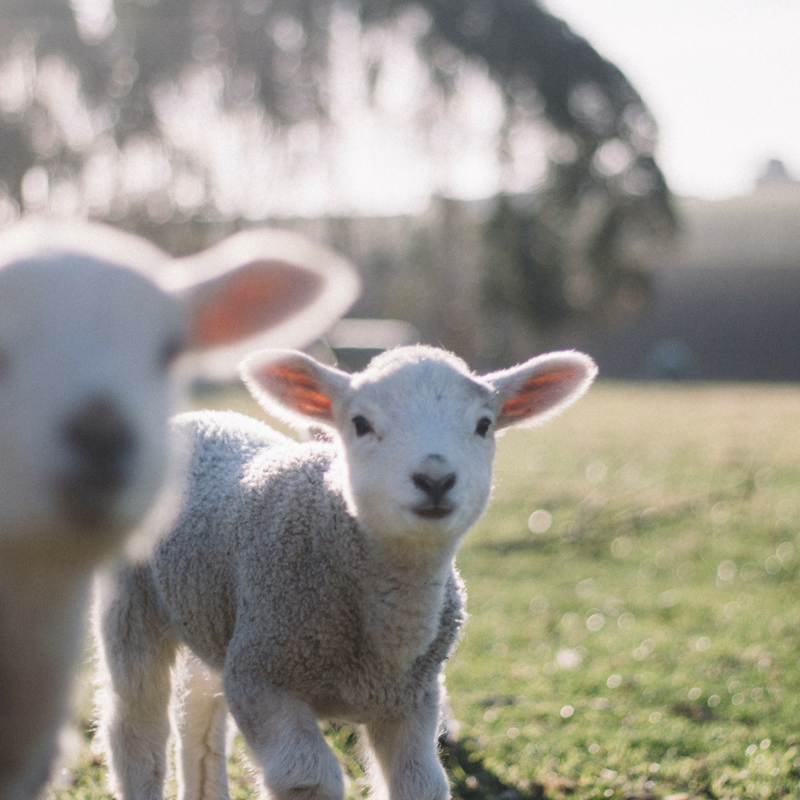
Two thousand years later, our livelihoods, families, money, and dreams graze in the fields of our lives, white and fluffy and susceptible to danger. So we shepherd them. We spend nights worrying about them. We fend off dangers and keep a wary eye out for threats.

There have been times in my life when something good happened, but I saw what I’d been looking for: danger. And like the shepherds, I was afraid.
But, thankfully, the shepherds’ story doesn’t end with fear. Our stories don't have to, either.
Click here to continue reading this post on Jerusha Agen's Fear Warrior blog.
Looking for Danger, Finding #Peace and a Fearless #Christmas @novelwritergirl @sdgwords
December 15, 2016
Lessons for Dreamers from the Wise Men

I imagine the wise men travelling through the wilderness, following a star—likely for years—and I think to myself, “That sounds familiar. My life’s story is like that.”
Well, okay, not exactly. But there are some similarities to my life and to yours, too.
We have dreams in your heart that seem like a star placed by God just to draw us out of our comfort zones and toward realized promises. The journey is long and rough. We tire, and we wonder how others who've gone before us managed to successfully chase lofty goals.
Those ancient wise men managed to succeed at their lofty goal somehow, following a star to a far-off land and meeting Jesus.
Wealthy men, what kind of comfortable homes did they leave behind to embark on their quest?
At some point, did it seem like they’d be following that star forever, never to arrive at their destination?
And when they found the humble home of Mary and Joseph, did they have a moment of doubt that their journey was worth the trouble?
Those questions say more about me than about the wise men, though. Thankfully, the wise men’s example provides a sort of answer to these questions, a model for modern dreamers to follow.

Going off the account of the wise men from Matthew 2:1-12, here are some lessons for dreamers we can still apply today, paired with some questions to help you consider your journey:
They studied and recognized God’s sign when it appeared. Contrast that with the way the chief priests and scribes of Jerusalem had to scramble when the wise men walked in and pointed out a miracle was happening right in their area. A relationship with God through His Word is paramount if we’re going to recognize what He’s calling us to do.
For the modern dreamer: How have you been investing in your relationship with Jesus?
They got up and moved when they saw the star. God gives us talents and passions for a reason. As we draw close to Him and He lifts up a dream for us to follow, let’s not hesitate for fear of what others will think or how our lives will change.
For the modern dreamer: Have you been hesitating?
They left their comfortable homes. Following dreams means sacrifices. We sometimes literally leave our homes. We often give up free time or income. The tradeoff is adventure with God.
For the modern dreamer: What comforts are you clinging to at the expense of your calling?
They didn’t let the pomp and circumstance of a worldly king sway their allegiance to their mission. We might not run into King Herod, but money, popularity, and a dozen other things can tempt us to go directions God hasn’t called us to.
For the modern dreamer: What distractions is the world offering you?
They rejoiced along the way. Their journey was a long one. They were likely tired, and they’d just had a rather weird experience with King Herod and the people of Jerusalem. Yet, the sight of the star in Matthew 2:10, a sign they were getting close, thrilled them. However long our journey is, we, too, are called to rejoice.
For the modern dreamer: How can you practice joy today?
They didn’t let the humble home of Mary and Joseph dissuade them from offering their best. I imagine travelling all that way and then coming to a rather non-descript (other than the starlight bath, of course) home. And still, the wise men pull out the gold, frankincense and myrrh. Sometimes, dreams-come-true aren’t as outwardly majestic as we’d hoped they’d be. Often, God’s plans revealed in our lives involve trials and heartaches. Or, maybe where we are right now is more humble than we'd hoped. But we can’t let that prompt us to offer less than the best.
For the modern dreamer: Have you been holding back?
They didn’t worship the star. The wise men were on a mission to worship Jesus. Following a dream for so long can make it seem more and more important in our lives, but the dream as it plays out on earth is not the point of our journey. That twinkling dream-star is the means by which God draws us and those around us closer to Himself. Like the wise men, we must follow the star not to stand in starlight, but to be led to the place where we’ll see Jesus face-to-face.
For the modern dreamer: If you’ve begun to seek the star and not the Savior, how can you right your priorities?

Following the wise men's example, we must follow the star not to stand in starlight, but to be led to the place where we’ll see Jesus, No matter how brightly any of our dreams might be sparkling, Jesus, the light of the world, is brighter.
PS. Haven't had enough of star talk? Check out this lovely poem by Christina Hubbard of Creative and Free.
Like the wise men, we must follow the star not to stand in starlight, but to be led to the place where we’ll see Jesus via @novelwritergirl
December 13, 2016
Understanding the Inner Workings of a Blessing
Sprinting through my dark neighborhood, following my black dog through shadowed yards, I prayed.
God, please let him get trapped by a fence so I can catch him.
Shortly after, I lost sight of my dog.
Twenty minutes passed. No sign of my four-legged runaway.
Then, my husband came across him inside a fenced yard, waiting patiently at the gate. All my husband had to do was open the gate, collect the dog, and bring him home. Talk about a literal answer to prayer.
In awe, we rejoiced.
But I was also curious, as if the blessing was a household appliance I could dismantle to reveal it's inner workings. How did the dog end up inside a fence? I walked by the house where the dog was trapped and peered into the back.

This property had an eight- to twelve-inch gap in the back corner of their fence. That gap must’ve allowed the dog in, but was small enough that he couldn’t find his way back out.
It seems that often, behind an answer to prayer, there’s a figurative a gap in the fence. A way for the blessing to slip in and stand waiting for me.
Recently, when handed another blessing, I started speculating to a friend, writer Jerusha Agen of the Fear Warrior Blog and the Sisters Redeemed series. (You've seen her influence on the blog recently because she's the one who suggested chasing snowballs sounded like a blog post material.) So in a message to Jerusha, I wondered about how the latest blessing could’ve happened.
Jerusha’s answer? God did it.
Yes, but how?
When Jerusha suggested I write a blog post involving accepting God's blessings, I paused. Maybe it would make a good blog post.
But writing forces me to look at my motives a little more deeply.
I was asking what seemed like an innocent enough question. How did God build this blessing? In some ways, it’s good to observe what goes right, to learn from successes as well as failures, to constantly improve.
But unfortunately, I think my motives weren't as pure as they should've been.
When I asked how God did something, part of me wanted to recreate the effect at will. I was hunting to discover the gap in the fence so that next time, less would be out of my control. I wanted to unscrew the case of the blessing and see how it ran. Deep down, part of me wanted to arm myself with the knowledge of the blessing's inner workings so I would be a little less dependent on God.
As if such a thing were possible.
If I sit down and dismantle a blessing, I’m left with a pile of parts I can't make run. (In fact, with my mechanical know-how, I'd be lucky to get the case off.) Take the example I started with. Dismantled, pieces are strewn left and right. A runaway dog. A gap in a fence. Two exhausted dog owners. A dark night. A lost cause.
I try to fit the parts back together, but the dog won’t slip into the yard through the gap in the fence without someone leading him. My husband won’t go down the street and turn his head without someone prompting him. The blessing’s gears just won’t turn without God. Without Jesus, there's no power source.
Not only that, but I turn around to see that there are even more parts to this blessing. Who but God caused the owner of that property to call their fence complete, though it was eight inches short of enclosing the yard?
God is the only one big enough to create all the parts, let alone fit them together and enable them to hum into motion.

Yes, I plan to learn and grow from experiences and blessings. (On a side note, I’m learning from failures, too—we’ve taken measures to keep the dog in our own yard so there will be no more midnight adventures. If you remember reading about him running loose once before, that's because I did write about the same situation from a different angle once before. Thankfully, he hasn't gotten out since!)
We get to learn what we can about recovering figurative lost dogs. God wants us to learn and gain His kind of wisdom. His kind of wisdom teaches us that no matter how many gaps in the fence we find, no matter how many dogs we catch, we will never cobble together all the parts we need to recreate success apart from Him.
The power to fuel success is God's alone. He’s the miracle worker. The One who hears and answers our prayers. The One who can turn the hearts of kings and the paths of dogs. The One who speaks and it is so. The One from whom all blessings flow.
Blessed be the name of the Lord.
What blessings are you thanking God for right now?
What I learned trying to dismantle a blessing to learn how it runs #faith #blessing via @novelwritergirl
December 8, 2016
When You Suspect You're Chasing Snowballs

My husband winds up and whips a snowball just past my dog's head. It smacks into the thin layer of snow that's fallen today. The dog trots around, hunting. A hound mix, he's determined to find this snowball.
We know what the dog does not: the snowball broke upon landing and cannot be dug up, no matter how much snow he roots through with his quivering black nose.
The fact that he hunts with gusto makes it no less of a fool's errand. The search hopeless.
Sometimes, pursuing dreams seems similar.
It's as if God gathered up a handful of good stuff--a calling, an opportunity, a purpose, means to pursue it--and let it fly past my head. It plops down so close I can hear it. He meant that good, good thing for me. I'm just sure of it.
So, I scour my surroundings for it, but my work doesn't yield the results I'm looking for. Maybe I write for publication but receive mostly rejections. Maybe I tell others about Christ but they're not interested. Maybe I get involved with a ministry but events lack participation. It's clear: this hunt for a realized dream is not so easy as it first appeared.

Hunting the yard for snowballs, my dog will eventually look to me or my husband for help. Likewise, hunting for realized dreams, I look back to God with questioning eyes. This is what You meant me to do, right?
If you're after His heart and His plan for you, you've done this, too, haven't you? When we sense His reassurance, we renew our hunt, nose to the ground, as obsessed as a hound.
Now faith is being sure of what we hope for, being convinced of what we do not see. Hebrews 11:1, NET
Faith, it seems, is much easier for a dog than for a person.
While a dog will eagerly search, questions haunt us. Was this a real dream meant for me, or am I chasing something as temporary as a snowball? Is it really there for me to find?
The answer is yes and no.
If we're seeking accolades and recognition, we've lost the scent.
If we're looking for immediate success, we're on the wrong trail.
If we think we know exactly how this dream-come-true will look when we tug it out of a snowbank, we're going to be surprised.
On their own, the milestones we see in this lifetime are about as satisfying as eating snowballs for dinner. They'll leave us cold and hungry.
On the other hand, God's promises will survive any impact or pressure--death included, because His good plan extends into eternity.
These all died in faith without receiving the things promised, but they saw them in the distance and welcomed them and acknowledged that they were strangers and foreigners on the earth. But as it is, they aspire to a better land, that is, a heavenly one. Therefore, God is not ashamed to be called their God, for he has prepared a city for them. Hebrews 11:13, 16, NET
Eternal purpose? Yes, that's there.
An invitation to relationship with God? Yes, scrawled across every snowflake.
We will not be disappointed when we seek these things with Jesus.

He has promised an inheritance imperishable, undefiled, and unfading. It is reserved in heaven for you, who by God’s power are protected through faith for a salvation ready to be revealed in the last time. (see 1 Peter 1:4-5, NET)
God isn't in the business of throwing snowballs. His promises won't disintegrate, even when we scrape along rock bottom. They don't melt or crumble. He never fakes us out. He always delivers on His promises more perfectly than any dream-come-true we would think to look for.
When pursuing your dreams seems as hopeless as chasing snowballs - via @novelwritergirl #faith #promises
December 6, 2016
Celebrating the Season of Joy

"It's a good thing I'm a happy person, or that would really bother me."
I stand in the living room, observing a double-whammy as I say those words. First, the dog has tugged one of the stockings, complete with its heavy stocking hook, onto the hardwood floor. Second, the stocking is misshapen. Not due to the dog, but due to my own poor choice in yarn.
Annoying, but because of what I said about being a happy person, my husband and I chuckle as I set the stocking and hook back up on the ledge.
Why laugh? Mostly, because it's not true. I'm not a noticeably happy person. I try to be nice and have faith and keep my cool, but some things annoy me fairly easily. I take myself pretty seriously; it's easy for me to disappoint myself. I have high expectations; in some circumstances, others find me easily disappointed, too.
I suspect I'm in good company because there are very few people in my life that I would say are noticeably happy. That's probably what makes my husband's aunt and uncle stand out in my mind. Though they've experienced their share of hardships, they have a good sense of humor about life (and themselves), they are active and inquisitive, and they limit worries by recognizing what they can and cannot change. They're fun-loving but not frivolous.
It is because of this couple that I recently told my husband I want to be happy, too.
The next time I was getting annoyed with his driving, my husband replied, "It's a good thing you're a happy person."
I smiled. I relaxed. I chose to be happy. After all, I'd just made the declaration I wanted to be a few minutes before.
And so, the joke was born. When something inconvenient would happen, and one or the other of us would say, "It's a good thing we're happy people!"
But as much of a joke as we made it, the reminder worked. We ended up chuckling when we would've been annoyed.
Why was that little line all it took?
The stuff we were tempted to lose our cool over was really, really small stuff. So small that both the example I opened with and the one about my husband's driving are made up. I mean, yes, they're based on true experiences, but is that when we used our line about being happy? Not sure. The choice to be happy made a bigger impression on me because the inconvenient events threatening my mood were petty.
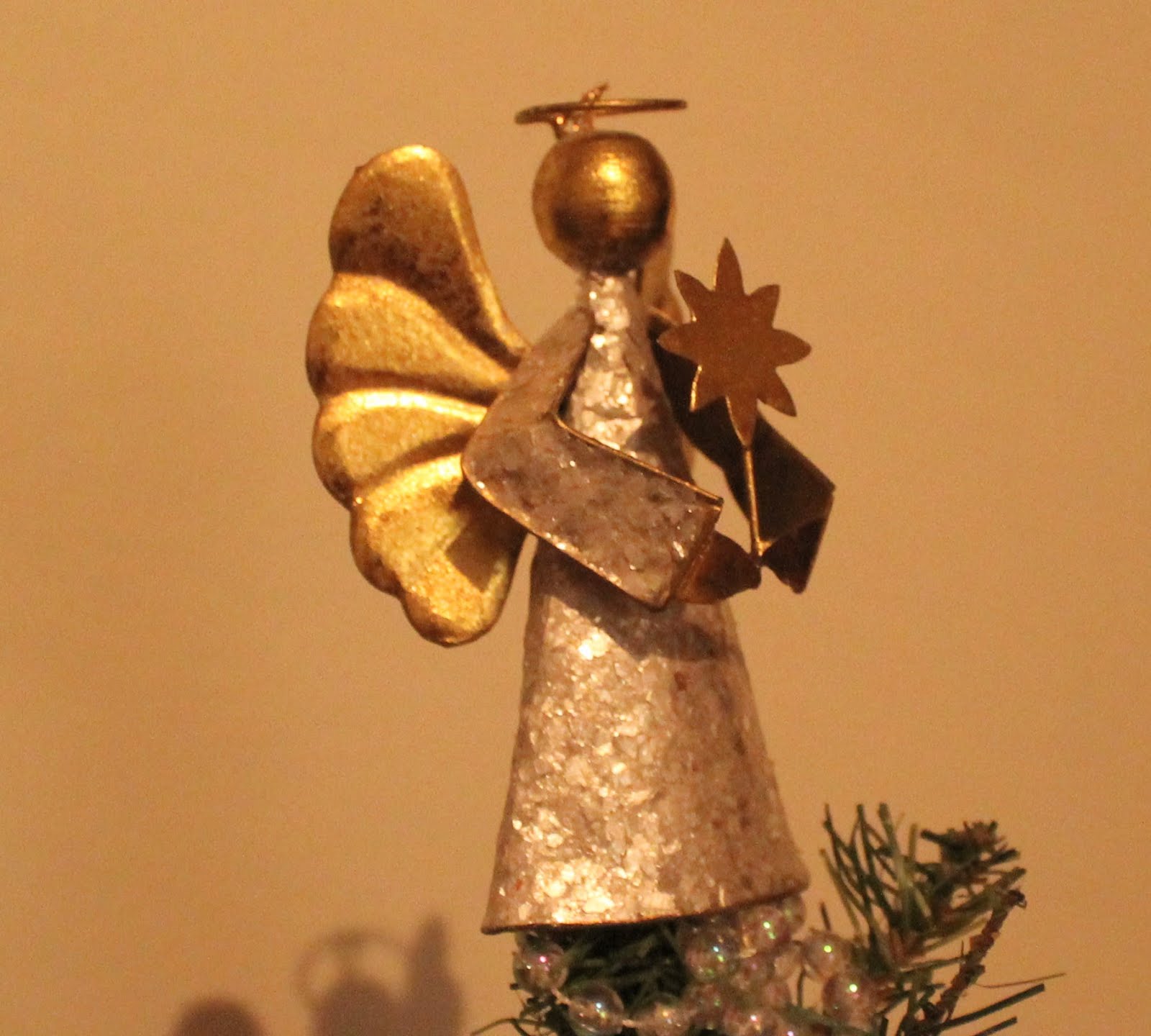
There's no better time for it. This is the season of comfort and joy. As the angel said: “Do not be afraid! Listen carefully, for I proclaim to you good news that brings great joy to all the people: Today your Savior is born in the city of David. He is Christ the Lord." (Luke 2:10b-11, NET)
That is good news--We have a Savior! We have eternal hope!--and this should still bring me joy today.
The eternal hope we have in Christ is why Paul could write, Rejoice in the Lord always. Again I say, rejoice! (Philippians 4:4, NET)
The mindset that everything is in God's control and is for the good of those who believe is how James could write, My brothers and sisters, consider it nothing but joy when you fall into all sorts of trials, because you know that the testing of your faith produces endurance. (James 1:2-3, NET)

When it comes down to it, all believers should be happy people. Or joyful, anyway.
In the verses above, I interpret joy to mean hope and assurance that God is good and God is in control, regardless of circumstances. Those verses don't mean we're in the wrong to experience grief or even anger or sadness. They don't mean we'll take the worst news with a smile. The joy we have as believers in those times might not be expressed in laughter or jokes. It might simply be the hope that pulls us through.
But if we have that kind of joy in hard times, shouldn't that result in harder-to-shake, closer-to-the-surface happiness in the everyday moments of our lives? Shouldn't joy lead us to choose laughter over annoyance more often? Shouldn't it recognize in daunting circumstances that the outcome is out of our power and in God's perfect, loving hands?
In my experience, often all it takes to redirect everyday negative moods is an accountability partner and gentle reminders. Though my husband and I have begun to let our joke fall by the wayside, I'm resurrecting it because I want joy. I want to be a happy person.
When I make a mistake, instead of taking myself so seriously, I want to acknowledge with humor that I'm not really all that anyway (but Christ is). I want to choose laughter whenever I can. I want to find comfort in the fact that though I cannot make my dreams come true, in Christ, my every eternal need is already met. And that, really, is a dream-come-true I can't even fathom.
It's time to choose joy.
What can you do today to choose joy?
This is my tweetable text. Click to tweet it!
December 1, 2016
Choosing the Tree in the Corner

Timid, we approached the trailer parked at the edge of the Christmas trees. Its windows were papered over with notices about only accepting cash and check, about how much a bough or a wreath or a tree would set us back.
My husband, the loud one, spotted the attendant first and called out a hello.
He asked us what kind of tree we were looking for.
We exchanged a glance, neither of us wanting to fess up that, despite being in our thirties, we were novices. But knowing we'd be clueless if I didn't say it, I found my voice. “We’ve actually never bought a real tree before.”
Without further prompting, the attendant graciously explained the lay of the land. “The first three rows are all Frasers. The needles last the longest. They’re like the Cadillac of Christmas trees. Then there’s the Balsam, pretty standard. The needles don’t last quite so long, are a little more prickly.”
He listed the prices of both, the fancy ones only ten dollars more than the standard.
So little to pay for something so long in the growing.
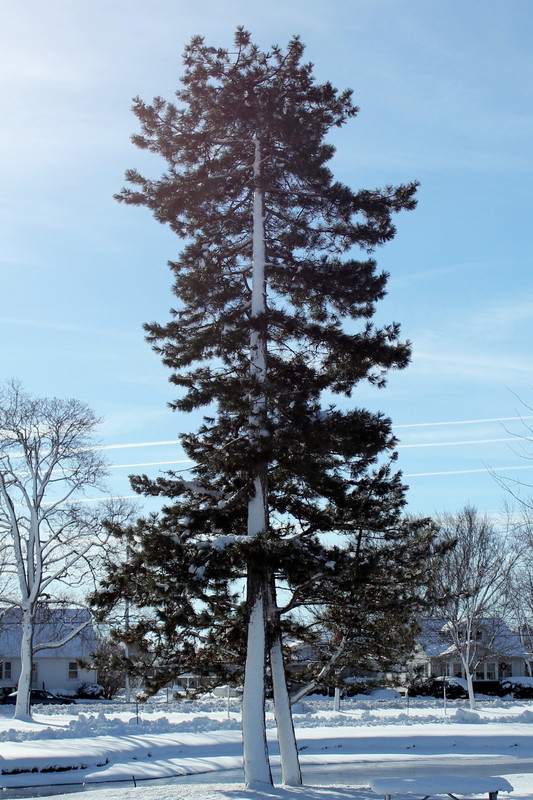
As an afterthought, he waved an arm toward a corner of the lot bordering the road and the edge of the property. “There are some white pines back there.”
An afterthought, but immediately, we saw the lovely long needles, unlike the short ones on the rest of the trees on the lot. These pines looked like large versions of the fake tree we bought when we lived in a tiny house.
But they were just an afterthought.
The needles must fall immediately. I bet those long ones are so prickly.

I stopped to touch the needles of the Balsam, circled back to see what the Fraser had to offer. “It’s like pit bull fur,” I said. “Short and stiff.”
Then my husband admitted what we’d both been thinking. “I kind of liked one. One of the white pines.”
I let my fingers drop from the dense needles of the best tree on the lot. We wove our way to the corner where six white pines with bushy needles insulated the rest of the lot from the brunt of the traffic.
Just six trees among one hundred others.
The long needles were soft, not aggressive, and the sides full and lush. After circling and falling in love, we admitted to the attendant that we wanted not the Cadillac, not the standard choice, but a white pine.
He warned us heavy ornaments would be problematic.
It’s okay. We’ll hang them somewhere else.
And then, as much of an afterthought as pointing out these trees in the first place, he told us white pines are the traditional Christmas tree.
That’s perfect. I like traditional. How much do we owe you?
Another ten dollars less than the standard trees.

Every year, as a child, when me and my brothers and sister would unpack our ornaments and Christmas stockings, the decorations would smell like Christmas. Fresh but almost fruity, I never understood where the scent came from or how it stuck, year after year.
At thirty-three, I’ve learned the answer. It comes from the Christmas tree. Though we have yet to decorate our white pine this year, it’s flung the bright, pine and cherry aroma throughout our first floor, taking care of the invisible decorations, trusting that we’ll get to the lights and glitter eventually.

Like the scent sets the tone for the season in the house, I want the experience of shopping for this tree to set the tone for my mindset this season.
I want to internalize the truth that I really don’t need the luxurious, expensive best simply because that’s what the world tells me I should want.
I want to open my eyes and really see what’s beautiful in this world, though perhaps undervalued by the masses.
I want to raise my voice to claim it as my own.
When I’m warned off because maybe the world’s idea of a fun time won’t go with my choices, I want to insist.
You see, I’ve chosen. I’ve chosen Jesus, and He is all I need.
He is strong enough to hold not only me, but the weight of the world, the weight of eternity.
The best isn’t always on display front and center. Many would sweep Jesus off into a corner of their celebrations, if they acknowledge Him at all. And even God chose not to send Jesus into a palace--front and center in the way humans might expect. He sent Jesus instead to a manger.
Sometimes, the best is off in a corner, emanating soft scents, beckoning those looking for more to seek, come, and find.
I want to open my eyes and really see what’s beautiful, though perhaps undervalued by the masses via @novelwritergirl
November 29, 2016
Waiting Awake: Guest Post on Creative and Free

A few months ago, I volunteered to be part of the launch team for Come, Lord Jesus, an Advent devotional by Kris Camealy. One of the perks? I did get a free copy to read. But also, I got to spend time thinking about what it really means to wait with and for Jesus.
Full of hope and thoughtful encouragement, I recommend the book to anyone looking to focus on and grow throughout this Christmas season.
On Sunday, to kick off Advent, I'm honored to have guest posted for the Come, Lord Jesus book club going on over on Christina Hubbard's blog Creative and Free. Here's a glimpse:
____
 “Couldn’t you stay awake for one hour?”
I would’ve shaken the sleepy disciple’s shoulders until he woke up, but I’m not Jesus. Yet even as our Savior, the ultimate example of patience and love, asks Peter this question, his wording is loud with pain. (See Mark 14:37, NET)
Peter, James, and John were supposed to keep watch as Jesus prayed in the hours leading up to His arrest. Instead, seated in the dark garden, they fall asleep not once or twice, but three times.
The next hours and days will be the worst and greatest of the disciples’ lives. This sleepy band of men will be tempted, they will fail, they will grieve, they will huddle together in locked rooms, they will run to the tomb, they will see the risen Savior.
To prepare, a night of watchful prayer would do them good right about now, but they can’t keep their eyes open.
As easy as it is to judge them, in Come, Lord Jesus: The Weight of Waiting, Kris reminds us Jesus has commanded us all to stay awake in no uncertain or abstract terms.
___
What does waiting with Jesus awake look like in our lives today? Join the discussion by following me over to Waiting Awake on Creative and Free.
What are we really waiting for? Not our own dreams come true, but God’s - via @novelwritergirl
This post contains an affiliate link.


