Joshua D. Jones's Blog, page 4
November 27, 2018
Missionaries Contact Dangerous British Islanders
 ROME, 300 AD -
A group of Christian missionaries from the Empire have travelled to the remote British Isles in an effort to spread their Christian faith. As the natives there are well known to be violent and ignorant of outside culture, we cannot speak confidently of their safety at this time.
This group was sent from a church within the Empire in order to ‘Bring Christ and salvation’ to those living on the island of Britannia. But their efforts have not been without criticism from people here in Rome. Maximus, a leading Platonist spokesman, said, ‘These Christians are so eager to impose their beliefs on others. Why not just let the British be? Missionaries? Really! This is the 4th Century for goodness sake!'
 Otho, a spokesman for an Epicurean group, stated, ‘I think this is born of some sort of fanatical Christian arrogance. Why do Latins need to travel up north just to tell the British what to believe? I see this as a subtle form of brown supremacy. If white people want to worship frogs, let them.’
 One person within Caesar’s household, speaking on condition of anonymity, said ‘Frankly, I’m not sure the Britons are intelligent enough to understand Christian theology. It’s by far the most backwater place our Empire has ever encountered. Christians put a lot of emphasis on their book, but these savages aren’t even literate! It’s a foolish endeavour, Christianity will never take hold in a place like Britain.’
 Questions of cultural imposition are being asked here in Rome and some are asking if the Senate should request a military base to by put at Calais to keep fanatical Christian missionaries from travelling again into Britain.
 One former soldier who was once on a surveying mission of southern Briton said ‘These primitives run around naked, painting themselves blue, and throwing rocks at each other. The worship trees and rocks and stuff. I don't mean to sound racist, but these white savages are the dumbest people we've ever encountered. The best things for the British is just to leave them alone. What good could bringing Christianity to them possibly do?’
_______________
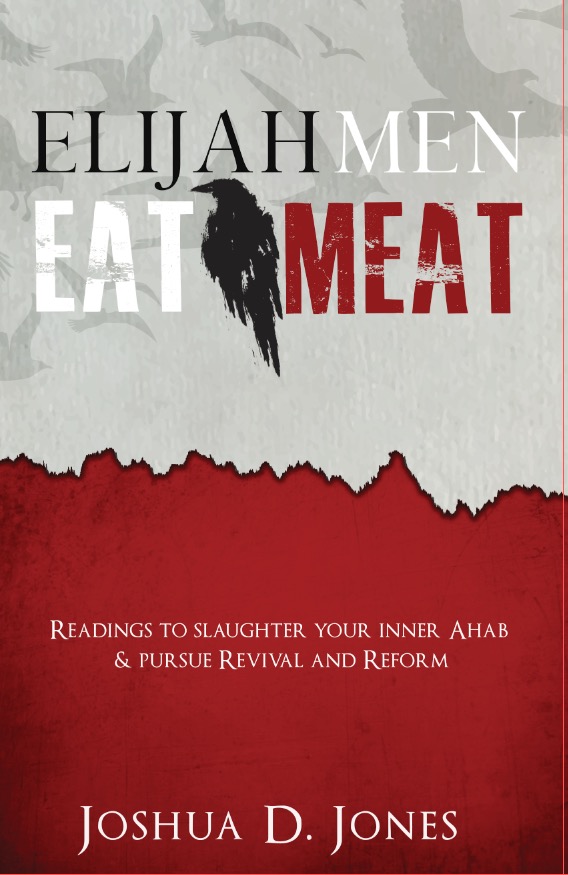 Please check out our book Elijah Men Eat Meat: Readings to slaughter your inner Ahab and pursue Revival and Reform

November 1, 2018
Revenge of the Eunuchs
 ‘The eunuchs threw her down and blood splattered on the wall.’ -2 Kings 9
Jezebel sits as queen bee over the nation of Israel. She births a hoard of idolatries and immoralities as the people blindly slave to increase her power.
That which godly men in a godly age are ashamed to think about, she has now made common practice. She has unleashed a torrent of spiritual sewage over the decades, but today the Almighty is calling her to account.
Elijah had prophesied to Ahab years earlier that dogs would one day devour Queen Jezebel’s flesh. That time has arrived. Yes, God does give the command for some people to die. Yes, this includes women. Before God's judgement, none of us get to claim victimhood status - regardless of gender or race.
Being chewed up by dogs may seem overly violent to us. But it is an appropriately ironic end for the Bible’s most blasphemous bitch. This doom would seem bad in our day. But in the Ancient Near East, it was worse than bad. It was an abomination. Dogs were unclean. They were wild―not pets. It would be akin to being eaten by rats.
In any case, the Queen probably never imagined Elijah's word would come to pass. But every true word of God does. And it is interesting that God’s sovereignty had ordained for eunuchs to fulfil it. It is eunuchs who slaughter this royal harlot. They toss her from a tall tower. One who manipulates and destroys by perverting sex, cannot work her charms over the ones for whom sex has no controlling hold.
Jesus & EunuchsJesus speaks of eunuchs. He had been speaking to his disciples on the subject of marriage and divorce. He affirmed to them that marriage was to be between one man and one woman for one lifetime. The disciples questioned if it was not better―since divorce is forbidden―to remain single. Perhaps the disciples were being a little bit cheeky in asking this. After all, in that conservative, Jewish culture, everyone got married―so Jesus’ reply must have shocked them.
“There are some eunuchs who are born so, there are some who are made eunuchs by others, and there are some eunuchs who have made themselves so―for the sake of the kingdom of heaven. He who can receive this, let him.” -Matt19
Jesus lists three types of eunuchs. There is some debate about what is meant by the first―those eunuchs who are ‘born so’. We understand the second―some male slaves had their parts removed for service by powerful rulers. In neither of these cases is being a eunuch seen as desirable. But then Jesus mentions a third type of eunuch. A voluntary one.
No, it doesn’t involve getting a knife and doing extreme surgery on yourself. Jesus is speaking of those who will live celibate lives for his glory. These are people who will show the world that sex is not their ultimate treasure. This is not the spiritual gift a lot of young people are eager to get. ‘Not all can receive it’ the Master says. But Jesus, as a single man, modelled it himself. The apostle Paul was also unmarried and he seemed thankful for that fact.
Same-Sex Attracted Christians + OthersSome of these may be people who have SSA (same-sex attraction) and no opposite-sex attraction. In popular speak, we would say they are gay without any hints of heterosexual attraction ever sneaking in. They forgo satisfying sexual urges out of obedience to Christ and they do not pursue marriage with someone of the opposite gender. Some of the UK’s most powerful Christian leaders fit this description. But it doesn’t have to be someone with SSA. Some may simply choose―regardless of sexual desires―to lay marriage aside to better serve God.
 'Hey Jim, should our article refer to her
 as a 'victim of misogyny'?
Those who voluntarily embrace celibacy are an offence to Jezebel. Part of her power lies in sexual trickery. But there are those who will not be controlled by that. This manipulative misleads because she teaches people to equate intimacy with sex. But whereas we all need love and intimacy to prosper, we do not need sex to do so.
Those who voluntarily choose to live celibate lives for the sake of Christ, have a special authority to confront the sexually immoral teachings and behaviours of our day. Yes, all of the pure hearted―married or unmarried―will have a degree of authority to confront her. But especially them. They are the ones who throw her down from the tower to the hungry dogs below. Twenty-four hours later, all that will be left of the Queen is little piles of dog poo. A tribute to the wages of the sin and the victory of the eunuchs.
_______________
This has been an extract from our book Elijah Men Eat Meat: Readings to slaughter your inner Ahab and pursue Revival and Reform
October 11, 2018
Chariots of Fire
 ‘Elijah went up to heaven in a whirlwind.’ -2 Kings 2
EVERY LIFE IS FULL of days. But not all days are full of life. Ahab and Elijah both end their earthly lives in a chariot: one is a chariot of blood, the other of fire. It is an ending markedwith shame for the first man. It is a moment of unparalleled glory for the second man. Elijah lived every day with eternity in view. Now he steps into that place where his heart has long resided.
There are three great moments in the life of every Christian. The first is the day of his birth. Over this moment he has no influence and is powerless to stop it. The second great moment is the day he meets his saviour. The third great moment is the day of his death. We may be powerless to stop the fact that we will die, but we are not powerless to influence how much glory will be in that moment.
For the secularist, there is no glory in death. If we take the material view, then the bio-machine that carries you around and gives you the illusions of consciousness, dignity, beauty, and love merely falters. The sad mystery that is organic ageing ends yet another one of those peculiar accidents that manifested themselves upon planet earth. By contrast, the Christian will step into eternity knowing, that both by life and by death, he is the sole property of Jesus Christ. Whether the days of his life have been numerous or few, Christ is there at the end. He has been bought with his Master’s blood and the grave does not hold final claim over him. He dies with confidence―not because he thinks that he has been a great Christian―but because he knows that Jesus is a great Saviour. I do not fully understand how rewards in Eternity work. But Jesus speaks of them. Since eternal life is a gift from Christ, many of us are hesitant to focus on rewards. And yet we must. Scripture demands it. Eternity will be an unspeakable joy for all of God’s hallowed people, but somehow there are things we can do to enrich that.
Jesus commands us to store up riches in heaven. Somehow the sacrifices we make for the name of Christ in this life will greet us a hundred-fold on the other side. Jesus commanded us to use our worldly resources so that eternal friends would be there to greet us in greater number on that final day. Heaven will be great for all. Our Creator will be there and we will see His face. But we are also guaranteed that we will never regret the sacrifices we made here on Earth of in order to give, fast, pray, and witnesses for Christ. Jesus is not only a great Saviour, he is also a great Rewarder.
What's Real?That is why we must consider Eternity’s chariots. They are more real than anything else in our lives. Those eternal hooves are more solid than the paperback or kindle in your hands now.
A solid vision of eternity changes how we live here on earth―giving us far more strength to serve God, bless others, rebuke fake teachers, and glorify God. Let’s illustrate this. Imagine a friend asks you to do a job for eight hours. He says that if you do it, he will pay you £50 ($60) at the end of the day. You agree and get to work. But no so sooner had you started, then people come in and start making fun of you as you work, calling you rude names. A crack appears in the ceiling above you and it starts raining on you. Your tools break, making the job far more difficult than you thought.
What would you do? Most would leave. The £50 would not seem worth the abuse. But imagine you are promised £50 million for that eight hours. At the end of the day, you will have riches like never before. How would you then experience the difficulties? Very differently. You would be whistling as it rained on you. You would cheerfully wave as the people made fun of you. And the blisters you got from your hard work would be incomparable to the riches that await you at the end of the day.
That’s life. That is our reward. Yet we so often forget it―and we are weaker in life’s difficulties as a result.
Live for that final day. Ask God to print a vision of a chariot on your eyes. If you do, you will live differently. Tribulations that overwhelm others, will only feel to you as ‘light affliction’ (Rom 8). Generosity will come easy, because what you give away is merely stuff that fades. You can endure short hunger pains when fasting, because you see the eternal difference it is making. Your ears can endure the mockery of others, because you are daily preparing your ears to hear ‘Well done good and faithful servant’ from their Creator. Do not leave this life timidly. Rage against hell until your final day. Eternity will be your retirement. _______________
This has been an extract from our book Elijah Men Eat Meat: Readings to slaughter your inner Ahab and pursue Revival and Reform October 4, 2018
Loving Your Spouse to Hell
 Photo by Mari LezhavaAHAB IS MOODY AGAIN. Naboth won’t sell the King his vineyard―a vineyard the King wants so he can have a bigger garden. Naboth is a righteous man and he won’t trade his father’s inheritance for money. What does Ahab do? He goes home and sucks his thumb. He didn’t get the vineyard, but he still knows how to whine as much as any crushed grape. Life doesn’t give him what he wants, so he indulges in the sin of pouting―a sin adults, as well as children, can be guilty of.
He tells his wife all about it. She will give him what he wants. She comforts his pouting and leaves his character in poverty. She is from Tyre where Kings are above the law―her daddy always got what he wanted. Now she will get her husband what he wants. All she has to do is throw a righteous man under the bus and her husband will get what he wants. Hey, anything for the marriage.
There have been many innocents down through the ages that have been sacrificed on the altar of love. When this love―marital or otherwise―becomes a god, it will then inevitably become a devil.
Men, don’t marry a woman who cares more about your comfort than your character. If you choose to marry, then marry a woman who kicks your butt if you insist on unrighteous attitudes and actions. Ahab should’ve had a wife that challenged him to be righteous in his dealings with Naboth and not simply help feed his own immaturities. Search for a gal who will help you live godly―not one who will merely help you feel good. (This could be said of close friendships as well as marriage.) Sadly, our King didn’t marry such a woman. He married one who excused his moodiness instead of confronting it.
Julie Andrews or Al Pacino?But there is more instruction here than just who we marry or befriend. We are tempted to let ourselves go and anticipate comfort whenever Jezebel whispers in our ear that she will take care of us. But ultimately, she doesn’t take care of us. At least not in the Julie Andrews sense of the phrase. If anything, she means it in more of an Al Pacino fashion. The bread and stolen waters she feeds us initially taste sweet, but they are poison. The whispers of the witch may warm our wounded ego, but it is only to bring about our own demise. She sings a lullaby to us while she prepares her cursed knife.
Always look out for self-pity. It makes us particularly susceptible to the manipulation of sin. It speaks to our ego: ‘You deserve better than this’, ‘God wouldn’t allow you to go through this pain’, ‘You deserve better than how your spouse treats you’, ‘You should be getting more recognition for your hard work and giftedness’. Self-pity whispers to us about how unfair our life circumstances are until we repeat these phrases in agreement. Once it convinces us that we are not getting what we deserve―once we have fully adopted the victim mentality that it lulls us into―then it presents a way of escape. Temptation is most effective when it presents itself as a form of relief.
In contrast to self-pity, God calls his men to a life of thanksgiving and repentance. Men who live this way are constantly amazed at how much better God is being to them then they deserve. They are aware of their daily shortcomings and sins. They confess them to God and thank Him for the gift of forgiveness. They thank God for their daily food and mean it.
They do not complain about not having the trendiest of shoes. They are too busy thanking God for the gift of two feet. Jezebel wants them to believe they deserve far better. But they refuse this attitude. Instead, they realise that God treats them with far more kindness than they have ever come close to meriting on their own. Every day is a gift. Even in life’s hard season―and we all have valleys of pain―they can give thanks, for they do not walk those valleys alone.
We all need comfort at times. But true disciples go to God for their rest and refuse the fake medications of sinful comforts. These disciples attune their ears to God’s healing voice and shut out worldly whispers by refusing self-pity. Their aim is not to nurture wounded pride. It’s to kill it. _______________
This has been an extract from our book Elijah Men Eat Meat: Readings to slaughter your inner Ahab and pursue Revival and Reform
October 2, 2018
A God who Keeps us on our Toes
 Photo by Nathaniel TettehMuch has been made of the divine whisper that Elijah hears on Horeb and not all of it is fit for consumption. Some commentators get mindlessly mystical over this.
An earthquake, a wind, and a fire all come upon the mountain. But God speaks in none of them. Finally, God speaks to Elijah in the form of a whisper. He asks what he is doing there and then sends him back up to Israel with further instructions.
Those who run meditation retreat centres tend to jump all over this one. See, God isn’t in the big, loud, and dramatic elements of life. He’s in the place of silence and solitude. Now, it is true that God often speaks to us in the quiet. It is also the experience of many Christians that it is healthy for us to regularly step away from our busy routines, calm ourselves, and be alone with God.
But there is a large leap we must take from saying that God can speak in the whisper to saying that God always speaks in the whisper or even that silent solitude is His preferred method of speaking. There exists, in our strange world of Churchianity, certain contemplative Pharisees who despise the big and the loud simply because it is big and loud and who take great pride in how many hours they can be silently aloof. Now as an introvert myself, I get this. I welcome quiet times alone. In fact, I thrive on them. But is this always the place where God shows up? Does He never show up in crowds or in relationships with other humans? Is He never noisy?
The episode on Horeb is not there to teach us that God always speaks in the whisper. It teaches us that God often speaks in ways that we do not expect. In the chapter before, God showed up in the fire. When Elijah leaves this life, it will not be a whisper that takes him up to heaven, but a whirlwind. When God confirms the work of His Son on the cross, He doesn’t send down a whisper, He sends anearthquake. At Pentecost, God births the church in wind and flame. God’s character is steadfast. But when it comes to His methods, we should be alert as we don’t know how He is going to move.
This is important for us to keep in mind both for our personal lives and for the church. When we pray for reform, we are praying for specific changes that we see which need addressing in the church. We may rightfully have a specific vision of what that change will look like. We know what Scripture says and we see where we have erred as a people.
But when we pray for revival as well, we are praying for a fresh injection of spiritual vitality into our lethargic souls. And God tends to answer those prayers in ways we do not always expect. Jesus said ‘the wind blows where it will and we don’t know where it comes from or where it is going. So are those led by the Spirit.’ The Ghost tends to keep us on our toes.
When a fresh awakening comes to a spiritually sleepy nation, it may come through a church, a denomination, a minister, or a style of worship that is not our favourite. Sometimes grace offends. God may show up in a way that is as far from our expectations as a whisper is from an earthquake.
_______________
This has been an extract from our book Elijah Men Eat Meat: Readings to slaughter your inner Ahab and pursue Revival and Reform
September 26, 2018
A Depressed and Lonely Christian
 ‘It is enough; now, O Lord, take away my life.’ -1Kg 19
Elijah is depressed. At the very least, he is in a funk to the point of no longer wanting to be alive.
Like a lot of mental health sufferers, it seems so illogical to outsiders: didn’t Elijah just have a major victory? Doesn’t he have a lot to be thankful for? Why isn’t he happy? Sometimes our internal pains make sense. Sometimes they do not.
We find Elijah under the tree and he is so disillusioned that he wants to die. Many of us have been there at least once in life―maybe twice. Maybe more. Few things wound a man like disillusionment even though we may mentally acknowledge that the removal of our illusions is good for us.
Our Long SaturdaysI write this on the Saturday before Easter. Some have called it ‘Long Saturday’ or ‘Silent Saturday’. It is the Saturday when the disciples were hurt and confused. The circumstantial drama of the crucifixion was over. The joy of Easter had not yet begun. The wound had been delivered. Now they were processing their pain.
Disillusionment is a particular type of mental suffering. It is the effect of unmet expectations and disappointments amplified. Sometimes disillusionment is in the form of circumstances: the ideal job you wanted is not what you thought it would be. Sometimes it is in the quality of our churches: the people and leadership have a far more toxic culture than you ever anticipated. And other times it is in a relationship: a close family member or friend is not there for you in the way that they promised they would be. They may be suddenly gone. Or, you may realise the relationship was not at all what you thought it was. That is hard.
We men fall to pieces so quietly at times. We hurt―but no one knows or understands how. At times, God allows his men to undergo this baptism of darkness. A minister of a previous generation once said that before God can use a man mightily, he must first wound him mightily. Perhaps. Sadly, Elijah’s loner ways have caught up with him, and there is no one around to encourage or comfort him. He goes through this valley with no human companionship.

This loneliness seems to be as much a dynamic in Elijah’s breakdown as the disillusionment. Elijah tells God twice that ‘I alone am left’. That is not quite true of course. But it is how we feel at times. Loneliness is a cancer. It has destroyed far more Christians than homosexuality ever will. This spectre sneaks up on you and drops a surprise kiss on your soul like a fart from hell. It festers. Pastors suffer more than most―often unconsciously so. Spiritual leadership on that level is isolating, especially when most of the people you serve don’t understand what your job actually entails. Many come to you with their problems, but who do you go to with yours?
In this book, we focus a lot on pornography and LGBT ideology. We haven’t said much about the adultery of pastors even though that has been hugely devastating to many. There are a couple of reasons for that. The first is that there are currently no high-profile religious leaders writing books and giving talks about how it is morally acceptable for a pastor to commit adultery. We are not being asked to affirm them in their transgression. We all know it is wrong, even though it happens. If a pastor is found to be having an affair, he is removed. (Unless he has an affair with another man. Then he is applauded for coming out―depending on his denomination.)
Lonely AffairsPastors do not have affairs because they are encouraged to by fake teaching. They usually do not even have them out of lust―most ministers don’t have that level of energy! The majority of pastors who have had affairs have done so because they are lonely. They have a lack of healthy friendships, or an unhealthy marriage, or both. This is true of many Christian men, but especially pastors. For such a man, the affair is not the primary problem. It is the fake medication for the primary problem. Always encourage your pastor to take time away from ‘church work’ to invest in healthy relationships where he can be poured into. Your pastor probably pours out far more to you and your congregation than he gets poured into.
The author of 1 Kings does not give us a full report on how Elijah slipped into this unfortunate state. After all, he had just performed a mighty miracle and won a decisive victory over the false religious teachers. Many of his countrymen turned to God as a result. Isn’t the success of revival supposed to make you feel better? He now has fans and a huge social media following―how could he be lonely?
If only.
But in spite his victory, this is where we find Elijah. Everything was building towards the confrontation at Mt. Carmel. And now it is over. It is a bit like how many people experience the intense build up to Christmas, only to feel empty once the celebrations are finished. Now Elijah is left wondering if his greatest moment is past. What else is on life’s radar? What do we do when the glory is gone and we are left with nothing but good memories? How long will this darkness last? What is there to live for?
It is impossible to see Easter morning when you are in Silent Saturday―but it is coming. God is now doing his silent work in the confusion and the pain. You are treading paths that God’s men have plodded along for centuries. Keep being faithful. Be obedient to what God has given you to do. Invest in your relationship with Him and in healthy, honest relationships with brothers and sisters. God’s grace often comes through letting other saints speak to us in our vulnerability.
We may think our story in God has tragically ended. In reality, He’s merely preparing us for the next chapter._______________
For more spiritual meat from the life of Elijah, please check out our book Elijah Men Eat Meat: Readings to slaughter your inner Ahab and pursue Revival and Reform
July 26, 2018
Multi-Coloured Saruman Sings Today
 'I preferred white.'
GET YOUR GEEK ON. It’s time to flaunt some Hobbit privilege.
Long before Hogwarts was the centre of modern wizardry, there was the fortress of Isengard. This was where those who were part of the high and ancient Council of Wizards met to discuss matters pertaining to the Wise.
The head of this order was Saruman the White.
But something happened to Saruman. Pride happened. He began to bask in his own sophistication and he ended up adopting a global agenda to advance his new cause.
Saruman became a freedom fighter. Which is to say, he fought against freedom.
But, as always happens when one has an ideology that one wants the world to embrace, something gets in the way. People. For some reason, not everyone appreciated Saruman’s sophistication to the degree which he assumed they should. And this brought him into conflict.
Gandalf was the first to spot the change of Saruman. It was to Gandalf that he first revealed that he was now self-identifying as Saruman of Many Colours―a change he felt was more in keeping with his high education and new insights. He points out that white light can be broken into a rainbow of colours with a prism.
When Gandalf tells Saruman that his choice to break something ancient is less than wise, Saruman silences Gandalf by exiling him to the top of Orthanc, the tower at the centre of Isengard.
Truth tellers are often exiled from centres of influence.
In a later encounter, we get real insight into how this proud and colourful wizard was able to influence so many―and how this power was broken. It’s in the second book of the LOTR series and the chapter is entitled ‘The Voice of Saruman’.
In this chapter, things aren’t going well for Saruman. His globalist goals have been dashed upon the rocks of his own foolishness. There has been a patriotic revival in nearby Rohan―a country that he had once kept under control by an ideological spin-master and adviser to the king, Grima Wormtongue. But now Rohan has an awakened leader in the person of the old but powerful figure of King Théoden who won't submit to the demands of Isengard anymore.
In addition, the forest had its own revival. The Ents (tree shepherds) who had long been mistreated by the proud wizard, marched on Isengard. They killed orcs and wrecked the place worse then a drunken stag-do in a Martha Stuart showroom. In short, Saruman if forced to feast upon the banquet of his consequences. But he is not without some power yet.
Amidst this rat's nest of wreckage Gandalf, Théoden, and their friends approach Orthanc, the impenetrable tower that Saruman is hiding in. Gimli the dwarf remarks that he wants to see if Gandalf and Saruman look alike. To this Gandalf replies:
And how will you learn that Master Dwarf? Saruman could look like me in your eyes, if it suited his purpose with you. And are you wise enough to detect all his counterfeits? Beware of his voice!
Beware Spiritual CounterfeitsAs Christians we're given a similar admonition in Scripture when it comes to counterfeits. We are warned by Jesus to beware of false prophets that come in sheep clothing (Mat 7). We are told that by the apostle Paul that Satan often masquerades as an angel of light (2 Cor. 11). John sees a dragon in his Apocalypse that deceives nations by having the appearance of a lamb.
The warning couldn’t be clearer: Evil will often infiltrate our lives and our world by looking like Goodness, Wisdom, and Virtue. Just because news programs, cultural centres of influence, and sophisticated sounding religious leaders praise something does not mean that behind its attractive façade is anything praiseworthy.
PrideOur attempt to deconstruct the Christian faith and keep it attractive to the cool kids is a reform is doomed by pride to Sarumanism.
And that’s what often gets overlooked: the role that pride plays in all of this. Pride is not good―regardless of what you may have heard to the contrary. We like to think of ourselves as clever and sophisticated. Ideas, even if they are ungodly ideas, are easily accepted by us if they are spun using sophisticated or moral terminology. The horrors of the Communist gulags were justified because they were said to be done for the good of the proletariat. The killing fields of Cambodia were the outworking of fine sounding ideas picked up from the top Universities of Europe. The fruit of the tree always looks good for wisdom.
Can you hear the voice of Saruman at work today? Persuasiveness is a priceless gift and it's not always the pure in heart who get it. Here's how Tolkien describes it when the voice speaks from the tower to those gathered around it:
All that the voice said seemed wise and reasonable, and desire awoke in them by swift agreement to seem wise themselves. When others spoke they seemed harsh and uncouth by contrast; and if they gainsaid the voice, anger was kindled in the hearts of those under the spell.
 Like Elijah, Gimli has both
 epic beard and epic boldness.Are there counterfeit ideas of goodness flowing through our church or the wider society of which we are a part? Are there ideas that cause those who parrot them to feel sophisticated? Ideas that make those who hold them angry when they hear an opposing point of view?
Deceptive words have hooks. And we're far more inclined to bite upon the bait than we like to admit.
Many who were gathered around Gandalf began to fall under the spell of this voice. But it was the least sophisticated member of the whole party, Gimli the dwarf, who broke the enchanted silence. Gimli is a rough figure with beer stained clothes and knuckles that are always a post-fight shade of plum. It's he that calls the Voice’s BS:
‘The words of this wizard stand on their heads. In the language of Orthanc help means ruin, and saving means slaying!’
In Jezebellic rage at Gimli’s audacity to challenge him, Saruman shouts but then quickly regains his composure. He continues trying to deceive Gandalf and company―who obviously have the upper hand.
Then, it is King Théoden’s turn. His country had fallen into disarray by listening to this Voice before, and now he will not listen to it again. He will not see his once great country fall into further ruin to the sound this fine sounding music.
Théoden shouts: ‘You are a liar, Saruman, and a corrupter of men’s hearts. You hold out your hand to me, and I perceive only a finger of the claw of Mordor. Cruel and cold!’ But though this boldness serves to weaken the spell, to Théoden’s own captains ‘Harsh as an old raven’s their master’s voice sounded in their ears after the music of Saruman.'
 The revived Theoden fights for his
nation and is bolder
in the book than the film The multi-coloured wizard continues speaking, but finally it is Gandalf that breaks what’s left of the Voice’s power by simply laughing at it. Counterfeit wise men (and women) hate being laughed at.
Laughing at sophisticated sounding lies and liars is sometimes the godliest thing a truth-lover can do.
Saruman, Saruman! Said Gandalf still laughing. Saruman, you missed your path in life. You should have been the king’s jester and earned your bread, and stripes too, by mimicking his counsellors.
Paul says to the hip young congregation at Corinth that ‘My speech and proclamation were not with persuasive words of wisdom but with a powerful demonstration by the Spirit.’ Why? ‘So that your faith might not be based on men’s wisdom but on God’s power.’
We like hip, pretty, and wise sounding words. But the gospel is not always like that. At times it's more like a Tarantino film: unpredictable and dark - yet gloriously gut wrenching and liberating.
May God help us resist the temptation of adopting fine sounding ideas simply so that we can think of ourselves as sophisticated. We are fools for Christ who do not glory in our level of education, coolness, or cleverness. We glory in the Cross. May we speak directly like Gimli, declare boldly like Théoden, and laugh freely like Gandalf in the face of all the savvy Sarumans of our generation._______________
For more on speaking truth to power, check out our book Elijah Men Eat Meat: Readings to slaughter your inner Ahab and pursue Revival and Reform
July 17, 2018
Cannibals Don't Love You
 How we define terms in the 21st CenturyLove is a sweet and simple thing.
 Until you put it into practice.
Everyone agrees that the world would be a jollier place if there were a few more pints of love to go around. But we get ourselves into a muddle on two points.
The first is an actual definition of love. The second is how we get and sustain it.
Love is a popular term. But when you request a definition, you get little more than a ‘Ummmm… you know. Right? It’s like, obvious’ or, if you're speaking to one of the cool kids, 'Love is love'. Yes. And thank you to our government funded educational system for that eloquent response.
How about is love used popular parlance?
You love hip-hop. We love Mexicans. She loves her husband. He loves tacos. She loves ‘50 Shades’. They love the Aryan race. We love God. I love burritos. He loves porn films.
Truth is, what we humans call ‘love’ is anything but clear. Take cannibalism as an example (as you do). Contra the whole Hannibal (Silence of the Lambs) thing, Cannibals don’t just ‘eat the rude’―i.e. their enemies. Rather, cannibalism usually comes into a culture through admiration.
 'I only eat the rude.'
Want to be brave like that warrior you admire? When he dies in battle, eat his flesh. Want to be smart like that genius over there? Eat their brains. Cannibalism usually starts as an act of worship. Want to be pure and wash away your guilt? Eat that innocent child.
Narcissist GenerationCannibalism is the end result of human love divorced from the governance of God. And though we may not actually eat a person’s body, we know over relationships in which one person consumes the life out of another. This relational cannibalism is part and parcel of our narcissism.
Perhaps you’re the cannibal in the relationship. You do not sincerely care for the other person’s flourishing. Rather, the dynamic of the relationship is what you can get from them: their comfort, their sex, their encouragement, their advice. When you don’t need that person, you simply put them on the shelf and ignore. You say you love them. But what you really mean is that you love yourself through them. You consume them to nourish yourself.
Love like that can be 87% hatred and still say ‘I love you’ with emotion. Such human affection is the deadliest thing on the planet. If human hatred has slain its thousands, human love has slain its tens of thousands.
An exaggeration you say?
Think. What has left the biggest wounds in your life? The attacks of an open enemy? Or, has it been the betrayal, the desertion, the lies, or the reckless words of someone you were in a love relationship with? Be it romance, family, or friends, these affections, marred by sin, leave the biggest scars.
But, perhaps more helpful than a mere dictionary definition, Christ gives us a picture and model of love; one that sacrificially seeks the good of the other.
Healthy LoveAnd this leads us to the second issue of where to find healthy love. We learn about love through Christ. The One who laid down His life for his enemies (us). He speaks hard truths which offend―but He does so for our good. He is faithful, not deserting us when our nights get dark.
If we do not know the vertical love of a holy God for an unholy people, then our horizontal, human love will wither into something putrid. Like a fine piece of fruit plucked from the tree and left in the heat, it will eventually perish.
 Love demands sacrificeLove rots the quickest when we make a god out of it. Eros is not a deity that is easily tamed and Philia is one that is can be undependable at the worst of times. We worship human love, we make sacrifices at its altar―and then it devours us.
To paraphrase a Frenchman I think I once read (but whose name I can’t remember), if love is to ever stop being a demon, it must first stop being a god. This what Jesus meant when he said, ‘If anyone comes to me and does not hate father and mother, wife and children, brothers and sisters--yes, even their own life--such a person cannot be my disciple.’ Why does Jesus make a demand that seems so outrageous to our fallen ears? Because He wants to free us. We cannot use human love as a tool to bless others with―and to enjoy ourselves―if we are a slave to it.
The cannibals aren’t entirely misguided. They know they have needs and that virtuous life from the outside must pass into them so that they can be whole. They’ve simply pursued the wrong meal. There is only One whose flesh can be food and whose blood can be drink. And fortunately, He loves us enough to give Himself for us. When we are satisfied in His life-giving love, we have the power to love, and not simply consume, others. And we can do so with a power that will not whither. _______________
For more on Christian love, check out our book Elijah Men Eat Meat: Readings to slaughter your inner Ahab and pursue Revival and Reform
July 3, 2018
A Review: 'Why Can't We Be Friends?' by Aimee Byrd
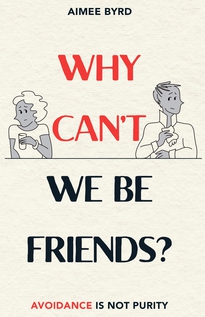 A FEW YEARS BACK, I accidentally wrote a book.
 ‘Stumbled into it’ may be a more accurate phrase. I was in a heated discussion with other church leaders and the topic was ‘Is it appropriate for Christians to engage and meaningful friendship with the other sex within the church?’ I was arguing for the affirmative as some of the most spiritually supportive individuals in my life had been and were women.
But after leaving the discussion, I was hungry for more teaching on the subject.
I went to my source of all knowledge: Amazon. I began looking for books and, to my surprise, I found just about nothing on the subject from a Christian perspective. I found a couple of secular sources, but that’s all I came up with. I figured this was a topic many other Christians had probably wondered about, so I set myself to doing what I typically do when even slightly provoked on any subject: I was going to write a blog post.
I began outlining my thoughts and soon realised that I had enough material to do a blog series. I wanted to address the issue from the standpoint of Biblical exegesis, a survey of church history, and my own experience… and I was just getting started. As I started writing the posts, someone told me I should probably put all the posts together in an e-book format so that I could send the whole thing to people.
Having never done an e-book before, I came across a program on Amazon that allows one to put out e-books through their Kindle service. After beginning to do this I found out that I could also print that same e-book in a paperback format. As I finished writing and was getting ready to self-publish, I also discovered some material on this subject written by Catholics and Progressives. Some of this material was helpful―especially pastorally. But I still found nothing from my classically Evangelical standpoint.
That’s how the material that I meant to be a series of blogs turned out to be my first book, ‘Forbidden Friendships’. I was glad that it met with positive feedback from people. It seemed to help some people be encouraged in their coed friendships and avoid the pitfalls. Even an average book can seem like a good book when there’s nothing else available. It filled a void.
But as I’ve gone on to write other books―ones actually meant to be books―I’ve become more and more aware of the shortcomings of my hastily done monographic debut. I’ve been wishing that a better book, from an Evangelical / Complementarian perspective, was written on it.
Now, my wish has come true.
Aimee Byrd has written an engaging and well researched book on the subject of male-female friendship in the church entitled ‘Why Can't We be Friends?: Avoidance Isn't Purity’. Aimee has done her homework. Anyone wanting to challenge her arguments will have to be well prepared. She wrote the book that I wish I could go back and write.
But I can’t.
Because I’m not as smart as she is.
And because time travel is impossible.
Her book is roughly 200 pages (I’m unsure as I read a Kindle copy). There is much in her work that is not specific just to coed friendships. She spends a lot of time developing a theology of Christian siblinghood―good thoughts for friends of the same as well as the opposite gender. Her theological analysis of what it means for us to be ‘sons of God’ was impressive. She also gives some historical perspective, touching on one of Calvin’s close female friendships (like the good Presbyterian she is).
She challenges what is often referred to as ‘the Billy Graham Rule’, but in a gracious way to him and his ministry. If you have been raised (as I was) with a degree of church gender segregation in the name of purity, or if you are a strong proponent of the Billy Graham rule, then let this book challenge your thinking. If you do believe that men and women (married or single) can engage in deep and meaningful friendship, then this book with help develop your theological understanding of how these things work.
I’m so glad this book is out there in the public sphere. I don’t know how many authors get a chance to say this, but I’ll be recommending her book ahead of my own._______________
Please check out our book Elijah Men Eat Meat: Readings to slaughter your inner Ahab and pursue Revival and Reform June 12, 2018
Undivided: A Review of Vicky Beeching's New Book
 FOR THOSE WHO DON'T know, Vicky Beeching is a former Evangelical worship leader from the UK who came out in 2015 as being gay and in support of 'same-sex marriage'. Those who share her views see her as a reformer within the church. Those who disagree with her views see her as a misleading teacher.
 Her book ‘Undivided’ came out this week.
Because my book review will be mostly from a place of disagreement, I wish to say a sympathetic word to begin with: the poor girl has been through a rough time. She has been in the unfortunate position of carrying a secret and feeling unable to share it―the result was a sickening sense of shame which crippled her. Anyone who cannot read her book and feel some compassion for her is a rock―even if they disagree with what she is trying to argue.
Beeching’s struggle is genuine. As a young person, she had same-sex attraction (SSA) and didn’t feel she could talk to anyone about it. That is tragic regardless of how she now chooses to interpret these events in terms of Christian doctrine.
A Deconversion TaleIn some ways, Beeching’s book is not unique. In the last few years, a sort of cottage industry has been built up on the foundation of quasi-deconversion stories. These tales involve various Christians―usually (former) Evangelicals or Catholics―recounting how they left a historic or orthodox understanding of the Christian faith, for something more in keeping with modern attitudes. Feminism and LGBT world views are often the topic upon which the change is based. It’s not that they don’t identify as Christians anymore. They do. But they renounce certain historic Christian doctrines that many in the church feel are quite central to being a Christian.
Surprised at Trolls?In her book, Beeching expresses shock at the fact she gets a lot of push back for challenging the historic understanding of marriage. In this manner, her book is similar to other deconversion tales and it is an element that puzzles me. Really? What should we expect when we challenge something so central and historically important to people of a faith community? A welcome mat? She mentions all the negative social media comments she gets. To her credit, she doesn’t play the ‘victim card’ to the same degree that some others in her position have―though at times it seems she comes close to doing so.
Beeching makes much of the trolling she has received as if something strange has happened. Beeching’s network is substantial. Her Twitter platform is a substaintial 66k followers, yet even my more modest account of 20k gets plenty of trolls. A few recent comments on my tweets and blog articles include:
‘This is the most simplistic piece of writing I’ve seen in a long time.’‘You’re teachings are dangerous.’[sic]‘You are an out and out misogynist and false witness.’‘When will you ever stop talking crap about things you have absolutely no understanding of?’
But I'm sticking my head out and addressing controversial topics. I expect no different. I'm in no way a victim.
 The difference between a true reformer and a false teacher is a matter of direction: one is taking us towards greater faithfulness to Scripture and the other is taking us further away from it. But both must expect to wade through plenty of reproach in order to get to their destination. Let no one who wants to bring about significant change be shocked to find they must wade through the swamps of toxic opinion.
Your Orientation or Your Teaching?Beeching writes about her coming out, ‘People I’d known my entire life suddenly saw me as different because my orientation did not match theirs.’ But is this really the case with the UK church? Do we reject for teachers for their orientation? Or, because of what they affirm the nature of marriage to be? We have respected leaders such as Sam Allberry and prophetic voices like David Bennett who both experience same-sex attraction. Most believers do not reject others simply for having a different 'orientation'. We reject (or should) public teachers who declare that marriage can be between two people of the same gender.
Her ArgumentsThe book is largely her memoirs. Many of these, the account of her American friend’s attempted suicide in particular, are very emotive. But the book is also peppered with arguments seeking to persuade us of the compatibility of homosexual acts with Christian teaching. She often uses ‘trajectory arguments’―the belief that the church, over time, is progressing in its understanding of what the Bible teaches and what God desires of us.
These are not new, but it’s fair of her to point out that some issues, like slavery, which many people thought were clear, were not so clear upon closer examination (a truth that cuts both ways). If her only point was that we need a bit of hermeneutical humility from time to time, I would ‘amen’ her. But it's not.
Beeching gives many citations (like a good Oxford grad) of Christians in the past who have had different views on issues like slavery and women’s suffrage (Galileo’s name was even invoked). Like most others who have used this line of reasoning, Beeching tries to lead us to the conclusion that we are progressing in our understanding of the Bible and that, given enough time, we too will soon accept ‘gay marriage’ just like most of us oppose slavery and (some) think it’s perfectly fine for women to be ordained ministers. But such arguments are not new and many of us who have heard them before remain unconvinced―both in terms of the idea of ‘progressive understanding’ in general and the comparison between slavery and gay marriage in particular.
There are other arguments she recounts, such as the supposed lack of clarity of the Greek word ‘arsenokoites’ for homosexuality, but there is really nothing new here. She uses an ‘inclusive hermeneutic’ to do an exposition of Acts 10 and 15 (comparing gay identity to circumcision). She writes, ‘Just as the Gentiles could fully join God’s family, now LGBT people could too.’ Just as non-kosher food is now sanctified, now gay sex is ‘clean and holy’.
And perhaps this will disappoint some on both sides of the debate: Beeching gives us nothing new in terms of theological argument. If you have been following the debate of LGBT ideology in the church, then it is only her story, not her arguments, that will be new to you. These arguments have been dealt with in countless academic debates already and found wanting. I respect the honesty of queer theologian Pim Pronk who, after acknowledging various arguments that Beeching attempts, confesses in his book Against Nature?, ‘To sum up: wherever homosexual intercourse is mentioned in Scripture, it is condemned. With reference to it the NT adds no arguments to those of the OT. Rejection is a foregone conclusion.’ Pronk goes on to argue for acceptance of homosexual acts―just not on the basis of the Bible. He makes no pretences of having an Evangelical view of Scripture.
Ex-Gay?About 2/3 through the book the tone shifts and we see a more militant Beeching. Through her memoirs she seemed to be asking for understanding for her journey. But when it comes to the subject of Christians who have left behind them a gay lifestyle, the tone shifts. She seems dismissive of all of those who claim to have had genuine change in their lives―not only in terms in regards to sexual desires―but sexual practice as well.
I think Beeching is smart, so I’m not going to let her off the hook so easy for conflating issues like ‘SSA’, and ‘Ex-Gay’. They are nowhere near the same things. She writes, ‘Conversion therapy, reparative therapy, or even just prayer ministry for people with SSA. The goal was the same; either to change someone’s orientation or to reinforce their need to reject their attractions and stay single.’ Those are two very different things. Implying that conversion therapy is comparable to someone who identifies as a ‘celibate gay Christian’ who denies acting on their sexual desires in order to honour Christ with their bodies is appalling. I may disagree with Beeching on several issues in her book, but this is perhaps the one place I am unable to respect her. She is too smart for this to be a slip of the pen. She is lumping issues together that should be dealt with separately and thoughtfully.
CelibacyEven though the church is filled with countless unwed, celibate, heterosexual Christians, Beeching feels it is not right to call people with SSA to this same standard of celibacy. She responds to this argument in the book saying, ‘If you’re a straight Christian… that still gives you the hope of finding a person of the opposite sex, a life partner, and committing to them. But if a Christian gay person can’t have sex outside of that heterosexual paradigm, there’s no hope for them to have a life partner ever.’
Yes, some heterosexuals may have the hope of getting married and having sex. But some never actually do―even though they badly want to. Some live their lives in self-pity. Some go out and have sex outside of marriage thinking it will satisfy them. Still others, realise that love and intimacy need not be sexual―and go on to find fulfilling spiritual relationships with brothers and sisters in Christ.
Beeching argues forcefully that being gay and called to celibacy is entirely different from being a heterosexual who is unable to find a partner and who needs to ‘control their lusts’. But I found her line of argumentation unconvincing here. (If you wish to follow her logic, you can find these arguments at Kindle location 2966―or about ¾ through the book)
Beeching argues that the call to celibacy is ‘the equivalent of the red tape loaded on the early gentiles―above and beyond what God required and leading to loneliness and isolation rather than abundant life.’ Here I believe Beeching is putting far too much confidence in romantic and sexual relationships as a cure for isolation and loneliness. Sexual love is not the highest form of human love. Jesus, our role model, was celibate and lived a fully human life. Paul was single, and he was thankful for it. One wonders if Beeching is subconsciously more influenced by Freud here than on what the New Testament actually teaches about the celibate life.
We can live without sex. We can’t live with without intimacy. It is fuzzy reasoning that conflates the two.
UndividedOf the title, Undivided, she writes: ‘Being undivided meant accepting both my faith and my sexuality.’
But this raises the all-important question that undergirds so much of the wider discussion: did Christ come to affirm us in our entirety, or did He come to change us and separate us from ourselves?
What are we to make of it when we read that Christ came with a sword that separates ‘spirit and soul asunder’? Or that he holds a winnowing fork with which to ‘separate the wheat from the chaff’? Christ says ‘deny yourself, take up your cross, and follow me’. Don’t we need renounce some parts of ourselves in order to embrace Him? This isn’t about denying our broken condition or hiding the truth of how we feel. It’s about letting Him be our master.
Beeching writes ‘Its about finally feeling comfortable in our own skin.’ But is this really the Gospel? To feel comfortable? Is it to be affirmed just as we are? Or, is it to be transformed into something new? We do not deny the existence of our orientation (in the broadest sense of the term we all have an orientation towards sin), but we do deny that we will make such orientations our master. We cannot serve both God and our sexual desires. We do not keep our sexual desires in secret denial or anxiety. But we do not have to obey them either.
My AppealBeeching, I’ve never met you, but you seem to be a likeable person and we are the same age. As a trans-Atlantic, Earl Grey sipping, theologically minded introvert myself, I would love to meet you some day. I would want to listen―and then probably seek to persuade you as you have sought to persuade so many through your book.
I don’t know if you’ll ever read this review. But, if you do, my thoughts of you centre on what you wrote about yourself in chapter four, that you’re ‘never one to go half measure.’ How true! You've swung from one extreme to the other. You’ve gone from being part of a strict, Pentecostal church environment into the throes of gay activism. Does the idea of being a celibate Christian who is open about her same-sex desires seem too middle of the road for you? May we both embrace the hermeneutical humility you call the church too.
[For those who desire a complimentary memoir to read alongside Beeching’s book, I would recommend that of my friend, David Bennett, who took the opposite journey. He went from living as a gay activist to being, as he describes himself, ‘a gay, celibate Christian’ Evangelist. His book is also on Amazon HERE]
_______________
For more, please check out our book Elijah Men Eat Meat: Readings to slaughter your inner Ahab and pursue Revival and Reform