Joshua D. Jones's Blog, page 3
May 23, 2019
Revelation 11: Apocalyptic Elijah
 REVELATION IS A TREMENDOUS BOOK for adoration.
 The images it gives of the throne of God and the victory of the Lamb over the beast inspires all the children of God to worship. It is a book that enriches the heart even if it puzzles the mind at times. It is a book where poets have an easier time than systematic commentators. For that reason, when we look at the role Elijah plays in this culmination of redemptive history, we must do so humbly. We are looking at a passage where far greater minds than ours have acknowledged uncertainty.
Most commentators have historically agreed that the two witnesses in chapter eleven are Moses and Elijah. They are described using imagery from Zechariah chapter 4―they burn with God’s fire as they draw oil from the olive tree of His word. They speak words like fire to a rebellious world who mock them and they are faithful witnesses even unto the point of death at the hands of the Beast.
We see that the Beast conquers the two preachers. He kills them and the world gets its clubbing clothes and gets sloshed in celebration. That which is rebellious against God is thrilled at the silencing of the church. Over 300 churches a year close in the UK, and many mockers think it is none too soon. In times and places where the church is persecuted more violently, there are parties on the streets as guns sing into the air when those from among their own clan are executed for embracing the gospel in ‘honour killings’. In the 1950s in China, the Maoist revolutionaries happily threw out all missionaries to squash the small, Christian presence in the nation. The Beast is always at war against the bold witness of the Gospel.
But the church has a stubborn way of not staying dead. It falls into the ground, dies, but then shoots back up again. You know, empty tombs and stuff. When the church seems dead, ‘the breath of God came into them, they stood on their feet and fear gripped those who saw them.’ So it has been throughout history. The Bible is the most attacked book in history, yet it is the best seller year after year. In China when Mao’s revolution was over, the church had multiplied itself many times over and there are currently more Evangelicals there than in any country in Europe.
In Zechariah 4 we also read, ‘Not by might, nor by strength, but by my Spirit says the Lord.’ In the last few decades, we have spent millions to try and reach Britain with the Gospel. But in spite of all our best efforts and marketing, we are worse off spiritually, morally, in overall attendance, in the growth of false religion, in the growing persecution of Christians, and in most measurable ways. Many have been labouring hard, but it can feel discouraging when we get a broad view of things―because it seems the Beast is defeating us.
But he cannot. Not ultimately. We have the Breath of God. His Spirit makes us anti-fragile and this is why we’re going to win. It won’t be because we suddenly get multi million-pound budgets nor because a Christian gets to 10 Downing St or the White House. We’ve had all that and it has done next to nothing. We are going to win because a nameless, faceless army of people like you get sick of sin and compromise in the church and the world. They lock themselves in their room to pray until they are clothed with the breath of God to give and share with those God puts within their reach. No man and no method will get the glory.
Yes, there will be identifiable leaders, but the move of God we pray for will be greater than anything we can attribute to a single person. God has repeatedly provided His church with the power they need when things look darkest. And it is that power that we must and shall receive from the Throne to be an Elijahianwitness to our world again._______________________________________________________
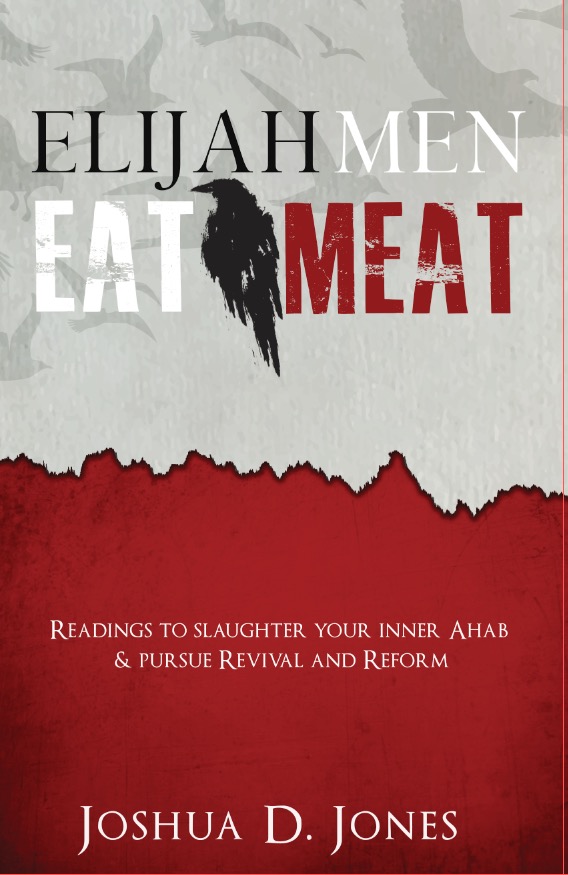 This is an extract from Elijah Men Eat Meat: Readings to slaughter your inner Ahab and pursue Revival and Reform

May 16, 2019
Is the Gospel Inclusive?
 (Photo by Annie Spratt)
INCLUSIVE. IT IS THE ETHICAL WORD of our generation―the virtue by which every other virtue must be measured. Companies, political parties, and even celebrities vie to squeeze this word into their speeches. The search engine giant I use boasts that it is an ‘inclusive place to work’ and is trying to get the world reflect this value as well. Even churches get in on it. On my social media feed now I see things like ‘Open Church Network’ and ‘The Inclusive Church’ making waves. Everyone seemingly wants to be inclusive.
But amidst all this current enthusiasm of inclusivity, we are right to ask: Did John seek to be inclusive? Did Elijah? And, more importantly, is the God that these men point to inclusive? It depends on how we use the term. ‘Inclusive’ is a fuzzy term. The Serpent loves fuzzy words and ideas. They let him say one thing yet mean another. Jezebel delights in fuzzy words because it allows her to say the same thing yet mean it in two different ways, creating room for double standards that most people, at first, assume are completely legitimate. But Elijah Men love dictionaries. Prophets tend to be straight shooters who mean what they say. And if a dictionary records more than one meaning for a word, they will not be shy to state which sense they are utilising. If by inclusive we mean ‘hospitable’, then yes, Jesus was inclusive. We are to welcome people into our churches and homes who are outsiders. We are to give people who are different from us hot cups of coffee, a listening ear, and comfortable chairs to sit in. We should be kind to them whether they are rich or poor. We are to preach, give announcements, and interact using language that is intelligible to outsiders so that our witness can be clear to all. There is a tendency for churches to become inward looking over time. They can become clubs that only care for its own membership rather than a movement that exists to rescue outsiders. We must seek to rescue brown, white and black, male and female, young and old, etc. If by inclusive we mean hospitable, yes, and a thousand times so. But there is another sense in which the gospel is very exclusive. Elijah’s name means ‘Yahweh is God’―as opposed to any others. He sought to bring back Israel to the worship of Yahweh alone and not to include Baal alongside Him. When John introduces Jesus, it is as one who separates ‘the wheat from the chaff’. Jesus himself often spoke of separating people, not bringing them together. He spoke of separating the nations into sheep and goats. He spoke of ten virgins: five who he would leave out as foolish and five whom he would receive as wise. He spoke of branches that did not bear fruit that he would cast into the fire as opposed to branches that did bear fruit―ones that he would keep and prune.There are servants he rewards and servants he casts into outer darkness. He said we must enter through the narrow gate, because many people walk on the broad road to destruction. It is hard to imagine how Jesus could have been any clearer: some will be welcomed into his Kingdom, and some will not be. We read of him excluding as much as he is including. Our greatest priority must be to be among those who are included―and to call others to that path. This is why we need to be clear in our thinking when we speak about preaching ‘an inclusive gospel’ as some do. Jezebel is sly and she knows how to tweak a good word to a perverse end. A truly inclusive gospel, one that is pleasing to God, says anyone is welcome to repent and find forgiveness in Jesus and share communion at our table. Race, economic status, gender―none of this keeps you out of God’s Kingdom. Only unrepented of sin keeps us out and it is sin that Jesus has come to remove. Everything can be cleansed and washed away.
Are you a practisingpaedophile? A Nazi? A gossip? A Marxist? A violent person? If you renounce the practice of your evil deeds and cast yourself on the mercy of the Cross you can be pure as snow―come and eat with us. Come liars, come thieves, come adulterers, come pornographers, come corrupt bank CEOs! Come all you practising homosexuals, you fornicators, you slanderers, you whores, you judgmental moralists, you abusers, and all you dearly loved bastards. Come to the table of the Lord. Leave your sin and be transformed. Christ’s inclusivity takes anyone from any background and transforms them into a child of God. He can take any unholy man and make him holy. This gospel affirms that God loves you in spite of who you are. Our sins have damned us. Every one of us is excluded from the start. But Jesus has paid the cost of his blood to lift us out of our bed of consequences. He was excluded in death so that we could be included in Life. He will exclude the proud who believe that they aren’t sinners in need of a Saviour. But he will include all those who come to him in humility and repentance―those he will never reject.
Jezebel’s inclusivity leaves you without the repentance and transformation. It tells you that God doesn’t mind your sin. It affirms you as a sinner and leaves you the way you are. There is no offence in the Jezebel message―no blow to the Adamic ego. It does not call for the death of the inner rebellion that we all instinctively have towards God and his Law. We must expose as fake any gospel that includes spiritually dead people without also transforming them. We are in the business of telling goats how they can be born again as sheep―not simply telling goats they are fine just as they are._______________
This is an extract from Elijah Men Eat Meat: Readings to slaughter your inner Ahab and pursue Revival and Reform April 4, 2019
Does Jesus Smash the Hierarchies?
 Jeffrey Hoffman offered up a challenge recently on something that I had said on my FB page. It seemed that his argument was based on the notion that the Christian message is essentially anti-hierarchical and he referenced Jesus' use of Isaiah in his Luke four Nazareth sermon to help make his point.
 There's a lot to be unpacked in Jeffery's argument (assuming I've understood him correctly), so instead of responding to him on FB, I thought I'd break open a few of the books on my shelves, do some homework, and attempt to give him a more worth reply.
Warning: this post be longer and more academic in tone than much of the shorter slapstick you normally find flying around Sanity's Cove.
Anti-Hierarchical?
When we ask the general question, ‘Is Christianity anti-hierarchical?’, we have a multitude of opinions that present themselves.
Marcia Bailey, believes that Christians should oppose the existence human hierarchies, stating that, ‘Hierarchy, with structures that prescribe, restricts the movement of power and Spirit… Dismantling hierarchy opens up opportunities for God’s Spirit to work within and among us.’ Ashley Purpura writes ‘For some, the term “hierarchy” has developed negative associations… some scholars of Christianity reject the term saying it is no longer reflective of an authentic Christian ideal.’
But not everyone agrees that the Christian faith is necessarily antagonistic towards human hierarchies. Croix, a Marxist author and class historian, takes the opposite view in his landmark The Class Struggle in the Ancient Greek World, critically stating that ‘Jesus accepted slavery as a fact of his environment’. He faults Christianity for leaving class structures fully in place and that, if there is an egalitarianism within Christianity, it ‘exists “in the sight of God” and has no relation whatever to temporal affairs.’ Catholic author and professor Prior lands not too far from Croix, writing, ‘Jesus was a great prophet, but a social reformer of very modest achievement.’
While Croix critiques Christianity for, what he sees as, failing to dismantle human hierarchy, Governor John Winthrop, in his well-known sermon in the early Seventeenth Century, ‘A Model of Christian Charity’, said that ‘God Almighty in His most holy and wise providence, hath so disposed of the condition of mankind, as in all times some must be rich, some poor, some high and eminent in power and dignity; others mean and in submission.’ He argued that social hierarchies were created for the glory of God and the good of mankind.
Purpura believes the human hierarchies can glorify God. She points out that ‘Dionysius the Aeropagite is generally recognized as having first coined the term “hierarchy” and subsequently developed it in a Christian context.’ Though human hierarchies existed long before Christ, Purpura believes the Christian theology helps demonstrate that ‘power’s authoritative execution and legitimate presence should reveal divine likeness.’ She is not blind to the abuse that can happen within a human hierarchy, but argues that this happens ‘if it is held in an unchecked position that can be dangerous to its subordinates without recourse to means of mediation.’ In other words, it’s the abuse of hierarchy, not hierarchy itself, that’s to be repented of.
Luke Four
The Spirit of the Lord is on me, because he has anointed meto proclaim good news to the poor. He has sent me to proclaim freedom for the prisonerand recovery of sight for the blind, to set the oppressed free, to proclaim the year of the Lord’s favour. -Luke 4
Jeff cited Jesus’ sermon in Luke four (and his use of Isaiah’s quote) as proof that the gospel is anti-hierarchical. SO that’s what I want to look at closely. Apologies if the tone of all this is more drawn out and academic than my useful stuff.
To be sure, some modern scholars would probably agree with Jeff and see Jesus’ initial sermon in Nazareth as anti-hierarchical. Yoder argues for a material and socio-political reading of this passage. Referring to Jesus’ quotation from Isaiah about ‘the year of the Lord’s favour’ he argues that ‘for the listeners of Jesus it most likely meant… the Jubilee year, the time when the inequities accumulated through the years are to be crossed off and all God’s people will begin again at the same point.’
Yoder seems to be interpreting this passage to go beyond merely eliminating hunger for the poor and towards an actual socio-political equality as symbolised by the Jubilee year. He believes that the Nazarene audience would have understood Jesus to be delivering an egalitarian call to the effect of ‘there is to come into Palestine the equalising impact of the sabbath year.’
Rodriguez would also concur with Jeff about the sermon’s intent. He writes, ‘On that occasion, before an exclusively Jewish audience, he proclaimed a message of integral liberation with clear social and political consequences.’ He believes that the location of this sermon was important, noting that Galilee was an area looked down upon in terms of religious purity. He writes that it was ‘an area populated by a mixed race that the pious of Jerusalem despised…it was precisely in a synagogue in marginal Galilee where Jesus expounded his messianic program.’ In order to launch a movement of social revolution, he argues, Jesus gives his initial address among those who would benefit most from it.
Prior points out that, ‘If we were guided only by Greek usage, the word ptōchos, which we translate ‘poor’ (pauperes), should be translated by ‘destitute’, or ‘beggar’.’ In other words, wider, Greek usage alone might lead us to think that Jesus is referring, not just to the poor, but to the poorest of the poor. Gustavo Gutiérrez, a central father of the Liberation Theology movement, understood that this is what Jesus meant by the word. He writes that ‘The term poverty designates in the first place material poverty, that is, the lack of economic goods necessary for human life worthy of the name.’ If we hold to that understanding of the term, we might sympathise with Jeff’s interpretation that this is evidence of Jesus’ call to social and material egalitariansim.
Historical InterpretationHistorically, there has been much, but not uniform, agreement that the reference to ‘the year of the Lord’s favour’ is necessarily about the year of Jubilee as prescribed in the Pentateuch―one of the foundational understandings important to establishing Yoder’s interpretation of the text as a call for socio-economic egalitarianism. John Wesley believed it was ‘Plainly alluding to the year of jubilee, when all, both debtors and servants, were set free.’ The German Reformer Johannes Brez agrees that ‘The prophet alludes to the year of Jubilee, of which mention is made by Moses.’
Calvin, however, seems non-committal. Of the idea that it refers to the Jubilee he merely comments that ‘I have no objection to that view. But it is proper to observe that…[He] makes the time of redemption to depend on the purpose, or good pleasure, of God.’ Cyril of Alexandria, a 5th Century Church Father, was one who rather understood that ‘the acceptable year of the Lord’s Favour’ to be so called because it represents our new relationship before God.’ He writes that ‘It signifies the joyful tidings of his own advent…For that was the acceptable year in which Christ was crucified on our behalf, because we were then made acceptable to God the Father.’
It is worth noting, even when the connection with Jubilee has been made, that it has not always been understood that this meant that Christ’s sermon was about a mission of socio-economic levelling. Brenz (cited above) who did see Luke 4.19 (and therefore Isaiah 61.2) as a reference to Jubilee goes on to write ‘as to the external observation of the year of Jubilee according to the law of Moses, we have nothing to do with that, but only with the matter which is signified by the year of Jubilee. This “spiritual” Jubilee began first when Christ started preaching the gospel and continued not for a year but forever.’
Brenz’s position seems to be that the Mosaic Jubilee as something akin to a type, foreshadowing the true Jubilee that came into the world through Christ. Wesley, who also saw in Luke four a reference to the historical Jubilee, like Brenz also understood it to have spiritual fulfilment in Christ. He writes, ‘in comparing the spiritual state of men to the miserable state of those captives, who are not only cast into prison, but, like Zedekiah, had their eyes put out, and were laden and bruised with chains of iron.’
And it is not just Brenz and Wesley. Calvin also sees these descriptions of oppression, blindness, and poverty to refer to all those outside of Christ. But inside of Christ he comments that ‘God cheers us by his life-giving light, to rescue us from the deep abyss of death, and to restore us…we cannot enjoy those benefits which Christ bestows, in any other manner, then by being humbled under a deep conviction of our distresses, and by coming, as hungry souls.’
Such thinking has broad support in the ancient church’s hermeneutical history. Origen, who would’ve been well aware of the common Greek usage of ptōchos, believed that ‘the poor’ that Jesus refers to in Luke four were the spiritual poor, namely the Gentiles. He writes that this term stands, ‘for the Gentiles, for they are indeed poor. They possess nothing at all: neither God, nor the Law, nor the prophets, nor justice and the rest of the virtues.’ Perhaps unsurprisingly, Cyril takes a near identical view of what Jesus means by ‘the poor’ also seeing in it a reference to those outside of Israel. He writes that Jesus ‘preached the kingdom of heaven to the heathen. They were poor, having nothing… he preached it to those who were without spiritual riches.’
Basil also implies a spiritual reading when he comments on another description of those to whom Jesus proclaims as the beneficiaries of his ministry, commenting, ‘He came to heal the broken hearted, i.e. to afford a remedy to those that have their heart broken by Satan through sin, because beyond all other things sin lays prostrate the human hears.’ John Chrysostom, who spoke about and worked on issues of material poverty in and around Constantinople, also sees the description of the releasing of captives as spiritual deliverance in Christ writing, ‘the worst captivity is that of the mind, of which he here speaks. For sin exercises the worst of all tyrannies, commanding to do evil, and destroying them that obey it. From this prison of the soul Christ lets us free.’
Historically, though many teachers have seen an allusion to Jubilee, there seems to be little evidence to support the interpretation that Jeff suggests and that some Egalitarian and all Liberation Theologians propose. There seems little historic affirmation to support the interpretation of Jesus’ sermon in Nazareth to be a proclamation that he was going to immediately work to dismantle socio-political or economic hierarchies.
Also, as I know this blog post is getting long, it would seem that if we look at Jesus’ sermon as a whole and the people’s violent reaction to it, we are left wondering how that could be consistent with and anti-hierarchical reading, unless the social hierarchy in question is religious racial purity. His audience gets mad at Jesus that for announcing that he will bring blessing to the Romans―that class of people that is richer and more politically powerful than they are. Apparently Jesus wasn’t going to topple those who were above these poor Nazarene Jews on the political, economic hierarchy; he was going to bless them. That idea infuriated their sense of justice and they tried to kill him for it.
There’s more to say, but this is long enough. My understanding of the gospel is that it transcends social hierarchies, it doesn't smash them. But developing that further would take more space than my blog or time will allow for right now.
Thoughts? _______________
For more, please check out our book Elijah Men Eat Meat: Readings to slaughter your inner Ahab and pursue Revival and Reform March 19, 2019
Natalie Collins and A Feminist View of History

Recently Natalie Collins, a feminist tweeter (@God_Loves_Women) and activist, went on the Unbelievable podcast to discuss and debate the issues surrounding gender roles in Christianity. (Video HERE) Representing the traditional Christian view was Pastor Phil Moore of Everyday Church, London.
SummaryIt was a painful discussion. Yes, they managed to be polite in the way British Christians do when they disagree strongly. They were frenemies. Natalie also represented her ideology better than her debate opponent (IMHO) who made a number of errors throughout the debate. Phil started well by calling out Natalie for implying that God was unfair for not making men able to get pregnant. But sadly, he tried to be overly kind and it went largely downhill form there. The first half hour of listening passed like a kidney stone. The second was worse.
In anticipation of the firestorm of commentary and reprobation that will probably be released by the writing of this article, I will begin by saying that in a very real way my respect for Natalie has increased. Many theological feminists and LGBT activists that I’ve encountered recently seem to flee public debate. We must give credit where credit is due and that she was willing to debate her ideology publicly should cause those of us who disagree with her position to extend a measure of respect. She’s ballsy.
Having given her credit for courage and articulating her case well, I now explain why I disagree with her position. It is no minor disagreement. It’s not that what she said on the podcast was unusual. Hardly. What she said was only too typical of feminist talking points. But is worth looking at and seeing why it such a monstrosity.
When Rev. Moore asked what she does with passages like 1 Peter 3 (49m20s of the video), she responded,
‘We have to accept that the Bible writers were extremely patriarchal. Women didn’t have rights, women couldn’t vote in their context.’
This vacuous argument raises two issues that seem to be part and parcel of feminist theologies. The first is a dysfunctional hermeneutic. The second is an inexcusable view of human history.
HermeneuticsIf we believe that some parts of scripture are insufficient, because the human authors are constrained by their culture (often referred to as a ‘hermeneutic of suspicion’), then where do we draw the line? How do we know what parts were written under the inspiration of the Spirit and which parts were merely a flawed human expression of cultural values? If our culture is different from that of ancient Rome’s, what standard exists to know if those differences are a progression or a regression? Who’s to say if we’re getting better or worse. If the ideal is feminism, presumably we could say we’re getting better. If the ideal is patriarchy, presumably we’re getting worse.
But how do we know the ideal if it’s not from scripture? If Paul and Peter were patriarchal, are we more enlightened than them because we’re not? Do I reject apostolic patriarchy because I was born in a Western country in the 20th century and I therefore know better? If we dismiss the passages that don’t fit the feminist narrative because the writers were, in Natalie’s words, ‘extremely patriarchal’ than it’s simply my preference versus your preference. I like french vanilla flavoured feminism. You like pistachio patriarchy. Whose to judge?
If Scripture is seen as only a product of culture and not also a standard that exists above culture and which judges human culture, then we fall into cultural relativism. We may think we’re progressive, but others may think we’re regressive. If we have no objective goal that we’re aiming for, who’s to say?
HistoryThe fact that Phil Moore didn’t call out this screwball misrepresentation of human history is a shame. He let quite a bit slide, but letting the whole ‘women couldn’t vote’ in the Roman Empire was a doozy. There’s regular propaganda and then there’s industrial-grade propaganda―and this feminist talking point is certainly in the second category.
Of course women didn’t have the vote. Men didn’t have the vote. Peter didn’t have the vote.
Were women politically oppressed back then? Of course they were.
So were men.
98% of the population was oppressed.
The elite ruling class was very small and the mass of humanity that lived hand to mouth was large. Yes, there was a middle class in the Roman empire but, as David Mealand points out, ‘there was perhaps a small middle class which did not have much influence.’

To think that all men have had the power and all women have always been in oppression is a dishonest and ideologically driven reading of history. Truly, this perspective is a demonic abortion of filth and fire.
In this, the feminist view of history as inherited the Marxist view of history which saw all of history as a class struggle. Marx saw history through this lens and predicted that the oppressed Proletariate would arise and through off the oppression of the privileged middle class. Feminists have simply replaced class with gender. They see a human history filled with privilege men sitting atop a mountain of an oppressed Femetariate ready to arise and through off their patriarchal shackles.
But this doesn’t line up with actual history and anyone who thinks so needs to go cuddle their pet unicorn. As Arlandson notes, 'upper-class women lived better than lower-class women and men on a daily basis.’A better view of history is one where men and women have clung together in tight family loyalty just to survive. The feminist reading of history not only misrepresents the actual facts with an impressive amount of ineptitude, but it also sets on gender against another in a struggle that is wholly contrived in order to satisfy an ideological itch. If previous generations of men and women could see how we depict them as part of some historic gender struggle, they would half kill themselves with either laughter or irritation. But, sadly, Scripture is the biggest victim here of yet another feminist misrepresentation of the human story.
If we start with the woefully inadequate and oversimplified view (repeatedly presented by Natalie) that history is one of men repeatedly raping, hurting, and sinning against women. The idea of a woman ever hurting or sinning against a man doesn’t seem to come up in the video (‘Um, Phil?’... crickets.) This is because Natalie, like most feminist theologians, appeals to experience as their starting point. Only then do they go to Scripture. But because they come with a prepacked theology, they have a proclivity to downgrade passages that don’t fit the narrative. As Thiselton puts it, the ‘appeal to experience prevents it from ever hearing anything that might be uncongenial to it.’Peter didn’t write what he did because he was too primitive and didn’t want to share the vote with women. That makes for good talking points on a podcast when your opponent is being overly polite and not calling you on things. But it’s inaccurate. Peter gave some instructions to husbands and some to wives by the inspiration of the Spirit. Only rarely did he give instructions to spouses generically. That’s because, under the guidance of the Spirit, he expected different things from each of them. And that same Spirit that inspired those instructions then, still expects us to obey them today.
Poverty and Expectation in the Gospels.Arlandson Anthony Thiselton, Hermeneutics
January 24, 2019
P0RN: Jezebel's Nuclear Weapon
 THE INTERNET HAS MADE pornography―once only a snare for those minority of men willing to go out and buy a magazine―a trap to us all. And not just the men. Increasingly women are getting caught up in it too. Pornography is a far greater weapon of destruction in the church than any activism could ever be. It has become Jezebel’s stronghold, keeping back a generation of Christians from going forward in confidant spiritual growth and ministry.
 Now let us never misunderstand: sex is a good gift. We do not think of the human body as bad. God made it. I am convinced that boobs are a sign that God loves us and wants us to be happy. Let us give thanks where thanksgiving is due. But pornography turns our natural sexual drive into a system of chemical terrorism.
One minute we're going about our business in a state of healthy sanity. The next minute―when ignited by a low neckline, short skirt, or sensual advertisement―we are grabbed by a furious desire to pant over cushions of flesh that are forbidden to us. We run to porn, covet, and believe our soul will only be satiated by the god of orgasm. Like all sins, this evil is goodness deformed.
Here, we share just a few short tips that many have found helpful in gaining victory in their own souls. First of all, realise there is usually no silver bullet. Rarely is there just one thing you must do in order to never struggle with sexual lust again. Pornography addiction is―in part―the result of other deep needs not being met in healthy ways or deep wounds not being properly healed. As we grow spiritually and find God’s affirmation, acceptance, and love, we will be less tempted to seek it out on a computer screen. Yes, unless you have SSA exclusively, then as a man you will always have an attraction to the female body. But increased health brings increased self-control. This includes times of prayer, reading, and even getting enough sleep and eating well. Secondly, do not isolate yourself. Porn makes a man feel dirty and guilty. Like Adam, he hides in shame. The ensuing loneliness makes porn all the more attractive and addiction becomes a downward spiral. Have quality friendships with brothers you can talk openly with. Also, have healthy relationships with women. Male-female friendships can be controversial, and it does have pitfalls. But Scripture commands us to treat women as sisters. We discuss this in more detail in the book Forbidden Friendships, but for now we simply note that having healthy relationships with women can help serve as an emotional deterrent to objectifying them on a computer screen. Next, consider dealing with masturbation as a root cause. Yes, we know the Bible does not specifically mention masturbation and some men have a huge and often unnecessary guilt complex over this issue. But as a pastor that has worked with men over the years on this issue, many have found that they could not overcome pornography without also eliminating masturbation. Some disagree, but it has definitely been the experience of many. Porn and masturbation play off each other. Eliminating the one will help you get rid of the other. Lastly, do not give up. The first of Luther’s 95 theses was that a Christian’s whole life should be one of repentance. Some men (and women) fight this new drug for a season and then give up after failing many times. Don’t. This may be a war we fight our whole lives―but our souls are worth fighting for. Never raise the white flag and surrender. Keep making whatever practical changes are necessary to remove yourself as far from temptation as you can get: turn the angle of your computer screen to face the door, pledge to a trusted friend that you will never take your smartphone into the bathroom, etc. You are in a war.
If we seek to reform a compromised church, we must reform our compromised selves. Keep doing whatever is necessary to gain ever-increasing victory over the sexual chaos Jezebel seeks to bring to your inner life.
_______________
This is an extract from Elijah Men Eat Meat: Readings to slaughter your inner Ahab and pursue Revival and Reform January 19, 2019
Why Am I Still Protestant?
 GIVEN THE SICKENING STRAIN of Protestantism that so often makes the headlines here in the UK, it's only fair for me to respond to the question about why in the name of the Virgin Mary that I'm still Protestant.
Let's get perspective first. There are three movements that are often seen as the historic branches of Christianity: Orthodox, Catholic, and Protestant.
Unlike the Mormons, Jehovah’s Witnesses, and other modern and classical sects, these three branches all affirm the foundational doctrines of the Incarnation, the Trinity, and Eternal Judgement. Since we live in a country with freedom of religion (diminishingly, but still relatively so) why have I chosen to pitch my tent on the Protestant branch?
Voluptuous HeresiesFirst of all, let me fully acknowledge that the last 100+ years have given us plenty of good reasons why myself and many other Christians might want to jump off the Protestant branch. Voluptuous heresies have emerged in the last century that have chased out plenty of God fearing people.
One of my favourite authors, GK Chesterton, was such a one. He saw the Church of England capitulating to the fashionable ideas of modernity last century and fled for safety in Catholicism. And the CofE is not alone. Of the three branches, only Protestantism―or much of its Western expression―has opened its doors to feminism and LGBT ideology in a way that the other two (older) branches certainly have not.
The Strange ExchangeLest my fellow Protestants think Chesterton was foolish, let’s consider this fairly. Five hundred years ago, both Catholics and Protestants were very different to what they are today. Five hundred years ago, if Catholic authorities found you with a copy of the Bible in your home your life could be at risk. Fast forward five hundred years: our current Pope has said that all Catholic families should have a Bible in their home and that good Catholics should read the Bible daily.
By contrast, five hundred years ago the Reformers were crying ‘ad fontes!’ (back to the sources) and were making copies of the Bible available to people from the original Greek and Hebrew. They placed the salvation of their souls on the idea that every word from God is faithful. Fast forward five hundred years: we have Archbishops punishing ministers for NOT doing gay weddings and sending envoys to the Vatican who don’t believe in the physical resurrection of Christ. We’ve traded in our Ulrich Zwinglis for Nadia Bolz-Weber and our Martin Luthers for Justin Welby. Burning the guy at the stake who brokered the deal shouldn't be off the table.
All this to say, during the last five hundred years, much of Catholicism has gotten better while much of Protestantism has gotten worse. The Orthodox, as always, have stayed the same.
So why am I still Protestant? Here are my reasons.
First, I still think the historic Protestant creeds give the clearest articulation of the forgiveness of sins while the Catholic and Orthodox faiths are still a bit fuzzy on this one. Protestantism gave us clear gospel preachers like Billy Graham who helped countless people clearly answer the 2,000 year old question ‘What must I do to be saved?’ By contrast, while the Orthodox, who have much good to say about the Incarnation of Christ, have little to say about his atoning death for sin.
Secondly, there is still something to be said for seeing institutions as things that are only fit for purpose. I’m a Congregationalist pastor. Should our Congregationalist church group no longer clearly teach and preach God’s word, please move on to another institution that does so more faithfully. We are not sacred, God’s Gospel is sacred. We do not teach the Gospel of the Church, we teach the Gospel of the Christ.
By contrast, Catholicism and the Orthodox churches see their institutions as sacred in a way we don't. There is a sense in which, if you aren't part of their institutions, you are not part of the ‘real’ church. A Catholic may not question your salvation, but she may well be praying for you to come back home to Rome. Anglicans (though often seen as Protestant) also have a doctrine of Apostolic succession that can be interpreted along these lines.
This is an important question. I’m exuberant that the current Pope encourages all Catholics to read and study the Bible. But the question remains: what if the next Pope doesn’t think this is a good idea. If future Popes think Bibles should be burned again or that polyamorous marriages should be standard practice, then what?
 I realise that some faithful Catholics may think I am oversimplifying the matter. And perhaps for brevity’s sake I am leaving out some of the nuance. Fair enough. Chalk it down to me wanting to reduce my blog's carbon footprint or something woke like that.
Yet my understanding of Scripture is one that does not identify the Church with an institution. In Revelation Jesus tells various churches that if they are not faithful, he will remove their lamp-stand. He says that old wine skins must be discarded if they can not hold new wine. True apostolic succession is not manifest in various ceremonies involving the laying on of hands. Apostolic succession is manifested by apostolic success.
But the CofE and Lutheranism isn’t the whole picture of Protestantism. While the historic European branches of Protestantism have compromised themselves with modern and woke ideologies, around the world a robust Pentecostalism has transformed the global Christian landscape. The future centres of Christian influence are not Europe or North America. It’s the red hot churches of Africa and Asia that is the trajectory of Christianity. They manifest a faith that, while decidedly not European in flavour, is based on the study of Scripture and calling people to forgiveness through a simple faith in Christ. Something I believe the original Protestant Reformers would’ve been glad to see.
The Glories and Perversions of EachEach branch of historic Christianity has it’s glories and its perversions. The Orthodox have a glorious vision of holy and heavenly worship but often fall into the ugliness of nationalism. Protestantism has historically called people to the Scriptures and faith in Christ but too often flirts with modernity and the trendy cultural ideas of the day.
And the Catholics? Well, I’m grateful for how they evangelised much of pagan Europe (see St. Martin) and have held strong on the Trinity, the Incarnation, the Resurrection and have stood against popular modern ideals. Yet the current child abuse scandals, the lack of clarity of how exactly one can be assured of salvation, and questions I still have about prayers to Mary, the saints, and the nature of the Eucharist still lead me to conclude that there is still room to remonstrate for reform - just like in the other two branches.
Poo ProtestantismGiven the current dog poo doctrines floating around some Protestant denominations, I see why some believers jump over to Catholicism and Orthodoxy. Our own house is not in order, how can I object?
Yet I still find few things as faith building as the historic Protestant confessions. Take this one from the Westminster confession:
Q: What is your only comfort in life and death?A: That I am not my own, but belong with body and soul, both in life and in death, to my faithful Saviour Jesus Christ. He has fully paid for all my sins with his precious blood.
And that is why I’m still Protestant. _______________
For more on the need for Reformation in the church, please check out Elijah Men Eat Meat: Readings to slaughter your inner Ahab and pursue Revival and Reform January 16, 2019
I, Herod.
 DEAR 21st CENTURY MEN,
I AM HEROD. My friends call me Antipas. I am not the Herod you hear about at Christmas―the one who slaughtered all the babies at Bethlehem. That was Herod the Great, my father. I was only a teenager when that happened.
Life started out well for me. When I began my reign, I had favour with the powers in Rome and accomplished some successful building projects near the Sea of Tiberias―or Galileeif you prefer the old, parochial speak. But despite these earlier successes, things did not end well. The marriage to my second wife, Herodias, added fuel to a border dispute I was having with King Aretas and a war broke out. He was annoyed―among other reasons―over the starter marriage I had with his daughter. (I divorced her to marry Herodias, you see.)
I lost that war because the reinforcements from Rome, ones that I had been depending on, never showed up. Two years after that, my nephew accused me of treason to Emperor Caligula. I was then sent into exile where I am now―to Gaul of all places! I was sent here with nothing but my wife.
There was a young preacher-man named John. A strange lad who lived in the desert and only ate insects and bee’s sugar when he wasn’t fasting. He had a bold spirit and warned me against marrying Herodias. She had been the wife of my half-brother since a very young age. But I was the ruler and I desired her. So, I invited her to be my wife. She divorced him and came to me. Whether she ever wanted to be married to me for me (or just for my throne) I do not know. I certainly did not care too much back then. She looked amazing and she made me feel amazing.
But, the Bible...But in order to be ruler over those fundamentalist, Jewish nutjobs, one is supposed to obey what Moses wrote about gender, marriage, and sexuality and that meant I couldn’t divorce my wife to marry her.
But really, how are we supposed to adhere to that stuff in our modern day? That was over 1,000 years ago. We’ve progressed so much since then. Moses predated Aristotle and Plato. People thought crazy things back in Moses’ day. If I really loved Herodias, why should a Mosaic law, written in primitive times, keep me from her?
But when I listened to John preach the first time, I wasn’t so sure. He was 15 years younger than me, but spoke with amazing conviction. I did not know if he was a wacky kid out of the desert or if he really was a messenger from the God of Abraham. People were whispering that he was Elijah back from the dead. To be honest, I was shaken. I wondered, What if John is right? What if I should deny my lusts instead of pursuing them? What if the love I have for Herodias is not meant to be followed? What if certain ideas that my sophisticated Greek and Roman education taught me are wrong?
I took my uncertainties to my new wife. She reassured me that love could never be sin and that John was nothing more than ‘a fundamentalist, misogynistic, hate preacher’ to use her vocabulary. She wanted me to have him executed for rebuking us publicly. But many people believed he was a prophet and I, though I didn’t tell Herodias, was not 100% sure that he wasn’t. Instead of executing him, I had him silenced by locking him up in prison for his hateful speech against us. Herodias was not thrilled that I let him live. But I thought she would respect my decision as ruler and be satisfied that he was silenced.
Hot Girl DancingThen there was my birthday party. It was a proper blokes party and there was plenty to drink on tap. All was going well―until Salome showed up in that outfit.
 Who is Salome? Salome is my wife’s daughter―a teenager at the time―and she had inherited all of her mother’s feminine appeal and charm. I had noticed her before, but had never touched her out of fear of my wife. But now she was in my man cave (willingly!) and she wanted to give me the birthday present of a striptease. With all that beer in me, what man could say no? She began to dance. And she… she was incredible. It’s ok, she’s not my real daughter, just my stepdaughter. She’s here because she wants to be―no one is forcing her! I repeatedly told myself as she danced.
 I was dizzy with desire. But I was not alone. There was not a man in the room who didn’t have drool running down his beard.
But the whole show was poison! And this is why I write to you. Herodias was playing me like a fool. She had sent her daughter in there, knowing I was a lusty man. She was furious that I had not killed John and she was using her daughter to get her way. During the dance, Salome got me to promise to give her whatever she asked for. I was in such a state of drunken ecstasy that I agreed. How could I deny such cleavage?! I swore before all my guests that I would give her whatever she asked for just don’t stop dancing like that! Don’t all men swear such things when they’re under the influence of sex? Eros! Now there’s a deity no man can tame.
Then, the dance ended. The music stopped. And she did what I had not expected. She asked for the head of the preacher on a platter. My conscience screamed the way a man’s does after he realises the wages that his sin pays. Surely there must be way out of this! I looked around the room. All eyes were on me. What could I do? I may have been a pervert, but to be a ruler worth my salt, I had to at least be a man of my word. I could not break a promise. Not a public one anyway.
Somehow in that moment I was sober. I knew that John was a prophet. Certain. He was in a dungeon while I was in the best room in the castle. He was languishing while I was lusting. And my sin was now the judge and jury that would silence his powerful voice forever.
I regretted what I did as soon as I had done it. But regret is not repentance. A year or so later I had the chance to set another prophet free, but I didn’t do any better towards him either. This one worked miracles. But he refused to even speak when he was brought before me. I was offended by his lack of respect so I mocked him and sent him back to Pilate who executed him. Some believe that prophet rose from the dead.
Now I have nothing but this house in southern Gaul and the woman who I married contrary to the Law. Had I submitted to John’s baptism of repentance, if I had stayed with my first wife, how might my life now be different?
Men, do not follow my example. I had it all. But sin took me further than I expected to go and made me pay prices I never expected to pay. Men, listen to the words of the prophet. The fires of lust may burn strong, but the fires of regret burn stronger still―and I have a gnashing of teeth that feels like it will never end. -Herod
_______________
This is an extract from Elijah Men Eat Meat: Readings to slaughter your inner Ahab and pursue Revival and Reform January 4, 2019
Why some Wounded Christians don't 'Empty the Pews'
[For those unfamiliar with the EXvangelical movement, this is NOT a critique of the movement. It isn't for three reasons: first, it would take up far too much space. Secondly, I do not feel qualified for such a task: the movement touches on a number of social, political, and cultural issues. Lastly because the comment I'm responding to was primarily about abuse - which is only a small part of the 'EXvagelicalism' movement. There is a lot online from EXvan leaders themselves if you wish to learn more.]
DEAR CHRISTIAN,
Thank you for messaging me the other day after seeing my tweet about the #EXvangelical movement along with the storm of both agreement and reprobation that followed it.
You shared a personal tragedy and asked challenging questions connected to why I think you should not leave church or 'empty the pews' as the hashtag calls it. And, as I imagine that others might also have similar questions, I’d like to respond to you in this format instead of through Tweets.
Have You ever been Hurt by Church Leaders?It has been my experience that some join the EXvan movement because they have become more theologically liberal than the churches they were raised in or have rejected Christianity outright - be it classical or progressive. Others join EXvan because of individual acts of abuse. You seem to be in the second category though you may have adopted rejected parts or all of classical Christian belief as well - we can talk about that another time if you wish.
Concerning abuse: You were treated in a way that is somewhere north of grotesque. For that, I am truly sorry for you. I can see why you left that congregation. I lay no claim to such an extreme experience of victimhood. But I don’t mind sharing with you some of my own painful journey.
 by Aarón TejedorI remember one incident clearly. The threatening leader who sat across from me was a former special forces soldier and was considerably bigger than I was. He believed he had an ‘apostolic anointing’―and was as full of himself as a Russian doll.
He raised his voice and made it forcefully clear to me that if I didn’t submit my social life to him, that he would make sure I’d regret it. I spent two hours in that church office being interrogated. The first hour passed like a kidney stone. The second one was worse. He gave me a homework assignment list and dismissed me from his church office.
I never set foot in that congregation again. I emptied that pew. As a result, he excommunicated me. I then worked and wrote to hold this pastor accountable. For I knew I wasn’t alone. He had emotionally abused many by seeking control over their personal lives in a way not granted to him by Scripture.
That wasn’t the first time. I was also excommunicated by a church leader when I was just 17. That left me feeling disillusioned for nearly a year. Youth from that church who also attended my high school would walk past me in the halls and fail to acknowledge my existence. They were following the lead from their pastor: I was dead to them.
My parents divorce at the age of twelve also involved the failings of church leaders. It left psychological scars that I can still feel. But I do not wish to publicly go into the details of that.
Is this how you Treat the Victims?I don’t share the above stories to show that we are exactly alike. We are not. I was not sexually abused as a child and I cannot fully appreciate the unique hurt you must experience even to this day. After reading what you wrote, my own scars seem minuscule to me by comparison.
Most of those reading this reply also have not been abused like you have. Yet their wounds are still serious. Church wounds are one of Satan's favourite tools. He will use the hurt brought by others to provoke us to doubt God’s goodness―the foundation of our spiritual lives.
How to handle these wounds seems to be one of the many issues that the EXvangelical movement seeks to address as they welcome people from evangelical and other conservative church backgrounds. It's an important issue and, in that sense, I commend them for seeking to address it - even if I disagree with some of their advice.
I share, firstly, because you asked. But also because I want you to know that much of the advice I give to others who have been hurt or disillusioned in the church comes from my own journey as guided by Scripture. When I was hurt, I took some advice to resist the tendency to see oneself through an exclusive victim lens.
This is not to say that I didn’t admit that I was the victim of someone else’s sin. I was. But I decided that, by God’s grace, I was going to work through it and not let it define me in a negative way.
So I encourage other hurt people in this direction: to be honest about our pain, cry tears in the company of safe people, pray Psalms of loss and anger, and avoid a long-term self-pity traps that will keep us unable to see the forest of God’s purposes for the trees of our hurt. And I encourage people to offer forgiveness (if we may dare to wield so beaten up a word) to those who hurt them.
Why do you let Abusers go Free? Ouch. Would it bother you if I suggest that your criticism of me might be unfair?
I once reported a heavy handed shepherd to denominational superiors and he was disciplined by his church authorities. This discipline included having to write a letter of apology and having a permanent mark on his career record.
Another incident involved a pastor at an independent church with no denominational hierarchy to report him too. I took to the internet and wrote an article about some of the abusive situations happening at this church. Eventually, as other people continued to be abused, the elders of the church woke up to the situation and threw him out.
So I have been involved in the formal discipline or removal of two church leaders―which I think is about two more than most of my online critics who say that I don’t care about abusers facing justice.
But this is slightly beside the point. As Christians we are often limited in what type of correction we can bring to leadership in other churches. What we can do is to help to redeem those who have been hurt. We follow Christ’s lead to ‘bind up the brokenhearted’. We try, however imperfectly, to help the wounded heal and go on to live fruitful and obedient lives for Christ. That should be our priority.
Why?
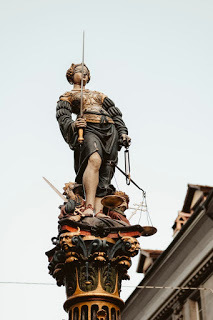 Photo by Jasmin FørestbirdJesus taught that no one gets away with anything. The day of the vengeance of our God shall come. If we do not believe in the Final Judgement then when we get hurt, abused, or betrayed, anxiety will leak out of us like antifreeze. We will work to see justice done and sinners punished in this life―fearful that it might never be done at all; fearful they’ll get away with it. But we shouldn’t believe that justice delayed is justice denied. Not forever. One day every elder will stand before Christ and give an account for every life they’ve overseen. No unrepentant abuser will have impunity. It will be and awesome and fearful day. No one will be able to say to Christ ‘Hey Jesus, you let that pervert priest off easy!’
No. Your pain is not forgotten. The tears you shed are kept by flaming seraphs to be rained down as napalm on those unrepentant leaders who abused you.
And we pray for those leaders who once hurt us to repent―because what is coming for them will be truly terrible. But whether they repent or not, we refuse to live in prisons of bitterness repeatedly dreaming about personal revenge. As it is written: ‘Beloved, never avenge yourselves, but leave it to the wrath of God, for it is written, “Vengeance is mine, I will repay, says the Lord.”’
Why are you Telling the Abused to Repent?God forbid we do that! We should be willing to verbally support people in leaving congregations where unrepentant abuse is happening. In that sense, we support the notion of ‘empty the pews’.
When one sided abuse of authority in leadership happens (or one sided rebellion in the congregation) then only one party should repent to the other. The abused should never have to repent to the abuser.
But this should not be understood to mean that we cannot repent to God when hurts come our way. Our lives are to be ones of continual repentance. This is the first word of the Gospel. The frustrations and wounds we receive at the hands of others can bring unbelief and vengeance to the surface like few other experiences. This good. We can turn our faces to meet pain’s fierce kisses knowing that they afford us the opportunity to find mercy for darkness that we never knew existed inside of us.
No angry pastor can send us to hell. No abuser can damn our souls. The only thing that can do that is our own sin. That’s why trials and hurts can be so valuable to us―if we bring them to God in worship. Our greatest treasure on earth is not seeing punitive justice descend in flames on those who hurt us. Our greatest treasure is our holiness before God.
As we bring our tears of hurt to be washed in the blood of the Lamb, they get collected into God’s bottle of remembrance―to one day be served as fine wine at His wedding banquet of redemption.
Why Not Leave Church Altogether? Photo by Ashim D’SilvaIf you are not seeking to join a healthy Christian congregation because you don't believe that Christ rose from the dead, that's understandable.
But you have been out of church for years because of past wounds. Have I misunderstood?
Instead of encouraging people to 'empty the pews' and stay out of church altogether, I'd encourage you to find a a new congregation. That is, assuming you still have a Christian faith.
Why?
First of all, yes, some of us have experienced real pain in church. But we have also seen wonderful things. Some of the most loving people we have ever met have been in the church. Though we may be on the receiving end of some disappointments when we join a congregation, we also receive strength, love, and grace.
Second, we believe that when God adopts us, He not only becomes our Father, but we get a whole new family―a family that’s just as broken and screwed up as we are. Repeatedly in the New Testament we are instructed to ‘forebear’, ‘submit to’, ‘be patient with’, ‘love’, ‘forgive’, ‘don’t stop meeting with’ and ‘be patient with’ one another.
God intends that our growth as Christians should largely come via both the joys and the challenges that come with being a committed part of a congregation.
Third, we realise within ourselves the possibility of unrighteous motives in not wanting to be a part of a congregation. There can be an allure to the idea of a life free from spiritual shepherds calling you to repent and live with purity. There’s a part of every son of Adam and daughter of Eve that despises authority―be it parental, ecclesiastical, or political. There’s also that the rush of freedom in getting rid of people in your life that are difficult to love. But all this is only the liberty of a runaway; the temporary relief of the lost son.
We also stay in church to avoid self-righteous pride. When we leave church fellowship, it is easy to get into a complaining spirit that sees church through a very narrow lens as being ‘the problem’. We think of all the ways in which ‘church’ has disappointed us and see ourselves as the righteous ones who now nobly suffer outside the camp.
Of all our sins, this type of self-righteous anger can be the most delicious. We feast upon memories of when we were so right and the other person was so wrong. We nibble upon thoughts of how base they were in their action and how we were far more wise or righteous. But one day, after we are satiated on all these replayed memories, we will realise that it is only ourselves that we have eaten. The feast has been our own souls.
How about, instead of asking, ‘How will my faith survive the church?’, let’s ask ourselves, ‘How will the church survive my faith?’’ Doing so might save souls from pride.
JesusLastly, many of us choose to stay with the church because we were never there for the church in the first place. We were there for Him. We didn’t sign up to follow Christianity, Evangelicalism, Catholicism, or any such movement. Jesus saved us and we joined our broken, sinful selves to one of His broken and sinful congregations. As is such, we believe that we should persevere when things go south. Occasionally, we may have to find a new congregation―especially if we think our church leaders are not submitting themselves to what God teaches in Scripture. But we don’t leave church.
Why?
Jesus love His church. The Bible calls it His ‘Bride’. As followers of Jesus, we must strive to have the same attitude towards the church as Jesus had. Yes, we’re sometimes angry when we see her fail. We’re hurt when those failings involve us. Yet we seek to be respectful if, and when, we feel the need to publicly point out her sins. We speak up to save, not to destroy her.
 Photo by Felix Koutchinski If you care, why don’t you join EXvangelical?Yes, there are things in evangelical subculture (particularly American evangelical culture) that I find troublesome and hard to understand. I find the way that many relate it to their politics to be odd. There are also legalisms and strange practices that I perceive to be less than Biblical at times. I welcome some of the critique movements like EXvangelical might give. I hope the church can learn and grow from such critiques.
But I do not join the EXvan community for two reasons. The first is theological: my belief system is still classically Christian. The second is that my advice to Christians who have been wounded or poorly pastored is different, as far as what I can discern, from EXvan's.
If someone rejects (classical) Christianity because they think another creed is more trustworthy, then so be it. But to reject a faith simply because one was hurt in a community that professes it, well, that may be a conflation of issues.
I recommend that fellow wounded travellers like yourself:
· Share your hurt with the leadership. If they respond well, you might reconcile. If not it could be best to find another congregation.
· Understand the scope and limits of the authority granted to church leaders by God in the Bible. (Here)
· Refuse to make victimhood a core identity. I am a forgiven sinner before I am person sinned against. The debt I've been released from will always be greater than the debt I release others from.
· Be humble in your politics. The people in the congregation I pastor belong to a variety of political parties. They vote differently. In the age of Brexit, these issues mater. But how sad if we cannot worship Christ next to a fellow redeemed sinner simply because they have a different political perspective than us.
· Cherish that, as a Christian, your God is unique. Christ is the only god who became man and allowed others to abuse him - all while praying for their forgiveness. Why? So that we might be healed. Mercy triumphs over judgement. Always.
· Report shepherds who, without repentance when confronted, abuse their authority to proper denominational or other authorities (in case of things like sexual abuse, tell the police).
· Talk to trusted friends or mentors. There’s also no shame in getting professional therapy or counselling.
· Through the pain, make it your goal to have Christ’s attitude towards his church: one to save and not to condemn.
My Life NowI used to trust the church. Not so much now. I love the church, but my trust is in Jesus. Being disillusioned has helped me separate following the church from following Christ. And I think I can serve the church better because of it.
I am no longer bitter towards the church, but thankful that Jesus allows me to be part of it. His faithfulness to me in spite of my sins is far greater than my faithfulness to the church in spite of her sins.
If you want more to think about, I wrote an article on Thank you for taking the time to read. These are big issues and I hope respectful, healthy dialogue can continue.
Yours,Joshua
DEAR CHRISTIAN,
Thank you for messaging me the other day after seeing my tweet about the #EXvangelical movement along with the storm of both agreement and reprobation that followed it.
You shared a personal tragedy and asked challenging questions connected to why I think you should not leave church or 'empty the pews' as the hashtag calls it. And, as I imagine that others might also have similar questions, I’d like to respond to you in this format instead of through Tweets.
Have You ever been Hurt by Church Leaders?It has been my experience that some join the EXvan movement because they have become more theologically liberal than the churches they were raised in or have rejected Christianity outright - be it classical or progressive. Others join EXvan because of individual acts of abuse. You seem to be in the second category though you may have adopted rejected parts or all of classical Christian belief as well - we can talk about that another time if you wish.
Concerning abuse: You were treated in a way that is somewhere north of grotesque. For that, I am truly sorry for you. I can see why you left that congregation. I lay no claim to such an extreme experience of victimhood. But I don’t mind sharing with you some of my own painful journey.
 by Aarón TejedorI remember one incident clearly. The threatening leader who sat across from me was a former special forces soldier and was considerably bigger than I was. He believed he had an ‘apostolic anointing’―and was as full of himself as a Russian doll.
 He raised his voice and made it forcefully clear to me that if I didn’t submit my social life to him, that he would make sure I’d regret it. I spent two hours in that church office being interrogated. The first hour passed like a kidney stone. The second one was worse. He gave me a homework assignment list and dismissed me from his church office.
I never set foot in that congregation again. I emptied that pew. As a result, he excommunicated me. I then worked and wrote to hold this pastor accountable. For I knew I wasn’t alone. He had emotionally abused many by seeking control over their personal lives in a way not granted to him by Scripture.
That wasn’t the first time. I was also excommunicated by a church leader when I was just 17. That left me feeling disillusioned for nearly a year. Youth from that church who also attended my high school would walk past me in the halls and fail to acknowledge my existence. They were following the lead from their pastor: I was dead to them.
My parents divorce at the age of twelve also involved the failings of church leaders. It left psychological scars that I can still feel. But I do not wish to publicly go into the details of that.
Is this how you Treat the Victims?I don’t share the above stories to show that we are exactly alike. We are not. I was not sexually abused as a child and I cannot fully appreciate the unique hurt you must experience even to this day. After reading what you wrote, my own scars seem minuscule to me by comparison.
Most of those reading this reply also have not been abused like you have. Yet their wounds are still serious. Church wounds are one of Satan's favourite tools. He will use the hurt brought by others to provoke us to doubt God’s goodness―the foundation of our spiritual lives.
How to handle these wounds seems to be one of the many issues that the EXvangelical movement seeks to address as they welcome people from evangelical and other conservative church backgrounds. It's an important issue and, in that sense, I commend them for seeking to address it - even if I disagree with some of their advice.
I share, firstly, because you asked. But also because I want you to know that much of the advice I give to others who have been hurt or disillusioned in the church comes from my own journey as guided by Scripture. When I was hurt, I took some advice to resist the tendency to see oneself through an exclusive victim lens.
This is not to say that I didn’t admit that I was the victim of someone else’s sin. I was. But I decided that, by God’s grace, I was going to work through it and not let it define me in a negative way.
So I encourage other hurt people in this direction: to be honest about our pain, cry tears in the company of safe people, pray Psalms of loss and anger, and avoid a long-term self-pity traps that will keep us unable to see the forest of God’s purposes for the trees of our hurt. And I encourage people to offer forgiveness (if we may dare to wield so beaten up a word) to those who hurt them.
Why do you let Abusers go Free? Ouch. Would it bother you if I suggest that your criticism of me might be unfair?
I once reported a heavy handed shepherd to denominational superiors and he was disciplined by his church authorities. This discipline included having to write a letter of apology and having a permanent mark on his career record.
Another incident involved a pastor at an independent church with no denominational hierarchy to report him too. I took to the internet and wrote an article about some of the abusive situations happening at this church. Eventually, as other people continued to be abused, the elders of the church woke up to the situation and threw him out.
So I have been involved in the formal discipline or removal of two church leaders―which I think is about two more than most of my online critics who say that I don’t care about abusers facing justice.
But this is slightly beside the point. As Christians we are often limited in what type of correction we can bring to leadership in other churches. What we can do is to help to redeem those who have been hurt. We follow Christ’s lead to ‘bind up the brokenhearted’. We try, however imperfectly, to help the wounded heal and go on to live fruitful and obedient lives for Christ. That should be our priority.
Why?
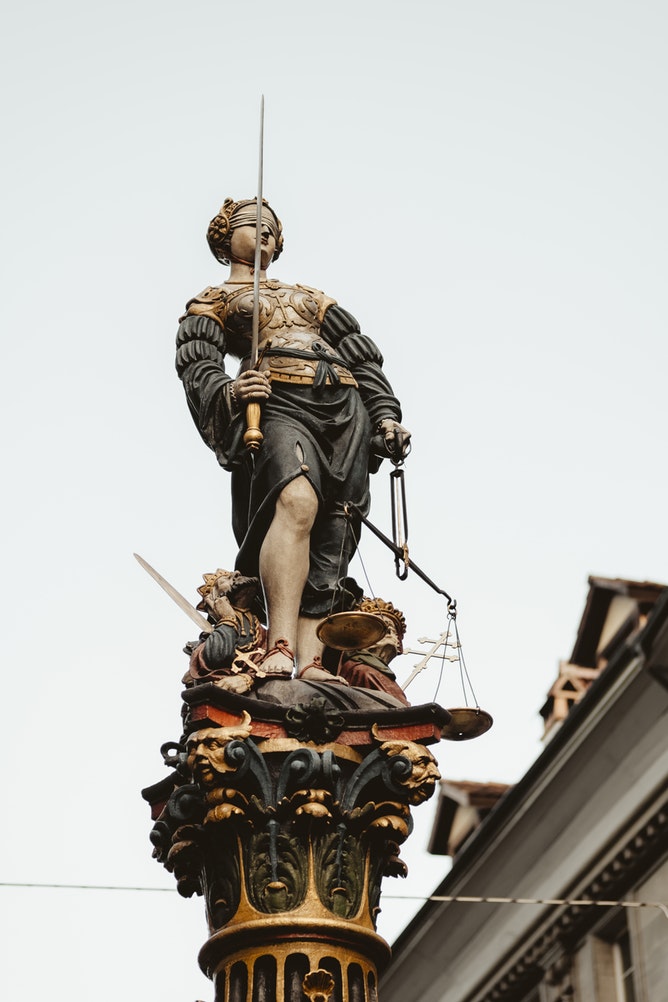 Photo by Jasmin FørestbirdJesus taught that no one gets away with anything. The day of the vengeance of our God shall come. If we do not believe in the Final Judgement then when we get hurt, abused, or betrayed, anxiety will leak out of us like antifreeze. We will work to see justice done and sinners punished in this life―fearful that it might never be done at all; fearful they’ll get away with it. But we shouldn’t believe that justice delayed is justice denied. Not forever. One day every elder will stand before Christ and give an account for every life they’ve overseen. No unrepentant abuser will have impunity. It will be and awesome and fearful day. No one will be able to say to Christ ‘Hey Jesus, you let that pervert priest off easy!’
No. Your pain is not forgotten. The tears you shed are kept by flaming seraphs to be rained down as napalm on those unrepentant leaders who abused you.
And we pray for those leaders who once hurt us to repent―because what is coming for them will be truly terrible. But whether they repent or not, we refuse to live in prisons of bitterness repeatedly dreaming about personal revenge. As it is written: ‘Beloved, never avenge yourselves, but leave it to the wrath of God, for it is written, “Vengeance is mine, I will repay, says the Lord.”’
Why are you Telling the Abused to Repent?God forbid we do that! We should be willing to verbally support people in leaving congregations where unrepentant abuse is happening. In that sense, we support the notion of ‘empty the pews’.
When one sided abuse of authority in leadership happens (or one sided rebellion in the congregation) then only one party should repent to the other. The abused should never have to repent to the abuser.
But this should not be understood to mean that we cannot repent to God when hurts come our way. Our lives are to be ones of continual repentance. This is the first word of the Gospel. The frustrations and wounds we receive at the hands of others can bring unbelief and vengeance to the surface like few other experiences. This good. We can turn our faces to meet pain’s fierce kisses knowing that they afford us the opportunity to find mercy for darkness that we never knew existed inside of us.
No angry pastor can send us to hell. No abuser can damn our souls. The only thing that can do that is our own sin. That’s why trials and hurts can be so valuable to us―if we bring them to God in worship. Our greatest treasure on earth is not seeing punitive justice descend in flames on those who hurt us. Our greatest treasure is our holiness before God.
As we bring our tears of hurt to be washed in the blood of the Lamb, they get collected into God’s bottle of remembrance―to one day be served as fine wine at His wedding banquet of redemption.
Why Not Leave Church Altogether?
 Photo by Ashim D’SilvaIf you are not seeking to join a healthy Christian congregation because you don't believe that Christ rose from the dead, that's understandable.
But you have been out of church for years because of past wounds. Have I misunderstood?
Instead of encouraging people to 'empty the pews' and stay out of church altogether, I'd encourage you to find a a new congregation. That is, assuming you still have a Christian faith.
Why?
First of all, yes, some of us have experienced real pain in church. But we have also seen wonderful things. Some of the most loving people we have ever met have been in the church. Though we may be on the receiving end of some disappointments when we join a congregation, we also receive strength, love, and grace.
Second, we believe that when God adopts us, He not only becomes our Father, but we get a whole new family―a family that’s just as broken and screwed up as we are. Repeatedly in the New Testament we are instructed to ‘forebear’, ‘submit to’, ‘be patient with’, ‘love’, ‘forgive’, ‘don’t stop meeting with’ and ‘be patient with’ one another.
God intends that our growth as Christians should largely come via both the joys and the challenges that come with being a committed part of a congregation.
Third, we realise within ourselves the possibility of unrighteous motives in not wanting to be a part of a congregation. There can be an allure to the idea of a life free from spiritual shepherds calling you to repent and live with purity. There’s a part of every son of Adam and daughter of Eve that despises authority―be it parental, ecclesiastical, or political. There’s also that the rush of freedom in getting rid of people in your life that are difficult to love. But all this is only the liberty of a runaway; the temporary relief of the lost son.
We also stay in church to avoid self-righteous pride. When we leave church fellowship, it is easy to get into a complaining spirit that sees church through a very narrow lens as being ‘the problem’. We think of all the ways in which ‘church’ has disappointed us and see ourselves as the righteous ones who now nobly suffer outside the camp.
Of all our sins, this type of self-righteous anger can be the most delicious. We feast upon memories of when we were so right and the other person was so wrong. We nibble upon thoughts of how base they were in their action and how we were far more wise or righteous. But one day, after we are satiated on all these replayed memories, we will realise that it is only ourselves that we have eaten. The feast has been our own souls.
How about, instead of asking, ‘How will my faith survive the church?’, let’s ask ourselves, ‘How will the church survive my faith?’’ Doing so might save souls from pride.
JesusLastly, many of us choose to stay with the church because we were never there for the church in the first place. We were there for Him. We didn’t sign up to follow Christianity, Evangelicalism, Catholicism, or any such movement. Jesus saved us and we joined our broken, sinful selves to one of His broken and sinful congregations. As is such, we believe that we should persevere when things go south. Occasionally, we may have to find a new congregation―especially if we think our church leaders are not submitting themselves to what God teaches in Scripture. But we don’t leave church.
Why?
Jesus love His church. The Bible calls it His ‘Bride’. As followers of Jesus, we must strive to have the same attitude towards the church as Jesus had. Yes, we’re sometimes angry when we see her fail. We’re hurt when those failings involve us. Yet we seek to be respectful if, and when, we feel the need to publicly point out her sins. We speak up to save, not to destroy her.
 Photo by Felix Koutchinski If you care, why don’t you join EXvangelical?Yes, there are things in evangelical subculture (particularly American evangelical culture) that I find troublesome and hard to understand. I find the way that many relate it to their politics to be odd. There are also legalisms and strange practices that I perceive to be less than Biblical at times. I welcome some of the critique movements like EXvangelical might give. I hope the church can learn and grow from such critiques.
 But I do not join the EXvan community for two reasons. The first is theological: my belief system is still classically Christian. The second is that my advice to Christians who have been wounded or poorly pastored is different, as far as what I can discern, from EXvan's.
If someone rejects (classical) Christianity because they think another creed is more trustworthy, then so be it. But to reject a faith simply because one was hurt in a community that professes it, well, that may be a conflation of issues.
I recommend that fellow wounded travellers like yourself:
· Share your hurt with the leadership. If they respond well, you might reconcile. If not it could be best to find another congregation.
· Understand the scope and limits of the authority granted to church leaders by God in the Bible. (Here)
· Refuse to make victimhood a core identity. I am a forgiven sinner before I am person sinned against. The debt I've been released from will always be greater than the debt I release others from.
· Be humble in your politics. The people in the congregation I pastor belong to a variety of political parties. They vote differently. In the age of Brexit, these issues mater. But how sad if we cannot worship Christ next to a fellow redeemed sinner simply because they have a different political perspective than us.
· Cherish that, as a Christian, your God is unique. Christ is the only god who became man and allowed others to abuse him - all while praying for their forgiveness. Why? So that we might be healed. Mercy triumphs over judgement. Always.
· Report shepherds who, without repentance when confronted, abuse their authority to proper denominational or other authorities (in case of things like sexual abuse, tell the police).
· Talk to trusted friends or mentors. There’s also no shame in getting professional therapy or counselling.
· Through the pain, make it your goal to have Christ’s attitude towards his church: one to save and not to condemn.
My Life NowI used to trust the church. Not so much now. I love the church, but my trust is in Jesus. Being disillusioned has helped me separate following the church from following Christ. And I think I can serve the church better because of it.
I am no longer bitter towards the church, but thankful that Jesus allows me to be part of it. His faithfulness to me in spite of my sins is far greater than my faithfulness to the church in spite of her sins.
If you want more to think about, I wrote an article on Thank you for taking the time to read. These are big issues and I hope respectful, healthy dialogue can continue.
Yours,Joshua
December 28, 2018
A Theological Defence of the Carnivore Movement
 THE 1ST JANUARY WILL SEE the second annual World Carnivore month where the Carnivore movement challenges people to exclusive carnivory for one month. At the end of the month people are to judge the impact this has upon their health and decide whether this is something they want to continue.
 Vegetarians do the same thing through the month of October.
What I hope to do here is address the Carnivore movement from a Christian perspective and to answer questions and concerns that curious Christians might have about the movement as well as help Carnivores (regardless of faith background) to understand how their lifestyle is seen Biblically.
Disclaimer I am not an exclusive carnivore. I toy around with vegetables sometimes. I flirt with carbs on special occasions. But I will be writing about the Carnivore movement from a sympathetic perspective. I do this for two reasons. First of all, twelve years ago I followed my doctor's advice and ate a high-carb, low animal fat diet to help improve my health. I followed his guidance for three years, hardly ever touching red meat or dairy (except skimmed milk), but my health only got worse. When I switched to a low-carb, high animal fat lifestyle I had vast improvements in a short period of time.
My second reason for addressing this issue is because I have seen a lot of guilt being aimed at meat and dairy eaters lately. As a Christian, it would wrong to not defend the eating of foods that the Bible celebrates the consumption from those overly eager activists. They are the few, the proud, the more or less appalled at everyone else.
What is the Carnivore Diet Movement?It’s not a ‘diet’ in sense of counting calories. It simply means the elimination of all non-animal based foods. The movement is not huge, but it is not tiny either. And it is growing quickly. There are 23,000 members on the 'World Carnivore Tribe' Facebook page and they are active on Instagram and Twitter as well. There are various websites: MeatHeals.Com is one of the ore popular ones and is filled with testimonials.
Within this movement, there is a spectrum of adherence with those on the more fundamentalist end eating nothing but beef, salt, and water. Dr. Jordan Peterson is probably the most famous of these.
 On the more liberal end, Carnivores eat any animal product: bacon, cream, (usually raw) whole milk, eggs, steak, cheese, etc. Probably the most controversial animal product would be honey as it is technically an animal product but is high in carbs―and many Carnivores like to see their movement as a zero-carb movement.
 Many in the movement are concerned about animal welfare and oppose industrialised farming practices in favour of more humane, grass-pastured ways of raising livestock.Participants come from a variety of backgrounds from and are not tied to any religion. Most embrace this lifestyle for health reasons.
What does the Bible teach about eating meat?Whereas many religions restrict the consumption of meat, Christianity does no such thing. The Bible actually celebrates carnivory (though not exclusively). Previous to the arrival of Christ, Israel was given laws forbidding certain types of meat (pork), but meat as such was celebrated and was very central to their worship and way of life.
With the coming of Christ, even the limitations against certain types of carnivory are removed. In fact, in when God speaks to the early, Jewish church leaders about the necessary inclusion of non-Jews into the movement, He does so through a vision of meat. Acts 11 reads:
‘Peter saw heaven opened and something like a large sheet being let down to earth by its four corners. It contained all kinds of four-footed animals, as well as reptiles and birds.Then a voice told him, “Get up, Peter. Kill and eat.”’ -Acts 11
The theological message is that all foods are now clean because Jesus has come to make unclean things clean again. The only regulations that God gives to us concerning what we eat are:1. Eat with gratitude to God for your food.2. Don’t judge others or be divisive over your choice of diet. Don’t be a food pharisee. 3. Don’t give yourself to gluttony (think emotional eating or over-eating.)
How is Carnivory Celebrated in Scripture? In many ways. Just to name a few:
· When God leads Israel through the desert, he promises them ‘a land of milk and honey’. Both of these are animal products (especially beneficial in their raw, untreated forms).
· When YHWH and the angels appear to Abraham in Genesis 18, it is recorded that they all ate exclusively carnivore: soured milk (kefir), cheese, and beef.
· After their time as slaves in Egypt, God promises Israel that when they get to the promised land they will ‘eat the fat of the of the land’. Israel understood that eating animal fats was central to nutrition and good health.
· In Genesis chapter four when the first sacrifices are recorded, YHWH rejects the vegetable offering of Cain but accepts the meat sacrifice of Abel.
· Much is made of made of offering up the fat of animals in the sacrificial system of ancient Israel. Little is made of vegetables, though there is some mention of grain offerings as well (which some think could be beer).
· After leaving the arc, God specifically gave all animals to Noah as food.
· The Passover meal, which centred around a lamb to be eaten, was a key religious observance given to Israel. No one was allowed to refuse this meat and still be part of the community.
· There is no limit to the amount of meat that the Israelis should eat: ‘you may slaughter your animals in any of your towns and eat as much of the meat as you want.’ Deuteronomy 12.15
· When John the Baptist came, he was reported to a man who never ate bread, only a carnivorous diet of insects and wild honey.
How Does the Bible Speak of the treatment of Animals?The Bible speaks of the humane treatment of animals. Trying to source meat and dairy from ethical farmers who raise pastured animals can be a shared commonality between Christians and Carnivores (and those who identify as both). ‘The righteous cares about his animal's health, but even the merciful acts of the wicked are cruel.’ Proverbs 12.10.
Will there be meat in Heaven?Christian teachers can’t say definitively. But we do get material for speculation. Those who would say ‘no’ point to the fact that there is no death in heaven. If we take Isaiah literally not even carnivorous animals will eat other animals as he describes a future where ‘the lion will lay down with the lamb.’ (11.6, 65.25)
 But in other passages, meat is described as being on the menu (again, Christians understand that the Bible uses poetic language to describe heaven as an unimaginably wonderful place so we caution against over literal readings of such passages). Isaiah says that there will be ‘choice meats and well-aged wine’ in the age to come (25.6).
 Perhaps the strongest argument for meat eating in heaven is that Jesus ate meat after His personal resurrection. Some may say that Jesus had to eat meat during his earthly incarnation just in order to get the nutrients his body would’ve needed. But what about with a glorified body that can walk through walls and ascend to heaven? In both John and Luke’s account it’s recorded that he ate fish after coming back from death. If Jesus is eating meat after his resurrection (with an immortal body that can never die) shouldn’t we expect to do the same? Didn’t Jesus say that when He returns in power that He will eat the Passover again with His followers (a meal centred on lamb)?
In short, the Biblical evidence does not demand that we see Heaven as a squalid Kingdom of veganism where we sit around and nibble on celery everyday. If you believe that, you really need to go pet your unicorn and think things over.
What about Daniel?The commentators are all over the place in regards to Daniel chapter one where Daniel and his friends eat only vegetables for only 10 days. Some write about how the meat at the Babylonian king’s table was probably offered up to idols. Whatever the understanding might be, there are a couple of things that are clear:· Like in the rest of the book of Daniel, supernatural powers were at work. No diet (vegan, vegetarian, carnivore, keto, etc) can build muscles and make you much smarter in only ten days.· The official who was responsible for Daniel understood that, in the natural, forgoing meat and eating only vegetables for ten days would make one weaker, not stronger. These were not stupid people. As a man in charge of feeding royalty, he knows what would strengthen the human body.
My understanding is that the meat was somehow religiously defiled and that Daniel and his friends chose a temporary (ten days only) position of weakness so that God could show his strength in this particular situation. Later in the book, Daniel is recorded as eating meat in a normal way like everyone else.
But human’s didn’t eat meat before the fall. Doesn’t that mean we should seek to avoid it?
 The first two chapters of the Bible describe the first man and woman in paradise. Some think that in these two chapters we are told the mankind wasn’t originally meant to eat meat. In them God clearly states that all plants (except one) can be used as food.
Though this is a possible interpretation, it is not solid. There is a difference between allowing mankind to eat of any plant (except one) and actually forbidding the eating of meat. Only one food is forbidden, and it is a piece of fruit―not meat. We are not actually told what the view of meat would’ve been if sin had not entered the world. If God had not intended us to eat animals, it sure is strange that He made them out of a substance that is both nutrient dense and delicious.
We do not live in the garden. We have reason to be doubtful that eating meat is a direct result of sin. But wearing clothes sure seems to be―at least as its indicated by the text. One could make a far stronger case that Christians should walk around naked than that we should be vegan.
Shouldn’t Christians be good stewards of the environment? And isn’t meat eating harming the planet?Some think that the Earth is becoming over-populated and that we all need to reduce the amount of meat we eat for the good of the planet. They argue that by eating less meat, Christians would be good moral examples.
This is a controversial proposition and some very educated people disagree over this. Not everyone who is literate is fully persuaded by the 'cowspiracy' theory that livestock is primarily responsible for blasting a huge farting hole in our atmosphere. Such theories are often put forward by partially-informed activists who are always in such a hurry to denounce so much. Slow down. It's complicated.
But the fact that this is complicated doesn't mean we have nothing to say on the matter.
Usually when people discuss the possible impact of the meat industry on the climate, they make no distinction between pasture farmed animals and industrial farming. They make overly broad assertions, as if all forms of animal farming were the same, in order to make their conclusions seem simple and obvious. But these matters are anything but simple.
Most in the Carnivore movement think industrial farming is bad for both health and the environment (though this negative impact is often exaggerated by vegan groups). But they would argue that meat raised the traditional, pastured way is good for the soil and the environment. Most Carnivores want, and some actively work for, reform in the meat industry.
Part of the academic work (for those interested) can be found online and is pioneered by Nicolette Hahn Niman―a lawyer and former vegetarian who has now given herself to defending ranched cattle from anti-meat libel. Google her for details.
From a theological point of view, we must ask ourselves: Why would the same God who calls us to be fruitful and multiply also commend to us the eating of meat if these two things are incompatible? Do we need to choose between obeying his command to multiply on the one hand and eat a healthy diet (in line with foods that His word exalts) on the other?
My own view is that this is an issue of resource management. We have the resources to feed everyone a healthy diet centred on pastured meats. We are simply not using our resources wise enough and selflessly enough to do so.
Daily Bread?Doesn’t Jesus teach us to pray ‘give us today our daily bread’? Didn't he multiply loaves as well as fishes? Isn’t this a clear endorsement of non-animal, carb-based eating?
Well, yes. It’s hard to get around the fact that even though meat is central to the diet of God's people in the Bible, fresh bread was often celebrated as a great accompaniment. Vegetables don’t get much good press in the Bible. Fresh bread does.
As I said at the beginning of this blog, I’m not an exclusive carnivore. I eat small amounts of carbs, veggies, and, yes, even fruit on occasion. Those carbs are probably offset by the fact that I'm strongly given over to intermittent fasting as well.
One of the reasons I still eat carbs is that my wife makes incredible bread. This is not like the loaf you get as ASDA or Wal-Mart. Now all homemade bread is far better than the industrial stuff. But my wife is extra-hardcore. She gets whole grains from the farmer, grinds them in a stone grinder, and then leaves them out to ferment naturally without the standard yeast.
I know, she's a beast.
The result is a bread very similar to the type of celebrated in the Bible and far more nutritious than what most people now know as (sandwich) bread. I love that bread fresh out of the oven. Ahhhh, the smell.
I then cover it in butter and honey for a carnivore kick.
The Bible does give us the liberty to eat carbs and vegetables with thankful heart. God's acceptance of us is not based upon what we eat, but upon what Christ has done for us. This grace also gives Carnivores the moral liberty to pursue their diet free of any guilt. If someone’s health is improving on the Carnivore lifestyle and they are grateful to God for the meat and dairy they eat, we should rejoice with and not condemn them.
Perhaps giving it a try for a month might even improve your health. Want to see?_______________
For more, please check out my book Elijah Men Eat Meat: Readings to slaughter your inner Ahab and pursue Revival and Reform
December 14, 2018
18 Things I learned in my 30s (Number 7 will blow your mind!)
 Hello 40!
WE LIVE IN A WORLD that paradoxically scorns the offer of eternal life while simultaneously pursuing eternal youth. It does this via Botox, hours at the gym, bolt-on boob jobs, Viagra, magical tea blends, and a host of pricey cosmetics of questionable functionality. But for the Christian, we need not have the same anxieties of the world around us. We are called to age like whisky, not milk. Our souls should not grow sour from sinning. For us, getting older should only mean getting classier and godlier.
These thoughts are ignited because I’m currently relishing my 40-year mile-marker. I'm now at the point where the grass has grown generously over the grave of my youth and I can't say that I'm crying about it. I feel good.
20 years growing up in the USA and 20 years of adult(ish) life in Europe―most of which has been in the UK. I have found life to be less like a cheery Facebook meme and more like a Tarantino film: unpredictable, dark, and gloriously gut wrenching. What wisdom have I gleaned from this intense decade? Probably far less than I should have.
It may be of some (or of little) interest to you, but here are a few of the lessons I’ve learned and found helpful over the last decade.
1. Patience and listening. Having four children and a church to lead has forced the calming fluid of patience to flow through my veins more than before. ‘Be slow to speak and quick to listen' is essential advice for any growing leader in the home and the church.
2. Ditch everything ‘low-fat’. Eat fatty meat, full fat milk, butter and cheese. At 30, my health was wasting away as I did everything my NHS doctor told me to do: skimmed milk, no red meat, no egg yolks, etc. When I ditched that advice for a low-carb, high-natural fat, nutritionally rich diet my health skyrocketed, my brain fog lifted, I lost weight. I feel much better at 40 than I did at 30. I also had my energy levels get more steady when I ditched sugar―a drug to which I had been addicted.
3. Keep reading. I read in my 20s, but it became harder in my 30s with four kids (yes, spend quality time with your kids - you’ll be glad you did when they’re older). I fought to stay a continual learner, though I know I could’ve done better. Don't think that just because you emerged from a mostly incest-free gene pool that you won't need to work to stay sharp. Keep your grey matter exercised. I don’t regret the time I’ve spent reading and studying. I do regret too much time on social media. The older you get, the more your brain needs quality books to read. Tozer, Ravenhill, GK Chesterton, Lewis, Tolkien, Charles Williams, EM Bounds, Andrew Murray, Tim Keller, William Gurnall, Michael L Brown, Augustine (especially ‘Confessions’), Pascal, Luther, David Brainard, Lewis Allen, etc―these guys will help keep you from becoming a dumbassador from the Republic of Stupid.
4. Keep friendships. Many friendships from your early adult life tend to fade away during your 30s. That’s normal, don’t get too anxious over losing many of them. But try to keep at least a couple. Few things are sadder than meeting older people who have lost all the friends they once had in early life. Some older people are lonely and friendless―a condition that's a real rat's nest of misery. Avoid it by maintaining key relationships over the decades. I’ve had to work hard to keep friendship across the years and miles (especially with a job and four kids!) but it’s been worth it. Time with these long lasting friends gives me the sensation of being both away on holiday and relaxing at home at the same time.
5. Intermittent fasting. After discovering what to eat, knowing when to eat greatly increased my energy levels. Look it up on YouTube and give it a try.
6. Men and women can be good friends. I didn’t know this when I was 30. But over the course of this decade some of those who have been closest to me and spoken into my life the most have been female. I’m very grateful for the mothers, sisters, and daughters in the faith that God has brought into my life. They are different than my friendships with other men, but are just as valuable to me.
7. Never be a fool for social media click bait. Second rate bloggers use it all the time. It’ll waste your life away.
8. Pray. I’ve regretted a lot of things. Time in prayer has never been one of them. As I said above, developing your mind is important, but it is not everything. There's far more in this Universe than mere philosophy can dream of. Some of those things that can't be gotten from a book must be grabbed by the spirit in prayer. So don’t be bum. Set your alarm, get up, and do it. Though we may grow grey headed with age, prayer will keep us from growing grey hearted.
9. Don’t make any one relationship an idol – including your best friend and your marriage. We tend to have unrealistically high expectations of just what our spouses and our BFFs can do for us. Make sure your ultimate joy is in God, not them. All other relationships will have their good days and bad days (good years and bad years sometimes). Don’t make any of them the foundation of your identity. Keep that private place with Jesus.
10. Learn to say ‘no’ to influential and powerful people in your life. Do it respectfully. Don’t yell. But be able to articulate clear boundaries that you can’t be manipulated out of.
11. Cowardice isn’t a virtue. Don't be a coward and call it being nice. A leader isn't merely one who sees a need for change. A leader is one who sees the need and then makes it happen. Sadly, I sometimes meet pastors who seem to have been queuing elsewhere when they were distributing testicles (and that's not a reference to lady vicars). I do regret certain things I’ve said over the years. I regret far more the times I kept quiet. In line with what I said above, don’t be quick to speak in anger. But when we’re sure that Wisdom is on our side, we must have courage to speak Wisdom’s words―regardless of who we might anger by doing so.
12. Therapy. Good counselling can really help you grow as a person.
13. Make your bed. Fix up that purgatorial waste you call your bedroom. Do it every morning.
14. Don’t lose sleep over your critics. If you’re going to make a difference, you must learn to live with storms criticism. You'll get called 'Hitler' by strangers online who have all the morality of a one who takes congress with a badger (Yes Mam, I said it. A badger.) Just open a folder and put all your hate mail in it. It’s fun going through as time goes on. Just don’t go all victim status and complain online about how badly you're being trolled for sympathy points. Pathetic! Such people are more full of themselves than Russian dolls.
Be a man and wear it as a badge of honour.
You have a limited amount of emotional energy. Don't spend it all trying to appear normal so you won't get shot at.
15. The conviction that Freedom of speech and expression is the second most important social issue for Christians to get behind (after the right to life for the unborn) as only grown over the years.
16. Keep praying and working for the advancement of God's Kingdom. Don't sink into a middle aged, middle class lullaby of spiritual impotence. The hordes of hell ride over our land, and through many of our churches, deceiving and damning with total impunity from a sleepy and distracted church. Pray for reformers and revivalists to be raised up and seek to bring it about.
17. Keep looking forward. Don't waste your life sobbing under a blanket of nostalgia concerning a life that never really existed except in your head. Get out of those shadows where you trust your heart to twisted tales and crooked promptings. We're headed to a world that's empty of heartache and full of laughter. I found out how evil self-pity can be. Fight it! Turn off the emo music. We are about to step into a song that no human language is beautiful enough to sing.
18. Jesus is faithful and He is there. Always.
_______________
For more, please check out my book Elijah Men Eat Meat: Readings to slaughter your inner Ahab and pursue Revival and Reform