Joshua D. Jones's Blog, page 8
September 26, 2017
Elijah: It Begins
 ‘Elijah said to Ahab…’ -1Kg 17
He ends his prayer, lifts his head, and stands. The sweat from his exertion kisses the cool mountain air as he surveys the familiar hills all around. He knows today is the day. Today he goes to the city.
The city. Samaria. Geographically, it is only 30 miles and one river crossing away. But it may as well be 3,000 miles and an ocean away. The city is where the educated, religious, and political elite play their polished games. And, as a man from the rugged terrain of Gilead, it isn’t really his vibe. He doesn’t do polished very well. Even his wardrobe places him apart from the posh urbanites. His rough camel hair tunic and old leather belt contrast sharply with the latest designer threads brought straight to the Samarian top shops from the boats that dock in Tyre’s port. As a Gileadite, he doesn’t do dandyism. Elijah isn’t your model metrosexual.
The Prophet sets out. He has been given a message from the Heavenly King to announce to the man who now sits on Israel’s throne. How will he say it? He’s never been talkative or given to clever wordsmithery. Just how does one throw down the gauntlet and tell the royals that their darling Baal is fake deity? Might as well stick with the direct approach.
Your impotent rain god has about as much chance of rescuing you from Yahweh’s coming drought as I do of winning the Miss Israeli Beauty contest. Crops will turn to dust, the economy will falter, and people will die. So, um, no more rain. ‘Until when did you say?’Until I say otherwise.‘Oh.’
When Elijah started praying, he probably didn’t know that God would draft him to be a spokesman as well. Our crowd-averse desert preacher may well have experienced a similar reluctance to Moses when God sent him from looking after sheep in the wilderness to stand in the courts of a cruel Pharaoh and deliver an equally unwelcomed message.
We are born cowards. To be truly courageous, we must be born again. Elijah trembles before God. Men who do so rarely tremble before other men―even before a king who holds the power of death in his command. The fear of God is what makes Elijah fearless.
It is of great importance that we speak to humanity about God. But it is of even greater importance that we speak to God about humanity. Not every man who grieves over the damnables of his generation is sent to speak to politicians or vast crowds. But it is certain that when God does choose a man to speak publicly, he chooses from amongst those who howl before Him privately.
Centuries later the half-brother of this world’s Saviour sums up the life of Elijah in two words: he prayed. Everything else that he does is a footnote to and an expounding of that. Before our prophet is anything in public, he is much in private. And after crying out many words to the God of Israel, he’s now been given one from Him―one to execute before the reckless ruler and his poisonous princess bride. This rustic son of the sands now hikes to the capital with a divine word that will soon be the talk of all who dwell in the Samarian halls of power.______________
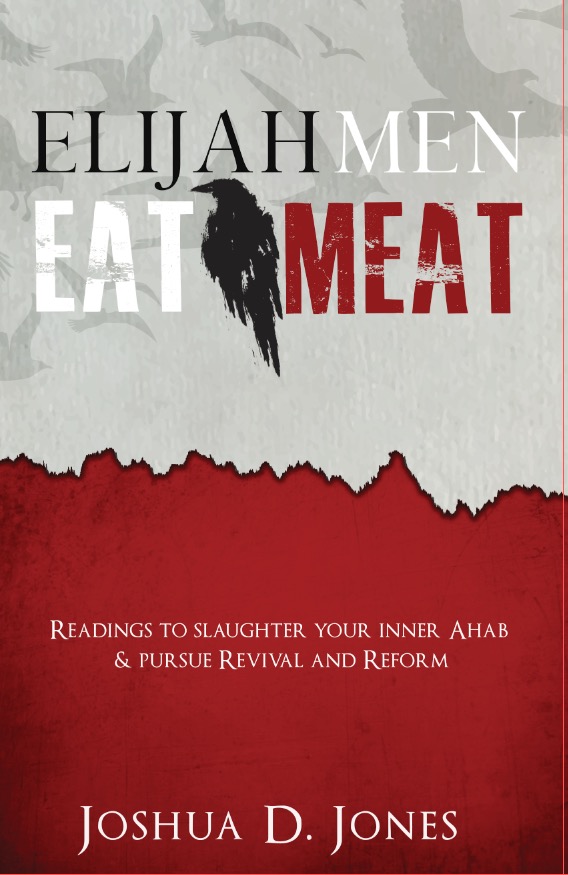 Extract from Elijah Men Eat Meat: Readings to slaughter your inner Ahab and pursue Revival and Reform (Get Here)


Ahab: Profile of a Beta-King
 [Extract from the book Elijah Men Eat Meat]
‘Ahab did more of what Yahweh considered to be evil than anyone before him.’ -1Kg 16
Ahab. Before we can really talk about Elijah, we must present our wayward King. Ahab is the 8th King of Israel since the nation broke away from Judah after the passing of King Solomon. He is the son of Omri, a military general who led a coup to take the throne. Omri and the six Kings before him passed in quick succession, giving Israel a rocky 58 years of initial leadership. Ahab will reign for 22 years, providing a measure stability for Israel.
But this political stability costs a great deal. For Ahab drinks down more perversity than all the previous Israeli Kings combined. A toxic culture has grown under his kingship that exceeds anything his apostate forefathers knew. It poisons everything. Darkness becomes the new normal.
How does Ahab create this spiritual swamp? To start with, Ahab promotes Baal worship into Israel. It has become all the rage among the who’s who. His predecessor King Jeroboam’s bull worship seems to have been just a warm-up for the spiritual cancer that is Baalism. It infects the land like an aggressive virus, twisting the hearts and minds of the people away from the God of their forefathers: Abraham, Isaac, and Jacob.
Our sinful sovereign also permits the worship of Asherah, Baal’s female cohort. Worshipping this goddess and teaching her doctrines pumps petrol into an already sexually immoral furnace. Asherah is hailed as the enlightened Morning Star of Ancient Near Eastern mythology. But underneath her veneer of sophisticated education, Asherah worship is merely an excuse to get naked and worship idols.
Finally, there is the woman. Ahab is the first King since the ugly breakup with Judah to take a princess wife from a foreign, pagan king―an act forbidden by Scripture. We don’t know why he got hitched to Princess Jezebel. Perhaps his successful father, King Omri, had arranged it. Perhaps he wedded her for the sake of political stability and economic opportunity with their seafaring and prosperous Phoenician neighbour. Domestically some commentators still remark that it was a great move. Having her as Queen is an asset both politically and economically. Or perhaps Ahab married her because he thought she was pretty hot. You know, those Phoenician gals and stuff.
But whatever practical reasons may have influenced the decision, she is spiritually and morally whoreable. She drives the fake religion that entices Israel to prostitute itself with other gods. Ahab occupies himself with politics and the military well enough, but he abdicates his role as Defender of the Faith to someone who seeks to suffocate it entirely. She is the one who entices these rebellious Israelis to come even deeper under the cloud of Yahweh’s righteous anger. Ahab may wear the crown, but Jezebel always seeks to wear the trousers. The King is not a man of strong spiritual conviction and is therefore easily blown about by emotional and sexual winds―a trait Jezebel can easily manipulate those to suit her purposes.
Ahab is ultimately culpable for this whole mess of course. He allows it on his watch. He fails to give godly leadership to both his Kingdom and his wife. Jezebel may be the active one but, as Pontius Pilate will learn centuries later, a leader cannot cleanse his hands of blood nor delegate culpability.
God does give him time to repent. God loves Ahab. He loves him enough to send him a mighty prophet to try to turn his heart. Men, you will shape the culture of your generation and the foundation of the generations to come. But how will you do so? The way you worship God matters. How you exercise self-control over your sexual and other appetites matter. If you allow lechery to live in you, it will be like a parasite that demands you feed it every day. You will be a slave to lust as Ahab was to Jezebel.
If you do marry, the woman whom you choose to take matters. We are not islands. Choices that we think of as being private are the ones that shape our character. Even our laziness and passivity has an effect on those around us. By contrast, the battles we fight in private for personal godliness prepare us to bring something of value to the public sphere.
Our King makes bad choices in his personal life and his name will be forever carved on the stones of history for leading Israel into the foulest apostacy. He fails to worship the Creator God in his prayer closet and so falters in leading the nation righteously. This all happens because he allows himself to be ruled by seduction rather than conviction. What will future generations say of us? Will we be seen as sons of Ahab? _________________
Extract from Elijah Men Eat Meat: Readings to slaughter your inner Ahab and pursue Revival and Reform (Get Here)
September 13, 2017
Of Freedom & Foodolatry
 Apologies in advance if this bit of gay food porn
causes anyone to stumble or offends.
-The ManagementEarly in my days as a preacher, I thought that sex and gender related issues were the most offensive things that one could talk about from the pulpit. After some time, I began to think that money was the most offensive. People seemed to be more upset when you told them what to do with their wallet than what to do with their genitals.
But now I think the most offensive issue has to be what people put in their mouths (and that’s not a reference to the first set of issues previously mentioned). The subject that people get most defensive about is the food they eat. This makes a pastor’s job a challenge as the Bible actually says a good deal about food.
Sadly, to avoid stirring conflict, many ministers fail to address the subject at all. This is cowardice and doesn’t actually serve the flock of God. It is also tragic as our generation has numerous problems with food ranging from anorexia and bulimia to the obesity epidemic that is destroying the health of millions in the UK, the USA, and many other Western countries. Some churches are good at addressing proper alcohol usage and the issue of drunkenness. But these same churches lack consistency in addressing food consumption. Most of what the Bible says about food can be placed in three broad categories.
GratefulnessFirst of all, the Bible repeatedly instructs us to be grateful for our food. We are to receive it from God as a gift, not a right. We are to ask Him for ‘our daily bread’ and we are to be sincerely thankful when we get it. The Bible says that when Jesus took the fish and loaves, ‘He looked up to heaven and gave thanks’. God could’ve made our physical absorption of nutrients a boring process. We could be created in such a way as to inject some dull, gray matter once a week to keep us going. Instead, we get to stop our work and have a celebration of God’s goodness three times each day by enjoying the food he provides. Let’s do more than say a token prayer of thanks before we eat. Come to the table to celebrate and be reminded of God’s goodness and generosity.
FreedomGod’s first word to Adam about food was one of freedom: ‘You are free to eat from the trees of the garden’. Only after establishing that freedom did he give the warning. The New Testament then goes on to teach that believers can now eat whatever food that God has created. Jesus had fulfilled the dietary cleanliness laws of Moses through his death. Paul writes to Timothy, ‘For everything created by God is good, and nothing is to be rejected if it is received with gratitude’. You want to eat whale? You can eat whale. Bacon? Yes. So long as you are thankful. Bear steak wrapped in bacon? A double amen. We may eat all God-created food with grateful hearts and we are not to judge those who eat differently than us.
Among other things, this means no divisive food philosophies. You want to eat paleo or vegetarian? Fine, but do not let it interfere with the table of Christian fellowship. When on mission we are instructed by Jesus to ‘eat what is set before you’. This means that sometimes I eat something that I would not prefer or consider healthy for the sake of Christian unity or the sake of not giving offense. Relationships and witness are more important than the food we put in our body.
WisdomWe enjoy our freedom, but we are instructed by the apostle, ‘Do not use your freedom as an opportunity to indulge the flesh.’ That means that though we can eat whatever good, God created food is out there, we should not misuse that freedom. There are sins of gluttony and food idolatry. Proverbs notes, along with warnings of excessive alcohol, that ‘It is not good to eat too much honey’. If the wise men of the ancient world saw that excessive amounts of natural sugar can be bad, how much more should we pay attention in our day of refined sugar, glucose, and artificially processed food-like stuff?
Paul speaks of those whose ‘god is their stomach’ and foodolatry is as much an issue in our day as it was in his. We often eat too much. We eat man-made foods that have toxins, are addictive, and make our bodies susceptible to disease – all when we have the option of eating otherwise. We go to the refrigerator more than to the Bible when we are feeling low and need comfort. It’s not by chance that ‘food porn’ is the banner under which attractive pictures of food on social media are tagged.
Sadly, churches that take a firm stance on drunkenness often turn a blind eye to gluttony. Food is not sin. It is God’s gift. So is alcohol. But the undisciplined use of either brings harm to our bodies and does not glorify God. As Christians, we should eat to live, not live to eat. This is one of the reasons God’s people throughout the Bible would have times of personal or corporate fasting – to make sure that their spiritual life was leading their fleshly life and not the other way around.
Food is a great gift. But it is a cruel master. The wisdom of self-discipline will keep this good angel from becoming a taxing devil.
Food is a big theme throughout the Bible. Mankind first sinned through eating what it should not have and salvation is presented to us a meal of bread and wine. At the end of human history, a wedding feast awaits us. May we eat thankfully, freely, and wisely until that day.
July 26, 2017
Theological Fascism in a Skirt
 I have had the privilege of knowing more than one woman who carries the title of ‘pastor’. Many of them are perfectly lovely ladies with whom I merely disagree about church structure. Most of them carry the title together with their husband and work as a ‘pastoral couple’ (think Brian and Bobbie Houston of Hillsong). I don’t hold to that view, but still, these women seem to love the Lord and the lost and I don’t spend my time arguing with such ‘Egalitarians’.But the Egalitarian movement is being hijacked by intoleristas. These are the men and women who not only will fight for women’s ordination but who will fight against you for disagreeing. They are the Feminist Gestapo and sadly they are gaining ground. This is perhaps best illustrated by a horrendous piece
(Here)
published online by Faith & Leadership from Duke University of all places. Their missional subtext is A learning resource for Christian leaders and their institutions. I don’t know what leaders or institutions would find this article particularly educational. It probably helps explain why Duke ministers often end up serving in dying liberal denominations. The article is written by Rev. Melissa Florer-Bixler and though we shouldn’t always judge based on the double barrel name, in this case, the stereotype is painfully accurate. The hyper-womansplaining title of the article alone lets you know where this is going: 10 Commandments for Male Clergy. Before we go any further, just think about that. Do you think that Duke would ever publish an article by a man called: 10 Commandments for Female Clergy? You know they wouldn’t. That’s because Duke and the wider progressive movement in the Anglo-Saxon world have bought into the myth that it’s impossible to discriminate against men but that all women in the Western world are constantly subjected to oppressive everyday sexism. By embracing this narrative, outrageously rude articles like Melissa's can be published by what is supposed to be a reputable institution. Let’s look at some of these commandments that Melissa says men should obey.
I have had the privilege of knowing more than one woman who carries the title of ‘pastor’. Many of them are perfectly lovely ladies with whom I merely disagree about church structure. Most of them carry the title together with their husband and work as a ‘pastoral couple’ (think Brian and Bobbie Houston of Hillsong). I don’t hold to that view, but still, these women seem to love the Lord and the lost and I don’t spend my time arguing with such ‘Egalitarians’.But the Egalitarian movement is being hijacked by intoleristas. These are the men and women who not only will fight for women’s ordination but who will fight against you for disagreeing. They are the Feminist Gestapo and sadly they are gaining ground. This is perhaps best illustrated by a horrendous piece
(Here)
published online by Faith & Leadership from Duke University of all places. Their missional subtext is A learning resource for Christian leaders and their institutions. I don’t know what leaders or institutions would find this article particularly educational. It probably helps explain why Duke ministers often end up serving in dying liberal denominations. The article is written by Rev. Melissa Florer-Bixler and though we shouldn’t always judge based on the double barrel name, in this case, the stereotype is painfully accurate. The hyper-womansplaining title of the article alone lets you know where this is going: 10 Commandments for Male Clergy. Before we go any further, just think about that. Do you think that Duke would ever publish an article by a man called: 10 Commandments for Female Clergy? You know they wouldn’t. That’s because Duke and the wider progressive movement in the Anglo-Saxon world have bought into the myth that it’s impossible to discriminate against men but that all women in the Western world are constantly subjected to oppressive everyday sexism. By embracing this narrative, outrageously rude articles like Melissa's can be published by what is supposed to be a reputable institution. Let’s look at some of these commandments that Melissa says men should obey.Decline to purchase books written by men who exclude women from the pulpit.
That’s right: Burn your books. Don’t consider alternate points of view. The new fascism is here and it’s wearing a skirt (but we shouldn’t talk about that either - it’s one of the rules). The idea that we should only read theological books by Feminist authors is actually being published by Duke University. Shame. That’s 98% of church leaders through 98% of church history disqualified. No more buying Augustine, Chrysostom, Luther, Piper, David Pawson, Jonathan Edwards, Ignatius Loyola, etc. You can only buy books by Feminists – you are not allowed to think outside the box we give you. The next rule?
Thou shalt not doubt me when I say something is sexist.
 That’s right. Not only are we not allowed to read what we want, we’re not allowed to doubt a woman in any discussion about sexism. She speaks, you listen. Mansplaining is a crime but femsplaining is perfectly legitimate. Something is sexist if I say it is. Can this work both ways? How would a woman feel if a man commanded her ‘Don’t doubt me when I say…’. A line like this would never be allowed in print if it were going in the other direction. This is because theological Feminism doesn’t care about equality. They want to talk down to men – something this article demonstrates brilliantly. And if you doubt that, consider the next commandment:
Thou shalt believe women when they say things.
I didn’t make that up. It’s really there. Not only can we not read or doubt, now we can’t even think for ourselves. If a woman says something, it must be believed! Should I also believe all the godly, Biblical women who would say this article is lunacy? Or do you mean only Feminist women? Once again, can you imagine a male clergyman writing this to women? Ladies, always believe it when a man tells you something. There would be a progressive outcry. Starbucks would be trashed. People would march wearing those ridiculous vagina hats on their heads. But because it’s a woman writing it to men, Duke University prints it as being perfectly acceptable. Then there is this commandment:
Thou shalt not joke about my having “lost a lot of weight” since you last saw me -- even if I’ve had a baby.
On one level, this is reasonable and good. If you were raised in a home where you were taught good manners, you were instructed never to joke about a woman’s weight. Good. But read the context of the article. Our dear Melissa is writing an article about how women clergy should be treated more like male clergy. Do you think we male clergy ever joke about each other’s weight? Every damn time we get together. I can’t think of a time we ministers haven’t met at a restaurant or buffet and haven’t made fun of one of our brethren and his need for ‘more fasting’. This is how men treat other men. I don’t think a man should joke about a woman’s weight – but I’m not a Feminist so I’m not the one arguing that men and women should be treated the same.
 And this is the dilemma for Feminism. We want to be treated the same as men… but we don’t. Treat us just like men… but only in the areas we tell you to. In some ways, our Melissa is admitting a weakness – or at least a difference. It’s ok for male clergy to joke and banter each other – but we ladies of the cloth are too fragile to take it. Lastly:
What is the way forward? For one, men must do better.
That’s right: it's men. Ministry is hard and we need someone to blame. Men are fair game. Let’s call it ‘the Patriarchy’. It’s their fault I don't feel successful. Duke, it’s you that ‘must do better’. You’ve embarrassed yourself.
June 30, 2017
Dear Pro-Gay Christian Friend
 [Response to the letter Dear Non-Affirming Christian]
Dear Pro-Gay Christian Friend,
Thank you for taking the time to write me. Sadly, it seems you misunderstand why I met with you for coffee.
Please let me explain my motives by defining the words in my salutation above. Would this be too terrible a way to go about it?
Let’s start with ‘friend’ shall we? You rightly question this term as an accurate description of our relationship. For now let's simply say I mean it as an expression of good will - but will return to it again at the end of the letter.
Then there's this term, 'pro-gay'. By this, I don't mean your personal sexual urges. There have historically been – and are today – countless godly leaders in the church who have deep sexual and romantic attractions to people of the same gender. In spite of their desires, remain celibate and teach orthodox views of gender and sexuality. You call me ‘non-affirming’, but I affirm these people and their teaching on sex.
What I do mean by 'pro-gay' is the teaching you now promote through personal conversations and social media. The articles you share, the comments you leave, and the blogs you write, these all teach that active sex between two people of the same gender is acceptable to the God of the Bible. It’s not that you are merely wrestling with questions. You promote a particularly Western, 21st Century view of sexuality that is counter to what God's people have historically believed and faithfully taught for millennia for by affirming sexual activity outside the Orthodox understanding of marriage.
Now, this wouldn’t be a problem if you were one of my non-Christian family members or friends that hold to this view. I see this teaching appear in memes and sound bites from them every day on Facebook. But you do all this while naming Christ. That's different. Paul makes this distinction in 1 Cor 5,
‘I have told you to avoid sexually immoral people, but I didn’t mean the immoral of this world. You would have to leave the world for that! I mean anyone who calls themselves a believer and does so. Avoid them! I should only judge those in the church, not outside the church.’
And this is where we come to the third term in my salutation, ‘Christian’. How do you define this? I’m sure you’re aware that for over 98% of Christian history the idea of our faith is in any way compatible with homosexual practice would’ve been unthinkable. ‘Pro-Gay Christian’ would’ve seemed as outrageous a term as, ‘pro-thievery Christian’ or ‘pro-pornography Christian’.
And this is why it’s sad just how profoundly you misunderstood our coffee date. Your letter suggests that I met you to garner acceptance points with the cool kids. That’s an unfortunate interpretation. Rather, I wanted to warn you that you’re in risk of rejection from the One whose opinion actually matters.
Tragically you say things that misrepresent what Christians actually believe. You say this discussion is about arguing ‘on behalf of my existence’. Really? It's troubling enough to think that you base your existence on whether you get to engage in sexual activity with other women and still call it ‘Christian’. But your reasoning suggests that if I don't join you in sanctifying sodomy, then somehow I deny your right to exist. Really?
The misrepresentation doesn't stop there. In addition to your letter, some of the articles you have been sharing on social media refer to Christians as ‘homophobes’ and ‘haters’ for simply believing what Christians have almost always believed – that marriage is a sacramental covenant between a man and a woman. Even in your letter to me, you refer to this aspect of Christian faith as a ‘murderer’. I expect such hostile pejoratives and misrepresentations from the world around me. I don’t expect that from someone who names Christ.
By being willing to ‘hear your story’ you infer that I was disingenuous and wanted to use you for some insincere end. No. I was trying to give you every possible chance to explain why you would be promoting an ideology that is an enemy to our faith. I was hoping against hope that you had somehow misunderstood the issue. But as you explained over your latte how you now see the Bible as a ‘general guide and not as a strict rule book’ it became clear that you understood the issues just fine.
In Revelation 2 Jesus speaks of a woman in Thyatira who is promoting an ideology of sexual immorality in His name. He gives her time to repent, but if she doesn’t He promises to remove her harshly. I care for you and don’t want you to come under this type of judgement. That’s why I wanted to meet – to plead with you. But all I heard from you were the same sound bites and memes I see from my non-Christian friends on Facebook every single day.
And this is why I must now return the favour and say that I can’t be your Orthodox Christian friend. At least not 'friend' in the classical sense of the word. If you had inner doubts, that would be fine. We could talk. If you were one of my unbelieving family member or friends that happen to be gay, there would be no problem. But you’re going public with fake teaching that promotes immorality. I must obey Scripture and distance myself from you.
You repeatedly refer to me in your letter as Non-Affirming. I’ll accept that label. But so must you. We just are non-affirming about different things. You won't affirm Christian sexual orthodoxy. I won't affirm an attempt to baptise buggery.
June 27, 2017
Book Review: Intimate Jesus - 2.5 Stars
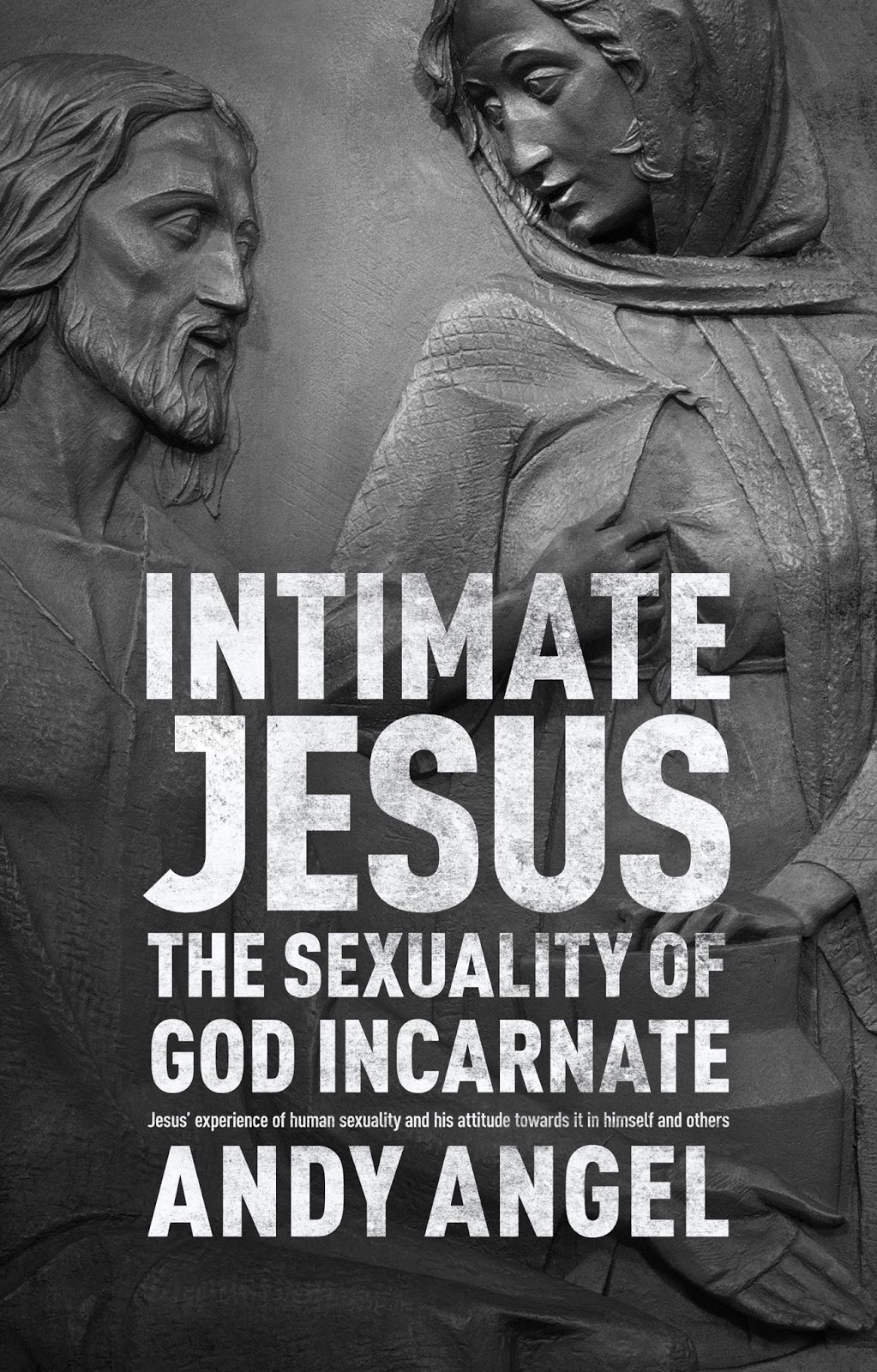 Intimate Jesus: The sexuality of God incarnateBy: Andy AngelRating: 2.5/5 stars
I was given this book in exchange for free in exchange for a review. Sometimes it’s great when such things happen, sometimes it’s a bit… meh. It all depends on the book.
This book falls in the ‘meh’ category. It was thrillingly easy to put down. I think I read four other books during the time I was supposed to be reading this one.
I don’t mean that the book was terrible. I almost wish it was. Instead, it was just ‘kind of’ good. I occasionally read terrible books by arch-heretics. Gross error can at least make you pay attention. There were no major heresies here. Nor was he arguing for any form of orthodoxy that was especially shocking. What was disappointing about this book was that it was about sex and God – two of my favourite things – and yet I was bored by it.
It is based on exegesis from the gospel of John. The author – a University lecturer at St. Johns College in Nottingham – rightly uses two key texts for discussion. He looks at Jesus’ encounter with the woman at the well and John’s encounter with Jesus at the last supper. At times, I found this tedious. At other times, he seemed to argue that something was a possibility (‘Jesus was using flirtatious posturing’) and then went on to assume that it was definitely the case.
The book would’ve made a great essay or online article. Trying to stretch it into a book by drowning it in textual analysis made Jack a dull boy. The book can’t seem to quite decide whether it wants to be popular or academic in tone.
If we’re going to talk about the holy and the horny together, we should use a more engaging style.
June 13, 2017
Sackcloth Swag

‘They will prophecy for 1,260 days clothed in sackcloth.’ -Rev. 11
Last week, a major denomination here in the UK announced that they would begin to recognise homosexual practicing relationship as sacred marriage. Although this would have been seen as an unthinkable act for 99% of church history, this announcement passed with relatively little comment from church leaders of other denominations.
There was no blowing of trumpet horns, no ashes, and no beating of the chest. There were no tears. Other denominations and churches did not assemble to mourn as Israel did in Judges 21 crying out ‘Why, God, has Israel lost one of its tribes?’ It has happened before and is it assumed that it will happen again.
The apocalyptic witness of Moses and Elijah in Revelation 11 – whether we see their appearance as something past, present, future, or some combination – gives us a glimpse into the prophetic call of the church in several ways. One of these is the description of their clothing: that of sackcloth.
This is not surprising given the descriptions of Elijah and John during their times of earthly ministry. Elijah and John both wore garments of camel’s hair. Biblical commentator Joseph Benson writes of John’s appearance out of the desert, ‘Not, as some have supposed, a camel’s skin, raw and undressed, but a kind of sackcloth, coarse and rough, made of the raw long hair of camels, and not of their fine and soft hair, dressed and spun into thread.’
Whatever else scholars may conclude about the significance of camel’s hair clothing – we can know they weren’t party clothes. There's not much swag in sackcloth.
Christians are called to joy. We are called to laughter and to celebrate God’s goodness and the blessings he delivers to us. Churches should be the happiest places on earth. And yet, we are not only to be happy. We are to have compassion – and sometimes compassion weeps. We are called to mourn with those who mourn. And though we party with the angels when one sinner repents, we also weep when a righteous man hardens his heart and walks away from God. In heaven, all tears will be wiped away. But in this life, holy men will know seasons of sorrow.
If the church is to fulfil its prophetic mission, there must be a place in our Christian discipleship for sackcloth and fasting. Throughout the Bible, fasting was an activity that people undertook to humble their bodies and souls and to mourn before news of tragedy and judgement. It was understood that when bad news came, it was often appropriate to put a meal to the side and go be with God to weep.
On a merely natural level, Westerners have grief issues. We do not mourn thoroughly at times of disaster and often find ourselves much later having to psychologically process our losses – sometimes with the help of a therapist. Other cultures have better recognised that time and space needs to be given for a soul to process bad news and that fasting helps us do this.
If we are to spiritually grow to the place where we can be entrusted with a message of repentance, we must have a sensitivity to that which grieves God’s heart. Yes, we must also learn to gratefully celebrate his goodness. But there will also be times when we mourn and fast – not only our personal tragedies – but that which is tragic to the name and glory of God throughout the earth.
If the church is to speak words of fire, it must first weep rivers of tears.
________________Please Share
 How can Christian Men and Women have meaningful friendships without scandal? Please check out Forbidden Friendships - available on Amazon in Paperback and Kindle in the
USA
and the UK.
How can Christian Men and Women have meaningful friendships without scandal? Please check out Forbidden Friendships - available on Amazon in Paperback and Kindle in the
USA
and the UK.June 12, 2017
Book Review: The Strange Death of Europe
 4/5 Stars. In many ways, this is an excellent book. If you want a book that gives a review of the social and political causes and impacts of recent immigration into Europe, this is the one. And I say that as an immigrant myself.
Regardless of your political stance or what you’d like to believe about immigration into Europe, it will be hard to argue with Murray’s research. The facts don’t care about our feelings and this book is filled with facts – many of which our feelings might not care for. His thesis is that Europe is committing suicide and one of its primary tools is through the unstrategic and (seemingly) unlimited immigration that has occurred in recent decades and – more importantly – in the last three years.
Those who may not like the facts that he presents may be tempted to paint him as a xenophobe or racist. He isn’t. He often shows how these policies aren’t particularly helping immigrants either and how genuine refugees who need our help the most, often aren’t getting it.
I found it interesting to read – not only as an immigrant – but also as a Christian. Murray himself is agnostic and his inevitable nihilism is felt throughout the book. To his credit, he's a lot more honest about it than most agnostics /atheists are.
He recognises that Europe could possibly receive millions of immigrants if its culture was strong. But Murray shows in many ways that it is not. He bemoans European shallowness, the fact that the European identity is currently so ill-defined, and our art is so hollow to what it once was. In the face of millions of Islamic immigrants who believe things strongly enough that they are willing to die for them – and a handful to kill for them – what can we call them to? What cultural richness can we assimilate them into that will cause them to want to truly become European?
Through the book, he describes how in the last century we have developed a culture of self-doubt and guilt – to the point of being ashamed we are European. He goes through the various signs of what makes a healthy and unhealthy culture – and we are unhealthy and unable to assimilate millions of immigrants well. In the end, Murray’s book is pessimistic. He gives no clear solution to our cultural (dare I say ‘spiritual’) malaise. He seems to think that in 100 years Europe will be Islamic. Much sooner in Sweden and Germany.
As Christians, we would probably agree that if Europe does not rediscover the gospel, then Murray is probably right. Nationalist parties will grow in popularity and the effects of unrestricted immigration become more visible. But it will be too late. Murray mentions Christianity, but he presupposes that it is no longer a viable option for thinking people. He assumes that textual criticism has dismissed the possibility of real confidence in the Hebrew/Christian scriptures. As a pastor who did his post-grad work in the hermeneutics of those Scriptures, I wish he would take a closer look.
As it stands, Europe’s future is dark. But if we see a movement of spiritual awakening to the gospel – one that sees millions of secular Europeans and Muslim immigrants repenting and turning to Christ – then that will result in quite a different story
For those of you who are Christians, if there was ever an hour in European history to fast, pray, and be bold with the gospel, that hour is here.
May 20, 2017
Is God a Misogynist?
 Elijah took the child, and brought him down into the house, and gave him to his mother. -1 Kings 17
A superficial understanding of Elijah could mislead someone into believing that he – or perhaps even the God who worked through Elijah – was a misogynist.
Sadly, that term - in addition to being hard to spell - has become loaded, politicised, and increasingly vague. CS Lewis pointed out that when such things happen we are witnessing verbicide – the death of a word. It’s a shame because misogyny and its counterpart misandry are both real things. So, let’s define. By misogynist, we do not mean someone who despises a woman or who believes men and women are different. We mean someone who despises a woman because she is a woman.
Elijah was not one. Elijah stood against the work of a certain Sidonian princess – but not because she was a woman or even because she was a foreigner. He resisted her plans because she was leading God’s people into false worship and sexual immorality. Any man whose imagination is kindled by Elijah’s zealous example should understand this distinction before he goes to battle. (So should anyone who tosses the term ‘misogynist’ at those with whom they disagree.)
Elijah's two Women
Elijah’s spiritual maturity surfaces in his dealings with one of Jezebel’s old neighbours. The Cherith brook where Elijah hid evaporates into dust and God sends him to Zarephath to meet a woman. For those of us who are a bit rusty in our Ancient Near East geography, we need to not rush over this detail.
God wasn’t sending him someplace nearby just so he could get a bite to eat. God takes him on a journey of nearly 90 miles over mountainous terrain into another country. That’s quite a stroll if it’s just for lunch. Most importantly of all, we need to note that this country of Tyre & Sidon was where Jezebel was from. Ahab and Jezebel are undergoing an international search for Elijah and God leads him to a village just 10 miles north of the cruel Queen’s home city. God sends his premier prophet on a perilous journey - all because he wants to show his love for a single woman who doesn't believe in him yet.
Some of us might raise our eyebrows that Elijah is going to be housemates with a woman. We might raise our eyebrows even more to know that she is a pagan and of the same immoral culture as Jezebel. But the most amazing thing is Elijah’s gracious behaviour with her. This same prophet who called down the fires of judgement on proud Israeli soldiers undertook a dangerous journey to humbly care for and minister to this woman.
Elijah never speaks directly to Jezebel. But in our reading of 1 Kings 17, we see him engaging in sarcasm and banter with his housemate. The miracles Elijah performs brings death to some in Israel. But with this young woman’s child, he places him on his own bed and cries out to God for life to be restored – and it is.
True Holiness & The Jezebel Spirit
This is the difference between true holiness and a man who simply has a judgmental spirit. Do the people you work with describe you as gracious and joyful? Do you bring life into your household? Before Elijah calls down fire from heaven, he must show that he’s a blessing to live with.
A man is manifesting misogyny when he mislabels a woman with 'Jezebel spirit' for simply expressing disagreement with him. While this term does have some valid use in describing genuine acts of manipulation, seduction, or cruelty, it should be used appropriately lest it suffers verbicide as well. Elijah, the one man who has every right to use the term 'Jezebel spirit' of a woman, never does. Instead, he demonstrates one of the best, non-romantic, male-female relationships in all of Scripture.
Elijah is not xenophobic or misogynistic. The man who slaughters Baal’s prophets first patiently leads a foreign woman to faith in Yahweh through a relational ministry.
Before we battle, we must bless.
________________Please Share
How can Christian Men and Women have meaningful friendships without scandal? Please check out Forbidden Friendships - available on Amazon in Paperback and Kindle in the
USA
and the UK.May 19, 2017
Is God Violent?
 ‘O man of God, I plead with you, let my life, and the life of these fifty men, be precious in your sight. I know that fire came down from heaven, and burnt up the two captains and their squads of fifty men each.’ -2Kings 1
King Ahaziah, son of the late king Ahab, sends a captain with 50 soldiers to go fetch Elijah who is sitting on a hill. Like the king, this captain and his soldiers have no fear of God. They arrogantly command Elijah to obey the message like he’s the king’s lapdog. As a result, God drops fire on them. The king then sends another 50 up the hill in an equally proud manner – and God equally napalms the lot of them. Lastly, a third captain goes up in humility, falling on his knees, and asking for mercy. This man and his soldiers live.
Last century, Arthur Wallis – at the beginning of his landmark book, God’s Chosen Fast – wrote, ‘When people do not like the plain literal meaning of something in the Bible they are tempted to spiritualise it, and so rob of its potency.’ What was true of the church’s reading of passages dealing with fasting in the 1960’s, is true today of the church’s reading of passages regarding God’s violence.
The Gymnastics
When we look at passages where God sends physical judgement against men and women, we have a couple of sneaky ways of dismissing them. The first is the way of unbelief. We simply chose to believe that this unsavoury portion of Scripture is not true, that is was accidentally included in the Bible, or that it is not inspired by God.
Another way allegorising. This method is simple enough to employ. We say that Joshua invading Canaan is about us violently fighting the sin in our lives or that Elijah calling down fire on wicked soldiers is about letting God judge sinful passions when they threaten to take control of our attitude. Of course, we can agree that some of these imaginative readings of the passage may have some useful application. But it doesn’t change the original story, does it? God still executed these violent acts in real space and in real time.
A book by a well-known ‘progressive’ Christian thinker is proposing yet another way of dealing with these passages. He writes that God is allowing himself to depicted in this violent way so that humanity can see just how violent they themselves are – and be repulsed. He argues that God’s actions in the Old Testament are like the work of the cross in the new: we are supposed to see it and be appalled at our own violent sinfulness. If you’re having trouble getting your head around that this one, you’re not alone. In addition to being confusing, the whole thesis presumes that these judgements are morally ‘wrong’.
But there is a much easier way forward than by doing interpretive gymnastics. And that is by simply taking the Bible at face value – assuming that it actually means what it says. Like whisky, we should take it straight. Really, if a person with no church background given a Bible and read through it, do any of us truly believe that she would describe Scripture’s God as always being non-violent?
The problem is not with the Bible. The problem is with us. 21st Century Westerners have difficulty imagining a God who both violently punishes the wicked and who is also loving, compassionate, patient, and kind. In the gospels, we see Jesus being kind and gentle to many and we struggle to see how this is the same holy God of divine judgment. The fact that we have difficulty seeing how God can be both of those things at once is not our ultimate problem. Every culture and every generation has difficulty in understanding at least some aspect of God’s character. In the Middle East, it’s the Trinity. In India, it’s the exclusive nature of Christ. In honour bound cultures it’s forgiveness. The problem comes when we exalt our cultural values above the Bible and begin to find clever ways of dismissing the bits that don’t agree with us.
Hard Words, Soft Hearts
For some among us, the motive in doing so is the notion that belief in a violent God will produce violent people. But this is not the case. It’s precisely because God will judge and punish the wicked that I can be free from doing so. This is why Paul says, ‘avenge not yourselves, but rather give place for God’s wrath: for it is written, Vengeance is mine; I will repay, saith the Lord’. Because vengeance is His, it doesn’t have to be mine. And that frees me to be a peaceful person.
We may not have the moral right to act violently to other humans. But we are not God. God has the right to be violent in ways that we do not. He gives life, and he can take it back. And sometimes that may offend our post-Enlightenment culture so filled with notions of individual human rights and notions of entitlement.
The New Testament says that we are to ‘behold both the kindness and severity of God.’ When we dismiss one at the expense of the other, we get in trouble. There should be times – though not all the time – when the Bible is preached in a way that causes us to see God’s severity. This creates in us the attitude demonstrated by the third captain. We approach a God who punishes wicked people on bended knee. We don’t approach Him telling him about how good we are, what rights we are entitled to, or how he ought to be kind to us. We acknowledge that we deserve the same flames that consumed the others – and we humbly run to the cross and ask for mercy. For it is at Golgotha where judgement and mercy meet.
And it’s on that hill where God calls down the fire of judgment on himself – so that he won’t have to call it down on us. ________________Please Share
How can Christian Men and Women have meaningful friendships without scandal? Please check out Forbidden Friendships - available on Amazon in Paperback and Kindle in the
USA
and the UK.