
Kenneth C. Davis's Blog, page 84
November 24, 2014
Pop Quiz: On November 26, 1942, FDR ordered the rationing of what basic item?
Answer: Gasoline
Roosevelt’s order was to go into effect on December 1 and its real reason was to help conserve rubber needed for the war effort.

“President Roosevelt served notice tonight that, Congressional upheavals and sectional objections notwithstanding, the government must and would begin the nationwide rationing of gasoline to conserve rubber on Dec. 1, as scheduled.”
Source: The New York Times report on the controversial order.
Read more about Roosevelt and World War II in Don’t Know Much About® History and Don’t Know Much About® the American Presidents.
Don’t Know Much About® the American Presidents (Hyperion Paperback-April 15, 2014)
Don’t Know Much About® History: Anniversary Edition (Harper Perennial and Random House Audio)


Who Said It (11/24/2014)
Abraham Lincoln, Proclamation 118-Thanskgiving Day, 1864

Abraham Lincoln (November 1863) Photo by Alexander Gardner
“And I do further recommend to my fellow-citizens aforesaid that on that occasion they do reverently humble themselves in the dust ….”
Now, therefore, I, Abraham Lincoln, President of the United States, do hereby appoint and set apart the last Thursday in November next as a day which I desire to be observed by all my fellow-citizens, wherever they may then be, as a day of thanksgiving and praise to Almighty God, the beneficent Creator and Ruler of the Universe. And I do further recommend to my fellow-citizens aforesaid that on that occasion they do reverently humble themselves in the dust and from thence offer up penitent and fervent prayers and supplications to the Great Disposer of Events for a return of the inestimable blessings of peace, union, and harmony throughout the land which it has pleased Him to assign as a dwelling place for ourselves and for our posterity throughout all generations.
Source: Online by Gerhard Peters and John T. Woolley, The American Presidency Project. http://www.presidency.ucsb.edu/ws/?pi....
This was Lincoln’s second annual Thanksgiving Day proclamation (dated October 20, 1864). In 1864, he had more to be grateful for than in 1863. Union victories had turned the tide of battle and Lincoln felt more assured that he would win re-election, which he did in November 1864.
November 19, 2014
Don’t Know Much About® the Gettysburg Address-Resources
On November 19. 1863, Abraham Lincoln was one of the speakers who dedicated the new cemetery at Gettysburg, Pennsylvania. That is the answer to this week’s Who Said It Quiz

Abraham Lincoln (November 1863) Photo by Alexander Gardner

Plum Run- Gettysburg (Photo Courtesy of Gettysburg National Historic Site NPS
There are still many myths about this speech. Here are some resources:
•The New York Times report of the dedication ceremony with text and applause noted four times.
•“Myths and Mysteries about the Gettysburg Address” from the National Constitution Center.
•”Learn the Address,” a program devoted to having Americans learn and recite the Address.
•The U.S. National Park Service Gettysburg National Military Park site
You can read more about the Gettysburg, Address and the Ciil War in:
Don’t Know Much About the Civil War (Harper paperback, Random House Audio)
November 17, 2014
Who Said It? (11/17/2014)

Plum Run- Gettysburg (Photo Courtesy of Gettysburg National Historic Site NPS
“The brave men, living and dead who struggled here have consecrated it far above our poor power to add or detract”
Abraham Lincoln, The Gettysburg Address (November 19, 1863)
“Fourscore and seven years ago our fathers brought forth on this continent a new nation, conceived in liberty and dedicated to the proposition that all men are created equal. Now we are engaged in a great civil war, testing whether that nation or any nation so conceived and so dedicated can long endure. We are met on a great battlefield of that war. We have come to dedicate a portion of that field as a final resting-place for those who here gave their lives that that nation might live. It is altogether fitting and proper that we should do this. But in a larger sense, we cannot dedicate, we cannot consecrate, we cannot hallow this ground. The brave men, living and dead who struggled here have consecrated it far above our poor power to add or detract. The world will little note nor long remember what we say here, but it can never forget what they did here. It is for us the living rather to be dedicated here to the unfinished work which they who fought here have thus far so nobly advanced. It is rather for us to be here dedicated to the great task remaining before us–that from these honored dead we take increased devotion to that cause for which they gave the last full measure of devotion–that we here highly resolve that these dead shall not have died in vain, that this nation under God shall have a new birth of freedom, and that government of the people, by the people, for the people shall not perish from the earth.”
Visit the Gettysburg National Historic Park (National Park Service site)
November 14, 2014
Pop Quiz: What was the name of the real whale that inspired “Moby-Dick”?
Answer: Mocha Dick was the name of an actual sperm whale that was purportedly the model for Melville
Moby-Dick, or, The Whale was published in the United States on November 14, 1851. (It had appeared earlier in London.)
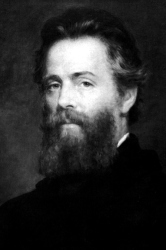
Etching of Joseph O. Eaton’s portrait of Herman Melville (Source: Library of Congress; Public Domain)
Melville’s home Arrowhead is located in the Berkshire region of Massachusetts.

Melville’s Writing Desk (Photo courtesy of Arrowhead-Berkshire Historical Society)
Read more about whales and whaling in Eric Jay Dolin’s Leviathan: The History of Whaling in America.
And read more about Melville and his work in Don’t Know Much About Literature: What You Need to Know But Never Learned About Grat Books and Authors.
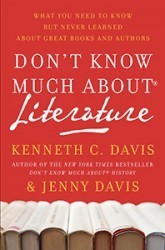
Don’t Know Much About® Literature (Harper and Random House Audio)
November 11, 2014
11-11-11: 95 Years Later-Don’t Know Much About Veterans Day-The Forgotten Meaning
“The eleventh hour of the eleventh day of the eleventh month.”

Taken at 10:58 a.m., on Nov. 11, 1918, just before the Armistice went into effect; men of the 353rd Infantry, near a church, at Stenay, Meuse, wait for the end of hostilities. (SC034981)
On Veterans Day, a reminder of what the day once meant and what it should still mean.
(This is a revised post of a piece written for Veterans day in 2011. The meaning still applies.)
That was the moment at which World War I –then called THE GREAT WAR– largely came to end in 1918. on the eleventh hour of the eleventh day of the eleventh month.
One of the most tragically senseless and destructive periods in all history came to a close in Western Europe with the Armistice –or end of hostilities between Germany and the Allied nations — that began at that moment. Some 20 million people had died in the fighting that raged for more than four years since August 1914. The complete end of the war came with the Treaty of Versailles in June 1919.
The date of November 11th became a national holiday of remembrance in many of the victorious allied nations –a day to commemorate the loss of so many lives in the war. And in the United States, President Wilson proclaimed the first Armistice Day on November 11, 1919. A few years later, in 1926, Congress passed a resolution calling on the President to observe each November 11th as a day of remembrance:
Whereas the 11th of November 1918, marked the cessation of the most destructive, sanguinary, and far reaching war in human annals and the resumption by the people of the United States of peaceful relations with other nations, which we hope may never again be severed, and
Whereas it is fitting that the recurring anniversary of this date should be commemorated with thanksgiving and prayer and exercises designed to perpetuate peace through good will and mutual understanding between nations; and
Whereas the legislatures of twenty-seven of our States have already declared November 11 to be a legal holiday: Therefore be it Resolved by the Senate (the House of Representatives concurring), that the President of the United States is requested to issue a proclamation calling upon the officials to display the flag of the United States on all Government buildings on November 11 and inviting the people of the United States to observe the day in schools and churches, or other suitable places, with appropriate ceremonies of friendly relations with all other peoples.
Of course, the hopes that “the war to end all wars” would bring peace were short-lived. By 1939, Europe was again at war and what was once called “the Great War” would become World War I. With the end of World War II, there was a movement in America to rename Armistice Day and create a holiday that recognized the veterans of all of America’s conflicts. President Eisenhower signed that law in 1954. (In 1971, Veterans Day began to be marked as a Monday holiday on the third Monday in November, but in 1978, the holiday was returned to the traditional November 11th date).
Today, Veterans Day honors the duty, sacrifice and service of America’s nearly 25 million veterans of all wars. We should remember and celebrate those men and women. But lost in that worthy goal is the forgotten meaning of this day in history –the meaning which Congress gave to Armistice Day in 1926:
to perpetuate peace through good will and mutual understanding between nations …
inviting the people of the United States to observe the day … with appropriate ceremonies of friendly relations with all other peoples.
The Library of Congress offers an extensive Veterans History Project.
The Veterans Administration website offers more resources on teaching about Veterans Day.
Read more about World War I and all of America’s conflicts in Don’t Know Much About History and Don’t Know Much About the American Presidents.
And watch for publication of THE HIDDEN HISTORY OF AMERICA AT WAR: Untold Tales from Yorktown to Fallujah (May 5, 2015 from Hachette Books and Random House Audio)
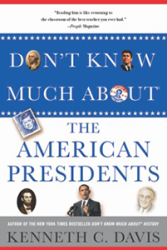
Don’t Know Much About® the American Presidents (Hyperion paperback-April 15, 2014)
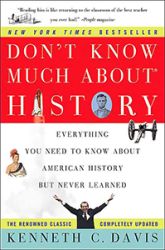
Don’t Know Much About® History: Anniversary Edition (Harper Perennial and Random House Audio)
October 24, 2014
Pop Quiz: Who was “Publius” and what did “he” write?
Answer: “Publius” was the pseudonym used by the authors of the collection of essays that became known as “The Federalist Papers”: Alexander Hamilton, James Madison and John Jay.
The first essay was published on October 27, 1787.

Title page of the first collection of The Federalist Papers (1788- CREDIT: Library of Congress The Federalist (vol. 1) J and A M’Lean, publisher, New York, 1788. From Rare Books and Special Collections Division in Madison’s Treasures
“The Federalist Papers were written and published to urge New Yorkers to ratify the proposed United States Constitution, which was drafted in Philadelphia in the summer of 1787. In lobbying for adoption of the Constitution over the existing Articles of Confederation, the essays explain particular provisions of the Constitution in detail. For this reason, and because Hamilton and Madison were each members of the Constitutional Convention, the Federalist Papers are often used today to help interpret the intentions of those drafting the Constitution.”
Source: Library of Congress Complete Text of The Federalist Papers
Following ratification of the Constitution and the establishment of the new federal government, Hamilton became first secretary of the Treasury under George Washington, Madison remained in Congress where he drafted the Bill of Rights — and later became the 4th president– and Jay became the first Chief Justice of the Supreme Court.
October 21, 2014
Who Said It? (10.21.2014)
…Aggressive conduct, if allowed to go unchecked and unchallenged ultimately leads to war.
On October 22, 1962, President John F. Kennedy announced an air and naval blockade of Cuba, following the discovery of Soviet missile bases on the island. This is the New York Times report of the speech.
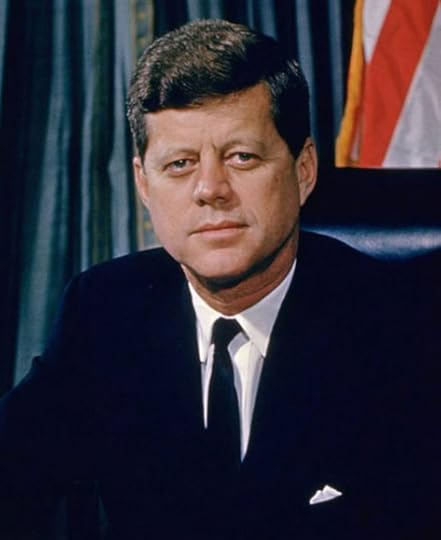
President John F. Kennedy (1961)
“Radio and Television Report to the American People on the Soviet Arms Buildup in Cuba” (October 22, 1962)
The 1930’s taught us a clear lesson: aggressive conduct, if allowed to go unchecked and unchallenged ultimately leads to war. This nation is opposed to war. We are also true to our word. Our unswerving objective, therefore, must be to prevent the use of these missiles against this or any other country, and to secure their withdrawal or elimination from the Western Hemisphere.
Audio recording and complete transcript: John F. Kennedy Presidential Library and Museum
The Kennedy Library and Museum offered a special exhibit called “To the Brink” with more details of this dangerous moment in Cold War history.
October 17, 2014
Pop Quiz: What did Washington want from the British when they surrendered at Yorktown?
Answer: All of the enslaved people in Yorktown who had escaped to the British in hopes of freedom.

Surrender of Lord Cornwallis by John Trumbull (Source: Architect of the U.S. Capitol)
When the British forces under Cornwallis surrendered to George Washington and his French allies on October 19, 1781, the terms of capitulation included the following phrase
It is understood that any property obviously belonging to the inhabitants of these States, in the possession of the garrison, shall be subject to be reclaimed.
(Article IV, Articles of Capitulation; dated October 18, 1781. Source and Complete Text: Avalon Project-Yale Law School)
Thousands of escaped enslaved people had flocked to the British army during Cornwallis’s campaign in Virginia in what has been called the “largest slave rebellion in American history.”
They had come in the belief that the British would free them. Cornwallis had put them to work on the British defense works around the small tobacco port, and when disease started to spread and supplies ran low, Cornwallis forced hundreds of these people out of Yorktown. Many more died from epidemic diseases and the shelling of American and French artillery during the siege.
The African Americans in Yorktown included at least seventeen people who had left Mount Vernon, Washington’s plantation, with the British, as well as members of Thomas Jefferson’s enslaved community captured earlier in 1781. They were all returned to their enslavement, along with thousands of others as Virginian slaveholders came to Yorktown to recover their “property.”
The Battle of Yorktown and role of African-American soldiers there –as well as the fate of the enslaved people in the besieged town — are featured in my forthcoming book; THE HIDDEN HISTORY OF AMERICA AT WAR: Untold Tales from Yorktown to Fallujah (May 5, 2015-Hachette Books and Random House Audio)
“A fascinating exploration of war and the myths of war. Kenneth C. Davis shows how interesting the truth can be.” –Evan Thomas, New York Times-bestselling author of Sea of Thunder and John Paul Jones
October 14, 2014
Don’t Know Much About® “Ike”
Born on October 14, 1890 in Denison, Texas, Dwight D. Eisenhower, the 34th President of the United States.
The greatest hero of World War II as Supreme Commander of the Allied Expeditionary Forces in Europe and architect of America’s victory over Germany, Eisenhower was sought by both political parties, which hoped that he would join their ticket in 1948. President Truman even offered to run in second place as vice president if Eisenhower would join the Democratic ticket. He turned Truman down and then ran as a Republican in 1952, winning the first of two terms.
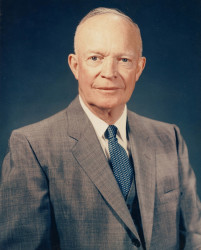
President Eisenhower (Courtesy: Eisenhower Presidential Library and Museum)
Milestones in Dwight D. Eisenhower’s Life
October 14, 1890 Born in Denison, Texas
1917–1918 Commander, U.S. Army Tank Training School
1932–1935 Senior military assistant to General Douglas MacArthur, U.S. Army chief of staff
1935–1939 Senior military assistant to General MacArthur in the Philippines
1941 Chief of Staff, Third Army
1942 Commanding general, U.S. Forces in Europe
1943–1945 Supreme commander, Allied Expeditionary Forces in Europe
1945–1948 Chief of staff, U.S. Army
1948–1950 President of Columbia University
1951–1952 Supreme commander of NATO Forces in Eu rope
1953–1961 Thirty- fourth president
March 28, 1969 Died at Walter Reed Army Hospital in Washington, D.C., aged seventy- eight. (Eisenhower’s New York Times obituary)
In early October 2014, a planned memorial to Eisenhower in Washington, D.C., which has been the subject of an ongoing controversy over its design and size, received final approval from the National Capital Planning Commission.

Young Eisenhower at Camp Meade (Photo: US Army, Public Domain Source: Eisenhower Presidential Library and Museum)
The Eisenhower Presidential Library and Museum is located in Abilene, Kansas.
Fast Facts
✱ Eisenhower was the last president born in the nineteenth century.
✱ Ike played army football, but his career was cut short by a broken leg, and so he became a cheerleader instead. No pom-poms.
✱ Eisenhower was the first president to be constitutionally prevented from standing for reelection following ratification of the Twenty-second Amendment; the amendment originated, according to journalist Tom Wicker, “in the Republican Eighty- second Congress as partisan, posthumous revenge against a hated Democrat, Franklin D. Roosevelt, and his four terms.”
✱ The last two of the fifty states were admitted under Eisenhower: Alaska (January 1959) and Hawaii (August 1959).
✱ At seventy, Eisenhower was the oldest president at that time; the youngest elected president, John F. Kennedy, succeeded him.
✱ During his presidency, Eisenhower suffered both a heart attack and a stroke, and was temporarily incapacitated. However, news of both health problems was made public, unlike Woodrow Wilson’s stroke. The Twenty- fifth Amendment, which revised and clarified the rules of presidential succession and allowed for temporary disabilities, was not ratified until 1967, and while Vice President Nixon was acting as executive, he lacked real constitutional authority to do so.
Initially dismissed by historians as a complacent, “do-nothing” president who slept through eight years in office, Eisenhower has moved up the ranks in more recent historical judgments. In Don’t Know Much About® the American Presidents, he received a “A” grade, although he is most faulted for his reluctance to be more forceful in the area of civil rights.
Read more about Eisenhower’s life and administration in Don’t Know Much About® the American Presidents. Eisenhower plays a prominent role in a chapter of my forthcoming book, The Hidden History of America at War: Untold Tales from Yorktown to Fallujah (Coming May 5, 2015 from Hachette Books and Random House Audio)
Don’t Know Much About® the American Presidents (Hyperion Paperback-April 15, 2014)
“A fascinating exploration of war and the myths of war. Kenneth C. Davis shows how interesting the truth can be.” –Evan Thomas, New York Times-bestselling author of Sea of Thunder and John Paul Jones


