Jamie Parsley's Blog, page 45
July 8, 2018
7 Pentecost
 July 8, 2018
Ezekiel 2.1-5; 2 Corinthians 12.2-10; Mark 6. 1-13
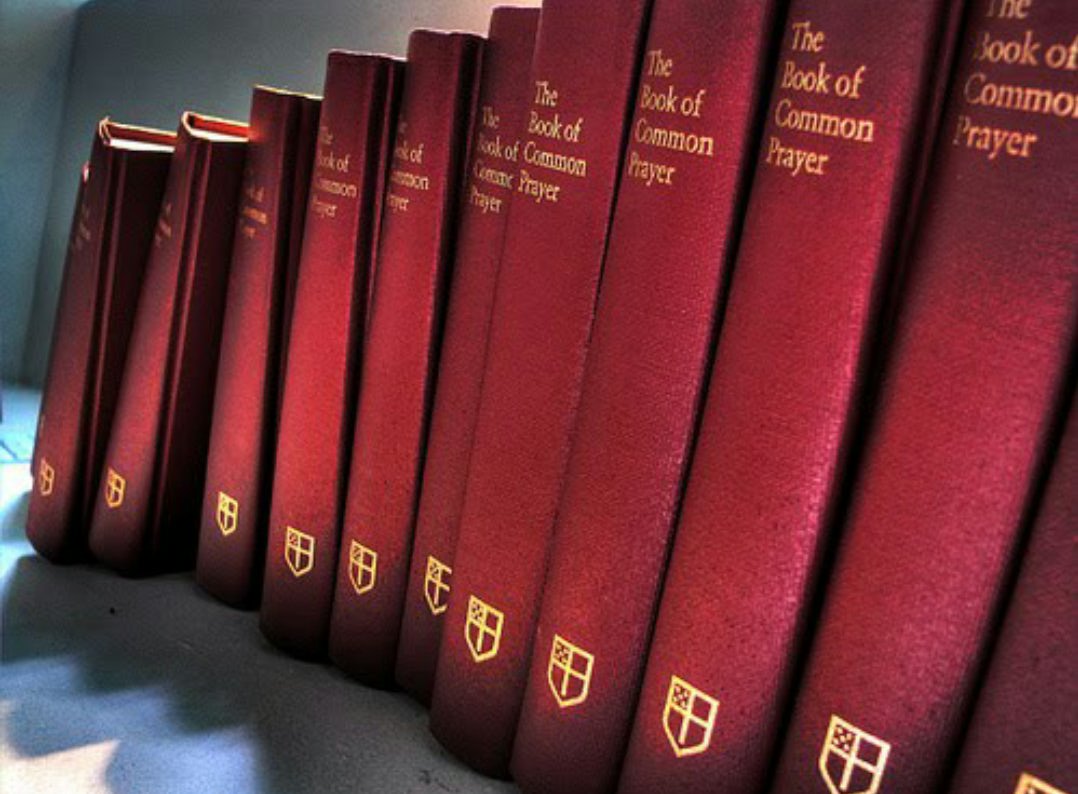
+ As we gather here this morning, the General Convention of the Episcopal Church is meeting in Austin, Texas. And the big debate this year: revision of the Book of Common Prayer.
If you ever want to rile Episcopalians up, just bring up to them the idea of changing the Book of Common Prayer. In fact, many of you might feel the same way. You might even be upset still over the fact that the 1979 BCP replaced the 1928 BCP.
So, why is the revising of the Book of Common Prayer such a big deal? Well, it’s a big deal because when we change the prayer book, we change our official policy of the Church on the certain issues.
For any of you who took my Episcopal 101 class knows; we as Episcopalians are not big on dogma or doctrine. But we are HUGE on worship. And if you want to know what we believe, worship with us.
We believe what we pray.
That’s what I LOVE about the Episcopal Church.
So, as a result, revising the Prayer Book is HUGE. So, what specific revisions are being weighed at General Convention?
The two BIG issues about revision are: First) using exclusive/expansive language regarding God in the liturgy. In other words, veering away from male-exclusive language for God in the words of our liturgies.
As you know, I have been pretty passionate about this one for many years. And we have tried hard here at St. Stephen’s to nudge ourselves in that direction. Of course, for 9 years, our Wednesday night Mass uses a liturgy adapted from some of the resources of the Episcopal Church to utilize non-gender language regarding God.
I am a major defender of this revision.
The other issue is of course the even BIGGER issue (an issue that, if passed will directly affect us at St. Stephen’s): the inclusion of a liturgy for same-sex marriage rites.
Yup, it’s that old battle again. But…if this revision goes through, the battle’s pretty much over. It will now be officially part of the Book of Common Prayer. That’s HUGE.
For most of us, especially here at St. Stephen’s, we are no doubt wonder why there is still so much debate on this issue? We have been doing it here for several years now, and look at how enriched our church is!
Look at how enriched the Church as a whole has been by allowing every one the full rites of the Church. But, by including these rites officially into the BCP and not into some supplemental materials to the BCP, it will now become “official” policy.
And that is where some Episcopalians bristle. “Bristle” might be too tame a word here. As I read though some of the testimonies regarding this issue this past week, I found myself walking familiar ground.
I’ve said it here before. I guess I’ll be saying it again. The issue’s already been decided. We all know the direction in which we’re headed. It is time for the Episcopal Church to simply step up and do it. Just revise what needs to be done, make this an official liturgy and let’s be done with it so we can move on and do the work that needs to be done.
If I sound impatient about this…well… I am. We need to move forward as a Church. Most of us here this morning fought these battles years ago. It’s time to be done.
The people who are opposed to it are going to remain opposed. They will need to make their own decisions in the face of this.
The rest of us just need to do the work that is at hand. As we have been doing here at St. Stephen’s.
We at St. Stephen’s knew that this was the direction in which the Church was heading for decades. We are prepared for these changes. We’ve fought these battles. We’ve been a part of those arguments. We knew this was where we were headed as a Church.
So, I say revise the Prayer Book! I, for one, am excited about the potential of what a new Prayer Book can bring forth! This is what it means to look forward.
To moveforward.
To not get stuck in the museum of the Church.
This is what we have been doing here at St. Stephen’s from the beginning. Looking forward. With hope. With expectation.
And for those of us who have, we knew these changes were coming. They were inevitable.
Now, call it prophecy if you will. Actually, no, don’t. Prophecy can be a good thing, and prophecy can be a bad thing. It depends on where you end up on the receiving end of prophecy.
We hear a lot of about prophecy in scripture of course. And we hear a lot about prophecy in our society.
But we need to be very clear here: Prophets are not some kind of psychics or fortune tellers. Yes, they see things and know things we “normal” people don’t see or know. They are people with vision. They have knowledge the rest of us don’t.
But, again, prophets aren’t psychics or fortune tellers. Psychics or fortune tellers tend to be people who believe they have some kind of special power that they were often born with (if we believe in such things)
According to the basis of prophecy we find in our reading today from Ezekiel, prophets aren’t born. Prophets are picked by God and instilled with God’s Spirit. The Spirit enters them and sets them on their feet. And when they are instilled with God’s Spirit, they don’t just tell us our fortunes.
They don’t just do some kind of psychic mumbo jumbo to tell us what our futures are going to be or what kind of wealth we’re going to have or who our true love is. What they tell us isn’t just about us as individuals.
Rather, the prophet tells us things about all of us we might not want to hear. They stir us up, they provoke us, they jar us.
Maybe that’s why I find the idea of prophets so uncomfortable. And that’s what we dislike the most about them. We don’t like people who make us uncomfortable. We don’t like people who stir us up, who provoke us, who jar us out of our complacency. Prophets come into our lives like lightning bolts and when they strike, they explode like electric sparks.
They shatter our complacency to pieces.
They shove us.
They push us hard outside the safe box in which we live (and worship) and they leave us bewildered.
Prophets, as much as they are like us, are also unlike us as well. The Spirit of God has transformed these normal people into something else. And this is what we need from our prophets.
After all, we are certain about our ideas of God. We, in our complacency, think we know God—we know what God thinks and wants of us and the world and the Church. Prophets, touched as they are by the Spirit of God in that unique way, frighten us because what they convey to us about God is sometimes something very different than we thought we knew about God.
The prophet is not afraid to say to us: “You are wrong. You are wrong in what you think about God and about what you think God is saying to you.”
Nothing makes us angrier than someone telling us we’re wrong—especially about our perception of God. And that is the reason we sometimes refuse to recognize the prophet. That why we resist the prophet, and change and looking forward in hope. We reject prophets because they know how to reach deep down within us, to that one sensitive place inside us and they know how to press just the right button that will cause us to react.
And the worse prophet we can imagine is not the one who comes to us from some other place. The worse prophet is not the one who comes to us as a stranger. The worse prophet we can imagine is the one who comes to us from our own neighborhood—from the midst of us. The worse prophet is the one whom we’ve known. Who is one of us.
We knew them before the Spirit of God’s prophecy descended upon them. And now, they have been transformed with this knowledge of God. They are different.
These people we know, that we saw in their inexperience, are now speaking as a conduit of God’s Voice. When someone we know begins to say and do things they say God tells them to do, we find ourselves becoming very defensive very quickly.
Certainly, we can understand why people in Jesus’ hometown had such difficulty in accepting him. We would too. We, rational people that we are, would no doubt try to explain away who he was and what he did. But probably the hardest aspect of Jesus’ message to us is the simple fact that he, in a very real sense, calls us and empowers us to be prophets as well.
As Christians, we are called to be a bit different than others. We are transformed in some ways by the Spirit’s presence in our lives. In a sense, God empowers us with the Spirit to be conduits of that Spirit to others.
If we felt uncomfortable about others being prophets, we’re even more uncomfortable about being prophets ourselves. Being a prophet, just like hearing the prophet, means we must shed our complacency. If our neighbor as the prophet frightens us and irritates us, we ourselves being the prophet is even more frightening and irritating.
Empowered by this spirit of prophecy, oftentimes what we say or do seems crazy to others.
Prayer Book revision? Ae you kidding me?
Same sex marriage rites? 15 years ago, few people in the Church thought that would ever be a real possibility.
20 years ago, I certainly didn’t think it would happen.
5 years ago, James and William didn’t think they would be having their marriage blessed in their own church of St. Stephen’s.
The Spirit of prophecy we received from God seems a bit unusual to those people around us.
Loving God?
Loving those who hate us or despise us?
Being peaceful—in spirit and action—in the face of overwhelming violence or anger?
To side with the poor, the oppressed, the marginalized when it is much easier and more personally pleasing to be with the wealthy and powerful?
To welcome all people as equals, who deserve the same rights we have, even if we might not really—deep down—think of them as equals?
To actually see the Kingdom of God breaking through in instances when others only see failure and defeat?
That is what it means to be a prophet. Being a prophet has nothing to do with our own sense of comfort. Being a prophet means seeing and sensing and proclaiming that Kingdom of God—and God’s sense of what is right.
For us, as Christians, that is what we are to do—we are to strive to see and proclaim the Kingdom. We are to help bring that Kingdom forth and when it is here, we are to proclaim it in word and in deed. Because when that Spirit of God comes upon us, we become a community of prophets, and when we do, we become the Kingdom of God present here. Being a prophet in our days is more than just preaching doom and gloom to people. It’s more than saying to people: “repent, for the kingdom of God is near!”
Being a prophet in our day means being able to recognize injustice and oppression in our midst and to speak out about them. And, most importantly, CHANGE it.
Being a prophet means we’re going to press people’s buttons. And when we do, let me tell you by first-hand experience, people are going to react. We need to be prepared to do that, if we are to be prophets in this day and age.
But we can’t be afraid to do so. We need to continue to speak out. We need to do the right thing. We need to heed God’s voice speaking to us, and then follow through. And we need to keep looking forward. In hope. And trusting in our God who leads the way. We need to continue to be the prophets who have visions of how incredible it will be when that Kingdom of God breaks through into our midst and transforms us. We need to keep striving to welcome all people, to strive for the equality and equal rights of all people in this church.
So, let us proclaim the Kingdom of God in our midst with the fervor of prophets. Let us proclaim that Kingdom without fear—without the fear of rejection from those who know us. Let us look forward and strive forward and move forward in hope.
I don’t know if we can be truly content with weaknesses, insults, hardships, persecutions, and calamities, as we heard from St. Paul’s in his second letter to the Corinthians today. But having endured them, we know that none of these things ultimately defeat us. And that is the secret of our resilience in the face of anything life may throw at us.
“For the sake of Christ,” let us bear these things.
With dignity.
With honor.
Let us be strong and shoulder what needs to be shouldered.
Because, we know. In that strange paradoxical way we know that, in the way of Christ, whenever it seems that we are weak, it is then that we are truly strong.


July 1, 2018
6 Pentecost
 July 1, 2018Wisdom of Solomon 1:13-15; 2:23-24; Mark 5.21-43+ If you’re anything like me—and I know some of you are on this one—you know how awful being impatient can be. We want certain things—and we want them NOW. Not tomorrow. Not in some vague future. NOW! And it no doubt drives those of around us crazy.
But I am impatient. I want to be doing certain things. And I have never liked waiting. Waiting is one of the worst things I can imagine.
Many years ago, I studied a famous play by Jean-Paul Sartre called No Exit. I’m
 not going to go into the whole plot of the play, but the essence is this. Three damned souls arrive in hell, expecting torture and fire and unending pain. Instead, they’re brought into a plain room.
And they wait.
And wait.
And wait.
There’s more to the play than this, but essentially, it’s about hell is simply a waiting room in which one waits and waits and waits.
To me, that play has always been terrifying. I understand it. I get it. Yes! That’s what hell would be like (if I believed in hell)
Impatient as I am, ultimately I know that waiting and being patient is a good thing sometimes. I’ll give you an example.
I have been very transparent with all of you about my mourning and grief for my mother following her death. I haven’t hidden that fact from any of you. And you’re probably sick of me bringing it up on occasion.
But, what I haven’t shared with anyone is that, there have been moments—very dark moments—when I simply want to be done with mourning. I want to past this pain, this experience of first things—first holidays, first times at this restaurant that we would eat, or that store in which we shop. I just want all those difficult things behind me. I want to be done with it all and move on.
I really want to cling hard and fast to our reading from Wisdom this morning:
God did not make death,
And [God] does not delight in the death of the living.
I know that. I realize that death and mourning and grief are all part of our own experience of hell here on earth.
Because, right here, right now, in the midst of it all—it’s not very pleasant. In fact, it’s very much like Sartre’s hell. I want to be done with mourning and sadness and all that goes along with losing someone we love.
The fact is, as much as I want that—it doesn’t work this way. We can’t rush these things. Things happen in their due course.
Not OUR course.
Not MY course!
But the proper course.
God works in God’s own time. And this is probably the most difficult thing for us.
Impatience is present in our Gospel reading for today, but in a more subtle way. Our reading from the Gospel today also teaches us an important reflection on our own impatience and waiting, and also about how the hell of death is ultimately defeated.
We have two things going on. First, we have Jairus, the leader of the synagogue, who has lost his twelve-year-old daughter, even though he doesn’t know it yet. The hell of death has drawn close to Jairus. While Jairus is pleading with Jesus to heal his daughter, we encounter this unnamed woman who has been suffering with a hemorrhage for twelve years—twelve years!—the same amount of years as the daughter of Jairus lived—is desperate. She wants healing.
I can tell you in all honesty that as I read and reflected and lived with this Gospel reading this past week, I could relate. I can relate to Jairus, who is being touched with the darkness of death in his life. And when I read of the woman with a hemorrhage grasping at the hem of Jesus’ garment, I could certainly empathize with her impatience and her grasping.
Many of us have known the anguish of Jairus. We have known the anguish and pain of watching someone we love fade away and die.
And many of us know the pain of that woman. We often find ourselves bleeding deeply inside with no possible hope for relief. For us, as we relate, that “bleeding” might not be an actual bleeding, but a bleeding of our spirit, of our hopes and dreams, of a deep emotional or spiritual wound that just won’t heal, or just our grief and sadness, which, let me tell you, can also “bleed” away at us. And when we’ve been desperate, when we find ourselves so impatient, so in need of a chance, we find ourselves clutching at anything—at any little thing. We clutch even for a fringe of the prayer shawl of the One whom God sends to us in those dark moments. When we do, we find, strangely, God’s healing.
And in this story of Jarius’ daughter, I too felt that moment in which I felt separated from the loved ones in my life—by death, yes, of course. But also when I felt that a distance was caused by estrangement or anger. And when I have begged for healing for them and for myself, it has often come.
But it has come in God’s own time. Not in mine. It is a matter of simply, sometimes waiting.
For Jairus, he didn’t have to wait long.
For the woman, it took twelve years.
But in both cases, it came.
Still, I admit, I continue to be impatient. I am still impatient in my mourning. But even now, in the midst of it all, I can hear those words that truly do comfort me:
“Why do you make a commotion and weep? Your loved one is not dead but only sleeping.”
Resurrection comes in many forms in our lives and if we wait them out these moments will happen.
And not all impatience is bad. It is all right to be impatient—righteously impatient—for justice, for the right thing to be done. It is all right to be impatient for injustice and lying and deceit to be brought to light and be revealed. And dealt with. It is all right to be impatient for the right thing to be done in this world.
But we cannot let our impatience get in the way of seeing that miracles continue to happen in our lives and in the lives of those around us. I know, because I have seen it again and again and, not only in my own life, but in the lives of others. We know that in God, we find our greatest consolation.
Our God of justice and compassion and love will provide and will win out ultimately over the forces of darkness that seem, at times, to prevail in our lives. Knowing that, reminding ourselves of all that we are able to be strengthened and sustained and rejuvenated. We are able to face whatever life may throw at us with hope and, sometimes, even joy.
See, we are not in Sartre’s hell. Trust me. We’re not. At some point, the doors of what seems like that eternal waiting room will be opened. And we will be called forward. And all will be well. That is what scripture and our faith in God tell us again and again. That is how God works in this world and in our lives.
So, let us cling to this hope and find true strength in it. True strength to get us through those impatient moments in our lives when we want darkness and death and injustice and pain behind us.
Let us be truly patient for our God.
If we do, those words of Jesus to the woman today will be words directed to us as well:
“your faith has made you well;
go in peace;
be healed.”
June 24, 2018
5 Pentecost
 June 24, 2018
Job 38.1-11; Mark 4.35-41
+ Lately I have been watching a lot of films. This past week I saw two very different films that created a bit of unrest.
I saw the film Hereditary, about a family possessed and haunted by some kind of evil. It was sort of a cross between The Witch and Rosemary’s Baby.
And I saw First Reformed, a film about a troubled pastor.
Occasionally films do this to me. They affect me. And they sometimes cause me to think too deeply about something.
And I truly do believe that films are the new parables for our world. They speak to us in sometimes veiled ways to convey deeper truth. Of course, I cannot read our scriptures from Job today without thinking of one of my favorite films, the great Cohen brothers film, A Serious Man.
The film takes places in St. Louis Park, Minnesota in the late 1960s and deals with
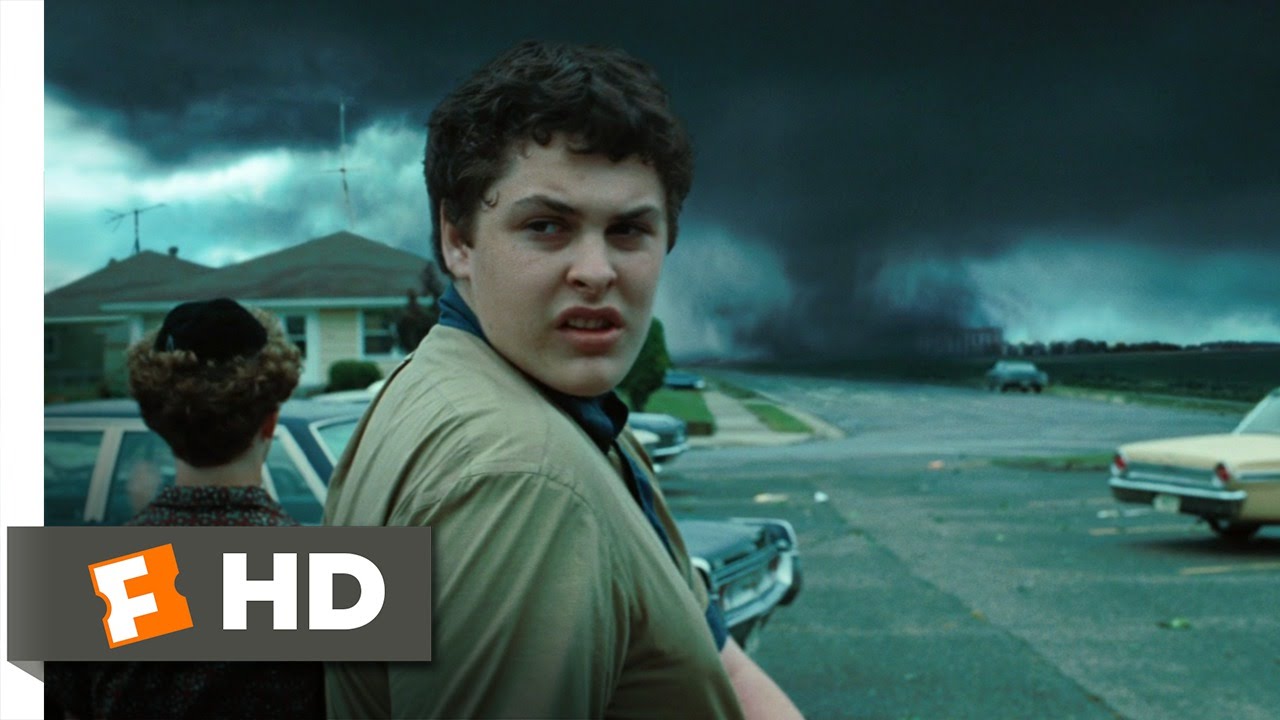 a Jewish family and the chaos of their lives. The ending of that film (which I won’t give away today) almost reminds me of this Job reading and was the catalyst for me figuring out that that film is a modern re-telling of the Job story. If you haven’t seem A Serious Man, please do so! (it’s not a kid-friendly film though).
 To me, in many ways, films are a great and powerful way to wrestle with theology and our understanding of how God works in this world.
Several years ago, I read a wonderful book called TheNew Christians by Tony Jones. In this book, Jones has probably one of the best contemporary definitions of theology. He writes:
“Theology…speaks directly of God. And anytime human beings talk of God, they’re necessarily also going to talk about their own experience of God.”
Jones then goes on to define theology more succinctly. He writes, “theology is talk about the nexus of divine and human action.”
I like that definition very much.
“But theology isn’t just talk,” Jones adds. “When we paint scenes from the Bible or when we write songs about Jesus or when we compose poems about God or when we write novels about the human struggle with meaning, we are ‘doing theology.’”
I would add to that list, films as well.
So, essentially, our entire lives are all about “doing theology.” All we do as followers of Jesus is essentially “doing theology.”
As I pondered two of our scriptures for this morning, our reading from Job and our reading from the Gospel of Mark, I found myself “doing theology” by re-examining that film A Serious Man which caused to examine the storms of my own life in the light of those scriptures and that film.
We all have them. We all have our own storms in this life. We all have our own chaos. And they are disruptive. And they can be destructive.
So, the question to ask of ourselves this morning is:
What is God saying to us from the whirlwinds that invade our lives?
What do we do in the windstorms of our lives, when we feel battered and beaten and bashed?
Well, as I have been “doing theology” on these scriptures and from that film, one glaring, honest reality of my life came forth: Oftentimes, when the storms of my own life came, I was the one responsible for many of those storms. Sometimes, there was no one to blame for some of them but myself. And more often than not, the storms of my own life were caused by own violent behavior.
Now, yes, I know. I preach often here about my non-violence. And I have worked hard, I have strived for non-violence in the world. But I have realized over the last several years that working for non-violence means ridding violence in all forms from one’s own life. One must have a firm foundation of non-violence in one’s own life before seeking it from the larger world (this is a major tenet of Gandhi’s non-violence).
And no, I’m not just talking veganism here. (though I could!)
I was reminded of the violence in my own life by a book I read by the Buddhist teacher Noah Levine, called Refuge Recovery. Levine writes,
“Harsh speech, dirty looks, obscene gestures and [angry and] offensive texts and e-mails are…subtle forms of violence. Our communications have power, the ability to cause harm or harmony.”
He goes on,
“we must strive to abstain from creating more negativity in this world” because by doing so we contribute to the negativity in this world.
“Violent actions have violent…consequences., and that…could manifest as…guilt, [anger,] shame and self-hatred…”
That passage from the book shook me to my core.
I did not want to admit to violence in my life much less to the fact that I sometimes contributed to the violence of this world by my own negativity sometimes. And let me tell you I have definitely contributed to it from those seemingly small, knee-jerk reactions.
The snide comment.
The angry text or email or Facebook response.
A mean-spirited eye-roll.
The gesture in traffic.
But the ripple effects of these seemingly innocent gestures in my life were certainly chaotic not only in my life, but possible in the lives of others. These acts of small or simple violence more often than not were enough to add to the brewing storms of my own life—and possibly to other’s lives as well. I have, in fact, created storms in my life, then find myself blaming others for those storms.
So, when we hear scriptures like this today, as we experience our own storms in our lives, what do we do?
How do we respond? Do we let the winds blow, let the chaos rage? Or do we, in those moments, calm ourselves and listen? Do we strain against the wind of the storm and listen to hear the Voice of God?
The fact is, if you do so, trust me: we will hear God’s voice. If we turn our spiritual ears toward God, we will hear God, even in those self-made storms in our lives.
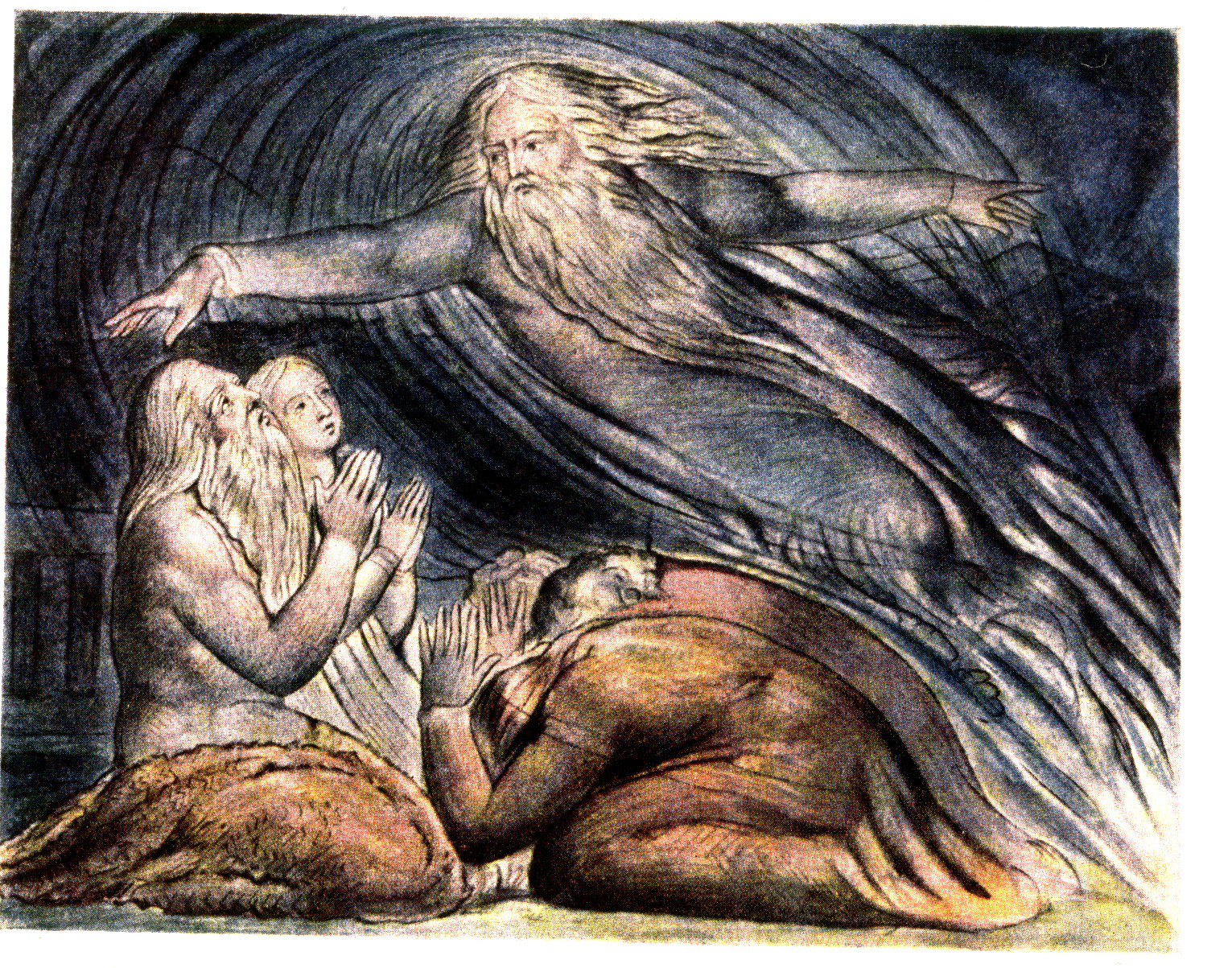
For Job, the voice of God he hears in the whirlwind has no answers to the questions we find ourselves asking all the time? Why do bad things happen to those of us who are faithful to God? Why do our lives get turned upside down? The Voice that answers Job from the whirlwind doesn’t answer any of that. Instead, the answer is just more questions:
“Where were you when I laid the foundations of the earth?[Where were you] when the morning stars sang togetherand all the heavenly beings shouted for joy?”
Sometimes that’s exactly what we hear in the storms of our lives. We want answers when we shout our angry questions of unfairness into the storm, our first raised. Sometimes, when we do, the Voice in the wind only throws it all back at us with more questions. Just when we want answers, we find more questions and we ourselves are forced to find the answers within ourselves.
But, sometimes the Voice answering back from the wind with questions, is a voice more succinct. Sometimes it is a more potent question—a question not filled with poetic and symbolic meaning, but a pointblank question to us. Sometimes the voice from the wind—as we shake with fear or anger (or both) and hold on for dear life during those frightening storms—asks us bluntly:
“Why are you afraid? Have you still no faith?”
Why fear the whirlwinds and all that they unleash upon us? Why even create them in the first place? Have we no faith? Again and again through the scriptures God commands us, in various voices, “do not be afraid.”
“Do not be afraid.”
And still we fear. And our fear causes anger. And our fear causes storms.
But the message is that although the storms of our lives will rage around us, when we stop fearing, those storms are quieted. Because sometimes the voice that comes out of the storms of our lives is not asking a question of us. Sometimes the voice that comes out of the storms of our lives commands,
“Peace! Be Still!”
“Peace!”
That wonderful, soothing word that truly does settle and soothe.
“Be still!”
In that calm stillness, we feel God’s Presence most fully and completely. As disoriented as we might be from being buffeted by the storm, that stillness can almost be as disorienting as the storms themselves. Still, in it, we find Jesus, calm and collected, awaiting us to have faith, to shed our fears and to allow him to still the storms of our lives.
So, in those moments when we stir up the forces of our anger, when the whirlwinds rage, when the storms come up, when the skies turn dark and ominous, when fear begins lurking at our doors and anger jostles us around, let us strain toward that Voice that asks us,
“Why are you afraid? Have you still no faith?”
Do not fear.
Have faith.
God loves us.
God will not leave alone even in the storms of our lives.
In midst of even the worst whirlwinds of our lives, there is a stillness dwelling in its core.
And while the storms rage, as violence goes on unleashed in the form of anger and fear, in the form of awful stories in the news and social media and people on the street or in our own lives, we can choose non-violence as our option. We can choose not to contribute to the storms.
And we can live!
And flourish!
See! we hear Paul saying today in his letter,
See, now is the acceptable time;
see, now is the day of [our] salvation!
June 17, 2018
4 Pentecost
 June 17, 2018
Ezekiel 17.22-24; 2 Corinthians 5.6-17; Mark 4.26-34
I hope you don’t get too upset with me this morning. But I’m going to start out today with, of all things, a poem. Actually, it’s only a fragment of a poem. And no, you can relax: it’s not one of my poem either.
No, this poem is a poem from, of all people, a Communist. A Communist from Chile. It’s one I definitely love. It is called “Oda al átamo” or “Ode to the Atom.” (I think I’ve shared this poem before)
Infinitesimal star, you seemed forever buriedin metal, hidden, your diabolic fire. One day someone knocked at your tinydoor: it was man. With one explosionhe unchained you,you saw the world,you came outinto the daylight,you traveled throughcities,your great brillianceilluminating lives,you were a terrible fruitof electric beauty…[Then] camethe warriorand seduced you:sleep, he told you,curl up,atom, you resemblea Greek god…in springtime,lie down hereon my fingernail,climb into this little box,and then the warriorput you in his jacketas if you were nothing buta North Americanpill,and traveled through the worldand dropped youon Hiroshima.
This poem was written by one of my all-time favorite poets—a poet you’ve heard me quote before and, trust me, you will hear me quote again and again—Pablo Neruda. And this fragment of the poem we just heard just touches a bit on what something as small as an atom can do.
An atom—that smallest of all things—can, when it is unleashed, do such horrendous damage. It truly can be
“a terrible fruitof electric beauty…”
And look at what it could do.
If the people of Jesus’ day knew what atoms where, he would no doubt have used the atom as a symbol of the Kingdom of God,
But rather, what we find today in our Gospel reading is Jesus comparing the Kingdom of God to the smallest thing they could’ve understood.
A mustard seed.
A small, simple mustard seed.
Something they no doubt knew. And something they no doubt gave little thought to. But it was with this simple image—this simple symbol—that Jesus makes clear to those listening that little things do matter.
This past Monday—on the feast of St. Barnabas—I celebrated my fourteenth anniversary of ordination to the priesthood. What can I even say about fourteen years in the priesthood? At fourteen years, one is definitely not the new kid on the block. Fourteen years is a long time. Those hopes, those dreams one had for what one was going to do in the ministry have either been realized or dashed.
At fourteen years, you are a grizzled old veteran. You’ve been through a few things, you’ve seen a few things.
More importantly, one definitely knows if one is bearing fruit or not by fourteen years. One knows if the seeds one has sown have been planted in fertile ground or are, instead, being thrown to the wind and to infertile ground.
What we all recognize is the fact that in one’s life as a Christian there are going to be moments when it seems as though one’s ministry is flourishing and wonderful. And there will be moments when our ministry seems to be producing nothing.
Our ministry, in many ways, reflects our lives.There will be feasts and there will be fasts. And all are equally productive.
Jesus’ use of the mustard seed is particular apt way of approaching ministry. The mustard seed is the smallest of the seeds and yet look at what it produces. This is what ministry is all about as well.
The smallest thing we do in our ministry can produce some of the greatest fruit. And that’s real point. All of us—certainly all of who profess our faith as Christians, who come to church on Sundays—are called to ministry.
Ministry is simply part and parcel of being a Christian. If we are baptized, if we live out that baptism in the world, we are doing ministry. Ministry is not nor has it ever been the exclusive claim of those of us who have been ordained, who wear funny collars and crisp black clothes.
Ministry has always been the work of all of us. That is why Jesus compares the Kingdom of God to these images of seeds. The Kingdom of God doesn’t just happen when priests and bishops get up and preach and make legislation in the Church.
In a few short weeks beginning on July 5th, the Episcopal Church’s General Convention will meet in Austin Texas. Let’s face it, the Kingdom doesn’t’ happen just when we as a Church send out deputies off to places like Austin where they make decisions about what direction the Church might go.
And I can tell you right now: the Kingdom of God definitely doesn’t happen when we hide behind Scripture or manipulate and use scripture to promote evil, blatantly unchristian acts such as separated children from their parents. In fact, in those instances, we are uprooting the Kingdom of God in our midst.
The Kingdom happens when we—each and every single one of us—do, in even some small way, what we profess to do, when we go out from this church on Sundays and try to live out in whatever way we can what we have learned and professed here.
To bring about the Kingdom of God in this world, we don’t need to be grandiose. We don’t need to shout or scream or strut about, full of ourselves. We don’t need to use the Bible as a sword to cut people down. We don’t even have to say a simple word. When it comes to the Kingdom, when it comes to true ministry, little things do truly mean quite a lot.
That sprig that the Prophet Ezekiel talks about in today’s reading from the Hebrew scriptures is another example of what the Kingdom of God is like. From a sprig form the topmost part of the cedar tree, can come a canopy under which we all live and serve.
Ezekiel’s sprig and Jesus’ mustard seed remind me of Neruda’s atom. Just as the small good things in the world can produce such beautiful and wonderful things such as the Kingdom of God in our very midst, so do those small seeds of discontent flourish into ugly and life-threatening weeds.
Sometimes the little things we do, do much harm as well. A quick, harsh word of criticism, a glance, a gesture of anger at a fellow motorist on the highway—all of these don’t do anything to bring about the Kingdom of God in our midst. They only sow discontent and anger and frustration. And where discontent and anger and frustration flourish, the Kingdom of God is stifled.
We have all known what it feels like to be on the receiving end of those seeds of discontent. We have all known people who have been driven from the church by what those seeds have produced. We ourselves have no doubt been close to leaving the church over those weeds that clog our lives and cause us such pain.
But it does draw us back to the mustard seed once again. It reminds us that despite all the weeds that can grow, that mustard seed can produce something even greater than weeds.
Those small, good things we do can truly bring about more good than we can hope to produce. Simple things like a hug, an ear to listen, a smile, an attempt to soothe, to comfort, to help—all these things and so many more go a long way in helping to crowd out the weeds of negativity in the world. Over and over again in our lives, we have no doubt seen the Kingdom of God blossom in people’s lives and in the world from the smallest seeds of goodness.
So, let us be seeds of absolute and total goodness! Let us hold before ourselves that image of the mustard seed. Let it be an icon for us in our ministries. Let it be for us a symbol of the ministry we have been called to do by our baptism, by our membership in the Church of God. Let the mustard seed be for us a doorway through which the Kingdom of God breaks through into our world. Let it be the positive atom which, when unleashed, creates an explosion of goodness and beauty and grace in this world.
Let it be the “fruit/of electric beauty” that will transform this world into the Kingdom in which God reigns completed and fully through us.
Let it be, as Neruda begged the atom to be at the end of his poem:
“…instead of the fatalashes of your mask,instead of unleashed infernosof your wrath,instead of the menace of your terrible light, deliver to usyour amazingrebelliousnessfor our grain,your unchained magnetism to found peace among men,and then your dazzling light will be happiness,not hell,hope of morning,gift to earth.”
Let our dazzling light be happiness not hell.
Let us be hope of morning.
Let us be gift of earth.
June 10, 2018
3 Pentecost
 June 9, 2018
Mark 3.20-35
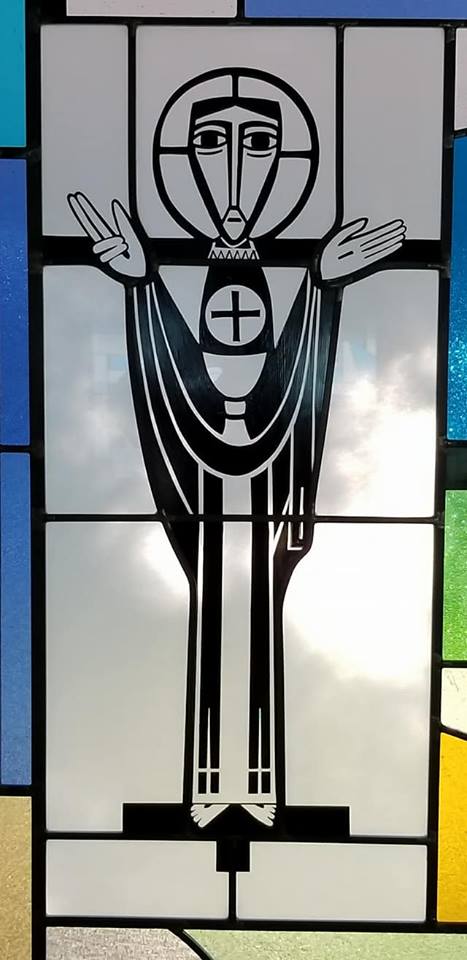
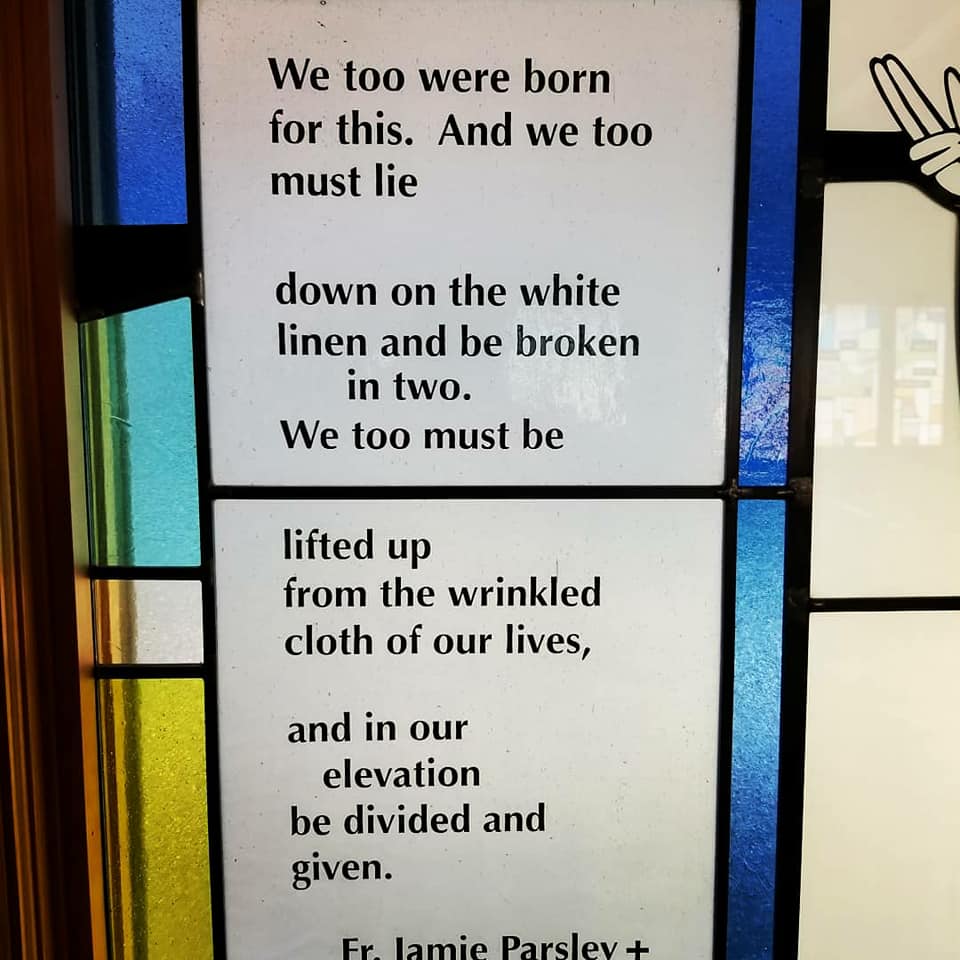
+ Today is a big day for us here at St. Stephen’s. We, of course, are blessing and dedicating this wonderful window today—the final one of this series of eight windows. Personally, it means so much to me. Of course, to have such a wonderfully window dedicated to my mother and cousin is moving for me. And I am deeply humbled to be honored by seeing my name and ministry, as well as my poem immortalized in the window means so much. And to honor not only my predecessor-priests, but also those priests that will come to St. Stephen’s in the future is truly beautiful and wonderful as well.
But, for all of us, this window of course represents the completion of an amazing and truly beautiful artistic project here.
It was about two and half years ago that our very own Leo Wilking brought an idea before the Vestry of having a window dedicated in memory of his parents. At the time, I didn’t know what to think of the idea. Of course, I was all for a stained glass window!
But, I’ll be honest. I thought we would end up having one window and that would be it.
Stained glass windows are expensive after all!
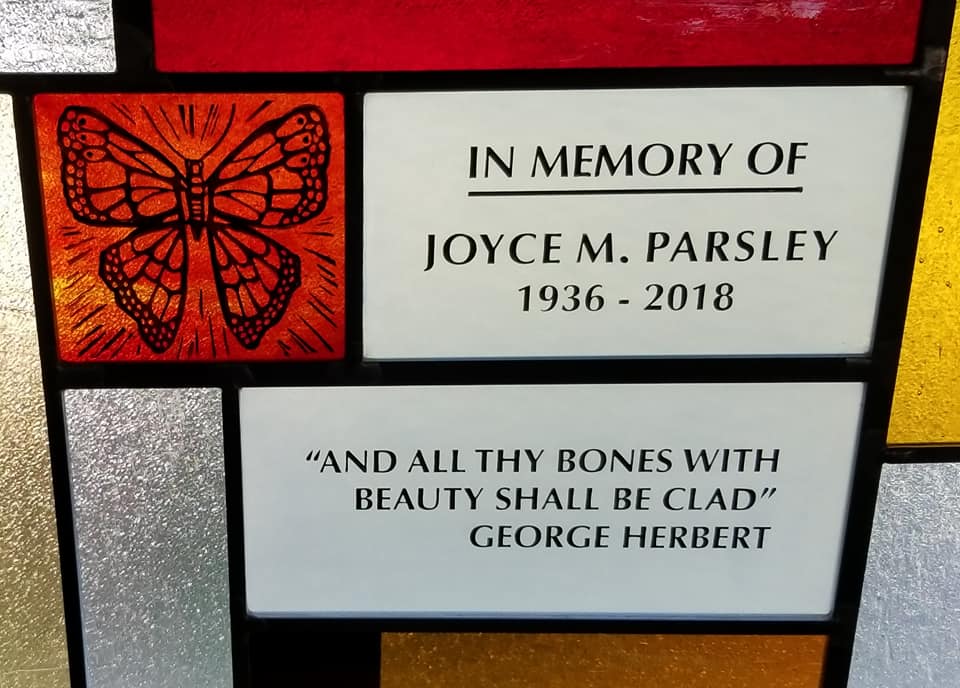
But with Gin’s artistic vision, we moved forward, thanks, in some way, to Piet Mondrian (and the Mondrian painting in the opening credits of Green Acres—which causes poor Gin to roll her eyes, but it’s kind of the truth!!).
Still, I will be even more honest about the fact that I thought this would be a project that would be completed long after my time at St. Stephen’s. I thought: well, this will be a project that will take at least five years, more likely ten.
 But first came the Good Samaritan window. And then dear Harriet Blow died and we then got the Mary and Martha window, to balance out the windows. Then came, of course, the Integrity window which was controversial and exciting and amazing all at once! And before we knew it…well, here we are.
The first window, that Good Samaritan window, was dedicated and blessed on June 12, 2016. That will be two years on Tuesday. Within two years, all of our windows are done! That is absolutely amazing! God works in these ways! (and so does Gin Templeton)
I thank Leo for his vision for these windows.
I thank Michael Orchard and Nick Walberg from the Michael Orchard Studio for their hard work on these windows.
I thank the donors who stepped up and contributed to this incredible artistic accomplishment.
And, of course, we thank Gin. Gin, who sacrificed and labored and lost sleep and was unable to fully enjoy her vacations to Florida, for these windows. There is a lot of blood and sweat and tears in these windows.
Now, having said all of that, I want to stress something. This all more about more than just glass and paint and metal this morning. These windows are more than just lovely additions to our church building.
Look at these windows! Actually LOOK at them. See what they represent.Actually look and see what it is they celebrate and commemorate. Because what they celebrate and what they commemorate is you.
Each of you.
You, as well as those who are not here among here in this building today but who now dwell in a place of light inaccessible. These windows commemorate the ministries you have been doing in this church for 62 years.
These windows represent yourblood, your tears, your sweat, your sacrifices, yourlost sleep, your moments of despair.
These windows represent yourdevotion, your perseverance, your dedication, your devotion to God and others.
These windows represent in a very real and beautiful way your attempts at doing the will of God in this world!
In today’s Gospel, we find Jesus saying that wonderful statement of his:
“Whoever does the will of God is my brother and my sister and my mother.”
Now that was no doubt a jarring statement to Mary, his mother, and to his brothers and sisters. But, I’ve always loved that scripture for a probably not so nice of a reason. Many of know full-well that family is not always those who share genetics with us. Family is often those we chose as family. The Church reminds us of this again and again. Those of us who follow Jesus, who are the sisters and brothers of Jesus, we are also sisters and brothers to each other, and hence, family. It is true of our church and it is true of our own community.
So, what is doing the will of God? Do I honestly need to even ask this this morning? We know what doing the will of God is. It’s peached and lived out in this church every single day.
It’s celebrated in these windows.
Doing the will of God is loving—radically and fully and completely. Doing the will of God is accepting radically and completely. Doing the will of God is being radically and fully inclusive. Doing the will of God is doing things that others say shouldn’t (or can’t) be done.
One of the things we endure in our lives is Christians is the doomsayer. We know the doomsayer. We’ve endured the doomsayer.
While other Christians—and specifically Episcopalians—are singing their songs of doom about the demise of the Episcopal Church and other mainstream churches, we are the ones who laugh at such doomsayers. We are the one who shrug our shoulders at those in authority who tell us we shouldn’t do what we have done here.
Look at these windows and what they celebrate.
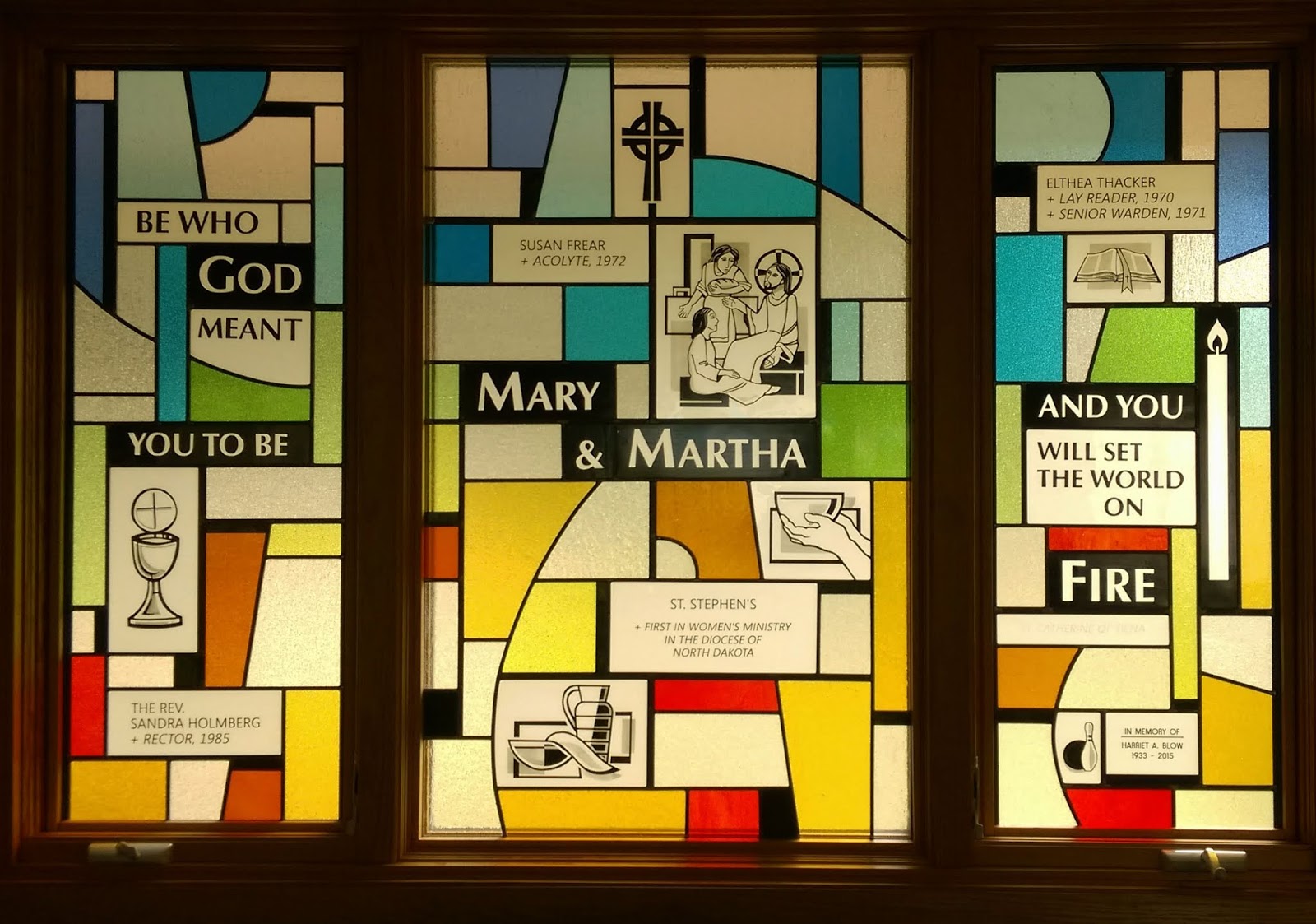 Mary & Martha window
We are the ones who gave women a place in leadership when others said that can’t be done.
 Peaceable Kingdom window
We are the ones who say and again that peace is always an option and that justice is a Christian obligation even while wars and rumors of wars raged around us.
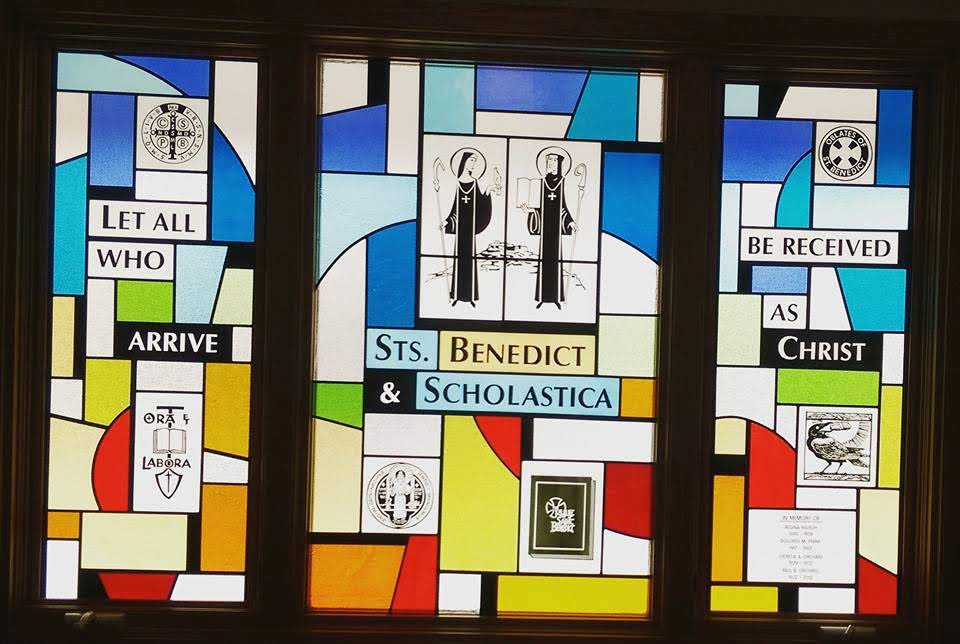 Sts. Benedict & Scholastica window
We are the ones who welcome all people in these doors in the name of Christ, receiving them as Christ and including them as one of us.
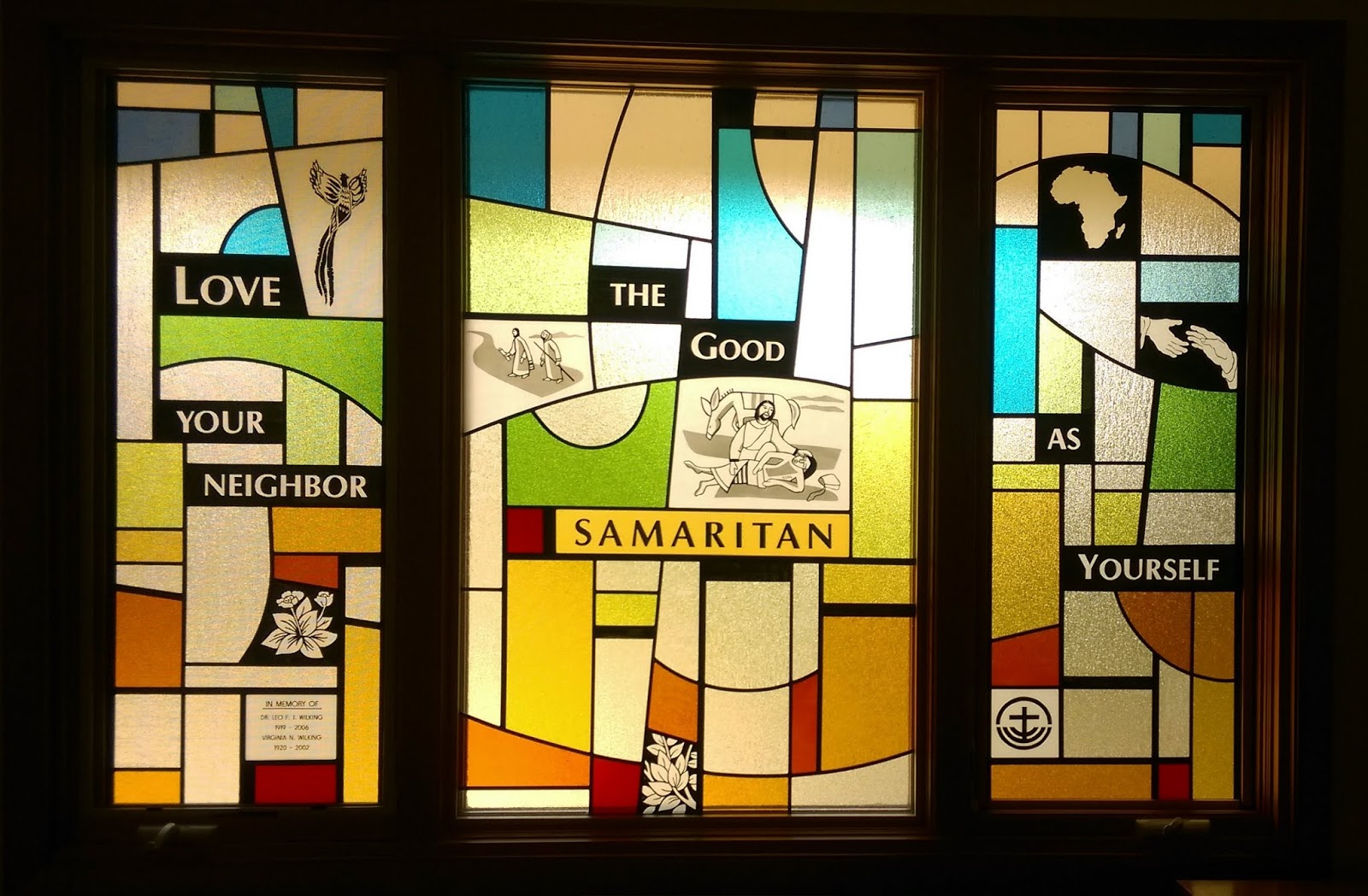 Good Samaritan window
We are the ones who did not pass by on the other side of the road when see others in need.
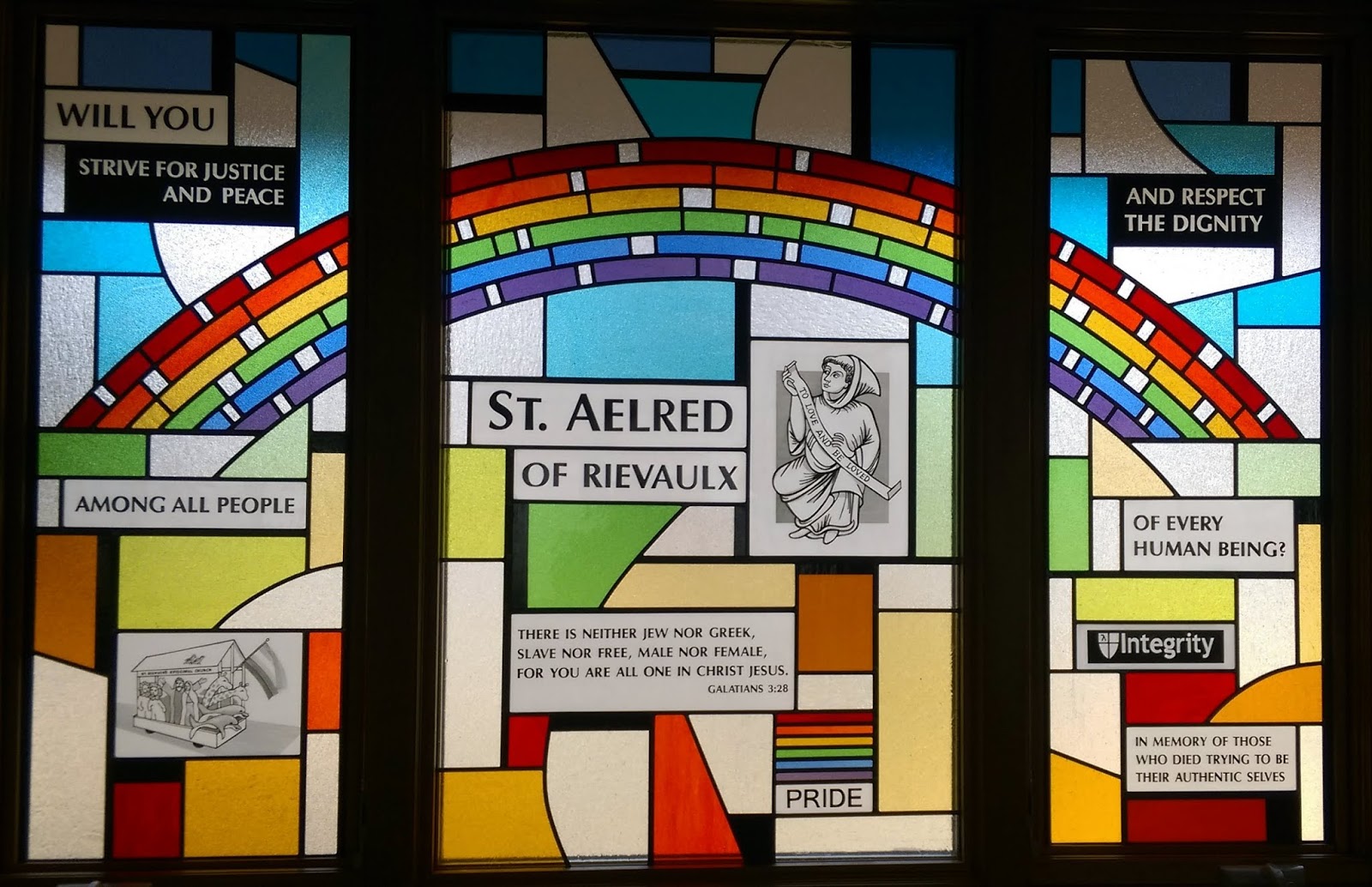 Integrity windowWe are the ones united under the overarching love and acceptance of God to include all people here, because we are a family under the overarching love of God.
We are the ones who stand up and say we cannot abide when those in authority tell us we cannot do this or that.
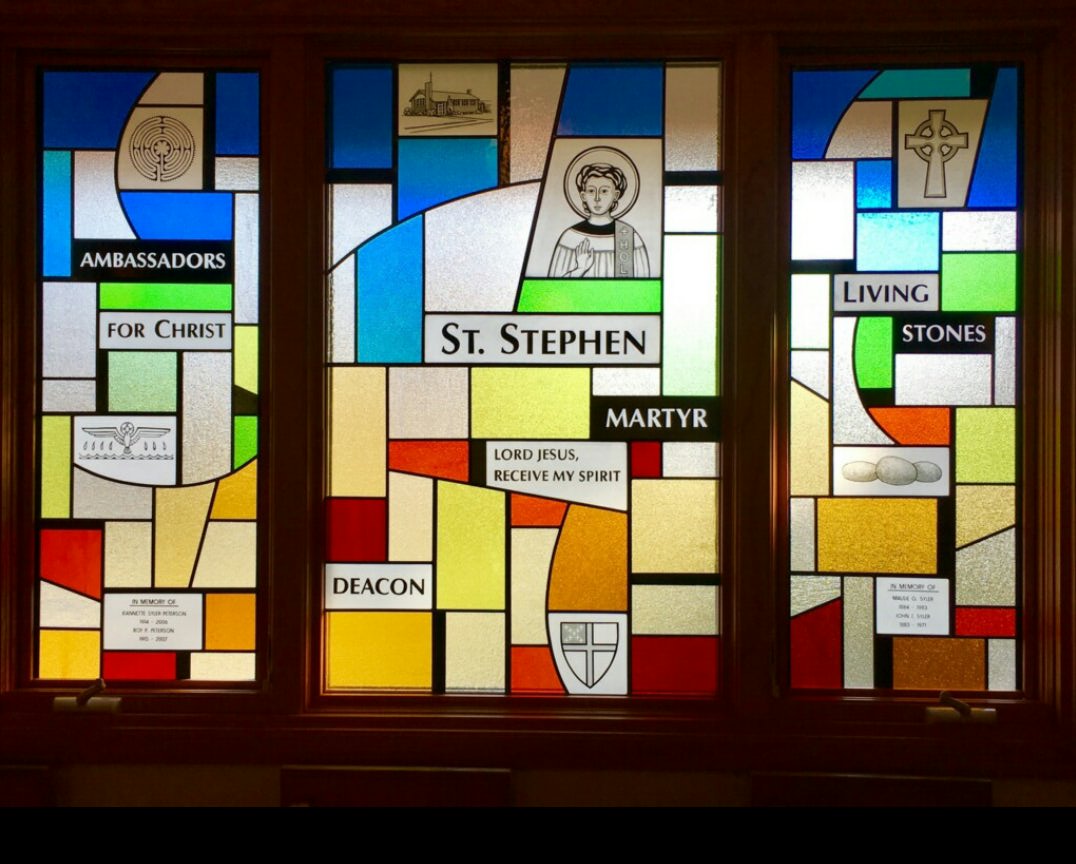 St. Stephen window
We are the ones who, like our patron saint, St. Stephen, can look up in the midst of a rain of stones, and see the glory of God and Christ standing his the right hand of that Glory.
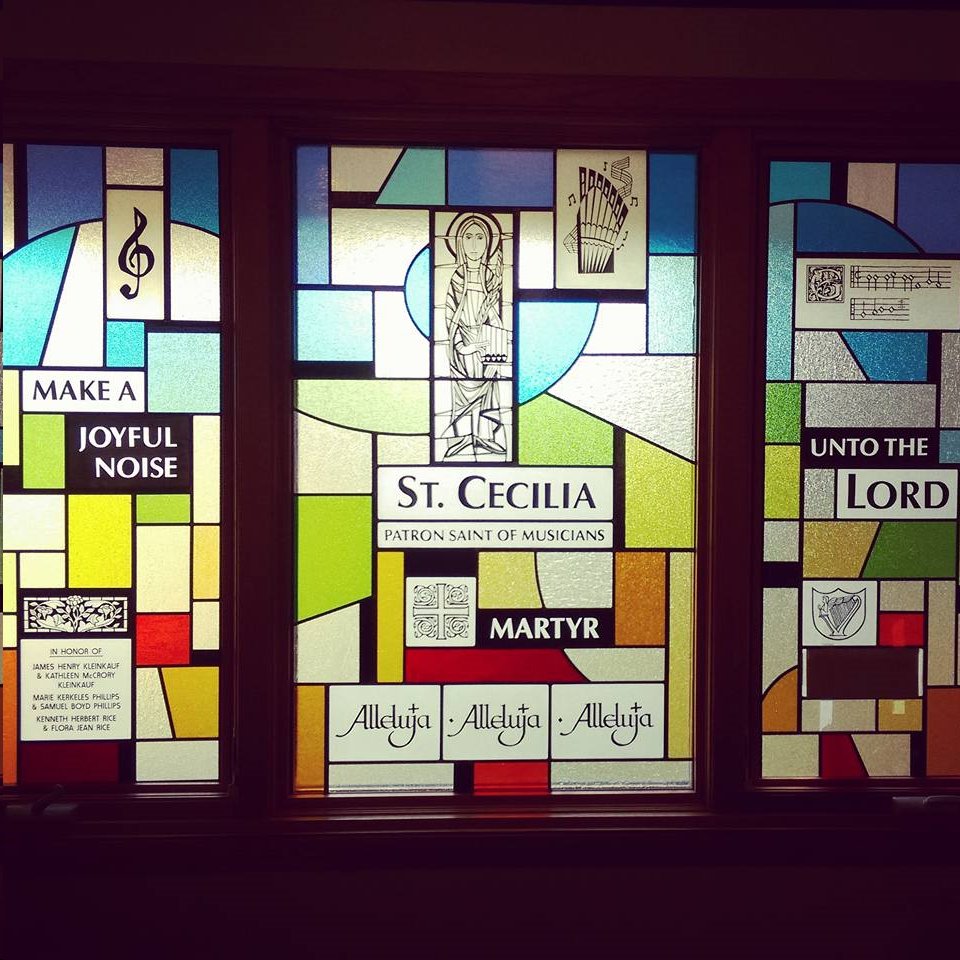 St. Cecilia window
We are the ones who, on good days and bad, who in the face of life’s storms or in the sunshine of our youth, who even at the grave are able to rejoice and sing and say, “Hallelujah! Hallelujah! Hallelujah!”
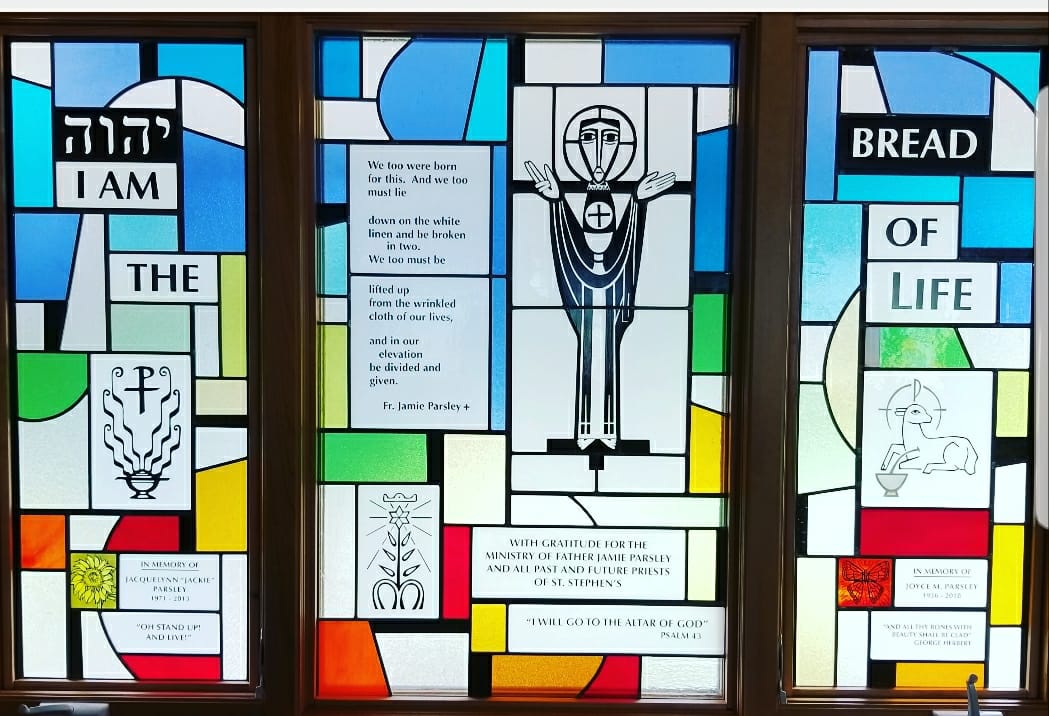 Bread of Life window
We are the ones who gather here, at this altar, again and again, to break bread with each other, to share the Body and Blood of Christ, and to then go out into the world to share Christ with others.
This is what it means to do the will of God. And by doing this, we are the brothers and sisters of Jesus.
See, it’s not doom. See, it’s not the end of the Church. Yes, we know it’s uncomfortable to change and grow and be pliable. But it’s essential.
The church is changing. These windows today reflect that changing church. These windows reflect the Church that is about to be.
This is the Church of the future. And it is the Church of the past. It is a church filled with music and poetry and art, but it is a church centered squarely on God and God’s Christ.
It is a Church supported by the saints, both those who are alive and present right here, and those who are singing their praises this morning in the Presence of the Lamb.
It is a Church that is radically different and yet radically the same.
Doing the will of God means being like these windows.
In this month’s newsletter, I shared the poem “Windows” by the great Anglican poet and priest, George Herbert (yes, one of my heroes—and who is quoted in our latest window). That poem is, of course, about more than mere windows. It is about us being the windows of the Church. It is about us being the conduits through which the Light of God shines. It means opening ourselves to reflect God’s Light to those who need God’s light in their lives.
We don’t have to perfect. We can be “brittle crazie glass” as Herbert says. We don’t have to be gorgeous stained glass done up in Midcentury modern/Mondrian-inspired beauty. We can be cracked and dirty and imperfect to reflect the Light of God. But our job is to reflect that Light, even when we don’t feel like or think we can’t.
“Who are my mother and my brothers and my sisters?” we are being asked today.
We are! That is what these windows represent. That is what these windows remind us we are doing. We are being Jesus’ sisters and brothers in this world by doing what these windows celebrate and commemorate.
So, let us celebrate today. Let us give thanks to our loving God for these windows, for all that they represent in our lives and ministries here at St. Stephen’s. Let us rejoice in the artistic and poetic vision and talents of those who labor beside us. Let us be thankful for those who worked on these windows and for those who are remembered in them.
But, most importantly, let us live out what these windows represent.
Let us be windows in our own lives.
Let us be windows reflecting God’s Light and Love to others.
Let us, like these window, shine !
Shine in all we say and do.
Shine in conveying the Light of God’s love and acceptance to all.
Today and always, let us...
SHINE !
May 27, 2018
Holy Trinity
 May 27, 2018
Isaiah 6.1-8; Romans 8.12-17; John 3.1-17
+ When all is said and done, at the end of the day, I can say this about myself: I am actually fairly orthodox in most of what I believe. I don’t say that pridefully. I’m not bragging. I’m just saying…
Yes, I know. I’m pretty liberal. At least socially.
But theologically, I’m pretty cut and dry. It would be hard to find a major heresy in most of my thinking.
OK. Yes, I’ll admit I’m somewhat of a universalist. I do believe that, eventually, we will all be together with Christ in heaven. I really do believe that. I do not believe in an eternal hell.
But the rest of it is pretty much straightforward. I believe in the Incarnation of Christ.
I believe Jesus is the Word of God made flesh.
I believe prayer does make a difference in this world.
I believe in the Resurrection.
I believe in the Real Presence of Christ in the Bread and Wine of the Eucharist.
And let’s not get into my view of Mary and the saints.
But, then, there’s the Trinity.
Sigh.
The Trinity.
I’ll make it simple for you. I don’t know what it is for certain. I don’t know how it works. But somehow I know it works. And I think that is where most of us are with the Trinity.
Most of us, let’s face it, don’t give the Trinity a lot of thought. For me, it’s a mystery. Which is not a bad thing. I love the mystery of our faith. And let me tell you, there is nothing more mysterious than the Trinity.
God as Three-in-One—traditionally seen as the Father, or Parent or Creator, the Son or Redeemer and the Spirit or Sanctifier.
I know, I know. It’s difficult to wrap our minds around this concept of God.
The question we regularly get is: how can God be three and yet one? How can we, in all honesty, say that we believe in one God when we worship God as three? Aren’t we simply talking about three gods? (We’re definitely not, by the way—just to be clear about that)
Whole Church councils have debated the issue of the Trinity throughout history. The Church actually has split at times over its interpretation of what exactly this Trinity is. Even as recently as the 1960s, when Episcopal Bishop James Pike denied the Trinity and was brought up on heresy charges, it has been an issue for us as the Church.
We can debate it all we want this morning. We can talk what is orthodox or right-thinking about the Trinity all we want. And I will admit, I probably have been heretical in some of my thinking on this issue.
But, for me, I think it all comes to down to how we experience God in our own personal lives. Now the word I use for this experiential understanding of the Trinity is tri-personal. If we look at our relationship with God in a tri-personal way, maybe—maybe—it sort of, kind of, maybe makes a bit more sense.
One tri-personal God—a God who cannot be limited in any way, but a God who is able to come to us and be revealed to us in a variety of ways. We can go on and on about theology and philosophy and all manner of thoughts about God, but ultimately what matters is how we interact with our God.
How is our relationship with God and with each other deepened and made more real by this one, tri-personal God? How do become closer to God?
This is our primary responsibility: our relationship with God. How can all this talk about God—how can this thinking about God—then deepen our relationship with God?
Our goal is not to understand God: we will never understand God. God is not some Rubik’s Cube or a puzzle that has to be solved.
Our goal is to know God. Our goal is to love God. Our goal is to try to experience God as God wishes to be experienced by us.
Because God does know us. God does love us.
And, more likely than not, we have actually experienced our God in this tri-personal way more than once in our lives.
I personally have experienced God in a variety of ways; certainly I have experiences God in that tri-personal way countless times. I have known God as a loving and caring parent, especially when I think about those times when I have felt marginalized by people or the Church or society or by friends and colleagues. And let me tell you I have definitely been clinging to the parental aspect of God in these last few months since my mother died.
I have also known God as my redeemer—as One who has come to me where I am, as One who knows my suffering because this One also has suffered as well. And this One has promised that I too can be a child of this God who is my—and our—Parent. I have been able to take comfort in the fact that God is not some distant deity who could not comprehend what I have gone through in my life and in this limited, mortal body. God the Redeemer knows what it was to be limited by our bodies. There is something wonderful and holy in that realization.
And I have known the healing and renewal of the Spirit of God of my life. Certainly we, at St. Stephen’s have experienced and continue to experience this Spirit’s presence in the life and renewal we are celebrating in our congregation. We have known in a very real way the healing and renewal of the Spirit of God here among us. And, I don’t need to tell you, it is wonderful.
In our reading from Paul’s Letter to the Romans, we get a real and beautiful glimpse of how God seems to work in this kind of tri-personal way. We hear,
“When we cry Abba! Father! It is the very Spirit bearing witness with our spirit…
So, The Spirit helps us to recognize this parental relationship with God. It then goes on,
“…that we are children of God [like Jesus], and if children, then heirs, heirs of God and joint heirs with Christ,”
Here is the tri-personal relationship at work. We can also see our place in this relationship. The Spirit helps us to see our place, as fully-accepted, fully-loved children of God, alongside Jesus, reaping the same rewards Jesus himself was able to reap, doing so because of Jesus.
So, in this one fairly short, but truly wonderful scripture, we see it all working together well, like a well-oiled machine. In a sense, we, as children of God and heirs with Christ, are essentially being invited to join in with the work of God. We are essentially being invited to part of this Tri-Personal relationship. We are being invited to join into the work of the Tri-personal God.
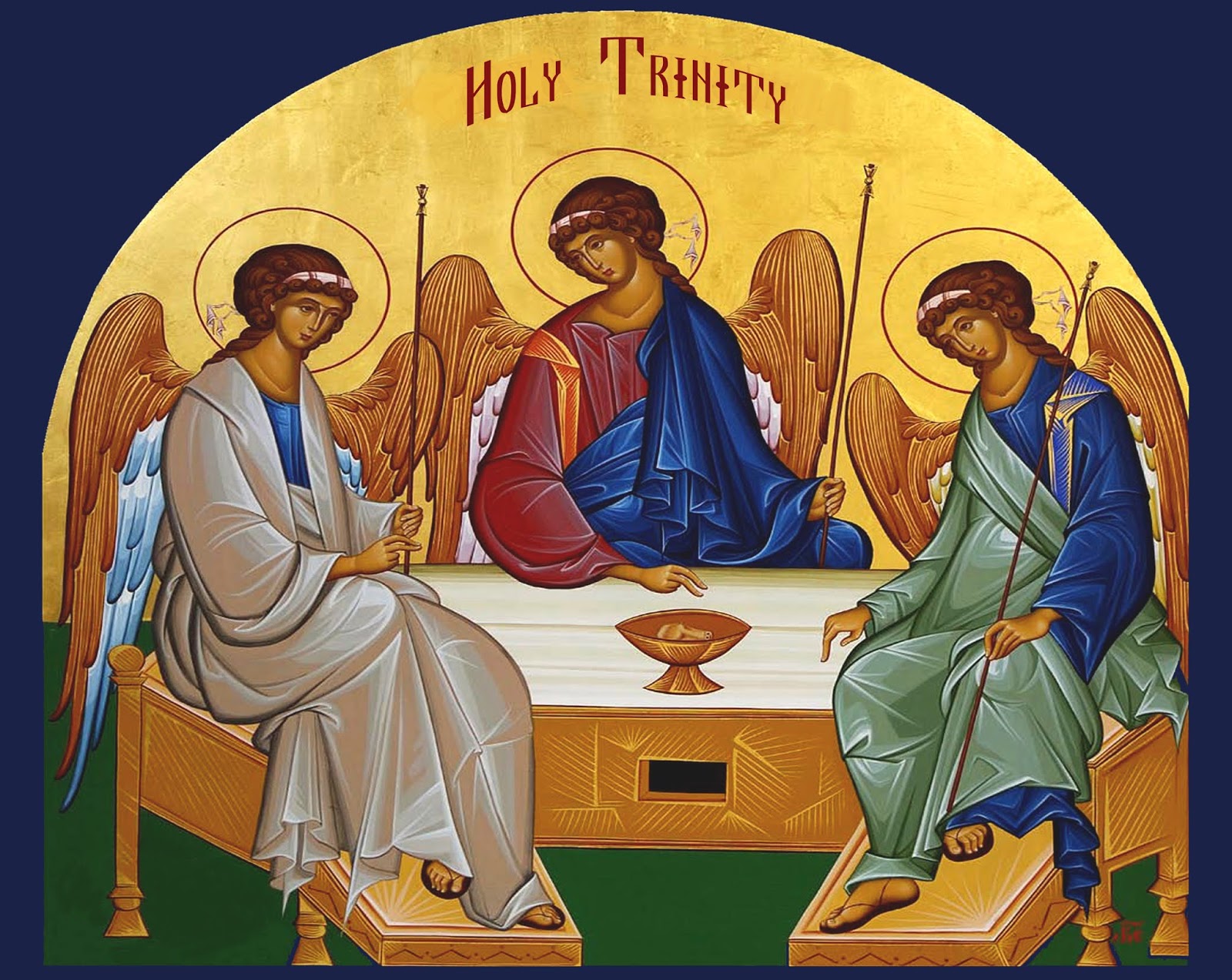
It reminds me of that ikon by Andrei Rubelev that I have put out in the Narthex this morning. We are being invited to join in to the work God is doing. And I think that is why this icon is so important to me.
We are constantly being invited to the table of God. We are called to sit down at that table with this tri-personal God, to join in that circle of love and, as followers of Jesus, to share that love with others, then we are truly celebrating what this Sunday is all about. We are sharing the love and work of our tri-personal God.
We are saying to God, as Isaiah did in today’s reading from the Hebrew scriptures:
“Here I am!”
So, no matter what the theologians argue about, no matter what those supposedly learned teachers proclaim, ultimately, our understanding of God always needs to be based on our own experience to some extent. The mysteries of God do not have to be a frustrating aspect of our church and our faith. Rather they should widen and expand our faith life and our understanding and experience of God and, in turn, of each other.
So, today, as we ponder our tri-personal God—and we should ponder this tri-personal God in our lives—as we consider how God has worked in our lives in a tri-personal way— and who God is in our lives, let us remember how amazing God is in the ways God is revealed to us.
God cannot be limited or quantified or reduced.
God can only be experienced.
And adored.
And pondered.
God can only be shared with others as we share love with each other. When we do that—when we live out and share our loving God with others—then we are joining with the tri-personal God who is here with us, loving us with a love deeper than any love we have ever known before.
May 26, 2018
Gin Templeton has been working hard on the last stained g...
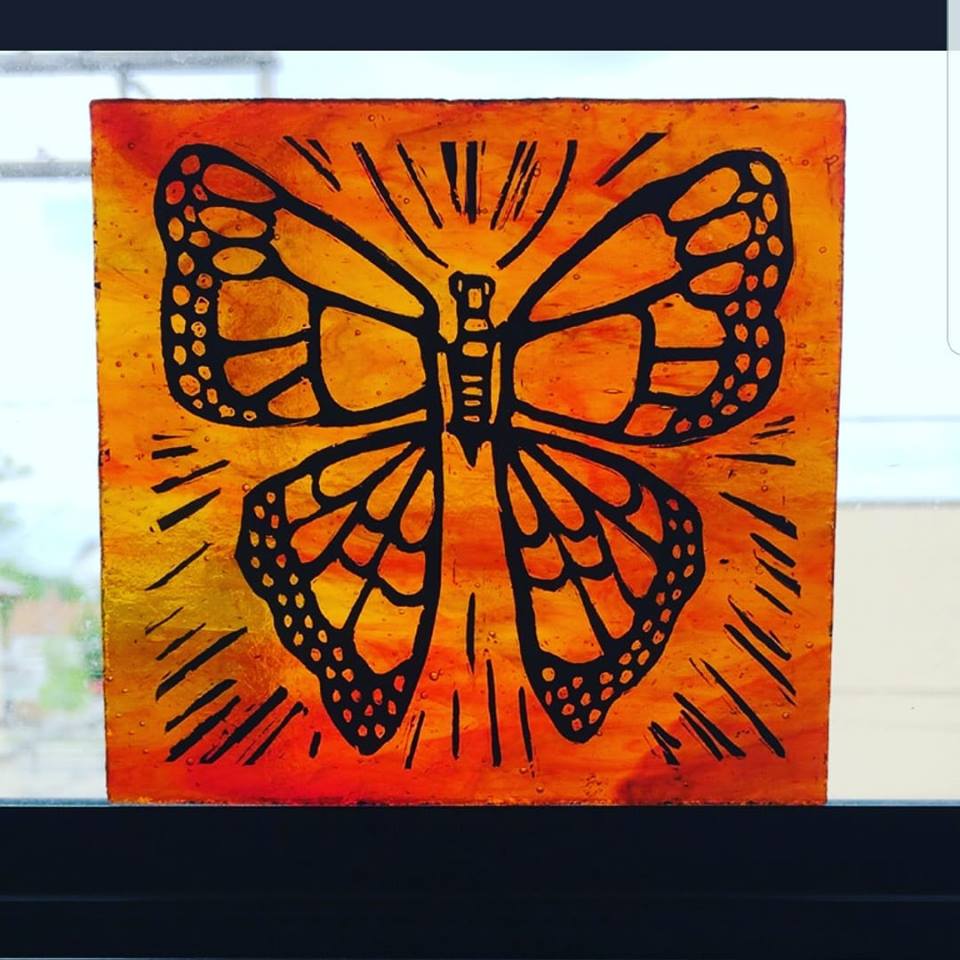 Gin Templeton has been working hard on the last stained glass window in the nave at St. Stephen’s. Here is the beautiful butterfly for the plate dedicated to the memory of my mother. The window will be blessed and dedicated on June 10.
May 22, 2018
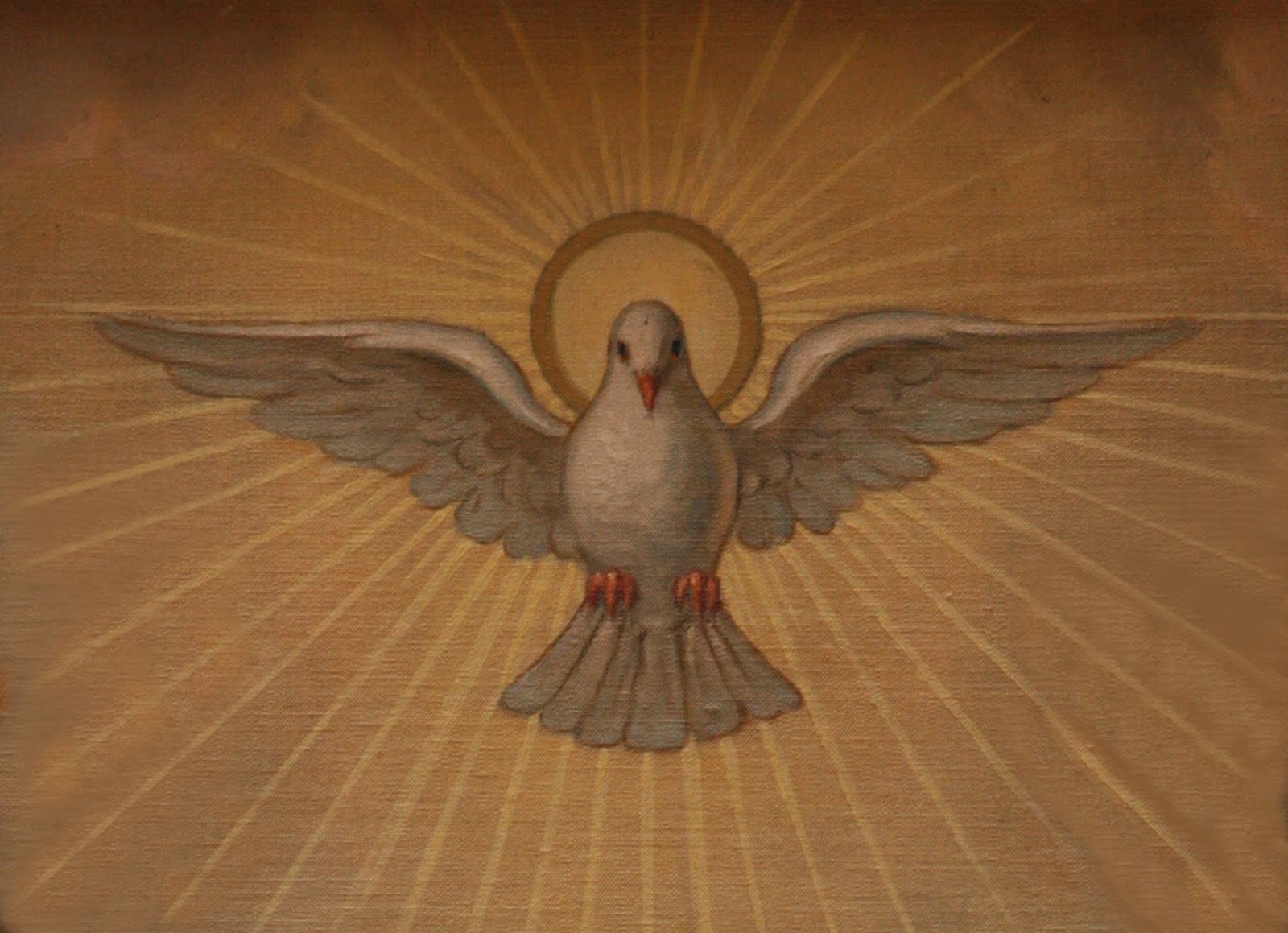
Pentecost
 May 20, 2018
Ezekiel 37:1-14; Acts 2.1-21
+ My guess is you you’re probably sick of me mentioning my small amount of Jewish Ancestry. As some of you know, I took my DNA test last November and found out that I am partly Jewish. Which, for me, was incredible and wonderful! And made so much sense to who I am.
But since then, I’ve really run with it. And I’ve really embraced it. And I have to say that my own faith, my own perception of Christianity has changed a bit as a result of this discovery. Seeing scripture, theology, even these feasts of the Church through a Jewish lens is actually amazing! And I have been enjoying it greatly. It’s sort of like it’s all brand new to me!
Let’s take today, for example. Yes, we are of course celebrating Pentecost today. It’s a very important day in the life of the Church. Today is essentially the “birthday” of the Church.
But, in Judaism, the feast of Shavuot is being celebrated this weekend. Shavuot is a wonderful and important Jewish feast. It is now 50 days since Passover.
The word Shavuot is Hebrew for “weeks.” The belief is that, after fifty days of traveling after leaving Egypt, the nation of Israel now has finally arrived at Mount Sinai. And on Shavuot, the Torah, the “Law,” the 10 Commandments were delivered to them by Moses.
So, in a very real sense, this is an important day not just for Judaism, but for us as well. The Torah, the 10 Commandments, are important to us too.
Our feast of Pentecost is very similar in many ways. It now 50 days after Easter. The word “Pentecost” refers to the Greek word for 50. And it’s connection with Shavuot is pretty clear.
Shavuot is this feast on which the early Jews offered to God the first fruits of their harvests. Now that is particularly meaningful to us Christians and what we celebrate on this day of Pentecost. It is meaningful that the Holy Spirit came among us on this feast in which the first fruits were offered to God. After all, those first Christiana who gathered in that upper room in our reading this morning from Acts, were truly the first fruits of the Church. And let’s not forget that those first Christians were also Jews, gathering to celebrate the festival of Shavuot. God chose to send the Spirit on those first followers of Jesus on just the right day!
Still, like nuclear power or electricity, God’s Spirit is sometimes a hard thing for us to grasp and understand. The Spirit can be elusive and strange and sometimes we might have a hard time wrapping our minds around the Spirit.
But it is clear from the words of Jesus before he ascends back into heaven what the role of the Spirit is for us:
"It is not for you to know the times or periods that the Father has set by his own authority. But you will receive power when the Holy Spirit has come upon you; and you will be my witnesses in Jerusalem, in all Judea and Samaria, and to the ends of the earth."
Although Jesus’s prophecy from God might no longer be among as it was when Jesus himself was with us physically, the prophecy does remains with us in the sending of God’s spirit. Jesus will leave—we will not be able to touch him and feel him and listen to his human voice again, on this side of the veil. But God is leaving something amazing in Jesus’ place. Jesus is gone from us physically, but in the Spirit Jesus is still with us.
In a sense what happens with the Descent of God’s Spirit upon us is the fact that we now have the potential to be prophets ourselves. The same Spirit which spoke to Ezekiel in our reading this morning, which spoke to Isaiah, which spoke to Jeremiah, which spoke to Moses, which spoke through Jesus, also can now speak to us and be revealed to us just as it spoke and was revealed to those prophets from the Hebrew Bible and through Jesus. That is who the Spirit is in our midst.
The Spirit we celebrate today—and hopefully every day—and in our lives is truly the spirit of the God that came to us and continues to be with us. It is through this Spirit that we come to know God in ways we might never have before.
God’s Spirit comes to us wherever we may be in our lives—in any situation or frustration. God’s Spirit is with us, as Jesus promised, always.
Always.
For those of us who want to grasp these experiences—who want to have proof of them—the Spirit doesn’t fit well into the plan.
We can’t grasp the Spirit.
We can’t make the Spirit do what we want it to do.
In that way, the Spirit truly is like the Wind that came rushing upon those first disciples.
So, how do we know how the Spirit is working in our lives? Well, as Jesus said, we know the tree by its fruit. In our case, we know the Spirit best through the fruits God’s Spirit gives us.
Remember what the feast of Pentecost originally was? It was the Jewish feast on which the first fruits were offered to God.
In a sense, what happens on our Pentecost, is God returning those fruits back to us. On the feast of Pentecost, we celebrate the fruits the Spirit of God gives to us and we can be thankful for them, and, most importantly, share them in turn with those around us. The Spirit comes to us and manifests itself to us in the fruits given to us by the Spirit.
We often hear about Pentecostals—those Christians who have been born (or baptized) in the Spirit. They are the ones who speak in tongues and prophesy and have words of knowledge or raise their hands in joyful praise—all those things we good Episcopalians find a bit disconcerting. These Pentecostals—as strange as we might find these practices—really do have a lot to teach the rest of us Christians about the workings of the Holy Spirit in our lives.
I remember the first time I ever attended a Pentecostal church. Rather than being attracted to that way of worship, I was actually turned off. Partly my reason for doing so, is that by that time in my life I had, in fact experienced the Spirit very profoundly in my life.
For me, the Spirit of God came to me not in a noisy, raucous way, but rather in a quiet, though just as intense, way. The Sprit of God as I have experienced it has never been a “raining down” so to speak, but rather a “welling up from within.”
The fruits of the Spirit for me have been things such as an overwhelming joy in my life. I have known the Spirit to draw close when I feel a true humbleness come to me. When the Spirit is near, I feel clear-headed and, to put it simply, happy. Or, in the midst of what seems like an unbreakable dark grief, there is suddenly a real and potent sense of hope and light—that is the Spirit at work.
When the future seems bleak and ugly, the Spirit can come in and make everything worth living again. We experience God’s Spirit whenever we feel joy or hope.
As Jesus says in today’s Gospel, the Spirit of God is a Spirit of Truth. We experience God’s Spirit when we strive for truth in this world, when truth comes to us.
In turn, we are far from God’s Spirit when we let bitterness and anger and frustration lead the way. We frustrate God’s Spirit when we grumble and mumble about each other and hinder the ministries of others in our church, when we let our own agendas win out over those who are trying also to do something to increase God’s Kingdom in our midst. We deny the Spirit when we deceive ourselves and the truth is not in us.
No doubt everyone here this morning has felt God’s Spirit in some way, although we might not have readily recognized that experience as God’s Spirit. But our job, as Christians, is to allow those fruits of the Spirit to flourish and grow. For us, we let the Spirit of God flourish when we continue to strive for truth and justice, when stand up against the dark forces of this world. The Spirit of God compels again and again to stand up and to be defiant against the dark forces of this world!
On the feast of Shavuot, the scripture we heard from Ezekiel today is read. Again, remember, those first followers of Jesus on that first day of Pentecost would have heard this scripture that same day as well. It is an amazing scripture and an amazing vision. In it, God’s Spirit revives the bones in the valley. What appears to be dead and lifeless is given life by God’s life-giving Spirit. And that reading ends with these very powerful words that speak so clearly not only to the Jewish people, but to us as well. Ezekiel says,
Thus says the Lord God: I am going to open your graves, and bring you up from your graves, O my people; and I will bring you back to the land of Israel. And you shall know that I am the Lord, when I open your graves, and bring you up from your graves, O my people. I will put my spirit within you, and you shall live, and I will place you on your own soil; then you shall know that I, the Lord, have spoken and will act,” says the Lord.
God’s spirit is placed within us so that the graves of our lives may be opened, and we can stand in that place to which God has lead us. That dynamic and life-giving presence of the Spirit of God speaks loudly to us.
Certainly we have seen God’s Spirit at work here in our congregation as we celebrate a bountiful harvest—the growth and vitality here. We see the Holy Spirit at work in the ministries we do, in the love we share with others, with the truth we proclaim as Christians, even in the face of opposition. We experience this Spirit of truth when we stand up against injustice, wherever it may be.
This is how God’s Spirit comes to us. The Spirit does not always tear open the ceiling and force its way into our lives. The Spirit rather comes to us just when we need the Spirit to come to us. Though, often the Spirit comes to us as fire—an all-consuming fire that burns way all anger and hatred and fear and pettiness and nagging and all the other negative, dead chaff we carry within us.
So, this week, in the glow of the Pentecost light, in the Shavuot glow with the Law written deep in our hearts, let us look for the gifts of the Spirit in our lives and in those around us. Let us open ourselves to God’s Spirit and let it flow through us like a caressing wind and burn through us like a purifying fire. And let us remember the true message of the Spirit to all of us.
Whenever it seems like God is distant or nonexistent, that is when God might possibly be closest of all, dwelling within us, being breathed unto us as with those first disciples. On these feasts of Shavuot and Pentecost—these feasts of the fruits of God—these feasts of the fire of God—let us give thanks for this God who never leaves us, who never stops loving us, but who comes to us again and again in mercy and in truth. Amen.
May 13, 2018
Here's an article from today's Fargo Forum in which I was...
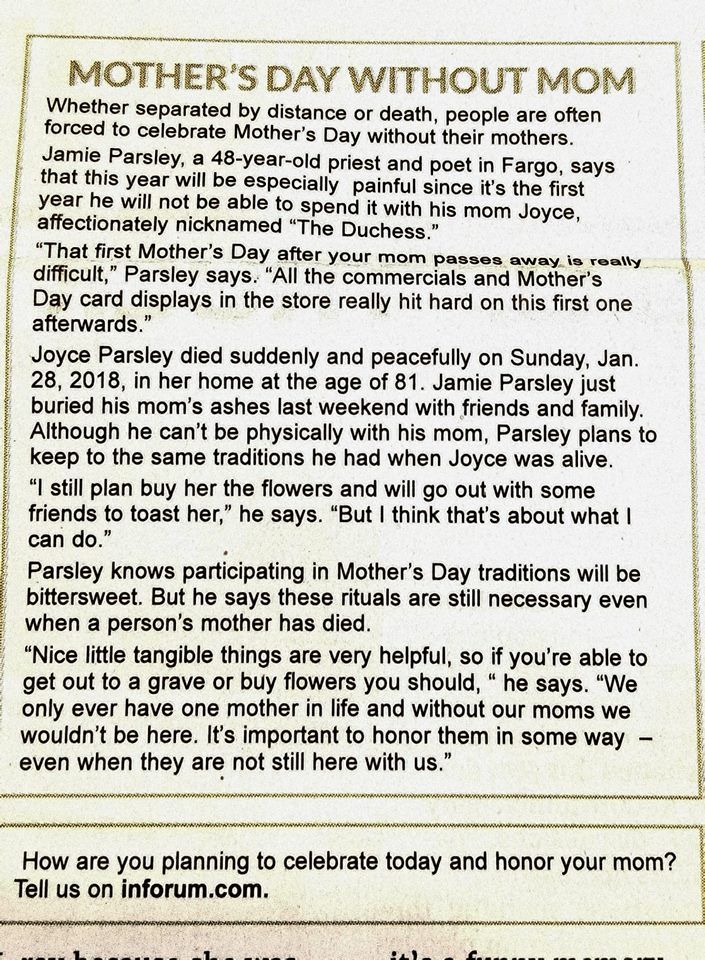 Here's an article from today's Fargo Forum in which I was interviewed by April Knudson about the first Mother's Day without Mom.
7 Easter / The Litany for Women in our lives
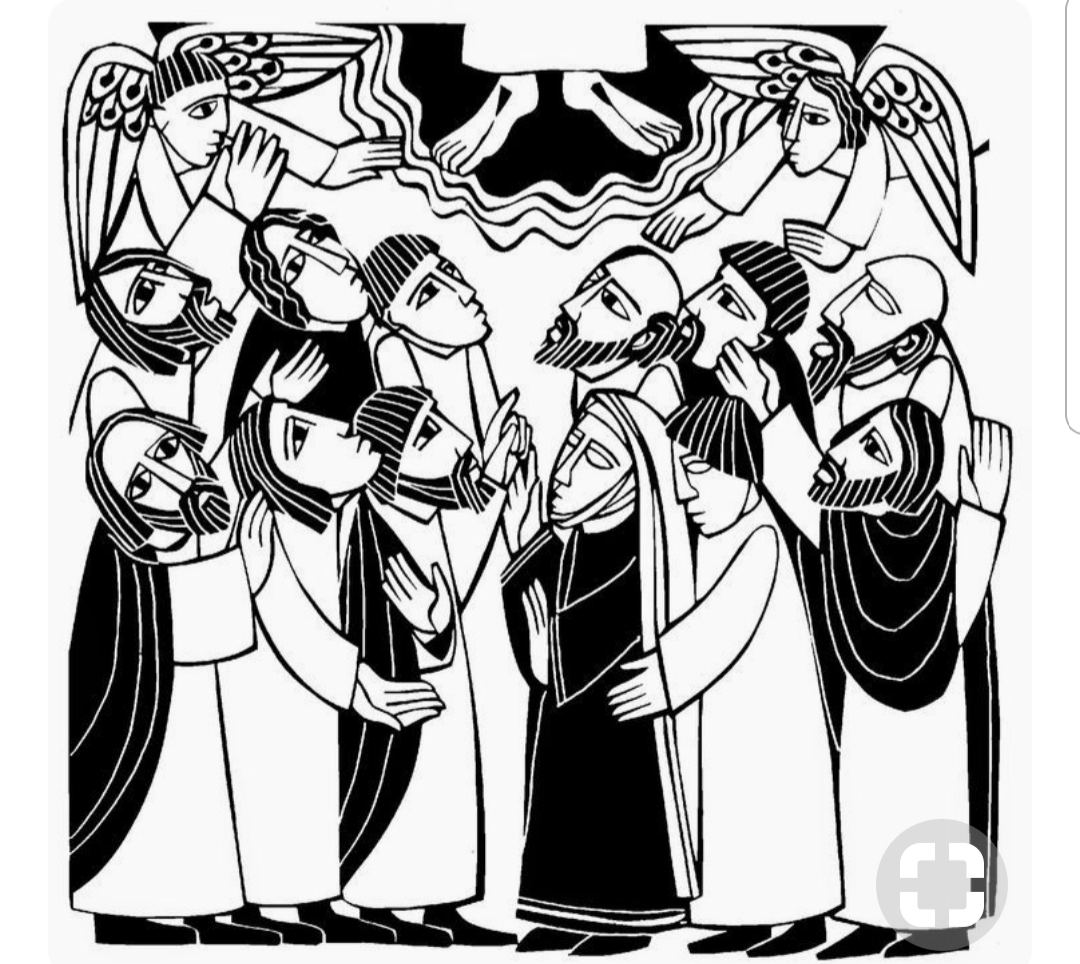 The Sunday after the Ascension
May 13, 2018
John 17.6-19
+ I know it seems strange to say this on this beautiful May morning—on Mother’s Day, but you all know we are still in the Easter season, right? I know. Easter, way back on April 1, seems like ages ago already. But for another week, we are still in the Easter season, still saying out Alleluias, still lighting the Paschal candle at every Mass.
I don’t know if I can say we’re still basking in the glow of the fire lit at our Easter Vigil. But, it does definitely seem like there is a winding down. A winding down of the Easter season.
Certainly this week, in our scripture readings, we see this slow movement away from the Easter season toward Pentecost, which is next week. For the last several weeks, we have been basking in the afterglow of the resurrected Jesus. In our Gospel readings, this resurrected Jesus has walked with us, has talked with us, has eaten with us and has led the way for us.
Last Wednesday night at Mass, we celebrated the Eve of the Feast of the Ascension. In that Mass we commemorated the ascension of Jesus. Now, he has been taken up. And with that we find a transformation of sorts happening. With his ascension, our perception of Jesus has changed. No longer is he just a wise sage, the misunderstood rebel, the religious renegade that he seemed to be when he walked around, performing miracles and upsetting the religious and political powers that be.
He is now something much more. He is more than just a regular prophet. He is the Prophet extraordinaire. He is more than just a king—a despotic monarch of some sort like Caesar or Herod. He is truly the Messiah. At his ascension, we find that he is, in a sense, anointed, crowned and ordained. And he now sits at the right hand of God.
At his ascension, we find that what we are gazing at is something we could not comprehend before. He has reminded us that God has taken a step toward us. He has showed us that God loves us and cares for us. He has reminded us that God speaks to us not from a pillar of cloud or fire, not on some shroud-covered mountain, not in visions. But God is with us and speaks in us. We are now empowered to be God’s prophets.
The puzzle pieces are falling into place. What seemed so confusing and unreal is starting to come together. God truly does love us and know us.
And next week, one more puzzle piece falls into place. Next week, we will celebrate God’s Spirit descending upon and staying with us.
For the moment, we are in this plateau, caught in between those two events—Ascension and Pentecost—trying to make sense of what has happened and trying to prepare ourselves for what is about to happen. But things are about to really change. We are caught between Jesus’ ascent into heaven and the Spirit’s descent to us. This week, smack dab in the middle of the twelve days between the Ascension and Pentecost, we find ourselves examining the impact of this event of God in our lives.
And God has made an impact in our lives. We, those of us who are fortunate enough to experience the resurrection and ascension of Jesus, at least liturgically, in our Sunday readings and in our liturgy, find ourselves constantly confronted with the meaning of these events from God. We are faced with the reality of them and what we should do to make sense of them.
I’m not certain there is a way we can make sense of the Ascension, but I can say this: if we only see the ascension as some kind of mystical event and don’t see it as a mirror for ourselves, we’ve missed the point. The commission that the ascended Jesus gave to the apostles, is still very much our commission as well. We must love—fully and completely.
Because in loving, we are living.
In loving, we are living fully and completely.
In loving, we are bringing the ascended Christ to others.
And we must go out and live out this commission in the world.
When we do that, the ascended Christ is very much still acting in the world.
When we think about what those first followers went through in a fairly short period of time—Jesus’ betrayal and murder, his resurrection and his ascension—we realize it was a life altering experience. Their lives—their faith, their whole sense of being—was changed forever. They would never be who they were again.
We also have had life-altering experiences in our own lives. Oftentimes, when those experiences happen to us, we find ourselves reeling from them. We find ourselves simply moving through the life-altering events with bated breath. Only later, when everything has settled down, do we have the opportunity to examine what had just happened to us. And it is then that we realize the enormity of these changes in our lives.
(And yes, I’m preaching to myself here, as well, of course)
For those first followers of Jesus, it seems like they didn’t have much of a change to ponder their life-altering experiences. As soon as one life-altering experience happened, another one came along. Just when they had experienced Jesus’ death, resurrection and ascension, they encountered this outpouring of God’s Spirit in their lives.
The waters, it seemed, were kept perpetually stirred. Nothing was allowed to settle.
That is what our ministry is often like. One day, very early in my career, I came to that realization myself. Ministry is perpetually on-going. There is never an ending to it. It’s always something. One week brings another set of opportunities, set-backs, trip-ups, tediums, frustrations, joys, celebrations.
Ministry truly is a never-ending roller-coaster ride of emotions and feelings. There are moments when it all seems to be useless and pointless. There are moments when one is, quite simply, frightened. There are moments when one feels so overwhelmed by the fact that one is simply not qualified to be doing the work. These are things those first followers of Jesus no doubt struggled with.
And we all struggle with these doubts in our own lives. Yet we, like them, are sustained. We, like them, are upheld. We, like them, are supported by the God who welcomed the ascended Jesus, whose work we are doing in this world. In those moments when our works seems useless, when it seems like we have done no good work, the God who brought Jesus back still triumphs.
Our job, in this time between Jesus’ departure from us and the return of the Holy Spirit to us, is simply one of letting God do what God needs to do in this interim. We need to let the Holy Spirit work in us and through us. We need to let the God who brought Jesus to heaven be the end result of our work. When it seems that we have failed, we need to realize that, above us, the Ascension is happening.
All we have to do is look up. All we have to do is stop gazing at our dirty, callused, over-worked hands—all we have to do is turn from our self-centeredness—and look up. And there we will see the triumph. And as we do, we will realize that we are not failures. There is no failure with a God who calls to ascend.
Jesus has ascended. And we have—or will—ascend with him as well. He prays in today’s Gospel that we
“may have [his] joy made complete in [ourselves].”
That joy comes when we let the Holy Spirit be reflected in we do in this world.
So, let this Spirit of joy be made complete in you. Let the Spirit of joy live in you and through you and be reflected to others by you. When we do, we will be, as Jesus promises us,
“sanctified in truth.”
We will be sanctified in the truth of knowing and living out our lives in the light of ascension. We will be sanctified by the fact that we have looked up and seen the truth happening above us in beauty and light and joy .
I would like to close my sermon today, on this Mother’s Day, with a prayer for all the women of our faith and our lives. I have freely adapted this “Litany of Women” from Common Prayer: A Liturgy for Ordinary Radicals]
A Litany to Honor Women
Let us prayWe walk in the company of the women who have gone before, Mothers of the faith both named and unnamed testifying with ferocity and faith to God's Spirit of Wisdom and Healing.
They are the judges, the prophets, the martyrs, poets, artists, healers, lovers and Saints who are near to us in the shadow of awareness, in the crevices of memory, in the landscape of our dreams.
We today walk in the company of Deborah,
who judged the Israelites with authority and strength.
We walk in the company of Esther,
who used her position as Queen to ensure the welfare of her people.
We walk in the company of whose names have been lost and silenced,
who kept and cradled the wisdom of God.
We walk in the company of the woman with the flow of blood,
who audaciously sought her healing and release.
We walk in the company of Mary, the mother of Jesus, who said “yes” to God, who carried within her God’s Word, who cradled in her arms the broken body of her Son.
We walk in the company of Mary Magdalene,
who wept at the empty tomb until the risen Christ appeared.
We walk in the company of Phoebe,
who led an early church in the empire of Rome.
We walk in the company of Perpetua of Carthage,
whose witness in the third century led to her martyrdom.
We walk in the company of Julian of Norwich,
who wed imagination and theology proclaiming "all shall be well."
We walk in the company of the women of St. Stephen’s, past and present and future, both named and unnamed, who have stood up, spoken out and ministered boldly in the Name of the One who called them.
We walk in the company of Joyce, who endured, who persisted, who stood tall against disappointment and adversity, and who ended her journey on this earth with strength and dignity, comforted and welcomed by her God.
We walk in the company of you Mothers of the faith, who teach us to resist evil with boldness, to lead with wisdom, to heal and to love God and others by both word and action.
Amen.