Jamie Parsley's Blog, page 43
November 11, 2018


27 Pentecost
 November 11, 2018
1 Kings 17:8-16; Psalm 146; Mark 12.38-44
At our Wednesday night Mass, in which we usually commemorate a different saint each week, sometimes our commemorations take the form of a little history lesson. I often say: “we’re gonna take a little trip back in time.” And then, we go and visit some distant year.
Well, today, we’re going to do that as well. We are going to go back in time. Actually we’re going back 100 hundred years exactly. Back to Monday, November 11, 1918.
If we actually went back to the day before, to that Sunday morning, November 10, 1918, well, we’d all be really cold right now because St. Stephen’s didn’t exist. In fact, this was a wide open field quite a ways out of Fargo in 1918.
But on that Sunday morning, normally, you would be attending church in Fargo. But it is very unlikely that would’ve actually been attending church on that Sunday morning of November 10th.
The reason?
Well, most of the churches in Fargo and Moorhead and, in fact, in most of the country, were under quarantine. The Spanish Flu was raging. And scores and scores of young people had been dying of the flu for at least a month and scores more would be dying in the next several months.
In the midst of that bleak and terrible world, on that Monday in France, the guns of war quieted finally and the “Great War,” as it was known, finally came to a close. But only after 2,700 people died that day before peace was declared. Henry Gunther was the last soldier to die in the war. He was shot 60 seconds before the Armistice while trying to charge the German lines to reclaim himself after being demoted.
And yes, it was raining in France 100 years ago today too.
It was an awful war. It was a bloody, quagmire of a war. And it was devastating on all those involved. And sadly, although it was to be supposed the war that ended all wars, it was not. Not by any means. Nor was it really a “Great” War either.
It’s important for us to remember this war and those who died. Because it was important.
Now, as unpleasant as it is for us to revisit 1918 today, there was another historical event this week that I think we would resist returning to even more than 1918. I am not going to ask you return with me to that event. We are not going back to the night of November 9-10, 1938. 80 years ago yesterday. And, in comparing it to the events of 1918, it almost makes the Great War and the Spanish Flu pale in comparison.
80 years ago yesterday, was the anniversary of Kristallnacht, or the Night of the
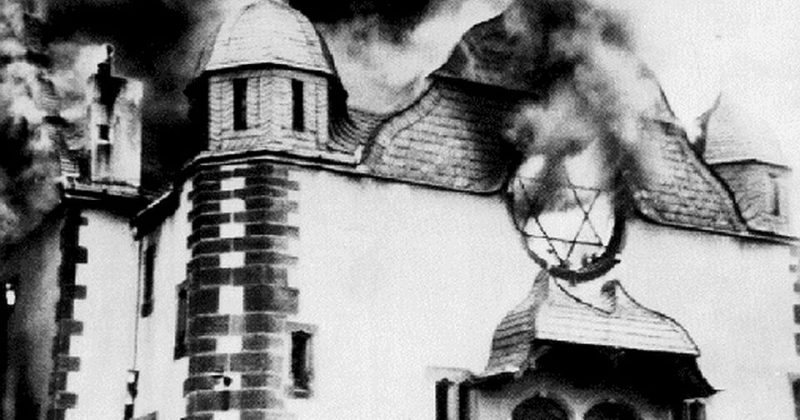 Broken Glass. And it was on that night, in Germany, that Jewish shops and houses and synagogues were burned, people were murdered, men were arrested and sent off to camps. It was the beginning of a nightmare that would culminate in Auschwitz and gas chambers and crematories and 6 million people dying simply because they were Jewish. That event is also very important for us to remember today. And always.
 Because, as Christians, we need to work, in our own lives, to make sure that neither of these events—the Great War and Kristallnacht—happen again.
All of our scriptures this morning find their purest and most poignant voice in the words from today’s Psalm:
“The Lord raises up those who are bowed down.”
“Bowed down” is a beautifully poetic understanding of the sufferings that come to us when we are at war, or when we are ill, or when we are being persecuted and treated unfairly by others. Certainly, in biblical times, no one was more bowed down than the widows we meet in our readings today.
In our reading from the Hebrew scriptures, we find a widow who visits the prophet and who, out of a desperate situation—she and her son will no doubt starve soon—she gives from what she has. She, bowed down and helpless, gives from what she has.
In our Gospel, we find a widow who is giving two small coins—money that, no doubt, could have gone for food.
Now, the stories seem basic. OK. So they’re poor women.
But there’s more to it than that.
Being a widow then and there was different than being a widow now. We oftentimes miss the real meaning behind these stories of the poor widows. A widow in those times was very much a person “bowed down.” Women, for the most part, at that time were defined by their men. Men took care of women—whether it be the father, the husband, the brother or the son— and when there were no men to look after the woman, she was left to her own devices, which were—in that time and in that place—extremely limited.
So, when we look at it from this perspective, for these widows, to give anything at all, is pretty amazing, since they probably had very, very little to give in the first place. And yet they, in their poverty, gave abundantly. These widows, these bowed down people, these marginalized and ignored people, are the people we are called—no, that we are commanded—to not forget about or turn away from.
Over and over again in both the Hebrew scriptures and in the New Testament, we are commanded to not neglect those who are lacking. We are not to neglect those among us who are being “bowed down” We are being commanded by God again and again to never turn away from the poor, from the marginalized, from those who are sick, from those who are being oppressed.
The reason behind this is that we—as believers in God and followers of Jesus—are not to look at the world as those “of the world” do.
How are we to see this world? We are to see this world with the “eyes of God.” We are to see—and to truly see— as God sees. And not just see as God sees. But to act as God acts. We are to show compassion on others as God shows compassion on us. When we do so—when we don’t turn away from those who are being unjustly treated in our midst—we are drawing close to the presence and the love of God.
But more so than even that, oftentimes when we act as God acts in this world, we are actually being the embodiment of God to those who need God in their lives. And most importantly, when we refuse to turn away from the oppressed in our midst, we are being mirrors of that compassion and love of God to others.
But I am going to take this even one more step further. Yes, we are not to turn away from those who are oppressed, but we are also called, in those moments when see, as God sees, oppression and war and violence in our midst to stand up and speak out against oppression and war and violence. And through all of this we need to remind ourselves that we too are lacking.
We too are not fully content, not fully rich, not fully whole. Even those of us who “have,” know what it means, at times, to be out in the fringes. We too who dress in our “long robes,” sometimes know what it means to be “bowed down” by injustice. When we read these stories of the poor widows—we can, in all honesty, put ourselves in the place of the widow.
No, we are not necessarily hungry, or poor, or dependent upon someone else for our financial well-being. But we may have known oppression in our lives. We may have known what it feels like to be marginalized, to be treated as someone less in this world just because of who we are. We too know what it is like to be ignored and seen as unimportant.
I personally have known this profoundly in my own life many, many times. I have known it by the society in which I live. I have most certainly known it by the Church in which I serve, and by the leaders of that Church.
And any of us who have been truly “bowed down” can tell you: being “bowed down” is awful. Truly and terribly awful! No one strives to be ones of the bowed down in our society. No one wishes to be treated that way in this world.
So, what do we do in these situations? Well, when it happens we recognize our dependence on that One who truly does feed us who are hungry, on the One who raises up us who are bowed down
Because God is with those who are oppressed. God was with those people whose shops were being burned on Kristallnacht, God still dwelt in those temples that were vandalized and burned, God was with those women who had to pick up the pieces after their husbands and sons were sent to the camps, who had to clean up their homes, who had to hold it all together. The strength and the forbearance of those people shows us how truly present God was with them. And in this world—this world that is at times so unfriendly and so mean-spirited and so violent and so full of illnesses that devastate us—we too know what it means to be on the receiving end of those things.
We too know what it means, at times, to be hurt and burdened. And it is very important for all of us who are bowed down to remember.
Those who are lacking are not only to receive justice. We cannot just hoard justice or demand it only for ourselves. We are to show justice as well in our own lives.
And that it is why it is important to identify with the widows. We—fractured human beings that we are—must show the justice we expect for ourselves. Even in our lacking, even bowed down as we might be, even ostracized and marginalized from the world and the Church and society, we must live out our lives with integrity and meaning.
We must emanate justice in all we do and say. We must strive for a truly lasting peace that will truly end all wars. And we must fight against injustice whenever we see.
So, let us bear within ourselves the love and compassion of God to others.
Let us reflect it with our very lives and actions.
Let us live God’s justice out in our very lives and in all of our actions.
Let us truly see this world through the eyes of God.
Let us love others, as God loves us.
Let us be compassionate to others, as God is compassionate to us.
And when we do, only then will wars finally cease. Only then will there be no more nights of broken glass. Only then will we know that, yes, truly God does raise up those who are bowed down.
November 4, 2018
All Saints Sunday
 November 4, 2018
Revelation21.1-6a
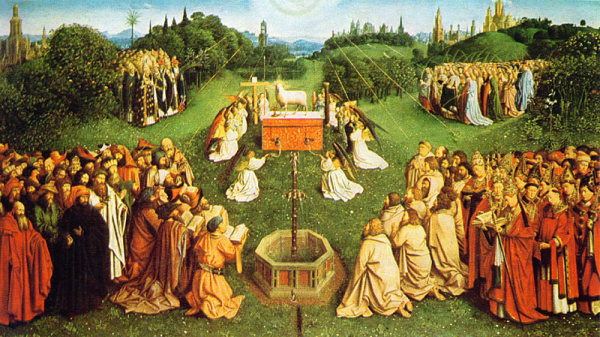
+ Today is, as you have probably realized, is All Saints Sunday. From the very earliest days of the Church, this has been one of the highpoints of the Church year. It’s an important feast. And it’s important not just because we honor saints like St. Stephen, or Mary the mother of Jesus, or St. Joseph or any of the other saints.It’s an important days because it is a day in which honor also those loved ones in our own lives who have gone before us. It is a time for us to honor our departed loved ones, as well as those we might not know about. Honoring and praying for those who have departed this life has always been an important part of the Church.
But, there are some branches of the Church that do not honor saints in this manner. If you come from a Lutheran or Methodist or a Presbyterian background, there may be some way of honoring those who have gone before, but prayers are usually not prayed for them, for whatever theological reason those particular denominations might hold.
But, for us, as Anglicans and Episcopalians, it has always been a part of our tradition to actually remember the departed in our prayers and to specifically pray for them. You will hear us, as Episcopalians, make a petition when someone dies that you won’t hear in the Lutheran Church, or the Methodist Church or the Presbyterian Church. When someone dies, you will probably get a prayer request from me that begins, “I ask your prayers for the repose of the soul of…”
Praying in such a way for people who have passed has always been a part of our Anglican tradition, and will continue to be a part of our tradition.
And I can tell you, I like that idea of praying for those who have died. But, and this is important: we don’t pray for people have died for the same reasons other branches of Christianity, like Roman Catholics, do. In other words, we don’t pray to free them from “purgatory,” as though our prayers could somehow change God’s mind.
So, why do we Episcopalians pray for the departed? Well, let’s see what the Book of Common Prayer says. I am going to have you pick up your Prayer Books and look in the back, to the Catechism. There, on page 862 you get the very important question:
Why do we pray for the dead?
The answer (and it’s very good answer): We pray for them, because we still hold them in our love, and because we trust that in God's presence those who have chosen to serve him will grow in his love, until they see him as he is.
Now, that is a great answer. We pray that those who have chosen God will grow in God’s love. So, essentially, just because we die, it does not seem to mean that we stop growing in God’s love and presence.
But, if you’re still not convinced, here’s an answer from no greater person than one of the treasures of the Anglican Church—C.S. Lewis. Lewis wrote, "Of course I pray for the dead. The action is so spontaneous, so all but inevitable, that only the most compulsive theological case against it would deter me. And I hardly know how the rest of my prayers would survive if those for the dead were forbidden. At our age, the majority of those we love best are dead. What sort of intercourse with God could I have if what I love best were unmentionable to [God]?”
I think that is wonderful and beautiful. And certainly worthy of our prayers. But even more so than this definition, I think that, because we are uncertain of exactly what happens to us when we die, there is nothing wrong with praying for those who have crossed into that mystery we call “the nearer Presence of God.”
After all, they are still our family and friends. They are still part of who we are. This morning we are commemorating and remembering those people in our lives who have helped us, in various way, to know God.
As you probably have guessed from the week-long commemoration we have made here at St. Stephen’s regarding the Feast of All Saints, I really do love this feast. With the death of my mother this last year and with many of my own loved ones having died in these last few years, this Feast has taken on particular significance for me. What this feast shows me is what you have heard me preach in many funeral sermons again and again.
I truly, without a doubt, believe that what separates those of us who are alive here on earth, from those who are now in the “nearer presence of God” is truly a very thin one. And to commemorate them and to remember them is a good thing for all us.
I do want us to think today long and hard about the saints we have known in our lives. And we have all known saints in our lives. We have known those people who have shown us, by their example, by their good, that God really does work through us. And I want us to at least realize that God still works through us even after we have departed from this mortal coil.
Ministry in one form or the other, can continue, even following our deaths. Hopefully, we can still, even after our deaths, do good and work toward furthering the Kingdom of God by the example we have left behind.
For me, the saints—those people who have gone before us—aren’t gone. They haven’t just disappeared. They haven’t just floated away and dissipated like clouds out of our midst.
No, rather they are here with us, still. They join with us, just as the angels do, when we celebrate the Eucharist. For, especially in the Eucharist, we find that “veil” lifted for a moment. In this Eucharist that we celebrate together at this altar, we find the divisions that separate us are gone.
We see how thin that veil truly is. We see that death truly does not have ultimate power over us. That is the way Holy Communion should be.
It’s not just us, gathered here at the altar. It’s the Communion of all the saints. In fact, before we sing that glorious hymn, “Holy, Holy Holy” during the Eucharistic rite, you hear me say, “with angels and saints and all the company of heaven we sing this hymn of praise.”
That isn’t just sweet, poetic language. It’s what we believe and hope in.
In these last few years, after losing so many people in my family and among close friends, I think I have felt their presence most keenly, at times, here at this altar when we are gathered together for the Eucharist then at any other time. I have felt them here with us. And in those moments when I have, I know in ways I never have before, how thin that veil is between us and “them.”
You can see why I love this feast. It not only gives us consolation in this moment, separated as we are from our loved ones, but it also gives us hope. We know, in moments like this, where we are headed. We know what awaits us.
No, we don’t know it in detail. We’re not saying there are streets paved in gold or puffy white clouds with chubby little baby angels floating around. We don’t have a clear vision of that place.
But we do sense it. We do feel it. We know it’s there, just beyond our vision, just out of reach and out of focus. And “they” are all there, waiting for us. They—all the angels, all the saints, all our departed loved ones.
So, this morning—and always—we should rejoice in this fellowship we have with them. We should rejoice as the saints we are and we should rejoice with the saints that have gone before us.
In our collect this morning, we prayed that “we may come to those ineffably joys that you have prepared for those who truly love you.”
Those ineffably joys await us. They are there, just on the other side of that thin veil.
They are there, in that place we heard about in our reading today from Revelation.
That place in which God “will dwell with them as their God;”Where we will be God’s peoples
They are there were God wipes “every tear from their eyes.”
Where “Death will be no more;
mourning and crying and pain will be no more,
for the first things have passed away."
November 1, 2018
Vote!
 Damn right, I voted! You need to too!
October 29, 2018
23 Pentecost
October 28, 2018
Mark 10.46-53
+ This past Thursday, one of the truly great spiritual leaders of the Church passed away. You might not have heard about his passing. In fact, you might not have even heard of the man himself. But he was a giant, especially among those of us who have tried to follow a more contemplative prayer life.
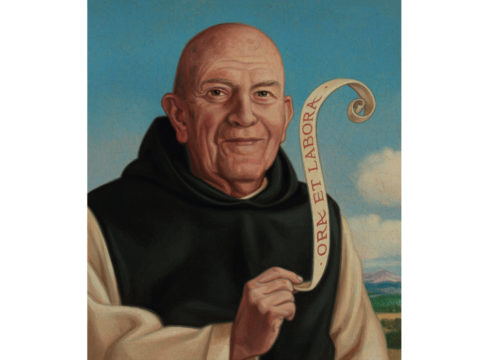 On Thursday, a Cistercian priest and monk by the name of Father Thomas Keating died at St. Joseph’s Monastery in Spencer, Massachusetts. And he was a giant because, in a very quiet, very unassuming way, he radically brought about a very simple kind of prayer that has helped countless people to no end. The form of prayer he helped people to practice was called “Centering Prayer.” He did this as a way to “revive the contemplative teachings of early Christianity and present them in updated formats.” (https://www.contemplativeoutreach.org...)
For him, it was a form of contemplative prayer was prayer "centered entirely on the presence of God."
Centering Prayer, according the method of Father Keating, uses single prayer word to “center” us, to bring us back into communion with God. Now that single prayer word is important. And it is meaningful only to the person using it. It might be as simple as
“God”
or Jesus”
or “Abba”
or “Spirit.”
But it is this word that helps us be centered—to focus—in our prayers.
Now you’ve heard me preach again and again about this, but I firmly believe that, without a solid foundation of personal prayer, all that we do in church on Sundays is without a solid base. All of us who have been baptized are ministers of the Church. And for our ministry to be effective, we need to have a strong and very solid prayer life to support that ministry.
I, of course, highly encouraged people to pray the Daily Offices of Morning and Evening Prayer from the Book of Common Prayer every day as the first foundation. From the offices and from the Mass, our prayer life as followers of Jesus flourish. For many of us, however, the Daily Offices are not something we can fit into our busy lives.
But, no matter how busy our lives are, we must always have a strong foundation of prayer. And that prayer life can be very simple. Centering Prayer and its emphasis on simple little prayers throughout the day are sometimes, by far, the most effective prayers.
This morning, in our Gospel, we find a very little, but it seems, very effective prayer, very much in the spirit of Centering Prayer. It is a story that at first seems to be leading us in one direction, then something else happens.
We find Jesus at Jericho, which reminds us, of course, of the story from Joshua and the crumbling walls. We then find this strangely detailed story of Barthemaeus. It’s detailed in the sense that we not only have his name, but also the fact that he was the son of Timaeus. That’s an interesting little tidbit. And we also find of course that he is blind.
Now, it’s not a big mystery what’s going to happen. We know where this story is going. We know Bartimaeus is going to be healed. We know he is going to see.
But the real gem of this story doesn’t have to do with Jericho, or the fact that we will never again hear about Bartimeus son of Timaeus. The real gem of this story is that little prayer Bartimaeus prays. There it is, huddled down within the Gospel, like a wonderful little treasure.
“Jesus, son of David, have mercy on me!”
Now that designation of Jesus as the “Son of David” is interesting in and of its self. By identifying Jesus as the Son of the David, Bartimaeus is essentially identifying Jesus as the Messiah, the anointed one sent by God.
But it takes on special meaning for us this morning, on this day after the massacre
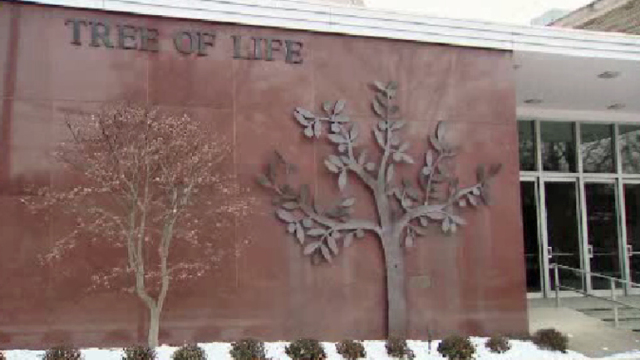 at Tree of Life Temple in Squirrel Hill, Pennsylvania. I want to be clear about what happened yesterday. What happened there didn’t just happen to people we think of as “them.” Yes, I know. We’re Christians. They’re Jews. They are “them.” But, we really don’t get use that excuse.
 Because of this one we follow—this Jewish Son of David—what happened there at Tree of Life Temple, to those Jewish people, happened to us as well. We are the same family. We are inheritors of what those people died for yesterday. Those people were murdered because they were Jews. They were Jews living in hate-filled society by an anti-Semite with automatic weapon. We cannot simply explain all of that away. And we cannot blame them because they didn’t have an armed guard at their door. They were Jews who were murdered because they were Jews. Jews, just like our own Son of David was a Jew. And because of that, what happened to them, happened to us too. We can never forget that fact.
So this man, Bartimaeus, is praying to the Jewish Messiah, to the One God sent, to have mercy on him. And what does the Son of David do? He has mercy on Bartimaeus.
It’s beautiful!
It’s perfect!
And in that prayer, we find the kernel of Centering Prayer to some extent. At first, it doesn’t seem like much. It’s so deceptively simple.
But, obviously, according to our Gospel for today, the prayer is important. Jesus does what he is asked. He has mercy on this man and heals him.
So why is this prayer so important? Well, for one thing, we get a glimpse of how to pray in this wonderfully simple little prayer. Jesus occasionally gives us advice in the Gospels on how we should pray.
The first one that probably comes to mind probably is the Lord’s prayer, the Our Father. But today we find a prayer very different than the Lord’s prayer. The Lord’s prayer is very structured. It covers all the bases. We acknowledge and adore God, we acknowledge and ask forgiveness not only for our sins, but for the sins committed against us by others. And so on. You know the prayer.
The prayer we hear this morning cuts right to the very heart not only of the Lord’s prayer but to every prayer we pray. It is a prayer that rises from within—from our very core. From our heart of hearts. It is truly the Prayer of the Heart. The words of this prayer are the words of all those nameless, formless prayers we pray all the time—those prayers that we find ourselves longing to pray.
Here it is, summed up for us.
More often than not, our prayers really are simple, one word prayers. And the one word prayer we probably pray more than anything—I do it anyway—is:
“please.”
“Please!” I pray so often.
Or sometimes it’s: “please, please, please!”
Poor God!
The one word prayer I should be praying more than anything is: “thanks.”
But Centering Prayer definitely comes from that kind of heart-felt prayer. Here are the words we long to use in those prayers without words.
“Have mercy on me!”
But if we were to pare it down, if we were to go to the heart of the prayer, what word from that prayer would be the heart of the whole prayer? It would, of course, be “mercy.” And in Centering Prayer, that would be our centering word.
We would quiet our mind. We would breathe quietly. And we would just simply repeat that one word, over and over again until we are in the presence of God.
The word draws us to God, helps nudge us into God’s presence. And then once we’re there, we don’t need to use it again except to use it to nudge us back into that Presence.
Mercy.
Mercy.
Marcy.
And, for many of us, this is the heart of our prayer. This is what we desire from God.
Mercy.
Please, God, we pray. Have mercy on us.
Using words like this, praying like this, simply sitting quietly and just being in the presence of God is a kind of “prayer of the heart.” That’s a perfect description of the prayer we heard in today’s Gospel. It is, as I said before, a prayer of the heart. If our lips could no longer pray, our heart would go on and this prayer would be the words of our heart.
The fact that it is so simple is what makes the Centering Prayer so popular. Anyone can do it. It is a prayer each of us can do wherever we are and whenever we need to do it.
I sometimes do centering prayer when I am in the dentist chair, getting my teeth cleaned. Or on the airplane. And during times like this, when hatred and anger and true darkness rages around us, we need these moments of peace. In fact, it is a prayer that demands to be practiced in moments like that. It’s almost impossible not to do it once we dip into it.
And it’s not as though we are mindlessly babbling on for sake of “saying our prayers.” We are not mindless repeating a prayer word over and over again for the sake of appearing to pray. It is a way to truly enter into the very heart of what prayer is all about.
What I find so interesting about that statement is that, limitless as this prayer might be, infinite in its use as it might be, it comes from and addresses our very own limitations. It is essentially the ceaseless prayer that should be going within us all the time. It is the prayer of absolute humility.
“Mercy.”
Or, going back to our discussion about one word prayers, the one word from this prayer we would be praying is “mercy.”
“Mercy.”
Like Bartimeaus, we can simply bring what we have before God in prayer, release it, and then walk away healed. There is no room for haughtiness when praying this prayer. The person we are when we pray it is who we really are.
When all our masks and all our defenses are gone, that is when this prayer comes in and takes over for us. This is the prayer we pray when, echoing Thomas Merton, we “present ourselves naked before our God.” That’s what makes the prayer of the heart—Centering Prayer—such a popular prayer practice for so many. And this prayer does not even have to be about us. We can use this prayer when praying for others. How easy it is to simply pray:
Mercy.
God, have mercy on her, or him, or them.
It’s wonderful isn’t it? how those simple words can pack such a wallop. We don’t have to be profound or eloquent in the words we address to God. We don’t need to go on and on beseeching and petitioning God. We simply need to open our hearts to God and the words will come. No doubt those words will be very similar to the words of the Centering Prayer of Father Thomas Keating.
“Mercy.”
So, like Bartimaeus, let us pray what is in our heart. Let us open ourselves completely and humbly to God. And when we do we will find the blindness’s of our own lives healed. We will find taken from us that spiritual blindness that causes us to grope about aimlessly, to ignore those in need around us, to not see the beauty of this world that God shows us all the time. Like Bartimaeus, we too will be healed of whatever blinds us to the Light of God breaking through into our lives. And when that blindness is taken from us, with a clear spiritual vision granted to us, we too will focus our eyes, square our shoulders and follow him on the way.
October 14, 2018
21 Pentecost
 October 14, 2018
Amos 5.6-7,10-15; Mark 10.17-31
+ For those of you who might not know, I am in the process of moving out of the rectory and into my late mother’s twin home. Now, most of you would think this would be fairly easy. He’s a priest, you’re no doubt thinking. He lives a simple life. Why is it taking so long for him to move?
Well, I really don’t live that simple of life. I like “things.” I have lots of “things.” Like LOTS of books. LOTS and LOTS of books. And midcentury furniture And, weirdly, lots of midcentury dishware. That’s weird because I don’t cook or really over use my kitchen. But when I have guests over, let me tell you: they eat and drink from the finest dishware they could make in the 1950s and early 1960s! And I have a lot of things I accumulated from my parents after their deaths. So I’m sorting and donating and throwing and truly, I hope, simplifying my life.
There’s a word I’ve been using quite a bit lately.
Pare.
P-A-R-E.
As in shaving away, as in paring down the “things” in my life.
It’s daunting and exhausting and good and frustrating all at once. And I’m making major headway.
And just when I think I’m doing really well, I come across this morning’s Gospel reading? Were you uncomfortable with it? I was uncomfortable with it. We should be uncomfortable. We all should be uncomfortable when we hear it. Jesus is, quite simply, telling it like it is. It is a disturbing message—at least, on the surface.
I stress that: on the surface.
He makes three hard-hitting points.
First, he tells the rich man who calls Jesus “good” to sell everything he has and give the money to the poor.
Second, he compares wealthy people getting into heaven to a camel going through the eye of a needle—a great image really when you think about it.
Finally, he tells his disciples that only those who give up their families and their possessions will gain heaven, summarizing it in that all-too-famous maxim: “the first will be last and the last will be first.”
For those who have—who have possessions, who have “things,” who have loved ones, who have nice cars and houses and safety deposit boxes and bank accounts and investments and stock AND bonds,--these words of Jesus should disturb us and should make us look long and hard at what we have and, more importantly, why we have them.
But…is Jesus really telling us we should give up these things that give us a sense of security? Does it mean that we should rid ourselves of those things? Should we really sell our cars and our houses, empty out our bank accounts and our safety deposit boxes and our savings and cash in our stocks and bonds give all of that money to the poor? Should we pare our lives down to nothing? Does it mean, we should turn our backs on our families, on our spouses and partners, on our children and our parents? Does it mean that we should go around poor and naked in the world?
Well, we need to look at it a little more rationally. Because, when Jesus talks about “riches” and giving up our loved ones, he’s not really talking what he seems to be talking about.
Do you remember the Gospel from last week, in which he was talking about Moses and the Law and divorce and remarriage? Now, that was a difficult scripture as well. He was saying that if one gets a divorce and remarries, they are committing adultery.
As I said last week, both of my parents had been divorced from their previous spouses before they married each other. Were my parents committing adultery in their marriage? Of course not.
But you can see how people DO have issues with the literal interpretation of this scripture. In fact, I had an uncle, who was divorced and remarried, who heard that scripture one morning in church in the 1970s. He got up and left the church and never stepped foot in a church again in his life. I wish I could’ve told him then, what I’m going to say right now. (Though I suppose where he is right now he’s already figured this out)
When Jesus talks of these things, he’s not really talking about what we think he talking about. He’s not really talking about the securities we have built up for ourselves. What Jesus is talking in today’s Gospel is about attachments. Or more specifically, unhealthy attachments.
Having “things” in and of themselves are, for the most part, fine, as long as we are not attached to them in an unhealthy way. Jesus knew full well that we need certain things to help us live our lives. But being attached to those “things” is a problem. It is our attachments in this life that bind us—that tie us down and prevent us from growing, from moving closer to God and to one another. Unhealthy attachments are what Jesus is getting at here. And this is why we should be disturbed by this reading.
Let’s face, at times, we’re all attached to some things we have. We are attached to our cars and our homes. We are attached to our televisions and computers and our telephones. Some of us are attached to our books, and to the art that hangs on our walls, and on midcentury furniture.
And, even in our relationships, we have formed unhealthy attachments as well. Co-dependence in a relationship is a prime example of that unhealthy kind of attachment that develops between people. We see co-dependent relationships that are violent or abusive or manipulative. People, in a sense, become attached to each other and simply cannot see what life can be like outside of that relationship.
And as much as we love our children, we all know that there comes a point when we have to let them go. We have to break whatever attachments we have to them so they can live their lives fully.
The same is true, in a different way, with our parents. You’ve heard me say many times over this past year that, taking care of my mother in these last years meant that my world sort of revolved around her. And when she died, I felt lost and aimless. I still do.
It is seems to be part of our nature to form binding relationships with others and with things at times. Especially in this day and age, we hear so often of people who are afraid to be alone.
The question we need to ask ourselves in response to this morning’s Gospel is this: if Jesus came to us today and told us to abandon our attachments—whatever it is in our own lives that might separate us from God—what would it be? And could we do it? Because Jesus is telling us to do that again and again.
What the Gospel for today hopefully shows us that we need to be aware of our attachments. We need to be aware of anything in our lives that separates us from God. Jesus today is preparing us for the Kingdom of Heaven. We cannot enter the Kingdom of God and still be attached to those unhealthy things in our lives. Because we can’t take them with us into the Kingdom.
The message is clear—don’t allow your unhealthy attachments to come between God and you. Don’t allow anything to come between God and you.
If Jesus came to us here and now and asked us to give up those attachments in our lives, most of us couldn’t to do it. I don’t think I could do it. And when we realize that, we suddenly realize how hard it is to gain heaven. It truly is like a camel passing through the eye of the needle.
For us, in this moment, this might be a reason to despair. But we really don’t need to. We just need to be honest. Honest with ourselves. And honest with God.
Yes, we have attachments. But we need to understand that our attachments are only, in the end, temporary. They will pass away. But our relationship with God is eternal. This is what Jesus is getting at in today’s Gospel.
So, we can enjoy those “things” we have. We can take pleasure in them. But we need to recognize them for what they are. They are only temporary joys. They come into in our lives and they will go out of our lives, like clouds. All those things we hold dear, will pass away from us.

 That is driven home to anyone who has to clean out a loved one’s home following their death. One of the true low points in this past year since my mother died was cleaning out her closet. I avoided it. I was tempted to ask someone to do it for me. But finally, one day, I just couldn’t stand seeing all those clothes, still on their hangers and folded neatly on their shelves. I realized that my mother would never wear those clothes again. My mother specifically requested that all her clothes go the New Life Center. And there, all her things, hopefully, are now being used by someone else who can wear them, who needs them. Hopefully several people are warmed on this bitterly cold day by the coats and sweaters my mother once wore.
 One day this will happen to us as well. All our clothes, all our possessions, all the money we worked so hard to save will no longer be ours. They will all be divided and distributed and given to others. It’s important to remind ourselves of this fact, even if it’s depressing.
But that is essentially what Jesus is telling us today. He is saying to us, “don’t cling to these ‘things.’” Let us cling instead to God and to the healthy bonds that we’ve formed with God and with our loved ones—with our spouses or partners, our children, our family and our friends. Let us serve those whom we are called to serve. And let us serve them fully and completely, without hindrance. Let us make the attempt to see that what we have is temporary. Let us be prepared to shed every attachment we have if we need to. And when that day comes when we are called by name by our God, on that day we can simply not think about these “things” we cling to here, but we can simply run forward and meet our God face to face.
October 7, 2018
20 Pentecost
 October 7, 2018
Mark 10.2-16
+ Now, for any of you who think of my as this kind of High Church Anglo-Catholic guy, you might be surprised to hear me say this:
But, I have, for many, many years been very attracted to and inspired by the Quakers, or the Society of Friends.
I know that’s probably a bit shocking to you. You would not think a denomination that is completely and totally non-sacramental and non-liturgical would hold any appeal to someone like me, who loves liturgy and the sacraments! But sometimes even I need an escape from the trappings of high church Anglo-Catholicism.
Even more than that, I love the simplicity of Quakerism. I love the silence and contemplative aspects. I love their pacifism. I love the fact that, historically, they were on the forefront of so much social change in society. I love how they strive for a truly experiential and relational connection with God—with the Light within, as they call it. And I love how the Quakers embody in their faith and in their lives a very simple, child-like faith.
It’s this last point that is especially appealing to me. And I also personally find it difficult.
To me, cultivating such a relationship with God without the structure of liturgy and the sacraments seems particularly daunting.
But there are days when I want that.
I want that simplicity.
I want that silence.
I want that child-like relationship with God.
And it is this child-like relationship with God that Jesus is commending to is in our Gospel reading for today. Out Gospel reading for today is wonderful. Well, except for that little exchange about divorce at the beginning of it.
After this debate, which really is all about following the letter of the law, rather than actually being divorce and remarriage, people start bringing children to Jesus. He says,
“Let the little children come to me; do not stop them; for it is to such as these that the kingdom of God belongs. Truly I tell you, whoever does not receive the kingdom of God as a little child will never enter it.”
So, what does Jesus mean when he talks about the Kingdom of heaven and children? Well, he is talking quite bluntly, I believe. He is making it clear that we need to simplify. We need to simplify our faith. We need to clear away all the muck, all the distractions, all those negative things we have accumulated over the years regarding our relationship with God.
Now, to be fair, the Church and Religion in general have piled many of this negative things on us. And that is unfortunate. Too often, as believers, we tend to complicate our faith life and our theology.
We in the Episcopal Church get caught up in things like Dogma and Canon laws and rules and Rubrics and following the letter of the law.
In the Roman Catholic Church, we find these strange “cults” of Mary and the saints that really do not promote a deeper faith, but rather only a shallow, somewhat plastic kind of faith.
In the Protestant church churches, we find that the Bible itself is held up in such a way that it eclipses the fact that we are called to live out what we learn scripturally and not just impress one another with our scriptural prowess and knowledge.
All the churches get so caught up in doing what we are told is the “right thing,” that we lose sight of this pure and holy relationship with God. We forget why we are doing the right thing.
For Jesus, he saw what happened when people got too caught up in doing the right thing. He tended to blame two groups of people for this. The scribes and the Pharisees. The scribes and Pharisees were very caught up in doing the right thing, in following the letter of the Law. A few weeks ago in one of my sermons I talked about these two groups of people—the scribes and the Pharisees.
They have received a very harsh judgement in the long arc of history. But we need to remind ourselves that, at their core, these were not bad people. They were actually well-intended people, trying in their own way to live out the Law, as they were taught.
It was the job of the scribes to write down and copy the scriptures, a daunting job in those pre-printing press days. As a result of copying scripture again and again, they of course came to see themselves as experts of the scriptures. And they were.
The Pharisees saw their job as interpreting the Law and the scriptures for people. They tried to make sure that the letter of the law was followed and that all those complicated rules we find in the Levitical law were followed to a T. They did this because they thought it was what was supposed to be done. In the course of their trying to do the right thing, they ended up losing sight of the heart of the Law and Scriptures and only concentrated on the letter of the Law and scriptures. But in doing so, they lost sight of God, which is easy to do when you’re so caught up on the dots and dashes of the words, and not on what those words actually mean. They lost sight of the meaning behind the Law. Hence, the debate about divorce today.
Jesus is telling them—and us—that we need to simplify. We need to refocus. We need to become like children in our faith-life.
Now that isn’t demeaning. It isn’t sweet and sentimental. Becoming children means taking a good, honest look at what we believe.
As followers of Jesus, it does not have to be complicated. We just need to remind ourselves that, if we keep our eyes on Jesus, he will show us God.
Following Jesus means knowing that God is a loving, accepting and always-present Parent. God is our “Abba.” Our job as followers is to connect with this loving Parent, with “Abba,” to worship and pray to God. Our job is to be an imitator, like Jesus, of this loving, all-accepting God in our relationship with others. When we do that—when we become imitators of our loving God, when we love as God loves us—the Kingdom of God becomes present in a very real and profound way.
But the fact is, the Kingdom of God is not for people who complicate it. The Kingdom is one of those things that is very elusive. If we quantify it and examine it too closely, it just sort of wiggles away from us. If we try to define what the Kingdom is, or try to explain it in any kind of detail, it loses meaning. It disappears and become mirage-like.
But if we simply do what we are called to do as followers of Jesus—if we simply follow Jesus, imitate our God and love one another—the Kingdom becomes real. It becomes a reality in our very midst. And whatever separations we imagine between ourselves and God and one another, simply disappear.
This is what I love about being a follower of Jesus. I love the fact that despite all the dogmas and structures and rules the Church might bring us, following Jesus is simply that—following Jesus. It is keeping your eyes on the one we’re following. It means doing what he did and trying to live life like he lived life. It means worshipping like him a God of amazing and unlimited love.
Yes, that sounds very simple. But it can also be very difficult, especially when we still get caught up in all the rules and complications of organized religion and the letter of the law of the Bible. And we do get caught up in those things.
Because following Jesus can be so basic, we find ourselves often frustrated. We want order. We want rules. We want systematic ways of understanding God and religion. Simplicity sometimes scares us. Becoming childlike means depending on God instead of ourselves. Becoming childlike means shedding our independence sometimes, and we don’t like doing that. Sometimes complication means busywork. And sometimes it simply is easier to get caught up in busywork, then to actually go out there and follow Jesus and be imitators of God and love others. Sometimes it is easier to sit and debate the fine points of religion, then it is to go out and actually live out our faith in our lives, and to worship God as our Abba.
But, as Jesus shows us, when we do such things, when we become cantankerous grown-ups, that’s when the system starts breaking down. We when get nitpicky and bitter, we have lost sight of what it means to be like Jesus. That’s when we get distracted. That’s when we get led astray from following Jesus. That is when we “grow up” and become cranky, bitter grown-ups rather than loving, wonder-filled children.
It is good to be wonder-filled children. It is good to look around us at the world and see a place in which God still breaks through to us. It is good to see that God lives and works through others.
So, let us be wonder-filled children. Let us truly be awed and amazed at what it means to follow Jesus. Let God be a source of joy in our lives. And let us love each other simply, as children love. Let us love in that wonderfully child-like way, in which our hearts simply fill up to the brim with love. Let us burn with that love in a young and vibrant way.
Being a Christian—following Jesus—means staying young and child-like always. Following Jesus is our fountain of youth, so to speak. So let us become children for the sake of the Kingdom. And when we do, that Kingdom will flower in us like eternal youth.
22 Pentecost
October 7, 2018Mark 10.2-16
+ Now, for any of you who think of my as this kind of High Church Anglo-Catholic guy, you might be surprised to hear me say this:
But, I have, for many, many years been very attracted to and inspired by the Quakers, or the Society of Friends.
I know that’s probably a bit shocking to you. You would not think a denomination that is completely and totally non-sacramental and non-liturgical would hold any appeal to someone like me, who loves liturgy and the sacraments! But sometimes even I need an escape from the trappings of high church Anglo-Catholicism.
Even more than that, I love the simplicity of Quakerism. I love the silence and contemplative aspects. I love their pacifism. I love the fact that, historically, they were on the forefront of so much social change in society. I love how they strive for a truly experiential and relational connection with God—with the Light within, as they call it. And I love how the Quakers embody in their faith and in their lives a very simple, child-like faith.
It’s this last point that is especially appealing to me. And I also personally find it difficult.
To me, cultivating such a relationship with God without the structure of liturgy and the sacraments seems particularly daunting.
But there are days when I want that.
I want that simplicity.
I want that silence.
I want that child-like relationship with God.
And it is this child-like relationship with God that Jesus is commending to is in our Gospel reading for today. Out Gospel reading for today is wonderful. Well, except for that little exchange about divorce at the beginning of it.
After this debate, which really is all about following the letter of the law, rather than actually being divorce and remarriage, people start bringing children to Jesus. He says,
“Let the little children come to me; do not stop them; for it is to such as these that the kingdom of God belongs. Truly I tell you, whoever does not receive the kingdom of God as a little child will never enter it.”
So, what does Jesus mean when he talks about the Kingdom of heaven and children? Well, he is talking quite bluntly, I believe. He is making it clear that we need to simplify. We need to simplify our faith. We need to clear away all the muck, all the distractions, all those negative things we have accumulated over the years regarding our relationship with God.
Now, to be fair, the Church and Religion in general have piled many of this negative things on us. And that is unfortunate. Too often, as believers, we tend to complicate our faith life and our theology.
We in the Episcopal Church get caught up in things like Dogma and Canon laws and rules and Rubrics and following the letter of the law.
In the Roman Catholic Church, we find these strange “cults” of Mary and the saints that really do not promote a deeper faith, but rather only a shallow, somewhat plastic kind of faith.
In the Protestant church churches, we find that the Bible itself is held up in such a way that it eclipses the fact that we are called to live out what we learn scripturally and not just impress one another with our scriptural prowess and knowledge.
All the churches get so caught up in doing what we are told is the “right thing,” that we lose sight of this pure and holy relationship with God. We forget why we are doing the right thing.
For Jesus, he saw what happened when people got too caught up in doing the right thing. He tended to blame two groups of people for this. The scribes and the Pharisees. The scribes and Pharisees were very caught up in doing the right thing, in following the letter of the Law. A few weeks ago in one of my sermons I talked about these two groups of people—the scribes and the Pharisees.
They have received a very harsh judgement in the long arc of history. But we need to remind ourselves that, at their core, these were not bad people. They were actually well-intended people, trying in their own way to live out the Law, as they were taught.
It was the job of the scribes to write down and copy the scriptures, a daunting job in those pre-printing press days. As a result of copying scripture again and again, they of course came to see themselves as experts of the scriptures. And they were.
The Pharisees saw their job as interpreting the Law and the scriptures for people. They tried to make sure that the letter of the law was followed and that all those complicated rules we find in the Levitical law were followed to a T. They did this because they thought it was what was supposed to be done. In the course of their trying to do the right thing, they ended up losing sight of the heart of the Law and Scriptures and only concentrated on the letter of the Law and scriptures. But in doing so, they lost sight of God, which is easy to do when you’re so caught up on the dots and dashes of the words, and not on what those words actually mean. They lost sight of the meaning behind the Law. Hence, the debate about divorce today.
Jesus is telling them—and us—that we need to simplify. We need to refocus. We need to become like children in our faith-life.
Now that isn’t demeaning. It isn’t sweet and sentimental. Becoming children means taking a good, honest look at what we believe.
As followers of Jesus, it does not have to be complicated. We just need to remind ourselves that, if we keep our eyes on Jesus, he will show us God.
Following Jesus means knowing that God is a loving, accepting and always-present Parent. God is our “Abba.” Our job as followers is to connect with this loving Parent, with “Abba,” to worship and pray to God. Our job is to be an imitator, like Jesus, of this loving, all-accepting God in our relationship with others. When we do that—when we become imitators of our loving God, when we love as God loves us—the Kingdom of God becomes present in a very real and profound way.
But the fact is, the Kingdom of God is not for people who complicate it. The Kingdom is one of those things that is very elusive. If we quantify it and examine it too closely, it just sort of wiggles away from us. If we try to define what the Kingdom is, or try to explain it in any kind of detail, it loses meaning. It disappears and become mirage-like.
But if we simply do what we are called to do as followers of Jesus—if we simply follow Jesus, imitate our God and love one another—the Kingdom becomes real. It becomes a reality in our very midst. And whatever separations we imagine between ourselves and God and one another, simply disappear.
This is what I love about being a follower of Jesus. I love the fact that despite all the dogmas and structures and rules the Church might bring us, following Jesus is simply that—following Jesus. It is keeping your eyes on the one we’re following. It means doing what he did and trying to live life like he lived life. It means worshipping like him a God of amazing and unlimited love.
Yes, that sounds very simple. But it can also be very difficult, especially when we still get caught up in all the rules and complications of organized religion and the letter of the law of the Bible. And we do get caught up in those things.
Because following Jesus can be so basic, we find ourselves often frustrated. We want order. We want rules. We want systematic ways of understanding God and religion. Simplicity sometimes scares us. Becoming childlike means depending on God instead of ourselves. Becoming childlike means shedding our independence sometimes, and we don’t like doing that. Sometimes complication means busywork. And sometimes it simply is easier to get caught up in busywork, then to actually go out there and follow Jesus and be imitators of God and love others. Sometimes it is easier to sit and debate the fine points of religion, then it is to go out and actually live out our faith in our lives, and to worship God as our Abba.
But, as Jesus shows us, when we do such things, when we become cantankerous grown-ups, that’s when the system starts breaking down. We when get nitpicky and bitter, we have lost sight of what it means to be like Jesus. That’s when we get distracted. That’s when we get led astray from following Jesus. That is when we “grow up” and become cranky, bitter grown-ups rather than loving, wonder-filled children.
It is good to be wonder-filled children. It is good to look around us at the world and see a place in which God still breaks through to us. It is good to see that God lives and works through others.
So, let us be wonder-filled children. Let us truly be awed and amazed at what it means to follow Jesus. Let God be a source of joy in our lives. And let us love each other simply, as children love. Let us love in that wonderfully child-like way, in which our hearts simply fill up to the brim with love. Let us burn with that love in a young and vibrant way.
Being a Christian—following Jesus—means staying young and child-like always. Following Jesus is our fountain of youth, so to speak. So let us become children for the sake of the Kingdom. And when we do, that Kingdom will flower in us like eternal youth.
September 30, 2018
19 Pentecost
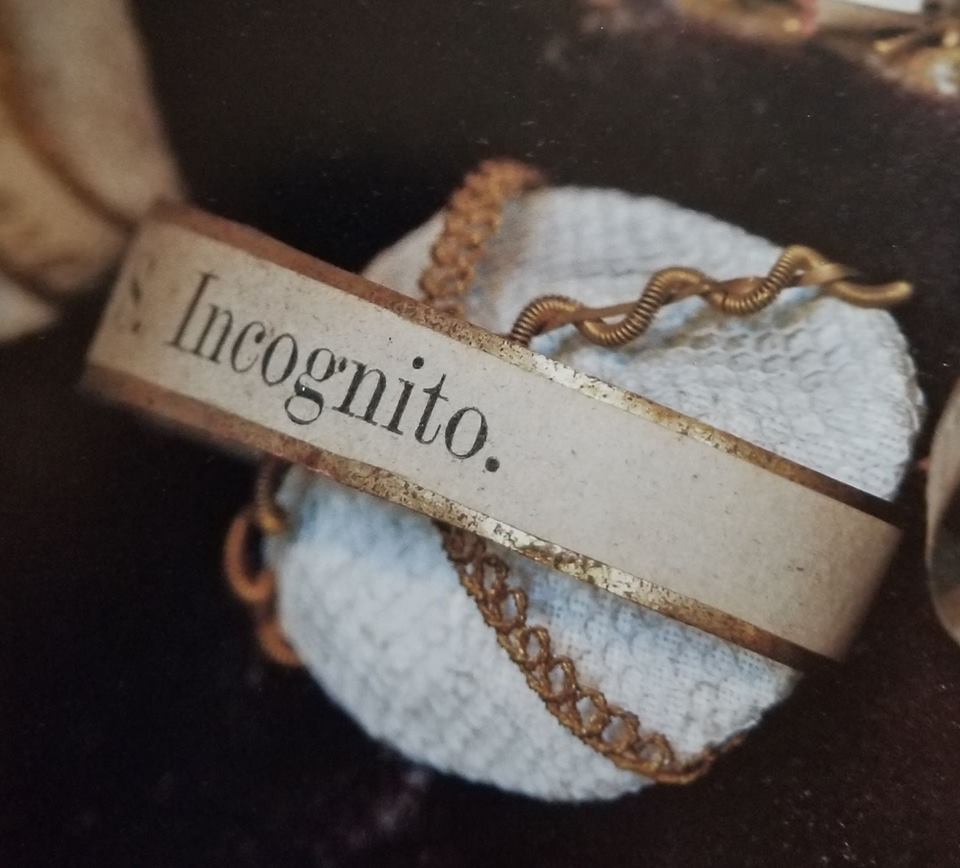 The relics of "St. Incognito" from the book Heavenly BodiesSeptember 30, 2018
Numbers 11.4-6, 10-16, 24-26; Mark 9:38-50
+ Come, O Holy Spirit, come!
Come as the fire and burn,
Come as the wind and cleanse,
Come as the light and lead.
Increase in us your gifts of grace.
Convict, convert and consecrate us, until we are wholly yours.
Tomorrow is a very momentous day in my life. Ten years ago, on October 1, 2008, I officially became the Priest-in-Charge of St. Stephen’s. I am, this morning, very grateful to God for these ten years. They have been wonderful. I’ve said it before. I will say it many times again and again: I love being the Priest of St. Stephen’s.But I will say that, on the whole, these past ten years have been difficult years for me personally. In addition to losing both of my parents, I have also had to struggle at times with the larger Church—capital C. And doing so has been unpleasant at times. I’ll get into that in a bit.
First, in this morning’s Gospel, we find one of Jesus’ chosen inner circle coming to him and complaining about someone—an outsider, not one of the inner circle of Jesus’ followers—who is casting out demons in Jesus’ name. We don’t know who this person was—we never hear anything more about him. Possibly it was one of those many multitudes of people who were following him around, observing all that he had done. Possibly it was someone who was trying to be like Jesus. More likely it was a genuine follower of Jesus who simply had not—for whatever reasons—made it into the inner circle of Jesus’ followers.
However, the apostles do not like it. They are threatened by this person—this outsider. And because he is an outsider, they want it stopped. So, thinking he will put an end to it, they go to Jesus. You can almost hear them as they whine and complain to him about this supposedly pretentious person.
But Jesus—once again—does not do what they think he will do. Jesus tells them two things: first
“for no one who does a deed of power in my name will be able soon afterward to speak evil of me.”
And the big one—the most obvious one (you would think)—
“Whoever is not against us is for us.”
Now, it’s a great story. And we have some very powerful characters in this story. We have, of course, Jesus, who is, as he should be, the center piece of this story. We have these apostles, who complain and whine.
But, the one I want to draw your attention to is that outsider. For the sake of continuing to call him an outsider, let’s just call him another name. Let’s name him Saint Incognito, the wannabe apostle.
Now, I will be honest this morning. It is certainly St. Incognito I feel the closest to in this Gospel story. I relate to him.
Why?
Because I am him.
Yes, I know: I am a uniform wearing ordained minister of the Church. But never once in all of these years I’ve been ordained, have I ever once felt like I’m some part of the inner circle of the Church. I have always felt sort of like St. Incognito, out there on the fringes, following Jesus from afar, trying to be a faithful disciple, but never feeling like I’m one of the “chosen few.” And I know several of you have felt this way too in your journey of following Jesus.
Now, I’ve shared this illustration with you before. But when I was in graduate school the first time, getting my Master of Fine Arts Degree, I wrote my thesis on the two perspectives of literature, in my opinion. All writers have either one of two perspectives to their writing, I argued (and still argue).
Those who are on the “inside” looking “out.”
And those on the “outside” looking “in.”
Perspective is everything in literature. And certainly also in life.
Many of us feel like we’re either on the outside or the inside of life or society or the Church (capital C). And for me, I have always seen myself on the outside, looking in. St. Incognito is the patron saint of all those outsiders.
Now the apostles say to Jesus, “…we tried to stop him because he does not follow us.”
That may be true. He is not following these apostles. But…he is, it seems, following Jesus in some way. He is aware of Jesus. He is casting out demons in Jesus’ name (and the demons, very importantly, are actually being cast out, if you notice). He is following Jesus in what he has observed and what he does.
But…he is not following in the way these apostles think he should be following. He is following from afar.
And as a follower of Jesus, it’s not always a pleasant place to be. It’s actually a very hard place to be. It’s hard to follow Jesus under any circumstances. But it is especially hard to follow Jesus when one is not part of the “inner group.” It is hard to follow Jesus from afar. And it’s hard to be one who is shunned by those inner few.
Luckily the one who doesn’t shun St. Incognito in our reading for today is, of course, Jesus. Now, you would think that we—the Church—would have learned from this story. You think we would have been able to have heard this story and realized that, if we are all working together for the same goal—for the furthering of the Kingdom of God in our midst—then, we are all working together in Jesus’ name.
But the fact is, we have not quite “got it.” There are still Christians—ordained and not ordained—who still strut around, proud of the fact that they figured it all out.
We’re right, they say.
We’re orthodox—we’re right thinking.
And everyone else who isn’t…well…here’s the shoulder.
Here’s the backside.
Here’s the shun.
Let’s face it, the Church—capital C—is an imperfect structure. It has the same faults and failings of all human-run organizations—no matter how blessed it claims to be by God. I will admit one thing to you—and for those of you who have come to know me in these last 10 years at St. Stephen’s, this comes as no great surprise—but, I have a love-hate relationship with the organized Church.
Now, I want to be clear: I truly love the Church. I love serving God’s people within the structure of the Episcopal Church and I definitely love serving here at St. Stephen’s. I love the Church’s traditions. I love its liturgy. As I’ve mentioned many times here before you, I love being a priest.
And, on really good days, I am so keenly aware that the Church truly is a family. We are a family that might not always get along with each other, but when it comes right down to it, my hope is we still do love each other .
And I have never seen that more keenly than here at St. Stephen’s. Certainly, we here, at St. Stephen’s, are very much a family.
Now I know St. Stephen’s has a reputation. It has a reputation of being an upstart congregation, a congregation that protests, that stands up and says no to injustice and hypocrisy. It has a reputation of being a thorn in the side of some people.
But even so, I will be just as honest that there are many days in which I find being a member of the Church—capital C— a burden. And being a member of the Church who is often viewed as an outsider of that Church is definitely a burden sometimes. The Church—as most of us know—can be a fickle place to be at times. It can be a place where people are more interested in rules and dogmas and a right interpretation of scripture and of church law than a place that furthers the love of God and of each other. It can be a place where people are so caught up in being orthodox, so caught up in being right, in being smart and clever, that they run rough-shod over people who truly need the Church and who truly long for and truly serve God.
Sometimes people are shocked to hear that I—an ordained priest—would even dare profess the hate side of my love-hate relationship with the Church. And it definitely boggles their minds that I—a collar-wearing priest—would be one of those outside the “inner circle” of the Church. But not being honest about it only helps perpetuate the hypocrisy the Church so often is accused of.
When I look at the Church at its worse right now I can honestly and clearly hear the voices of those disciples of Jesus in this morning’s Gospel. I can hear their statement as one of anger and one of frustration and one of jealousy.
On the other hand, I see people in the Church, at times, as making a real solid effort to be what Jesus wanted it to be. If I didn’t believe that, I wouldn’t be in the Church.
One aspect of the Church that I have always loved is the belief—and the fact— that there is room here for everyone in the Church—no matter who they are. I feel there is room for people who have differing views in the Church. Not everyone has to agree. But we all do have to make room for each other here. The Church however doesn’t always see itself in such a way.
Like the disciples in today’s Gospel, the government of the Church likes to claim that only it knows who can and who cannot do God’s work in the world. When an upstart—when a person marginalized by society—comes along and tries to do God’s work in Jesus’ name, the Church very often tries to put an end to it.
Look at our recent history in the church. Forty, fifty years ago, the issue was women. Can women be priests? A lot of people said, “absolutely not.” And people were mean and petty in their opposition.
Ten, fifteen, twenty years ago, it was ordaining Gay and Lesbian priests.
“This will be the end of the Church,” we heard proclaimed. Like Henny Penny crying out in the children’s story, the sky will. Well, guess what? The sky didn’t fall. And the Church hasn’t fallen apart.
We’re still here and, I personally can’t help but believe we’re a much better place for allowing women and LGBTQ people to serve us as priests and deacons and bishops.
As Anglicans, I have loved the fact that there has always been room for everyone. There is room for people who challenge us and provoke us and jar us out of what can very easily devolve into self-righteous complacency and moral pettiness.
As Scot McNight says in his delightful book, Embraced by Grace:
“In God’s equality, difference is maintained and loved.”
I have said it before and I will say it again: Who are we to judge who God calls to serve? God decides these things.
Our job as Christians is simply this: we must love each other and do what we can as Christians as followers of Jesus. As Jesus says in today’s Gospel,
“Whoever is not against us is for us.”
This Church that I love is a wonderful place to be at times. And I think it is a place from which everyonecan benefit. Like those disciples, none of us is perfect. All of us are fractured, sinful people at times. Because we are fractured sinful people, isn’t it wonderful that we have a place to come to even when we’re fractured and sinful, a place where we are not judged, a place from which we are not shunned or excluded or left feeling like an outsider. A place where we are welcomed for who and what we are. A place in which there are no more “outsiders” looking “in.” This is the ideal of the Church.
This is the place God intended it be. It is place in which the Spirit of God rests on its people, just as the Spirit of God rested on those elders in our reading from the Book of Numbers today. That resting of the Spirit of God is important for us to take note of. And to be open to right now in our own day.
That Spirit of God puts all of us on common ground.
That Spirit of God makes us all equal.
That Spirit of God eliminates those fringes of society, those marginalized places and makes us all part of the inner circle.
That Spirit of God reminds us that there are no “outsiders” among those on whom that Spirit rests!
We—all of us—are followers of Jesus and Spirit-infused children of a loving, accepting God, no matter who we are.
So remember, the Church is not an exclusive club. It is not a club for everyone who believes exactly the same thing, doing the same exact thing. The Church is a place on which God’s loving Spirit rests.
Following Jesus means making room for the person we might not agree with. Following Jesus means walking alongside someone whom no one else loves or cares for. Following Jesus means making sure no one is left outside our “inner circle.” Following Jesus means making sure we don’t lose our saltiness, as Jesus tells us today.
We must, as followers of Jesus, be salt of the earth. This is what, I think we are doing here at St. Stephen’s.
All of us, in our own ways, are attempting to follow Jesus here. The same Spirit which rested on those elders in the desert in the days of Moses rests upon us this morning. We should rejoice in that fact.
See why I am so grateful on this Sunday. See why I am so grateful on this tenth anniversary of my time with you as your priest. Together, here, we are doing what we care called to do.
So, let us, together, continue to do just that together. When we do, it is that we make a real difference in the Church and in this world. Amen.
September 23, 2018
18 Pentecost
 September 23, 2018
 Jeremiah 11.18-20; Psalm 54; James 3.13-4,7-8a;
+ I’ve shared this before with you. And I want to preface what I am going to say with a hope that you will not see me as a kind of progressive, Episcopal priest version of Richard Nixon.
But…I have enemies. There’s just no getting around that fact. There are people in this world who just do not like me. I know that’s hard to believe. Lol. There are people who point-blank dislike me. Or maybe even hate me.
Sometimes…when one makes stands, who stand firm, or makes comments or takes positions that differ from others, you’re gonna have enemies. Sometimes, just for standing up and saying “no” to people, you are going to have people dislike you. Or sometimes, you just are not able to do for others what they need you to do for them. And, as a result, they despise you for not being who they need you to be for them.
It’s hard. It’s painful. It’s extremely painful. And sometimes, when those people are people you care for or who were close friends or family, it is even more painful.
But, let me tell you this: we don’t make it through this life without a few enemies, without a few people who just not going to like us.
Now, like Richard Nixon, I actually write their names down. But unlike Nixon I do so not to keep up on them and persecute. I keep a list of my “enemies” so I can pray for them on a regular basis.
Now when I say “pray for them” I sometimes honestly can’t do more than that. Sometimes those people have hurt me enough that I can’t say I pray for really great things to happen to them.
But, I also don’t pray for bad things to happen to those people who I view as my enemy. Do I kind of secretly wish that bad things would happen to them?
Well…
…
…ok…
…maybe…
…secretly…
But…more than anything, I just wish they would see the error of their ways, as I perceive it. Which is arrogant of me, I know. But it’s honest.
Ok, yes, for one or two, maybe I did kind of wish bad things for them. You know, like a canker sore or a stubbed toe or something like that. I don’t wish for illness or death or really bad things to happen to them.
Enemies in the Bible were dealt with differently, as we no doubt have discovered. And often times, some harsh language was directed at those people who were considered enemies.
On those occasions, we do sometimes come across language in the Bible that we might find a bit—how shall we say—uncomfortable. The language is often violent. It is not the language good Christian people normally use. We get a peek at this language in our scriptures readings for today.
Our reading from the Prophet Jeremiah is a bit harsh, shall we say?
“Let us destroy the tree with its fruit,let us cut him off from the land of the living,so that his name will no longer be remembered.”
For many us, as we hear it, it might give us pause. This is not the kind of behavior we have been taught as followers of Jesus. After all, as followers of Jesus, we’re taught to love and love fully and completely. We certainly weren’t taught to pray for God to destroy our enemies, to “cut them off from the land of the living.” And not just destroy our enemies, but our enemy’s children (that whole reference to the fruit of the tree).
We have been taught to pray for our enemies, not pray against them. None of us would ever even think of praying to God to destroy anyone. I hope!
But the fact is, although we find it hard to admit at times, we do actually think and feel this way. Even if we might not actually say it, we sometimes secretly wish the worse for those people who have wronged us in whatever way. I like to think that, rather than this being completely negative or wrong, that we should, in fact, be honest about it.
We sometimes get angry at people. We sometimes don’t like people. And sometimes WE are the enemy to other people.
And let’s truly be honest, there are sometimes when we might actually just hate people. It’s a fact of life—not one we want to readily admit to, but it is there.
Sometimes it is very, very hard to love our enemies. Sometimes it is probably the hardest thing in the world to pray for people who have hurt us or wronged us.
So, what do we do in those moments when we can’t pray for our enemies—when we can’t forgive? Well, most of us just simply close up. We turn that anger inward. We put up a wall and we swallow that anger and we let it fester inside us. Especially those of us who come from good Scandinavian stock.
We simply aren’t the kind of people who wail and complain about our anger or our losses. We aren’t ones usually who say, like Jeremiah, “let us cut [that person] off from the land of the living!”
I think we may tend to deny it. And I think we even avoid and deny where the cause of that anger comes from.
Certainly, St. James, in his letter this morning, tries to touch on this when talks about these violent “cravings” which are “at war within us.” It’s not pleasant to think that there is warfare within us. For me, as a somewhat reluctant pacifist sometimes, I do not like admitting that there is often warfare raging within me. But it is sometimes.
So, what about that anger in our relationship to God? What about that anger when it comes to following Jesus?
Well, again, we probably don’t recognize our anger before God nor do we bring it before God. We, I think, look at our anger as something outside our following of Jesus. And that is where scriptures of this sort come in. It is in those moments when we don’t bring our anger and our frustrations before God, that we need those verses like the ones we encounter in today’s readings.
When we look at those poets and writers who wrote these scriptures—when we recognize her or him as a Jew in a time of war or famine—we realize that for them, it was natural to bring everything before God.
Everything.
Not just the good stuff. Not just the nice stuff.
But that bad stuff too.
And I think this is the best lesson we can learn from these readings than anything else.
We all have a “shadow side,” shall we say. I preach about this all the time. We all have a dark side. We have a war raging within us at times. And we need to remember that we cannot hide that “shadow side” of ourselves from God. Let me tell you, if you have war raging inside you, you definitely cannot hide that from God.
Sometimes this dark self, this war, is something no else has ever seen—not even our spouse or partner. Maybe it is a side of ourselves we might have not even acknowledged to ourselves.
It is this part of ourselves that fosters anger and pride and lust. It is this side of ourselves that may be secretly violent or mean or unduly confrontational and gossipy. Sometimes it will never make an appearance. It stays in the shadows and lingers there.
But sometimes it actually does make itself known. Sometimes it comes plowing into our lives when we neither expect it nor want it. And with it comes chaos
As much we try to deny it or ignore it or hide it, the fact is; we can’t hide this dark side from God. It’s incredible really when you think about it: that God, who knows even that shadow side of us—that side of us we might not even fully know ourselves—God who knows us even that completely still loves us and is with us.
Few of us lay that shadow self before God. But the authors and poets of our scriptures this morning do, in fact bring it ALL out before God. These poets wail and complain to God and lay bare that shadow side of him or herself. The poet is blatantly honest before God. Or as St. James advises,
“submit yourselves therefore to God. Resist the devil and he will flee from you. Draw near to God, and [God] will draw near to you.”
When these ugly things crop up in our lives, bring them before God. Let us deal with them in humility before God.
The fact is: sometimes we do secretly wish bad things on our enemies. Sometimes we do wish God would render evil on those who are evil to us. Sometimes we do hope that God will completely wipe away those people who hurt us from our lives.
It is in those moments, that it is all right to pray to God in such a way. Because the fact is—as I hope we’ve all learned by now—just because we pray for it doesn’t mean God is going to grant it. I say this over and over again: God grants all prayer, correct?
But there are three possible answers to prayer.
Yes.
No.
And not yet.
And if you pray for bad things to happen to your enemies, God is probably gonna answer with a big fat “NO.”
But that doesn’t invalidate the prayer. God knows what to grant in prayer. And why.
The important thing here is not what we are praying for. It is not important that in this Psalm we are praying for God to destroy our enemies.
What is important is that, even in our anger, even in our frustration and our pain, we have submitted to God. We have come before God as this imperfect person. We have come to God with a long dark shadow trailing us.
I have heard people say that we shouldn’t read these difficult on Sunday morning because they are “bad theology” or “bad psychology.” They are neither. They are actually very good and honest theology and very good and honest psychology. Take what it is hurting you and bothering you and release it. Let it out before God. Be honest with God about these bad things. Even if your anger is directed at God for whatever reason, be honest with God. Rail and rant and rave at God in your anger if you have to. Trust me, God can take it.
But, these scriptures teach us as well that once we have done that—once we have opened ourselves completely to God—once we have revealed our shadows to God—then we must turn to God and turn away from that shadow self.
We must, as St. James says, “resist the Devil.”
This past week, I came across this incredible quote:
“Forgive anyone who has caused you pain or harm. Keep in mind that forgiving is not for others. It is for you. Forgiveness is not forgetting. It is remembering without anger. It frees up your power, heals your body, mind and spirit. Forgiveness opens up a pathway to a new place of peace where you can persist despite what has happened to you.”
The key for me in that quote was, “Forgiveness is not forgetting. It is remembering without anger.”
Hatred and anger and pain are things that, in the long run, hurt us and destroy us. They make us bitter. And they hinder our relationship with God and with others.
At some point, as we all know, we must grow beyond whatever anger we might have. We must not get caught in that self-destructive cycle anger can cause. We must not allow those negative feelings to make us bitter.
So, when we are faced with these difficult scriptures and we come across those verses that might take by alarm, let us recognize in them what they truly are—honest prayers before God Let these scriptures—these lamenting and angry, as well as the joyful, exultant scriptures—be our voice expressing itself before God. And in the echo of those words, let us hear God speaking to us in turn.
When we do, we will find ourselves in a holy conversation with God. And, in that holy conversation, we will find that, even despite that shadow side of ourselves, God, who is Light, who is love, accepts us fully and completely for just who we are.