Jamie Parsley's Blog, page 39
April 25, 2019
So long, Leisha; we will sure miss you!
 On Tuesday, April 2, Leisha Woltjer, long-time Diocesan Administrator, announced her resignation from the Diocese, effective April 30. Her last day will be April 26. With her resignation on the heels of Bishop Michael’s, which becomes effective on May 1, it is truly the end of an era in the Episcopal Diocese of North Dakota.
Leisha began working for the Episcopal Church in April, 2002, when she was hired as the secretary of Gethsemane Cathedral. I was, at the time, preparing for my ordination to the transitional diaconate at Gethsemane and was in the office the day Leisha started. I still remember when I came in that day and saw a fresh-faced young woman at the front desk who had never worked in a church environment before. Later, she would describe her time as secretary as a true baptism by fire. In that time, she truly saw both the best and the worst of the Church.
Over the years, Leisha and I worked closely with each other, both at Gethsemane Cathedral and later in the Diocese office. While at the Cathedral, we saw Deans and transitional Deans come and go. We worked on funerals and weddings together. Many jokes were shared and much laughter filled the office, oftentimes with a Dutch version of the pop song “Barbie Girl” blaring from the computer. I remember clearly how she would put intentional mistakes in bulletins for me when I was proofreading them just to make sure I wasn’t just skimming them. Oftentimes we had very bizarre experiences happen: at one point, we both became victims of a seriously deranged stalker who hung around the cathedral; my car was keyed multiple times and Leisha’s purse was stolen.
In 2009, when Bonnie Bernardy resigned as Diocesan Business Manager, Leisha moved across the hall from Gethsemane Cathedral office to the Diocesan office, becoming the new Finance Manager, after having attained a degree in accounting while working at Gethsemane. At that same time, I became Bishop Michael’s Executive Assistant. Over the next three years, Leisha and I worked side by side in the Diocese, oftentimes under as equally unusual circumstances as we had at the Cathedral . One memory in particular stands out when, during the April 2009 flood in Fargo-Moorhead, Leisha and I were manning the Diocesan Office at a time when only “essential workers” were allowed on the streets. As sirens wailed and the city took on the feel of a ghost town, we fielded calls and wondered if she would be able to make it back home to Sabin safely.
After my resignation as the Bishop’s Executive Assistant in 2012, Leisha assumed most of the responsibilities I had, including editing The Sheaf which I had edited for 10 years.
For many of us, Leisha has been the voice and face of the Diocese and with her departure, it will seem strange not see her or hear her voice on the phone. I will miss seeing her at the table handing out packets at Diocesan Convention. I will especially miss the care and devotion she had to many of us.
I know that I speak for many of us in the Diocese when I say that Leisha has been a feisty, strong-willed but truly incredible and genuinely caring person in her position in the diocese. She was just the person for the job at just the right time. Her dedication and attention to detail will be deeply missed.
Leisha, we all wish you the very best in your future endeavors. And know that you go from here with all our blessings, gratitude and best wishes surrounding you and remaining with you.


April 21, 2019
Easter
 April 21, 2019
+ It’s really not much of a secret.
I LOVE Easter.
This, to me, is what it’s all about.
If anybody asks me, so what do you love most about being a Christian, I always say, Easter.
What isn’t there to love?
This is what it’s all about.
That holy moment—that moment when everything changed—when God raised Jesus from the tomb was the essential moment.
The Jesus who appears to us on this Easter morning is not a ghost.
He is not a figment of our imagination.
He is not an illusion.
And this story isn’t a fairy tale.
Every so often, someone will come up to me and ask that age-old question: “Do you really believe in the Resurrection? Do really you believe that God raised Jesus from the grave?”
And my answer is always this: “Why not?”
Why couldn’t God do this?
And if we look long and hard at what happened on that Easter morning, we realize that what happened there was more than just some vague experience for some ancient people.
What happened happened to us as well.
Everything since that point has been broken open for us.
Our old fear of death and dying—that’s all gone.
Because now we know that what we once held to be a mystery, is no longer a mystery.
What happens to us when we die?
We know now, because Jesus has been there already.
Jesus has gone there and by going there has defeated death.
What seemed to be the end—the bleak and horrible end on Good Friday afternoon—has been broken apart.
And what we are faced with is life.
Life that never ends.
Now, when people ask me if I believe in the Resurrection, I say that I do, but I usually leave it there.
Anything beyond my belief that it happened—and that it will happen for us—is beyond me.
I don’t understand it fully.
I still find bits and pieces of it being revealed to me.
I find on bad days or skeptical days that I’m, not certain I believe in it.
But what I have discovered is that, mostly, I find one deep, strong emotion coming forth in me when I ponder the Resurrection.
And that emotion is: joy.
In our Gospel reading for today, we find joy.
Joy comes to Mary Magdalene and the other Marys when they realizes that the tomb is empty and that it is Jesus, resurrected, standing before them.
We can almost feel that joy emanating from her as they rush to tell the other disciples about seeing him.
Joy is an emotion we seem to overlook.
We think, maybe of joy as some kind of warm, fuzzy feeling.
But joy is more than just feeling warm and fuzzy.
Joy is a confident emotion.
It is an emotion we can’t manufacture.
We can’t make joy happen within us.
Joy comes to us and comes upon us and bubbles up within us.
Joy happens when everything comes together and we know that all is good.
This morning we are feeling joy over the Resurrection—over the fact that today we celebrate the destruction of everlasting death.
See why I like Easter so much.
Easter, however, is what it’s all about to be a Christian.
What I talk about when I talk about Easter is that fact that today is truly the embodiment of the joy we should all feel as Christians.
Today is a day of joy.
Today, we are all filled with joy at the resurrection and the fact that the resurrection will happen to us too.
This is a joy that sustains us and lifts us up when we need lifting up.
It is a joy that causes us to see what others cannot see.
The Resurrection reminds us that God dwells with us.
God dwells within us.
And to see God, all we have to do is look around and see God in the faces of those around us.
See, Easter is about the Resurrection of Jesus, but it’s also about us as well.
That Resurrection is our Resurrection too.
What happened to Jesus will happen to us as well.
Why?
Because God loves us.
God loves us just for who and what we are.
God loves us, just as God loved Jesus.
And just as God raised Jesus up on that first Easter day, God will raise us up as well.
No matter who we are.
All us, fully loved and fully accepted by our God, will be raised up, just as Jesus is raised today.
By doing so, we no longer have to fear things like death.
By raising Jesus up, God destroyed our fears of an uncertain future.
By raising Jesus up, God brought victory to all of our defeats and failures.
See, there is a reason for joy on this Easter morning.
In fact, it is joy that dwells with us and among us as we gather here.
Joy.
So, on this Easter morning, let this joy we feel at this moment not be a fleeting emotion.
Rather, let it live in us and grow in us.
Let it provoke us and motivate us.
Let it flow forth from us.
And when you live into this joy—when you let this joy fully consume you—every day with be Easter day to you.
Every day will be a day of resurrection.
Every day will be a day of renewed life.
Alleluia! Christ is risen.
The Lord is risen indeed!
Alleluia!
April 20, 2019
Easter Vigil
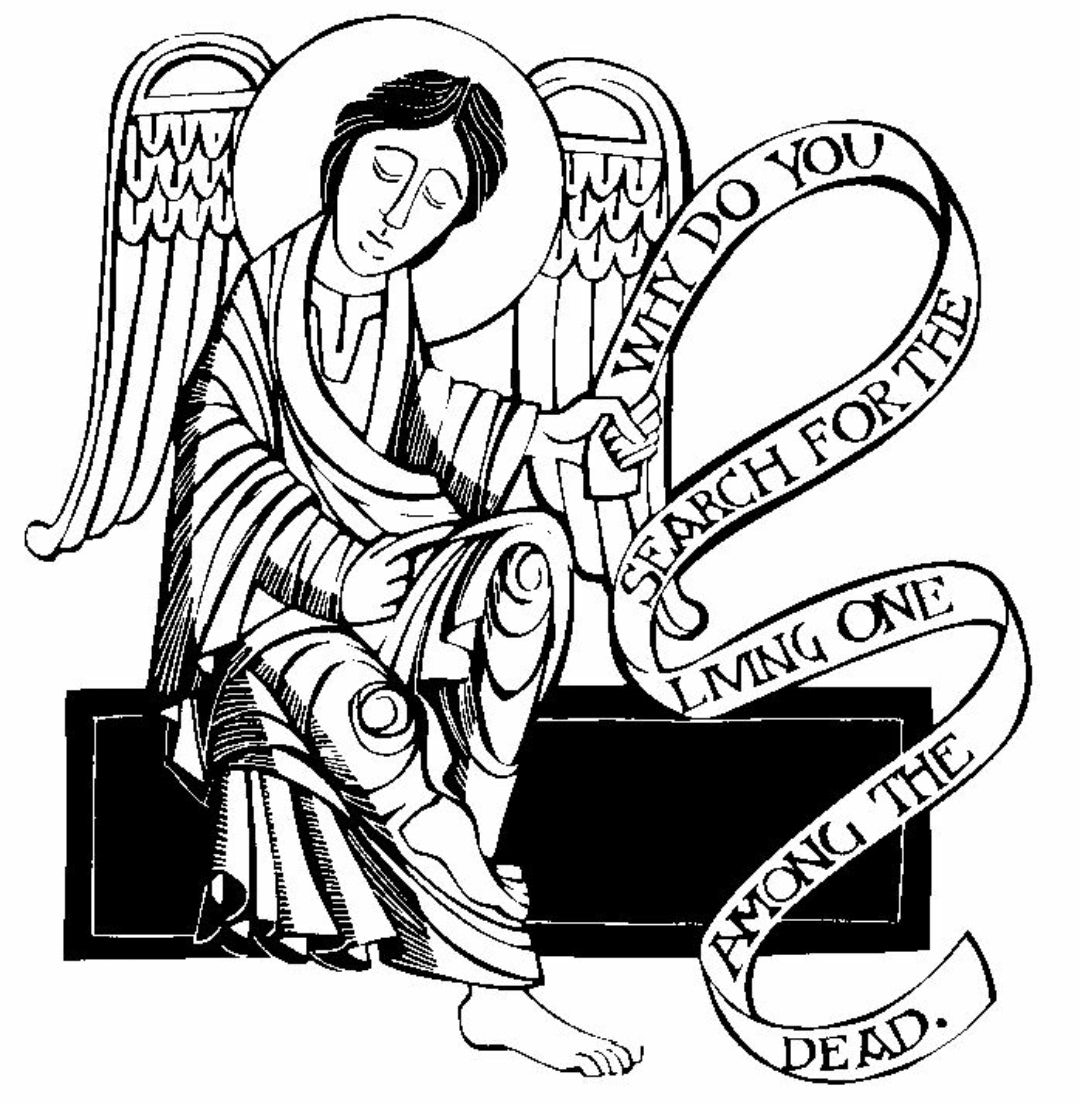 April 20, 2019
+ I don’t know about you, but…
I LOVE Easter!
Some people like Christmas.
For them, that’s the real magical time.
But for me, it’s all about Easter.
This is what it is all about.
There is nothing, in my opinion, like gathering together here on this glorious morning, in all of this Easter glory.
I just love Easter!
I love everything about it.
The light.
The joy we are feeling this morning.
That sense of renewal, after a long, hard winter.
An Easter eve like this reminds me that there is more to this world than we thought.
There is a glory that we sometimes catch a glimpse of.
There is an eternity and it is good.
There’s an old saying, “Eternal life doesn’t start when we die, it starts now.”
I love that.
Resurrection is a kind reality that we, as Christians, are called to live into.
And it’s not just something we believe happens after we die.
We are called to live into that Resurrection NOW.
Jesus calls us to live into that joy and that beautiful life NOW.
The alleluias we sing this evening are not for some beautiful moment after we have breathed our last.
Those alleluias are for now, as well as for later.
Those alleluias, those joyful sounds we make, this Light we celebrate, is a Light that shines now—in this moment.
We are alive in Christ now.
We have already died with Christ when we were baptized.
And in those waters, we were raised with him, just as he is raised today and always. Easter and our whole lives as Christians is all about this fact.
Our lives should be joyful because of this fact—this reality—that Jesus died and is risen and by doing so has destroyed our deaths. This is what it means to be a Christian.
Easter is about this radical new life.
It is about living in another dimension that, to our rational minds, makes no sense.
Even, sometimes, with us, it doesn’t make sense.
It almost seems too good to be true.
And that’s all right to have that kind of doubt.
It doesn’t make sense that we celebrating an event that seems so wonderful that it couldn’t possibly be true.
It doesn’t make sense that this event that seems so super-human can bring such joy in our lives.
Tonight we are commemorating the fact that Jesus, who was tortured, was murdered, was buried in a tomb and is now…alive.
Fully and completely alive.
Alive in a real body.
Alive in a body that only a day before was lying, broken and dead, in a tomb.
And…as if that wasn’t enough, we are also celebrating the fact that we truly believe we too are experiencing this too.
Experiencing this—in the present tense.
Yes, we too will one day die.
But, THAT doesn’t matter.
What matters is that that death is already defeated.
We are already living, by our very lives, by our baptisms and our faith in Jesus, into the eternal, unending, glorious life that Jesus lives in this moment.
Our bodies MAY be broken.
Our bodies WILL die.
But we will live because Jesus lives.
What we are celebrating this evening is reality.
What we are celebrating tonight is that this resurrected life which we are witnessing in Jesus is really the only reality.
And death is really only an illusion.
We aren’t deceiving ourselves.
We’re not a naïve people who think everything is just peachy keen and wonderful.
We know what darkness is.
We know what death is.
We know what suffering and pain are.
For those of us who have losses in our lives, we know the depths of pain and despair we can all go to in our lives.
It is this Light of Christ, that has come to us, this glorious night, much as the Sun breaks into the darkness.
What Easter reminds us, again and again, is that darkness is not eternal.
It will not ultimately win out.
Light will always win.
This Light will always succeed.
This Light will be eternal.
I am honest when I say that part of me wishes I could always live in this Easter Light.
I wish I could always feel this joy that I feel this morning.
But the fact is, this Light will lose its luster faster than I even want to admit.
This joy will fade too.
But I do believe that whatever heaven is—and none of us knows for certain what it will be like—I have no doubt that it is very similar this the joy we feel this morning.
I believe with all that is in me that it is very much like the experience of this Light that we are celebrating this morning—an unending Easter.
And if that is what Heaven is, then it is a joy that will not die, and it is a Light that will not fade and grow dim.
And if that’s all I know of heaven, then that is enough for me.
The fact is, Easter doesn’t end when the sun sets tomorrow night.
Easter is what we carry within us as Christians ALL the time. Easter is living out the Resurrection by our very presence.
We are, each of us, carrying within us the Light of Christ we celebrate this evening and always.
All the time.
It is here, in our very souls, in our very bodies, in our very selves.
With that Light burning within us, being reflected in what we do and say, in the love we show to God and to each other, what more can we say on this glorious, glorious morning?
What more can we say when God’s glorious, all-loving, resurrected realty breaks through to us in glorious light and transforms us;
Alleluia! Christ is risen!The Lord is risen indeed. Alleluia!
Holy Saturday
 April 20, 2019
+ We’ve all been here.
We’ve been here, in this belly of hell.
We’ve been in this place in which there is nothing.
Bleakness.
No hope.
Or so it seems.
It’s not just a bad place to be.
It’s the worst place to be.
We have been in that place in which we seemed abandoned.
Deserted.
No one was coming for us, we believed.
No one even knew we were here, in these depths of hell.
Hell.
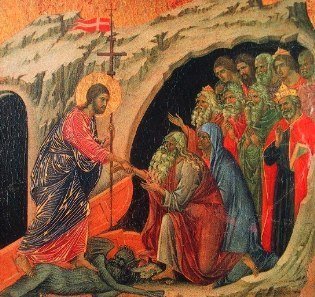
Holy Saturday is the time in which we commemorate not only the fact that Jesus is lying in the tomb—in which we perform a liturgy that feels acutely like the burial service.
We also commemorate a very long belief that on this day, Jesus, although seemingly at rest in the tomb, was actually at work, despite the fact that it seemed he was dead.
He was in the depth of hell.
This belief, of course, comes to us from a very basic reading of 1 Peter, and from the early Church Fathers.
Jesus descended into hell and preached to those there.
The popular term for this is the Harrowing of Hell.
He went to hell and harrowed until it was empty.
As a follower of Jesus, I find the story of the Harrowing of Hell to be so compelling.
I find it compelling, because I’ve been there.
I’ve been to hell.
More than once.
As we all have.
I have known despair.
I have known that feeling that I thought I would actually die from bleakness.
Or wished I could die.
But didn’t.
Even death wasn’t, in that moment, the worst thing that could happen.
That place of despair was.
It’s the worst place to be.
Which is why this morning’s liturgy is so important to me.
In the depth of hell, even there, when we think there is no one coming for us—just when we’ve finally given up hope, Someone does.
Jesus comes to us, there.
He comes to us in the depths of our despair, of our personal darkness, of that sense of being undead, and what does he do?
He leads us out.
I know this is a very unpopular belief for many Christians.
Many Christians simply cannot believe it.
Hell is eternal, they believe
And it should be.
If you turn your back on God, then you should be in hell forever and ever, they believe.
If you do wrong in life, you should be punished for all eternity, they will argue.
I don’t think it’s any surprise to any of you to hear me say that I definitely don’t agree.
And my faith speaks loudly to me on this issue.
The God I serve, the God I love and believe in, is not a God who would act in such a way.
Now, I am not saying there isn’t a hell.
There is a hell.
As I said, I’ve been there.
But if there is some metaphysical hell in the so-called “afterlife,” I believe that, at some point, it will be completely empty.
And heaven will be absolutely full.
What I do know is that the hell I believe in does exist.
And many of us—most of us—have been there at least once.
Some of us have been there again and again.
Any of us who have suffered from depression, or have lost a loved one, or have doubted our faith, or have thought God is not a God of love—we have all known this hell.
But none of them are eternal hells.
I do believe that even those hells will one day come to an end.
I do believe that Jesus comes to us, even there, in the depths of those personal hells.
I believe that one day, even those hells will be harrowed and emptied, once and for all.
Until that day happens, none of us should be too content.
None of us should rejoice too loudly.
None of should exult in our own salvation, until salvation is granted to all.
If there is an eternal hell and punishment, my salvation is not going to be what I thought it was.
And that is the real point of this day.
I love the fact that, no matter where I am, no matter where I put myself, no matter what depths and hells and darknesses I sink myself into, even there Jesus will find me.
And I know that the Jesus I serve and follow will not rest until the last of his lost loved ones is found and brought back.
It’s not a popular belief in the Christian Church.
And that baffles me.
Why isn’t it more popular?
Why do we not proclaim a Savior who comes to us in our own hells and bring us out?
Why do we not proclaim a God of love who will bring an end, once and for all, to hell?
We as Christians should be pondering these issues.
And we should be struggling with them.
And we should be seeking God’s knowledge on them.
On this very sad, very bleak Holy Saturday morning, I find a great joy in knowing that, as far as we seem to be in this moment from Easter glory, Easter glory is still happening, unseen by us, like a seed slowly blooming in the ground.
That Victory of God we celebrate this evening and tomorrow morning and throughout the season of Easter is more glorious than anything we can imagine.
And it is more powerful than anything we can even begin to comprehend.
In my own personal hells the greatest moment is when I can turn from my darkness toward the light and find consolation in the God who has come to me, even there, in my personal agony.
Even there, God in Jesus comes to me and frees me.
God has done it before.
And I have no doubt God will do it again.
In the bleak waters of abandonment, God has sent the buoy, the lifesaver of Jesus to hold us up and bring us out of the waters.
That is what we are celebrating this Holy Saturday morning.
That is how we find our joy.
Our joy is close at hand, even though it seems gone from us.
Our joy is just within reach, even in this moment when it seems buried in the ground and lost.
April 19, 2019
Good Friday
 April 19, 2019
+ The one word that has been with me these last few days has been a word most of us know well in our lives.
Brokenness.
In many ways, that is what this day is all about.
Brokenness.
The Jesus we encounter today is slowly, deliberately being broken.
This moment we are experiencing right now is a moment of brokenness.
Brokenness, in the shadow of the cross, the nails, the thorns.
Broken by the whips.
Broken under the weight of the Cross.
Broken by his friends, his loved ones.
Broken by the thugs and the soldiers and all those who turned away from him and betrayed him.
In this dark moment, our own brokenness seems more profound, more real, as well. We can feel this brokenness now in a way we never have before. Our brokenness is shown back to us like the reflection in a dark mirror as we look upon that broken Body on the cross.
Like Jesus, we have all wondered at times in our lives if God, who once was such a source of joy and gladness to us, had turned away from us. We have all known what the anguish of losing someone love feels like, whether we lost that person to death, or to a change of feelings, or simply due to desertion. Some of us have known that fear that comes when we are faced with our mortality in the face of illness, and we think there will never be a time when we will never be well again.
This dark place is a terrible place to be.
But as Bishop Charles Stevenson once wrote:
“To receive the light, we must accept the darkness. We must go into the tomb of all that haunts us, even the loss of faith itself, to discover a truth older than death.”
Yes, we have known brokenness in our lives. We have known those moments of loss and abandonment. We have known those moments in which we have been betrayed. We have known those moments when we have lost someone we have cared for so much, either through death or a broken relationship. We have known those moments of darkness in which we cannot even imagine the light.
But, for as followers of Jesus, we know there is light. Even today, we know it is there, just beyond our grasp. We know that what seems like a bleak, black moment will be replaced by the blinding Light of the Resurrection.
What seems like a moment of unrelenting despair will soon be replaced by an unleashing of unrestrained joy. This present despair will be turned completely around. This present darkness will be vanquished. This present pain will be replaced with a comfort that brings about peace. This present brokenness will be healed fully and completely, leaving not even a scar.
In a short time (though it might not seem like it) our brokenness will be made whole. And will know there is no real defeat, ultimately. Ultimately there will be victory. Victory over everything we are feeling sadness over at this moment. Victory over the pain, and brokenness, and loss, and death we are commemorating
This is what today is about. This is what our journey in following Jesus brings to us.
All we need to do is go where the journey leads us. All we need to do is follow Jesus, yes, even through this broken moment.
Because if we do, we will, like him, be raised by God out of this broken place. The God in whom we, like Jesus, trust, will reach out to us, even here, in this place, on this bleak day, and will raise us up.
Following Jesus, means following him, even to this place. But, we, who have trusted in him, will soon realize this is, most definitely, not the end of the story. Not by any means. We will, in a short time know, that, in our following of him, we will know joy—even a joy that, for this moment, seems far off.
April 18, 2019
Maundy Thursday
 April 18, 2019
1 Corinthians 11.23-26; John 13.1-17, 31b-35
+ Tonight, we are in the midst of a mystery. Tonight we commemorate the mystery of Christ happening to us. We commemorate an event in our lives as Christians that has changed us and affected us and transformed us and made our spiritual lives better.
Tonight, we commemorate that incredible and amazing miracle—the institution of the Holy Eucharist. Tonight, we remember the fact that Jesus took bread, broke it, gave it and said, “This is my body,” and that he did the same with the wine and said, “This is my blood,”
And that by doing so, something incredible happened. Christ happened. God in Christ broke through to us. God broke through to us and incredible and wonderful way.
Every Sunday, we participate in this incredible, holy event. We come together. We celebrate together this mystery. We come forward and take this bread and drink from this cup and, in doing so, we take the Body and Blood of Christ. Every Sunday, our congregation celebrates this mystery, this miracle and this incredible conduit in which God still continues to come to us in this tangible, real way.
In this bread and wine we share, Christ happens to us. Christ is present with us in a unique and wonderful way. And recognizing this presence, how can we be anything other than in awe of it?
We should be blown away by what is happening on our altar. And we should remind ourselves that, no matter what we believe, Jesus is our spiritual food.
I will hear from people who tell me that it was this holy event of the Eucharist that converted them and changed them and transformed them. And that amazes me.
I’m sure there are people out there who see what we do as archaic. There are even some Christians out there who say we don’t need Holy Communion every Sunday.
I disagree.
We need Holy Communion every Sunday. One of the reasons I came back to Church and have stayed in the Church as long as I have is this one act of the Church. Even when I wandered away from the Church and journeyed about in my own spiritual journey, I oftentimes found myself craving what I had always experienced in the Eucharist. And it was this deep desire for the Eucharist that brought me back to the Church in my twenties.
The reason we come to church is so we can experience God’s presence. What better way than in in the Bread and the Wine and in one another? The reason we come to church is to be strengthened in our everyday faith life. We come to church to be fed spiritually, so that we can be sustained spiritually.
And the amazing fact is, people are still being transformed by this event. Each of us is transformed by what we do here. And so is anyone who comes to our altars and experiences God’s Spirit coming to us in this bread and wine.
This is why Holy Communion is so important. This is why we celebrate this miracle every Sunday.
There is nothing else like this kind of worship in the Church. It is one of the most intimate forms of worship we can know. Christ truly comes among us and feeds us with the Spirit. We form a bond with Christ in Communion that is so strong and so vital to our spiritual lives.
But Jesus tells us tonight, on the eve of his death, on the eve of his leaving us, that he will not leave us without something. Rather, he will leave us with a sign of his love for us.
As John tells us tonight, “Having loved his own who were in the world, he loved them to the end.”
He loved us even at the end so that he could leave us something to nourish us and sustain us until he comes to us again. He leaves us this wonderful and amazing sign of God’s sustaining us.
But Holy Communion is more than just being fed in our bodies. What we learn at this altar of ours, when celebrate the Eucharist together and we share Holy Communion together is that, Jesus is our Bread of Life, our cup of Salvation, that Jesus is the Body given for us and the Blood shed for us, whenever we are starving or thirsting spiritually.
When we feel empty and lost, God comes to us and refreshes us. God feeds our spirit with that presence of absolute love in our lives.
In other words, what Jesus is saying to us is: this is what will fulfill you.
This God who feeds us, with Spirit, with food. God then becomes the very staple of our spiritual lives. God is the One who feeds that hunger we have deep within us, who quenches that seemingly unquenchable thirst that drives us and provokes us. God fills the voids of our lives with this life-giving Presence.
But it’s more than just a moment.
This love that we experience in this Communion, is love that we can’t just hug to ourselves and bask in privately. This love we experience in this Eucharist is a love that is meant, like the Bread and the Cup, to be shared with others.
“Love one another,” is Jesus’ commandment to us in those moments before he is betrayed, in those hours before he is tortured, on the eve of his brutal murder.
“Just as I have loved you, you should love one another. By this everyone will know that you are my disciples, if you have love for one another.”
Communion—and the love we experience in it—is not just something we do here in church on Sunday mornings or on Maundy Thursday. It is something we take with us when we go from here. It is something we take out into the world from here.
As Christians, we are not only supposed to share the Body and the Blood of Christ wherever we go because we carry those elements within us.
We are to become the Body and Blood of Christ to those who need Christ.
And because we carry those elements within us, we are to feed those who are not just hungry of body, but are hungry of mind and spirit as well.
We are to share and BE the Body and Blood of Jesus with all of those we encounter in the world.
How do we do this? We do it simply by loving. By loving and accepting fully and completely. That is how we live this Eucharist in our lives in joyful thanksgiving.
So, as we go from here this evening, during the rest of this Holy Week and especially during the holy season of Easter, let us go out into the world remembering what we carry within us. Let us remember WHO we are carrying within us. Let us remember what nourishes us, what sustains us, what quenches our own spiritual hunger and thirst. Let us go out, refreshed and filled with life-giving bread and life-refreshing cup—following Jesus and serving God, who feeds us with his very self.
But let us go out also into the world ready to share that bread and cup that gives such life to us. Let us show it in our actions and show it in our words. Let us show it by living out that commandment of love to all. Let that Presence of God within us nourish those around us just as it nourishes us.
April 17, 2019
Easter Letter
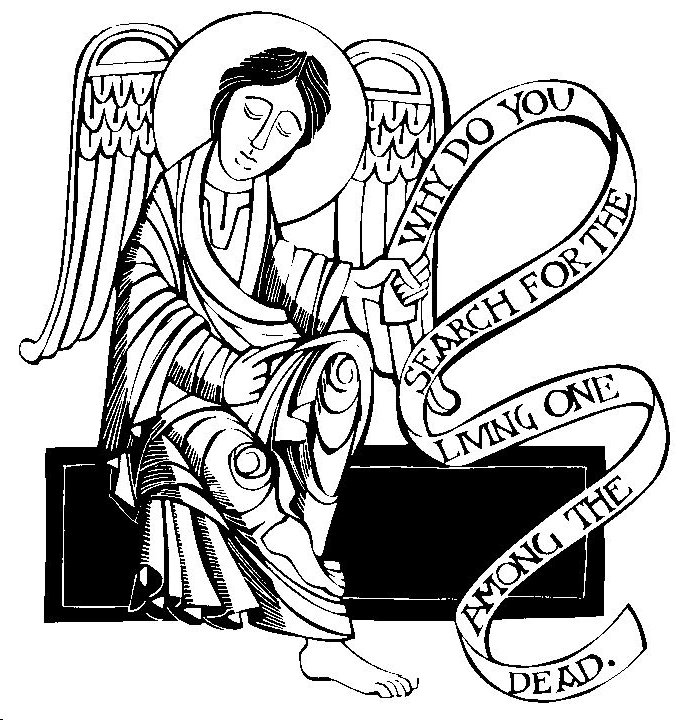 “Through the Paschal mystery…we are buried with Christ by Baptism into his death, and raised with him to newness of life.” —The Book of Common Prayer
April 17, 2019Wednesday of Holy Week
Greetings! As we journey together through the darkness of Holy Week toward the glorious light of Easter morning, we do so with a sense of purpose and direction. Our eyes are set on the goal of the Light of Christ which shines in our hearts and gives us a hope that does not die.
As we near the Triduum of Maundy Thursday, Good Friday and Holy Saturday, and beyond to Easter I would like to invite each of you to join with me in commemorating Jesus’ last journey to the cross and celebrating the glorious Event of the Resurrection. There will be plenty of opportunities for worship during Holy Week and the Easter Season. A schedule of Holy Week/Easter events is included in this mailing.
Our Easter Vigil and Easter Day celebrations at St. St. Stephen’s will once again be the most beautiful and glorious services we celebrate during the year and this year is no exception. We will have a truly special and meaningful service of liturgy and music that will be memorable for all of us. And we will, once again, have special opportunities for our children as well.
And again, please know of my deep gratitude and joy in being able to serve alongside you at St. Stephen’s. You are an incredible congregation!
Peace,Jamie+ Fr. Jamie Parsley
HOLY WEEK AT ST STEPHEN’S Thursday, April 18 – Maundy Thursday7:00 pm Holy Eucharist + Foot washing + Stripping of Altar
Friday April 19 –Good Friday 12:00 pm – Good Friday service + Solemn Collects + Veneration of the Cross + Eucharist of the Pre-sanctified
3:00 pm – Stations of the Cross
Saturday, April 20 – Holy Saturday10:00 am – Holy Saturday service
8:00 pm—Easter Vigil Lighting of the New Fire + Service of Light + Return of the Alleluia
Sunday April 21 – Easter 11:00 am – Holy EucharistEloise Tackling First Holy Communion
April 14, 2019
Palm Sunday
 April 14, 2019
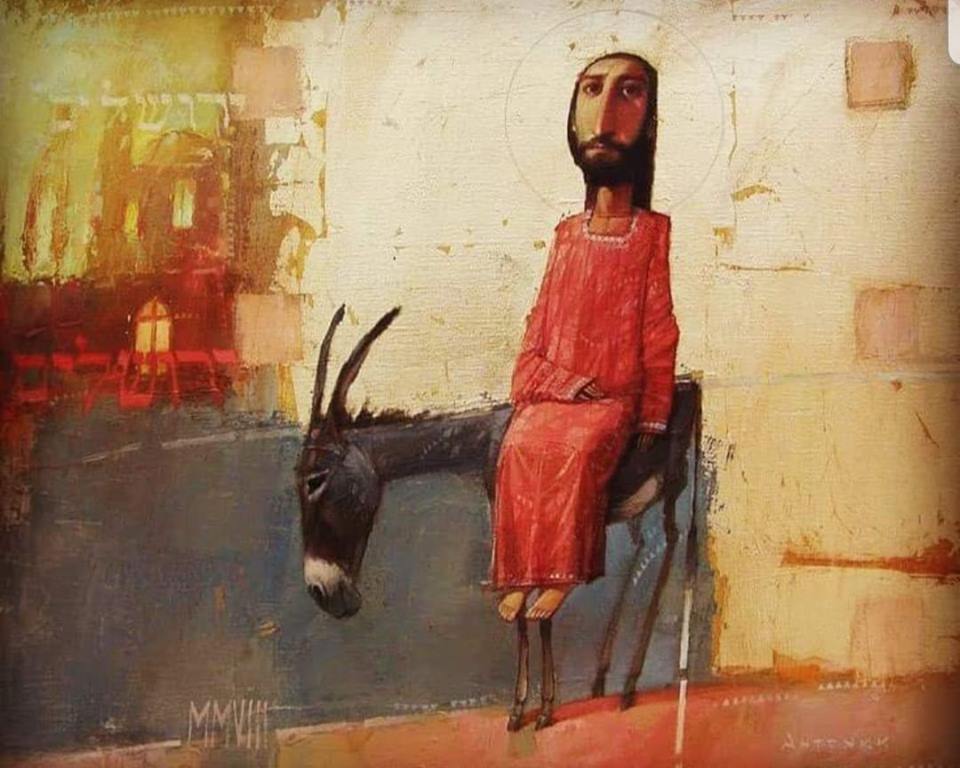
+ I know. I say this to you every Palm Sunday. But I’m going to say it again.
Save your palms.
Keep them.
Fold them up , display them in your homes.
Keep them throughout this year.
Let them dry out.
Because next February (which I know seems like ages away), I will ask you to bring them back to church. Because these palms that are so young, and green and fresh this morning, in February will be burned and made into the ashes for Ash Wednesday.
See, the cycle of our liturgical year. It’s interesting to ponder them in such a way. There is a strange kind of cycle here.
These palms represent us, in many ways. In fact, everything that is about to happen this coming week, speaks to us on a very personal level.
As we approach this Holy Week, we need to keep in mind a very important reality. What is about to happen in Holy Week is about us, as much as it about Jesus.
Now, I’m not talking about this all in some abstract way. I mean it, when I say, this is our story too. Let’s face it: we’ve been here. Our liturgy today—this service we have this morning—begins on a high note.
Jesus enters in a hail of praises. The crowds acclaim him. It is a wonderful and glorious moment as Jesus enters Jerusalem, praised by everyone.
But everything turns quickly. What begins on a high note, ends on a lowest note possible.
The crowds quickly turn against him. He is betrayed, whipped, condemned.
And although we hopefully have not physically experienced this things, most of us, have been here at least emotionally. We have known these highs and lows in our own lives. We have known the high notes—those glorious, happy moments that we prayed would never end. And we have known the low notes—when we thought nothing could be worse. And sometimes these highs and lows have happened to us as quickly as they did for Jesus.
Unless we make personal what is happening to Jesus in our Gospel reading this morning and throughout this coming week, it remains a story completely removed from our own lives.
As we hear this reading, we do relate to Jesus in his suffering and death. How can we not? When we hear this Gospel—this very disturbing reading—how can we not feel what he felt? How can we sit here passively and not react in some way to this violence done to him? How can we sit here and not feel, in some small way, the betrayal, the pain, the suffering?
After all, none of us in this church this morning, has been able to get to this point in our lives unscathed in some way. We all carry our own passions—our own crucifixions—with us. We have all known betrayal in our lives as times. We have all known what it feels like to be alone—to feel as though there is no one to comfort us. Whenever we feel these things, we are sharing in the story of Jesus. We are bearing, in our very selves, the very wounds of Jesus—the bruises, the whip marks, the nails.
And when we suffer in any way in this life, and we all have, we have cried out, “where are you, God?” That is what this story of Jesus shows us very clearly.
Where is God when we suffer? Where is God when it seems as though everyone has turned from us, and abandoned us? Where is God in our agony?
Where is God?
The death of Jesus shows us where God is in those moments. Where is God? God is right here, suffering with us in those moments.
How do we know this? Because we see it clearly and acutely in this story of Jesus.
As I said, the Gospel story we heard this morning is our story.
For those of us who carry wounds with us, we are the ones carrying the wounds of Jesus in our bodies and in our souls as well. Every time we hear the story of Jesus’ torture and death and can relate to it, every time we can hear that story and feel what Jesus felt because we too have been maligned, betrayed, insulted, spat upon, then we too are sharing in the story. Every time we are turned away and betrayed, every time we are deceived, and every time we feel real, deep, spiritual pain, we are sharing in Jesus’ passion.
When we can feel the wounds we carry around with us begin to bleed again when we hear the story of Jesus’ death, this story becomes our story too.
But…and this is very important BUT, there’s something wonderful and incredible about all of this as well. The greatest part about sharing in this story of Jesus is that we get to share in the whole story.
Look what awaits us next Sunday. These sufferings we hear about today and in our own lives, are ultimately temporary.
But what we celebrate next Sunday is forever—it is unending. Easter morning awaits us all—that day in which we will rise from the ashes of this life—the ashes of Ash Wednesday, the ashes of these palms we wave this morning, and live anew in that unending dawn.
Next Sunday reminds us is that, no matter how painful our sufferings have been, no matter how deep our wounds are, God, who has suffered with us, will always raise us from this pain of ours, just as God raised Jesus from his tomb.
God will dry all our tears.
All our pains will be healed in the glorious light of Easter morning.
This is our hope.
This is what we are striving toward in case we might forget that fact.
Our own Easter morning awaits us, as well.
So, as difficult as it might be to hear this morning’s Gospel, as hard as it is to relive our pains and sufferings as we experience the pains and sufferings of Jesus, just remember that in the darkness of Good Friday, the dawn of Easter morning is about to break. With it, the wounds disappear.
The pains and the sufferings are forgotten.
The tears are dried for good.
The grave will lie empty behind us.
And before us lies life. Unending, pain-free life. Before us lies a life triumphant and glorious in ways we can only—here and now—just barely begin to comprehend.
March 31, 2019
4 Lent
 March 31, 2019Laetare Sunday
Luke 13.1-3,11b-32
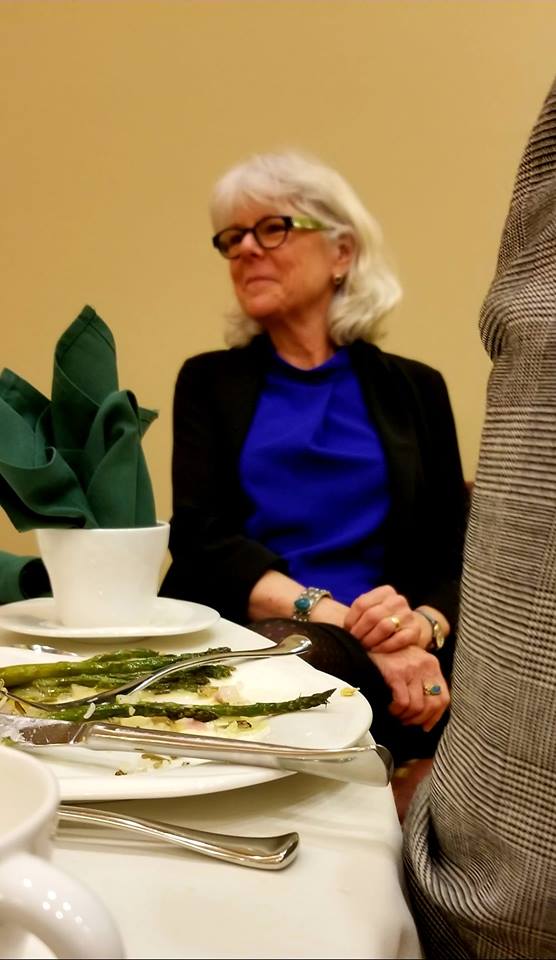
+ As you may have heard, the writer and Episcopal priest Barbara Brown Taylor was at Concordia College last Tuesday. It’s one of the few times I have ever been star-struck—and I’ve met some fairly famous people in my life (at least famous by my personal pantheon of famous people). I was even fortunate enough to be seated at the head table at a supper in her honor that evening, just one person over from her.
In fact, I even got to talk to her. And what did we discuss?
We discussed St. Stephen’s! Or more specifically what we do here.
At some point in the evening, I was talking to a student beside me, who was asking questions about the Episcopal Church. When she asked what I loved most about being Episcopalian, I said it was our theology about the Eucharist.
Barbara Brown Taylor, who was talking to someone else, turned and said, “I heard the word ‘Eucharist.’”
I then explained to her our views on the Eucharist here, about our open invitation
 of all people present here are welcome to Holy Communion, not just the baptized (which is very controversial, I know, even among some of you) She smiled and we had the discussion I often have about the Last Supper and my view that we do not know who was baptized and who wasn’t at the Last Supper (actually we know only One who was at that meal).
I then said that somehow the Eucharist has become this privileged meal for only those who are “in”—which is exactly what we can imagine Jesus would not want it to be—an exclusive little private meal for the privileged.
At some point the conversation turned to St. Stephen’s being the only congregation in the Diocese to be allowed to same-sex marriage, and our DEPO process. She was particularly impressed with this.
I explained that, as of May 1, the thing we fought so hard to do here at St. Stephen’s will now be the norm in the Diocese of North Dakota.
She said, “You guys are trailblazers.”
“And rebels,” I added. “
The conversation turned briefly to religious communities on the edge. At that point, she was asked to give a question and answer period so we never finished our conversation.
But during her talk later that evening, Barbara Brown Taylor talked about religious communities on the edge. And it gave me a bit of pride knowing that she knew of an Episcopal church in Fargo, North Dakota that was one of those communities.
We are one of those communities. We have been out on the edge in our ministries throughout our entire history. And, I can say this, being out here on the edge is important, but it isn’t always fun.
There’s a downside to being rebellious. It can be very isolating. Oftentimes, the rebel is all alone in the cause of rebellion. There are days when it feels like one is Don Quixote fighting windmills. And it’s exhausting.
To stand up for what it right, to often be at odds with those in authority, to finally have make a decision to step back and not cow tail to authorities who do not respect you or respect the worth and dignity of other human beings or respect the stand you’ve made, is very hard. And now that we are pondering the end of DEPO and our own reconciliation with the Diocese of North Dakota, we are also facing a difficult moment.
How to do so when there has been so much pain and so much hurt between us? Because we do have to acknowledge the fact that, we made the right stand. The proof is in the pudding.
What we stood up for in 2015 is now the norm in the Diocese and the rest of the Episcopal Church. For the naysayers in 2015, I hate to say this, but—I told you so. I told you this was exactly what was going to happen. What we stood up for then is now the norm. And we needed to make that stand then. We needed to be that force in 2015. We needed to stand up and be a safe place in a diocese that did not feel safe for many of us.
Yes, when that decision not to allow same-sex marriage rites in this diocese when the rest of the Church did, it did not feel like a safe place in this Diocese for many of us. And for the people who have been married through St. Stephen’s, who have been affirmed by our stand, it was totally and completely worth it!
Yes, now is the time for reconciliation. Now is the time for us to move back into our rightful place in this diocese.
But…and I am going to emphatic on this: for reconciliation to happen in this diocese, we have to realize that it is going to be a two-way reconciliation. It is not time for us to come groveling back.
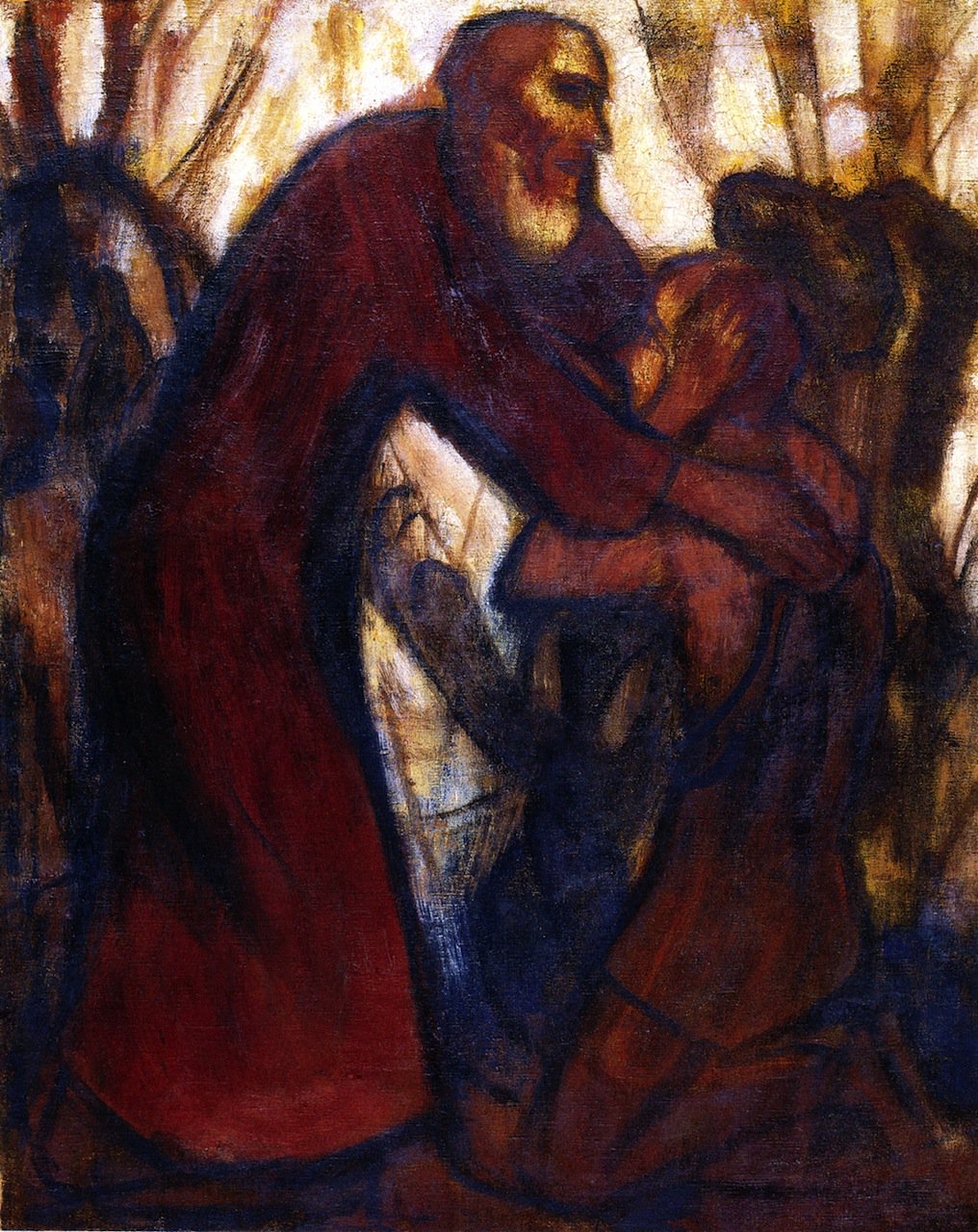
We did nothing wrong in our stand and in what was said and done in 2015. I want to be clear: we are NOT the Prodigal Sons returning home in this. And I want that to be very clear about that as we proceed forward in this diocese.
But, although we are not the Prodigal Son, we can definitely find ourselves relating to the story Jesus tells this morning in our Gospel reading. We have all been down that road of rebellion and found that, sometimes, it is a lonely road, as I said. Sometimes we do find ourselves lying there, hungry and lonely and thinking about what might have been.
But for me, in those lonely moments, I have tried to keep my eye on the goal. I am, after all, one of those people who habitually makes goals for myself. I always need to set something before me to work toward. Otherwise I feel aimless. Goals are good things, after all.
In our Gospel for today, we find the Prodigal Son have some big goals and some pretty major hopes and dreams. First and foremost, he wants what a lot of us in our society want and dream about: money. He also seems a bit bored by his life. He is biting at the bit to get out and see the world—a feeling many of us who grew up in North Dakota felt at times in our lives. He wants the exact opposite of what he has. The grass is always greener on the other side, he no doubt thinks. And that’s a difficult place to be. He only realizes after he has shucked all of that and has felt real hunger and real loneliness what the ultimate price of that loss is.
It’s a difficult place to be. But, I’ve been there. WE’ve been there. Many of us have been there. And it’s important to have been there.
God does occasionally lead us down roads that are lonely. God does occasionally lead us down roads that take us far from our loved ones. And sometimes God allows us to travel down roads that lead us even from God (or do it seems at times).
But every time we recognize our loneliness and we turn around and find God again, we are welcomed back with open arms, and complete and total love. That, of course, is what most of us get from this parable.
But…
There’s another aspect to the story of the prodigal son that is not mentioned in the parable. The prodigal has experienced much in his journey away. And as he turns back and returns to his father’s house, we know one thing: that prodigal son is not the same son he was when we left. The life he has returned to is not the same exact life he left. He has returned to his father truly humbled, truly contrite, truly turned around. Truly broken.
And that’s the story for us as well. In my life I have had to learn to accept that person I have become—that people humbled and broken by all that life and people and the Church have thrown at me. And I have come to appreciate and respect this changed person I’ve become.
That’s the really hard thing to do. Accepting the change in myself is so very difficult.
Who am I now?
God at no point expects us to say the same throughout our lives. Our faith in God should never be the same either. In that spiritual wandering we do sometimes, we can always return to what we knew, but we know that we always come back a little different, a little more mature, a little more grown-up. No matter how old we are. We know that in returning, changed as we might been by life and all that life throws at us, we are always welcomed with open arms by our loving God. We know that we are welcomed by our God with complete and total love.
And we know that, lost as we might be sometimes, we will always be found. And in that finding, we are not the only ones rejoicing. God too is rejoicing in our being found.
That is the really great aspect of this parable.
God rejoices in us.
God rejoices in embracing us and drawing us close.
So, let us this day rejoice in who we are, even if we might not fully recognize who we are.
Let us rejoice in our rebelliousness and in our turning back to what we rebelled against.
Let us rejoice in the fact that we are a voice and force of change as a congregation.
Let us rejoice in our being lost and in our being found.
Let us rejoice especially in the fact that no matter how lonely we might be in our wanderings, in the end, we are always, without fail, embraced with an embrace that will never end.
And let us rejoice in our God who rejoices in us.
March 27, 2019
No Caffeine -- No Pain No Gain
 I recently decided to give up caffeine. No coffee, no soda, no…nothing. And not just for Lent, but for good. After a few days of really terrible flu-like symptoms and the deepest sense of fatigue I’ve ever known (one night I went to bed at 9:30 p.m. and slept like I was dead until 7:00 a.m. the next morning), I gotta say I am feeling really good. No pain, no gain, right???