Jamie Parsley's Blog, page 38
June 23, 2019
2 Pentecost
 June 23, 2019
Galatians 3.23-29;Luke 8.26-39
+ I had an interesting discussion with someone this past week about the sermon I preached last Sunday. Last Sunday, I preached, in passing, that I was a Christian Universalist. In other words, I do not believe in an eternal hell. I do not believe that the God that I believe in and love would send anyone to a metaphysical hell for all eternity.
This person had an issue with that belief of mine. She even quoted to me several passages of scripture that she felt showed she was right. Which actually helped my position, especially when we examined early Jewish understanding of the afterlife at that time.
And then she made an assumption. She said, “well, since you don’t believe in evil…”
Oh. I said. Nope. I never said I didn’t believe in evil.
I say it emphatically:
Evil DOES exist.
Now I’m not saying I believe in actual supernatural devils or demons. But, the fact remains, whether we believe in actual demons or nor not, whether we believe in Satan as a goat-like horned figure with a forked tail or not, what we all must believe in is the presence of actual evil in this world. Whether that evil is natural or supernatural, or both, the fact is, there is evil. Even good rational people know that!
Just look at the news, depending on what news source you follow.
And those of us who are followers of Jesus have promised that we must turn away from evil again and again, in whatever way we encounter it. Whenever we are confronted with evil, we must resist it, we must stand up to it.
In our Baptismal service, these questions are asked of the person being baptized (or their sponsors):
“Do you renounce Satan and all the spiritual forces of wickedness that rebel against God?”
And…
“Do you renounce the evil powers of this world which corrupt and destroy the creatures of God?”
And, as our Baptismal Covenant asks us asks us:
“Do you persevere in resisting evil, and whenever you fall into sin, repent and return to the Lord?”
Evil is something we must stand up against however we encounter it. Whether we encounter it as a spiritual force, or whether we encounter it in other forms, such as racism, sexism, war, or homophobia, as followers of Jesus, must stand up against evil and say no to it.
And let me be really blunt here:
Treating migrant children like animals is EVIL.

Allowing children to sleep on floors, under tin foil sheets, in col, dirty conditions is evil.
Separating children from their parents and families is evil.
I can’t believe I even have to say it in this day and age, and in this country. And if you don’t think it’s evil, if you don’t think it’s anti-Christian, I, as your priest, invite you to take a long, hard look at your soul. And repent.
And maybe make an appointment with me this week for confession.
In a sense, what we are being asked to do is what Jesus did in this morning’s Gospel. We are being compelled, again and again, to cast out the evil in our midst, to send it away from us. This is not easy thing to do. It is not easy to look long and hard at the evil that exists in the world, and in our very midst. But it is very easy to believe that evil wins.
The story of Jesus is clear: good always defeats evil ultimately. Again and again.
It might not seem like it sometimes. Often times, evil wins the battle. But, be assured, evil never wins the war.
Christ, as we heard in Paul’s Letter to the Galatians today, breaks down the boundaries evil in its various forms sets up.
In Christ, we hear, there are no distinctions.
In Christ, all those things that divide us and allow the seeds of evil to flower are done away with—those issue of sex, and social status and nationality and race are essentially erased in Christ.
And we, as followers of Jesus, so prone at times to get nitpicky and self-righteous and hypocritical and divide ourselves into camps of “us” versus “them,” are told in no uncertain terms that those boundaries, in Jesus, cannot exist among us.
Those boundaries, those distinctions, only lead to more evil. To less love.
But even then, even when evil does seem to win out, even when there are moments of despair and fear at the future, there’s no real need to despair.
Even in those moments when evil seems to triumph, we know that those moments of triumph are always, always short-lived. Good will always defeat evil ultimately.
Yes, we find the premise of good versus evil in every popular movie and book we encounter. This is the essence of conflict that we find in all popular culture.
Good versus evil—and good always wins.
But, for us, as followers of Jesus, this is not fiction. That is not a fairy tale or wishful thinking. It is the basis on which our faith lies.
When confronted with those spiritual forces of wickedness that rebel against God, we must renounce them and move on. And what are those spiritual forces of wickedness in our lives? What are those forces that divide us and cause conflict among us? What are the legion of demons we find in our midst?
Those spiritual forces of wickedness are those forces that destroy that basic tenant of love of God and love of each other. Those spiritual forces of wickedness drive us apart from each other and divide us. They harden our hearts and kill love within us.
When that happens in us, when we allow that to happen, we cannot be followers of Jesus anymore. We cannot call ourselves children of a loving God. When that happens our faith in God and our love for each other dies and we are left barren and empty. We become like the demoniac in today’s Gospel. We become tormented by God and all the forces of goodness. We wander about in the tombs and the wastelands of our lives. And we find ourselves living in fear—fear of the unknown, fear of that dark abyss of hopelessness that lies before us.
It would be easy to feel like that in the wake of the violence and terror we experience in this world. It is early to feel that way when confronted with the reality of detention camps on our borders.
But when we turn from evil, we are able to carry out what Jesus commands of the demoniac. We are able to return from those moments to our homes and to proclaim the goodness that God does for us.
That’s what good does. That’s what God’s goodness does to us and for us. That is what turning away from evil—in whatever form we experience evil—does for us.
So, let us do just that. Let us proclaim all that God has done for us. Let us choose good and let us resist evil. Let us love—and love fully and completely, without barriers. Let us love each other. Let us love peace and nonviolence. Let us cast off whatever dark forces there are that kills love within us.
And let us sit at the feet of Jesus, “clothed in and in our right mind,” freed of fear and hatred and violence and filled instead with joy and hope and love.


June 16, 2019
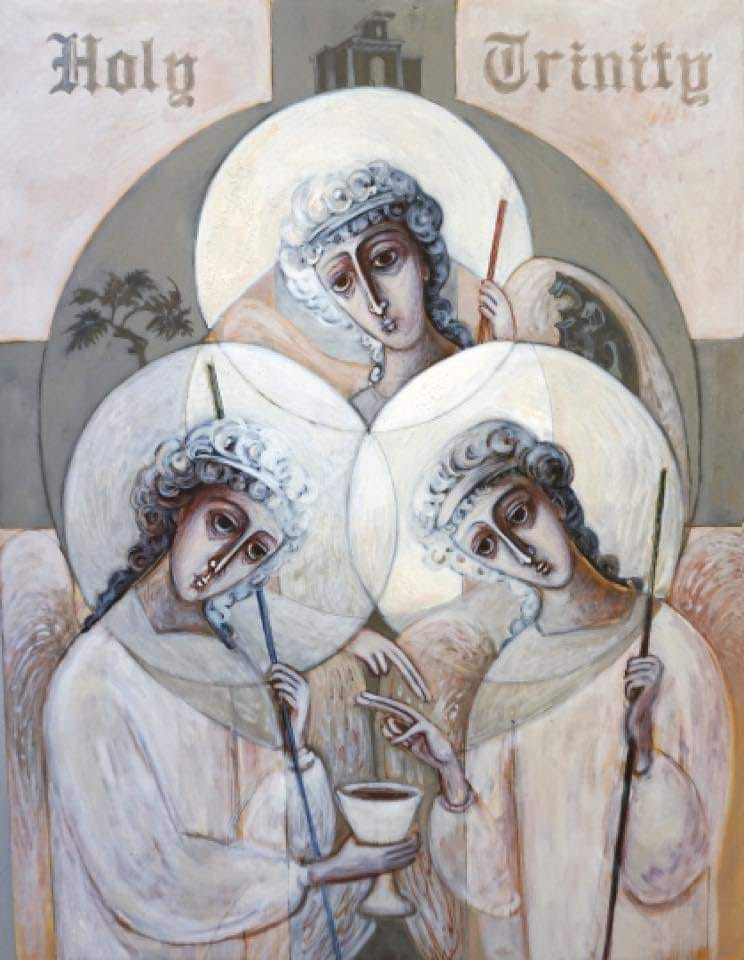
Holy Trinity
 June 16, 2019
John 3.1-17
+ When all is said and done, at the end of the day, I can say this about myself:
I am actually fairly orthodox in most of what I believe. I don’t say that pridefully. I’m not bragging. I’m just saying…
Yes, I know. I’m pretty liberal. At least socially.
But theologically, I’m pretty cut and dry. It would be hard to find a major heresy in most of my thinking.
OK. Yes, I’m a universalist. I do believe that, eventually, we will all be together with Christ in heaven. I really do believe that. I do not believe in an eternal hell.
But the rest of it is pretty much straightforward.
I believe Jesus is the unique and divine Son of God.
I believe he’s the Word of God Incarnate.
I believe in the Virgin Birth and the Resurrection.
I believe prayer does make a difference in this world.
I believe in the Real Presence of Christ in the Bread and Wine of the Eucharist.
And let’s not get into my view of Mary and the saints.
And then, there’s the Trinity.
Sigh.
The Trinity.
Every time I try to explain it, I find myself nudging over into some kind of heresy. Was that Modalist in my definition? Or am I guilty of Partialism?
I don’t want you to think I’m a heretic or anything. I don’t want any heresy charges brought against me. So, you know what? I’m not even going to attempt it today. After all, I’m just a priest. I’m not a theologian, nor have I ever claimed to be one.
Most of us, let’s face it, don’t give the doctrine of the Trinity a lot of thought. Like you, I really don’t lost a lot of sleep over it. I approach this Sunday and this doctrine of the Holy Trinity as I approach any similar situation, like Christmas or Easter or, as we celebrated last Sunday, the Holy Spirit and Pentecost.
It’s a mystery. And I love the mystery of our faith. And let me tell you, there is nothing more mysterious than the Trinity.
God as Three-in-One—God as Father or Parent or Creator, God as Son or Redeemer and God as Spirit or Sanctifier.
I know, I know. It’s difficult to wrap our minds around this concept of God.
The questions we priests regularly get is: how can God be three and yet one? How can we, in all honesty, say that we believe in one God when we worship God as three?
Certainly our Jewish and Muslim brothers and sisters ask that very important question of us: Aren’t you simply talking about three gods?
(We’re not , by the way—just to be clear about that)
My answer is: I don’t know.
But I believe. I don’t know what it is, but I believe in it.
Whole Church councils have debated the issue of the Trinity throughout history. The Church actually has split at times over its interpretation of what exactly this Trinity is.
We can debate it all we want this morning. We can talk what is orthodox or right-thinking about the Trinity all we want.
But the fact remains that unless we have experienced God in a real and somewhat personal way, none of this talk to the Trinity is really going to matter, ultimately. There is the key to everything this Sunday is about. We can go on and on about theology and philosophy and all manner of thoughts about God, but ultimately what matters is how we interact with our God.
How is our relationship with God and with each other deepened and made more real by this one God? That’s what Jesus tells us again and again.
Just love God.
In scripture we don’t find people worrying too much about whether they are committing a heresy or not in trying to describe God.
What do we find in scripture? We find a constant striving toward a more personal and closer relationship with God. This is our primary responsibility: our relationship with God.
How can all this talk about God—how can this thinking about God—then deepen our relationship with God?
Our goal is not to understand God: we will never understand God. God is not some Rubik’s Cube or a puzzle that has to be solved. Our goal is to know God. In our hearts. Passionately.
Our goal is to love God.
Our goal is to try to experience God as God wishes to be experienced by us.
Because God does know us.
God does love us.
And, more likely than not, we have actually experienced our God in more than one way more than once in our lives.
I personally have experienced the Trinity—or rather, I should say, I have experienced God in a tri-personal kind of way (I don’t know what heresy that might be, but I really don’t care)
I personally have experienced as a loving and caring parent, especially when I think about those times when I have felt marginalized by people or the Church or society or by friends and colleagues.
I have also known Jesus as my redeemer—as One who, in Jesus, has come to me where I am, as Jesus who suffered in a body and who, in turn, knows my suffering because this One also has suffered as well. And this One has promised that I too can be, like Jesus, a child of this God who is my—and our—Parent. I have been able to take comfort in the fact that God is not some distant deity who could not comprehend what I have gone through in my life and in this limited, mortal body. In Jesus, God knows what it was to be limited by our bodies. There is something wonderful and holy in that realization.
And I have known the healing and renewal of the Spirit of God of my life.
If that’s the Trinity—and certainly that’s the Trinity I have experienced in my life—then, it’s wonderful!
If all we do is ponder and argue and debate God and God’s nature, we’ve already thrown in the towel. And we are defeating the work of God. But if we simply love God and strive to experience God through prayer and worship and contemplation, that is our best bet.
No matter what the theologians argue about, no matter what those supposedly learned teachers proclaim, ultimately, our understanding of God needs to be based on our own experience to some extent.
Yes, God is beyond our understanding. Yes, God is mysterious and amazing and incredible. But God does not have to be a frustrating aspect of our church and our faith. Our experience of God should rather widen and expand our faith life and our understanding and experience of God and, in turn, of each other.
So, today, as we ponder God—as we consider how God has worked in our lives in many ways— and who God is in our lives, let us remember how amazing God is in the ways God is revealed to us. God cannot be limited or quantified or reduced.
God can only be experienced.
And adored.
And pondered.
God can only be shared with others as we share love with each other.
When we do that—when we live out and share our loving God with others—then we are joining with the amazing and mysterious work of God who is here with us, loving us with a love deeper than any love we have ever known before.
June 13, 2019
15 Years a Priest!
 June 12, 2019
Matthew 10.7-16
+ In our Gospel reading for tonight, we hear Jesus say, “I am sending you as sheep into the midst of wolves; so be wise as serpents and innocent as doves.”
I can say that scripture has definitely been a prophecy-fulfilled in my ministry. When I heard those words fifteen years ago last night, I may have had an idea of what Jesus meant. Fifteen year later, I can truly say I KNOW what Jesus meant.
I’ve been there, in the midst of those wolves. And if I have had any gift granted to me by God to survive, it has definitely been to be wise as a serpent and innocent as a dove. Well, I don’t know how “innocent” I’ve been. But I’ve tried really hard to be innocent as a dove.
Fifteen years ago, on that that hot night (and it WAS hot that night) I was impatient. I was biting at the bit. I was straining forward. That ordination couldn’t happen fast enough.
And when it did, it was something. It was unique. And it was wonderful. I truly experienced the Holy Spirit that night.
I have told you before how, when the Bishop laid hands on my head that night, I FELT the electricity of the Spirit in that moment. And I definitely felt something change in me.
At moments, it seems like it was just yesterday. And at other moments, it seems like it was 100 years ago.
15 years of priestly ministry. You have heard me say it before. I will say it again a hundred times I’m sure.
I love being a priest.
I can say in all honesty that I was meant to be a priest. As sure as a shark is meant to hunt, or a fish to swim, I was meant to be a priest. It was almost like it was programmed into me.
Now saying that, I’m not saying I have been a perfect priest. I was never called to be a perfect priest. Nor even at times, have I been a particular good priest.
I have failed.
I have tripped up.
I have stumbled.
I have made many, many mistakes.
But even then, even with all the mistakes I’ve made, it’s all right. It’s all good. Still, it hasn’t been easy.
I remember twenty years ago, when I told the first Episcopal priest I too wanted to be an Episcopal priest, he leaned back in his chair, put his fingers to his chin and shook his head.
“It’s never going to happen,” he said.
And I thought then, that was it.
All right.
The door was closed and that was that.
And if that priest had had his way, it would’ve ended there.
Actually, let’s face it: the odds were against me. Because of who I am and what I am, I really can’t imagine now how I made it through and was ordained.
And there were people who said I shouldn’t have been ordained.
There were people who said I had no right to stand at the altar.
Sadly for them, they did not get their way.
Nor really did I.
God did.
Some priests have been able to fly under the radar. Not me. Which is not always a good thing.
Being a priest like me means being a target. A big target. For better or for worse.
But it helped that I did not go into this as some doe-eyed, naïve PollyAnna. I was prepared for all this vocation would give me—both good and bad. I knew and was prepared for all of those things.
Fifteen years ago I thought I knew what it meant to be “broken.” I know now what it means to be broken. And I have served many broken people.
But I was also prepared for the good things, as much as anyone can be prepared for such things in their lives.
In these fifteen years I’ve known the beauty of grace and friendship. I knew what it was, in those moments, to see God breaking through in wonderful and incredible ways.
I also realized that all that spiritual training I had—clinging to the Holy Eucharist and the discipline of the Daily Offices of Morning and Evening Prayer—could truly sustain one spiritually when the Devil takes you by throat and shakes you. The Holy Eucharist and the Daily Office have been my buoys. They have been the buoys through the hard times. They have been the buoys when my father died and then when my mother died. They have helped me when I have felt so utterly alone in this world. They helped me keep my head above water.
So, yes, I am the scarred veteran priest.
But I stand before you as priest who can still hold my head up and say, without one qualm, without one doubt, without hesitation: I am so happy to be a priest.
I am!
I really am!
I’m going to close tonight with the prayer I had printed on my worship booklet back then. It was a prayer I adapted from a prayer by one of my all-time heroes, Michael Ramsey, Archbishop of Canterbury. I can say that this has been a prayer that has been answered in ways I never knew prayers could be answered. This is a prayer that is a very clear warning to everyone: be careful sometimes what you pray for.
It might actually be answered.
I close with this prayer I prayed fifteen years ago last night. And tonight, I can say that prayer has been answered. Again and again in my life. And for that, I am truly grateful.
Let us pray. Holy God, the years have fallen away—one by one—only to reveal this one shining moment. It lies here before me as a precious gift I neither asked for nor deserved. And yet, here it is. Here it is in its beauty, more precious than any other gift.
Only one thing I ask: take my heart and break it. Break it not as I would like it to be broken, but as you would. And because it is you who are breaking it, how can I be afraid, for your hands are the hands I have felt all my life at my back and on my face, supporting me, comforting me and guiding me to the places you wanted me to be. Your hands are safety and in them, I am safe.
Take my heart and where you have broken it, fill it with joy—not the joy I want for myself, but the joy you want for me. Fill my heart with a burning joy and let its fire burn away everything dead or dying within me. Let my heart burn with a joy I cannot imagine and can only vaguely comprehend.
It’s time, Lord, and I am ready. See! I am ready to be your priest.
June 9, 2019
Pentecost
 June 9, 2019
Acts 2.1-21
+ In case you might not have guessed, today—Pentecost Sunday—is an important day in the life of the Church. Important like Christmas and Easter are important.
Today, we commemorate the end of the Easter season today, which is important. At the end of Mass today, we will process the Paschal Candle back to its place in the Baptistery, where it will stand by the baptismal font until next year. Back in April, we processed the Paschal Candle in at the Easter Vigil. So, this is a fitting end to the season.
It’s been a good Easter season. And it’s sad to see it go.
But, of course, most importantly, we commemorate today the descent of the Holy Spirit on those first followers of Jesus. What’s surprising is that, as important as this day is, there still is not a whole lot of writers who write about the Holy Spirit.
In fact, one of the best writers I’ve found who writes the best about the Holy Spirit, isn’t even a Christian. The Vietnamese Zen Buddhist teacher Thich Nhat Hanh has some very powerful things to say about the Holy Spirit and his belief that there is a connection between the Holy Spirit and the Zen concept of mindfulness.
Another writer that I admire greatly wrote a wonderful book about the Holy Spirit. The late great Episcopal writer, Phyllis Tickle, wrote a wonderful book called The Age of the Spirit; How the Ghost of an Ancient Controversy is Shaping the Church. In an interview she gave while promoting that book, Tickle said this: “…we’re seeing a need to experience the Spirit everyday and a belief in the accessibility of the Spirit. Most Christians 100 years ago would have prayed to Jesus. Today, people are actually praying to the Spirit with regularity. So, there is greater engagement with the Spirit in a way that would not have been true in years past.”That may be true. But I think many Christians still don’t quite “get” the Holy Spirit.
As you probably notice, Christians think A LOT about Jesus. Which is very good! BUT….although they think VERY much about Jesus, and pray to Jesus a lot, there isn’t always a lot of following of Jesus. There isn’t a lot of being Jesus in the world. And that isn’t just sad or unfortunate. That is detrimental to the Church as a whole.
Sadly, the Holy Spirit just doesn’t capture the imagination of most Christians like Jesus does. After all, the Spirit is usually depicted as a dove. Not an exciting symbol for most people.
But, let me tell you, the Holy Spirit is VERY important. Vitally important.
Essential.
In fact, the Spirit is probably that one aspect of God that we experience in our own lives more than any other aspect of God. Every time we feel God’s Presence in our life, every time we feel a sense of the Holy, that is the Spirit. And everything we do as a Church is done in the Spirit of God.
Even here in the Holy Eucharist, when we partake of the Bread and the Wine, we are partaking in the Spirit of God. We actually call down the Spirit in this Eucharist.
15 years ago this coming Tuesday, I was ordained to the Priesthood. On that day, the Bishop laid hands upon my had and prayed this prayer:
Therefore, Father, through Jesus Christ your Son, give your Holy Spirit to Jamie; fill him with grace and power, and make him a priest in your Church.
And let me tell you: I felt the Spirit at the moment very powerfully! In fact, it was one of the most amazing moments of my life! Most importantly the Spirit works in other amazing ways in the Church.
Whenever anyone asks me. What is the secret of our success here at St. Stephen’s? How has your congregation grown and become so vital and alive? What do I say? I always say: The Holy Spirit.
It is God’s living Spirit that is responsible for growth and vitality and holiness. It the Spirit that many of us feel when we enter this church and gather together. It is that wonderful kind of disconcerting energy we feel in the air, that reaches right down into us and grabs us in our core. THAT is the Spirit.
So, see, the Spirit is very active in our lives. And by being active in life, we know that God is active in our lives.
Today we are reminded of how the Holy Spirit continues to move in our lives. We are reminded that the Holy Spirit is in the collective Church. And in us, as individuals. And that moving of the Holy Spirit within us, has changed us and made us a wonderful force of good and love in the world. I think most of us—I hope most of us—have felt this moving of the Holy Spirit within us as some point.
Still, even if we haven’t, when it comes to the Holy Spirit, we all find ourselves grasping and struggling to define who and what the Spirit is in our lives. The Spirit can be elusive and strange and sometimes we might have a hard time wrapping our minds around the Spirit.
But it is clear from the words of Jesus before he ascends back into heaven what the role of the Spirit is: Although Jesus might no longer be with us physically as he was when he walked with the disciples, God’s spirit that was in Jesus will always remain with us. Jesus will leave—we will not be able to touch him and feel him and listen to his human voice again. But God is leaving something amazing in Jesus’ place.
And this is not just some nice, pleasant gift. It is a gift that makes us live up to our full potential as lovers of God.
In a sense what happens with the Descent of God’s Spirit upon us is the fact that we now have the potential to be prophets, as you’ve heard me say many, many times. The same Spirit which spoke to Ezekiel, which spoke to Isaiah, which spoke to Jeremiah, which spoke to Moses, also can now speak to us and be revealed to us just as it spoke and was revealed to those prophets from the Hebrew Scripture.
That is who the Spirit is in our midst. The Spirit we celebrate today—and hopefully every day—is truly the Spirit of the God that came to us and continues to come to us—first to those prophets in our Hebrew past, then in the Word who is Jesus and finally in that rushing wind and in that rain of burning flames. It is through this Spirit that we come to know God in ways we might never have before.
The Spirit is God with us NOW.
Right here.
Right now.
Always.
So, how do we know the Spirit is working in our lives? Well, as Jesus said, we know the tree by its fruit. In our case, we know the Spirit best through the fruits God’s Spirit gives us. It was on the feast of Pentecost in Jewish culture on which the first fruit were offered to God. In fact, today is the feast of Shavuot, which is wheat harvest in Israel.
In a sense, what happens on our Pentecost, is God returning those fruits to us. On the feast of Pentecost, we celebrate the fruits the Spirit of God gives to us and we can be thankful for them. The Spirit comes to us and manifests itself to us in the fruits given to us by the Spirit.
But, we must not let the Holy Spirit do all the work. It is important that we actually DO the work the Holy Spirit gives us. We must cultivate those fruits of the Spirit.
Yes, we can pray for them. Yes, we can pray novenas and ask the Spirit to come and convict and convert us. But we have to be ready for that first. We have to be doing the work already—we have to be out there, getting the ground ready for those fruits first.
But unless we work to make fertile ground in which those fruits grow and flourish, we are not doing OUR part.
The Spirit works with us, not for us. We can’t manipulate the Spirit. We can’t force the Spirit to do anything—especially what we want that Spirit to do. We can’t control that Spirit any more than we can control the wind. We have to do part of the work ourselves. This is the way the Spirit works.
Our job as followers of Jesus is to be open to God’s Spirit, the same way he was open to God’s Spirit, just the way his mother Mary was open to God’s Spirit, just the way those first followers in that upper room were open to God’s Spirit. Our job is to allow the Spirit to be present and to do what the Spirit does.
For us collectively here at St. Stephen’s, we’ve been doing that all along. How do we know that? Well, just take a look at our fruits. Take a look at the fruits of the Holy Spirit flourishing here at St. Stephen’s. And when we do, let’s not be critical, let’s not be proud, let’s not say to ourselves, “well, of course.”
Rather, let us be thankful to the Spirit of God with us, to the Spirit who dwells with us here. And let us continue to welcome that Spirit into our midst to continue to the work begun here.
So, this week of Pentecost, let us look for the gifts of the Spirit in our lives and in those around us. Let us open ourselves to God’s Spirit and let it flow through us like a caressing wind. And let us remember the true message of the Spirit to all of us—whenever it seems like God is distant or nonexistent, that is when God’s Spirit might possibly be closest of all, dwelling within us, being breathed unto as it was those first disciples.
On this feast of Pentecost—this feast of the fruits of God—let us feel the Holy Spirit move within us and let us give thanks to God for all the many fruits of the Spirit in our lives.
Let us pray.
Come Holy Spirit: come as the wind and cleanse; come as the fire and burn; convict, convert, consecrate the lives of the members of St. Stephen’s, to our great good and your greater glory. Let us know your Presence here and let the gift of your fruits flourish in our midst. Amen.
June 5, 2019
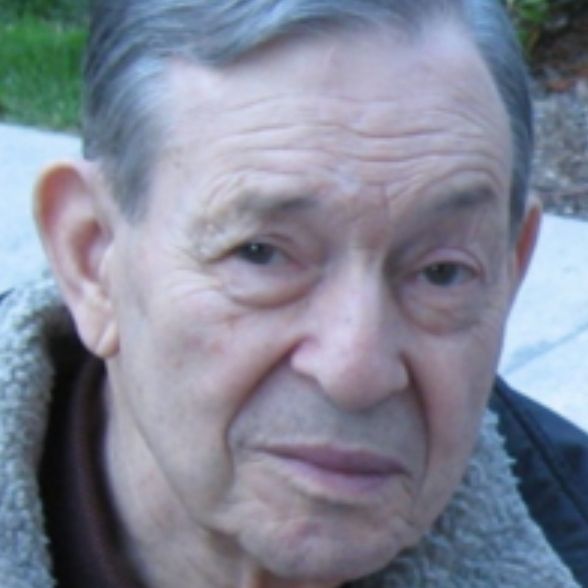
The Requiem Mass for Jacque Stockman
 Jacque Stockman
St. Stephen’s Episcopal ChurchFargo, North Dakota
Wednesday, June 5, 2019
It a true honor to officiate at this service for Jacque. As some of you know, I actually knew Jacque for many years. He was my father’s attorney for many years. And I remember well going with my father as a kid to Jacque’s office.
As I’ve heard from many people and as I knew myself: There was only one Jacque Stockman. And the world is just a bit different now that he is no longer in it.
What I admired most about Jacque is that he was truly an advocate to my father when my father needed an advocate in his life. And because he was, not only my father admired him, but I did too. He made a difference in my father’s life. And, without a doubt, he made a difference in many other people’s lives as well. And that is the important thing to remember today as we remember Jacque.
Being an advocate is not just something one does. It is truly a vocation, in the best sense of that word. A vocation is a calling. It is more than just a job. It is more than what one does. It is something one is. And I believe being an advocate for others is often a journey down the road less traveled.
It is a hard job. It is often a very thankless job. It is very difficult at times. It is often a journey into uncharted territory at times. There are times when one wonders why one even did it. There are times when one wonders if what one is doing is really even making a difference. There were no doubt times when one might even regret it (and that’s all right).
But the fact remains: advocating for others makes all the difference. It may take years and years before anyone appreciates the difference a an advocate makes. But it does matter. And what they do outlives them.
Their legacy is justice and rightness! How incredible is that? And what a legacy!
Just think for one moment about all the lives that were affected by Jacque Stockman. I hope Jacque knew this in his life. I hope Jacque was able to appreciate it and be thankful for it.
As you may know, Jacque was a long time member of 1st Lutheran Church here in Fargo. Then, in March of 2017, he transferred his membership here to St. Stephen’s. He liked the feeling here—it reminded him, he said, of the little Lutheran he knew as a kid.
I knew well what it meant to be Jacque’s priest. I knew, fairly well, his beliefs (or lack thereof) I knew he was an atheist, which of course did not bother me in the least. In fact, I respected him for them, which I know he appreciated.
The last time I talked to Jacque (the second to the last time I saw him), he had just endured a particularly difficult bout of pneumonia. But there he was, sitting up in bed, and when I entered the room he smiled genuinely at me. He was happy to see me And as we talked, he talked fondly of my father. And that meant so much to me.
If my father was there that day, or even here today, he would say to Jacque: Thank you. Thank you for all you did. And that is also what all those people for whom Jacque Stockman was an advocate will say.
Yes, it is a sad day today for those of us who knew and cared for Jacque. But we do have our consolations today. Our consolation today is that all that was good in him, all that was talented and charming and full of life in him—all of that is not lost today. It is here, with us, who remember him and cared for him and respected him. It is there in those for whom he was an advocate.
And, for those of who have faith in God and in a life that is beyond this life, we take consolation that all of that goodness now dwells in a place free from pain and hardship. The consolation we can take away from today is that, all of the difficult things in Jacque’s life are over for him. He is now, in this moment, fully and completely himself. He is whole in this moment.
In his later years, Jacque came to greatly appreciate Judaism. I have too. So, in a few moments, we will pray the Kaddish, the traditional Jewish prayer of mourning, for Jacque and in honor of his interest in Judaism. I think it very appropriate to do so in this service in which we do give thanks for Jacque and all he was to us.
After all, Jacque chose the right path. Those of us who are gathered together today can attest to that fact.
So, let us be thankful that he did make the right choice in his life. It did make all the difference. Amen.
June 2, 2019
7 Easter
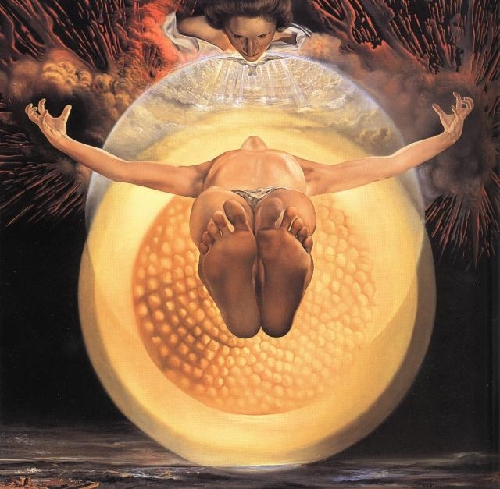 The Sunday after the Ascension
June 2, 2019
Revelation 22.12-13, 16-17, 20-21
+ This past Wednesday evening, we celebrated the Eve of the feast of the Ascension. Now, for most of us, this just isn’t that big of a feastday for us. In fact, I don’t know a whole lot of Christians who, quite honestly, even give the Ascension a second thought. Some of us might look at the Ascension as a kind of anticlimactic event.
The Resurrection has already occurred on Easter morning. That of course is the big event.
The Ascension comes as it does after Jesus has appeared to his disciples and has proved to them that he wasn’t simply a ghost, but was actually resurrected in his body. In comparison to Easter, the Ascension is a quiet event.
The resurrected Jesus simply leads his followers out to Bethany and, then, quietly, he is taken up by God into heaven. And that’s it.
There are no angels, no trumpet blasts.
There is no thunder or lightning.
He just goes. And that’s that.
So, why is the Ascension so important to us? Well, it’s important on two levels.
One, on a practical level, we recognize the fact that, at the Ascension, this is where our work begins. This is when our work as followers of Jesus begins. We, at this point, become the Presence of Jesus now in the world. This is where we are now compelled to go out now and actually do the work Jesus has left for us to do.
Those apostles who are left gazing up at Jesus don’t just simple linger there, wringing their hands, wondering what has just happened. Well, actually, yes, that’s exactly what they do. They fiddle their thumbs and stumble around. For a while anyway. But eventually, with a BIG prompting from the Holy Spirit, they get going. They go out and start doing what they are meant to do. But we’re going to talk about that NEXT Sunday on the feast of Pentecost.
For now, we’re here, with them, watching Jesus being taken up, out of their midst. For now, we know Jesus is taken out of our midst and is seated at the right hand of God. Again, this is the point in which we become the presence of Christ in this world.
Now, I love the Feast of the Ascension! What I love about the feast is that it is more than just going out to do Jesus’ work. Which brings us to our second point.
Again and again, as we see in the life of Jesus, it isn’t just about Jesus. Our job is not simply to observe Jesus and bask quietly in his holiness. It’s about us too.
When we hear the fantastic stories of Jesus birth’ at Christmas, we can look at them as simply fantastic. They are wonderful stories that happened then and there, to him.
Or…we could see them for what they are for us. We could see it our birth story as well.
God worked in the life of Mary and Joseph and God’s own Son was born. But it should remind us that God worked in our birth as well. Well. Maybe not with angels and shepherds. But God worked in our lives even from the beginning, as God did in the life of Jesus.
With Jesus, born as he was, with God’s special light and care upon him, we too were born. Jesus’ birth became our birth. At Easter too, we could simply bask in the glorious mystery of Jesus’ resurrection from the tomb.
But the story doesn’t really mean anything to us until we see ourselves being resurrected with him. His resurrection is our resurrection as well. God, who raised Jesus, will raise us as well.
Well, the same thing happened last Thursday. Jesus’s ascension is our ascension as well. What God does for Jesus, God does for us too. That’s incredibly important to understand!
We are not simply followers of Jesus. We are sharers with Jesus in all that happens to him. And that is incredibly wonderful! The event of the Incarnation is a reminder that in much the same way God is incarnate in Jesus so God is incarnate in us as well.
So, regarding the Ascension, it is important for us to look at what happened and see it not only with Jesus’ eyes, but our eyes as well. Yes, we are rooted to this earth, to creation. We are children of this world.
But we are also children of the next world as well. We are children of heaven too. Jesus tells us in our reading from Revelation today:
“See, I am coming soon; my reward is with me, to repay according to everyone’s work.”
Our reward, as children of Heaven, is with the One who says,
“I am the Alpha and the Omega, the first and the last, the beginning and the end.”
What the ascension reminds us is that we are inheritors of heaven too. We, like Jesus, will one day ascend like him, beyond this world. We will be taken up and be with God, just as Jesus is with God. In fact, our whole life here is a slow, steady ascension toward God. We are moving, incrementally, upward toward God.
This is our journey.
And as we do, as we recognize that we are moving upward, slowly ascending, like Jesus, to that place in which we ultimately belong, we should be feeling what Jesus no doubt felt as he ascended.
Joy.
Happiness.
Exultation.
When we are happy—when we are joyful—we often use the word soar. Our hearts soar with happiness. When we are full of joy and happiness we imagine ourselves floating upward. In a sense, when we are happy or in love or any of those other wonderful things, we, in a sense, ascend.
Conversely, when we are depressed we plunge.
We fall.
We go down.
So this whole idea of ascension—of going “up”—is important. Jesus, in his joy, went up toward God. And we, in our joy, are, at this very moment, following that path.
We have followed Jesus through his entire journey so far. We have followed him from his birth, through his ministry, to his cross. We have followed him to his descent into hell and through his resurrection from the tomb. And now, we are following him on his ascension. And it is joyful and glorious.
And just when we think God has provided just what we need for this journey, we find one more truly amazing gift to us. Next week, an event will happen that will show us that Jesus remains with us in an even more extraordinary way. On that day—Pentecost Sunday—God’s Spirit will descend upon us and remain with us always.
But we’re getting ahead of ourselves. For now, we must simply face the fact that it all does fall into place. All that following of Jesus is now really starting to pay off. We know now—fully and completely—that God will never leave us alone. In what seems like defeat, there is amazing resurrection, and ascension. In what seemed like being stuck to an earth that often feels sick and desolate, we are now soar.
So, today, and this week, as we remember and rejoice in the Ascension, as we prepare for the Holy Spirit’s descent, let our hearts ascend with Jesus. Let them soar upward in joy at the fact that God is still with us. Let us be filled with joy that God’s Spirit dwells within us and can never be taken from us.
As we heard in our reading from Revelation today:
“Let anyone who wishes take the water of life as a gift.”
Let us take this gift of the water of life.
Let us rise up, saying: “Amen. Come, Lord Jesus!”
Let us rise up, in joy.
Let it rise up in us and sing through us to those around us we are called to serve. Amen.
May 26, 2019
6 Easter
 Rogation Sunday +++The Blessing of the Lifelong Covenant of Donna Clark and Daniel Wolford+++May 26, 2019
John 14:23-29
+ This past week in the Fargo Forum there was a fascinating article about what is now called “Green Burial.”
Green Burial, for those who didn’t read the article, is a simplification of the burial procedures in the U.S.
It bypasses the more traditional aspects of burial that include embalming, metal, sealer caskets, vaults and grave liners, etc.
It even by passes cremation.
It is a directed burial in the ground of a body wrapped in a shroud or placed in a wicker casket.
“Green Burial” is not something unique to many of us here at St. Stephen’s.
I know that several of you are planning a “Green Burial.”
I like the concept of these “Green Burials.”
Though I am, of course, a major proponent of cremation, which, despite the article, actually does not emit that much pollution into the sky (Most crematories have updated cremation ovens that actually only release very little emissions into the air).
I like the idea of the return of our remains directly to the earth—truly a ashes to ashes, dust to dust way of doing it.
In fact, I even read a book about Green Burial from a completely Christian (actually eastern Orthodox) perspective, called Christian Ending, which is essentially a handbook on Christian Burial.
But we, in our own Episcopal manner, have been performing a kind of green burial right here at St. Stephen’s.
5 years ago today—on Sunday, May 26, 2014—we did something special at our Rogation Blessing.
On that Sunday five years ago we dedicated our Memorial Garden.
And now, look!
Thanks to Sandy Holbrook and the gardening committee and all the people who have worked for that garden and all that beautiful landscaping that was done there, it has become a place of beauty.
And in these five years, our memorial garden has become a place of rest for seven people—and a place of consolation for countless others.
Most of those people have had their ashes buried directly into the earth, without an urn or another container.
The exceptions are those abandoned urns we’ve buried—we have kept them in their urns so that should family members want to claim them and disinter them later, they can do so.
Now I don’t think I’m overestimating it when I say it has also become a place of mercy.
We of course have laid people to rest there who had no other place to rest, who were rejected or forgotten.
Why? Why do we do that?
Because that is what we do as Christians.
In our Christian tradition, mercy plays heavily into what we do.
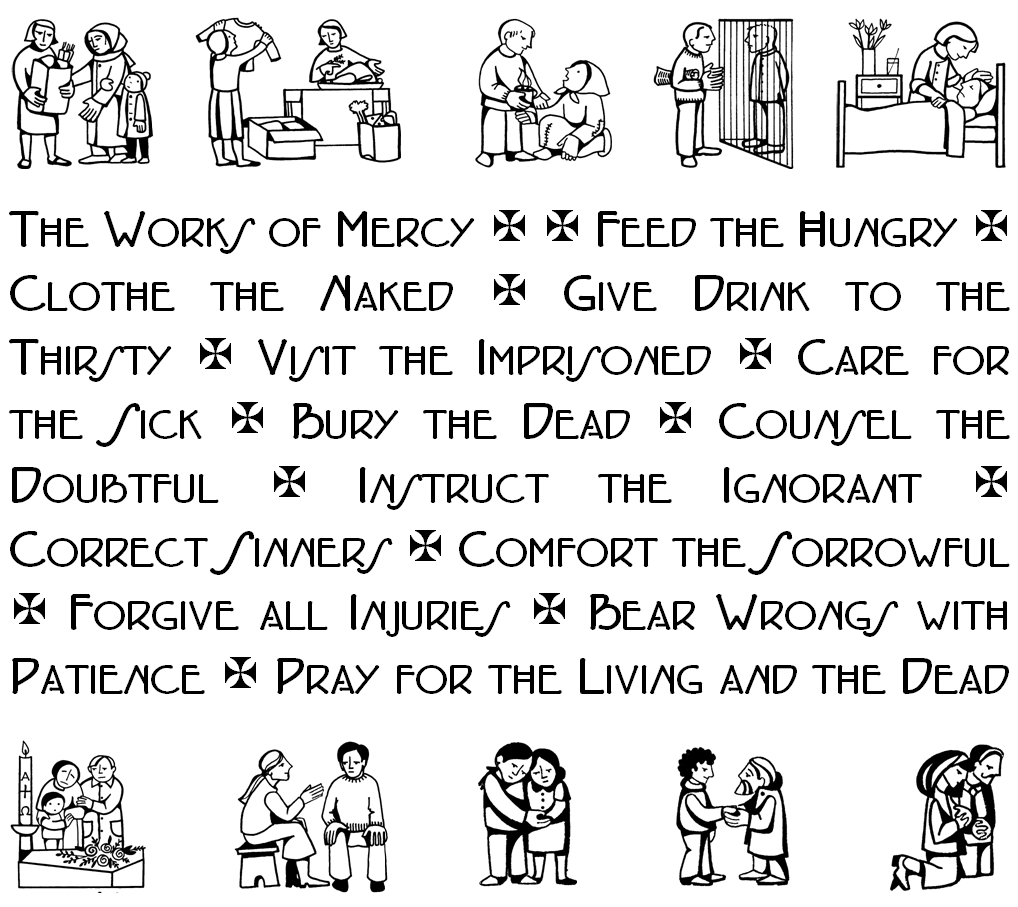
And as a result, there have been, since the early Church, a series of what have been called corporal acts of mercy.
I’ve talked about this many times before.
These corporal acts of mercy are:
To feed the hungry;To give drink to the thirsty;To clothe the naked;To harbor the harborless;To visit the sick;To ransom the captive;To bury the dead.We at St. Stephen’s, in the ministry we do as followers of Jesus, have done most of those well.
Including that last one.
Burying the dead is a corporate act of mercy.
And, it’s appropriate we are discussing things like mercy and love on this Sunday, Rogation Sunday, the Sunday before the Ascension of Jesus.
In our Gospel reading for today we find Jesus explaining that although he is about to depart from his followers—this coming Thursday we celebrate the feast of Jesus’ Ascension to heaven—he will not leave them alone.
They will be left with the Advocate—the Spirit of Truth.
The Holy Spirit.
He prefaces all of this with those words that quickly get swallowed up by the comments on the Spirit, “If you love me, you will keep my commandments.”
And just to remind everyone, that command is, of course, “to love.”
To love God.
And to love our neighbors as ourselves.
This is what it means to be the Church.
To love.
To serve.
To be merciful.
To be Christ to those who need Christ.
To be a Christ of love and compassion and acceptance.
Without boundaries.
Without discrimination.
Because that is who Christ is to us.
When we forget to be Christ to others, when we fail to do this, we fail to do mercy.
We are doing so this morning.
We are living into our ministry of mercy to others.
Today is, as I’ve said, Rogation Sunday.
Rogation comes from the Latin word “Rogare” which means “to ask.”
In our Gospel reading today we hear Jesus saying to us,
“I will ask the Father, and he will give you another Advocate…”
From a very simple perspective, the thing we are asking today, on this Rogation Sunday, is to be faithful followers of Jesus, thorough our works and acts of mercy.
Now for some of us, this whole idea of Rogation Sunday and the procession that we will soon be making outside at the conclusion of our Eucharist this morning might seem a bit too much.
The fact is, it is something, very much like burying the dead on the church grounds.
Our memorial garden—this visible sign of the final corporal act of mercy—is a part of this Rogation celebration.
This is where we do our blessing.
We process there and bless the earth and the land there.
We ask God’s blessings on the growth not only of crops and fields.
We also thank God today for the growth of our congregation.
We are thanking God for the acts of mercy and grace done to each of us.
And we are asking God to continue to make us Christ to those who need Christ.
We are thanking God especially for all the graces in our lives.
Grace is especially is something we celebrate on Rogation Sunday.
And grace is something I always preach at weddings.
Let’s see if you can remember my definition of grace.
I know Daniel will remember this definition.
Grace, in my very simple opinion, is a gift we receive from God that we don’t ask for.
In fact it is often something we receive from God that we may not even known how to ask for.
At most weddings I do, I mention that grace is what we celebrate.
Well, today we celebrate grace with this service of blessing on the lifelong committed relationship of Donna and Daniel.
I stress that is NOT a wedding—at least not in the tradition sense.
There is no marriage license.
The vows are a bit different.
Neither Donna nor Daniel will lose any benefits they would have as divorced or single people.
According to the task force responsible for this brand new liturgy in the Episcopal Church, they defined it in this way:
“’The Blessing of a Lifelong Relationship,’ is intended for couples who desire to formalize their monogamous, unconditional and lifelong relationships that are ‘something different than a marriage in that [they do] not include the merging of property, finances or other legal encumbrances.’”
So, like a wedding, but not quite a wedding.
But what they do get today is blessing.
God’s blessing on their relationship.
Our blessing on the love they have for each other.
And we all get to be reminded of the fact that God’s grace still works in our midst in wonderful and beautiful ways.
It is a recognition of the grace of God in this love—in the fact that this love they have for each other is an unexpected gift from God to them.
This is how God works sometimes in our lives.
Just when we think we have given up on something—love or a relationship or whatever—God surprises us.
God has certainly surprised Donna and Daniel with the love they have found for each other.
And we should celebrate that!
In what we thought was our barrenness, God produces a fertile and beautiful garden.
In what we thought was a kind of death, we find a vibrant and beautiful life.
That is what we celebrate today in the blessing of the relationship of Donna and Daniel.
It is appropriate to do on this Rogation Sunday—this Sunday in which we ask God’s blessings on us, on the growth in our lives, and on the renewal in our lives.
As we process out at the end of the Eucharist today, I ask you to look around the memorial garden.
I ask you to look at the names on the stones there.
We know some of them.
Others of them we will never know on this side of veil.
I ask you as you walk about to thank God for them.
I ask you today to thank God for the growth God has granted us at St. Stephen’s.
I ask you to thank God for the love in Donna and Daniels’ lives.
And I ask that you remember Jesus’ call to us, to love God and to keep that commandment of love and mercy.
This is more than just sweet, religious talk.
It is a challenge and a true calling to live out this love in radical ways.
It is a challenge to be merciful.
As we process, as we walk together, let us pay attention to this world around us.
Let us ponder the causes and the effects of what it means to be inter-related—to be dependent upon on each to some extent, as we are on this earth.
We do need each other.
And we do need each other’s love.
And mercy.
We do need that radical love that Jesus commands us to have.
With that love, we will truly love our neighbors as ourselves.
We will show mercy to them.
Let this procession today truly be a "living walking" as George Herbert put it.
But let our whole lives as Christians be also a “living walk,” a mindful walk, a walk in which we see the world around with eyes of love and respect and justice and care.
And, most importantly, with eyes of mercy.
Amen.
May 19, 2019
5 Easter
 The Baptism of Brooks Broten
May 19, 2019
Revelation 21.10, 22-22; John 13.31-35
+ If you’re anything like me, if you have been active in the Church over the years, you no doubt have encountered other Christians who tell us things like this:
“You know we’re in the last times, right?”
Or,
“When the Rapture comes, you want go with it, because to be left behind is terrible.”
There were even references recently to Revelation and the end times when the United States moved its embassy in Israel from Tel Aviv to Jerusalem (a reference I didn’t understand no matter how hard to tried to unravel it)
I personally never understood these comments until I later heard that they come from some Evangelical churches that have found these interpretations of the Book of Revelation to mean that what is written in that book is happening right now.
And with the popularity of such books as the Left Behind series (which I personally find to be major manipulations of scripture, not to mention very badly written books), we have seen even more clearly some Christian’s ideas of how the Book Revelation somehow is interpreted in the light of current events current events.
Later, as I sort of studied it a bit, I found a big problem with such teaching:
Almost every Christians since the time of Jesus believed they were in the “end times.”
The problem with this is that the rallying cry of these being the “end times” it’s been said of every major era of modern history.
People thought it was the end times when the Black Death rolled through Europe.
People thought it was the End Times when the Protestant Reformation raged, or when the Turks invaded Europe or when the French Revolution happened.
People thought it was the end times when World War I came.
People thought it was the End Times during the 1918 Flu Epidemic.
People definitely thought it was the end times when Hitler rose to power.
People in the 1950s were saying it was the end times with the Communist threat from Russia and China.
Or they were saying it was the end of times when kids started listening to Rock and Roll or the Beatles came to the U.S, or anytime during the very tumultuous 1960s.
And I remember my aunt, who belonged to the First Assembly of God Church, saying it was the end times in the 1980s.
I remember her saying that we should not have VISA cards because VISA was a clever guise for the Mark of the Beast—the numbers 666.
If we were to believe everyone who cried it was the end times, we could honestly say that the end times have been happening for at least 2,000 years.
I solved my confusion about this issue by doing the only thing I could do in the fact of all that confusion:
I simply re-reading the Book of Revelation from beginning to end.
And you know what happened?
I was able to claim—or re-claim—it, and helped me to read it anew.
And I was able to see that the Book of Revelation really isn’t about “End Times”
Still, I think there are a lot of us who feel very differently about the Book of Revelation.
Revelation is a strange book.
It can be a frightening book.
But—and I know this might seem strange to many Christians— I don’t see it as a book of prophecy, as many Christians do.
I don’t see it saying anything definitely about future governments or some messianic Anti-Christ in our midst or that we are living in the so-called “last days” or what have you.
Mind you, I do believe “anti-Christs” come and go through history.
I do believe that powerful people who represent every anti-Jesus, anti-Christian ideals of loving God and loving others and respecting the worth of dignity of all peoples are real, and those people are, by definition anti Christ.
But, for that matter, anytime any of us run counter to these Christian ideals, we too become kind of “anti-Christs” to those around us.
Still, what I do see it doing is speaking to us through some beautiful and powerful poetry on what is happening in our lives, right now, as Christians, and about how, in the end, Christ is victorious.
I think it is important for us to re-claim Revelation in this way —and, in doing so, re-read it with a new lens.
In our reading this morning from Revelation, we find some very strange esoteric images—not an uncommon thing when we read Revelation.
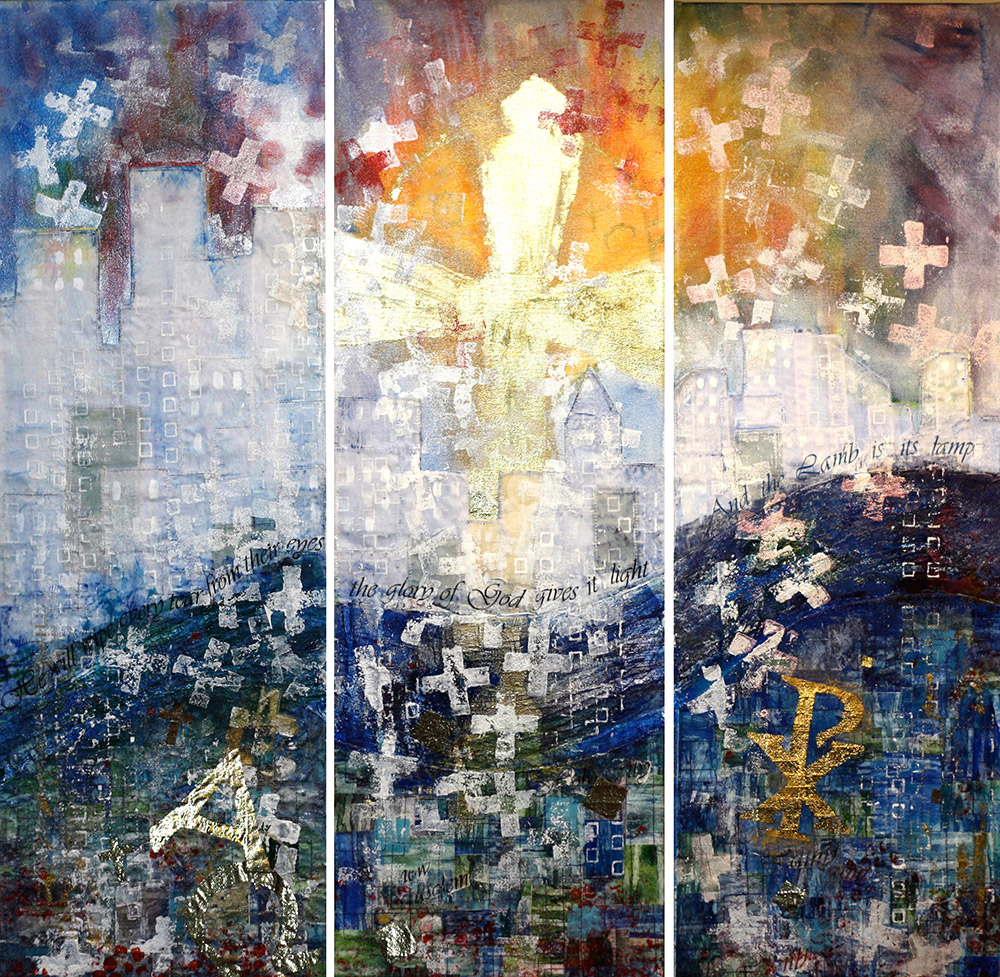
We find this morning these images of a new heaven and a new earth, of this new Jerusalem, where death is no more or tears or crying.
It is a place of beauty and glory.
It is a place of unending life.
And it is here that I think the Book of Revelation speaks loudly to us.
Even we, as Christians, sometimes struggle with the reality of death in our lives.
Even we fear it at times.
And that is all right.
That is normal.
Of course, death is a part of life, and certainly it’s part of my job as a priest.
I knew that going into it.
But, let me tell you: it still is hard, often.
And for people who have to deal with this mystery of death on a regular basis, there have to be ways to find strength and comfort in the midst of death.
One of the ways I find my way through this sometimes constant dealing with death is by turning to the scriptures.
There is a common theme we find through all Scripture.
And that common theme is this:
the defeat of death.
Or as the great Episcopal theologian William Stringfellow called it: “authority over death.”
I agree with him 100%.
I think he is absolutely right about that.
Stringfellow saw it most profoundly in the life of Jesus.
There we see this authority over death most profoundly.
We see it every time Jesus healed the sick, calmed the storms, cast out demons, ate with sinners, cleansed the temple, raised the death, carried the Cross.
And of course, in the Resurrection, which we are still celebrating in this season of Easter, it is all about authority over death.
In all of this, we see the God of life—God in Jesus—being victorious over death.
This view of life over death speaks to us most profoundly during this Easter season.
During this season, what we have found most vital to our understanding of living into this Easter faith is the startling fact that death truly does not have power over us.
We, as Christians, cannot let the power of death control and direct our lives.
As Christians, as followers of Jesus who crossed that awful boundary between life and death, and came back, we must truly be defiant to death.
Of course, that ultimate victory over death happens only when we can face death honestly.
True victory over death is when we can see death in the light we hear about in today’s reading from Revelation.
Only then do we realize that death has no victory over us.
Because of what happened on Easter, because of the Resurrection, because Jesus did die, yes, but God raised him that tomb, and because Jesus walked victorious upon the chains of death, we know now death does not have the last word in our lives.
Over this last year and a half especially, I can tell you, it would’ve been easy for me to just give into this victory death strives for over life.
Mourning does that do us.
It weakens us and saps our energies from us.
We all get stuck in mourning patterns.
But, for us Christians, we can’t be stuck in such death.
We must live.
And we must move forward.
We must stand up against death.
I can tell you that, right now, in my own life, I am very tired of death.
I am weary of dealing directly with it.
I am tired of dealing with its after-effects.
I am tired of dealing with its seemingly overpowering presence.
But, standing up to death, even when we’re sick of it, is not easy.
Choosing life, with all its uncertainties, can be scary.
Even when moving forward into life and living our lives fully and completely, we realize it can be frightening.
We are, after all, heading into the future which is unknown to us.
But that, again, is what I love about Revelation.
What Revelation promises to us, through all that poetry and imagery, is that death will lose, hatred will lose, violence will lose, evil will lose, war will lose—and goodness, and holiness and LIFE will be victorious.
That isn’t wishful thinking. That’s isn’t being naïve.
Rather, this is what it means to be a Christian.
This is what it means to believe in the God of life.
That is what I means to follow Jesus.
Yes, following Jesus means following him to the Cross and to that dark tomb.
And to death, yes.
But it also means following him into the great unknown on the other side of the Cross and the tomb—into that glorious, light-filled, unending life that swallows up death and darkness and war once and for all.
It means following him to the point in which the God of unending life raises him—and us—into unending life as well.
"See, the home of God is among mortals,” St. John tells us in our reading for today.
“He will dwell with them as their God;
they will be his peoples,
and God himself will be with them;
he will wipe every tear from their eyes.
Death will be no more;
mourning and crying and pain will be no more,
for the first things have passed away."
Those are words of absolute and glorious victory.
But more so, they are words of life—of a life that goes on forever and ever.
As we travel through these last days of Easter, as we head into this week in which we celebrate Jesus’ ascension to that place of life and light, into that place in which the God of life and light dwells, let us do so with true Easter joy.
Let us do so rejoicing from the very core of our bodies.
We are alive.
This morning, we are alive.
Life is in us.
We are followers of Jesus.
We are filled with life and love.
As we heard Jesus say in our Gospel reading for today, “I give you a new commandment, that you love one another. Just as I have loved you, you should love one another. By this everyone will know that you are my disciple, if you have love for one another.”
Those words are our words this morning as well.
We are filled with love and life.
We are celebrating love and life.
We are celebrating life and renewed life in the baptism of Brooks.
When we renew our Baptismal promises, we are celebrating the unending life that is ours through baptism.
And it is all very, very good.
We have much to be thankful for and in which to rejoice.
So, let us be thankful for this life.
Let us rejoice in it.
And let us realize that in rejoicing in our lives and in the life within each of us, God has truly prepared for us, as we heard in our collect this morning, “such good things as surpass our understanding.”
Amen.
May 13, 2019
4 Easter
 Good Shepherd Sunday
The Baptism of Saylor Mauk
May 12, 2019
Psalm 23; John 10.22-30
+ Today is a special day. It’s special of course because we are celebrating the baptism of sweet Saylor of course.
And it’s doubly special because it is also Good Shepherd Sunday. It’s Good Shepherd Sunday because of this wonderful reading we have in our Gospel reading for today, as well as our reading from Revelation, and, of course, the very familiar 23rdPsalm
But, every year we celebrate Good Shepherd Sunday without really thinking about it. How many times in our lives have we heard this psalm or the story or references to the Good Shepherd? For the most part, we just don’t even really think about it. After all, shepherds are just not a part of our modern lives.
Are there even shepherd anymore? I’ve never met one. Have you ever met one?
Yes, still, when we really think about this image—of God being our shepherd—it still, weirdly, resonates for us.
We kind of get it. And we are comforted by it. And it still does have meaning for us.
God as Good Shepherd. It’s a great image for God. In it, we encounter the compassion of our God.
Certainly, for the people of Jesus’ day, this image of the Good Shepherd is probably one of the most perfect images Jesus could have used. They would have understood what a good shepherd was and what a bad shepherd was.
The good shepherd was the shepherd who actually cared for his flock. He or she looked out for them, he watched after them. The Good Shepherd guided the flock and led the flock. He or she led the flock to a place to eat.
It’s a wonderful way to try to describe God’s goodness to us. This image implies that God really—legitimately—cares for us and loves us.
This is an important aspect of the role of the Good Shepherd. The Good Shepherd didn’t feed the flock. Rather the good shepherd led the flock to the choicest green pastures and helped them to feed themselves. In this way, the Good Shepherd is more than just a coddling shepherd. He or she is not the co-dependent shepherd. The Good Shepherd doesn’t take each sheep individually, pick them up, and hand-feed each one of them. Rather, the Good Shepherd guides and leads the sheep to green pastures and allows them to feed themselves. The Good Shepherd also protects the flock against the many dangers out there. He or she protects the flock from the wolves, from getting too near cliffs, or holes, or falling into rivers or lakes.She or he cares for the flock.
And that’s VERY important.
Let’s face it, there are many dangers out there. There are many opportunities for us to trip ourselves, to get lost, to get hurt. If we follow the Good Shepherd, if we allow ourselves to be led by him, we realize that those pitfalls are difficult, yes, but they don’t defeat us.
Of course, the journey isn’t an easy one. We can still get hurt along the way. Bad things can still happen to us. There arepredators out there, waiting to hurt us. There are storms brewing in our lives, waiting to rain down upon us.
But, with our eyes on the Shepherd, we know that the bad things that happen to us will not destroy us, because the Shepherd is there, close by, watching out for us—caring for us. We know that in those bad times—those times of darkness when predators close in, when storms rage—he will rescue us.
This is what we are looking for in our lives—a savior, a protector. We are all longing for someone who will comes to us and rescue us from all the bad things of this life. And not just Superman who sweeps down from the skies and pulls us out of danger, and then just nods to us and flies away. We long to have this protector, this defender know us and genuinely care for us.
That’s what makes the Good Shepherd so special. The Good Shepherd knowshis flock.
“I know them and they follow me,” Jesus says in today’s Gospel reading.
If one is lost, he knows it is lost and will not rest until it is brought back into the fold. This is the kind of relationship we have with our Good Shepherd. We are know God because God knows us. God knows us and calls us each by our name. And loves us for just who we are—no matter who we are.
The Good Shepherd reminds us that we don’t have some vague, distant God. We don’t have a God who lets us fend for ourselves. We instead have a God who leads us and guides us, a God who knows us each by name, a God who despairs over the loss of even one of us.
We have a God who knows us and loves and cares for us. All these are important images, vital images to explain the relationship God has with us and we with God.
I just came across this great quote from Chad Bird
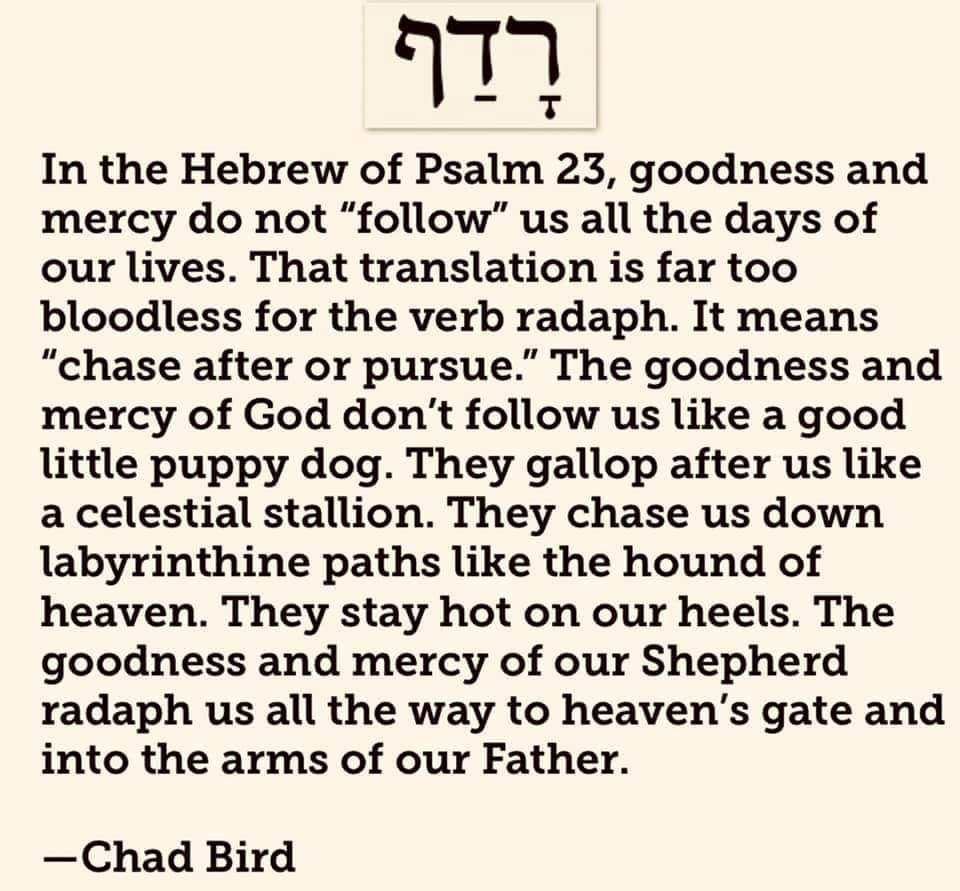
We have a God whose goodness and mercy chases us and seeks us out. A God whose goodness and mercy follows us wherever we go and whatever we do.
But the Good Shepherd doesn’t end there. This isn’t just about me as an individual and God.
The image of the Good Shepherd must be taken and applied by anyone. Any of us who follow Jesus are called to be good shepherds in turn. We must love and love fully those who around us. We must care for those people who walk this path with us. We must look out for our loved ones and even our enemies, we must respect the worth and dignity of all people, and we must shepherd them in whatever ways we can in our own lives.
Again, this is not easy, especially when it seems we are lost at times, when we are falling into the traps life sets before us, when our alleluias during this Easter season feels cold and lonely.
But, that’s the way God works, sometimes. Sometimes, God’s works through our brokenness and helps us to guide others in their brokenness. Sometimes the best Good Shepherd is the one who has known fully what a lost sheep feels like, who knows the coldness and loneliness of being that lost sheep.
So, on this day in which we celebrate the Shepherd who leads and guides, whose goodness and mercy chases us, let us not only be led, but let us also lead. On this day that we look to the Shepherd who guides, let us be guided and let us guide others. And let our alleluia on this Good Shepherd Sunday, even if it is a cold and lonely Alleluia, still be an Alleluia nonetheless. Let it be the sound we make, even in the cold and lonely places we sometimes find ourselves in. And let us, in that place, know that, even there, we are still experiencing the amazing glory and all-encompassing love of God.
Amen.
May 5, 2019
3 Easter
 May 5, 2019
John 21: 1-19
+ When I was in graduate school, studying poetry, I came across a great quote from the British literary critic, A. Alvarez.
He said, essentially, it’s good to be an apprentice. You learn the task—in this case, of poetry—so that “when the Devil takes you by the throat and shakes you,” it is then, that you’ll know what to do. It is then, that you become a poet.
It has been great advice. And I think it’s advice that can be used in multiple situations.
So, the question for all of you this morning is: When the Devil takes YOU by the throat and shakes you, what do you do?
What do you do when you find yourself at the left hand of God, a phrase that comes from Richard Rohr about being in a bad place in your life?
What do you do when the bad things of this life are thrown at you?
Do you shut down, and curl up and just wait for it to pass?
Do you freeze up and just brace yourself for it?
Do you react and rage at the injustice of it?
Or do you confront it all?
When the “Devil” takes me by the throat, when I find myself at the left hand of God (and I’ve been there MANY times in my life!) do you know what I do? I make myself busy. When I was diagnosed with cancer, when my father died very suddenly, when any of the bad things happen, I just get busy.
I do something.
Anything.
Because not doing something is worse than the Devil’s cold hand on my throat.
However, I will say this: when my mother died, I shut down to a large extent. I did not do something simply because I couldn’t do anything. The shock of her death and the deep level of emotional pain prevented me from doing something. And that, to me, was so much worse.
Doing something in the face of the Devil—doing something when you find yourself on the left hand of God—is so much more imporatnt than freezing up and collapsing.
In this morning’s Gospel, we find the Apostles doing something very much like that. They aren’t sitting around doing nothing. They are doing some thing. They are keeping busy.
In the wake of the murder of Jesus, in the wake of his resurrection, in the wake of his appearing to them—in the wake of this unusual, extraordinary activity in their lives—they do the most ordinary thing in their lives.
They go fishing.
They pick up their nets and they go out onto the water.
No doubt, considering all that had happened to them in the previous days and weeks, their minds were reeling. But, now, they are doing something they knew how to do. Something that gave them some comfort, no doubt.
Fishing is what they did, after all. Fishing is what their fathers did and no doubt what their grandfathers and great-grandfathers did as well. Fishing was in their blood. It was all they knew—until Jesus came into their lives. And, no doubt, when the extraordinary events of Jesus’ murder and resurrection happened, the only way they could find some normalcy in their life was by going fishing.
The fact is, this is probably the last time they would ever go fishing together. Their old life had once and for all passed away with the voice that calls to them from the shore. Their jobs as fishermen would change with the words “Feed my sheep.” In that instant, they would go from fishermen to shepherds.
No longer would they be fishing for actual fish. Now they would be the feeding the sheep of Jesus’ flock.
That symbolic number of 153 seems to convey to us that the world now has become their lake. And what is particularly poignant about all of this is Jesus doesn’t come into their lives to change them into something else. He comes into their lives and speaks to them in language they understand.
Jesus could have said to them: “Go out and preach and convert.” But to fishermen and shepherds, that means little or nothing. They are fishermen, not rabbis or priests. They are not theologians.
Instead, Jesus says, “Feed my sheep.” This they would understand. In those simple words, they would have got it.
And when he says “feed my sheep,” “Shepherd my sheep,” it was not just a matter of catching and eating. It was a matter of catching and nurturing.
And this calling isn’t just for those men back then. That voice from the shore is calling us too. In a sense, we are called by Jesus as well to be shepherds like Peter and the fellow apostles. And those around us—those who share this world with us—are the ones Jesus is telling us to feed.
It isn’t enough that we come here to church on a Sunday morning to be fed. A lot of us think that’s what church is about. It’s about me being fed. It’s about me being nurtured. To some extent, yes.
But, if all we do is come to church to be fed and then not to turn around and feed others, we are really missing the point. We, in turn, must go out and feed. And this command of Jesus is important.
Jesus asks it of Peter three times—one time for each time Peter denied him only a few weeks before. Those words of Jesus to Peter are also words to us as well.
In the wake of the devastating things that happen in our lives, the voice of Jesus is a calm center. Amid the chaos of the world, the calm, cool voice of Jesus is still saying to us, as we cope in our ordinary ways, “feed my sheep.” Because, it is in these strange and difficult times that people need to be fed and nourished. Not just by me, the priest, only. But by all of us—all of who call ourselves followers of Jesus. It is in times like these that we need to be fed, and it is in times like these that we need to feed others as well.
That, in a sense, is what it means to be a Christian. Following Jesus, as we all know, is not easy. The fact is: it’s probably the hardest thing one can do. Jesus is not present to us as he was present to those fishermen in this morning’s Gospel. He is not cooking us a breakfast when we come back from ordinary work.
This God of Jesus, this God he keeps telling us to love and to serve, is sometimes a hard God to love and serve. Loving a God who is not visible—who is not standing before us, in flesh and blood, is not easy.
And I’m sure I don’t have to tell anyone here this morning: loving our neighbors—those people who share our world with us—as ourselves, is not easy by any means. It takes constant work to love. It takes constant discipline to love as Jesus loved. It takes constant work to love ourselves—and most of us don’t love ourselves—and it takes constant work to love others.
But look at the benefits. Look at what our world would be like if we loved God, if we loved ourselves and loved others as ourselves. It was be ideal. It would truly be the Kingdom of God, here on earth. It would be exactly what Jesus told us it would be like.
But to do this—to bring this about—to love God, to love ourselves, to love each other, it’s all very hard work.
Some would say it’s impossible work. There are people, I’ll confess, I don’t want to love. I don’t want to love those people who hurt me, or who hurt people I actually do love. Sometimes I can’t love them. I’m not saying I hate them. I’m just saying that sometimes I feel nothing for a person who has wronged me or one of my loved ones. In that instant, it really is hard to be a follower of Jesus.
Certainly, it seems overwhelming at times. Let’s face it, to live as Jesus expects us to live, to serve as Jesus calls us to serve, to love as Jesus loves—it would just be so much easier to not do any of it. Being a Christian means living one’s life fully and completely as a follower of Jesus. It means being a reflection of God’s love and goodness in the world.
A quote you’ve heard me share many, many time is this one of St. Augustine: “Being a Christian means being an Alleluia from head to toe.”
It means being an Alleluia even when the bad things in life happen. It means being an Alleluia—in our service to others—when we would rather go fishing. It means, occasionally, going and feeding the sheep rather than going off fishing and being a busybody when the bad things in life happen.
In the midst of all the things in the world that confuse us—as we struggle to make sense of the world—the voice of Jesus is calling to us and is telling us to “feed my sheep.” Because in feeding those sheep, you know what happens: we too are fed. In nurturing Christ’s sheep, we too are nurtured.
See, it all does work out. But we have to work at it for it to work out.
So, let us do just that. Let us feed those Jesus calls us to feed. And let us look for the Alleluia of our lives in that service to others. In finding the Alleluia amidst the darkness, we—in our bodies and in our souls—become—from our head to our toes—an Alleluia.