
Kathy Howard's Blog: Unshakeable Faith for Life, page 5
May 20, 2024
5 Teaching Methods of Jesus

Jesus wasn’t just a master teacher, He was THE master teacher. Jesus amazed the crowds. He taught with authority, not like the scribes (Matthew 7:28-29). Even the temple guards declared they never heard anyone teach like Jesus (John 7:45-46). The Pharisee Nicodemus recognized that Jesus was a teacher sent by God (John 3:2).
Jesus wanted His disciples and the crowds to both grasp and remember His teaching. To make it engaging and memorable, Jesus used a variety of teaching methods. To best grasp the truths Jesus communicated, we need to recognizing the teaching method He used and how it should be and understood. (See also “4 Tips for Understanding the Gospels.” and “The 4 R Bible Study Method.“)
TEACHING METHODS OF JESUS1. HyperboleA hyperbole is a purposeful exaggeration of the truth to make a big impact by engaging our emotions. The shock of the statement is meant to rouse us from lethargy.
Typically, hyperbole is easy to spot. For instance, Jesus said, “If anyone comes to me and does not hate his own father and mother and wife and children and brothers and sisters, yes, and even his own life, he cannot be my disciple” (Luke 14:26). But, in other passages Jesus taught we should honor our parents (Mark 7:8-13) and He would not contradict Himself. So, we can know Jesus used hyperbole to emphasize that He must be first and foremost in our lives.
2. ParableA parable is a story told to illustrate an important truth. Although they do appear in the Old Testament (2 Samuel 12:1-2), we are most familiar with them because Jesus often used them as a teaching tool. We should not treat parables as allegories, but rather look for the general principles illustrated by the story that teach spiritual truths. Considering the surrounding literary context in which Jesus told the parable can help us recognize the points He wanted to make with the parable.
3. Metaphor and SimileBoth of these figures of speech compare one thing to another. One item in the pair is usually something common and familiar used to help us understand something less familiar or understood. The primary difference between a metaphor and simile is that similes include “like” or “as” in its comparison. We find these throughout Scripture including in the teachings of Jesus. For instance, when Jesus sent out His disciples He used a simile: “Behold, I am sending you out as sheep in the midst of wolves, so be wise as serpents and innocent as doves” (Matthew 10:16).
Jesus also used many metaphors to help us understand His divine nature. “I am the bread of life” (John 6:35). “I am the light of the world” (John 8:12). We know that Jesus is not literally a loaf of bread. But the metaphor teaches us that He alone provides life. He alone sustains us spiritually.
4. Miraculous signsIn his Gospel account, John used the word “sign” to refer to the miraculous works Jesus performed. John’s stated purpose in recording the seven signs he selected out of the “many others” Jesus did was so people would believe in Jesus for eternal life (John 20:30-31). The miracles confirmed that everything Jesus said and taught about the Father, the Kingdom of God, the way of salvation, and Himself were indeed true.
Jesus also performed signs to teach specific truths about Himself. In addition to ministering to His friends, Jesus raised Lazarus from the dead to teach prove He has the power over life and death. Jesus is the “resurrection and the life” (John 11:15, 26-27). Jesus fed 5,000 plus people from a small boy’s lunch to feed the hungry crowd, yes, but more importantly to teach His disciples that He alone gives spiritual satisfaction. But they failed to grasp it (Mark 7:52).
5. Proverbial SayingsA proverb is a short, pithy statement that communicates an observable truth about life in a memorable way. They are not used to communicate absolute truth but rather wise generalizations about life. If we do such and such, usually this will happen.
Jesus used a lot of these. Maybe the most well-known is the one often referred to as the Golden Rule. “And as you wish that others would do to you, do so to them” (Luke 6:31). Here’s a couple more:
“A disciple is not above his teacher, nor a servant above his master” (Matthew 10:24).“And if a house is divided against itself, that house will not be able to stand” (Mark 3:25).To best understand the proverb, focus on the general principle Jesus taught but don’t consider it a promise or non-negotiable truth. (Also see “3 Tips to Help You Understand Proverbs.“)
By the way, this is not an exhaustive list of Jesus’ teaching style. For instance, He also used questions, and object lessons, and conversation to teach. But these will get you started! (See also “6 Preaching Methods Jesus Used” and “The Teachings of Jesus.“)
What is your favorite teaching methods of Jesus?


May 6, 2024
3 Reasons to Read and Study Hebrews

Some Christians avoid reading or studying the book of Hebrews. I’ve heard various reasons for this. Some think Hebrews is more difficult to read than the other New Testament epistles. (Also see “8 Tips to Help You Understand the Epistles.“) Others don’t like the abundance of Old Testament references and imagery. I’ve even heard that some think Hebrews is just for Jewish Christians.
Whatever your reason, if you have been neglecting this important book I hope this post will encourage you to open your Bible to the book of Hebrews and start reading. Every word in God’s Word – from Genesis 1:1 to Revelation 22:21 – is valuable for His people. (See also “Finding Treasure in the Boring Parts of the Bible.”)
3 Reasons to Dive into the Book of HebrewsTo connect the dots between the Old Testament and the New Testament – Some Christians also avoid reading the Old Testament because they think it’s not relevant for Christians. After all, we are under the New Covenant! But the Old Covenant revealed in the Old Testament laid the foundation for the New Covenant. Same God, same purposes, same plan. The New Covenant through Christ fulfilled everything God began with the Old. Reading and studying the Old Testament gives us a greater understanding and appreciation of what Christ accomplished for us. All the elements of the Old Covenant – the priest, sacrificial system, tabernacle, Jewish festivals, and more – reflect Christ. They are shadows of the much greater spiritual reality. The book of Hebrews beautifully describes these truths. The author shows us the inseparable relationship between the Old Covenant and the New. Reading Hebrews will help you fall in love with the Old Testament! (See also “6 Reasons to Read and Study the Old Testament ” and “ Look for Jesus in the Old Testament. “)To experience spiritual encouragement – The original audience of Hebrews were considering abandoning Jesus and returning to Judaism. They were discouraged by the spiritual persecution they faced. Following Jesus was harder than they expected and they weren’t sure they could continue. You may have felt that same way. You may not have been tempted to turn to anything religion, but perhaps you may have cooled in your devotion to Jesus because following Him was not easy. The author of Hebrews poignantly reminds us that nothing the world can offer compares to Jesus. Knowing Him and experiencing the salvation that only He gives is superior to any and everything else. The book reminds us to cling to Jesus and keep our eyes on His future, eternal promises. What Jesus has for us now and in eternity is worth far more than temporary comfort in this life. (See also “ 10 Characteristics of Faith from the Hebrews Hall of Faith. “)To gain a deeper understanding of Jesus – Hebrews digs deep into the character, nature, and work of Jesus. The author touches on Jesus as Son and King, but particularly emphasizes the role of Jesus as our great High Priest. As High Priest, He has offered a superior sacrifice and instituted a better covenant. And as our great High Priest, Jesus gives us bold confidence to approach God’s throne of grace. A better appreciation of these deep theological truths will help us better worship our superior Savior.Have I convinced you?
Ready to dig into Hebrews?Check out my newest book “Deep Rooted: Growing through the Book of Hebrews” This 4th volume of the meaty Deep Rooted devotional series takes you through this book of the Bible in 40 days. The book uses a simple inductive study method to help you understand and apply the eternal truths in this beautiful book. Find out more about the book here or see it on Amazon.
If you ‘ve read or studied Hebrews, what stuck with you from this beautiful book?
April 22, 2024
Who Wrote Hebrews?

Today, most scholars admit that we don’t know who wrote Hebrews. However, the church’s opinion about the identity of the author has changed over the centuries.
Quick history of Church’s OpinionNo evidence from the first century exists today. Support for Paul as the author grew in the eastern church from the 2nd through the 4th century. The western church resisted Pauline authorship until late in the 4th century. Then in A.D. 419, at the Sixth Synod of Carthage, the church officially assigned Hebrews to the list of Paul’s epistles. (Also see “Who Wrote the Bible and Why Does it Matter?” and “8 Tips to Help You Understand the Epistles.“)
During the Reformation in the 16th century, John Calvin and Martin Luther reopened the debate by challenging Pauline authorship. For the last 500 years, scholarly suggestions for author have included Barnabas, Luke, Apollos, and the husband and wife team Aquila and Priscilla.
Things we do know about who wrote HebrewsAlthough the author does not name himself, clues pack the letter. Consider the following details and characteristics:
Received the gospel from those who had heard Jesus, not Jesus Himself (2:3)Knew the recipients personally (13:7, 17, 18, 22)Knew Timothy and possibly ministered with him (13:23)Primarily quoted from the Septuagint, the Greek translation of the Hebrew ScripturesWell-versed in the Septuagint, Jewish customs, and OT ScripturesHighly educated with an excellent command of GreekDifferent writing style than any other New Testament authorDynamic preacherDemonstrated a pastor’s heart for the spiritual well-being of his flockFacts against Pauline AuthorshipIf we don’t know who wrote the book of Hebrews, why not Paul? Although a small possibility, the evidence in the letter heavily supports someone other than Paul. Consider these facts:
The writing – Scholars readily admit the grammar and phraseology are different than Paul’s. When I read Hebrews, even my ears hear the difference. Additionally, the elegant Greek is unlike any of Paul’s letters.No authentication – Hebrews includes no author identification or signature. But in 2 Thessalonians 3:18, Paul wrote that he signed every letter in his own hand to prove it genuine.No eyewitness claim – The author described himself as a “second-generation” Christian (2:3), which directly conflicts with Paul’s own testimony. Paul saw Jesus face-to-face (1 Corinthians 9:1) and received the gospel straight from Him (Galatians 1:11-12).We can surmise that the author of Hebrews was likely a highly educated, Jewish Christian raised outside of Palestine. He was a “second-generation” believer who came to faith in Christ through the testimony of eye-witnesses. This elegant orator and gifted teacher loved God’s people and longed for their spiritual maturity. We may not know his name, but God does.
Two Ways to Study Hebrews
Reading the Bible Together – This ongoing, closed Facebook group will begin reading and studying the Book of Hebrews. The introduction will post on Saturday, April 27. The daily readings and discussion questions will begin on Monday, April 29. The study is conducted through written posts in the FB group. Readings and questions post Monday through Friday only. There is no set time frame, simply stop into the group when it works for you. This group is for women only. To join,
follow this link,
request membership, then answer the 3 questions. The group is free. However, for this study, you may want to purchase the optional book “Deep Rooted: Growing through the Book of Hebrews.” “Deep Rooted: Growing through the Book of Hebrews” – Check out my newest book! This 4th volume of the meaty Deep Rooted devotional series takes you through this book of the Bible in 40 days. The book uses a simple inductive study method to help you understand and apply the eternal truths in this beautiful book. Find out more about the book here or see it on Amazon.Let’s talk! Have you ever read or studied the Book of Hebrews? If so, what did you learn or how did it impact your faith?
March 26, 2024
How is Easter Connected to Passover?
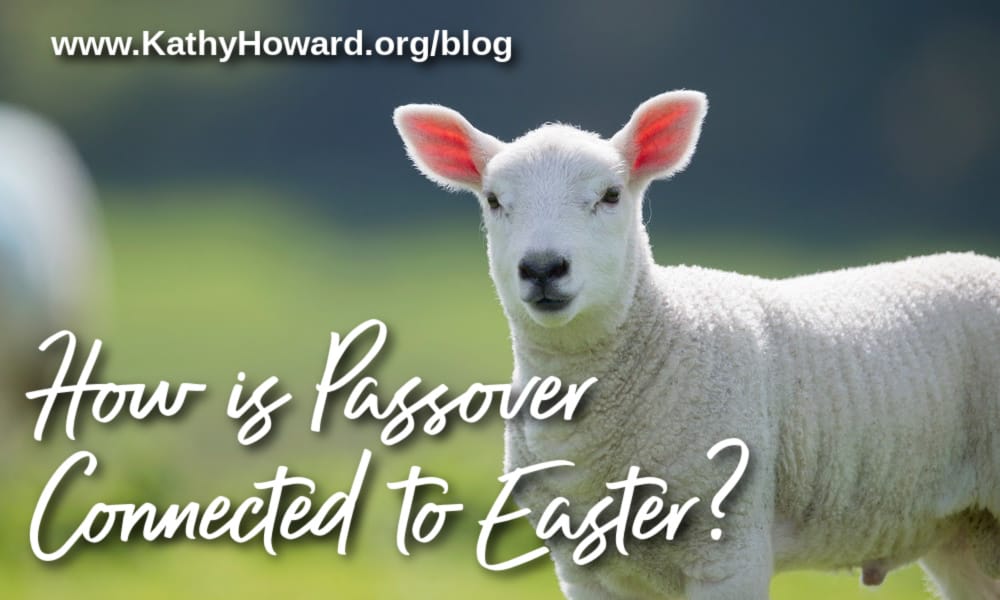
Years ago, some Jewish friends invited us to join them for Seder, the ceremonial meal that begins the Passover festival. Passover commemorates God’s deliverance of His people from slavery in Egypt. This is the meal Jesus ate with His disciples in the upper room on the night He was betrayed. Christians call this event “the last supper.”
Before the meal, we dipped parsley in salt water and bitter herbs. The bitter herbs remind Seder participants of the harshness of the Jews’ life in Egypt. The salt water reflects the tears they shed and the waters of the Red Sea. The parsley represents the hyssop used to brush the blood of the sacrificial lamb on the door posts of the homes of God’s people. Then, when God brought His final plague on Egypt – the death of every firstborn male – He would pass over every home marked by blood.
Jesus is the Lamb of GodMy husband and I clearly saw Christ evident in every aspect of the Seder, not just in the lamb itself. Every symbol, every word, every element pointed to Him and His sacrifice. One thing in particular caught my interest. Three pieces of matzah – unleavened bread – are included to symbolize the haste of the Jews departure from Egypt. At the beginning of the meal, the middle of the three matzahs is broken in half. The larger half, called the afikomen, is wrapped in a cloth and hidden away. At the end of the meal, the afikomen is brought out or found by the children, broken into smaller pieces and distributed to the Seder participants who then eat it together.
The whole evening was both beautiful and sobering. We were awed by God’s clear portrait of Christ and His salvation in a ceremony instituted by God more than a millennium before His sacrificial death. But we were saddened that our friends missed it. They didn’t see the “Lamb of God, who takes away the sin of the world” (John 1:29) on their table. They missed the burial and resurrection of Jesus in the afikomen. (See also “How Jesus Fulfills the Passover.”)
The Passover Pointed Ahead to JesusHowever, Jesus clearly connected the elements of the Passover Seder to His imminent suffering and death. Jesus broke the matzah, the bread that symbolized His broken body. He shared the cup of wine – His blood spilled out for many. Jesus had fulfilled the Old Covenant. Now, His death established the New Covenant between God and His people.
The Passover Seder not only looked back to God’s physical deliverance of His people, it also pointed forward to His ultimate spiritual deliverance. On the night of His arrest, Jesus graciously instituted the Lord’s Supper to help us look back on His sacrificial death, as well as forward to His return. (See also “Look for Jesus in the Old Testament.”)
…and when he had given thanks, he broke it, and said, “This is my body, which is for you. Do this in remembrance of me.” In the same way also he took the cup, after supper, saying, “This cup is the new covenant in my blood. Do this, as often as you drink it, in remembrance of me.” For as often as you eat this bread and drink the cup, you proclaim the Lord’s death until he comes. 1 Corinthians 11:24-26, ESV
The slain lamb of the first Passover in Egypt was a substitute sacrifice. The life of the lamb instead of the life of the firstborn. A life for a life; a sacrifice for sin. But the animal sacrifice was merely a temporary place holder. The blood of animals is not sufficient to forever provide forgiveness of sins (Hebrews 10:4). But Jesus – the sinless Son of God – is our perfect, eternal Passover lamb (1 Corinthians 5:7). We were ransomed from slavery to sin with “the precious blood of Christ, a lamb without blemish or defect” (1 Peter 1:19, NIV). One sacrifice for all time. And Jesus is coming again to claim His own!
How often do you reflect on Jesus’ sacrifice for you? How often do you anticipate His return?
Note: This post was adapted from Kathy’s meaty devotional book “Deep Rooted: Growing through the Book of Mark.” Find out more about this volume of the Deep Rooted devotional series or see it now on Amazon.
March 18, 2024
3 Attitudes We Need When We Read the Bible

I do a lot of reading. In addition to God’s Word, I read novels, cookbooks, blogs, articles, non-fiction books and more. Some of this reading is for fun. Other reading is for instruction or information. Some I approach casually. Other with skepticism. Some things I read might instruct my behavior. Other things I dismiss as irrelevant or even wrong. But it’s different when I read the Bible.
The Bible is uniquely different from everything else ever written. Which means we must read the Bible differently from the way we read anything else. The Bible was not written by man, but directly inspired by God Himself. God’s words, God’s heart, given to us. How should we approach the Bible? What attitudes are vital to not only read God’s Word, but to really hear it, to be shaped by it? (See also “3 Reasons We Can Trust the Bible” and “What Does it Mean that the Bible was Inspired?”)
How should we approach the #Bible. What’s your attitude?
Click To Tweet
The mere fact that we own a copy of the Bible is miraculous. Think about it. The Creator of the universe has revealed Himself to lowly mankind. He gave His words to us and used human authors to record them. Then, God miraculously preserved His words for centuries. And it is as relevant today as it was two millennium ago. Yet, we so often approach the Bible so casually and haphazardly. (See also “Do You Read the Bible all Wrong?”) Instead, we should approach God’s Word with not only a sense of awe and wonder, but with extreme reverence. God’s words are an extension of God Himself. God’s Word carries the same authority for us as God Himself.
3 Attitudes We Need to Read the BibleSo, how should we approach God’s Word? Here are 3 attitudes that will put us in the right mindset, reading to hear and respond to what God has for us.
Humility – Far too often I approach God’s Word with some level pride. Pride in thinking I already know this passage. Pride that I don’t need what He has to say. Oh, but pride is a great deceiver, keeping me from everything God has for me in His Word. Do I really want God to teach me? To use me for His purposes? Then I must humbly allow Him to correct, rebuke, and train me through His Word (2 Timothy 3:16-17). “He guides the humble in what is right and teaches them His way” (Psalm 25:9).Submission – Some days I take God’s Word far too casually. I read it and hear His gentle whisper to “tell” or “do” or “go” or “stop.” And I consider obedience. The Bible is God’s authority for my life. It is living, actively penetrating the deepest parts of my heart, mind, and soul to judge my attitudes, thoughts, behaviors, and intentions. To make me more like Jesus. How dare I ever tell Him “no.”Anticipation – God’s Word is light and life and hope. It guides, delivers, and comforts. God’s laws are right and true and trustworthy. The Word of God gives wisdom and joy. I should run to read His Word each day, greatly anticipating the treasure I will find there. Sometimes I do, but not always. (See also “4 Spiritual Benefits from God’s Word.”)
Need an #attitude adjustment? What attitude to we need to approach #GodsWord?
Click To Tweet
God has reminded me today I need a little attitude adjustment. What about you? Do you approach God’s Word with humility, submission, and anticipation?
Lord God, adjust my attitude today. Forgive me of pride and foster a humble spirit within me. Help me submit to the authority of Your Word, so that I will live a life a full obedience to You. And grant me the joy of anticipation, always delighting in the discovery of Your Word. Amen.
March 11, 2024
The #1 Way to Know God’s Will

There have been moments I wished God would send me an email to tell me exactly what He wanted me to do in a particular situation. I desperately wanted to know God’s will, so I could do the right thing, but I wasn’t sure what the right thing was.
Most Christians sincerely want to know and follow God’s will. We want to know what God wants us to do, what He wants us to say, what decisions He wants us to make, where He wants us to go. And yet so often we hesitate to step out because we lack confidence that this way – or is it that way – is God’s way.
Yet, we really don’t have to wonder what God’s will is. We don’t have to struggle with every decision, question every crossroad. We CAN know His will for us. God wants us to know His will.
We will break it down below, but here’s the answer in a nutshell:
When we know God’s Word, we will know His will.God has revealed Himself to us in the Bible. In His divinely inspired Word, He has made known to us everything He wants us to know about Him. Indeed, everything we need to know about Him to live the life He wants us to live. In the Bible, God has revealed His character, His plans and purposes, His thoughts, and His ways.
The more we know and apply the “living, active” (Hebrews 4:12) Word of God, the more God uses its Truth to purify our hearts and renew our minds. The more we fill our minds with God’s Word and meditate on His eternal truths, the more our thinking will align with God’s thinking. The lies and half-truths of the world will be replaced with truth. And, over time, the way we think will look more and more like God’s way of thinking.
Paul expressed it this way in his letter to the Christians in Rome:
“Do not be conformed to this world, but be transformed by the renewal of your mind that by testing you may discern what is the will of God, what is good and acceptable and perfect.” Romans 12:2
The Greek word translated as “discern” in Romans 12:2 means to understand and agree with God’s will with the intent of putting it into practice. The more our thinking aligns with God’s we will begin to know almost instinctively what His will is in a given situation. The more we think like God, the more we will act like Him.
What we put into our minds WILL shape the way we think. Our thinking then shapes our beliefs and what we believe will dictate our behavior. When we think like the world, we will act like the world. When we think like God, we will do what God would do. (See “What are You Feeding Your Mind?” for more about transformed thinking.)
A Few Guidelines for Transformed Thinking:Transformed thinking takes time– The Bible is not a quick-reference guide. We can’t wait until a need arises then use the concordance to try to find God’s will. Knowing God’s Word in order to think like God requires a life-long commitment. It doesn’t happen overnight. It takes time to undo old patterns of thinking and establish new ones. (Also see “12 Ways to Stay Motivated to Read the Bible.”)Transformed thinking requires a personal commitment– Bible studies written by other people, sermon podcasts, and Christian conferences can all be great supplemental tools for the life of faith, nothing can replace our own study. Thorough knowledge of God’s Word requires personal, ongoing immersion in the Scriptures. Our study of the Bible cannot be erratic, casual, or second-hand. (If you want to dig into God’s Word for yourself but need just a little guidance, check out the Deep Rooted Journal . It’s packed with Bible study tips and helps. For a guide through a Bible book see the Deep Rooted devotional series. Each volume leads you through your own study of a Bible book. See Mark , Acts , or Romans .)Transformed thinking needs follow-through– The goal of knowing God’s will is doing God’s will. If we undertake to study God’s Word to know His will, we must be prepared to do His will. (Also see “4 Ways to Apply Scripture to Your Life.”)Additional help in knowing God’s willWhen we know God’s Word, we will know His will.
Even with a thorough knowledge of God’s Word and thinking that generally aligns with His, sometimes we still struggle to know God’s will. Seeking direction through prayer and godly counsel can often help us wisely discern God’s will. Keep in mind two things:
The Holy Spirit will never direct us in ways that contradict God’s Word.Always check human advice against the truths in God’s Word before proceeding.Do you struggle to know God’s will? How have you sought to discover it in the past?
A few other related posts you may find helpful:
3 Attitudes I Need to Approach God’s Word5 Probing Questions to Help You Meditate on ScriptureFree Resources for Your DiscipleshipFebruary 26, 2024
9 Tips to Help You Interpret the Bible

When you read Scripture are you confident that you interpret the Bible correctly? Although we will always be growing in our knowledge of God and His Word, with the right tools and approach, we can understand the meaning of Scripture. This post gives 9 practical tips to help you “rightly handle the word of truth” (2 Timothy 2:15).
The need to interpret the BibleEvery Bible passage has just ONE MEANING. (See also “Don’t Ask What This Bible Passage Means to You.”) That’s the one God originally gave it when He inspired it to be written. The original meaning is still it’s current and only meaning. Our task as students of the Bible is to seek to understand God’s original meaning and then apply it to our lives.
So why isn’t that meaning always crystal clear for us? Why do we need to do the work of interpreting what we read?
The biggest reason is this: DISTANCETwenty-first century, western believers are separated from the original meaning of Scripture by language, time, and culture. The Bible was written in Hebrew, Greek, and a little Aramaic. And it was written thousands of years ago in a cultural and historical setting very different from ours today. All of this separates us from an immediately clear meaning of a Bible passage.
Good, solid translations help a lot but they cannot fully bridge the distance gap. That’s why good study techniques are vital. Understanding the Bible doesn’t have to be hard. It just has to be done correctly. (See also, “Why are there so Many Bible Translations?”)
Before you read1. Set aside preconceptions– None of us come to Scripture like a clean slate. We all have previously held understandings, preconceived ideas, and biases. These can hinder or alter a correct understanding of the passage. So, before you begin to read set all these aside and ask God to help you understand His meaning.
2. Recognize the literary genre – The Bible is comprised of different types of literature. We cannot read and understand historical narrative the same way we do poetry or wisdom literature. (For more information see “Quick Tips for Handling 8 Different Literary Genres.”)
3. Know the background – Finding facts like the author, original audience, and the author’s original purpose for writing lays the right foundation for right understanding. This doesn’t always need to take a lot of time. Check the notes of a study Bible or keep a good Bible handbook close by. (Take a look at “Talk Thru the Bible” by Wilkinson and Boa.) A great online resources is the BibleProject.com.
As you read4. Observe the text – Before we can know what a passage means, we must first know what it says. Observation is the first step of inductive Bible study. (Find out more about my 4R Inductive Bible Study Method.) Recording things like facts, commands, lists, key words, and comparisons helps us determine what it says. (For more about observation see “10 Observation Tips for Better Bible Study.”)
5. Identify any figurative language – The Bible uses many literary tools like metaphors, similes, and hyperbole. For instance, Jesus said, “If anyone comes to me and does not hate his own father and mother and wife and children and brothers and sisters, yes, and even his own life, he cannot be my disciple” (Luke 14:26 ESV). Jesus used hyperbole here to show that He alone is first in our lives.
6. Keep the passage in context – Taking a verse or passage out of its original context may be the most common mistake we make as Bible students. We should consider a passage’s literary, historical, and cultural contexts. (For more on context see “4 Tips to Help You Understand the Bible” and “How Literary Context Helps You Understand the Bible.”)
After you read7. Use cross-references to clarify – One of the best ways to add insight or clarify a confusing passage is to look up other passages that deal with the same topic. You can find cross-references for every passage in a study Bible or a concordance. Good Bible students always interpret Scripture with Scripture!
8. Summarize, paraphrase, or outline the passage – This step will help you think through what you observed and give shape to your understanding.
9. Look for application – One reason we interpret the Bible is so we can apply its truths to our lives. Now identify things like spiritual truths, commands, and principles for godly living. God wants to use these to shape your beliefs, attitudes, and actions.
Did any of these tips surprise you? Which of them do you think will be most helpful to you? Why?
January 30, 2024
Bible Journaling can Enhance Your Bible Study

About ten years ago I was speaking at a women’s conference and attended a breakout a woman led on creative Bible journaling. This “journaling” was really beautiful art. She showed us how to visibly and creatively express the truths found in a passage in the margin or even across the whole page.
I gave it try but didn’t stick with it. While many women find this type of journaling helps them understand and own the biblical truth, I needed something different. I longed for a method that would help me dig deep into the passage, understand God’s meaning, and apply His truths.
After doing some investigating into different styles and studying some various Bible study methods, I landed on something that works really well for me. And from the feedback I’ve gotten, it works well for many others as well.
A few Types of Bible JournalingThere is more than one type of journaling referred to as “Bible journaling.” Although the following is not an exhaustive list, it will give you a good place to start.
Artistic – Many women find that drawing, stenciling, and coloring help them mediate on the deep truths of the Scripture. Some keep their artwork in the margins and others cover the whole page (without obscuring the text itself). If you are interested in adding a creative aspect to the way you engage with Scripture this post – “How to Start Bible Journaling” – is a good place to start. You may also be interested in the unique “Discovering the Bible Series.” This innovative Bible study series by a team of women combines in-depth Bible study (Jean E Jones) with motivating devotions (Pam Farrel) and creative coloring pages (Karla Dornacher).Reflective – This type of journaling can help us see our life and circumstances more clearly through the lens of God’s Word. As we reflect on His truths, we can pour out our hearts to God in writing. Can include prayers, praise, soul needs, and how we should apply the Scripture. Use the margin of your Bible or a separate journal.Bible study – This is the type of Bible journaling I do. As I read a Bible passage, I follow a simple inductive study method I call the 4R Bible study method. First, I READ the passage through. Then during a second reading, I move into the RECORD step. After highlighting specific things in the text like important facts, key words, and commands I write my specific observations in the extra-wide margin of my single-column journaling Bible. (See also “Bible Highlighting” and “10 Ways to Observe a Bible Passage.”) You can also use a separate journal, notebook, or the newly released “Deep Rooted Journal.”Types of Bibles to Consider for Bible JournalingInterleaved Bible – This type of Bible provides lots of space for journaling and study notes. The biblical text is printed in two columns, but across from each page of text is a full blank page. To see check out this NKJV red letter interleaved edition.Single-column wide-margin – This is the type of Bible I use. Each page includes just one column of biblical text, leaving an extra-wide, lightly lined margin for writing. The paper is heavier to minimize bleed-thru of pens and highlighters. I use a large print version because my eyes are old, but that makes it even easier for underlining and highlighting. If you’re interested, this is the one I use. Spiral-bound Illustrating Bible – I love the look of this Bible. This type of Bible also has a single-column of text, wide margin, and heavier paper. But the spiral binding also allows it to lay flat. Great feature that I may have to try out one day! Take a look at this one in the CSB translation.Scripture Journal – This great resource combines a full, single Bible book with lined blank pages for writing and study notes. For an example, see this Romans volume of the ESV Scripture Journal. They even offer a “study edition” that includes helpful tools and teaching notes.If you rather not write in your Bible or simply need more room than even a wide-margin or interleaved Bible provides, you can use an actual journal. This option is also helpful if you are reading/studying a passage you’ve read before and your Bible is already packed with notes.
Deep Rooted JournalIf you want to do Bible study journaling but would rather write in something other than your Bible, I have a suggestion! The Deep Rooted Journal was designed just for that! (See this video to get an up close introduction to the journal!)

This enhanced journal can be used with any book of the Bible, one of the Deep Rooted devotional books, or any other Bible reading plan. The basic daily structure shows you how to interact with and respond to Scripture.
This resource is jam-packed with practical tools for your Bible reading, study, and prayer time:
50 days of Journaling pages for your daily Bible readingBook Background worksheetsBreakdown of the 4 R Bible Study Method (Inductive)Lots of Bible study helpsScripture memory tipsSix Bible Reading PlansAnd more!You can see inside the journal on Amazon now!
Do you journal? If so, I’d love to know the type and is you find it helpful.
Bible Journaling can Enhance Your Bible Study by Kathy Howard.
January 9, 2024
What is Inductive Bible Study?
Maybe you’ve heard the term “inductive Bible study” but aren’t exactly sure what it is. Or maybe you’re familiar with the meaning but have never used this method to study the Bible before. This post will define the term, explain the goal, describe the process, and show you some variations. Ready?
What is Inductive Bible Study?“Inductive Bible study” is a simple, but reliable, three-step approach to properly understand and apply God’s truths from Scripture. Inductive study sets aside any preconceptions or prior assumptions we may have and simply starts with the evidence in the biblical text. This God-driven approach keeps the focus on God. There are quite a few variations of basic inductive study (see below) that keep the same focus and general approach. But there are also other approaches to Scripture that sadly often miss the point. (For more on this see “Do You Read the Bible All Wrong?” For a more detailed discussion of Inductive Bible study see this “Step-by-Step Guide.”)
What is the goal?Every verse in the Bible has ONE original meaning. That’s the one God gave it when He inspired it to be written. Yes, there is endless specific applications to our individual lives, but only one meaning. Our goal as students of the Bible is to understand that meaning through proper observation and interpretation. In that process we will discover eternal truths and timeless spiritual principles. Those truths and principles can be applied to our lives in infinite ways. God’s unchanging truths are relevant for every situation and circumstance of our lives. To sum it up, our goal in Bible study is to learn God’s truth and allow Him to use it to make us more like Jesus. (You might also like “How Jen Wilkin Teaches Women to be Transformed by Scripture.“)
What is the process?Basic inductive Bible study is a three-step process:
OBSERVATION – Before we can know what a passage means, we must see what it says. We do this through careful observation of the biblical text. We act like investigative journalists who ask questions that start with words like “who, what, when, where, and how.” We look for things like facts, word pictures, commands, repeated words and phrases, contrasts and comparisons. I record my observations in the extra-wide ruled margin of the journaling Bible I use, but you can also use a notebook or journal. (For more about observing a Bible passage see “10 Observation Tips for Better Bible Study.“)INTERPRETATION – After we’ve done the work to see what a passage says we can use solid interpretation principles to understand God’s one meaning. First, reflect on your observations. For instance, in John chapter 1, the author used used the words “light” and “life” repeatedly (keywords!) to describe Jesus. That’s significant. What truths about Jesus does the repeated use of those words indicate? Second, there are some guidelines we must keep in mind as we seek to determine God’s meaning. For instance, the literary genre of the book and the historical, cultural, and textual context all help shape our understanding. (For more on these guidelines see “4 Tips to Help You Understand the Bible.”)APPLICATION – the Bible study process is not complete until we have applied God’s truths to our lives. As I mentioned above, the application of God’s truth is endless. But, Paul gave us some broad categories for application in his letter to Timothy that’s a good place to start. (See “4 Ways to Apply Scripture to Your Life.”)What are some variations?I teach a method of Inductive Study I call the “4 R Method.” I find the “4 Rs” memorable and I like the alliteration! The 4 R Method leads the student to read, record, reflect, and respond. The “read” step is the one not specifically indicated in basic inductive study, but we do have to read the passage! The 2nd through 4th Rs correspond to observation, interpretation, and application. (See “The 4 R Bible Study Method” for a breakdown of this method or learn how with “Video Teaching on the 4 R Bible Study Method.“)
I’ve seen solid inductive Bible study “packaged” in other various ways to make it more memorable or to make it easier for the Bible study to follow. As long as the study method seeks to find God’s meaning and follows the basic steps of observation, interpretation, and application it could be a good method to use.
For instance, I’ve seen the S.O.A.P method. The acronym stands for Scripture, Observation, Application, and Prayer. Although it doesn’t specifically mention “Interpretation,” I think it’s implied.
The H.E.A.R. method leads students to highlight, explain, apply, and respond. This method seems to more closely reflect the inductive Bible study method. “Highlight” is the observation step, “explain” is the interpretation step, and “apply” is the application step.
The way you package the method is not nearly important as the method itself. Just remember, we must first observe what the text says, so we can interpret what it means, so that we can apply it to our lives.
Getting Started with Inductive Bible StudyOnce you have a grasp of the basic process you can use the inductive study method with any book or passage in the Bible! With just a few solid study tools you can confidently engage in Bible study on your own. Just pick a Bible book and get started.
However, if you’d like a little help and direction there are lots of great resources. Here are just a few:
The Deep Rooted devotional books – I’ve written a series of “meaty” devotional books (more like a Bible study, devotional hybrid!) formatted around the 4 R Bible study method. Each one guides you through a book of the Bible and helps you use the inductive method to study it. Check out Mark, Acts, or Romans on Amazon. By the way, the Deep Rooted Journal and Deep Rooted Hebrews are coming soon!“ Reading the Bible Together ” – In this Facebook group for women we use the 4R Bible study method to read through and discuss one Bible book at a time. You can jump in any time! To join, follow this link , request to join and answer the three easy questions.Other resources – There are so many great Bible teachers out there who can help you learn how to do solid Inductive Bible Study. For instance, check out “Women of the Word” by Jen Wilkin, “Growing Up” by Robby Gallaty, and the awesome BibleStudyHub community led by Katie Orr.I’d love to hear from you! What method of Bible study do you use now? Have you ever tried inductive Bible study?
December 28, 2023
What’s Your Bible Reading Plan for 2024?

If we want to know God better and grow spiritually, we need to be in His Word. And that doesn’t happen by accident. We need to be intentional. We NEED a Bible reading plan.
How do you plan to be in Scripture in the new year? It is not unspiritual to plan. At best, lack of planning means our time in the Bible will be hit and miss.
Years ago, before I started using long-term planning, my time in God’s Word was limited to published Bible studies. I was only in the Bible if I was in a study. I did learn a lot, but my knowledge was limited to the scope of those studies. I eventually began to see those wonderful studies as something that should be supplemental to regular Bible reading, not instead of. I needed to let God’s Spirit teach me directly from His Word. And it needed to be a day-to-day habit, not just two semesters of study a year.
Three Different Approaches to a Bible Reading PlanAt different times in my life, I have used all the various approaches to Bible reading listed below. There are advantages to each. Honestly, we need all of them. So, if you’ve been reading one way for quite a few years, consider changing it up for 2024. (Also see “Wide or Deep? Fast or Slow? Best Way to Read the Bible.“)
Read the Bible Through – Everyone needs to do this at least once! Reading through the whole Bible in a year – or even less time – helps us see and appreciate the Big Story (metanarrative) of Scripture. We see how all the pieces fit together. Also see “What is the Metanarrative of Scripture?”) I do have a year-long plan on my website that will take you through the entire Bible. It’s FREE to download. If you want to take a little slower pace, here’s a three-year long full Bible plan. And if you’re up for a challenge, Mary DeMuth has a full Bible 90-day challenge! Book-by-Book – This approach is for those who want to dig deep and savor what they’re reading rather than reading at a pace to cover a lot of ground. I’ve found a good pace for me is about 20 verses. The amount of Bible books you’ll read during the year will depend on how many verses you read each day and the length of the books you choose. There are six years of Bible reading plans with this approach on the Free Resources page of my website. Check them out!Topical – A topical plan would focus on a particular topic, word, character, etc found in Scripture. For instance, you could read all about God’s grace or parenting. It’s a little harder to find a full-year topical plan. However, I do have a couple of plans on my website that cover broad categories that are a year. One is the “Christian Doctrine” plan and the other is “Key Bible Character” plan. Check them out on the “Free Resources” page.Join My Bible Reading GroupI love to help women get into the Word, to encourage them to build a habit, and to equip them with solid study tools. To this end, one thing I do is lead a daily Bible reading group on Facebook. I have led this group consistently for almost 10 years now. We’ve been using the book-by-book approach for the last six. We start a new book – and a new full year’s Bible reading plan – on Monday, January 1st. (The book introduction will post on Saturday, December 30th.)
“Reading the Bible Together” is an encouraging, active community that includes women of all ages and walks of life who want to be in God’s Word. The members pray for one another and welcome all.
We read through one Bible book at a time, maintaining a pace that allows us to go a little deeper each day. The group fits any schedule, you can stop in anytime. We have women from all over the world so everyone reads and comments when it works best for them.
How the group works:
Readings & discussion questions for Monday through FridayDaily posts scheduled for 5am Central timeAverages 20-30 verses a dayFormatted to help you get into the Word for yourselfThis group is FREENew Bible books begin immediately after one endsYou can start and stop at any timeThis group is for women of all ages and any place on the globe! If you’d like to join, follow the link to the Group Page, request to join, and answer the three easy questions. Note: You do need a Facebook account to join a group.
Additional Resources to HelpThe New Year is almost here! Now is the time to prepare so you can hit the ground running with the calendar change. Pick a plan, gather your tools, and commit to a new year in the Word. If you’ve struggled with consistency, here are a few posts that can help you build a spiritually-healthy habit:
8 Tips to Foster Consistency in Your Quiet Time
11 Tips for Spending Quality Quiet Time with God
5 Tips for Setting Spiritual Growth Goals for the New Year
What is YOUR plan for being in the Bible in 2024? How can I help?


