Carissa Halston's Blog, page 9
October 29, 2012
Comparisons

Just outside my window
This morning, I should have left for a residency to finish the current draft of my new novel, but the buses were cancelled and the ferries were too, so I’m still at home, being safe and unproductive.
I want to work. But there are distractions. I’m worried about my friends in New York and Pennsylvania. My friends in Greenpoint, who are so close to Zone A. My friends in Manhattan, where power is out for so many after a Con Ed generator exploded (I’d link to the video, but it’s since been removed). My friends in the Lehigh Valley, some of whom were forced to evacuate due to flooding. I’m worried about them.
But here I am, safe, sound, and wishing I could go outside.
Eight years ago today, I moved to Boston. Six years ago today, I got married. I wanted to celebrate properly–take a walk, see the city, hold married hands.
There’s something else though. Something about seeing the water behaving so strangely, seeing it falling and crashing and hanging in the air. I want to see it and be out in it for as long as I can stand it. But then, of course, I have the luxury of going back inside–there are many who don’t. Still, there are so many articles I’ve read describing people who are leaving their homes and neighborhoods to see this storm. With their jobs and other time-sensitive obligations on hold, some of us want to see how this familiar place can be made unfamiliar. Like we can change just by seeing it. Like the change is even ours.


October 11, 2012
Every single clause is a new birth
I’ve got twelve chapters to go. Twelve out of 48 chapters (and two ancillary sections that are neither pro- nor epilogues) in order to finish this draft and I’m basically reworking every sentence to the point of unrecognition. This draft will be so different than the last–for the better–and I already have so many notes on what needs to be done in the draft to follow, and the draft after that, and after that…
But you won’t get to read any of those, so for my next trick, I’ll talk about things you can read.
I’ve got a book recommendation for Peter Grandbois’s The Arsenic Lobster up at The Lit Pub. If I’ve ever asked you to tell me a story about scars, you’ll probably enjoy reading that. You’ll probably also enjoy reading Grandbois’s book.
Also, there’s a little recap of the reading I did a few weekends ago at the Baltimore Book Festival, where I had the pleasure of meeting a hundred nice people, none more gracious than Jen Michalski and Michael Kimball. If you’re in the area, you should go to one of their readings. They’re great fun.
I’m also thrilled to announce that I’m going to have a story (a long one) in the next issue of Fourteen Hills. Issue 19.1, I’m told. Title is “Hacking and Packing.” More info on that once the story’s tangible and available for purchase.
 Also, for those of you who prefer to be read to, the next Literary Firsts reading (and the last for 2012) is just four days away. Erica Anzalone, Myfanwy Collins, Jennifer De Leon, and Ilan Mochari will be reading; I will be hosting; you will be there, and I will love you.
And, one last note, while I’m deep in the trenches of this new novel, I have stories bouncing around in my head, ones I want to work on and ones that I’ve read by others. One I read today is Tony McMillen’s “Ambuscade,” which I encourage you to read now, unless you don’t like stream-of-consciousness, but actually, even if you don’t, you should still read this because it may well bring you around.
September 26, 2012
An out of context excerpt
 I’m writing a new book.
I told Randolph this morning that I need to remember how young it still is. How little of it I’ve really solidified, how much of it will still change.
But I love certain parts of it, the parts that move me, the parts that I know, all the same, might get cut before all is said and done.
This is a part I’d like to keep. I’m posting it here just in case it’s not strong enough, or just as bad: too strong. I’m posting it so I can read it whenever I want. I’m posting it so you can read it too. It’s the first part of the book I’ve shared with the world at large.
I’m not contextualizing this excerpt in reference to the plot or who’s speaking. At this stage, I know it doesn’t matter.
From Conjoined States:
Yet we each resist it. I resist it. And I try to support my resistance. Self-reliance, said Emerson. Self-sufficiency. Self-importance. No man is an island, said John Donne. But sometimes, men masquerade as cities, harboring fortunes of knowledge, courage, insight, and compassion. And, along with these, apathy, disgust, superiority, and fear. Just like any city, every man is the sum of his parts. So polarized, depending on the day—I love Cleveland. I hate Cleveland. Both sentiments could come from one person on one day in one breath. I love my parents. I hate my parents. For independence, we forsake what we know. Familiarity falls away in pieces. We plant our feet, trying to conjoin what’s left, trying to reassemble the resemblance between what we thought we knew and what has come to be.
September 19, 2012
A round-up, a recap, a review, another reading, and a random search term
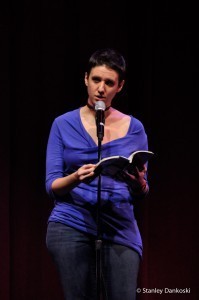
Photo credit: Stanley Dankoski
First, the recap.
Last Wednesday, I had the pleasure of reading at Literary Death Match. I should start by mentioning that my introduction to LDM was through Karyn Polewaczyk. It was October, 2010, and Karyn had just read at Literary Firsts. She e-mailed Adrian Todd Zuniga, host of LDM, and said, “You and Carissa should probably know each other.” So I tried to make the next Boston LDM. It was sold out. I tried to make the one after that–something came up. My schedule stood in the way of every single reading that came to Boston, including one wherein I knew several people reading.
NOTE: The implicit message here is that I am not only busy, but also a bad friend.
So, finally, when my schedule is at its most insane, but when everything on my plate has to do with promoting one book or writing another, I get an e-mail from Kirsten Sims, Boston LDM producer, asking if I’d like to read.
So I read. And it was an incredibly good time. Every photo on the LDM site that doesn’t depict me reading shows me laughing (and subsequently, those photos should be destroyed). But honestly, Literary Death Match is a great series because it doesn’t take itself (or its readers) so seriously. Next time it’s in a city near you, just go. Regardless of what else you’re doing. Go.
That said, just in case you missed last week’s Literary Death Match and now you’re sad because I just told you what a good time it was, you have another chance to hear me read (this time, alongside Randolph Pfaff and Lesley Mahoney). Tomorrow night, I’ll be at the Hallway Gallery in JP and I’ll be reading my short story, “1964, Berkeley,” which appeared in Consequence earlier this year and is the second section of a three-part story (the beginning of which will be in The Massachusetts Review this fall and the end of which can be read here). Details can be found on Facebook, but you don’t have to book your face to attend. Just show up and I’ll read right to you. I promise.
On to the round-up. I got a note on Twitter this morning that the online journal, Instafiction–which, per their site, “provides one quality short story each weekday morning, formatted in a single page, for ease of use with services like Instapaper“–had reposted the excerpt from Mere which ran at The Good Men Project a few months ago. Oddly enough, I also found out that they picked up a short story back in March which I had at the dearly departed > kill author last August. So, thanks, Instafiction. I feel loved. And if not loved, then respected in a way that tells me you want me for my mind.
Which reminds me: the review. In the latest edition of The Critical Flame, Sean Campbell has reviewed The Mere Weight of Words. In it, he made some very fair points about things in the book which don’t necessarily work. But he also caught so many of the book’s subtleties, the book’s pacing/format among them. The movement is meant to imitate memory, not just Mere’s, but her perception of her father’s. Also, Campbell had a great, astute reading of the passage wherein Mere becomes paralyzed:
The best scene in the novella is located at its center. While living and teaching in China, long before her father’s Alzheimer’s diagnosis, Meredith awakes to find her face ravished by Bell’s Palsy. Her gradual realization of this is visceral, even frightening. The reader feels her first impressions through this wonderful simile: “My voice was a foreigner: an ugly term, but well-suited to the situation.” It isn’t until much later, when she meets her friend Agatha in America, that the words “Bell’s Palsy” are even used. Instead, we’re left only with her frightened impressions. As she enters a hospital:
“I imagine that the disdain I felt was similar to a xenophobe’s feelings about the non-native’s tongue. Yet my voice’s pronunciation belonged to no ethnic group. Rather, it was beholden to the makeshift, bastardized whims of my stiff jaw and dead lip.”
These arresting metaphors are perfectly allied with the character’s passions: of course a linguist (a phonetician at that) would consider the symptoms through its impact on her voice, her pronunciations, her phonemes. But it also ties in with her relation to her father’s overpowering voice, and in her desire to escape that influence.
On the days when I feel like I’m just writing for myself, when I worry that the scenes which collect in my head will only ever make sense to me, it’s reassuring to get a review like this one.
And now, surely the moment you’ve been patiently anticipating–the random search term which brought someone to my site yesterday: slaughterhouse 5 interpretation of sex scene
Kids, the sex scene is easy–it’s the biggest clue that it’s a fantasy, that Billy’s replacing that which he’d rather not see with that which he wishes were true. But that’s not the scene you need to examine. Look at the death of Billy’s wife, her crazy deathgrin frozen onto her mouth. Why kill her that way? Consider, for a minute, the line wherein Vonnegut reinserts himself into the text after so long an absence (“That was I. That was me. That was the author of this book.”). Interpret his decision to make his presence known at that moment, in that manner. Ask why. Always ask why.
August 30, 2012
Readings, lectures, and other appearances
I have so much news and it all involves me talking in front of you. That’s exciting because 1/I like talking and 2/I like you. Details:
There’s a little lull before the end of the Mere tour, but in the meantime, I’ll be reading alongside Baratunde Thurston, Molly Birnbaum, and Ori Fienberg at the next round of Literary Death Match in Boston: September 12, OBERON in Harvard Square. I’m trying to decide if I should read forthcoming work or in-progress work. There’s only one way to figure out which I choose.
I just found out where I’ll be reading at the Baltimore Book Festival! Look for me at the CityLit Stage on Saturday, September 29 at 6:30pm along with Michael Kimball, Robb Todd, Elissa Schappell, Patrick King, and Nancy Murray. Also, there will be wine and music. And I’ll be reading my favorite section from Mere. You should be there.
I’m teaming up with Erica Mena-Landry from Anomalous Press to share a table/plan a reading for the 2013 AWP conference. Readers signed on thus far include Josh Denslow, Jeannie Greeley, Nicolette Kittinger, Steven LaFond, and Dolan Morgan, with more in the works. March is going to knock Boston’s socks to shreds.
This fall, Randolph and I will be giving a presentation on publishing at BU as part of a class called Boston Writing Now. I’m so excited about this. Last time I gave a presentation for apt, Randolph couldn’t be there, but I met so many great people as a result of that engagement, so I’ve got high hopes for this.
And last, but never, ever least, the next Literary Firsts is around the corner–Monday, October 15. The full list of readers will be announced next week!
See you soon!
August 28, 2012
On the sound of fiction
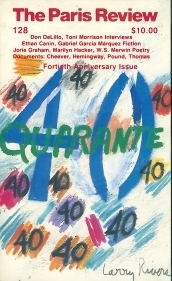 Don DeLillo raises all the points that describe, fairly accurately, why I wrote The Mere Weight of Words, a book about a former phonetician:
“Words typed on the white page have a sculptural quality. They form odd correspondences. They match up not just through meaning but through sound and look. The rhythm of a sentence will accommodate a certain number of syllables. One syllable too many, I look for another word. There’s always another word that means nearly the same thing, and if it doesn’t then I’ll consider altering the meaning of a sentence to keep the rhythm, the syllable beat. I’m completely willing to let language press meaning upon me.”
I get wrapped up in the placement of words, in the way they hum. Syntax is important on every level–within the word, within the sentence, within the paragraph and chapter and section. Even so, I’m wary of it. That last sentence though, “I’m completely willing to let language press meaning upon me.” That, Mr. DeLillo, is where we part ways.
And, as a friendly reminder, don’t forget that you can listen to me read part of Mere at TNBBC or read to yourself (silently or aloud) two different excerpts, at either The Collagist or The Good Men Project.
August 6, 2012
An audio excerpt of Mere at TNBBC
 The always hard-working Lori Hettler was kind enough to ask me to take part in TNBBC’s new audio series, “The Authors Read. We Listen.” Being the sort of author who loves to read aloud, I responded, “Yes, absolutely,” and set to work.
It should be mentioned that every time I record myself reading my work, there are a lot of mistakes and re-recording and re-re-recording. So, this 6-7 minute excerpt is actually culled from an hour of me laughing at myself and swearing. Also, Lori mentions in her post that I’ve been touring, which is true, but I’ve not read this section of the book at all, so it’s special and curated just for TNBBC.
To listen, click here.
August 5, 2012
We still need critics
 Like most writers, I spend a lot of time on my computer. I hang out on Facebook. I use Twitter. A nanosecond after this journal entry appears on my website, it will be crossposted to Tumblr. As a “new voice” in literature, as I’ve recently been called, I’m aware that I need to cast a wide net in order to have my voice heard at all. However, that’s not why I use Facebook or Twitter or Tumblr.
Okay–maybe it’s why I use Tumblr. For the most part though, I have other reasons for using social media that extend beyond finding new readers. Authors are people. We like to waste time on the internet. We like to have discussions online. We find out about books online, be it from friends, fellow writers, fans, or complete strangers (hat-tip to sites like LibraryThing and Goodreads). We read articles online, articles about cats and climate change and war and ice cream. We read things like Jacob Silverman’s article, “Against Enthusiasm,” published online yesterday at Slate, an article that’s an extension of Silverman’s original post, which I read when it surfaced a few weeks ago. And my reaction was, Finally.
This is a conversation I’ve been having over dinner tables for months. I tried to discuss it online (on Facebook, actually) a few months ago. I asked whether any of my Facebook friends actually talk about books they dislike. Their answers ranged from, “If I don’t like a book, I don’t finish it,” to “Yes.” When I asked the Yeses to give me an example, the conversation dried up. One person said, “My response is usually that the author didn’t know what they were doing.” I walked away from that interaction thinking, But there must be more to it than that.
As an editor, I read a ton of fiction that needs work—either it isn’t finished or has pacing issues or needs to be compressed or has too little tension (or conversely, not enough release). I think about these issues a lot. When I have the opportunity, I try to tell an author what I think needs work because, as a writer, I find feedback to be helpful. I’m not saying I’m right all the time but I can say that there are things I didn’t know were problems in my own work until someone pointed them out. Obviously, we can only hope that authors of published books have already reached that point. They likely already went through and fixed the problems with their work (or further problemitized their work, in the case of too little tension). However, they still want to know, of course they want to know, whether all that work paid off.
And we, as readers, want to tell them. We tell them by arguing about books. We read and write and talk about ambitious books because we want to take part in a larger conversation called Literature. And Literature needs that conversation in order to thrive. Further, Literature needs Criticism. We need critics, or, if there’s no one who’s willing to be seen as merely a critic (for, very often, once you get a label, you are that and nothing else), then we need to collectively be more critical. No one wants to hurt anyone’s feelings. No one wants to be confrontational. As a person who’s had her feelings hurt, as a writer who’s received mixed and, unquestionably, negative reviews, but who nonetheless prefers confrontation over passive silence, I’d like to know why criticism is suddenly such an awful premise.
Criticism leads to deeper levels of thought, authentic feeling that goes far beyond the fleeting decision to click “Like” or “☆ Favorite” or “♥.” I’m not dismissing those decisions to click; I’m saying that we have an amazing capacity for communication that we ignore when we passively, wordlessly, “like” things and then stop considering them altogether. This may have to do with the content that we read/watch online.
If I were asked to submit a scale of things I ingest on the internet, measured from Instinctual Delight to Thought-Provoking Satisfaction, the range might go something like:
Videos of cute cats to Articles on The Onion to XKCD to Articles on NPR/HuffPo/The Daily Beast/Insert Site Regularly Posting “Think Pieces” Here
As you’ll surely note, there is room for gradation between those points and, while I’ve definitely had a reaction to content on all of them that went something like, “Yay!” my reactions lessen/deepen, regarding actual vested interest, as I move back and forth on the scale. I’m saying that when my contribution to a conversation is “Yay!” it is a very different reaction than when I take time to actively ponder a topic, which is the way books often makes me feel (because books regularly make me feel multivalent emotions, whereas posts online, very often, reinforce something that I already like/“like,” which is still fine, but not the same as sources which lead to critical thought). That means nothing on the scale (and I do mean nothing) makes me feel the way books do. There’s crossover. I coo over cat videos. I coo over the phrase, “VICTORY TO THE FORCES OF DEMOCRATIC FREEDOM.” I laugh at The Onion. I laugh at Lydia Davis’s story, “Honoring the Subjunctive,” the full text of which is, “It invariably precedes, even if it do not altogether supersede, the determination of what is absolutely desirable and just.” Similarly, I hate foxnews.com. I hate The Heart of Darkness. My responses are comparable, but different. That difference gets to the heart of criticism’s glory.
Glorious criticism: Let’s consider how we feel when we learn something, through an artwork’s message, that we already know—translation: when we come to a party too late. How many friends do you have who first read a book or saw a movie or heard a record long after you did? A book or record or movie that you love and they can only be disinterested in. All we can do is accept that it’s one of those bits of art that needs to be consumed at a certain age or its impact is lost. Examples include: Catcher in the Rye, Ishmael, Weezer’s Blue Album, and Rushmore. (NOTE: I’m not debating these titles’ merits. In the interest of full disclosure, I hate one of them. I may or may not have been introduced to it too late. Point being: These are all polarizing in the public’s reaction to them.) The best part of disagreeing on whether or not the books you love or hate are, in fact, worth loving or hating is the discussion. You get to talk about why something is good or bad. You get to accept or dismiss its merits. You get to be introduced to two different parties’ points of view—the creator of the work in question and the person you’re arguing with, which brings me back to Silverman’s Slate article.
Reading Silverman’s original post, I felt vindicated. I felt similarly, though not as strongly positive, about his article in Slate. He pegged Emma Straub, a writer whose online presence is hard to avoid, as an example of effusive author-ity. He went on to say he could’ve named Jami Attenberg, Nathan Englander, Cheryl Strayed, or J. Robert Lennon. The difference between Emma Straub and the other writers he mentions is that, in addition to being an author, Straub is a bookseller. In his original post, Silverman stated, “Some of these people have backgrounds in book-selling, publicity, or marketing, so their enthusiasms are understandable.” In his Slate article, that was conveniently left out. That omission makes his argument less credible, but beyond that, the argument was still sound, an argument, wherein by the way, he does not criticize Straub, rather he criticizes the entire system. In order to discuss our fear of voicing dissent, for fear of being disliked, Silverman had to name names. So he raised the flag for criticism and pointed to what he saw as behavior indicative of the root problem. He will likely fall prey to a backlash that will support his underlying argument: We don’t like people who disagree with us. Frequently, we confuse disagreement to argumentativeness. We assume it’s an attack on our taste. And sometimes, it is. But in the instances wherein we feel attacked, we should stop and consider what the attacker would gain from the kill. If someone is anonymously throwing their weight around just to spout vitriol, then yes, that’s an attack, and it’s likely best dealt with by pointing out the source’s unnecessary anger and moving on. But if there’s merit in the argument, we should hear it out. We should treat it as we would a book and think about it beyond our immediate reaction to like or dislike it. If, after that, we still feel attacked, then we should find a third person and ask their opinion because discussion is a form of criticism and criticism is the way art has a long and active life.
July 31, 2012
Amazement
It has been said that the word “amazing” no longer holds meaning. It is used to gloss over abstractions, to describe things that are funny or moving or shocking or thought-provoking.
Like most people, I’m guilty of overusing the word “amazing.” I use it when describing things as mundane as breakfast cereal (always when it’s the first meal after many hours of not eating). I use to denote amusement, to cite cleverness. I say it after chuckling over a video of someone’s pet, “That’s amazing,” before returning to whatever else I was doing at the time. But I also say it in revered tones when I am floored by something. I use it as it was meant to be used.
With that in mind, this past week has been amazing. I’m amazed that I made it through two 10+ hour bus rides over the course of 48 hours, amazed by the talented people I know, amazed that all but the final stop on the tour is over (remember that I’m bad with time). I’m amazed that we’re closing online submissions for apt in just two weeks and that we’ll then be closing print submissions six weeks later. I’m amazed at the work we’ve gotten. This issue is already thrilling and there are still two more months of submissions on the way. I’m amazed that we’re turning seven in October.
I’m amazed by the work of my colleagues, that of Gillian Devereux, who was kind enough to invite me to read with her in Virginia. It’s sort of a tradition that we read together at least once every year (Literary Firsts in 2010, the TUTDOSN release party in 2011), but we’ve been lucky enough to have read together three times this year: the apt release party, the AWP reading, and just this past Friday in Virginia. It’s always a pleasure to hear Gillian read. She has a great sense of comic timing, a way of working the crowd with nuance, and a simultaneous strength and vulnerability that really makes her readings resonate. We were both exhausted by the end of the night, but it was well worth the effort. I’m amazed by the literary stylings of James Caroline, Cassandra Long, Dolan Morgan, Tom Oristaglio, and Matthew Zingg, all of whom were my fellow readers in Siena Oristaglio’s Literary Cathouse reading, a fundraiser that benefited Join the Conversation and Andrea Bredbeck’s documentary, After.
Their work amazed me.
Literature so often is a source of my amazement.
I am amazed that I get to spend most of my time reading and writing literature. I am lucky for those who support me. I am amazed (and so grateful) that this fall, I’ll get to spend a week working only on literature. I found out over the weekend that I’m the recipient of a grant from Turkey Land Cove Foundation. I’ll spend a week there finishing the current draft of Conjoined States.
By then, the Mere tour will be completely over. The last Literary Firsts reading of 2012 will have come and gone. Submissions will be closed for the third print annual of apt and we’ll be working on editing/designing it. We’ll be seven years old.
But I’ll be amazed still.
July 23, 2012
Brookline Booksmith recap, excerpts, virtual readings, travel, and home
My reading at Brookline Booksmith last week was such a great time for so many reasons. First of all, I got to hear Jill McDonough read from her book Habeas Corpus (and from her forthcoming book, Where You Live). I got to listen to her answer questions about writing and the history of the death penalty in the US and teaching writing in prisons, which is such important work, not just because adult learners are largely forgotten across the board, but because people in prisons rarely have access to the wide range of literature that the rest of society does, much less the opportunity to have that literature expounded on by an astute reader/teacher like Jill. Short version: Jill is awesome and if you were lucky enough to have been there, you know what I’m talking about. Shorter version: go buy her first book and pre-order her second.
Also, I got to see so many people at the Booksmith that I don’t normally see, including my publisher, Cynthia Reeser, who was visiting all the way from New Orleans, and Neal Bruss, one of the two linguists to whom I dedicated the book (the other linguist, Carolina Barrera-Tobon (since married, and is now Carolina Tobon-Hicks) was at the NY reading, so I’ve got all dedication bases covered). Also, Evan Perriello, the Events Manager at BB, was such a great help during the event and he even asked an insightful question that I loved. Also, (just one more also, I promise), in the middle of my reading, I touched my right eye and it started leaking and would not stop. It was okay–I rolled with it. Since the right side of Mere’s face is paralyzed and she can’t even close her eye, and I could still see, though I couldn’t stop it from weeping everywhere, it was fine. It didn’t really affect my reading, though it did make it surreal. So thanks to everyone who came out to hear Jill read and me read (and to watch my eye leak!) and to be supportive. You’re great and I love you.
In other Mere news, I am very happy to have an excerpt up at The Good Men Project. In the excerpt that ran in The Collagist, we’re introduced to Mere’s parents. In the GMP excerpt, we meet the people that Mere gravitates toward in her parents’ absence: Agatha and Patrick. You also get the explanation for why Mere is named Mere. So go read it!
On the tour front, I’ve got another busy week lined up. I’ll be doing a satellite reading at Maple Street Bookshop in New Orleans on Wednesday at 6:30pm (wine and cheese at 6!). FACT: You can go to the bookstore right now and get the book because they already have them, so if you’re in New Orleans, go and do it and I’ll look for you (through my computer) on Wednesday night!
Just two days later, on Friday, July 27, I’ll be reading in person in Manassas, VA (a stone’s throw from DC) with the always lovely Gillian Devereux. There will be poetry; there will be fiction; there will be karaoke! There will be copies of Mere and apt and They Used to Dance on Saturday Nights and Focus on Grammar, and I will be there, so if you’re in or around DC, I hope you’ll be there too.
Again, just two days after that, I’ll be back home in Boston, reading at Tres Gatos in Jamaica Plain. There will be a full reading at 3:30pm, when I’ll read alongside James Caroline, Cassandra Long, Lilly Mara, Dolan Morgan, Tom Oristaglio, and Matthew Zingg, as followed by dinner service. During dinner, you can order me off a menu and I will read to you, tableside, a short portion of the book or a short bit of fiction, and the proceeds will benefit Join the Conversation: Filmmakers Against Sexual Violence. I recently had a conversation with Randolph about the term “rape culture” and why it’s confrontational, as a phrase, and why it needs to remain that way to bring about real change (by way of difficult conversations) regarding sexual violence. So, if you can make it, not only will you be supporting literature (and me), you’ll also be supporting a great cause.
There’s one more virtual reading/signing in the works, so regardless of where you are, I’ll be able to see you soon. But I’d love to see you in person, so if you’ve got an event where you’d like me to read, my contact info is on the front page of this site–let me know and we’ll work something out!