Theodora Goss's Blog, page 58
June 2, 2011
Two Worlds
So first, I've been playing around a bit with this website. I've updated my About page. I had added a Favorites page, but you know, it just didn't feel right? So instead of listing favorite posts, which may have been favorites only for a specific period of time, I created a new page: Advice. It contains many of those favorite posts, but it focuses specifically on advice about writing and the creative life. Here's my description of the page:
"Some of you have suggested that I write a book about writing. And not just about the act of writing, but also about other aspects of being a writer, such as branding and marketing, and creating the life that writers need in order to produce their best work. I don't have time to do a project like that at the moment, and probably won't for a while. But in the meantime, I thought I would share the blog posts I've written on those topics. I hope this advice helps you with your own writing, and with your creative life as a writer."
Go on over to the page and take a look. Feel free to tell me what you think!
Also, I moved the Press and Purchase pages into new positions, and if you look at the Purchase page, you'll see that I'm adding books. Eventually, you'll be able to see all the different places where you can buy what I've written.
What do you think? I want to make sure that this website remains useful, timely, and easy to navigate.
Oh, and in case you didn't notice, I'm adding YA Novel Challenge links as people send me the URLs for their blogs. If you want to join the challenge and blog about your progress, send me your URL!
So, what do I mean by two worlds?
As you know, last weekend I was at Wiscon. I still remember what it felt like to walk down the hall on the sixth floor, where all the parties take place. I remember what the people there looked like, how they interacted. Yesterday, I went to the art show for Ophelia's after-school program. There I saw all the parents from Lexington. And, as you can imagine, it was a completely different crowd. It was a crowd of people who looked like, and probably took themselves seriously as, grownups. (If you've seen pictures of Wiscon, you'll know that none of us looked like grownups. At least, not there.)
This isn't a particularly fair comparison. Wiscon draws people from all over the world. It's an incredibly diverse crowd, and a crowd that is generally liberal, creative. Lexington is an expensive suburb of Boston. It's filled with people who can afford to live here (and us, but I won't get into that, although thank goodness for writing income). They moved here because of the schools. So they have children, and the children go to the schools, and to music and riding and karate lessons. They have two cars and commute into the city or work in one of the technology companies that have relocated to the suburbs. They shop at the local mall.
Wiscon and Lexington are two different worlds. What I realized, walking through that after-school program art show, is that I belong to the Wiscon world. And I wondered once again, as I've wondered a number of times during the past year, how in the world I ended up in Lexington.
Sometimes events just move you around, you know? You move to Boston for graduate school, and then you have a child, and the child needs to go to school, and the Boston school system makes absolutely no sense. So you think, I'll move to Brookline, and you can't find a place that you can actually afford that has the right number of rooms, and you know you're going to have to pay for parking and laundry. And you see an advertisement for a house in Lexington, and you think, the commute can't be all that bad, after all, some people commute from Maine. (They do. I'm not joking.) And so there you are, in the suburbs.
I'm not sure what to call these two worlds. Perhaps the ordinary world and the extraordinary world? The ordinary world is the one in which you grow up to become a lawyer, and you make sure your benefits package has a good health care plan, and you move into a neighborhood in a good school district, and there are playdates and PTA meetings. The extraordinary world is the one in which you and your illustrator friend collaborate on a book, and then your friends who know about video help you make a trailer for it, and then your musician friends make a CD and you all go on tour together. Most of us creative types live in both worlds. After all, we still have to pay taxes. We still have to go to the dentist. (Although I have met people who live almost entirely in the extraordinary world.) But I suppose the reason I'm writing this is that if you're a creative type, you can't just live in the ordinary world. You need the extraordinary.
I'm not sure this is making sense, so I'm going to quote from a blog post called "How to Tell If You're a Writer" that I happened upon recently. (It's an incredibly funny blog post, by the way.) Those signs include the following:
Your first friend was imaginary.
You hold conversations between people who don't exist.
Your brain is tuned to some mad, intrusive frequency.
You know how you would do it differently. (Meaning, you watch a movie or read a book and immediately start thinking about how you would do it – the right way!)
And this brilliant rant is from the comments:
"One of the hardest things for non-writers to understand is that YOU CANNOT TURN IT OFF. Ideas keep coming. They form unions and picket your brain. They fight turf wars over your attention. They butt in on each other when it's not their turn to be written.
"A writer will come to a point of choice and pick a direction, but the possibility of that other choice will spawn an entirely new idea. Then your tenth grade English teacher's voice pops into your head, reciting 'The Road Less Traveled' and suddenly that other idea now stars a guy named Frost because there's no other possible name for him.
"Schrodinger and his cyanide-huffing cat had nothing on the infinite possibilities that live inside a writer's mind. To a writer, there's no question that multiple universes exist because we see them all, simultaneously, running side-by-side with their infinite branches splitting each possible storyline.
"And it NEVER STOPS.
"It's the only profession in the world where you can get paid for quoting the voices in your head, rather than paying out money to make them stop."
That last sentence? I don't wear t-shirts with quotation on them. But I might wear that one.
And these are also from the comments:
"Writers are too mad for any other job, just sane enough to stay free, hungry enough to be motivated, full enough to think, jaded enough to see the dark side of the world, hopeful enough to see the better alternative."
"There is only one writer's motto that matters. 'I can use that.' If you find yourself sitting at the deathbed of a dear friend, there is one part of your mind that is recording the pallor, the way he twists in pain, the color of the vomit. You're ashamed of yourself, but you do it anyway."
"You're a writer if you're mulling over going someplace relaxing on vacation – and all you can think about is how great it will be to WRITE there. (Beach house, the mountains, etc.)"
I suppose what I'm trying to do in this post, really, is figure out why, after being at Wiscon all weekend, I went to the after-school program art show and thought, WHAT am I doing here? Of course, the answer was obvious. In the ordinary world, one goes to the after-school program art show. But my native country is that extraordinary world of people who make stuff up. Who have imaginary friends; hold conversations between people who don't exist; are tuned to some mad, intrusive frequency; and do it themselves (write books, make movies, create art).
So if you see me walking around Lexington, looking like a perfectly nice, ordinary person, you should know: there are voices in my head.





June 1, 2011
The Challenge Begins
Yes, this is June 1st, although by the time I finish typing this blog post it will probably be June 2nd. Of course I had to pick today to start the challenge. I'm still sick, and I still have all sorts of things to do that need to get done before I can start on the serious writing. But I've started working on the YA novel.
First things first. If you want to join the YA Novel Challenge, here once again are my suggestions:
1. The challenge will run June 1st to August 31st.
2. The goal of the challenge is to write or revise a YA novel, or part of a YA novel.
3. To meet that goal, set smaller goals for yourself: words per day, pages revised per week, etc.
4. If you would like, blog about your progress. Remember that failure is as important as success.
5. Anyone can join or leave the challenge at any time. It's always OK to start or stop.
If you plan on blogging about your progress and would like me to link to your blog, sent me the URL you would like me to link to and the name you would like me to use. I'll link to it under YA Novel Challenge (on the sidebar). My email address is tgoss@bu.edu.
You can already see who has joined on the sidebar, and several of the writers listed there have already blogged about the challenge. If you would like to see their posts, here they are:
Alexandra Duncan
Alexandra Wells
Amy Sundberg
Briana Dyrness
Kelly Jones
Livia Llewellyn
So what have I done today? I didn't have as much time as I would have liked, but what I did that's actually quite important is try to decide where my story starts. First, I took a red notebook, narrow ruled with heavy paper, from Bob Slate and made it my YA novel notebook. On the top of the first page I wrote "The Mad Scientist's Daughter," and beneath that, "The Athena Club: Book 1." You can see how ambitious I'm being! Then I made a list of my main characters, with a list of possible attributes for each:
Mary Jekyll: light brown hair, gray eyes, tall, logical, the mastermind.
Diana Hyde: dark brown hair, brown eyes, short, passionate, violent, the thief.
Beatrice Rappaccini: black hair, green eyes (if that's not too standard?), pale, beautiful, poisonous. Italian.
Justine Frankenstein: six feet tall, blond with blue eyes, gentle, strong, loves poetry. Swiss.
Catherine Moreau: brown skin, golden brown hair, golden brown eyes, scarred. Argentine. Can bite through your throat.
And then I got into that question: how to being. I've actually been thinking about this for several weeks. Does Mrs. Poole come and wake Mary up with a summons to Buckingham Palace? (Oh, please!) What exactly motivates her to go through her father's papers? At first I kept thinking of the idea of being summoned in various ways, that the motivation was external. But that's boring, isn't it? The motivation should be internal. Mary should start going through her father's papers for a reason that makes sense to her. She should have an internal motivation for her research.
And the book can't start with that research. It has to start with action. So I'm thinking it starts in Whitechapel. This brings me back to what we discussed on the research panel at Wiscon. I need to get a much better sense of late 19th century London, which is where and when my novel will be set. I think. I keep considering setting it later, in the Edwardian era, but I wanted to bring in Queen Victoria. In the Edwardian era, I'd be stuck with either Edward or Alexandra, and that just doesn't give me what I'm looking for, the gravitas I want. And I want to set the book in the era I've spent so much time researching, the fin-de-siècle, with all its anxieties. I want to mix real people like Darwin with literary people like Sherlock Holmes.
One of the questions I have to consider when writing this blog is how much I want to give away. How much do I want to tell you about what I'm working on? I don't know the answer to that yet. I'll have to think about it as I write.
So, this was the first day, and I certainly won't write about the YA novel every day, but I did want to start off by writing about it today, letting you know what I was thinking about. Which is where the story starts. It has to start somewhere vivid, eventful. Perhaps with a corpse.





May 31, 2011
The Tapeworm
As you may remember, I'm reading Mario Vargas Llosa's Letters to a Young Novelist. In it, he has an image of the literary vocation that I think is both brilliant and profoundly disturbing. Here it is:
"Your decision to claim your literary leanings as your destiny must lead you into servitude, into nothing less than slavery. To put it graphically, you've just done what some nineteenth-century ladies, concerned about their weight and determined to recover their splendid silhouettes, were reputed to do: you've swallowed a tapeworm. Have you ever come across anyone who sheltered that terrible parasite in his gut? I have, and I assure you those ladies were heroines, martyrs to beauty. In the early sixties in Paris, a great friend of mine, José María, a young Spanish painter and filmmaker, was invaded by such a creature. Once the tapeworm establishes itself inside an organism, it merges with it, feeds off it, grows and is nourished at its expense; the worm is very difficult to expel from the body it thrives on and effectively colonizes. José María kept getting thinner, even though he was constantly forced to eat and drink (milk, especially) to satisfy the gnawing of the creature housed inside him, since if he didn't, his suffering would become intolerable. But everything he ate and drank was for the tapeworm's benefit, not his. One day, when we were talking in a little Montparnasse bistro, he surprised me with the following confession: 'We do so many things together. We go to theaters, exhibitions, bookstores, we spend hours and hours discussing politics, books, films, friends. And you think I do these things for the same reason you do, because I enjoy them. But you're wrong. I do them all for it, for the tapeworm. That's how it seems to me: that my whole life is lived no longer for my sake but for the sake of what I carry inside me, of which I am now no more than a servant.'
"Ever since then, I've liked to compare the lot of the writer to that of my friend José María when he had the tapeworm inside him. The literary vocation is not a hobby, a sport, a pleasant leisure-time activity. It is an all-encompassing, all excluding occupation, an urgent priority, a freely chosen servitude that turns its victims (its lucky victims) into slaves. Like José María's tapeworm, literature becomes a permanent preoccupation, something that takes up your entire existence, that overflows the hours you devote to writing and seeps into everything else you do, because the literary vocation feeds off the life of the writer just as the tapeworm feeds off the bodies it invades. As Flaubert says: 'Writing is just another way of living.' In other words, those who make this enchanting and engrossing vocation their own don't write to live but live to write."
That's brilliant, right? Because you're not going to forget it, are you? The imagine is so disturbing, and yet so interesting, that I find myself coming back to it again and again. I think, is literature that way for me? Or is it that way only for people who win Nobel prizes, like Llosa? Maybe that's what literature needs to become for you, to win a Nobel prize?
And yet I think there is a fundamental truth to the image. Once, when I was pregnant with Ophelia, I was given a thyroid medication that it turned out I didn't actually need. It made me very sick. I stumbled to the bathroom to throw up, then lay on the bathroom floor for hours, with the room spinning around me. I couldn't stand up. It took me a week of lying in a dark room, eating saltines and sliced turkey, to recover. But I remember that, even as I was lying there, feeling sicker than I had ever felt in my life, part of me was filing the experience away. Observing it, saving it for later. And I used it recently in a scene where a character overdoses on her medication. There's a certain mercilessness about being a writer. You use yourself mercilessly, the people around you mercilessly. And that means you can't harbor many illusions about them. You have to be able to see them as they are. If you have social skills, you never let them know and hope they don't see themselves in your characters. And you can't have many illusions about yourself either. You have to ask yourself questions like, "Under what circumstances would I commit a murder, and how?" And you have to answer honestly.
Likewise, when you visit a city, you think of what stories you could set there. When you eat a particular food, you mentally record how it tastes, so that later a character can eat the same food and remark on it. It's an only partly-conscious process that goes on all the time. Being a writer means living with this split consciousness. Every day of your life.
The tapeworm is a parasite, and parasitism is one type of symbiosis. But there are also two other types: commensalism and mutualism. Symbiosis is when two organisms live in close association with one another. Parasitism is when one organism benefits from that relationship but harms the other. Commensalism is when one organism benefits and does not affect the other. Mutualism is when both organisms benefit. In the end, brilliant as it is, I don't think Llosa's tapeworm analogy fits. I think the symbiotic relationship between literature and the writer is mutualism, not parasitism. We are not harmed by writing, any more than the dancer is harmed by dance. Rather, we are made in such a way that writing helps us, allows us to process a world that, to the sort of person who becomes a writer, might be overwhelming, unbearable. Writing provides a refuge. At least, that's what I feel when I sit down to write. I suspect a musician feels that when sitting down to play, a painter feels that when starting to paint, a dancer feels that when getting into position.
I realize that what I've written above contains an unstated assumption, that the artist is somehow different from a lawyer, for example. Or an accountant. A lawyer is not necessarily someone who needs the law to live in the world, or understands the world through it. (I've known enough lawyers to be fairly confident of that.) But an artist is someone who needs his or her art. For whom it's a necessity, the way food is. For whom it functions as a way of understanding, of dealing with, the world around.
I have to think more about this topic, because I can see, from what I've written above, that my ideas are not well-developed. But what I'm trying to do is provide an alternative to Llosa's image of the tapeworm while acknowledging that what he describes is, very much, true for me. That I do find myself living for the writing. But also, the writing is a way of living, as Flaubert says. It provides me with a way of functioning in the world, which is something the tapeworm does not do. An orchid living on a tree is an example of commensalism. Ants living on an accacia are examples of mutualism. The ants make a small hole in the accacia, and the accacia provides them with sugar. But at the same time, the ants protect the accacia. They attack anyone who tries to damage it. I think my relationship with literature is much more like that. It's not as arresting an image, the writer as ant and literature as the accacia. But I rather like it.





Making Your Life
I'm so sick.
I woke up this morning coughing, with an aching throat. I know, you don't need to tell me. You're not the first person to point out that I'm pushing myself too hard. But tomorrow is June 1st, and I have a project this summer. No, it's not finishing the dissertation. It's not even writing the YA novel, about which more later. It's changing my life. And that's a hard thing to do, so I'm pushing myself with the sort of relentlessness I often have, the willingness to drive myself hard, even make myself sick in pursuit of a goal. And this is the most important goal I've ever had, which is to make a life for myself that focuses on what I want to do, on my writing.
At the Fairyland party, I had a long talk with Kevin Wiley, who is S.J. Tucker's partner, a singer and fire-spinner. He told me about a talk he gives called something like "Making Your Life" (although I'm not sure I have that exactly right). But it's about the fact that we are told the sort of life we should live. We are told what we should want, what should matter to us. But we don't have to accept that. We can step outside of it, choose our lives for ourselves. He said, you have to choose what actually matters to you. Does owning a nice house matter to you? Then work to own that nice house. But make sure it actually matters to you, that it's not something you've simply been told you should want. I think his advice was both simple and powerful: choose what you want and then work to make it happen.
So I've been thinking about what I want in my life. The center of my life will always be my creative work. That's what I and only I have control over. That's what I will always do, what I will sacrifice for. But what surrounds that is the desire to be among people also doing creative work. Those are the people I love and admire, and I want to be with them. I want to work with them. And what surrounds that, imagine concentric circles here, is finding a place where all that can happen. A community, a home. Kevin said that when he and Sooj first met, she was working at a job that was making her sick: denying health insurance claims. And he asked her, what do you really want to do? And she said, I want to travel around the country playing music to my friends. I hope he doesn't mind my paraphrasing him here. But this was an important conversation for me, because it made me think about what I really want to do. And watching people like Cat and Seanan and Mary create their lives made me think about that as well.
Of course, I have to do it in a way that doesn't make me sick all the time. I can't push myself quite so hard. But tomorrow is June 1st, and I think it's going to get easier. Today, I started going through the books. I'm making piles of the books I'm keeping, piles of the books that I'm giving away. I want a life in which I'm surrounded by the things I love, not burdened by the things I don't. And going through stuff is the first step. What stuff do I really need and want, what have I simply accumulated over time? It can be hard to give up the barnacles that have encrusted your hull. But they slow you down in the water.
That's all I want to write in this particular blog post. I need to lie down and rest so I have energy for this evening. And I want to post some thoughts later today on writing. But I also want to leave you with two videos.
The first is a video I found on YouTube of Kevin spinning fire to Sooj's "In the Name of the Dance."
The second is Sooj's first music video, the very funny parody "Playing D&D," which you, my nerdy readers, will hopefully appreciate as much as I do. (You don't mind me calling you nerdy, do you? In my personal dictionary, it's a term of high honor.)
And yes, I heard her play this at Wiscon. My tribe . . .





May 30, 2011
Sunday at Wiscon
I'm so tired!
I'm home from Wiscon. I woke up at 3:00 this morning for a 6:00 a.m. flight. And of course I had parties to go to last night, so I got only about two hours of sleep. As soon as I came home, I went to bed. Now I'm sitting here listening to S.J. Tucker's Blessings, about which more later. And catching up on this blog.
On Saturday night, I went to the Fairyland party. Here are some pictures from before the party itself, when we were setting up, and when people first started coming into the room.


Once the party began, the room was absolutely packed. What do you expect, when S.J. Tucker and her friends are singing? The party ended with Seanan McGuire singing "Wicked Girls," which as you know is my personal anthem.
I'm happy to report that both of the dresses I brought did get worn. See? (Yes, these are photos in the bathroom on the first floor. I find my full-length mirrors where I can.)


Notice that with the second dress I wore flats (sacrilege!). That's because on Saturday, I injured my foot. No, I didn't kick anyone. Somehow, I pulled the muscle right behind the ball of the foot, the one that you use as a dancer to go up on your toes. (At least, I always feel it there in dance class.) By Sunday, I was limping. So this picture isn't entirely accurate. In the evening, I actually walked around with one shoe on, carrying the other in my hand. And I spent as much time as I could with my foot on one of these:

After my relaxing Saturday, Sunday was very, very busy. In the morning, I had a reading with Haddayr Copley-Woods, Mary Rickert, Marguerite Reed, and Kat Beyer. I was surprised at how many people turned out that early. It was a very good reading and gave me another chance to read from "Pug," which is currently out in Asimov's.
That afternoon, I had three panels back to back. The first was a panel on anthologies moderated by Sharyn November. Advice to new convention goers: if Sharyn November is on a panel, go! I learned so much simply from being on that panel and hearing her speak. My second panel was on how being able to access research so quickly has affected writing, which was quite interesting. It turns out that I'm not the only one who writes with the internet available, so I can go over and quickly research what the characters would be eating for lunch at a pub in Cornwall. But we also talked about the need for more extensive research, when you're writing a novel and you need to establish a firm understanding of the world your characters are going to be moving around in. The final panel was on "indigenous" American fantasy, and I was the moderator. We talked about what indigenous means, why Native American mythical and religious figures and themes don't appear more often in fantasy, that sort of thing. It was one of the most interesting panels I think I've ever moderated. And if you ever have a chance to moderate a panel with Andrea Hairston, know that it's going to be easy: she always has such terrific points to make. It's good when a panelist has strong opinions but is also thoroughly informed. That's the best kind of panelist, I think.
Then I got ready for what I always think of as the banquet but is actually the Tiptree Ceremony and desert salon. That's where I wore the burgundy velvet dress. And then, there were the parties.
So now you know what I did at Wiscon. Two more things, though.
First, I bought the most beautiful painting, by the artist Ingrid Kallicki. It's called The Green Man's Final Hours. I saw it in the art show and knew I had to have it.

I wish I could have gotten a better photograph of it. It's absolutely beautiful, acrylic and oil on top of a graphic print, I believe. I actually ran into the artist, in the same bathroom in which I took the pictures of my dresses, of all places. I would have liked to talk to her more, but I was between panels, rushing. That's the one thing I splurge on at conventions: art.
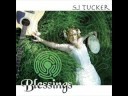
I also bought one other thing: the CD Blessings, by S.J. Tucker, which has one of my favorite songs on it: "Witch's Rune." Here it is. If you like this blog, I think you would like this song.
That's my Wiscon report. And that's all I can write at the moment. I'm back, but quite sick, and need to go lie down again. So I can get some rest.
One final thought. Catherynne Valente and I were talking about blogging, about what our blogs provided, what made them appeal to readers. She said that what her blog provided was sincerity, which I think is absolutely right and an important insight to have. Cat's blog is always absolutely sincere. That started me wondering: what does my blog provide? I'm not entirely sure, but I hope it provides at least a bit of enchantment. You can come here to see or learn about something beautiful, like Ingrid Kallicki's paintings or S.J. Tucker's music. And then, you can incorporate those things in your own lives.





May 28, 2011
Saturday at Wiscon
On the way to Wiscon, as I was going through airports, there was a game being played on Twitter. It used the tag #lessinterestingbooks and it involved people suggesting book titles. Like the following:
Fatigue in the Afternoon
Jude the Obvious
The Reasonably Bearable Lightness of Being
The Moped Diaries
To Hurt a Mockingbird
Fried Eggs and Ham
Animal Farming
Harry Potter and the Chamber of Commerce
For Whom the Bell Rings
The Welder in the Iron Mask
The Old Man and the Swimming Pool
The Maltese Sparrow
The Once and Future Shift Manager
The Pilgrim's Impasse
A Tale of Two Suburbs
Ten Habits of Fairly Effective People
The Girl With the Temporary Tattoo
Gulliver's Staycations
The Average Gatsby
Lord of the Files
Good Expectations
Peter Hamster
I thought this game was actually very interesting from a writing perspective. In the workshop I led on Friday morning, I commented that a couple of the proposed novel titles were not very interesting. And I wondered what makes for a powerful, interesting title. Of course, what the #lessinterestingbooks titles do is deliberately undercut the power of the originals. But there's a lesson there.
In keep with my theme for this Wiscon, which is not pushing myself too hard, I had a very easy today today. Lunch with Mary Rickert (during which I had my first bento box), then talking with various people. Tonight I will be at the Fairyland party (for The Girl Who Circumnavigated Fairyland in a Ship of Her Own Making, which by the way is a wonderful book title). It's almost time to get ready, so I'll leave you with one more lesson, if you're a writer. The Fairyland trailer is the best book trailer I've ever seen. If only all of them were this good:





May 27, 2011
Friday at Wiscon
Last night, I was up late again finishing my critiques for the writing workshops. I finished them around 4:00 a.m., then slept a few hours, got ready, and workshopped. It went well. It always does when you have a group of talented writers and critiquers.
Afterward, I was so tired that I had to rest, so I actually got some sleep. I've never been quite so tired at Wiscon before. I think it's because this has been such a tiring year in general. I haven't had time to recover yet. When I get home, I'm going to spend a couple of days sleeping. After finishing my revisions, I mean.
When I woke up, I went down and walked around the book room, and took a few pictures.


At the Small Beer Press table, I saw David Schwartz and Genevieve Valentine.

And here is Genevieve's book, which just came out.

Genevieve and I got into a fight. Yes, right there among the books.

But then we made up and started to tango.

Afterward, I went to dinner with Catherynne Valente, and Annalee Newitz and Charlie Jane Anders from io9. We ate Nepalese. And then, I skipped all the parties. I know, it's Wiscon. But I'm tired, and I've been to enough conventions now to know that when I want to rest and be by myself, I should.
So tonight I'm going to rest. There are plenty of parties tomorrow.





May 26, 2011
My Tribe
This is what a writing life looks like.
Last night, I was up until 4:30 a.m., finishing what will probably be a next-to-final round of revisions to the Secret Project. The final round of revisions will probably take place as soon as I get back from Wiscon. I slept for three hours, then got up and packed.
Then I got on a plane, flew to Milwaukee, and then to Madison. And here I am, at Wiscon. By baggage claim, I ran into one of my roommates, Catherynne Valente. My other roommate, Seanan McGuire, will arrive tomorrow.
After we had checked in and brought our bags up to the room, with a larger group of people because that's what happens in the Wiscon lobby, people just grab you and then you end up being part of a group, I took some time to go out by myself, walk along the main street that leads to the capitol building, remember how much I like Madison. And get a bowl of spicy noodles, which I'm eating as I write this.
Here, by the way, is a picture of Traveling Dora. Looking tired but sensible, as though she could handle a train through Siberia or elephants in Indonesia. With the gray shawl that kept her warm on the cold, cold planes.

In the airports and on the planes, I finished reading the stories I need to critique in the writing workshop tomorrow. I still have to write up my comments for the workshop itself. Conventions are fun, but when you're a writer, they're also work. So tonight I'll be staying in, writing up my comments, doing the work I'm supposed to do.
And then I'll be spending tomorrow with my tribe, the tribe of writers and editors and publishers and illustrators. The people who make stories happen. I think of it as a very special tribe. These are the people who will laugh when I post a picture of Cthulhu Pikachu.
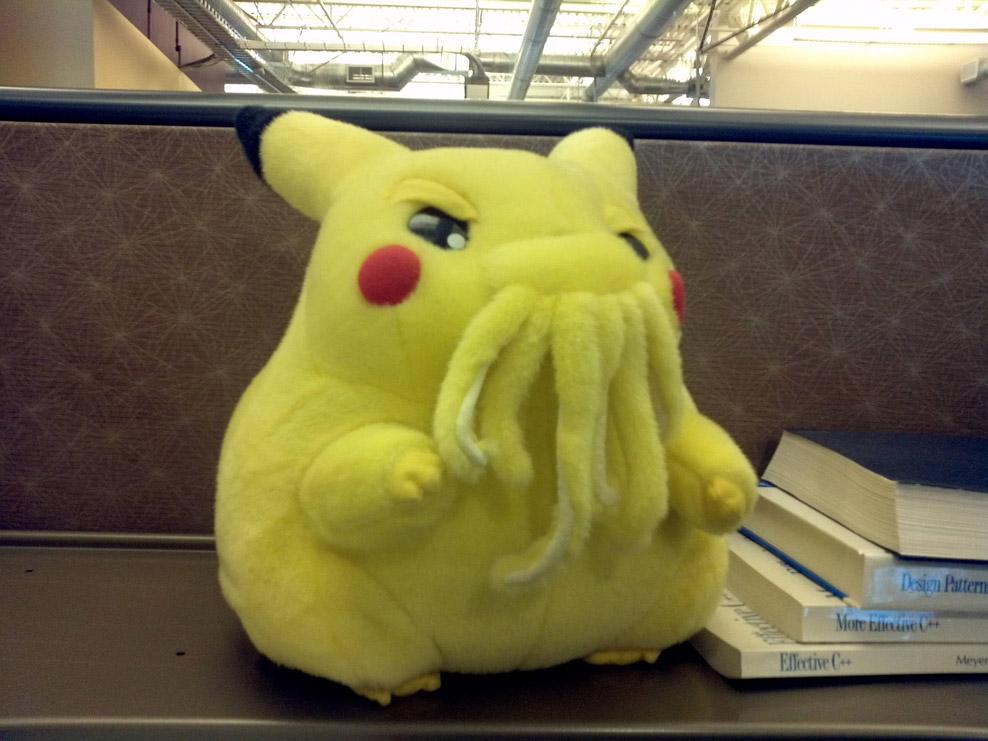
Or get this joke with peer reviews, which I will include at the end of this post for those of you who don't like to click links. This one is for the academics, and there's one academic I'd like to share it with in particular, because I know it would make him laugh. If you read this, you know who you are, professor.
Being here makes me think about what I want in my life, now. Love and friendship, first. There are so many people I lost touch with because I was focused on the work. It always came first. But I've missed my tribe, my people. It's time to start reconnecting. Second, writing and creative work. I'm already working on that, already writing stories, essays, poems. But there are so many projects I have planned, so many I want to undertake. And finally, a place where I can make all of these things happen, where there is beauty and comfort and peace. Some of these things might take me a while to find, but I'll get there. I have – not always confidence, but a kind of faith.
All right, here's the joke. Go ahead, laugh at me for thinking this is one of the funniest things I have ever read. Especially the peer reviews.
Q: How many historians does it take to change a light bulb?
A (by Dr. L): There is a great deal of debate on this issue. Up until the mid-20th century, the accepted answer was 'one': and this Whiggish narrative underpinned a number of works that celebrated electrification and the march of progress in light-bulb changing. Beginning in the 1960s, however, social historians increasingly rejected the "Great Man" school and produced revisionist narratives that stressed the contributions of research assistants and custodial staff. This new consensus was challenged, in turn, by women's historians, who criticized the social interpretation for marginalizing women, and who argued that light bulbs are actually changed by department secretaries. Since the 1980s, however, postmodernist scholars have deconstructed what they characterize as a repressive hegemonic discourse of light-bulb changing, with its implicit binary opposition between "light" and "darkness," and its phallogocentric privileging of the bulb over the socket, which they see as colonialist, sexist, and racist. Finally, a new generation of neo-conservative historians have concluded that the light never needed changing in the first place, and have praised political leaders like Ronald Reagan and Margaret Thatcher for bringing back the old bulb. Clearly, much additional research remains to be done.
– Response by peer reviewers
Dear Dr. L,
We regret that we cannot accept your historian joke in its present form . . . . However, a panel of anonymous reviewers (well, anonymous to YOU, anyway) have reviewed it and made dozens of mutually contradictory suggestions for its . . . improvement. Please consider them carefully, except for the ones made by a man we all consider to be a dangerous crackpot but who is the only one who actually returns comments in a timely fashion.
1. This joke is unnecessarily narrow. Why not consider other sources of light? The sun lights department offices; so too do lights that aren't bulbs (e.g. fluorescents). These are rarely "changed" and never by historians. Consider moving beyond your internalist approach.
2. The joke is funny, but fails to demonstrate familiarity with the most important works on the topic. I would go so far as to say that Leeson's omission is either an unprofessional snub, or reveals troubling lacunae in his basic knowledge of the field. The works in question are Brown (1988), Brown (1992), Brown (1994a), Brown (1994b), Brown and Smith (1999), Brown (2001), Brown et al. (2003), and Brown (2006).
3. Inestimably excellent and scarcely in need of revision. I have only two minor suggestions: instead of a joke, make it a haiku, and instead of light bulbs, make the subject daffodils.
4. This is a promising start, but the joke fails to address important aspects of the topic, like (a) the standard Whig answer of "one," current through the 1950s; (b) the rejection of this "Great Man" approach by the subsequent generation of social historians; (c) the approach favored by women's historians; (d) postmodernism's critique of the light bulb as discursive object which obscured the contributions of subaltern actors, and (e) the neoconservative reaction to the above. When these are included, the joke should work, but it's unacceptable in its present form.
5. I cannot find any serious fault with this joke. Leeson is fully qualified to make it, and has done so carefully and thoroughly. The joke is funny and of comparable quality to jokes found in peer journals. I score it 3/10 and recommend rejection.
I know, I'm a nerd. But I sat there in the airport, laughing and laughing.





May 25, 2011
YA Challenge Addendum
I'm so excited that so many of you have expressed interest in joining the YA Novel Challenge!
So, this is how it's going to work for me, but feel free to change and adapt for yourself, however you would like. Because after all, this is supposed to help us, right? And we probably each need to be helped in different ways.
1. The challenge will run June 1st to August 31st.
2. The goal of the challenge is to write or revise a YA novel, or part of a YA novel.
3. To meet that goal, set smaller goals for yourself: words per day, pages revised per week, etc.
4. If you would like, blog about your progress. Remember that failure is as important as success.
5. Anyone can join or leave the challenge at any time. It's always OK to start or stop.
If you plan on blogging about your progress and would like me to link to your blog, sent me the URL you would like me to link to and the name you would like me to use. I'll link to it under YA Novel Challenge (on the sidebar). My email address is tgoss@bu.edu.
I was excited to write a YA novel this summer, but I'm so much more excited now that I'm not doing it alone! I'm looking forward to starting on June 1st.
The rest of this post is going to be about Wiscon, which I'm preparing for tonight, so if you don't want to hear about which dress I'm thinking of packing for the banquet, you can stop reading now.
On to the dress.
There is one banquet, and two possibilities. The first is a long burgundy velvet dress that I bought in a thrift store. (By long, I mean that it goes down to my ankles.)

The second is a black velvet tunic with a skirt of gray net over tulle. I don't remember where I got the tunic, but it comes with a long black velvet skirt, which is particularly useful on nights when I want to look like a vampire. The gray skirt was from J.Jill, bought years ago because I couldn't resist anything so subtle and beautiful.

I know, neither of these outfits look like anything on the hanger. I chose them because they're warm and comfortable. When you have them on, they drape around your body and look quite different, shaped rather than boxy. I don't know why, but this particular Wiscon I want whatever I'm wearing to drape around me, almost like a hug.
And then there are the shoes, again two possibilities. First, the shoes in which I can stand for thirty minutes without pain.

Then, the shoes in which I can stand for two hours without pain.

Nevertheless, I will end up wearing whichever pair I choose all night. Both of them go with my favorite evening purse. (I will probably take the second pair. Just like the dress, I want my shoes to be comfortable. Well, relatively. If it's a party, I want to be wearing heels. Otherwise, attending a party is like being in a well, since I'm almost a foot shorter than the John Joseph Adams and Gavin Grants of the world.)

And of course there is the jewelry. I probably won't decide on specific pieces until the last minute, but this is the selection I'm probably taking with me.

Sorry, I know that's blurry. I still haven't had time to put together my new camera, so I'll have to take the old to Wiscon. And these particular pictures were just snapped on my phone. But it includes pearls, marcasites, intaglio, and garnets.
So which outfit should I take? Maybe I'll take both of them. There are going to be a number of parties. I can wear the black velvet tunic with jeans, the gray net skirt with a black t-shirt and ballet flats. I have so much more work to do tonight, and I haven't even started packing. But I'm so looking forward to this!





May 24, 2011
YA Novel Challenge
This is my two hundredth post! Can you believe it? I'm proud of myself for posting on this blog almost every day, and you know, it's changed my writing in ways I could never have imagined. I write more easily now, more quickly. And I think the quality of my writing is actually higher.
I set myself that challenge last fall, when I began this blog: write a blog post a day. If you look at my statistics from various months, you'll see that there are months when I didn't do that, months in which I couldn't keep up. But for the most part, I did. It feels like an accomplishment. Now I'm setting myself another challenge. In June, July, and August, I have to finalize my dissertation: write the introduction, make final revisions to the three chapters. But I want to do more than that.
I want to write a YA novel.
And I'm not the only one. I've set myself a challenge, and two other people are setting themselves the same challenge: write a YA novel, or at least part of a YA novel, in three months. Those two other people are Nathan Ballingrud and Alexandra Duncan, who are both wonderful writers. We've barely had time to talk about the details yet, but I think this is what it's going to look like. We're each going to set goals for ourselves and try to meet them. My goal will be to write 1000 words a day, every day. That goal is based on the fact that a YA novel is typically around 75,000-100,000 words long. It's also inspired by Holly Black's statement that she wrote Black Heart in 81 days. Those three months will give me 92 days in which to write a YA novel. Well, at least the first draft.
I don't yet know what Nathan's and Alexa's goals will be. I'm going to ask them tonight. We've talked briefly about getting together to critique our manuscripts, and I'm hoping that I'll be able to do that in person at least once. Which means flying down to Asheville, North Carolina, where they both live, later in the summer. Asheville is one of my favorite places, and I haven't been there for years, so I'm very excited.
The novel itself will be based on a story of mine that was published on Strange Horizons: "The Mad Scientist's Daughter." The story won the Strange Horizons Readers' Poll for best story, it was one of the storySouth Million Writers Award Notable Stories, and it's now a Locus Awards finalist. So I get the sense that people respond to it, and I think what they respond to most are the characters. Well, I want to write the further adventures of some of those characters. I'm not going to give you any more details now, because I have a lot of other work I need to get done tonight, before I leave for Wiscon on Thursday. But I'll start giving you more details when I get back.
Why am I telling you all this, rather than keeping it a deep, dark secret? First, because I'm going to be posting about my progress. Word counts, perhaps excerpts, certainly thoughts about what I'm doing. I'll try to post about my progress at least once a week. Hopefully, Nathan and Alexa will decide to do that as well, and I'll be able to link to their posts. Second, because I know that many of you are writers and might be interested in doing the same thing. So if you want to take up the YA Novel Challenge and write a YA novel, or part of one, in the next three months, please feel free to tell me about it, let me know how it's going. Just if you want to, you know. (But wouldn't it be fun?)
I'm writing this a bit prematurely because there are a lot of things Nathan, Alexa, and I still need to discuss, but I wanted to get this post up tonight because I have a feeling that tomorrow night is going to be one of those mad packing nights I often have before conventions. When I will be trying to find a clutch to go with my dress for the banquet, and that sort of thing. (I think the dress will be a burgundy velvet dress I found at a thrift store. The sort of dress that Jane Morris would wear to the Wiscon banquet. I still need to pick out the jewelry, but I have some garnets – somewhere.)
So there you are, the YA Novel Challenge. Will I succeed? I will certainly fail at various points along the way. I'm expecting that. But I'm very excited about this project.
I think it's finally summer.
Do you know how I can tell? The lilies of the valley are almost done blooming. I cut several today and put them in a vase. They smell heavenly.
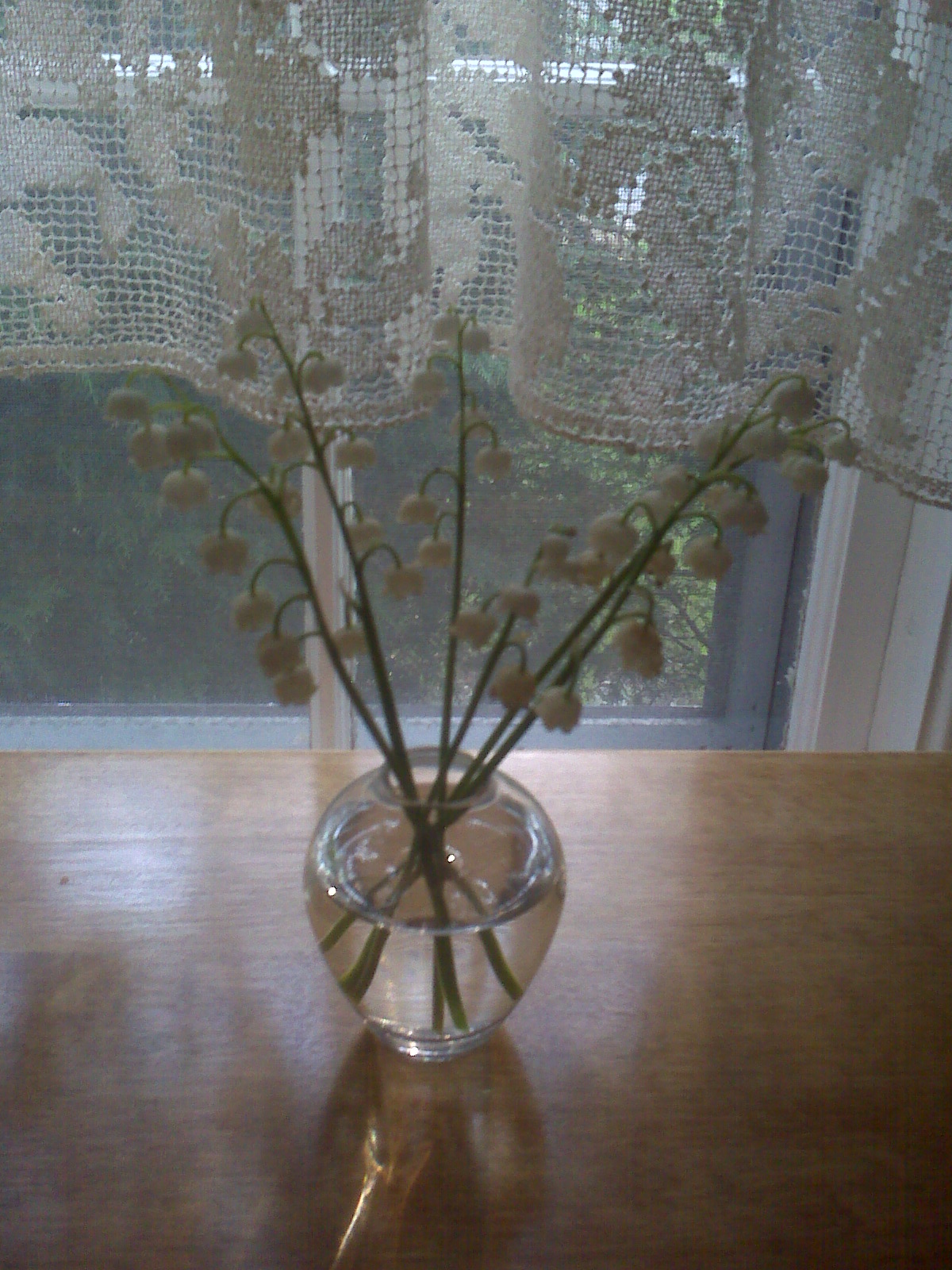
But also, I have two summer projects that I'm looking forward to: finishing the dissertation, and this one. I can't wait to start.