Theodora Goss's Blog, page 38
March 29, 2012
Being a Fantasy
This may be a strange post for me to write, considering that I've been posting images from the photoshoot I did down in Florida. Those images are explicitly fantastical. They're meant to be.
They're fantastical representations of a fantasy writer, and I had a lot of fun doing them.
But something happens when you're a writer, and you write fantasy, and you have an online presence. In some ways, you start to become a fantasy. You're no longer the person you actually are. People imagine you in different ways, often as slightly larger than life, more magical. And that can become difficult, when they realize that you're only human after all.
A human being trying to do magical things, which takes work and time and effort.
The thing about being a writer, even a fantasy writer, is that you have to have a very firm grasp on reality. You have to understand how the world works, what motivates people, how they sometimes fool even themselves. You have to have the magic inside you, which is a kind of sensitivity to the world as well as to language. That's how you make it happen.
Writers like to spend time together because they understand one another, in ways other people sometimes don't understand them. They know that everything in their books was once inside them, and that it took tremendous effort to bring it out. That the magic happens inside and on the page. That when people expect them to be fantastical creatures, they're locating the magic in the wrong place. When writers get together, what do they talk about? All the dull, technical things they would talk about if they were in any other profession. Who has a new agent. What's up for an award. Advances.
When they get together, writers are as mundane as plumbers. The magic happens inside, and for the most part we don't talk about it. Except as craft, in workshops. (But it's magic nevertheless.)
We are human, so when people want us to be fantastical creatures, I think we try to look the part. Fantasy writers tend to be photographed in fantastical ways. Look at photographs of Catherynne Valente sometime, or China Miéville. At some level, we start to look like characters from our own stories. This could be an older version of Thea Graves, for example. (When I write about her going to the Shadowlands, she's just out of college. She's not quite this sophisticated yet.)

(This is of course a picture of me from the photoshoot.)
But of course we're not characters, but the ones who create characters. The music makers and dreamers of dreams. And that means we get up in the morning, in our pajamas, and eat a bowl of oatmeal, and sit down in front of the computer, and check to see what we wrote the previous day, and how good (or bad) it is. And then we take a shower, thinking about the writing for that day. And then we sit down in front of the computer again. For hours and hours and hours.
The magic happens inside. And hopefully on the page.





March 28, 2012
The Photoshoot
Please excuse the appearance of this website. I'm in the process of updating certain things, including the general look of the site. It will probably be changing over the next few days. I want to make it more contemporary. And I'm going to be using images from the photoshoot I did with Walker1812 Photography. I'll write a bit about that today.
Here, by the way, is the author photo that came out of that shoot:

What do you think? I like it a lot, of course, although it makes me look more glamorous than the typical author headshot. But there's nothing wrong with glamor, is there? What I particularly like about it is that a lot of personality comes through. That's what I'm like, minus some of the glamor. Looking at the world in that sidelong way, as though it's somewhat, but not entirely, amusing.
So what is a photoshoot actually like? First thing that morning, I met the photographer. I was wearing no makeup, just SPF 30 because of the Florida sun. When we arrived at the location, I went directly to makeup. That was a fascinating process. I always assumed that the makeup used on photoshoots and in movies is fundamentally different from the makeup we use every day, and I was right. Oh, the makeup itself is the same (Mac, in this case), but it's applied differently. By the end of the process, I looked as though I had been photoshopped. In the photograph above, my face doesn't look all that different than it did in the original shot, although of course the photographer performed his post-shoot magic on it. I don't think I've ever had such a perfect complexion.
And then there were five hours of taking photos in different settings and positions, with three costume changes. What you won't see in any of the photographs is the assistant who dragged the boat around in the water. There were times when I couldn't sit up by myself (after lying in the boat for an hour with my head propped on the wooden side, for instance). There was also a behind the scenes video being shot at the same time, which I'll show you once it's done.
I think I learned a lot from the process. I definitely learned, a bit late because I didn't see the photos until after they were uploaded onto the computer, how I should stand, how I should turn my head – what works and what doesn't. I learned about my own angles. That will be useful if I ever do a photoshoot again. If I do, I will focus more on telling stories. In the end, the photographs I liked best were the ones that told stories, either through action or through a facial expression. Even reaching out to touch a branch, or looking behind me, could be a story. In the end, I want images to make me think and feel, in the same way I want prose to make me think and feel.
That's what I like about the woman in the headshot above. You can see her – me – thinking. What is she thinking? Ah, that you'll have to tell me . . .





March 27, 2012
Angels at ICFA
I'm going to try to do a proper ICFA post. (ICFA, for those of you who don't know, is the International Conference on the Fantastic in the Arts.) That's where I was last weekend, and it was absolutely lovely. But honestly, I don't have the energy tonight, and I'm in the difficult position of typing on an external monitor. My computer monitor broke and the part hasn't come in yet, so I'm waiting. Sometimes my monitor works, sometimes it doesn't, and working on an external monitor makes typing anything difficult, even though I'm a fairly competent touch typist.
I haven't been updating a lot, and there are a couple of reasons. One is sheer exhaustion. One is the problem with the computer monitor. One is the workload I'm dealing with right now. Sometimes, it's just all overwhelming, and the problem isn't so much that I can't find the time to type 500 words; it's that I can't think of 500 words to type. The internal peace that would allow me to write eludes me. That goes for actual writing as well, not just blog posts.
Which makes me wonder if I should write my story here, kill two birds with one stone as it were, although I would never hurl stones at birds. What do you think? The one I'm working on right now is called "The White Cat," and I could do a first draft here. It's a thought . . .
So last weekend I was in Orlando, Florida, at ICFA. On the first day, I had dinner with Ann and Jeff Vandermeer, which included a long talk with Nancy Hightower. Then I had a panel on monsters and some socializing to do. Finally, I had a long talk with my roommate, Karen Meisner. We hadn't seen each other forever, and it was lovely to catch up.
The next day I wasn't at the convention at all, because I had a photoshoot with Jesse Walker of Walker1812 Photography, which deserves a post of its own. (And yes, I will be posting pictures. If you want to see the first ones, go ahead and friend me on Facebook, where I've posted a few.)
The final day of the banquet, I did a reading with Karen Lord and Steven Erikson. I read my story "Beautiful Boys," which is coming out in Asimov's Science Fiction sometime in late summer or early fall. Then it was time to change for the banquet. I'll post a picture of my ball gown in the next few days, but in the meantime, here is another picture you might like. James Patrick Kelly took this fabulous photo of me with Kat Howard and Maria Davanah Headley. We were being Charlie's Angels. (Isn't it obvious?)

And that's it for tonight. Working with the external monitor, it's taken me an hour to write almost 500 words, and there's something exhausting about trying to write this way. But in the next few days, I'll try to update you on everything that's been going on in my writing life. (Not enough writing, of course.)
And I'll think about whether I should post that story . . .





March 18, 2012
The Vuitton Show
A friend of mine posted a video of the Marc Jacobs for Louis Vuitton fall 2012 ready to wear collection shown during Paris Fashion Week. I don't usually pay much attention to fashion shows unless they're by houses I like, such as Alexander McQueen. But this show was particularly wonderful. Watch it for yourself.
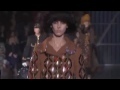
There's some Downton Abbey in there, in the Edwardian lines of the coats and dresses. There's some Alice in Wonderful, in the hats that look like mushrooms. And there's quite a lot of steampunk. That's what we need in fashion, I think. Interesting lines, interesting silhouettes. Fashion seems to be stuck in a sort of rut, and this is a way forward (also a way backward, but then aren't ways forward also that as well?). And the clothes are coming out in about six months. I wonder what they will look like, how closely they will resemble what we saw on the runway. And more than that, I wonder how they will influence fashion in general, because the chance of my being able to afford Louis Vuitton ready to wear is approximately zero, but fashion filters down.
What interested me most about this collection, however, was the story it told. It was a magical story, about a sort of enchanted train trip. And of course, whenever I see anything like that, a magical story told in another medium, I start wondering about my own medium. About how I can capture something in writing with that same feel to it. One of the wonderful things about being in the arts is that all arts inform what you're doing, all arts become possible influences. That means, of course, that it's worth your while to pay attention to all arts, to keep your mind open, see beauty and meaning in places you might not expect.
What we particularly need in our culture, I think, are magical stories. Notice that the collection is fundamentally about connection: to the past, first of all, because the designs so clearly refer back to the late nineteenth and early twentieth centuries. But the shapes and colors are also organic, so there's a connection to the natural world. And there's also a connection to childhood, because of the ways in which things don't quite fit. The shoes that are a little too high to walk in (some of the model stumbled on those platforms and heels), the hats that are a little too big. Even some of the clothes look oversized. It's as though girls are playing dress-up. Magical stories give us those sorts of connections, to the past (both personal and historical), to the natural world. They tie the pieces of our history together, and tie us to the world we sometimes think we have lost: the world of trees and mountains and streams.
And yet the clothes are also modern and urban.
So how do I combine all those things? I'm going to be thinking about that as I write the novel. Which I need to start soon, although at the moment I'm still terribly behind on everything. And my computer monitor dying hasn't helped.
Here, in case you're interested, are some of my favorite looks from the show:





March 17, 2012
More Imaginary Gardens
My computer is working: for now. Sometimes it does and sometimes it doesn't.
As soon as the parts come in, it goes back to the It Help Center, where it will have the monitor replaced. After that, it should work again. It's an old computer, but I do need it to work: without it, I feel as though I've lost an important part of my life.
I have so much to do right now, and I've been doing a lot of it today, although I'm still terribly behind. But you can understand why I need something, some glimpse of something brighter, better, wilder. And so today I'm going to post some pictures of imaginary gardens. These come from The Hanging Garden, which I described several days ago as the most beautiful blog on the internet. They are of course pictures of real places, but I think of them as imaginary because to me, they are parts of a country of the mind, which I'll explain in just a moment.

And as I'm posting these, I'm going to start thinking about the story I was writing online, a while back. You remember it, right? It was about Thea. She took a train to the town of Shadow, which is the town where Mrs. Moth, Miss Lavender, Miss Gray, and Hyacinth all have a house. On the outskirts of town. That house has many doors, and some of them, sometimes, lead to the Other Country, which is Mother Night's country.

Thea went to that country, and there she met Mother Night and saw the tapestry she is weaving. She even caught a glimpse of the front of the tapestry. And she met the Gentleman, and Mother Night's children, Morgan and Merlin. Especially Merlin. And she was accompanied at least part of the way by Cordelia the obnoxious Cat.

What I think about gardens is, I think the best of them are glimpses of Mother Night's country. That's what makes them magical. They are earthly glimpses of something unearthly. So if you want to look at portions of that country, reflections of it as it were, look at these gardens.

These old towers and bridges and streams, that's what you would find there, if you could find your way there. But that takes magic. Cats have that magic, and witches have that magic. And sometimes writer do too. The problem is, if I go back to telling that story, where would I start? I'm just not sure anymore.

Would I tell the story of Thea and Merlin? That was a story that came out of a particular time, and I don't know if I can go back to it. Or perhaps I can. Perhaps this is the time to write it, to capture it.
Since I finished the PhD, I have not been much of a writer. I've been an author, sure. But I haven't been writing, haven't been creating the things I should be creating. It's as though there's been something in the way. As though I haven't been able to get back, myself, to Mother Night's country, that country of and in the mind. So what I need to do, of course, is find the magic again. Because the thing is, if you know how to get there, any door is the door to that country. Every threshold becomes the threshold. For witches, every door connects to every other. Spaced and time mean nothing to them. (Or to cats.)
So how to go back, where to start? I don't know. I'll have to think about it . . .





March 15, 2012
On Monsters
Yesterday, I didn't write a blog post. I'm trying to write one each day of at least 500 words, but my laptop is still being repaired and it's difficult to write on the netbook. I think the laptop is going to be at the IT Help Center until next week. It needs a new monitor, and the part will be about $400, which means that I need to write and sell a story to pay for it. Well, at least it's incentive. (So if you want a story from me and you pay at least $.05 a word, this is a good time to let me know!)
Today I wanted to announce that my essay "A Brief History of Monsters" just went online at Weird Fiction Review. It's part of the magazine's Twelve Days of Monsters, which is going to include some wonderful stories and essays.
I'm going to give you a preview of the essay, just the first few paragraphs, so you can decide whether you want to go over and read it. (Of course, I hope you will.) Here you go:
If you happened to be in New York City in the summer of 1842, you could see a rare and wonderful creature: a real mermaid. She had been caught by a naturalist named Dr. Griffin off the coast of the Feejee Islands. Dr. Griffin himself had been reluctant to display her, but his friend P.T. Barnum had persuaded him that the public should be allowed to see such a marvelous sight. He had offered the newspapers a woodcut of a beautiful woman with the tail of a fish, and they had printed it. He had also distributed copies of a pamphlet with her picture on it throughout the city. Anticipation ran high: the crowds to see the mermaid were enormous.
Those allowed into the exhibition hall were given a lecture by Dr. Griffin detailing how he had found the mermaid and explaining that since there were sea-horses and sea-lions, there must certainly be sea-humans as well. And they were shown the mermaid herself. I wonder how many of them realized that they were looking at a clever hoax: the dried head and torso of a monkey sewn onto the tail of a fish. A reporter from the Philadelphia Public Ledger who seems to have been fooled wrote,
"The monster is one of the greatest curiosities of the day. It was caught near the Feejee islands, and taken to Penambuco, where it was purchased by an English gentleman named Griffin, who is making a collection of rare and curious things for the British Museum, or some other cabinet of curiosities. This animal, fish, flesh or whatever it may be, is about three feet long, and the lower part of the body is a perfectly formed fish, but from the breast upwards this character is lost, and then approaches human form — or rather that of a monkey." (1)
Dr. Griffin was as much of a fake as the mermaid herself. He was actually Levi Lyman, Barnum's collaborator. Both men had conspired to fool the public. But the public seemed to enjoy being fooled. After the initial exhibition, the Feejee Mermaid was displayed at Barnum's American Museum, where she significantly increased ticket sales. She remained a popular attraction, both in museums and on tour, until she was destroyed in a museum fire in the 1880s.
The Philadelphia Public Ledger reporter was right to call the Feejee Mermaid a "monster." We often think of monsters as large, frightening creatures, such as Polyphemus from the Odyssey or Frankenstein's monster. The Feejee mermaid was neither large nor frightening. But monsters come in all sizes, and some of them are attractive — at least initially. The vampire Carmilla is beautiful and seductive before she sucks your blood. What separates monsters from ordinary creatures is something more subtle, having to do with the way we perceive the world. As we grow up, we learn to place the phenomena around us into categories. Monsters are what do not fit into those categories. They are giants with one eye, assemblages of corpses, beautiful women who can turn into cats — or monkeys with the tail of a fish. Because they do not fit, monsters make us feel what Sigmund Freud has described as the unheimlich, which is usually translated as the uncanny, a sensation that can range from discomfort to outright fear. And yet, as the New Yorkers who paid to see the Feejee mermaid demonstrate, we are also fascinated by monsters. They inhabit the myths and legends of our earliest history as well as Hollywood blockbusters. There is a direct line of descent between Polyphemus and the Terminator.
To illustrate this excerpt, I thought I would use Head of Medusa by Peter Paul Rubens:

Medusa is a classic monster. What makes a monster, I think, is that it crosses the boundary between the fundamental categories of the self and other. Medusa, the beautiful woman with snakes for hair, is both like and unlike us. She is what does not fit into either category. Which gives me the idea for a story . . . (After all, I have to pay for my laptop monitor.)





March 13, 2012
Love Recklessly
This was one of those days.
First thing this morning, my computer screen stopped working: it was black. I had already been planning to drive into the city because I had a series of errands to run. The computer became the most important. I dropped it off at the place where computers are fixed (which is a part of the university), and then went on my errands: to the optometrist to get my glasses lenses replaced, to Small Pleasures on Newbury Street to drop off a strand of pearls that needs to be restrung and a pair of marcasite earrings that are missing a few of the marcasites, to Pandemonium to pick up the last two months of Locus because I've let my subscription lapse (although I shouldn't have of course, it's just that I've been so busy) and I'm mentioned in both issues.
While I was in the optometrist's office, the fire alarm went off and the building was evacuated, so I had to leave my glasses there and go back later. And of course I had to leave my computer. I'm writing this post on a netbook, and I continually have to correct my spelling because the keyboard is so much smaller than I'm used to.
So it was that sort of day.
While I was standing on a subway platform, I saw a sign. It said "Live Humbly, Love Recklessly." I liked it so much that I later posted it on Facebook, and a friend of mine replied that when he loved recklessly, he always had his heart broken. So I started thinking about what you can love both recklessly and safely: what won't break your heart. And I came up with a sort of list.
I think one of the reasons the sign resonated with me so much is that I do live that way: I live fairly humbly (although, if I dare say so myself, with lovely things), but the things I love, I do love recklessly. That was just an aside. On to the list.
Things you can love recklessly without getting your heart broken (almost for certain):
1. Books. You can love as many books as you want (you can be a polybibliophile), and you can love them as deeply and sincerely and recklessly as you like. And they will never betray you. Jane Austen will never say that she loves another better than you; Agatha Christie will never decide that you should just be friends.
2. A Garden. There is a caveat here: individual plants will break your heart. The blossoms killed by frost, the young vegetables eaten by rabbits, will cut you to the bone. You will mourn over them. But the garden will always be there. Even in winter, you will be able to see its bones and pour over gardening catalogs, imagining its summer glory.
3. Music. No matter what mistakes you make, no matter what a mess you make of your life, music will always love you as recklessly and extravagantly as you love it. Just sit back, listen to Liszt or Dylan, and let it wash over you. It will tell you that although the world may be all wrong, you are going to be all right.
4. A cat. I don't think a dog is the same: dogs are too close to human, too prone to causing heartbreak. But if you lose a cat, no matter how beloved, you lose something that was never yours anyway. A cat will return your love, but it is always already half somewhere else. It already belongs to another state of being. When a cat dies, you can imagine it entering the land of the dead as though returning to its own country.
5. Nature. When you need something to love recklessly and you can't find anything else, nature is always there. You can love trees, the mountains, the ocean. (I love the ocean extravagantly myself.) And if you are trapped in some sort of prison, there is always the sky. Nature, the great mother, will respond to you by being herself, beautiful and infinite, and by making you feel as though whatever heartbreaks you have are small things after all, when you can look up and see the moon and stars. As Wordsworth says in "Tintern Abbey," "Nature never did betray the heart that loved her," and I think he's right.
There are so many things in the world that will cause you heartbreak. People of course, but also houses, countries, sometimes the work of your own hands. Ideas, when you find they are not as grand as you originally believed, can break your heart. But those five? I think they're safe.
My new favorite garden from The Hanging Garden, which is one of the most beautiful blogs I've seen:





March 12, 2012
In Recovery
Honestly, I think I'm still in recovery. Last year was so stressful – you know, you were there. And I've been working so much since I finished the PhD that it's been difficult to find the time simply to be still, to recover from all the stress and work.
It's only recently that I've started to feel free again, to feel as though the future exists, rather than seeing simply a road through dark forest. To see, in the distance, the possibility of sunlight.
A friend of mine sent me a song that's become my new anthem: Tom Petty's "Wildflowers." It seems to express so perfectly where I am now in my life.
I've started planning for this summer, which will include some wonderful things: writing and travel and spending time with friends. I can't wait. Right now, there's still a lot of hard work to do. I'm going to be doing a lot of it this week, so I can go to ICFA and not have to worry about it. It would be nice if I could spend spring break doing something other than catching up, but that's all right. (When I say catching up: I sorted through and deleted about 600 emails from my inbox this morning. And yes, those accumulated within the last two months, since the last time I deleted that number. And yes, I delete most of my emails daily. So that gives you an idea of the volume I get.)
Another friend of mine sent me a smart, interesting talk by Susan Cain about being an introvert:
Cain is right to talk about introversion as a way of describing response to stimuli. Introverts respond to stimuli differently. She doesn't, at least in this talk, discuss what it feels like when you're overwhelmed by stimuli, both internal and external. That's when you're overwhelmed, and that leads to breakdown. I went there at several points in the dissertation process: to the point of breakdown. It's not a place I want to be again. Recovery is slow, and I am often tired. I still need what I don't have on a daily basis: time without stress. But you know, I'm getting there.
And I hope that I can get back to writing soon. I hope the stress will get better, and I will feel the sense of freedom and power I need to create something. As I said, I'm starting to see light among the trees.
I worry sometimes that it will be like that scene in The Hobbit where it's not sunlight, just some tricksy elvish light that will disappear again. But it looks brighter than that.
I'm looking forward to wildflowers . . .





March 10, 2012
The Ball Gown
Today I did what may be a silly thing, but then sometimes silly things can be the most magnificent.
I bought a ball gown.
As you may know, in about two weeks I'll be going to the International Conference on the Fantastic in the Arts. On the last night of ICFA, there is a banquet, and we all dress up. For several days, I'd been thinking about what to wear to that banquet. I have plenty of evening clothes, of course: silks and velvets and tulles. But nothing truly extravagant or over the top. And that's what I wanted, this year. Something over the top.
Of course, I had no money for a new dress anyway. So I dutifully decided that I was going to wear a velvet outfit that I've had for probably the last decade. I got it years ago from J.Jill: a black velvet tunic and skirt with burnout leaves. It's soft, warm, and comfortable. Also, quite pretty. Not over the top, but perfectly adequate.
Today, I ran several errands, and all the time I was thinking about the evening dress I wasn't going to buy. And then, after I had finished all my errands, I went into one of these stores where they sell designer dresses at a discount. Just for fun, just to see.
That's where I found the ball gown.
When I googled BDBG MaxAzaria black evening dress, I found a picture of it online. It's probably being worn by a guest at a formal wedding? I have no idea who the woman is, but thank you, whoever you are, for modeling my dress for me.

She's wearing it differently than I would: the sash actually ties in the back, not at the side. And I'm planning on wearing it with black satin shoes that have court heels. For jewelry, I'm thinking marcasites and pearls. These, specifically:

So I'll look more formal in it. But she is lovely, and the picture does at least give you an idea.
The dress was an extravagance: $160, which is a lot more than I usually pay for a dress, particularly one that I'll only wear to banquets or balls, or for international espionage. But it was so completely worth it. I think we all need to be extravagant sometimes, to go over the top. To make the romantic gesture. Otherwise, what is life for? I don't want "She Was Thrifty" written on my gravestone. No, what I want written on it is "She Lived."
(I do still need to buy a black satin clutch to go with it. So that's my mission for tomorrow.)
This year, I will be going to the ICFA banquet in a black strapless ballgown. And if there's a bit of international espionage? Well, I'll be prepared.


March 8, 2012
What Winterson Said
There's a wonderful interview with Jeanette Winterson in Lambda Literary: "It is the Imagination that Counts." I want to quote from it a bit here so you get a sense of the article. And some of what she said is important to me personally.
"Life . . . we understand it differently at different stages. It's what is interesting about getting older, you realize your relationship with the past is always negotiable. There is a lot of freedom in that, because you realize you can go back to what you did such a long time ago. You can talk with the dead, talk with your lost self, your disappeared self, and you can visit those places again, and understand it differently. That makes a huge difference."
Perhaps that's the importance of memoir: it allows you to go back and, in a sense, rewrite the past. Or perhaps just write the past, because the past exists to the extent that we remember it. So perhaps it exists to the extent that it is written, and the act of writing it allows us to revise, to reinterpret what happened. The act of revision and reinterpretation changes it, just as observation changes quantum phenomena.
"There is a bit where I talk about 'keeping the heart awake to love and beauty.' That's very difficult in our world, even when things are going well. It's not a world with much room for love and beauty. The daily news is [filled with] everything that goes wrong in our world, and everything horrible and unpleasant. I think that saturates your mind with negativity. I really think we need something to counteract that. I don't think it's Pollyanna or sentimental to focus on the ways we support one another on the micro level."
Just this one part makes me want to read her memoir. I believe strongly that we need to keep the heart open to love and beauty, so it can recognize them and take them in. It's easy to become cynical, to believe they don't exist. But they do, and they're important – as important as what we see on the nightly news, I think. And they do counteract that flow of negativity. We need love and beauty just to survive. And I know so many people who don't have them, who are missing those basic things . . .
(My blog post was interrupted here by the need to play a recorder duet. I played the harmony. It's been so long since I've played that I can't remember the difference between the Baroque and German fingering.)
"Everyone's talking about the death and disappearance of the book as a format and an object. I don't think that will happen. I think whatever happens, we have to figure out a way to protect our imaginations. Stories and poetry do that. You need a language in this world. People want words, they want to hear their situation in language, and find a way to talk about it. It allows you to find a language to talk about your own pain."
There are writers who are clever, and writers who are wise. I think Winterson is one of the wise ones. I don't think the book will ever disappear either. The codex is too perfect a format.
"If you want to seek happiness, or a person, or vision, or commitment, does that mean you will always be at odds with the larger society? If you're in the larger society, does that mean personal neuroses and depression? Those are the things we see when gay and transgender people try to conform. They are trying to part of society because we all want to be loved, but the price to the self is so high. We feel we are so tolerant, but we pay it lip service. So many kids find the world isn't so tolerant when they try to be themselves."
We do all want to be loved, and the price can be very high when we don't fit into social norms. Sometimes too high – when the price is the self, you can't pay it. That's too high a price, no matter what you get in return.
"My whole life is trying to get this balance right. There is this bigger world and I want to contribute to it, but I must limit my exposure to it so I don't go mad. This is a personal quest for a sense of worth and a sense of self. It is a lifetime effort, and it's not going to be accomplished by guru speak or self help books. It's a conversation that happens with the self every day. Of all the things I need to stress, it is that we cannot be passive in our own lives. We can't coast along. We can't be unreflective. It's that everyday focus that's important. This really is your day; what are you going to do with?"
This is the quotation I wanted to end with, because I think it's the most important one. It's about what you're going to do, how you're going to save yourself. That final question: it's the one I ask myself every day. This my day, what am I going to do with it? And then I try to do something meaningful
Here is a review of Winterson's memoir, and the book itself: Why Be Happy When You Could Be Normal?

I know I definitely want to read it!