Rob Kitchin's Blog, page 36
June 30, 2019
Lazy Sunday Service
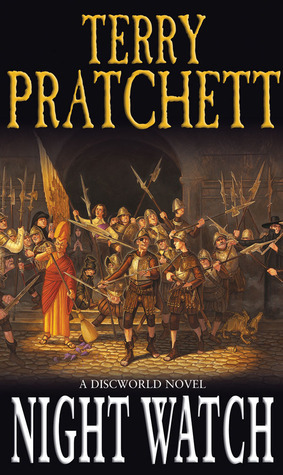 A weekend of digging a french drain between showers, playing with the dogs, and reading an old Terry Pratchett novel, The Night Watch. I could get used to this kind of life.
My posts this week
Review of The Liberator by Alex Kershaw
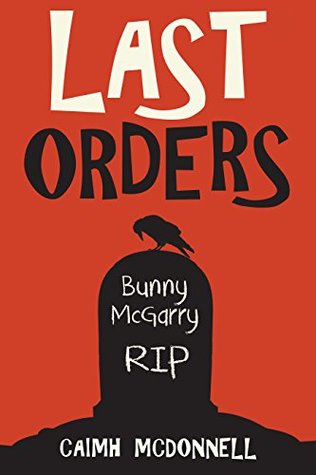
Review of Last Orders by Caimh McDonnell
Normal family


June 29, 2019
Normal family
‘So your mum and her dad are married?’
‘Yes.’
‘And you’re married?’
‘Yes.’
‘But you’re brother and sister?’
‘Step-brother and step-sister. We’re not blood relations. We’re the same age.’
‘But you grew up together?’
‘From the age of twelve when my mum moved in with her dad.’
‘So, you were living as siblings and then you started dating?’
‘When we were sixteen.’
‘Even though your parents were married?’
‘Yes.’
‘But you have a younger step-sister who is related to you both?’
‘Yes.’
‘And you have two kids?’
‘We’re not hillbillies, y’know.’
‘You’re not a normal family, either.’
‘Yes, we are.’
A drabble is a story of exactly 100 words
‘Yes.’
‘And you’re married?’
‘Yes.’
‘But you’re brother and sister?’
‘Step-brother and step-sister. We’re not blood relations. We’re the same age.’
‘But you grew up together?’
‘From the age of twelve when my mum moved in with her dad.’
‘So, you were living as siblings and then you started dating?’
‘When we were sixteen.’
‘Even though your parents were married?’
‘Yes.’
‘But you have a younger step-sister who is related to you both?’
‘Yes.’
‘And you have two kids?’
‘We’re not hillbillies, y’know.’
‘You’re not a normal family, either.’
‘Yes, we are.’
A drabble is a story of exactly 100 words
June 28, 2019
Review of The Liberator by Alex Kershaw (2012, Crown)
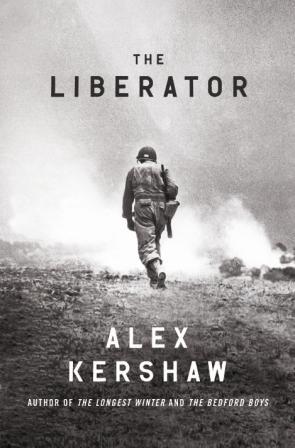 Felix Sparks wanted to study law at college but his poor background led him to ride the railroad before enlisting in the Army. Having saved enough to pay the fees, he left the army and enrolled in a law degree only for World War II to intervene. In July 1943 he is coming ashore in Sicily as a second lieutenant in the 157th Infantry Regiment of the 45th ‘Thunderbird’ Division. As Alex Kershaw’s history reveals, his journey to the end of the war involves three more beach landings at Salerno, Anzio and southern France, fighting in the Vosges Mountains, battles across Germany ending with the liberation of Dachau. For 500 days his regiment was almost constantly on the front-line and suffered some of the highest casualty rates amongst the Western allied armies. Sparks rose through the ranks and unlike many other commanders led from the front, taking part in fierce frontline fighting in Italy and Germany, miraculously surviving for so long when few others did (though he is seriously wounded and spends some time in hospital). Sparks’ service was not, however, without controversy. Devoted to his men and their welfare he was prepared to challenge and defy his superiors when needed. Ordered to liberate Dachau, his unit is horrified at what they find and some of his officers line-up and shoot SS men. Shortly after, he bars a general and a journalist from entering the site. The two events haunt his career and reputation post-war.
Kershaw tells Sparks’ story from childhood to his post-war career as a lawyer, judge, National Guard general, and gun control campaigner, concentrating on his Second World War experiences. At times the story is a little sketchy and thin, both with respect Sparks’ experiences and the wider context of his regiment/division and the broader war effort and politics, but trying to tell a life-time and especially 500 days of conflict in less than 400 pages was always going to be a tricky task. Kershaw’s tactic is to provide a light overview of all stages of the journey and focus in particular on key events, especially Anzio, entering Germany, and liberating Dachau. Generally, the balance is right, but it does leave the first half of the book a little anaemic at times, with the story growing in interest and detail as it progresses. The result is a fascinating tale of a determined man and those that he fought with and their remarkable and bloody journey from Sicily to Munich.

Review of Last Orders by Caimh McDonnell (2018, McFori Ink)
 Two bodies are discovered buried in the Wicklow Mountains. Former policeman, Bunny McGarry, knows that the evidence trail will eventually lead to his door. Always somewhat unhinged and further traumatised from ten days at the hands of a mad-man the previous year, Bunny begins to come apart at the seams, talking to ghosts, seeing trackers everywhere, and acting more erratically than usual. Bunny’s two business partners are not fairing much better. Having built a successful investigations company, Paul seems determined to destroy it through a pointless tit-for-tat rivalry with a competitor that quickly escalates into all-out war. Brigit is in despair over Paul’s actions, the perilous state of the company, and Bunny’s mental health. Both situations are spiralling out of control and neither seems set to end well.
Last Orders is the third book in the Dublin trilogy and marries the storyline with the events from the prequel book, with the events from that catching up with Bunny McGarry 18 years later, and having consequences for the fate of MCM Investigations, which is already hanging in the balance due to a feud with another company. McDonnell runs the tale as two strands – the investigation into the deaths of two men found buried in the Wicklow Mountains, and Paul and Bridget’s war with the Kelleher brothers – that become entwined through Bunny’s administering a dose of rough justice to a cheating gigolo. It should have been great fun, but the story felt too staged and contrived, moving from one set-piece to another, the humour a little flat with few laugh-out-loud moments, and the denouement was pretty much signalled from the start. The characters are somewhat pale shadows of themselves – Bunny is missing some verve, Paul seems to have become someone else – and the bionic FBI agent Alana Dove is straight from the ‘larger-than-life and completely unbelievable’ casting couch. Comic crime capers often suffer from stagey-ness and oddball characters, but in the best of them – as with earlier books in this series – they are inherent or incidental to the story rather than being its crux. While the story has its moments, for me it’s the weakest of the books so far, which was a shame as I have soft-spot for Bunny.

June 25, 2019
Review of Last Orders by Caimh McDonnell (2018, McFori Ink)
 Two bodies are discovered buried in the Wicklow Mountains. Former policeman, Bunny McGarry, knows that the evidence trail will eventually lead to his door. Always somewhat unhinged and further traumatised from ten days at the hands of a mad-man the previous year, Bunny begins to come apart at the seams, talking to ghosts, seeing trackers everywhere, and acting more erratically than usual. Bunny’s two business partners are not fairing much better. Having built a successful investigations company, Paul seems determined to destroy it through a pointless tit-for-tat rivalry with a competitor that quickly escalates into all-out war. Brigit is in despair over Paul’s actions, the perilous state of the company, and Bunny’s mental health. Both situations are spiralling out of control and neither seems set to end well.
Last Orders is the third book in the Dublin trilogy, plus prequel, and marries both together, with the events of the prequel catching up with Bunny McGarry and effecting the fate of MCM Investigations, which is already hanging in the balance due to a feud with another company. McDonnell runs the tale as two strands – the investigation into the deaths of two men found buried in the Wicklow Mountains, and Paul and Bridget’s war with the Kelleher brothers – that become entwined through Bunny administering a dose of rough justice to a cheating gigolo. It should have been great fun, but the story felt too staged and contrived, moving from one set-piece to another, the humour a little flat with few laugh-out-loud moments, and the denouement was pretty much signalled from the start. The characters are somewhat pale shadows of themselves – Bunny is missing some verve, Paul seems to have become someone else – and the bionic FBI agent Alana Dove is straight from the ‘larger-than-life and completely unbelievable’ casting couch. Comic crime capers often suffer from stagey-ness and oddball characters, but in the best of them – as with earlier books in this series – they are inherent or incidental to the story rather than being its crux. While the story has its moments, for me it’s the weakest of the books so far.

June 23, 2019
Lazy Sunday Service
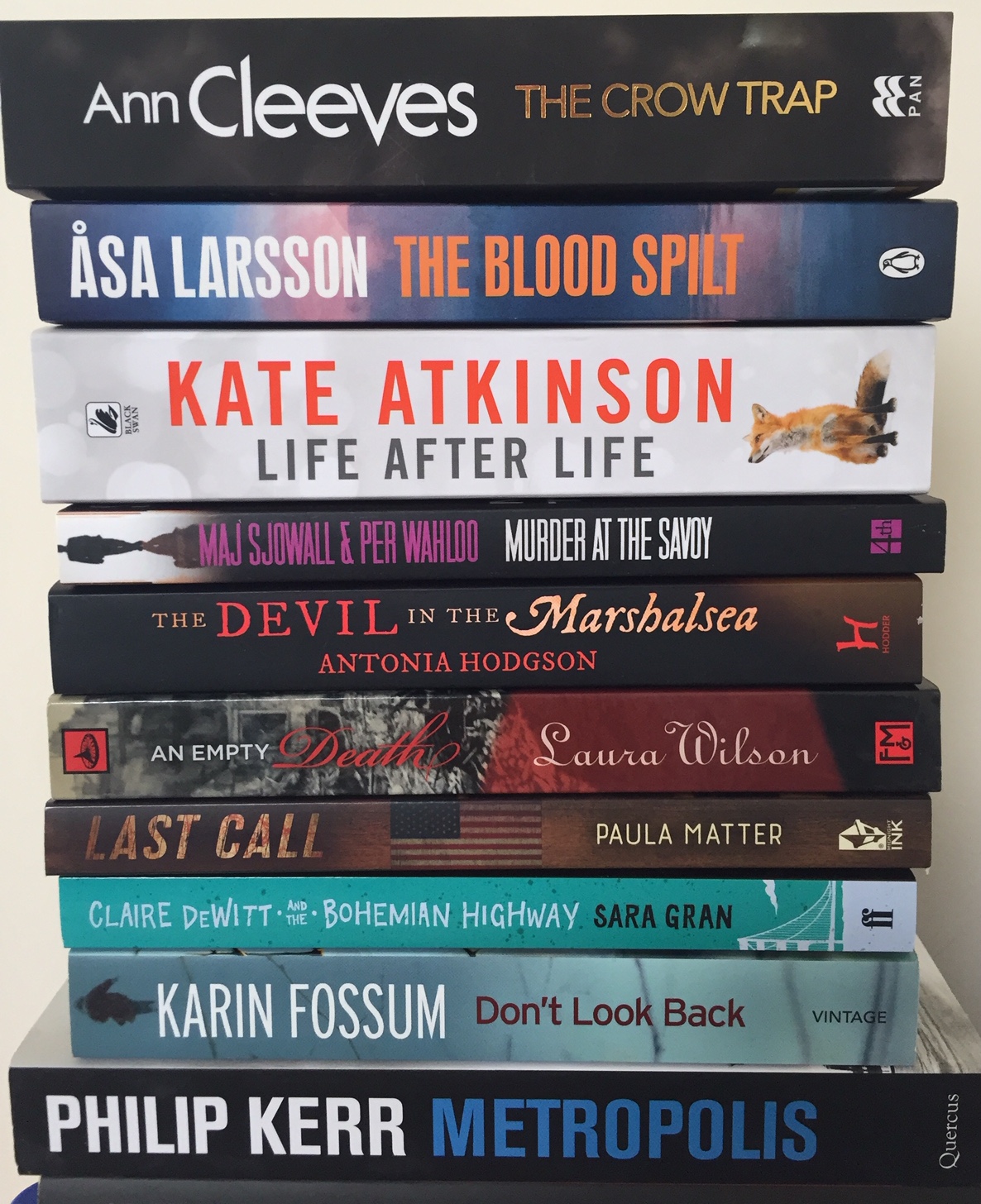 Reasonably rare to read back-to-back five star reads and the two from this week will make picking a book of the month in a week's time tough. I doubt they'll get much competition from yesterday's haul from the local book shop, not because they won't be good reads, but because I'm unlikely to have read them by next Friday. Looking forward to reading this pile.
My posts this week
Review of Finding Nouf by Zoe Ferraris
Review of The Blinds by Adam Sternbergh
They'll be another if you blabber
June 22, 2019
They'll be another if you blabber
Leahy was three steps along the corridor when the shot sounded.
He spun back and threw open the door.
The prisoner had slumped to the floor, dark blood gathering round his head.
‘What the fuck!’
A pistol was hanging by Kelly’s side.
‘Well?’
‘You told me to get rid of him.’
‘I told you to get him out of here, not blow his fucking brains out!’
Kelly shrugged. ‘He deserved what he got.’
‘Since when did you become judge and executioner?’
‘Since this fucker and his pals killed Bates.’
‘This is murder.’
‘And they’ll be another if you blabber, Leahy.’
A drabble is a story of exactly 100 words.
He spun back and threw open the door.
The prisoner had slumped to the floor, dark blood gathering round his head.
‘What the fuck!’
A pistol was hanging by Kelly’s side.
‘Well?’
‘You told me to get rid of him.’
‘I told you to get him out of here, not blow his fucking brains out!’
Kelly shrugged. ‘He deserved what he got.’
‘Since when did you become judge and executioner?’
‘Since this fucker and his pals killed Bates.’
‘This is murder.’
‘And they’ll be another if you blabber, Leahy.’
A drabble is a story of exactly 100 words.
June 21, 2019
Review of Finding Nouf by Zoe Ferraris (2008, Mariner)
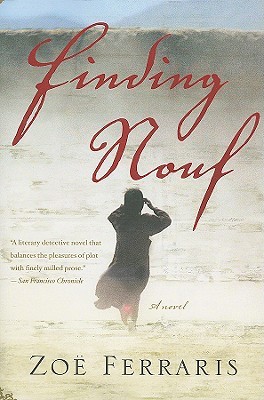 Sixteen year old Nouf Shawari is due to get wedded in a couple of weeks when she disappears from her family’s island-based mansion along with a truck and her favourite camel. The family asks Nayir al-Sharqi, a desert guide, to search for her. Ten days later, just as he is losing hope, her body is discovered in a desert wadi. The coroner determines that she died not of dehydration or sunstroke, but by drowning, and that she was pregnant. However, a payment from the family returns a verdict of accidental death. Nouf’s brother asks his fiancé, Katya, who works in the coroner’s office, along with Nayir, to secretly investigate his sister’s death. Nayir is conservative in his views on gender, strictly observing cultural traditions, and is deferential in his manner. In contrast, Katya is more forthright, has a doctorate and wishes to continue to work when she marries, though she follows her father’s wishes and social norms and is always accompanied by a chaperone. The two form an uneasy alliance as they try to trace Nouf’s last few hours and determine who might have wanted her dead.
Finding Nouf is the first book in the Nayir Sharqi and Katya Hijazi trilogy of crime mysteries set in Saudi Arabia. Nayir works as a desert guide, and this outing starts his career as an investigator, and Katya works as a lab technician in the coroner’s office. They are paired together through their shared acquaintance with the brother of Nouf Shawari, Katya being his fiancé and Nayir an old friend. Nouf is found dead in the desert having drowned in a flash flood and the brother asks each of them to investigate her death. The sixteen year old girl was due to be married shortly after she disappeared and it soon transpires that she planned to flee her new husband in New York, where they were due to honeymoon. She was also pregnant when she died. Ferraris uses this premise to tell a compelling murder mystery tale that is firmly rooted in the culture and place of Saudi Arabia. Indeed, she creates a palpable sense of place with respect to the landscape, terrain, architecture and weather, and carefully sets the cultural context especially with respect to gender, religion, wealth and family. The contrast and awkward tension between Nayir and Katya nicely unfolds, as does the investigative elements of the plot that has plenty of intrigue and leads to a satisfying denouement. I’ve already added the second book to my list of future reads.

June 17, 2019
Review of The Blinds by Adam Sternbergh (2017, Faber and Faber)
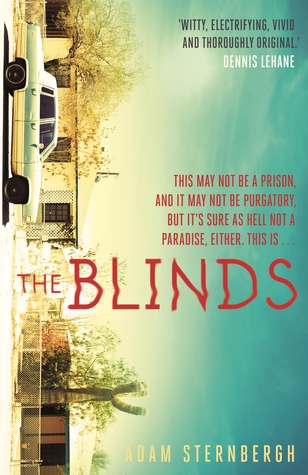 Sheriff Calvin Cooper overseas the tiny population of Caesura, West Texas, located in the third least populous county in the United States. The residents all chose to live there, not sure whether they are criminals or witnesses in need of protection, but knowing that their key memories have been wiped as a part of new experimental programme. Afraid of the consequences, rarely does anybody leave what they call ‘The Blinds’. Supplies arrive once a week and occasionally a new resident shows up, picking a new name based on those of movie stars and vice-presidents. After eight years of relative mundanity there’s been a suicide and a murder in quick succession attracting the attention of outside federal agents. The residents are nervous, the deputy sheriff smells a conspiracy, and Cooper wants to use the fear to get Fran Adams, the only resident with a child, to leave. The uneasy peace starts to unravel as the truth of The Blinds starts to be revealed and it appears that nobody is as innocent as believed. And with a town full of criminals who fear the truth more than death, and outside interests interfering, Cooper is going to struggle to maintain order.
It’s getting increasingly difficult to find crime novels with a fresh take on the genre with most fitting into classic moulds and are derivative in storyline and twists. The Blinds, however, does manage to create a new angle blending together aspects of a Western with a SF memory loss tale. Caesura, West Texas, is a dusty, isolated town of second chances. All of its residents except for an eight year old boy and the three-person police team are either criminals or key witness who’ve had their memories altered so they cannot remember what led to them being there. What keeps them in place is a fear of what will happen if they leave, but a suicide and a murder have them worried about danger closer to home. Sheriff Calvin Cooper is charged with keeping the peace, but the two deaths have attracted outside attention, which along with the arrival of four new residents threatens to destabilise the community and reveal truths that nobody wants to rediscover. Sternbergh uses this premise to spin-out a compelling yarn in which the past gradually intrudes on the present leading to betrayal, violence, redemption, and desperate fight to survive. The story immediately grabs the reader’s attention and maintains its tight hold until the final page. The plot is very nicely constructed with plenty of intrigue and tension, the characterization is excellent, and there’s a strong sense of place and context. A wonderful, engaging, fresh tale of corrupted justice.

June 16, 2019
Lazy Sunday Service
 I've still a dozen books on the TBR but it felt like it needed a bit of better mix to choose from so I've put in another order with the local bookshop. Hopefully the following will be wending their way to me shortly to be shuffled into the pile: Antonio Hodgson, The Devil in the Marshalsea; Paula Matter, Last Call; Saeida Rouass, The Assembly of the Dead; Kate Atkinson, Life After Life; Ann Cleeves, The Crow Trap; Sara Gran, Claire DeWitt and the Bohemian Highway; Asa Larsson, The Blood Spilt; Karin Fossum, Don't Look Back; Patricia Gibney, The Missing Ones; Maj Sjowall and Per Wahloo, Murder at the Savoy; Laura Wilson, An Empty Death.
My posts this week
Review of Code Breaker by Marc McMenamin
Review of London Rules by Mick Herron
What kind of question is that?