Rob Kitchin's Blog, page 32
September 5, 2019
Review of The Widows of Malabar Hill by Sujata Massey (2018, Soho Crime)
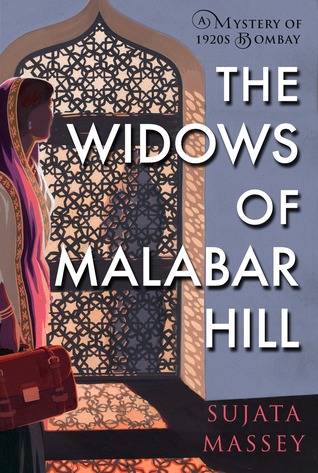 Bombay, 1921. Perveen Mistry, the first female solicitor in the city, takes over the administration of the will of Omar Farid from her father. Having survived a sham marriage and gaining her law degree in Oxford, she is keen to prove her worth to the family business. As she goes through the estate papers of the wealthy Muslim mill owner, she notices that his three wives have signed away their inheritance to a charity. Wanting to be certain of their wishes, she travels to their bungalow in the desirable district of Malabar Hill. The three women are living with their children in strict seclusion, never leaving the women’s quarters, forbidden from talking to or being touched by unknown men. There she is confronted by the guardian appointed by the late-husband to look after the wives’ affairs, who is unhappy that she is questioning how he running the estate. After talking to the women, she is suspicious about the set-up; even more so when there is a murder in the house shortly after she leaves. While the police rush to conclusions, Perveen works with her best friend, Alice Hobson-Jones, the English daughter of a senior government official, and her father to solve the case.
The Widows of Malabar Hill is the first book in Perveen Mistry series set in 1920s Bombay (now Mumbai). After studying for a law degree in Oxford, Perveen has joined her father’s law firm as the city’s first female solicitor. She’s keen to establish herself and build a successful career, hoping to eventually become a lawyer and undertake court cases, though women are barred from such work. In the meantime, she helps her father prepare cases and undertake more routine work relating to family and commercial affairs. In this initial outing, her father asks her to take over the legal aspects of the legacy of a wealthy Muslim mill owner who has left three wives and a handful of children. Perveen notices some odd things about how the wives’ guardian is administering the estate and shortly after she leaves the family home a murder is committed. Perveen aids the police, but unhappy with how they are handling the case, she starts her own investigation. Massey does a nice job of historically contextualising the tale with respect to the multicultural nature of Indian society, the position and roles of women within these cultures, the laws that shaped different communities, and governance by the British. There’s also a strong emphasis on the workings of family and food and fashion. The characterisation is nicely done, especially Perveen, who is smart, determined, and politically astute, but also a little naïve, and her somewhat bolshie English friend, Alice Hobson-Jones. The plot with respect to the bereaved family and the murder was interesting, and nicely constructed, though there were a little too many coincident holding it together in terms of connections between characters and places. Where the telling suffers, however, is Perveen’s extended back story, which not only broke the flow of the mystery tale but was drawn out. The back story is important for understanding Perveen and her approach to representing women, but its inclusion as a detailed separate strand took the pace out of the story and meant the key part of the investigation doesn’t start until two thirds of the way through. Nonetheless, Perveen, the setup and context are interesting and I look forward to giving the second book in the series a read.


September 3, 2019
Review of The Smoke by Tony Broadbent (2012, MP Publishing)
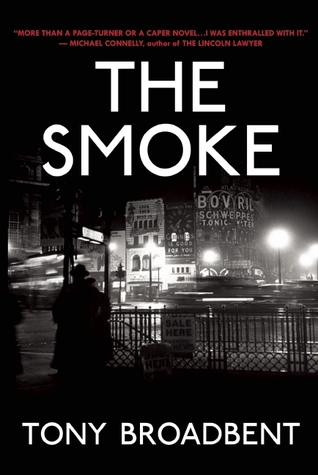 London post-war. After a stint in the merchant navy, Jethro has returned home to work as a theatre stagehand and resume his life as a cat burglar and jewel thief. His work in the West End provides a cover for criminal activities, both as a legitimate source of income and access to wealthy areas of Mayfair and Belgravia. After spotting a valuable necklace set, he decides to set up an escapade to steal them. The job, however, means breaking in to the Soviet embassy, as the set belong to the ambassador’s wife. His successful mission, but narrow escape, brings him to the attention of MI5, who want him to make a second trip to retrieve a code book and help a cipher clerk defect. His first trip, however, has ruffled a few feathers. The Russians want to prosecute revenge, the London mob want him to join their ranks, and the police want him locked up.
The Smoke is the first book in the Jethro, cat burglar series set in post-war London. Jethro is a Cockney likely-lad who’s day job is working as a theatre stagehand, but he makes his real money stealing expensive jewellery. He’s a skilled thief who always spends time casing his target, works alone and uses a single trusted fence to minimize the risk of being caught. In this outing, he breaks into the Soviet embassy to steal the jewels of the ambassador’s wife. His escapade makes him the target of the soviets, the London mob, the police and MI5 and he gets into scrapes with them all, eventually agreeing to return to the embassy for more thievery on behalf of MI5. While the story is reasonably entertaining, I didn’t really warm to it. Written in the first person, I never really connected with Jethro’s voice and perspective. The main issue though was the plot, which just didn’t feel credible enough and was a little uneven in pacing. Yes, it’s a caper tale involving Soviet officials, the mob, police and secret services, but even allowing for that, it felt too contrived and over-the-top while lacking the humour to offset. Overall, the detail on the thefts was interesting, and the story had its moments, but I never felt vested in the story.

September 2, 2019
August reads
 I think this must be my slowest August in terms of reading. Just five books read and reviewed. The stand out book was Hitler in Los Angeles, an engaging account of fascist and pro-German organisations in LA pre-war.
Assembly of the Dead by Saeida Rouass ****
Black Hornet by James Sallis ****
Hitler in Los Angeles by Steven J Ross ****.5
The Horseman’s Song by Ben Pastor ****
Murder at the Savoy by Maj Sjowall and Per Wahloo ****
September 1, 2019
Lazy Sunday Service
 A slow week of writing and reading. At least I've got the next few weeks kind of mapped out with the TBR pile. Hopefully some good reads in these two piles.
My posts this week
Review of Assembly of the Dead by Saeida Rouass
Seventeen sodden souls
August 31, 2019
Seventeen sodden souls
Larkin pulled up his collar against the driving rain and pressed closer to the wall.
On the far side of the cemetery, a small group of mourners huddled under umbrellas.
There were seventeen. Eleven of them were family.
Even with the dirty weather, he’d hoped for more.
Where were friends? Work colleagues?
Fifty years and this was what a life was worth. Seventeen sodden souls in a soulless graveyard.
Four workers lowered the coffin.
That was it. His old life gone.
Larkin headed for the gate, aware that the next time he perished the funeral would be a solitary affair.
A drabble is a story of exactly 100 words.
On the far side of the cemetery, a small group of mourners huddled under umbrellas.
There were seventeen. Eleven of them were family.
Even with the dirty weather, he’d hoped for more.
Where were friends? Work colleagues?
Fifty years and this was what a life was worth. Seventeen sodden souls in a soulless graveyard.
Four workers lowered the coffin.
That was it. His old life gone.
Larkin headed for the gate, aware that the next time he perished the funeral would be a solitary affair.
A drabble is a story of exactly 100 words.
August 29, 2019
Review of Assembly of the Dead by Saeida Rouass (2017, Impress)
 Morocco, 1906. Six girls have disappeared in Marrakesh but local officials have refused to investigate, suggesting they have run away. The sultan sends Farook al-Alami, a cultured official who has spent time in Europe and learned some of their policing methods, to the city to discover the truth. Farook’s presence is unwanted and he gets little help from the locals. He gradually makes progress and it soon becomes clear that there are more than six girls missing. The locals now take a more active role to save face, but their methods are crude. Farook sticks to his approach hoping to stop the killer before any more girls disappear.
Assembly of the Dead is a historical mystery tale set in Morocco in 1906 and fictionalizes a real serial murder case in which teenage girls and young women were lured to their deaths in the city of Marrakesh. At the time, Morocco had no police force (crime was investigated by a civilian or court judge appointed by the Ministry of Complaints), was plagued with domestic political instability, and was under pressure from European powers (it became a French protectorate in 1912). Rouass very nicely places the story within this political context, but also the social context of everyday life and the social hierarchies operating. Indeed, there is a strong sense of place and culture (family relations, food, religion, trade, governance) throughout. The political context is also captured in the relationship between the lead character, Farook al-Alami, a representative of the sultan who has spent time in London and takes an interest in European affairs, including police investigative methods, and a local investigator, Yusuf al-Mhadi, who is rooted in local officialdom and gains confessions through terror; as well as with a French doctor practising in the city who feels increasingly under threat. The telling felt a little clunky at first, but it quickly smooths out, settling into a nice cadence, and gains interest as Farook’s investigation progresses. The plot is well charted and builds to a nice denouement. And it was interesting to learn about the ‘Moorish Jack the Ripper’, who had far more victims than his London counterpart.

August 25, 2019
Lazy Sunday Service
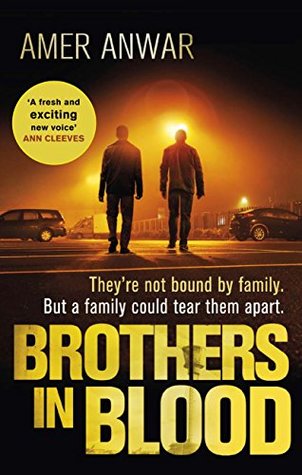 A lovely order of books arrived into the local bookshop last week. I'm already read and reviewed the James Sallis' Black Hornet, finished Saeida Rouass' Assembly of the Dead, and I'm well into The Smoke by Tony Broadbent. Others on the pile include Friends and Traitors by John Lawton, Brothers in Blood by Amer Anwar, A God in Ruins by Kate Atkinson, Gravesend by William Boyle, The Widows of Malabar Hill by Sujata Massey, The Three Evangelists by Fred Vargas, Tokyo Year Zero by David Peace and Black Cross by Greg Iles. And I've another order on the way. I figure the TBR pile will keep me going to almost the end of the year, but no doubt I'll find a way to add more books to it in the meantime.
My posts this week
Review of Black Hornet by James Sallis
Review of Hitler in Los Angeles by Steven J Ross
Still a jewel
August 24, 2019
Still a jewel
‘They’re very nice, but they’re paste.’
‘Paste?’
‘But you have to admire the craftwork of the settings.’
‘Admire the craftwork! I cased this job for two months.’
‘Then they saw you coming.’
‘I was like a ghost.’
‘People see apparitions all the time, Frank. Think they’re haunted.’
‘Are you sure they’re paste? She wore them out that evening. To the palace.’
‘You’re free to seek a second opinion.’
‘I’m going to get the original set, if it’s the last thing I do.’
‘Perhaps they are the original set?’
‘You’re saying she’s as fake as her diamonds?’
‘But still a jewel.’
A drabble is a story of exactly 100 words.
‘Paste?’
‘But you have to admire the craftwork of the settings.’
‘Admire the craftwork! I cased this job for two months.’
‘Then they saw you coming.’
‘I was like a ghost.’
‘People see apparitions all the time, Frank. Think they’re haunted.’
‘Are you sure they’re paste? She wore them out that evening. To the palace.’
‘You’re free to seek a second opinion.’
‘I’m going to get the original set, if it’s the last thing I do.’
‘Perhaps they are the original set?’
‘You’re saying she’s as fake as her diamonds?’
‘But still a jewel.’
A drabble is a story of exactly 100 words.
August 22, 2019
Review of Black Hornet by James Sallis (1994, No Exit Press)
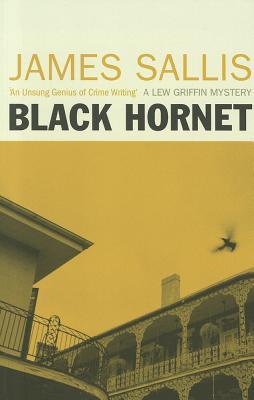 Lew Griffin is drifting along in life in 1960s New Orleans. A black man in the Deep South, cobbling together jobs working for bail bondsman, doing security, acting as a private investigator. Not quite committing to Verne. Floating between bars. Never quite far from trouble. And it finds him when he’s talking to a white journalist when she’s shot dead. She’s the sixth victim of a sniper who is preying on the city’s citizens. Forming a loose alliance with a police officer and the journalist’s partner, Lew seeks to track down the sniper and make sense of his actions. In the process he wallows black literature and gets caught between different warring black communities.
 Black Hornet is the third book in the Lew Griffin series set in New Orleans. In this outing, it the early 1960s and a sniper is territorizing the city, killing random strangers. Griffin is pulled into the hunt for the killer when a white journalist he is talking to is shot dead. While the plot centres on Griffin’s search for the marksman, the heart of the story is the excavation of Griffin’s character, his philosophical musings on life, and what it means to be black in the Deep South. Griffin is a man of contradictions who fears close relationships and rarely takes the easy path. He drinks to excess and has a habit of finding violence. Yet he is kind, seeks justice, has a literary bent, and is deeply reflexive. While he gets results, he doesn’t always get answers. The result is a thoughtful, existential tale told in evocative prose. There’s no great mystery to the tale, the pleasure is in its observations and telling.

August 19, 2019
Review of Hitler in Los Angeles: How Jews Foiled Nazi Plots Against Hollywood and America by Steven J Ross
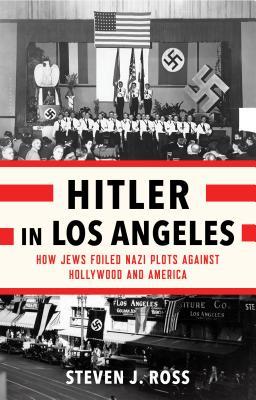 Prior the Second World War the Nazis targeted Los Angeles and Hollywood due to its strong military-industrial complex (especially Navy and aircraft production) and the propaganda power of the movies produced. As well as the German consul vetting movie production across studios with the threat of banning all films from the lucrative German market, they also set up spy networks, encouraged those of German descent to oppose America entering any future European war, and helped organize and fund pro-Nazi and fascist organizations. Despite the threat posed by a foreign power operating in their territory and fomenting racial hatred, and German re-armament and the treatment of Jews in Germany, US policing and military intelligence paid little attention. Many members of the police had fascist leanings and were anti-Semitic, the FBI were chronically under-staffed, military intelligence outwards facing, and all three were more concerned with communism. Instead it was left to the Jewish community and their allies to monitor and tackle the growth of openly pro-Nazi/pro-German and fascist groups.
Steven Ross details the work of Leon Lewis and Joseph Roos, a lawyer and a journalist, who set up their own spy organization and network in Los Angeles, funded by the heads of the Jewish owned movie studios. Lewis and Roos recruited a number of spies – thirteen of which feature in the book – who agreed to join various fascist organizations, work their way up through the ranks, pass on everything they heard and work to spread discord and internal fights between rival factors. It was dangerous work, with the threat of death for any spy discovered, and at least three died in suspicious circumstances. Lewis and Roos passed on what they learned to the police and intelligence services, seeking to prosecute those preaching hate crimes and planning to commit domestic intelligence. Ross provides a fascinating and detailed account of the work of this spy network in penetrating organizations promoting fascism, some of which were also aiding German ambitions, and the extent of anti-Semitism and isolationist views in pre-war America. He does a good job of marshalling all the material and providing a coherent narrative given the number of actors and organizations. While providing plenty of detail, he doesn’t let it swamp the story and keeps the account moving along. I only had two minor gripes. First, the title is a little misleading – Hitler is used as a surrogate for Nazism (he doesn't feature per se) and the focus is both Nazi and fascist groups in Los Angeles, the latter of which might not be pro-Nazi or pro-Germany, but certainly is American first, isolationist, and anti-Semitic and racist. Second, Hollywood and its moguls fall out of the story as it progresses and is certainly never revisited as to its reaction to the various cases and on-going anti-Semitism throughout the war, or how it dealt with fascism post-war. Overall, an absorbing and engaging account that underscores how deep-seated white, Christian, nationalist fascism is in the United States (and how they are aided/funded by other countries – swap Russia for Germany for the present).