Dan Jorgensen's Blog, page 425
October 19, 2017
Interweaving pieces of lives
“One curious thing about growing up is that you don't only move forward in time; you move backwards as well, as pieces of your parents' and grandparents' lives come to you.” – Philip Pullman
Born on this date in 1946, Pullman is the author of several best-selling books, most notably the fantasy trilogy His Dark Materials and the fictionalized biography of Jesus, The Good Man Jesus and the Scoundrel Christ. In 2008, The Times of London named Pullman one of the "50 greatest British writers since 1945."
A native of Norwich, England, Pullman was a teacher when his first published work, The Haunted Storm, was published in 1972. It was an instant hit, winning the New English Library's Young Writer's Award. For the next 20 years, Pullman split his time between writing and teaching and even though he has been writing full time since 1996, he continues to do some teaching and considerable lecturing.
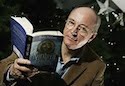 In 2005 Pullman won the Astrid Lindgren Memorial Award from the Swedish Arts Council, recognizing his career contribution to "children's and young adult literature in the broadest sense.” He also is a two-time finalist for the Hans Christian Andersen Medal, given biennially to the best writer of fiction for children and young adults.
 His advice to new writers is simple. Write 3 pages a day. “If you can't think of what to write, tough luck; write anyway. If you can think of lots more when you've finished three pages, don't write it; it'll be that much easier to get going next day.”
Share A Writer’s Moment with a friend by clicking the g+1 button below


October 18, 2017
Building your writing skills
“Generating ideas isn't some mystical talent that you have to be born with: it's a skill you can develop.“ – Charles Stross
Born in Leeds, England, on this date in 1964, Stross first wrote for computer magazines before discovering that his Sci-Fi short stories attracted large audiences and writing awards. A 2002 short story collection, Toast: And Other Rusted Futures, is a best-seller, and subsequent stories have been nominated for the both Hugo and Nebula Awards.
In 2003, Stross decided to try novels and his first one, Singularity Sky, also was nominated for a Hugo. His 2005 novella "The Concrete Jungle" was a Hugo winner. He has since won numerous Sci-Fi/Fantasy awards. He still writes short stories but enjoys novels because, “Novels are one of the few remaining areas of narrative storytelling where one person does almost all of the creative heavy lifting.”
 In 2012 he collaborated with Cory Doctorow (no relation to E.L.) to write the bestseller, The Rapture of the Nerds. He and Doctorow also have been involved in the Creative Commons licensing and copyright movement, allowing creators to communicate which rights they reserve, and which rights they waive. Creative Commons licenses do not replace copyright, but are based upon it.
 As for his own creativity, Stross now has over 20 books and continues developing new and interesting settings. “ . . . Build a world that people want to inhabit (especially as readers),” he said, “and the inhabitants will come. “
Share A Writer’s Moment with a friend by clicking the g+1 button below
Developing that writing skill
“Generating ideas isn't some mystical talent that you have to be born with: it's a skill you can develop.“ – Charles Stross
Born in Leeds, England, on this date in 1964, Stross first wrote for computer magazines before discovering that his Sci-Fi short stories attracted large audiences and writing awards. A 2002 short story collection, Toast: And Other Rusted Futures, is a best-seller, and subsequent stories have been nominated for the both Hugo and Nebula Awards.
In 2003, Stross decided to try novels and his first one, Singularity Sky, also was nominated for a Hugo. His 2005 novella "The Concrete Jungle" was a Hugo winner. He has since won numerous Sci-Fi/Fantasy awards. He still writes short stories but enjoys novels because, “Novels are one of the few remaining areas of narrative storytelling where one person does almost all of the creative heavy lifting.”
In 2012 he collaborated with Cory Doctorow (no relation to E.L.) to write the bestseller, The Rapture of the Nerds. He and Doctorow also have been involved in the Creative Commons licensing and copyright movement, allowing creators to communicate which rights they reserve, and which rights they waive. Creative Commons licenses do not replace copyright, but are based upon it. As for his own creativity, Stross now has over 20 books and continues developing new and interesting settings. “ . . . Build a world that people want to inhabit (especially as readers),” he said, “and the inhabitants will come. “
Share A Writer’s Moment with a friend by clicking the g+1 button below
October 17, 2017
Writing with a sense of urgency
“The books I like to read the most feel like they've been written by somebody who had to write them or go crazy. They had to get them out of their heads. I like that kind of urgency.” – Patrick Ness
Born in Virginia on this date in 1971, Ness is a British-American (with dual citizenship) author, journalist, lecturer, and screenwriter, best known for his Young Adult books, particularly the Chaos Walking trilogy.
A one-time creative fiction teacher at Oxford University, he started as a corporate writer for a cable company and then as a magazine feature writer. After moderate success with several short stories, he discovered his real talent lay in the YA field. Ness's first YA novel The Knife of Never Letting Go came out in 2008, was an instant success, and earned him the Guardian Children's Fiction Prize followed by numerous other awards.
 Since then he has had one bestseller after another while also building an audience as a much sought-after lecturer. And, he’s well known as a reviewer, reviewing books for some of England’s top literary magazines and many leading newspapers.
 Ness said his writing routine is simple. “I write 1,000-1,500 words. Then the next day, I rewrite it and add 1,000-1,500 words to the end of it.” As for his advice to new writers, he said, “How you leave the reader is so important – and not the climax; I call it the 'exit feeling'. “ His leaves you wanting more.
Share A Writer’s Moment with a friend by clicking the g+1 button below
October 16, 2017
A 'charmed' writing life
“Most people are so busy knocking themselves out trying to do everything they think they should do, they never get around to doing what they want to do.”– Kathleen Winsor
Born in the small Minnesota town of Olivia on this date in 1919, Winsor is best known for her 1944 historical novel Forever Amber, a runaway bestseller (more than 3 million copies sold) and the first of 7 books that she would write. A newspaper sportswriter first (one of the first female sportswriters), she started writing the book after her first husband did research on King Charles II of England. It sparked Winsor’s interest in the era known as “The Restoration” and started her along a path toward her massive bestseller.
While Forever Amber tells the story of orphaned Amber St. Clare, who makes her way up through the ranks of 17th century English society, the subplot follows Charles as he returns from exile and adjusts to ruling England. Winsor spent years researching the period, including reading hundreds of books on the era. Her nearly 1,000-page novel (edited down from almost 5,000 pages) includes vivid portrayals of Restoration fashion, lifestyles and customs and of politics and public disasters like The Plague and the Great Fire of London.
The book made Winsor a worldwide celebrity and ultimately led to her second hit novel, 1950’s Star Money, based loosely on her experience of becoming a best-selling novelist.
 Married 4 times, Winsor became a leading light in California and New York Society circles and was known for her wit and charm, to which she once replied, “Charm, you know, is simply the ability to make someone else think that both of you are pretty wonderful.” She died in 2003.
Share A Writer’s Moment with a friend by clicking the g+1 button below.
October 15, 2017
Exploring 'the rhythm' of words
“I think with all my books, language has been their subject as much as anything else. Language can elide or displace or sideline whole groups of people. You can't necessarily change the way language is used, but if it becomes something you're conscious of... that gives you a certain power over it.”– Kate Grenville
Born on this date in 1950, Kate Grenville is an Australian writer and author of15 books – including fiction, non-fiction, biography and books about the writing process. Winner of both the Commonwealth Writers’ Prize and Britain’s prestigious Orange Prize, she has had her works published worldwide. Grenville’s writing career started in film before she wrote a collection of highly regarded short stories in the early 1980s. Her 1985 novel Lilian’s Story established her reputation as one of Australia’s best fiction writers. The multiple award-winning book also was made into a successful movie in 1996.
In the 2000s, Grenville has explored Australia’s colonial past and relationships among its peoples in her acclaimed books The Secret River, The Lieutenant and Sarah Thornhill.
 A teacher of writing, too, Grenville has written or co-written several widely used books about the writing process.
 “I read a lot of poetry, and I love what it does with language,” Grenville said. “I love music, too, and I think there's probably no coincidence there, that the rhythm of the words is almost as important as the words themselves, and when you can get the two working together, which usually takes me about 20 goes, I feel a huge satisfaction.”
Share A Writer’s Moment with a friend by clicking the g+1 button below.
October 14, 2017
And that's why we're 'we'
“Once we believe in ourselves, we can risk curiosity, wonder, spontaneous delight, or any experience that reveals the human spirit.”– e. e. cummings
 Born on this date in 1894, Edward Estlin "E. E." Cummingswrote approximately 2,900 poems; 2 autobiographical novels; 4 plays and several essays and was one of the eminent “voices” of 20th century English-language literature. Cummings' poetry often dealt with themes of love and nature but some, he said, “were just for fun.” For Saturday’s Poem, here is cummings’ IfIf freckles were lovely, and day was night,
And measles were nice and a lie warn’t a lie,
Life would be delight,—
But things couldn’t go right
For in such a sad plight
I wouldn’t be I.
If earth was heaven and now was hence,
And past was present, and false was true,
There might be some sense
But I’d be in suspense
For on such a pretense
You wouldn’t be you.
If fear was plucky, and globes were square,
And dirt was cleanly and tears were glee
Things would seem fair,—
Yet they’d all despair,
For if here was there
We wouldn’t be we.
Share A Writer’s Moment with a friend by clicking the g+1 button below
October 12, 2017
This is what you have to do
“I write because I write - as anyone in the arts does. You're a painter because you feel you have no choice but to paint. You're a writer because this is what you do.” – Richard Price
Born on this date in 1949, Price is both a novelist and screenwriter, known for the books The Wanderers and Clockers. Price's novels explore late-20th century urban America in a gritty, realistic manner that has brought him considerable literary acclaim.
His award-winning screenplays including two of the most popular HBO series’ – The Wire and The Night Of – and the Academy Award nominated The Color of Money.
A native of The Bronx, Price studied at both Cornell University and Columbia University and started writing while still in college, achieving success in both creative writing and with his essays in such prestigious journals as Esquire and The New Yorker. A popular and much sought-after writing teacher, he has done numerous stints at many major universities.
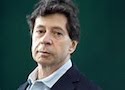
His advice to students is to develop your characters and then let them grow with your writing. “You can't take a character anywhere they don't expect the character to go,” he said. “But within those confines is where creativity lies.”
Share A Writer’s Moment with a friend by clicking the g+1 button below
October 11, 2017
Writing those 'all-inclusive' characters
“I love the characters not knowing everything and the reader knowing more than them. There's more mischief in that and more room for seriousness, too. “– Anne Enright
Born in Ireland on this date in 1962, Enright says she grew up enjoying writing but didn’t start writing in earnest until the age of 21 when her family gave her an electric typewriter for her birthday. She started as a television writer, producing both adult and children’s programming while at the same time doing a series of short stories, published in 1991 as the award-winning collection The Portable Virgin.
Since then, her writing has won numerous awards including the Man Booker Prize for her 2007 novel The Gathering, which also won the Irish Novel of the Year Award in 2008. Widely praised for her characterizations, particularly of women, she noted, “I think it's very important to write a demythologized woman character. My characters are flawed. They are no better than they should be.”
 Enright's works have regularly appeared The New Yorker, The Paris Review, and the Irish Times. Once a regular contributor to BBC Radio 4, she now reviews for The Guardian, is a frequent lecturer, and just completed a term as the inaugural Laureate of Irish Fiction. Her advice to writers is to bring in all aspects of a character’s life. “There's no such thing as a life that is not normal, or, there's no such thing as a life that is not abnormal,” she said. “We all have amazing lives; we all have very dull lives.”
Share A Writer’s Moment with a friend by clicking the g+1 button below
October 10, 2017
A person who 'cares' what words mean
“A writer is a person who cares what words mean, what they say, how they say it. Writers know words are their way towards truth and freedom, and so they use them with care, with thought, with fear, with delight. By using words well they strengthen their souls.” – Ursula K. Le Guin
An “October baby,” Le Guin celebrates her 88thbirthday this month at her home in Portland, Ore. First published in the 1960s, Le Guin has often depicted futuristic or imaginary alternative worlds in politics, the natural environment, gender, religion, sexuality and ethnography.
Her writing has influenced such Booker Prize winners and other writers as Salman Rushdie and David Mitchell – and notable science fiction and fantasy writers like Neil Gaiman and Iain Banks. She has won the Hugo Award, Nebula Award, Locus Award, and World Fantasy Award, each more than once.
 In 2014, she was awarded the National Book Foundation Medal for Distinguished Contribution to American Letters.
 In 2016, The New York Times described her as "America's greatest living science fiction writer,” although she has said she would prefer to be known simply as "American novelist.”
“I don't write tracts, I write novels. I'm not a preacher, I'm a fiction writer,” Le Guin said. “I get a lot of moral guidance from reading novels, so I guess I expect my novels to offer some moral guidance, but they're not blueprints for action, ever.”
Share A Writer’s Moment with a friend by clicking the g+1 button below.