Dan Jorgensen's Blog, page 421
November 30, 2017
Standing on the side of Social Justice
“I don't mind expressing my opinions and speaking out against injustice. I would be doing this even if I wasn't a writer. I grew up in a household that believed in social justice. I have always understood myself as having an obligation to stand on the side of the silenced, the oppressed, and the mistreated.”– Tayari Jones
Born in Atlanta on this date in 1970, Jones won the Hurston-Wright Legacy Award for Debut Fiction for her 2002 novel Leaving Atlanta, a three-voiced coming-of-age story set against the backdrop of the Atlanta Child Murders of 1979-81. Written while she was a graduate student at Arizona State University, she based the story on her own experience as a child in Atlanta during that period.
While she wrote the book in grad school she actually started her career while still and undergraduate at Atlanta’s Spelman College, where she earned her degree in English. She now has written 3 successful novels, following Atlanta with The Untellingand Silver Sparrow, both best sellers and award recipients.
 Now an Associate Professor at Rutgers-Newark University, she is currently in a year-long Distinguished Writer program at the University of Nevada, Las Vegas. In addition to teaching, she also continues her longtime efforts to mentor up-and-coming young writers, especially girls. “I take mentoring very seriously,” she said, “and I am on the board of an organization called Girls Write Now, where we match teen girls and writing mentors because it changes their lives.”
Share A Writer’s Moment with a friend by clicking the g+1 button below.


November 29, 2017
It's a jungle out there
“If you’re doing something, show up every day, and something good might happen – it’s not going to happen if you don’t show up.” – Randy Newman
Born on Nov. 28, 1943, Newman is a writer who pretty much always shows up, especially when it comes to writing songs for movies. He’s been nominated for 20 Academy Awards, 3 Emmys, 6 Grammys and been named for the Governor's Award from the Recording Academy. Inducted into both the Songwriters Hall of Fame and the Rock and Roll Hall of Fame, his most memorable film scores are for the Toy Story and Monsters, Inc. series; Seabiscuit; and Ragtime.
Newman cites Ray Charles as his greatest influence during his “growing up” years and has been a professional songwriter since age 17. In his early years he was writing for other musicians or groups with which he sang, but for the past 40 years his raspy, fun-filled voice is all that’s really needed to bring his words to life.
 I can truly say I’ve never heard a Newman song I didn’t like, and I encourage all to check him out on YouTube. I especially like “It’s a Jungle out there,” the Emmy winning theme song for the long-running TV series Monk. And below, for your listening pleasure, here’s a link to “We Belong Together” from Toy Story 3, one of his Academy Award winners. This version also shows the words and it’s Newman’s voice that you hear. Enjoy.
 http://www.youtube.com/watch?v=ns5Q25ozfaw
Share A Writer’s Moment with a friend by clicking the g+1 button below.
November 27, 2017
Inspired by Everyday Life
“I think writers are observers and watchers. We always have our ears open and eyes open, so I might see something in everyday life that inspires me. And I think that's probably more than anything else. Everyday life is where I get my inspiration.” – Kevin Henkes
Born on this date in 1960, Henkes is both writer and illustrator of children's books. As illustrator, he won the Caldecott Medal for Kitten's First Full Moon and Waiting, which also won the coveted Geisel Honor Book award – only the second time in history that a book has won both awards. As writer, his books Olive's Ocean and The Year of Billy Miller won the Newbery.
A native of Racine, Wis., he has been writing and illustrating children’s books for 30 years. “It’s the only real job I’ve ever had.”
 Growing up as an avid reader, he said library trips were a family ritual and one he highly recommends. He started writing as a teenager and his first picture book was accepted for publication when he was just 19 and an art major at the University of Wisconsin.
 For writers thinking about children’s books, he said, “You don't need to have kids to write a good book for kids. I don't want my kids to see themselves in my books. Their lives should be their lives. “
Share A Writer’s Moment with a friend by clicking the g+1 button below.
November 26, 2017
Think Big; Imagine Big
“We have to think big. We have to imagine big, and that's part of the problem. We're letting other people imagine and lead us down what paths they want to take us. Sometimes they're very limited in the way their ideas are constructed. We need to imagine much more broadly. That's the work of a writer, and more writers should look at it.” – Alexis Wright
A native Australian (half of her heritage is Aborigine) Wright was born Nov. 25, 1950, and grew up in Queensland. She's best known for winning the prestigious Miles Franklin Award for her sweeping 2006 novel Carpentaria, which tells the interconnected stories of several inhabitants – both aboriginal and white – of the fictional town of Desperance on the Gulf of Carpentaria in northwest Queensland. Wright, who also is a research fellow at the University of Western Sydney, spent years conceiving and then getting the book published, despite the fact that she’d already won several literary awards for earlier writings, including her first novel Plains of Promise. She also is noted for her nonfiction work Take Power, an anthology on the history of the land rights movement. She has written widely on indigenous rights, and lived and worked for several years in Central Australia where she organized successful Indigenous Constitutional Conventions.
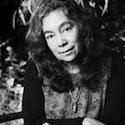
Wright looks upon her work as a writer, particularly as a novelist, as a pacesetter. “My role as a novelist is to explore ideas and imagination,” she said, “and hopefully that will inspire people from my world to continue dreaming and to believe in those dreams.”
Share A Writer’s Moment with a friend by clicking the g+1 button below.
November 25, 2017
When lightning Strikes
“ A poet is someone who stands outside in the rain hoping to be struck by lightning.”– James DickeyThe onetime U.S. Poet Laureate (named in 1966) Dickey was a multiple award winner for a wide range of his poems and other writings. He might be best known for his novel, the taut thriller Deliverance, also an acclaimed film by the same name.
Born in Atlanta in 1923, he had a career in advertising before starting creative writing in the late 1950s. His first book, Into the Stone and Other Poems, was published in 1960. Buckdancer's Choice (1965) earned him a National Book Award for Poetry. All 331 of his poems have now been collected in the 2013 work, The Complete Poems of James Dickey. For Saturday’s Poem, here is Dickey’s,
At Darien Bridge
The sea here used to look
As if many convicts had built it,
Standing deep in their ankle chains,
Ankle-deep in the water, to smite
The land and break it down to salt.
I was in this bog as a child
When they were all working all day
To drive the pilings down.
I thought I saw the still sun
Strike the side of a hammer in flight
And from it a sea bird be born
To take off over the marshes.
As the gray climbs the side of my head
And cuts my brain off from the world,
I walk and wish mainly for birds,
For the one bird no one has looked for
To spring again from a flash
Of metal, perhaps from the scratched
Wedding band on my ring finger.
Recalling the chains of their feet,
I stand and look out over grasses
At the bridge they built, long abandoned,
Breaking down into water at last,
And long, like them, for freedom
Or death, or to believe again
That they worked on the ocean to give it
The unchanging, hopeless look
Out of which all miracles leap.
Share A Writer’s Moment with a friend by clicking the g+1 button below.
November 24, 2017
Work that speaks for itself
“The best part of one’s life is the working part, the creative part. Believe me, I love to succeed…however, the real spiritual and emotional excitement is in the doing.” – Garson Kanin
Kanin, born this day in 1912, was a prolific writer and noted Broadway director. Among his many hit shows were The Diary of Anne Frank, Funny Girl and Born Yesterday, which he started writing while serving as a soldier and filmmaker in World War II. His major war role was documenting Dwight Eisenhower’s official record of the Allied Invasion, resulting in the Academy Award-winning documentary True Glory. A novelist, too, he wrote the bestseller Smash, basis for the hit television series a few years ago.
 His most famous line from the long-running Born Yesterday – in which I was fortunate enough to have a community theater role – is enshrined on a New York City Public Library plaque. It was delivered by his journalist character Paul Verrall, who says: "I want everyone to be smart. As smart as they can be. A world of ignorant people is too dangerous to live in."
 Kanin, who died in 1999, also is famously quoted as saying, “When your work speaks for itself, don’t interrupt.” Seventy-five years after he said that, his writer's moments continue to speak.
Share A Writer’s Moment with a friend by clicking the g+1 button below.
November 23, 2017
Giving Thanks
All writers have moments that can be directly attributed to the people in their lives; people who not only form the basis for the characters through which each shares his or her thoughts, but also those whose inspirational stories swirl in the world that surrounds us.
Our lives are filled with interactions and meetings with these wonderful people, and yet we often miss the all-too-fleeting opportunities to tell them “Thank you!” So I'll do it now.
Thanks! Happy Thanksgiving! And wishing you many great Writer's Moments.

Share A Writer’s Moment with a friend by clicking the g+1 button below.
November 22, 2017
Reading brings new friends and old
“The first time I read an excellent work, it is to me just as if I gained a new friend; and when I read over a book I have perused before, it resembles the meeting of an old one.” –George Gissing
Born on this date in 1857, Gissing was an English novelist who published 23 novels between 1880 and 1903 while also teaching and serving as a tutor throughout his life. Three of his books, The Nether World (1889), New Grub Street (1891) and The Odd Women, were critically acclaimed in the 1890s and are still in print today.
Gissing began his writing career while living and working in Boston and Chicago doing a series of short stories for newspapers while also teaching and then doing a stint as a traveling salesman – experiences he used as the basis for New Grub Street.
 While Gissing's early novels were not well received, he achieved greater recognition in the 1890s from his novels noted above, combined with his popular short stories in newspapers throughout Europe and his critical writings on Charles Dickens. He also made and cultivated friendships with influential and respected literary figures such as journalist Henry Norman and author J. M. Barrie. Then, at the height of his popularity, he died from pneumonia at age 46. Today, many critics place him alongside Thomas Hardy and George Meredith as one of the leading novelists in late 19th century England.
Gissing said he was fascinated by how individuals can be at the same scene but end up with differing views. “It is the mind which creates the world around us, and even though we stand side by side in the same meadow, my eyes will never see what is beheld by yours, and my heart will never stir to the emotions with which yours is touched.”
Share A Writer’s Moment with a friend by clicking the g+1 button below.
November 21, 2017
Turning fears into treasures
“One thing that makes art different from life is that in art things have a shape... it allows us to fix our emotions on events at the moment they occur, it permits a union of heart and mind and tongue and tear.”– Marilyn French
Born in Brooklyn on this date in 1929,French began her writing career in journalism while still in college, although she hoped to become a musician and composer. After marrying and having two children, she went into teaching for several years, earned both her Master’s and Doctorate degrees in English, and returned to writing. While she was an essayist and sometime short story writer, her biggest impact came through her novels. French's first and best-known novel, The Women's Room, follows the details and lives of Mira and her friends in 1950s and 1960s America during the dawning and subsequent impact of militant radical feminism. The 1977 novel sold over 20 million copies worldwide and has been translated into more than 20 languages.
 Shortly before her death in 2009, she was asked what advice she might give beginning writers, and she said to capitalize on things that might seem to get in your way, such as fear of failure. “Fear is a question,” she said. “What are you afraid of and why? Our fears are a treasure house of self-knowledge if only we explore them.”
 Share A Writer’s Moment with a friend by clicking the g+1 button below.
November 20, 2017
Making sense of life
“Writing is making sense of life. You work your whole life and perhaps you've made sense of one small area.”—Nadine Gordimer
Born on this date in 1923, Gordimer was a South African writer, political activist and recipient of the Nobel Prize in Literature. She was recognized at her Nobel ceremony as a woman "who through her magnificent epic writing has – in the words of Alfred Nobel – been of very great benefit to humanity"
Gordimer, who died in 2014, wrote on moral and racial issues – particularly apartheid – in South Africa and her best-selling works like Burger's Daughter and July's People were banned by the South African government. Virtually all of Gordimer's works deal with themes of love and politics in the lives of ordinary people, almost always questioning power relations and truth.
 In addition to the Nobel, she won many dozens of other major writing awards, including the Booker Prize, the James Tait Award, and the Central News Agency Literary Award. She also received 15 honorary degrees. She began writing early and had her first work – a short story for children – published at age 15. Her writing led to 21 collections of short stories and 15 novels, plus plays, dozens of essays, and many reviews.
Her advice to other writers was to look to the best writers in history as a guide. “For example,” she noted, “From Ernest Hemingway's stories, I learned to listen within my own stories for what went unsaid by my characters.”
Share A Writer’s Moment with a friend by clicking the g+1 button below.