Dan Jorgensen's Blog, page 423
November 7, 2017
Rhythm, cadence, music to the ear
“Language in fiction is made up of equal parts meaning and music. The sentences should have rhythm and cadence, they should engage and delight the inner ear.”– Michael Cunningham
Novelist and screenwriter Cunningham, who turned 65 yesterday, is probably best known for his novel The Hours, which won the 1998 Pulitzer Prize for Fiction, the 1999 PEN/Faulkner Award, and was made into a critically acclaimed movie for which Nicole Kidman won the Best Actress Academy Award.
Cunningham started his writing career while working toward his Master of Fine Arts degree and had a number of short stories published in such journals as Atlantic Monthly and Paris Reviewduring that time. Among those early works was the wonderful “White Angel,” which earned him a place in 1989’s “Best American Short Stories” list. Still a writer of short stories, Cunningham has had several collections published, including his most recent book, A Wild Swan and Other Tales.
In addition to the Pulitzer and PEN/Faulkner awards, Cunningham has won a Michener Fellowship, a Guggenheim Fellowship, a Whiting Fellowship, and the O.Henry Prize for his short story “Mister Brother.”
 Cunningham has taught at several leading colleges and universities and currently serves as senior lecturer of creative writing at Yale. His advice to his students: “As writers we must, from our very opening sentence, speak with authority to our readers.”
 Share A Writer’s Moment with a friend by clicking the g+1 button below


Equal parts 'meaning and music'
“Language in fiction is made up of equal parts meaning and music. The sentences should have rhythm and cadence, they should engage and delight the inner ear.”– Michael Cunningham
Novelist and screenwriter Cunningham, who turned 65 yesterday, is probably best known for his novel The Hours, which won the 1998 Pulitzer Prize for Fiction, the 1999 PEN/Faulkner Award, and was made into a critically acclaimed movie for which Nicole Kidman won the Best Actress Academy Award.
Cunningham started his writing career while working toward his Master of Fine Arts degree and had a number of short stories published in such journals as Atlantic Monthly and Paris Review during that time. Among those early works was the wonderful “White Angel,” which earned him a place in 1989’s “Best American Short Stories” list. Still a writer of short stories, Cunningham has had several collections published, including his most recent book, A Wild Swan and Other Tales.
In addition to the Pulitzer and PEN/Faulkner awards, Cunningham has won a Michener Fellowship, a Guggenheim Fellowship, a Whiting Fellowship, and the O.Henry Prize for his short story “Mister Brother.”
Cunningham has taught at several leading colleges and universities and currently serves as senior lecturer of creative writing at Yale. His advice to his students: “As writers we must, from our very opening sentence, speak with authority to our readers.” Share A Writer’s Moment with a friend by clicking the g+1 button below
November 6, 2017
Writing songs for the times
“We human beings are tuned such that we crave great melody and great lyrics. And if somebody writes a great song . . . we as humans are going to feel something for that and there's going to be a real appreciation.”– Art Garfunkel
Garfunkel, who turned 76 yesterday,not only has written some great lyrics and wonderful melodies – particularly as part of the groundbreaking duo Simon & Garfunkel – but he also has written the new book What Is It All But Luminous (Notes From an Underground Man).
Just out, it is a terrific view of the folk-rock music age in which he and Paul Simon grew up and embraced, and a study of the music world they helped define through their sound. I was fully reminded of their impact again during the recent airing of the PBS series on Vietnam when their song Sounds of Silence played in the background during a poignant episode.
Sounds of Silence established their sound, but perhaps their most lasting and moving song was Bridge Over Troubled Water, also the title of their massive best-selling album. The song placed Garfunkel squarely at the center stage during the duo’s performances, although he said he has never been comfortable in that role.
“Paul has more, I think, of a feel for the stage. Whereas I have it more for the notes themselves. I love record making and mixing, arranging, producing. That I love. I love to make beautiful things, but I don't like to perform.” Fortunately for all of us, he did.
From Simon & Garfunkel’s 1981’s groundbreaking concert in New York City’s Central Park, here is Garfunkel at center state, performing Bridge Over Troubled Water. https://www.youtube.com/watch?v=Ho92k2CKNh0
Share A Writer’s Moment with a friend by clicking the g+1 button below
November 4, 2017
A poem is a two-way street
“Of course a poem is a two-way street. No poem is any good if it doesn't suggest to the reader things from his own mind and recollection that he will read into it, and will add to what the poet has suggested.” – James Laughlin
Laughlin, born in 1914, was founder of New Directions Publishing, which became a preeminent publisher of modernist literature.

Laughlin's poetic writing (more than 1,200 poems) often focused on everyday experiences, love, and life and was highly regarded by fellow poets. In his honor, the “James Laughlin Award” is given annually by The Academy of American Poets to recognize and support a second book of poetry forthcoming in the next calendar year. For Saturday’s Poem, exerpted from New Direction’s wonderful book The Collected Poems of James Laughlin is,
What The Pencil Writes
Often when I go out I
put in my coat pocket
some paper and a pencil
in case I want to
write something down
well there they are
wherever I go and as
my coat moves the pencil
writes by itself
a kind of gibberish
hieroglyphic which I
often think as I undress
at night & take
out those papers with
nothing written on
them but strange and
meaningless marks is
the story of my life.
Share A Writer’s Moment with a friend by clicking the g+1 button below.
November 3, 2017
Bright thoughts - Writers' Moments
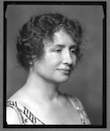 “The best and most beautiful things in the world cannot be seen or even touched - they must be felt with the heart.” – Helen Keller, author and activist (1880-1968)
  “All you need in the world is love and laughter. That's all anybody needs. To have love in one hand and laughter in the other.” – August Wilson, playwright and actor
 Share A Writer’s Moment with a friend by clicking the g+1 button below.
November 2, 2017
Don't let the music die
Recently, I read about a local barber who said he was influenced to begin his business by a quote he read from Oliver Wendell Holmes, Sr., the Boston-based physician, professor, lecturer, poet and author who lived most of the 1800s (1809-94).
Curious about what a 19thCentury figure wrote to influence a 21st Century barber, I explored a bit more about Holmes and found a remarkable man who had a remarkable way with words that often served to inspire many … in many different fields. While writing wasn't his primary livelihood – he was a physician after all – writers like Emerson, Thoreau and Longfellow hung out with him and acclaimed him as one of the best writers of their day.
He made many “re-quotable” statements, a key one being the effect books had on him. “Life-transforming ideas have always come to me through books,” Holmes said. “The best of a book is not the thought which it contains, but the thought which it suggests; just as the charm of music dwells not in the tones but in the echoes of our hearts.”
On our recent trek across the country we took along one of Tess Gerritsen’s books on tape – The Bone Garden – featuring Holmes as a young medical student helping the protagonist solve a series of gruesome murders in the Boston area. Having just “heard” that story combined with the story about the barber citing Holmes as his inspiration was reason enough for me to write about him today.
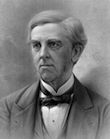 Oh, and that Holmes’ quote that inspired our local barber: “Many people die with their music still in them. Too often it is because they are ALWAYS getting ready to live. And, before they know it time runs out.”
 Share A Writer’s Moment with a friend by clicking the g+1 button below.
November 1, 2017
Writing: 'A powerful possibility'
“I think as the world changes, we have to keep up. We have to note what is happening, and I think writing has always had a powerful corrective influence and possibility. We have to write about what's good, and we also have to write about parts of our culture that are not good, that are not working out. I think it takes a new eye.” – Lee Smith
Born on this date in 1944, Smith is a native Virginian who grew up in Appalachia, “devoured” any books or stories she could find, and was already writing—and selling, for a nickel apiece—stories about the coal boomtown of Grundy and its nearby isolated "hollers" by the age of 9.
She continued to write at Hollins College where she and classmate (and fellow writer) Annie Dillard sang and danced in a band called The Virginia Woolfs. In her senior year she won a writing contest, which led to her first book, The Last Day The Dog Bushes Bloomedin 196, the first of 15 novels and 4 collections of short stories.
 Her writing has continued to earn rave reviews and awards, including the Sidney Lanier Prize for Southern Literature and the Southern Book Critics Circle Award. Her memoir Dimestore: A Writer’s Life, published in 2016, is the story of her life in Grundy and beyond. “I write about people in small towns; I don't write about people living in big cities,” she said. “My kind of storytelling depends upon people that have time to talk to each other.”
 Share A Writer’s Moment with a friend by clicking the g+1 button below
October 31, 2017
Off one horse and onto another
“As a writer, when you fall in love with a place, you want to spend more time in it, either physically or mentally, and so you write about it.” – Don Winslow
For thriller/crime writer Winslow, born on this date in 1953, that probably means California (where he’s lived for over 20 years), although this native New Yorker has been all across the world and had the chance to “fall in love” with many different locales.
A private investigator before he became a writer, Winslow earned a degree in African History, has a master’s degree in Military History, and worked as a safari guide in Africa and hiking guide in China before getting into writing in the 1990s. His first novel, A Cool Breeze on the Underground, is set in NYC where he was doing his private eye work and became the first in a series of books about investigator Neal Carey.
But he likes to write about many things. “My problem is not that there are too few ideas out there,” Winslow explained. “It's that there are too many.”
 A self-proclaimed insomniac, he starts his writing day at 5:30 a.m., writes for several hours before going for a 6 or 7 mile hike, then hits the keyboard again. His routine has resulted in 19 novels, almost all bestsellers, the latest being this summer's The Force.
 When he first started he set a page count goal. “So I thought I should write five pages a day. And that's what I did. Eventually I had a book,” he said. “Producing words isn't a problem for me. And I usually write two books at a time. When one horse gets winded, you just jump on the other.”
Share A Writer’s Moment with a friend by clicking the g+1 button below
October 30, 2017
Validating life through writing
“You are validating someone's life by telling their story. Even if it's a sad one.”– Alex Tizon
Pulitzer Prize-winning journalist Alex Tizon, who died suddenly this year of natural causes, is the author of "Crossing America – Dispatches From a New Nation,” written as he and Seattle Times photographer Alan Berner drove to NYC’s Ground Zero, stopping to interview, photograph and write about ordinary Americans and how the 9/11 bombing changed their lives and the communities in which they lived. The trip followed on the heels of his 5-part series about fraud and mismanagement in the Federal Indian Housing Program, for which he and 2 Seattle Times colleagues won the Pulitzer for Investigative Reporting.
Born in Manila, The Philippines on this date in 1959, Tizon immigrated with his family in 1964. Despite growing up in hardship and adversity, he earned degrees from Oregon and Stanford and became a leading journalist.
 He also was a much sought after essayist by major publications across America. His final story – published in The Atlantic after his death – was the controversial piece “My Family’s Slave” about a Filipina peasant woman. Both denounced and lauded, it may earn him yet another major writing award posthumously.
As a reporter, Tizon sought out and wrote with empathy about people and places often overlooked and generally dismissed, leaving his readers with thoughtful and thought-provoking tales. “Messages hidden in the thickets of a story are the ones that burrow deepest,” he said, “because most of us don't realize that any burrowing is going on at all.”
Share A Writer’s Moment with a friend by clicking the g+1 button below.
October 29, 2017
Just a thought ...
For today's post, I want to just share a few thoughts I've found from writers on the process of writing and what it all means or meant to them, for them, and for all who choose to write; those concepts that come from and lead into our Writers Moments.
***** “If you want to see the consequences of ideas, write a story. If you want to see the consequences of belief, write a story in which somebody is acting on the ideas or beliefs that she has.” - Charles Baxter
****“The greatest writers have persistence.” - Gina Nahai
***
“In every bit of honest writing in the world, there is a base theme. Try to understand men, if you understand each other you will be kind to each other. Knowing a man well never leads to hate and nearly always leads to love.” - John Steinbeck
**** “Writing is, in the end, that oddest of anomalies: an intimate letter to a stranger.” - Pico Iyer
***
“The writer has to be … (someone) … who turns the world upside down and says, ‘Look, it looks different, doesn’t it?’” - Morris L. West