Dan Jorgensen's Blog, page 388
October 31, 2018
Creating those 'thinking situations'
“When I'm writing, I'm trying to immerse myself in the chaos of an emotional experience, rather than separate myself from it and look back at it from a distance with clarity and tell it as a story. Because that's how life is lived, you know?” – Charlie Kaufman
Born in November 1958, Kaufman is a screenwriter, producer, director, and lyricist who wrote the films Being John Malkovich, Adaptation, and (one of my faves) Eternal Sunshine of the Spotless Mind, for which he won an Academy Award. Those three scripts appear in the Writers Guild of America’s list of the 101 greatest movie screenplays ever written.
“I want to create situations that give people something to think about,” Kaufman said about his works. His works explore such universal themes as identity crisis, mortality, and the meaning of life through a parapsychological framework, putting him fairly firmly in the “surrealist” category for his writing.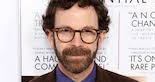 A native of New York – and graduate of NYU – Kaufman currently lives in California where he said his writing is pretty “cut and dried.”
“When I write characters and situations and relationships,” he said, “I try to sort of utilize what I know about the world, limited as it is, and what I hear from my friends and see with my relatives.”
Share A Writers Moment with a friend by clicking the g+1 button below
Born in November 1958, Kaufman is a screenwriter, producer, director, and lyricist who wrote the films Being John Malkovich, Adaptation, and (one of my faves) Eternal Sunshine of the Spotless Mind, for which he won an Academy Award. Those three scripts appear in the Writers Guild of America’s list of the 101 greatest movie screenplays ever written.
“I want to create situations that give people something to think about,” Kaufman said about his works. His works explore such universal themes as identity crisis, mortality, and the meaning of life through a parapsychological framework, putting him fairly firmly in the “surrealist” category for his writing.
 A native of New York – and graduate of NYU – Kaufman currently lives in California where he said his writing is pretty “cut and dried.”
“When I write characters and situations and relationships,” he said, “I try to sort of utilize what I know about the world, limited as it is, and what I hear from my friends and see with my relatives.”
Share A Writers Moment with a friend by clicking the g+1 button below


Taking genre' literature to the top
“It's funny because I think that genre literature can be looked down on by literature literature. And I like that! I like being scorned; I like people looking down their noses at us a little bit... It gives us a little chip on our shoulder.”– Don Winslow
Born in New York City on Halloween night 1953, Winslow grew up in Rhode Island and credits his parents for preparing him to become a writer. His mother was a librarian, and his father a non-commissioned officer in the United States Navy who was a great storyteller and invited Navy friends around who told even more, inspiring Winslow to become a storyteller himself.
His first “genre” book, in 1991, introduced detective Neal Carey, a recurring figure in many of his detective/crime novels.
 To date he has written 19 books and had two – The Life of Bobby Z and Savages – made into movies. His newest book, The Force – is under production for a 2019 movie release. He said he thinks of writing in the genre as “being in a special place.”
“And, as a writer, when you fall in love with a place, you want to spend more time in it, either physically or mentally,” he said, “so you write about it.”
Share A Writers Moment with a friend by clicking the g+1 button below
October 30, 2018
Mastering the publishing process
“Writing one's first novel, getting it sold, and shepherding it through the labyrinths of editing, production, marketing, journalism, and social media is an arduous and nerve-wracking process.” – Paul Di Filippo
Di Filippo – whose 64th birthday was yesterday – is the author of hundreds of short stories and numerous novels and “collections.” Unlike some authors who find second or third novels to be problematical, Di Filippo believes that once you master the labyrinth of “processes” in getting that first book out there, it becomes easier in subsequent efforts. And as his “process” has grown so have his awards and rewards for those efforts. In the past 15 years he’s been a finalist for the Hugo, Nebula, BSFA, Philip K. Dick, Wired Magazine, and World Fantasy awards.
Born and raised in Rhode Island, Di Filippo has not only become one of America’s leading science fiction and fantasy writers but also a highly respected reviewer, writing for such magazines as Asimov's Science Fiction, The New York Review of Science Fiction and the online Science Fiction Weekly.
 He also is co-author (with Damien Broderick) of Science Fiction: The 101 Best Novels 1985-2010.
 While he has had success with series' of books, including the highly praised Steampunk Trilogy, he said readers and writers alike shouldn’t always expect a repeat of what a writer first produces, because it’s usually not possible. Although, he noted wryly, “The impossibility of a sequel ever recapturing everything - or anything - about its ancestor never stopped legions of writers from trying, or hordes of readers and publishers from demanding more of what they previously enjoyed.”
Share A Writer’s Moment with a friend by clicking the g+1 button below.
October 29, 2018
A 'Pick Me Up' Writing Result
“I do seem to have a lot of family secrets in my novels. I guess I'm one of those writers who is often writing about the same sort of themes, but taking different angles on them.” – Nancy Werlin
Born on Oct. 29, 1961, Werlin has made her name as a writer of young-adult novels, winning a National Book Award nomination for The Rules of Survival, and winning an Edgar Award for Best Young Adult Novel for The Killer's Cousin. She also was an Edgar award finalist for Locked Inside.
A native of Massachusetts, Werlin was a reader by age of 3, she was reading up to 10 books a week by 3rdgrade and even read encyclopedias, especially those that contained an appendix of plot synopses for famous novels. “By the time I was ten, I knew I wanted to be a writer to create what I loved so much,” she said. "I just read all the time and it occurred to me that somebody had to write these things—and why shouldn't it be me?"
A graduate of Yale (in English) Werlin has written 10 young adult novels, including New York Times-bestselling fantasy Impossible. Her newest book is And Then There Were Four, a suspense thriller.
 One thing that often bothers writers – especially new writers – is how publishers choose cover art, but Werlin said it’s no longer a concern for her. “I used to want covers that represented the book's contents very closely and were also pretty. Many folks automatically believe that this is what makes a good cover. But I've changed my mind about this. While the cover should not lie (by implication or outright), its job is simply to say: 'Pick me up!' to someone who might like the book.”
Share A Writers Moment with a friend by clicking the g+1 button below
October 23, 2018
Reconnecting to our family stories
“To understand and reconnect with our stories, the stories of the ancestors, is to build our identities. We all belong to an ancient identity. Stories are the rivers that take us there.”– Frank Delaney
Delaney, born on this date in 1942, was an Irish novelist, journalist and broadcaster noted for his attention to the basics and basis of writing and writing style. Among his many best sellers were Ireland, and Simple Courage: A True Story of Peril on the Sea. Delaney died in 2017.
A great essayist, Delaney’s work was published in many of the leading newspapers in the United States, the UK and Ireland, including on the Op-ed pages of The New York Times. He was a frequent public speaker and a contributor and guest on a variety of National Public Radio programs. Also recipient of many awards and accolades for his adaptations to radio and television, he said he thought the best novels were those that could also be “heard.”
 “If you need proof of how the oral relates to the written,” he said, “consider that many great novelists, including Joyce and Hemingway, never submitted a piece of work without first reading it aloud.”
When asked who he most admired as an author, he said American writer F. Scott Fitzgerald. “The Great Gatsby . . . remains the most perfect novel that has ever come out of the United States,” he said. “Everything in the book moves as it should, in the manner of a musical piece by Bach or Mozart.”
Share A Writer’s Moment with a friend by clicking the g+1 button below.
October 22, 2018
An 'Easy Solution': 'Just Write'
“I've always said the hardest aspect of the job of being a writer is writing. Writing is a lonely profession.”– Bob Mayer
Born on Oct. 21, 1959, Mayer is a West Point graduate, former Green Beret, bestselling author, much sought-after speaker, and the CEO of Cool Gus Publishing. He has authored over 60 novels in multiple genres, selling more than 4 million books, including three #1 series: Area 51, Atlantis, and The Green Berets.
Mayer's prolific writing encompasses both his military experience and his fascination for history, legends and mythology, though most of his novels reside within the realm of science fiction, Young Adult and suspense. He also has had a successful foray into romance writing, coming up with an interesting combination of military/romance tales. Not only did it succeed, but he now is the only male writer to reach the Romance Writers of America Honor Roll.
A native of New York City, Mayer now makes his home in Tennessee and despite his ongoing success he said he understands why writers are faced with “issues” when they put pen to paper – or fingers to keyboards.

“Completing any writing project, particularly a novel, is a daunting prospect. Many people become frozen by the prospect. Others keep waiting for the right time. Some wait for the spark of inspiration. Even experienced writers find it is easier to do anything other than actually write.”
Share A Writer’s Moment with a friend by clicking the g+1 button below.
No age limit to success
“The secret to being a writer is that you have to write. It's not enough to think about writing or to study literature or plan a future life as an author. You really have to lock yourself away, alone, and get to work” – Augusten Burroughs
Perhaps best known for his bestselling memoir Running with Scissors. Burroughs' essays and feature writing, often seen in such publications as The New York Times, House and Garden, and Attitude, focuses on subjects such as advertising, psychiatrists, religious families, and home shopping networks. A former advertising specialist, he has a knack for writing great titles, including those for his books. Among them are Dry (about overcoming alcoholism), Magical Thinking, Possible Side Effects and Sellevision.
Born on this date in 1965, Burroughs said that for a time everything he was writing seemed to be rejected out of hand, but he noted, “As a writer, you can't allow yourself the luxury of being discouraged and giving up when you are rejected, either by agents or publishers. You absolutely must plow forward.”
 But Burroughs, the son of renowned poet Margaret Robison, perservered. “I knew that if I wrote a new book every six months or every year, if I continued to read great books, eventually I would write something worthy of publication. I understood I might be in my forties or my fifties or even my sixties, but I felt confident that it would happen.”
 Share A Writers Moment with a friend by clicking the g+1 button below
October 19, 2018
Saturday's Poem
“Poetry’s medium is not merely light as air, it is air, vital and deep as ordinary breath.” – Robert Pinsky
Born in New Jersey on Oct. 20, 1940, Pinsky has been an essayist, literary critic, and poet laureate consultant to the Library of Congress. A former saxophonist, he said being a musician was profoundly influential on his poetry, and the musicality of poetry was and is extremely important to his work.
 Poetry, Pinsky said, is a vocal art, not necessarily performative but for reading to oneself or recalling some lines by memory. For Saturday’s poem – from Pinsky’s 6-part City Elegies – here is:
III. House Hour
Now the pale honey of a kitchen lightBurns at an upstairs window, the sash a cross. Milky daylight moon,Sky scored by phone lines. Houses in rows Patient as cows.
Dormers and gables of an immigrant street In a small city, the wind-worn afternoon Shading into night.
Hundreds of times beforeI have felt it in some districtOf shingle and downspout at just this hour. The renter walking home from the bus Carrying a crisp bag. Maybe a storeVisible at the corner, neon at dusk.Macaroni mist fogging the glass.
Unwilled, seductive as music, brief As dusk itself, the forgotten mirror Brushed for dozens of yearsBy the same gray light, the same shadows Of soffit and beam end, a reef Of old snow glowing along the walk.
If I am hollow, or if I am heavy with longing, the same: The ponderous houses of siding,Fir framing, horsehair plaster, fired bricksIn a certain light, changing nothing, but touching Those separate hours of the pastAnd now at this one timeOf day touching this one, last spokesOf light silvering the attic dust.
Share A Writer’s Moment with a friend by clicking the g+1 button below
Saturday's Poem a few hours early
“Poetry’s medium is not merely light as air, it is air, vital and deep as ordinary breath.” – Robert Pinsky
Born in New Jersey on Oct. 20, 1940, Pinsky has been an essayist, literary critic, and poet laureate consultant to the Library of Congress. A former saxophonist, he said being a musician was profoundly influential on his poetry, and the musicality of poetry was and is extremely important to his work.
Poetry, Pinsky said, is a vocal art, not necessarily performative but for reading to oneself or recalling some lines by memory. For Saturday’s poem – from Pinsky’s 6-part City Elegies – here is:III. House Hour
Now the pale honey of a kitchen lightBurns at an upstairs window, the sash a cross. Milky daylight moon,Sky scored by phone lines. Houses in rows Patient as cows.
Dormers and gables of an immigrant street In a small city, the wind-worn afternoon Shading into night.
Hundreds of times beforeI have felt it in some districtOf shingle and downspout at just this hour. The renter walking home from the bus Carrying a crisp bag. Maybe a storeVisible at the corner, neon at dusk.Macaroni mist fogging the glass.
Unwilled, seductive as music, brief As dusk itself, the forgotten mirror Brushed for dozens of yearsBy the same gray light, the same shadows Of soffit and beam end, a reef Of old snow glowing along the walk.
If I am hollow, or if I am heavy with longing, the same: The ponderous houses of siding,Fir framing, horsehair plaster, fired bricksIn a certain light, changing nothing, but touching Those separate hours of the pastAnd now at this one timeOf day touching this one, last spokesOf light silvering the attic dust.
Share A Writer’s Moment with a friend by clicking the g+1 button below
October 18, 2018
Writing your own 'distinct sound'
“I just believe that young people need to be able to learn how to write in their own voice. Just like a musician, you pride yourself on having your own distinct sound.” – Terry McMillan
Born on this day in 1951, McMillan grew up in Michigan and earned a degree from UC-Berkeley before starting her writing career in her late 30s. After modest success, she had a major breakthrough with the 1992 best-seller Waiting to Exhale, credited with contributing to a shift in Black popular cultural consciousness and the visibility of a female Black middle-class identity in popular culture.
 And while she drew on her own experiences for part of that book, it was the 1998 semi-autobiographical novel How Stella Got Her Groove Back that firmly cemented her writing as a force to be reckoned with.
Her work is characterized by relatable female protagonists, and she says all of them reflect a part of herself, something she thinks all writers have incorporated into their work.
“Few writers are willing to admit (that) writing is autobiographical,” she said. “But it mostly is.”
Share A Writer’s Moment with a friend by clicking the g+1 button below.