Dan Jorgensen's Blog, page 392
September 17, 2018
Demanding 'character' reactions
“One of my great passions is the collection of historical trivia…I love to curl up with a book about some dusty corner of history.” – Lynn Abbey
Born in September, 1948 Abbey was firmly entrenched in a career as a computer programmer when she literally got started her start in the publishing world by accident. While working in Ann Arbor, Mich., in 1979 she was on her way to pick up famed science fiction writer Gordon R. Dickson for a guest appearance at Ann Arbor’s Science Fiction Convention, ConFusion. En route, she was injured in a car accident. Dickson, feeling guilty, offered to critique and even edit some of her writing after learning that Abbey not only was a fan of his work but also had been doing some creative writing of her own.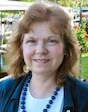
His editorial assistance led to her first book, Daughter of the Bright Moon, published to accolades and getting her hooked on doing more. Her first short story "The Face of Chaos," was published shortly after as part of a Thieves World anthology.
The anthology route has been a good one for Abbey, who has had numerous stories selected – constantly exposing her writing to readers who like to read short stories by a range of authors. She also has become a noted editor of science fiction and for her work on tie-ins to video games – a nod to her computer background.
As a writer, Abbey says she demands results from her characters. “ I'm one of those writers who, when writing, believes she's god - and that she hasn't bestowed free will on any of her characters. In that sense there are no surprises in any of my books.”
Share A Writer’s Moment by clicking on the g+1 link below.
Born in September, 1948 Abbey was firmly entrenched in a career as a computer programmer when she literally got started her start in the publishing world by accident. While working in Ann Arbor, Mich., in 1979 she was on her way to pick up famed science fiction writer Gordon R. Dickson for a guest appearance at Ann Arbor’s Science Fiction Convention, ConFusion. En route, she was injured in a car accident. Dickson, feeling guilty, offered to critique and even edit some of her writing after learning that Abbey not only was a fan of his work but also had been doing some creative writing of her own.

His editorial assistance led to her first book, Daughter of the Bright Moon, published to accolades and getting her hooked on doing more. Her first short story "The Face of Chaos," was published shortly after as part of a Thieves World anthology.
The anthology route has been a good one for Abbey, who has had numerous stories selected – constantly exposing her writing to readers who like to read short stories by a range of authors. She also has become a noted editor of science fiction and for her work on tie-ins to video games – a nod to her computer background.
As a writer, Abbey says she demands results from her characters. “ I'm one of those writers who, when writing, believes she's god - and that she hasn't bestowed free will on any of her characters. In that sense there are no surprises in any of my books.”
Share A Writer’s Moment by clicking on the g+1 link below.


September 15, 2018
Songs to Life
“If a man is not faithful to his own individuality, he cannot be loyal to anything.”– Claude McKay
Born in Jamaica on this date in 1889, McKay was the son of peasant farmers, who was infused with racial pride and a great sense of his African heritage. His 1912 book of poems, Songs of Jamaica, about Jamaican peasant life, established his credentials as a leading black poet. And, while he wrote poetry for most of his life, he also had many novels and short stories, including 1928’s Home To Harlem about New York City’s black ghetto life.
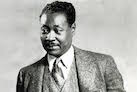 It is arguably considered the first commercially successful novel by a black writer.
 For Saturday’s Poem, here is McKay’s,
To A Poet
There is a lovely noise about your name,
Above the shoutings of the city clear,
More than a moment's merriment, whose claim
Will greater grow with every mellowed year.
The people will not bear you down the street,
Dancing to the strong rhythm of your words,
The modern kings will throttle you to greet
The piping voice of artificial birds.
But the rare lonely spirits, even mine,
Who love the immortal music of all days,
Will see the glory of your trailing line,
The bedded beauty of your haunting lays.
Share A Writer’s Moment with a friend by clicking the g+1 button below
September 14, 2018
History + imagination = bestselling success
“The thing that most attracts me to historical fiction is taking the factual record as far as it is known, using that as scaffolding, and then letting imagination build the structure that fills in those things we can never find out for sure.” – Geraldine Brooks Born on this date in 1955, Brooks is an Australian American journalist and author whose novel Marchwon the Pulitzer Prize for Fiction after establishing her credentials as a writer of historical fiction with her first novel Year of Wonders, published in 2001. That book, set in 1666, depicts the story of a young woman’s battle to save fellow villagers when the bubonic plague suddenly strikes. A massive international bestseller Wonders moved her over from a journalistic career into one as a full-time novelist. [image error]March was inspired by her fondness for Louisa May Alcott’s Little Women, which her mother had given her as a child. To connect that memorable reading experience to her new status in 2002 as an American citizen, she researched the Civil War historical setting of Little Women and decided to create a chronicle of wartime service for the "absent father" of the March girls. In the process, she also developed a newfound respect for religion. “You can't write about the past and ignore religion,” she said. “It was such a fundamental, mind-shaping, driving force for pre-modern societies. I'm very interested in what religion does to us - its capacity to create love and empathy or hatred and violence.”
Meanwhile, she encourages all who are interested in history not to fear writing historical fiction. “There's just so many great stories in the past that you can know a little bit about, but you can't know it all,” she said. “And that's where your imagination can go to work.”
Share A Writer’s Moment by clicking on the g+1 link below.
Meanwhile, she encourages all who are interested in history not to fear writing historical fiction. “There's just so many great stories in the past that you can know a little bit about, but you can't know it all,” she said. “And that's where your imagination can go to work.”
Share A Writer’s Moment by clicking on the g+1 link below.
September 13, 2018
Overpowering Those Writing Fears
“A writer of fiction lives in fear. Each new day demands new ideas and he can never be sure whether he is going to come up with them or not.” – Roald Dahl
Dahl, a World War II hero for his great skill as a pilot in the Royal Air Force, simultaneously rose to writing prominence during the war with works for both children and adults, ultimately becoming one of the world's best-selling authors. His first books, written for adults, were about his wartime adventures, but he made his first splash into the children’s lit. world with his tale Gremlins, also starting his terrific career writing for kids.
Born on this date, Dahl has been referred to as "one of the greatest storytellers for children of the 20th century,” earning the World Fantasy Award for Life Achievement in 1983, and Children's Author of the Year from the British Book Awards in 1990. In 2008 The London Times placed Dahl 16th on its list of "The 50 greatest British writers since 1945."
Dahl's adult stories, like Tales of the Unexpected, were also adapted into movies and a television series. But his works for children are among the world’s most beloved, especially James and the Giant Peach, Charlie and the Chocolate Factory, and Matilda. The “Charlie” book grew out of a childhood fantasy that he might someday work for the famed Cadbury chocolate company in his native Britain. [image error]“When you're writing a book, with people in it as opposed to animals, it is no good having people who are ordinary, because they are not going to interest your readers at all,” Dahl said about his writing style. “Every writer in the world has to use the characters that have something interesting about them.”
Share A Writer’s Moment by clicking on the g+1 link below.
Dahl, a World War II hero for his great skill as a pilot in the Royal Air Force, simultaneously rose to writing prominence during the war with works for both children and adults, ultimately becoming one of the world's best-selling authors. His first books, written for adults, were about his wartime adventures, but he made his first splash into the children’s lit. world with his tale Gremlins, also starting his terrific career writing for kids.
Born on this date, Dahl has been referred to as "one of the greatest storytellers for children of the 20th century,” earning the World Fantasy Award for Life Achievement in 1983, and Children's Author of the Year from the British Book Awards in 1990. In 2008 The London Times placed Dahl 16th on its list of "The 50 greatest British writers since 1945."
Dahl's adult stories, like Tales of the Unexpected, were also adapted into movies and a television series. But his works for children are among the world’s most beloved, especially James and the Giant Peach, Charlie and the Chocolate Factory, and Matilda. The “Charlie” book grew out of a childhood fantasy that he might someday work for the famed Cadbury chocolate company in his native Britain. [image error]“When you're writing a book, with people in it as opposed to animals, it is no good having people who are ordinary, because they are not going to interest your readers at all,” Dahl said about his writing style. “Every writer in the world has to use the characters that have something interesting about them.”
Share A Writer’s Moment by clicking on the g+1 link below.
September 12, 2018
The Brilliance of Mark Twain
"Anyone who's ever had a bull by the tail knows 5 or 6 things more than anyone who hasn't.” – Mark Twain
Mark Twain, born Samuel Clemens in Hannibal, MO, in 1835, is on nearly everyone’s list of all-time great American authors. As a young man, he held a series of jobs which included work as a printer’s apprentice, a Mississippi riverboat pilot, and a newspaperman in Nevada and San Francisco. He moved gradually from journalism to travel writing and then to fiction, aided by the success of his 1869 travel memoir The Innocents Abroad. Often leaving words open to each reader’s interpretation, Twain would draw his readers into his works by making it their task to clarify what they were reading. His tales of human nature, especially The Adventures of Tom Sawyer (1876) and Huckleberry Finn (1885), remain standard texts in high school and college literature classes.
 “Use plain, simple language, short words and brief sentences,” Twain advised. "That is the way to write English―it is the modern way and the best way. Stick to it; don't let fluff and flowers and verbosity creep in. When you catch an adjective, kill it. No, I don't mean utterly, but kill most of them―then the rest will be valuable. They weaken when they are close together. They give strength when they are wide apart. An adjective habit, or a wordy, diffuse, flowery habit, once fastened upon a person, is as hard to get rid of as any other vice.”
 Share A Writer’s Moment with a friend by clicking the g+1 button below.
September 11, 2018
A Writing Life Without Regret
“I want to live my life so that my nights are not full of regrets.”– D.H. Lawrence
Born in England on this date in 1885, David Herbert Lawrence said he had few regrets from his writing life. He rose from poverty as the son of nearly illiterate parents to become one of the best-known writers of the 20thCentury. While he earned both renown and condemnation for such novels as Sons and Lovers, Women in Love, and Lady Chatterley's Lover, he also was a prolific poet and wrote a couple dozen collections of short stories, countless letters and many essays. His letters also have been gathered into several published volumes.
Life within an industrial setting and the nature of relationships that can be had within such settings were often the hallmarks of Lawrence’s writing, much based on his own “growing up” and young adulthood experiences.
 Among his most praised collections of short stories are The Prussian Officer and Other Stories, and The Woman Who Rode Away and Other Stories, both massive best sellers as were most of his novels. Constantly at odds with British authorities and critics, he decided to travel and live around the globe, including the U.S.
 “I can never decide whether my dreams are the result of my thoughts, “ he mused shortly before his death from tuberculosis at age 44, “or my thoughts the result of my dreams.”
Share A Writer’s Moment with a friend by clicking the g+1 button below
September 10, 2018
That Inspiration To Improve
“Other writers definitely influence my writing. What encourages me and inspires me is when I read a good book. It makes me want to be a better writer.”– Kimberly Willis Holt
Born on Sept. 9, 1960, Holt is perhaps best known for the novel When Zachary Beaver Came to Town, which won the 1999 U.S. National Book Award for Young People's Literature. Daughter of a US Navy Chief in Pensacola, Florida, she spent most of her childhood in Forest Hill, LA, “growing up” experience that inspired her award-winning first novel, My Louisiana Sky. Her experiences as a “Navy brat” are reflected in her Piper Reed series. To date she has written 18 books for Young Adults and Children
Holt said she’s often amazed how the tiniest real life moments can grow into books, and that she always has in the back of her mind that her characters really don’t go away once a book is finished.
“My biggest disappointment (as a writer),” she said, “is that once I’m finished working on the characters, I really do expect to see them in the flesh one day.” As many readers would agree, it is often hard to “let those characters go.”

Holt also has some great advice for young authors who say they struggle with “wrapping up” a piece on which they’re working. “If you're having trouble finishing a book, it might be that you're trying to hard to fix it as you go. Just finish the story, no matter how terrible you think that first draft is. Then let it cool off. In other words, don't look at it for a while. Then you can rewrite it.”
Share A Writer’s Moment with a friend by clicking the g+1 button below
September 8, 2018
Your Necessity for Success
"Persistence is a necessary ingredient for success."- Debasish Mridha
Mridha is a neurologist and attending physician at Covenant HealthCare at the Michigan Neurology Center who also enjoys writing, both for relaxation and as a way to express his creativity. Renowned as both a healer and a poet and essayist, he has written extensively on the importance of the power of words in the healing process. “Focus on your dreams, believe in yourself, and know that anything is possible if you put your heart and mind into it,” he said. “A writer creates wings of words and lets them fly in the sky of readers’ minds.”
For Saturday’s Poem, here is Mridha’s,
Dreams of Desire In my heart, a live fire,
Like the morning sun
Burning my mind, to purify the soul
That is my love.
In my dream, a burning desire,
Like the light from a diamond
Make my life ever precious
That is my love.
My mind is ever longing,
As the moon longs for night.
Make the night dreams of desire
That is my love.
Share A Writer’s Moment with a friend by clicking the g+1 button below
September 7, 2018
Life's Greatest Adventure
“Learning should be a joy and full of excitement. It is life's greatest adventure; it is an illustrated excursion into the minds of the noble and the learned.”– Taylor Caldwell
Born in England this date in 1900, Caldwell emigrated to the U.S. in 1907 and spent many of her formative years living in poverty after her father died. It shaped her values and she said she always wanted to have money and never again live in fear of want.
A writer even before leaving England (where she won a Charles Dickens Prize for young writers) she became a prolific author of popular fiction, writing under her own name and the pen names Marcus Holland and Max Reiner, and by her married name of J. Miriam Reback.
In her fiction, she often used real historical events or persons combined with her own vivid imagination, writing bestsellers like Dynasty of Death, Dear and Glorious Physician (about Saint Luke), The Earth is the Lord's (about Genghis Khan), and Captains and the Kings. Over her long lifetime (she died at age 85), she had nearly 50 novels published and purportedly discarded more than 150 more. To date, her books have sold upward of 40 million copies worldwide.
 “A born skeptic” she believed firmly in education and hard work. “I wanted to acquire an education, work extremely hard and never deviate from my goal to make it.”
Share A Writer’s Moment with a friend by clicking the g+1 button below.
September 6, 2018
Exploring 'Voice' Possibilities
“I do think it's important to remember that writers do not have a monopoly of wisdom on their books. They can be wrong about their own books, they can often learn about their own books.” – China Miéville
Award-winning writer Miéville (for such books as King Rat and The City & the City) was born in England on this date in 1972 and said he got his name in a rather unorthodox fashion. “My parents went through the dictionary looking for a beautiful name, nearly called me Banyan, flicked on a few pages and came to China, which is cockney rhyming slang for mate,” he said.
Miéville is a noted political activist and intended to have a career in academics, earning degrees in social anthropology and international relations, then teaching English in the Middle East before trying his hand at writing in the late 1990s. Good choice. Since then he has won dozens of writing honors, including the Arthur C. Clarke Award (three times), the British Fantasy Award (twice), the Hugo, Kitschies and World Fantasy Awards, and Locus Awards for Best Fantasy Novel (four times), Best Novelette, and Best Young Adult book.
 A Fellow of the Royal Society of Literature, he has authored 12 novels, 3 collections of short stories, several comic books and children’s books, 6 nonfiction books, and several collections of essays and said he has plans to write a book in every genre, if possible.
 “Every book I write, the first thing I have to do is get into the voice,” he said, “and the voice varies from book to book - that's part of what's interesting to me.”
Share A Writer’s Moment with a friend by clicking the g+1 button below