Dan Jorgensen's Blog, page 391
September 28, 2018
Like honey, not medicine
“The best novels are those that are important without being like medicine; they have something to say, are expansive and intelligent but never forget to be entertaining and to have character and emotion at their heart." -- Chimamanda Ngozi AdichieAdichie, born in September, 1977, grew up in Nigeria. Her work has been translated into 30 languages and has appeared in various publications, including The New Yorker, Granta, The O. Henry Prize Stories, the Financial Times, and Zoetrope. Winner of a MacArthur Foundation Fellowship (known as “The Genius Grant”), she is the author of the novels Purple Hibiscus, Half of a Yellow Sun, and Americanah, and the story collection The Thing Around Your Neck. Americanah, published around the world in 2013, has received numerous accolades, including winning the National Book Critics Circle Award for Fiction and The Chicago Tribune Heartland Prize for Fiction; and one of The New York Times Ten Best Books of the Year.
[image error]As for non-fiction, which she is exploring in more detail, she noted, “Non-fiction, and in particular the literary memoir, the stylized recollection of personal experience, is often as much about character and story and emotion as fiction is.
“I am drawn, as a reader, to detail-drenched stories about human lives affected as much by the internal as by the external, (what) Jane Smiley nicely describes as 'first and foremost about how individuals fit, or don't fit, into their social worlds.”
Share A Writer’s Moment by clicking on the g+1 link below.
[image error]As for non-fiction, which she is exploring in more detail, she noted, “Non-fiction, and in particular the literary memoir, the stylized recollection of personal experience, is often as much about character and story and emotion as fiction is.
“I am drawn, as a reader, to detail-drenched stories about human lives affected as much by the internal as by the external, (what) Jane Smiley nicely describes as 'first and foremost about how individuals fit, or don't fit, into their social worlds.”
Share A Writer’s Moment by clicking on the g+1 link below.


September 27, 2018
Something Worth Saying
“The difference between people who believe they have books inside of them and those who actually write books is sheer cussed persistence - the ability to make yourself work at your craft, every day - the belief, even in the face of obstacles, that you've got something worth saying.”– Jennifer Weiner
Born in 1970, Weiner jump-started her writing career by developing a column called Generation XIII, i.e., Generation X – the generation to which she belongs – at a small Pennsylvania newspaper. After a stint at the Lexington, KY, Herald-Leader she moved over to the Philadelphia Inquirer where she continued to write her columns, did feature stories, and freelanced for such notable magazines as Mademoiselle and Seventeen.
After earning awards for her newspaper work, she started writing novels in the 2000s and has had great success, including the terrific In Her Shoes (also made into a feature film). To date, she has authored more than a dozen novels, and short story collections selling millions of copies around the globe.
“I don't write literary fiction,” she said. “I write books that are entertaining, but are also, I hope, well-constructed and thoughtful and funny and have things to say about men and women and families and children and life in America today.”
Share A Writer’s Moment by clicking on the g+1 link below.
September 26, 2018
Writing to escape from emotion
“Poetry is not a turning loose of emotion, but an escape from emotion; it is not the expression of personality, but an escape from personality. But, of course, only those who have personality and emotions know what it means to want to escape from these things.” – T.S. Eliot
Born Thomas Stearns Eliot on this day in 1888, Eliot was an essayist, publisher, playwright, literary and social critic, and one of the 20th century's major poets. He started life as an American and ended it 76 years later as an English citizen and winner of the Nobel Prize in Literature, "for his outstanding, pioneer contribution to present-day poetry." The award came in 1948 and he lamented that he was almost sad to have the award because “No one has ever done anything after he got it.” Having said that, he promptly wrote his 1949 award-winning play The Cocktail Party, then went on to author two more plays, dozens of poems, and several highly regarded works of nonfiction before his death in 1965. [image error]
Eliot first attracted widespread attention for his poem The Love Song of J. Alfred Prufrock (1915), which is seen as a masterpiece of the Modernist movement. It was followed by some of the best-known poems in the English language, including The Waste Land (1922), The Hollow Men (1925), Ash Wednesday (1930), and Four Quartets (1945). “Poetry should help, not only to refine the language of the time, but to prevent it from changing too rapidly,” he said. “Genuine poetry can communicate before it is understood.”
Born Thomas Stearns Eliot on this day in 1888, Eliot was an essayist, publisher, playwright, literary and social critic, and one of the 20th century's major poets. He started life as an American and ended it 76 years later as an English citizen and winner of the Nobel Prize in Literature, "for his outstanding, pioneer contribution to present-day poetry." The award came in 1948 and he lamented that he was almost sad to have the award because “No one has ever done anything after he got it.” Having said that, he promptly wrote his 1949 award-winning play The Cocktail Party, then went on to author two more plays, dozens of poems, and several highly regarded works of nonfiction before his death in 1965. [image error]
Eliot first attracted widespread attention for his poem The Love Song of J. Alfred Prufrock (1915), which is seen as a masterpiece of the Modernist movement. It was followed by some of the best-known poems in the English language, including The Waste Land (1922), The Hollow Men (1925), Ash Wednesday (1930), and Four Quartets (1945). “Poetry should help, not only to refine the language of the time, but to prevent it from changing too rapidly,” he said. “Genuine poetry can communicate before it is understood.”
September 25, 2018
Writing experiences ... and dreams
“What it takes is to actually write: not to think about it, not to imagine it, not to talk about it, but to actually want to sit down and write. I'm lucky I learned that habit a really long time ago. I credit my mother with that. She was an English teacher, but she was a writer.” – Luanne Rice
Luanne Rice has been a regular on the New York Times’ Bestseller List, but then she’s had lots of opportunities, producing more than 30 novels. Her work has been translated into 24 languages and 5 have been made into movies – two of which were selected for TV’s “Hallmark Hall of Fame.”
Many of her novels deal with love and family, although it is about nature and the sea that she truly excels. Among her works are The Lemon Orchard, Little Night, The Silver Boat, and Sandcastles. Born 63 years ago this day in New Britain, CT, Rice got into writing early and had her first published poem (in the Hartford Courant) at age 11. Her first short story was published in American Girl magazine when she was 15, and her debut novel, Angels All Over Town, at age 30.
As a just-beginning novelist, Rice was married to a law student and would sit in on lectures on criminal law and evidence, mesmerized by how the cases would unfold and getting ideas for her writing. From that she developed a research and writing style that have led to her remarkable success. [image error]
She said she enjoys doing research, and also writes down her dreams – both of which make up parts of her work. But, she said, she bases many characters on the real people she has met and is inspired by. “While novels are fiction, mine are usually very close to my heart.”
Share A Writer’s Moment by clicking on the g+1 link below
Luanne Rice has been a regular on the New York Times’ Bestseller List, but then she’s had lots of opportunities, producing more than 30 novels. Her work has been translated into 24 languages and 5 have been made into movies – two of which were selected for TV’s “Hallmark Hall of Fame.”
Many of her novels deal with love and family, although it is about nature and the sea that she truly excels. Among her works are The Lemon Orchard, Little Night, The Silver Boat, and Sandcastles. Born 63 years ago this day in New Britain, CT, Rice got into writing early and had her first published poem (in the Hartford Courant) at age 11. Her first short story was published in American Girl magazine when she was 15, and her debut novel, Angels All Over Town, at age 30.
As a just-beginning novelist, Rice was married to a law student and would sit in on lectures on criminal law and evidence, mesmerized by how the cases would unfold and getting ideas for her writing. From that she developed a research and writing style that have led to her remarkable success. [image error]
She said she enjoys doing research, and also writes down her dreams – both of which make up parts of her work. But, she said, she bases many characters on the real people she has met and is inspired by. “While novels are fiction, mine are usually very close to my heart.”
Share A Writer’s Moment by clicking on the g+1 link below
September 23, 2018
Permission to Discover
“Ultimately, theatre is about creating a sense of wonder, and I think wonder is achieved not by a kind of wide-eyed silliness but by being available to that which is most unknown, inside the material and inside yourself.”– George C. Wolfe
Born on this date in 1954, Wolfe is an American playwright and director in both theater and film. He won a Tony Award for directing Angels in America: Millennium Approaches and another Tony for his direction of the musical Bring in 'da Noise/Bring in 'da Funk. He’s currently directing the Broadway revival of Eugene O'Neill's The Iceman Cometh with Denzel Washington in the lead role.
A native of Kentucky, he started writing both poetry and prose while still in high school and continued his writing at Pomona College in California, where he first tried his hand at writing plays, something he almost immediately fell in love with.
 That led to a MFA in dramatic writing and musical theater at New York University and a career that has led to dozens of writing, producing and directing awards. In 2013 he was inducted into the American Theater Hall of Fame.
 “Confidence comes in going on personal journeys in a public arena and feeling as though you have a right to do that,” he said. “You have to give yourself permission to discover what you need to discover and not worry about how pretty the journey is. If you're aware of the pretty, you're not going to dig into the mess.”
Share A Writer’s Moment with a friend by clicking the g+1 button below
September 22, 2018
Flowing with tides of the mind
“Happiness is not a matter of events; it depends upon the tides of the mind.”– Alice Meynell
Born in London on this date in 1847, Meynell was a writer, editor, critic, and suffragist, but primarily a poet. Her more than two-dozen published collections of poems began with 1875’sPreludes, illustrated by her elder sister Elizabeth. She was among the nation’s leading editors and wrote regularly for many journals and newspapers, including The World, The Spectator, the Scots Observer (which became the National Observer), and The Saturday Review. For Saturday’s Poem, here are Meynell’s, At NightHome, home from the horizon far and clear,
Hither the soft wings sweep;
Flocks of the memories of the day draw near
The dovecote doors of sleep.
Oh which are they that come through sweetest light
Of all these homing birds?
Which with the straightest and the swiftest flight?
Your words to me, your words!
My Heart Shall Be Thy GardenMy heart shall be thy garden. Come, my own,
Into thy garden; thine be happy hours
Among my fairest thoughts, my tallest flowers,
From root to crowning petal, thine alone.
Thine is the place from where the seeds are sown
Up to the sky inclosed, with all its showers.
But ah, the birds, the birds! Who shall build bowers
To keep these thine? O friend, the birds have flown.
For as these come and go, and quit our pine
To follow the sweet season, or, new-corners,
Sing one song only from our alder-trees,
My heart has thoughts, which, though thine eyes hold mine.
Flit to the silent world and other summers,
With wings that dip beyond the silver seas.
Share A Writer’s Moment with a friend by clicking the g+1 button below.
September 21, 2018
Loving Writing; Being a Writer
“I just love writing. It's magical, it's somewhere else to go, it's somewhere much more dreadful, somewhere much more exciting. Somewhere I feel I belong, possibly more than in the so-called real world.”– Tanith Lee
Born during this week in 1947, Lee was one of the most prolific British writers of the late 20th and early 21st centuries, authoring nearly 100 novels, 300 short stories, a children's picture book, poems, and episodes of the BBC science fiction series Blake's 7. Lee, who died in 2015, was the first woman to win the British Fantasy Award best novel for her book Death's Master – the second novel in her “Flat Earth” series. Lee died in 2015.
Vibrant is a word often used by critics when writing about her works. But perhaps the best thing that might be said about her writing style is that it can’t be categorized, something that definitely helped her broad readership base.
Once when asked, she said she was greatly influenced by the historical novelist Mary Renault, (who wrote some terrific works on Ancient Greece), but then she quickly added “Oh, and C.S. Lewis.
 Actually,” she said, “I love writers all across the board, so I’ve been influenced by many.” She said her own vivid imagination also shaped her writing career.
“At an early school, when I was about 5, they asked what we wanted to be when we grew up. Everyone said silly things, and I said I wanted to be an actress. So that was what I wanted to be. But what I was, of course, was a writer.”
Share A Writer’s Moment with a friend by clicking the g+1 button below
September 20, 2018
Drawn To Puzzly Plots
“The funny thing is, though I write mysteries, it is the one genre in adult fiction I never read. I read Nancy Drew, of course, when I was a kid, but I think the real appeal is as a writer because I'm drawn to puzzly, complicated plots.”– Elise Broach Born in Georgia on this date in 1963, Broach now makes her home in Connecticut where she settled after earning two degrees from Yale and where she writes all sorts of books, but primarily mysteries. Among her many award-winning novels are Shakespeare's Secret, Desert Crossing, and Masterpiece.
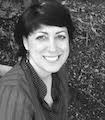 To show the breadth of her writing, Broach has also authored 9 Picture Books for young children, including When Dinosaurs Came with Everything, a 2008 Notable Children's Book (as voted by the American Library Association) and 2018’s, My Pet Wants A Pet. But it's mysteries she most loves.
“Mysteries always have the potential for interesting connections between the elements,” she said. “I'm also most interested in the relationship between the characters. As in Masterpiece,I'm trying to create characters who not only are solving a mystery but are solving the riddle of their own personal relationships.”
Share A Writer’s Moment with a friend by clicking the g+1 button below
September 19, 2018
Reading Royko: A Simple Pleasure
“I never went to a John Wayne movie to find a philosophy to live by or to absorb a profound message. I went for the simple pleasure of spending a couple of hours seeing the bad guys lose.” – Mike Royko
Born on this date in 1932, Royko wrote over 7,500 columns for the Chicago Daily News, the Chicago Sun-Times, and the Chicago Tribune, beginning as a humorist focused on daily life in Chicago before authoring Boss, a scathing negative biography of Chicago Mayor Richard J. Daley in 1971. In 1972 he won the Pulitzer Prize for Commentary.
Royko, who grew up in poverty and was a decorated military veteran, wrote his first columns for his Air Force Base newspaper, beginning in 1955. Ultimately, his columns were syndicated in more than 600 newspapers and he also wrote or compiled dozens of "That's Outrageous!" columns for Reader's Digest.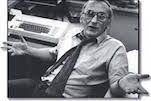 Over the years, his stories touched on everything from politics to sports to the movies and many were compiled into a dozen books, including three published posthumously. Honored by the National Press Club with its Lifetime Achievement Award, he died in 1997.
“Hollywood likes to boast that it can elevate the national conscience,” he wrote in recalling his love of good movies. “Hollywood is right. A good and strong movie can have a more powerful social impact than any and all political speeches or newspaper editorials and columns.”
Share A Writer’s Moment with a friend by clicking the g+1 button below
Born on this date in 1932, Royko wrote over 7,500 columns for the Chicago Daily News, the Chicago Sun-Times, and the Chicago Tribune, beginning as a humorist focused on daily life in Chicago before authoring Boss, a scathing negative biography of Chicago Mayor Richard J. Daley in 1971. In 1972 he won the Pulitzer Prize for Commentary.
Royko, who grew up in poverty and was a decorated military veteran, wrote his first columns for his Air Force Base newspaper, beginning in 1955. Ultimately, his columns were syndicated in more than 600 newspapers and he also wrote or compiled dozens of "That's Outrageous!" columns for Reader's Digest.
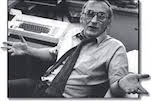 Over the years, his stories touched on everything from politics to sports to the movies and many were compiled into a dozen books, including three published posthumously. Honored by the National Press Club with its Lifetime Achievement Award, he died in 1997.
 “Hollywood likes to boast that it can elevate the national conscience,” he wrote in recalling his love of good movies. “Hollywood is right. A good and strong movie can have a more powerful social impact than any and all political speeches or newspaper editorials and columns.”
Share A Writer’s Moment with a friend by clicking the g+1 button below
September 18, 2018
Applauding Flights of Fantasy
“Encourage children to write their own stories, and then don't rain on their parade. Don't say, 'That's not true.' Applaud flights of fantasy. Help with spelling and grammar, but stand up and cheer the use of imagination.”– Gail Carson Levine
Born in New York City on this date in 1947, bestselling writer Levine grew up wanting to be either a painter or an actress. “I didn't want to be a writer,” she said with conviction. “Most of the authors I liked were dead, so it didn't seem like a safe occupation.”
An avid reader as a girl, she immersed herself in fairy tales and loved the artwork that often accompanied those stories. Gravitating toward art, she actually started her career illustrating for kids’ books before realizing that she really enjoyed doing the words more than the pictures. That led to her re-working the Cinderella story into her first published book, the massively successful Ella Enchanted.
 Since it’s publication in 1997 the book has sold millions, won the Newbery Award (for best children’s literature), and spawned an equally successful movie. She now has written nearly two dozen best sellers, the most recent being 2017’s The Lost Kingdom of Bamarre.
Common messages from her books include the importance of kindness, selflessness, self-confidence and courage in the face of danger, but she said the most important thing she would share is that reading is crucial and kids emulate adults. “If a big person invests time in reading, kids learn reading is important, the child is important, words are important, stories are important.”
Share A Writer’s Moment with a friend by clicking the g+1 button below