Dan Jorgensen's Blog, page 384
December 16, 2018
That 'Stick-to-it-iveness' Factor
“Rejection is not a reason to give up. Sometimes you'll do something that you really like and no one else does. You'll feel terrible, but you've just got to press on and keep trying. If you like doing it and keep working at it, then someday you will succeed.” – Norman Bridwell
Bridwell, born in Indiana in 1928, is a great example. The artist-author of the phenomenally successful Clifford the Big Red Dog series was told he had no artistic talent and his stories were too schmaltzy. His first book, simply named Clifford the Big Red Dog, was rejected by the first 9 publishers he submitted it to. But, instead of throwing in the towel, he tried a 10th and the rest is history.
“Clifford,” by the way, was supposed to be called “Tiny,” but Bridwell’s wife Norma said that name was “stupid.” She liked the name Clifford, and as any writer knows, listen to your spouse or partner. As for Clifford’s friend Emily Elizabeth, that was a no-brainer. It was the name of their daughter, to whom Norman had been conveying his Clifford story in the first place.
 His “poorly drawn; schmaltzy storied” book (just some of his rejecters’ words) became the anchor of a writing empire with 40-some titles printed in 65 countries and selling more than 130 million copies, plus an animated television series still loved by children everywhere.
 Clifford actually embodies his creator, a gentle man with a sense of humor who wanted to share values he hoped children would embrace – kindness, compassion, helpfulness, gratitude and, of course, “stick-to-it-iveness.”
Share A Writers Moment with a friend by clicking the g+1 button below


December 15, 2018
Creating a 'Poetic' life
“Breathe-in experience, breathe-out poetry.” – Muriel Rukeyser
Born on this date in 1915 and raised in New York City, Rukeyser started writing poetry while still in high school but didn’t write it seriously until 1935. That year her first book, Theory of Flight was published by the “Yale Younger Poets Series,“ selected personally by poet laureate Stephen Vincent Benét, who wrote the book’s introduction.
 In her lifetime Rukeyser, who also became a leading political activist, wrote 25 books, 18 of them books of poetry. She died in 1980. For Saturday’s Poem, here is,
Reading Time: 1 Minutes 26 Seconds
The fear of poetry is the
fear: mystery and fury of a midnight street
of windows whose low voluptuous voice
issues, and after that there is not peace.
The round waiting moment in the
theatre : curtain rises, dies into the ceiling
and here is played the scene with the mother
bandaging a revealed son's head. The bandage is torn off.
Curtain goes down. And here is the moment of proof.
That climax when the brain acknowledges the world,
all values extended into the blood awake.
Moment of proof. And as they say Brancusi did,
building his bird to extend through soaring air,
as Kafka planned stories that draw to eternity
through time extended. And the climax strikes.
Love touches so, that months after the look of
blue stare of love, the footbeat on the heart
is translated into the pure cry of birds
following air-cries, or poems, the new scene.
Moment of proof. That strikes long after act.
They fear it. They turn away, hand up, palm out
fending off moment of proof, the straight look, poem.
The prolonged wound-consciousness after the bullet's
shot.
The prolonged love after the look is dead,
the yellow joy after the song of the sun.
Share A Writer’s Moment with a friend by clicking the g+1 button below.
December 14, 2018
A beacon for writers with a dream
“The world was hers for the reading. She would never be lonely again . . . Books became her friends and there was one for every mood.” ― Betty Smith, A Tree Grows in Brooklyn
Born on this date in 1896, Smith never “officially” went beyond 8th grade in her formal education, but because of her innate ability to tell a great story, she was able to convince the University of Michigan to let her “sit in” on writing classes, giving her the background to ultimately become one of America’s all-time best-selling authors.
Smith quickly found that she was among the most “listened to” students in those college classes, because she literally spoke with a different voice, a voice from life experiences. She lived life intensely and cared passionately about matters that others could only guess at, and her professors recognized this. Ultimately she was rewarded with the Avery Hopwood Award, the most prestigious writing prize bestowed by the University.
In 1928, Smith started submitting her work to area newspapers and the N.E.A. Syndicate, selling some 50 articles to the Syndicate and places like the Chicago Tribune, Detroit Free Press, and the Herald Tribune. For this work she made $176.75 – “And I thought I was on top of the world,” she later recalled.
 A dozen years later, the success of A Tree Grows in Brooklyn earned her some $300 thousand in just 2 years – and that was before movie rights, which led to an Academy Award winning movie in 1945. Between then and 1963, she wrote three more best sellers, including Joy in the Morning, another top-grossing book and movie. She remains today as a beacon for all writers who both have a dream and the “can do” spirit to make it a reality.
 Share A Writers Moment with a friend by clicking the g+1 button below
December 12, 2018
More than 'just a story'
“Stories are really important to people and can really change the way they understand, and even live, their lives. As such, I don't agree much with people who say, 'Calm down, it's just a story.’” – Tim Pratt Born on this date in 1968, Pratt is a Senior Editor at Locus Magazine and primarily a writer of science fiction and fantasy – both short stories novels. He won the prestigious Hugo Award in the “Best Short Story” category for his tale “Impossible Dreams” and has authored of 19 novels and 4 short story collections. He's been a frequent finalist for most major awards in the SciFi-Fantasy categories. His most recent novel (written as T.A. Pratt) is 2017’s Closing Doors, although it’s rumored a new one is nearing completion.
 A native of North Carolina, where he studied English at Appalachian State University, Pratt currently makes his home in northern California. A frequent presenter at Writer’s conferences and workshops, Pratt said he “loves” researching for his books and stories, and tries to immerse himself into whatever era or area he’s writing about by reading works done about that place and time.
 “When I was working on a Victorian-era novel,” he said, “to get in the mood, I read several historical novels set in approximately the same period and place, and (found that I) really enjoyed the detective novels of John Dickson Carr.”
Share A Writers Moment with a friend by clicking the g+1 button below
December 11, 2018
Creating readers for life
“Librarians and romance writers accomplish one mission better than anyone, including English teachers: we create readers for life - and what could be more fulfilling than that?” – Susan Elizabeth Phillips
Phillips, born in Ohio on this date in 1948, is credited by many who are “in the know” as being the creator of the sports romance genre (I have to admit I didn’t really know that there was such a genre), and she also has been called the “Queen of Romantic Comedy.”
The only five-time winner of the Romance Writers of America Favorite Book of the Year Award, she was inducted into the Romance Writers Hall of Fame in 2001 and was a recipient of the Romance Writers of America's Lifetime Achievement Award in 2006. That having been said, she said she’s not even close to being “done” with her writing and continues to turn out popular, award-winning books on a regular basis, including the best-selling Chicago Stars series. The latest in that group is First Star I See Tonight.
 “I write about the men you want to read about but don't necessarily want to be married to,” she said when asked about who she likes to select for her protagonists. As for her mantra as a writer, it's simple: “Because life’s too short to read depressing books.”
Share A Writers Moment with a friend by clicking the g+1 button below
Fostering lifelong readers
“Librarians and romance writers accomplish one mission better than anyone, including English teachers: we create readers for life - and what could be more fulfilling than that?” – Susan Elizabeth Phillips
Phillips, born in Ohio on this date in 1948, is credited by many who are “in the know” as being the creator of the sports romance genre (I have to admit I didn’t really know that there was such a genre), and she also has been called the “Queen of Romantic Comedy.”
The only five-time winner of the Romance Writers of America Favorite Book of the Year Award, she was inducted into the Romance Writers Hall of Fame in 2001 and was a recipient of the Romance Writers of America's Lifetime Achievement Award in 2006. That having been said, she said she’s not even close to being “done” with her writing and continues to turn out popular, award-winning books on a regular basis, including the best-selling Chicago Stars series. The latest in that group is First Star I See Tonight.
“I write about the men you want to read about but don't necessarily want to be married to,” she said when asked about who she likes to select for her protagonists. As for her mantra as a writer, it's simple: “Because life’s too short to read depressing books.”Share A Writers Moment with a friend by clicking the g+1 button below
December 9, 2018
Creating the illusion of 'aliveness'
“The thing about a story is that you dream it as you tell it, hoping that others might then dream along with you, and in this way memory and imagination and language combine to make spirits in the head. There is the illusion of aliveness.” – Tim O’Brien
I’ve always felt a kinship with O’Brien, and not only as writers. We are nearly the same age; both Midwesterners (although today he lives in Texas and I in Colorado); and both U.S. Army Infantry veterans – although there’s little doubt that his experiences, particularly in the Vietnam War, were much more intense than my own. A keyattribute to O'Brien's work is his relationship between fiction and reality. While it is fiction, his work contains many details from his real-life experiences, a common literary technique. But his approach brings the writing to life in a way that blurs the lines between fact and fiction.
Writers of historical fiction often must “imagine” themselves in the place and time they are writing so that they can, in turn, put together the story that will not only be based on real events, but also will provide a good tale. If you want to see it done in a masterful way, read O’Brien, especially his award-winning The Things They Carried.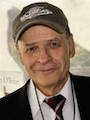 O’Brien, who recently turned 72, said he doesn’t think of himself as a war writer but rather a writer who wrote about war. “When writing, I'm not thinking about war, even if I'm writing about it,” he said. “I'm thinking about sentences, rhythm and story. So the focus, when I'm working, even if it's on a story that takes place at war, is not on bombs or bullets. It's on the story.”
Share A Writer’s Moment with a friend by clicking the g+1 button below.
I’ve always felt a kinship with O’Brien, and not only as writers. We are nearly the same age; both Midwesterners (although today he lives in Texas and I in Colorado); and both U.S. Army Infantry veterans – although there’s little doubt that his experiences, particularly in the Vietnam War, were much more intense than my own. A keyattribute to O'Brien's work is his relationship between fiction and reality. While it is fiction, his work contains many details from his real-life experiences, a common literary technique. But his approach brings the writing to life in a way that blurs the lines between fact and fiction.
Writers of historical fiction often must “imagine” themselves in the place and time they are writing so that they can, in turn, put together the story that will not only be based on real events, but also will provide a good tale. If you want to see it done in a masterful way, read O’Brien, especially his award-winning The Things They Carried.
 O’Brien, who recently turned 72, said he doesn’t think of himself as a war writer but rather a writer who wrote about war. “When writing, I'm not thinking about war, even if I'm writing about it,” he said. “I'm thinking about sentences, rhythm and story. So the focus, when I'm working, even if it's on a story that takes place at war, is not on bombs or bullets. It's on the story.”
Share A Writer’s Moment with a friend by clicking the g+1 button below.
December 8, 2018
Poetry 'surrounds' us
“I like to start with the ordinary, and then nudge it, and then think, 'What happens next, what happens next?'” – James Tate
Born on Dec. 8, 1944, Tate won both the Pulitzer Prize and the American Book Award for his poetry. Growing up with the goal of becoming a gas station attendant, he struggled in high school, overcame being in a gang, and fell in love with writing while taking college classes on a dare. Ultimately he earned three college degrees, taught poetry and creative writing in several major colleges, and became one of America’s greatest poets, authoring 16 books of poetry and 30 books altogether.
 “Poetry is everywhere,” Tate said. “It just needs editing.”
 For Saturday’s Poem, here is Tate’s,
Teaching The Ape To Write PoemsThey didn’t have much troubleTeaching the ape to write poems:First they strapped him into the chair,Then tied the pencil around his hand(The paper had already been nailed down).Then Dr. Bluespire leaned over his shoulderAnd Whispered into his ear:“You look like a god sitting there.
Why don’t you try writing something?”
Share A Writers Moment with a friend by clicking the g+1 button below
December 6, 2018
Stop aspring; start writing!
I read about a psychologist who said we should strike the verb “to be” from our language. Instead of saying “I am a writer,” just say “I write.” Every person spends more time sleeping than any other process, but you rarely hear someone say, “Yeah, I’m a sleeper.” So, you write, and usually you do something else to support your habit. It’s okay. But if you want to write something you have to start writing. I like this quote by Alan Watts, a British-born (in 1915) author and philosopher who spent most of his adult life living – and writing – in California.
“Stop aspiring and start writing. If you’re writing, you’re a writer. So, write like you’re a death row inmate and the governor is out of the country and there’s no chance for a pardon. Write like you’re clinging to the edge of a cliff, white knuckles, on your last breath, and you’ve got just one last thing to say. Write like you’re a bird flying over us and you can see everything.
[image error]
. . . Take a deep breath and tell us your deepest, darkest secret, so we can wipe our brow and know that we’re not alone. Write like you have a message from the king.”
Watts' own writings, and there were many, reflect his keen interest in patterns that occur in nature and which are repeated in various ways and at a wide range of scales – including the patterns to be discerned in the history of civilizations. But, as I mentioned, he was a philosopher.
Share A Writer’s Moment with a friend by clicking the g+1 button below.
December 5, 2018
Strive to open new doors
“We keep moving forward, opening new doors, and doing new things, because we're curious and curiosity keeps leading us down new paths.” – Walt Disney
While Disney – born in Chicago on this day in 1901 – was primarily known as a cartoonist and business mogul, he also was a terrific writer and had an uncanny ability to recognize and adapt others’ writing into the many movies his studio produced. By the time of his death, at the relatively young age of 65, Disney had won 22 Academy Awards (nominated an astounding 59 times) and 4 honorary Academy Awards for his work. He also won 7 Emmys for his television productions.
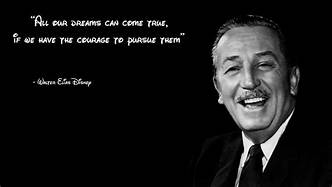 “Life is composed of lights and shadows and we would be untruthful, insincere and saccharine if we tried to pretend there were no shadows,” Disney once said, when asked why he sometimes created characters and dialogue not always as upbeat and “happy” as his early cartoon work. “I would rather entertain and hope that people learned something than educate people and hope they were entertained.“
Share A Writers Moment with a friend by clicking the g+1 button below