Dan Jorgensen's Blog, page 383
December 27, 2018
An adult version of being a kid
“Being a novelist is the adult version of a kid creating a make-believe world. But unlike a child, a writer of fiction has to come up with a structured story, one that has as much meaning for others as it has for her.”– Susan Isaacs
Born on this date in 1943 and raised in New York City, Isaacs began her writing career as a freelance political speechwriter while simultaneously serving as an editor for Seventeen magazine. In her mid-30s she decided to veer away from journalism and speechwriting and try her hand at fiction. Good move. Her first novel (and first attempt at fiction), Compromising Positions, was chosen as a main selection of the Book of the Month Club and was a New York Times bestseller.
Since then she’s authored 15 books, numerous essays, screenplays, and a work of cultural criticism, Brave Dames and Wimpettes: What Women are Really Doing on Page and Screen.
 All of her books have been best sellers and her works have been translated into 30 languages. In addition to writing books and screenplays, Isaacs has reviewed fiction and nonfiction for The New York Times, the Los Angeles Times, The Washington Post, and Newsday.
 She said she loves the writing process. “There are days where I lose track of time, of place, of everything else,” she said, “because I've been transported to another universe. “
Share A Writers Moment with a friend by clicking the g+1 button below


December 26, 2018
That's a 'unique' writing style
“As a writer, I need an enormous amount of time alone. Writing is 90 percent procrastination: reading magazines, eating cereal out of the box, watching infomercials. It's a matter of doing everything you can to avoid writing, until it is about four in the morning and you reach the point where you have to write. Having anybody watching that or attempting to share it with me would be grisly.” – Paul Rudnick
Born this day in 1957, Paul Rudnick is an American playwright, novelist, screenwriter and essayist. First catapulted to fame for his work Addams Family Values, his plays have been produced both on an off Broadway and around the world. Most of his works for theater are comedies and the New York Times once said, "Line by line, Mr. Rudnick may be the funniest writer for the stage in the United States today."

A native of New Jersey, he attended Yale University and his first hit play wasPoor Little Lambs, a comedy about a female Yale student's attempt to join the Whiffenpoofs, the famed (one-time) all-male singing group.
Since 1998, Rudnick also has been a frequent contributor to The New Yorker magazine, mostly short humor pieces. His work appears in the collections Fierce Pajamasand Disquiet, Please.
Share A Writers Moment with a friend by clicking the g+1 button below
Fostering a 'unique' writing style
“As a writer, I need an enormous amount of time alone. Writing is 90 percent procrastination: reading magazines, eating cereal out of the box, watching infomercials. It's a matter of doing everything you can to avoid writing, until it is about four in the morning and you reach the point where you have to write. Having anybody watching that or attempting to share it with me would be grisly.” – Paul Rudnick
Born this day in 1957, Paul Rudnick is an American playwright, novelist, screenwriter and essayist. First catapulted to fame for his work Addams Family Values, his plays have been produced both on an off Broadway and around the world. Most of his works for theater are comedies and the New York Times once said, "Line by line, Mr. Rudnick may be the funniest writer for the stage in the United States today."
A native of New Jersey, he attended Yale University and his first hit play wasPoor Little Lambs, a comedy about a female Yale student's attempt to join the Whiffenpoofs, the famed (one-time) all-male singing group.
Since 1998, Rudnick also has been a frequent contributor to The New Yorker magazine, mostly short humor pieces. His work appears in the collections Fierce Pajamasand Disquiet, Please.
Share A Writers Moment with a friend by clicking the g+1 button below
December 24, 2018
Writing as an emotional release
“An artist's love for what they create is what creates love.”– Sheila Heti
Born in Toronto, Canada, on Christmas Day, 1976, Heti first rose to fame as co-editor of the New York Times bestseller Women in Clothes, which features the voices of 639 women from around the world. She also is the author of 8 books, which to date have been translated into 18 languages. Among those was the 2013 mega-bestseller How A Person Should Be, listed among numerous “best of” lists. That same year, Time magazine listed her as one of the 150 “Most Influential People in the World,” after she was named among 15 writers who are “shaping the way we read and write fiction in the 21stcentury.”
“When you're writing,” she said, “I think a big part of writing comes out of an attempt to understand yourself. You're dealing with emotions and thoughts that are native to you. So that probably winds up in your characters.”

As a journalistic writer, Heti has conducted numerous interviews with other famous writers and artists and had her works printed in The New Yorker and The London Review of Books, among others. And she has authored several plays, produced in both New York and Toronto.
“The reason I write is because I have questions,” Heti said. “What I don't want is for people to forget that I'm a novelist and think I'm a sociologist or something. I don't want to feel trapped into a corner where I don't belong. “
Share A Writers Moment with a friend by clicking the g+1 button below
December 23, 2018
'Authoring' begins at Page One
“An author is somebody who writes a story. It doesn't matter if you're a kid or if you're a grown-up, it doesn't matter if the book gets published and lots of people get to read it, or if you make just one copy and you share that book with one friend.” –Jarrett J. Krosoczka
That’s how Krosoczka looks at his own writing career. He started writing and drawing while in elementary school and still calls upon some of those early ideas in his book creation. Born on Dec. 22, 1977, Krosoczka is the author and illustrator of countless books, 23 of which have been published. He is perhaps best known for his 10-book award-winning Lunch Lady series, soon to hit movie screens starring Amy Poehler.
His 2018 book, Hey, Kiddo, is a finalist for The National Book Award for Young People’s Literature. Raised by his maternal grandparents – his father mostly gone and his mother in-and-out of prison or rehab. centers – Krosoczka honed his artistic and writing talents at the Rhode Island School of Design. His first book contract came shortly after graduation and he’s had a steady stream of successes since. A few years ago, he used part of his book earnings to recognize the role his grandparents played in his life, establishing the Joseph and Shirley Krosoczka Memorial Youth Scholarships at the Worcester (Mass.) Art Museum. Those scholarships provide tuition to underprivileged children who are in unique familial situations, not unlike his own.
“When I look back at my career as an author,” he said, “I don't look at the first book that was ever published as to where my career began. I look to the first book that I ever wrote.”
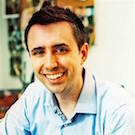
“You never know when your ideas are going to come back to you.”
Share A Writers Moment with a friend by clicking the g+1 button below
December 22, 2018
The genius of a beautiful Christmas song
“You express – when you sing – your soul in song.” – John Rutter (From “The Importance of Choir.”)
Candlelight Carol
How do you capture the wind on the water?
How do you count all the stars in the sky?
How do you measure the love of a mother
Or how can you write down a baby's first cry? Candlelight, angel light, firelight and star-glow
Shine on his cradle till breaking of dawn
Gloria, Gloria, in excelsis deoAngels are singing; the Christ child is born
Shepherds and wise men will kneel and adore him
Seraphim round him their vigil will keep
Nations proclaim him their Lord and their Savior
But Mary will hold him and sing him to sleep.
Candlelight, angel light, firelight and star-glow
Shine on his cradle till breaking of dawn
Gloria, Gloria, in excelsis deo Angels are singing; the Christ child is born
Find him at Bethlehem laid in a manger
Christ our Redeemer asleep in the hay
Godhead incarnate and hope of salvation
A child with his mother that first Christmas Day
Candlelight, angel light, firelight and star-glow
Shine on his cradle till breaking of dawn
Gloria, Gloria, in excelsis deo
Angels are singing; the Christ child is born
https://www.youtube.com/watch?v=2C4aHEh0j1U
Share A Writers Moment with a friend by clicking the g+1 button below
December 21, 2018
That's a 'very' good suggestion
"The two most important days in your life are the day you are born and the day you find out why." -- Mark Twain
While he was not averse to having nice things said about his writing, Twain abhorred flowery adjectives in those descriptions just as he disdained using them in his own writing. “Stick to it; don’t let fluff and flowers and verbosity creep in,” he advised. “When you catch an adjective, kill it. No, I don’t mean utterly, but kill most of them – then the rest will be valuable. They weaken when they are close together. They give strength when they are wide apart. An adjective habit, or a wordy, diffuse, flowery habit, once fastened upon a person, is as hard to get rid of as any other vice.”Twain said you should write using plain, simple language, short words, and brief sentences. And while he was pleased when he coined a word or phrase that others liked to use (mentioning that it came from him, of course), he also noted that the use of “a pregnant pause” also could be a great writing style. “The right word may be effective,” he wrote, “but no word was ever as effective as a rightly timed pause.” [image error] Share A Writer’s Moment with a friend by clicking the g+1 button below.
While he was not averse to having nice things said about his writing, Twain abhorred flowery adjectives in those descriptions just as he disdained using them in his own writing. “Stick to it; don’t let fluff and flowers and verbosity creep in,” he advised. “When you catch an adjective, kill it. No, I don’t mean utterly, but kill most of them – then the rest will be valuable. They weaken when they are close together. They give strength when they are wide apart. An adjective habit, or a wordy, diffuse, flowery habit, once fastened upon a person, is as hard to get rid of as any other vice.”Twain said you should write using plain, simple language, short words, and brief sentences. And while he was pleased when he coined a word or phrase that others liked to use (mentioning that it came from him, of course), he also noted that the use of “a pregnant pause” also could be a great writing style. “The right word may be effective,” he wrote, “but no word was ever as effective as a rightly timed pause.” [image error] Share A Writer’s Moment with a friend by clicking the g+1 button below.
December 20, 2018
Develop your 'unique' writing voice
“If you don't have a unique voice, then you're not really a writer.”– Kate Atkinson
Born on this date in 1951, Atkinson is an English writer and three-time winner of one of Britain’s most prestigious awards – the Whitbread Book of the Year prize – in 1995 under that title, and then in both 2013 and 2015 under its Costa Book Awards designation. She has authored 9 novels, a play and a short story collection and said she enjoys the “What If” factor when setting out to write.
“Alternate history fascinates me,” she said, “(just) as it fascinates all novelists, because 'What if?' is the big thing.”
Honored by the Queen for Services to Literature, she is noted for works filled with “wit, wisdom and subtle characterization,” and for works with “surprising twists and plot turns.” While all of her books have earned acclaim, she is best known for her stand-alone novels Behind The Scenes at the Museum and Life After Life and her series featuring private investigator Jackson Brodie, adapted into a BBC series called Case Histories.

“I usually start writing a novel that I then abandon,” she said. “When I say abandon, I don't think any writer ever abandons anything that they regard as even a half-good sentence. So you recycle. I mean, I can hang on to a sentence for several years and then put it into a book that's completely different from the one it started in.”
Share A Writers Moment with a friend by clicking the g+1 button below
December 19, 2018
Supporting a 'Literacy Revolution'
“Writing surrounds us: it's not something we do just in school or on the job but something that is as familiar and everyday as a pair of worn sneakers or the air we breathe.” – Andrea Lunsford
Author ofThe Everyday Writer, one of the best texts on writing that any aspiring writer could hope to have on his or her desk, Lunsford has made a name for herself as a distinguished essayist, editor and teacher. She also is a faculty member in two great writing venues, Stanford University, where she heads up the writing program, and at the annual Bread Loaf School near Middlebury, Vermont.
Robert Frost also liked to spend his summers teaching at the Bread Loaf School, which gets its name by virtue of its location – on Middlebury College’s mountain campus below Bread Loaf Mountain. Great writing and great teaching about it – in literature, creative writing, and theater – has taken place there since 1920 using tools developed by teachers like Lunsford, who has given us all the gift of writing through her marvelous text. Everyday Writer, by the way, is just one of more than a dozen books this writing coach has written.
In a recent study she helped lead, she said she believes technology is “reviving … and pushing literacy in bold new directions.” She said young people today write far more than any generation before them because so much socializing takes place online, and it almost always involves texting – “life writing,” as Lunsford calls it. “I think we’re in the midst of a literacy revolution the likes of which we haven’t seen since Greek civilization.”
Share A Writers Moment with a friend by clicking the g+1 button below
December 17, 2018
Character 'involvement' is her key
“I want to wake up one morning and know how to write page one, or page 10, or page 250. But I never seem to know how to do it. Every book is different and takes a different structure, style, process, etc. And relearning how to write is where the insanity comes from.” – Sarah MacLean
Born on this date in 1978, MacLean is a New York Times bestselling author of both young adult and romance novel. Since breaking onto the national scene in 2009, all 12 of her novels (to date) have been on the New York Timesand USA Today bestseller lists.
A two-time winner of the Romance Writers of America RITA Award for Best Historical Romance, MacLean also has made a name for herself on social media (Facebook and Twitter) and as a regular columnist for The Washington Post, writing a monthly romance novel review column since early 2014. Her most recent bestseller, published this past summer, is Wicked and the Wallflower.
 She calls her writing style one of a "benevolent deity.”
 “For the most part, my characters don't talk to me. I like to lord over them . . . and, for the most part, my characters go along with it. I write intense character sketches and long, play-like conversations between me and them, but they stay out of the book writing itself.”
Share A Writers Moment with a friend by clicking the g+1 button below