Dan Jorgensen's Blog, page 382
January 10, 2019
Not money, just history
“Writing is not the easiest way to make a living. You work long hours, usually all by yourself. It is not a way to make money.” – Stephen Ambrose
Born in Illinois on this date in 1938, Ambrose was one of the 20th Century’s giants in both the teaching of history – which he famously said “is everything that has ever happened” – and his popular writing about history.
A graduate of the University of Wisconsin, where he originally aspired to a career in medicine, he turned to history instead after hearing the first lecture in a U.S. history class entitled "Representative Americans" from William B. Hesseltine. Ambrose credited Hesseltine with fundamentally shaping his writing and igniting his interest in the field.
A distinguished professor of history for 30 years, Ambrose wrote what arguably are among the most popular history books – many also made into movie or television series. Among them were Crazy Horse and Custer: Band of Brothers (about the U.S. Army’s famed Easy Company); and D-Day, June 6, 1944 (all 3 with much longer “formal” titles). His most popular single work was Undaunted Courage: Meriwether Lewis, Thomas Jefferson, and the Opening of the American West, which stayed on the New York Times best seller list for 126 weeks.

In addition to 27 self-authored books, Ambrose co-authored, edited, and contributed to many more. He also was a frequent contributor to magazines such as American Heritage right up until his death in 2002, continuing his impact as a “writer of popular history.” U.S Senator and Presidential candidate George McGovern, the primary focus of Ambrose's book Wild Blue said, "He probably reached more readers than any other historian in our national history."
Share A Writers Moment with a friend by clicking the g+1 button below


January 9, 2019
'Go and write a book'
“I hate politics. I like to write about it, but to get involved in it, to try and make a lot of ignorant people do what you want them to do, waste of time. Go and write a book. It's more important and it'll last longer.”– Wilbur Smith
Born in northern Rhodesia (now Zambia) in 1933, Smith was the son of a metal worker turned rancher, grew up on that ranch, he worked as a police officer and studied accounting before turning to his real love – writing. After being rejected multiple times for his first book ideas, he finally broke through with When The Lion Feeds, leading to a spectacular writing career.
He followed his initial book with three long chronicles of the South African experience, all bestsellers, and most recently he’s done a series of historical novels set in Ancient Egypt. To date he’s published 35 novels selling more than 120 million copies worldwide. Many of his books have also been made into popular movies.
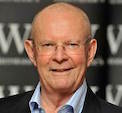 His advice to new writers is simple: “Write for yourself, not for a perceived audience. If you do, you'll mostly fall flat on your face, because it's impossible to judge what people want. And you have to read. That's how you learn what is good writing and what is bad. Then the main thing is application. It's hard work.”
 Share A Writers Moment with a friend by clicking the g+1 button below
January 7, 2019
Write what you want to read
“The great thing about novels is that you can be as un-shy as you want to be. I'm very polite in person. I don't want to talk about startling or upsetting things with people.” – Nicholson Baker
Born on this date in 1957, Baker is an American novelist and essayist who has written about everything from poetry, literature and library systems to history, politics, time manipulation, youth, and sex. Among his many writing honors are a National Book Critics Circle Award, and the International Hermann Hesse Prize.
Born in New York City, he grew up in Rochester, NY, studied at both the Eastman School of Music and Haverford College, and began writing while still in school. A fervent advocate for libraries’ maintaining “physical copies” of books, manuscripts and old newspapers, he established the American Newspaper Repository to help insure that they would not be destroyed. For his ongoing efforts, he won the prestigious James Madison Freedom of Information Award. Among Baker’s best-known works are Double-Fold: Libraries and the Assault on Paper, and Human Smoke: The Beginnings of World War II; The End of Civilization. He said he likes to write what he would enjoy reading.
“(Each time) . . . I was writing I assumed it would be published under a pseudonym,” Baker said, “and that liberated me. What I wrote was exactly what I wanted to read.”
Share A Writers Moment with a friend by clicking the g+1 button below
Born on this date in 1957, Baker is an American novelist and essayist who has written about everything from poetry, literature and library systems to history, politics, time manipulation, youth, and sex. Among his many writing honors are a National Book Critics Circle Award, and the International Hermann Hesse Prize.
Born in New York City, he grew up in Rochester, NY, studied at both the Eastman School of Music and Haverford College, and began writing while still in school. A fervent advocate for libraries’ maintaining “physical copies” of books, manuscripts and old newspapers, he established the American Newspaper Repository to help insure that they would not be destroyed. For his ongoing efforts, he won the prestigious James Madison Freedom of Information Award.
 Among Baker’s best-known works are Double-Fold: Libraries and the Assault on Paper, and Human Smoke: The Beginnings of World War II; The End of Civilization. He said he likes to write what he would enjoy reading.
 “(Each time) . . . I was writing I assumed it would be published under a pseudonym,” Baker said, “and that liberated me. What I wrote was exactly what I wanted to read.”
Share A Writers Moment with a friend by clicking the g+1 button below
January 6, 2019
A powerful, descriptive talent
“Poetry is the opening and closing of a door, leaving those who look through to guess about what is seen during the moment.” – Carl Sandburg
Sandburg said he never set out to win any prizes for his writing and, in fact, wanted to “write my own way,” even though that often was at odds with what his contemporaries were doing. All that did, of course, was win him most of the major prizes, including three Pulitzers – the only poet to ever win that many. He actually won two for his poetry - for Corn Huskers and Complete Poems - and then another for the second volume of his two-volume masterpiece Abraham Lincoln, still considered one of the definitive biographical works on our 16th President. [image error] Like so many great writers of the 19th and 20th Centuries, Sandburg began writing as a journalist (for the Chicago Daily News). And, while he is most known for his poetry - particularly about his adopted city - his historical works, biographies, novels, children's literature, and film reviews also were among the best pieces of his day.
He truly enjoyed unrivaled appeal as a poet, perhaps because the breadth of his experiences connected him with so many strands of American life. At his death in 1967, President Lyndon B. Johnson observed, “Carl Sandburg was more than the voice of America, more than the poet of its strength and genius. He was America.” Arguably, Sandburg’s best-known poem may be "Chicago – City of the Big Shoulders"– but my favorite is the short and whimsical Fog.
Fog
The fog comes on little cat feet. It sits looking over harbor and city on silent haunches and then moves on.
Sandburg said he never set out to win any prizes for his writing and, in fact, wanted to “write my own way,” even though that often was at odds with what his contemporaries were doing. All that did, of course, was win him most of the major prizes, including three Pulitzers – the only poet to ever win that many. He actually won two for his poetry - for Corn Huskers and Complete Poems - and then another for the second volume of his two-volume masterpiece Abraham Lincoln, still considered one of the definitive biographical works on our 16th President. [image error] Like so many great writers of the 19th and 20th Centuries, Sandburg began writing as a journalist (for the Chicago Daily News). And, while he is most known for his poetry - particularly about his adopted city - his historical works, biographies, novels, children's literature, and film reviews also were among the best pieces of his day.
He truly enjoyed unrivaled appeal as a poet, perhaps because the breadth of his experiences connected him with so many strands of American life. At his death in 1967, President Lyndon B. Johnson observed, “Carl Sandburg was more than the voice of America, more than the poet of its strength and genius. He was America.” Arguably, Sandburg’s best-known poem may be "Chicago – City of the Big Shoulders"– but my favorite is the short and whimsical Fog.
Fog
The fog comes on little cat feet. It sits looking over harbor and city on silent haunches and then moves on.
January 5, 2019
Poetry speaks to the spirit
“Poetry is what gets lost in translation.” – Robert Frost
My own belief is that all of us who are moved to put words to paper – whether the focus is on the creative or the erudite – have a bit of poet within. We have a vague hope that those poetic words can someday be expressed, just waiting for the right time and form to come out into the world. As the poet Thomas Gray said, “Poetry is thoughts that breathe and words that burn within us.”
While I don’t have any poetic thoughts (yet), I do want to share these thoughtful words by another fine poet and creative writer Richelle Goodrich.
“It may be that when you write (poetry), you choose to share your verse with others or with no one. Either way, growth, cleansing, relief all come from the process.
“Poetry speaks to the spirit by piercing understanding. It interprets all senseless truths – beauty, love, emotion – into sensible scrawl.”
Happy writing … and a belated Happy New Year!
Share A Writers Moment with a friend by clicking the g+1 button below
January 4, 2019
When chosen, you must respond
“They say it is the first step that costs the effort. I do not find it so. I am sure I could write unlimited 'first chapters'. I have indeed written many.” – J.R.R. Tolkien
Born on this date in 1892, John Ronald Reuel Tolkien was an English writer, poet and university professor, best known of course for The Hobbit and Lord of the Rings. But had he not written these precursors to much high fantasy as we know it today, he probably would have gained equal fame for his scholarly work and teaching, including his definitive studies of the epic poem Beowulf. His translation of Beowulf, completed in 1926, was not published until 2014, but his 1920s lectures, particularly “Beowulf: The Monsters and the Critics,” had a lasting impact on Beowulf research and criticism.
J.R.R. Tolkien lost his father at age 3, then his mother at age 12, but by then both had instilled in him a lifetime love of books, the understanding and use of language, and a spirit of adventure that was to permeate his writing.
 A decorated soldier in World War I, he developed a writing code and became a code-breaker for the English army. His academic career began by working on the Oxford Dictionary, then teaching at Leeds and Oxford. At Oxford’s Pembroke College he wrote The Hobbit, which sat unpublished for many years. Once it was out, he was encouraged to write a sequel and produced Lord of the Rings.
 In defining his drive to succeed he once said it is like a line he wrote for a character: “You have been chosen, and you must therefore use such strength and heart as you have.”
Share A Writer’s Moment with a friend by clicking the g+1 button below.
January 2, 2019
A Writer's Heart
“You can judge the heart of a man by his treatment of animals.” – James Beverly
Writing about animals takes a special talent, and Jack Hanna, born this day in 1947, not only has the talent but also the expertise in the wild animal kingdom to have made himself into one of the world’s leaders in this field.
Director Emeritus of the Columbus (Ohio) Zoo, a facility he literally raised from a rundown, second-rate operation into one of the best in the U.S., if not the world, Hanna is not only an expert on the animal kingdom but also in doing public relations and writing on behalf of it. Hanna's live animal demonstrations on major television talk and news shows have brought and continue to bring attention to his beloved zoo.

The author of several books and many articles in every type of publication has come a long way from his college days in Ohio when he was a fledgling journalist on the college newspaper staff and nearly got himself expelled for keeping wild ducks in his dorm room and then a donkey in his fraternity house shed.
“The world is the true classroom,” Hanna said. “The most rewarding and important type of learning is through experience; seeing something with our own eyes.”
Share A Writer’s Moment with a friend by clicking the g+1 button below.
December 31, 2018
'Without books, history is silent'
“Books are humanity in print. Books are carriers of civilization. Without books, history is silent, literature dumb, science crippled, thought and speculation at a standstill.” – Barbara Tuchman
I’ve always loved history, especially when presented in the palatable manner that Tuchman had for the topic. A two-time Pulitzer Prize winner, her work has sold hundreds of thousands of copies, led by her award winner TheGuns of August (a prelude to and first month of World War I), and her 1970 biography on the World War II General Joseph Stilwell.
In 1978, she wrote the wonderful A Distant Mirror about the calamitous 14thCentury but considered reflective of the 20th, especially in its horrors of war. That book, too, led the New York Times bestseller list and was a finalist for yet another Pulitzer.
 Tuchman began her writing career in the 1930s as a journalist and in 1937, during the Spanish Civil War, became one of the few women – along with Martha Gellhorn working as a war correspondent – reporting for The Nation.
 In 1980, not long before her death, the National Endowment for the Humanities selected her for the Jefferson Lecture, the federal government’s highest honor for achievement in the humanities. Tuchman focused her lecture on “Mankind’s Better Moments,” many of which appeared in the 20 books she wrote for us as a lasting historical legacy.
“I want the reader to turn the page,” she said, “and keep on turning until the end.”
Share A Writer’s Moment with a friend by clicking the g+1 button below.
December 30, 2018
A 'gentle' writing approach
“If history were taught in the form of stories, it would never be forgotten.”– Rudyard Kipling
Born to British parents in India on this date in 1865, Kipling wrote one of literature’s most innovative tales, The Jungle Book. But despite its lasting success, during his own lifetime (he died in 1936) it was not ranked at the top of the many great stories he authored. In his day his novels Kim and Captains Courageous; his short story "The Man Who Would Be King;” and his poems "Mandalay,” and "Gunga Din” were considered even better and more popular. Those works and many, many others by this great writer are not only still in print but also extensively studied in writing programs everywhere.
One of the most popular writers in the British Empire in the late 19th and early 20th centuries, Kipling was also a journalist, travel writer, and
 science fiction editor and writer. His cumulative writing skills earned him the Nobel Prize in Literature at age 42, both the first English-language writer and the youngest person ever to earn this pinnacle writing award.
 Kipling was regarded as a major innovator in the art of the short story, and one critic described his work as exhibiting "a versatile and luminous narrative gift.” Among the many, many sayings attributed to him is the Mother’s Day favorite: “God could not be everywhere, and therefore he made mothers.”
Share A Writers Moment with a friend by clicking the g+1 button below
December 29, 2018
Poetry is our 'original texts'
“Auden said poetry makes nothing happen. But I wonder if the opposite could be true? It could make something happen.” – Carol Ann Duffy
Born in December 1955, Duffy is a Scottish poet and playwright, professor of contemporary poetry at Manchester Metropolitan University, and Britain’s first female Poet Laureate. Among her very popular and often-taught collections are Selling Manhattan, winner of the Somerset Maugham Award; Mean Time, winner of the Whitbread Poetry Award; and Rapture, winner of the T. S. Eliot Prize.

“The poem is a form of texting... it's the original text,” Duffy said. “It's a perfecting of a feeling in language - it's a way of saying more with less, just as texting is.” For Saturday’s Poem, here is Duffy’s,
The LookThe heron's the look of the river.
The moon's the look of the night.
The sky's the look of forever.
Snow is the look of white.
The bees are the look of the honey.
The wasp is the look of pain.
The clown is the look of funny.
Puddles are the look of rain.
The whale is the look of the ocean.
The grave is the look of the dead.
The wheel is the look of motion.
Blood is the look of red.
The rose is the look of the garden.
The girl is the look of the school.
The snake is the look of the Gorgon.
Ice is the look of cool.
The clouds are the look of the weather.
The hand is the look of the glove.
The bird is the look of the feather.
You are the look of love.
Share A Writer’s Moment with a friend by clicking the g+1 button below.