This will prevent Andre from sending you messages, friend request or from viewing your profile. They will not be notified. Comments on discussion boards from them will be hidden by default.
(page 43 of 290)
"She talks about distinctions between temples for gods and those for ghosts and the gods she mentioned are only the big ones. What about ghosts who have been levelled up to god status and what about animal gods, do they count as belonging to the Yang temples or the Yin temples?"
—Nov 25, 2026 04:59AM
(page 89 of 320)
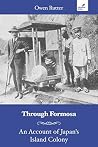
"He is at Koxinga's shrine, I hope it will be better than the boring stuff with the dutch. Was all the dutch stuff really necessary?"
—Nov 23, 2026 11:13PM
“According to Japanese scholar Yuki Tanaka, the United States firebombed over a hundred Japanese cities. Destruction reached 99.5 percent in the city of Toyama, driving Secretary of War Henry Stimson to tell Truman he "did not want to have the US get the reputation of outdoing Hitler in atrocities," though Stimson did almost nothing to halt the slaughter. He had managed to delude himself into believing Arnold's promise that he would limit "damage to civilians." Future Defense Secretary Robert S. McNamara, who was on LeMay's staff in 1945, agreed with his boss's comment that of the United States lost the war, they'd all be tried as war criminals and deserved to be convicted. Hatred towards the Japanese ran so deep that almost no one objected to the mass slaughter of civilians.”
―
Oliver Stone,
The Untold History of The United States
“Probably in all our history no foe has been so detested as were the Japanese. Emotions forgotten since our most savage Indian wars were reawakened.”
―
Allen Nevins
“In Europe we felt that our enemies, horrible and deadly as they were, were still people. ... But out here I soon gathered that the Japanese were looked upon as something subhuman and repulsive; the way some people feel about cockroaches or mice.”
―
Ernie Pyle
“In Shanghai's prime, no city in the Orient, or the world for that matter, could compare with it. At the peak of its spectacular career the swamp-ridden metropolis surely ranked as the most pleasure-mad, rapacious, corrupt, strife-ridden, licentious, squalid, and decadent city in the world. It was the most pleasure-mad because nowhere else did the population pursue amusement, from feasting to whoring, dancing to powder-taking, with such abandoned zeal. It was rapacious because greed was its driving force; strife-ridden because calamity was always at the door; licentious because it catered to every depravity known to man; squalid because misery stared one brazenly in the face; and decadent because morality, as every Shanghai resident knew, was irrelevant. The missionaries might rail at Shanghai's wickedness and reformers condemn its iniquities, but there was never reason for the city to mend its errant ways, for as a popular Chinese saying aptly observed, "Shanghai is like the emperor's ugly daughter; she never has to worry about finding suitors." Other great cities - Rome, Athens, or St. Petersburg, for instance – might flatter themselves that they had been conceived for virtuous, even heroic, purposes. Not so the ugly daughter who reveled in her bastard status. Half Oriental, half Occidental: half land, half water; neither a colony nor wholly belonging to China; inhabited by the citizens of every nation in the world but ruled by none, the emperor's ugly daughter was an anomaly among cities. The strange fruit of a forced union between East and West, this mongrel princess came into the world through a grasping premise-the right of one nation to foist a poisonous drug upon another. Born in greed and humiliation, the ugly daughter grew up in the shadow of the Celestial Empire's defeat by outsiders in the Opium War. Nonetheless, within decades, she had become Asia's greatest metropolis, a brash sprawling juggernaut of a city that dominated the rest of the country with its power, sophistication, and, most of all money.”
―
Stella Dong,
Shanghai : The Rise and Fall of a Decadent City 1842-1949
“It’s like when we read The Diary of Anne Frank in seventh grade, and I had the sneaking suspicion that I would have been a Nazi back then because I wouldn’t have had the guts to be anything else. Because I would have been too scared to not go along with the majority. Like, I would have been a passive sort of Nazi, but I still would have been a Nazi. I never said anything out loud, of course, but I remember reading that book in Ms. Peterson’s class and everyone was all, “Oh, I would’ve helped Anne. I would have rebelled. I don’t understand how people could have allowed this to happen, blah blah blah.” I mean,”
―
Jennifer Mathieu,
The Truth About Alice
Goodreads Librarians Group
— 351830 members
— last activity 2 minutes ago
Goodreads Librarians are volunteers who help ensure the accuracy of information about books and authors in the Goodreads' catalog. The Goodreads LibraGoodreads Librarians are volunteers who help ensure the accuracy of information about books and authors in the Goodreads' catalog. The Goodreads Librarians Group is the official group for requesting additions or updates to the catalog, including:
* Adding new books or editions
* Editing book information (including covers)
* Combining and merging book editions
* Edits to page counts, quotes or awards
* Correcting author profiles for authors not in the Goodreads Author Program
If you're a Goodreads member with a new request, click Join Group. Once you're added to the group, you can post your question following this link.
Simple requests (e.g. page count updates) typically take around 48 hours depending on the volume of requests, while more complex requests could take up to a couple of weeks (e.g. adding a new book).
Authors, if you are a member of the Goodreads Author Program, you can edit information about your own books. Find out how in this guide.
Keep in mind that Librarians don't:
* Grant or give insights into Librarian applications / Librarian status
* Move ISBNs or ASINs between editions
* Help with non-catalog Support questions (e.g. How do I reset my password?)
For help with these queries or to submit general questions, comments or feature requests, try Goodreads Help or use the Contact Us form.
If you're a Librarian and want to process requests, please refer to our Librarian Manual to ensure edits are performed in line with Goodreads policies....more





 Goodreads Librarians Group
— 351830 members
— last activity 2 minutes ago