
 Sign in with Facebook



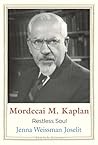

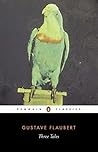

Those who did not want a Palestinian state, he believed, included the Arab countries. They wanted to keep the Palestinians in bondage and continue to have the threat of war as a justification for not making long-overdue political changes
...more


“The right seeks release from liberal notions of what they should feel—happy for the gay newlywed, sad at the plight of the Syrian refugee, unresentful about paying taxes. The left sees prejudice. Such rules challenge the emotional core of right-wing belief. And it is to this core that a free-wheeling candidate such as the billionaire entrepreneur Donald Trump, Republican candidate for president in 2016, can appeal, saying, as he gazes upon throngs of supporters, “See all the passion.” We can approach that core, I came to see, through what I call a “deep story,” a story that feels as if it were true. As though I were seeing through Alice’s looking glass, the deep story was to lead me to focus on a site of long-simmering social conflict, one ignored by both the “Occupy Wall Street” left—who were looking to the 1 and the 99 percent within the private realm as a site of class conflict—and by the anti-government right, who think of differences of class and race as matters of personal character. The deep story was to take me to the shoulds and shouldn’ts of feeling, to the management of feeling, and to the core feelings stirred by charismatic leaders.”
― Strangers in Their Own Land: Anger and Mourning on the American Right
― Strangers in Their Own Land: Anger and Mourning on the American Right
“As I reviewed the social terrain of the right-leaning people I had come to know—the companies, the state government, the church, Fox News—I reflected on my keyhole issue. Everyone I was talking to was enduring a great deal of pollution and despite the silence from companies, politicians, and state officials, nearly everyone clearly knew it. To some, such as Lee Sherman and Harold and Annette Areno, exposure had become the defining experience of their lives. To others, it was a passing matter. While many, like Madonna Massey, spoke of their love of capitalism, the dominant industry in their economy presented a decidedly mixed story. Oil was highly automated and accounted for some 15 percent of jobs—and even some of those were going to foreign workers at lower pay. The state had made huge cuts to local jobs and social services in order to bring in companies and, instead of money trickling down, a third of it was leaking out. To some degree, the community had become the site of local production without being the site of local producers. They were victims without a language of victimhood.”
― Strangers in Their Own Land: Anger and Mourning on the American Right
― Strangers in Their Own Land: Anger and Mourning on the American Right
“41 percent of all Americans believe the Second Coming “probably” or “definitely” will happen by the year 2050. Images of the rapture that believers have posted on the Internet suggest a growing gulf between those who rise to Heaven and those who stay on earth. In one image, svelte, well-dressed adults rise to a blue sky. Perhaps the rapture speaks to shared and understandable anxieties about an earthly economy, it occurs to me. For many congregants, well-paid, union-protected jobs through which a man could support a stay-at-home wife are gone for all but a small elite. Given automation and corporate offshoring, real wages of high school–educated American men have fallen 40 percent since 1970. For the whole bottom 90 percent of workers, average wages have flattened since 1980. Many older white men are in despair. Indeed, such men suffer a higher than average death rate due to alcohol, drugs, and even suicide. Although life expectancy for nearly every other group is rising, between 1990 and 2008 the life expectancy of older white men without high school diplomas has been shortened by three years—and truly, it seems, by despair. In their tough secular lives, life may well feel like “end times.”
― Strangers in Their Own Land: Anger and Mourning on the American Right
― Strangers in Their Own Land: Anger and Mourning on the American Right
“Today, although many such strikes continue—the Walmart strike of 2012, for example—many industrial work sites have been moved offshore to Mexico, China, Vietnam, and elsewhere. Other forms of social conflict have arisen in different theaters. One theater animates the politics of the left. It focuses on conflict in the private sector between the very richest 1 percent and the rest of America. Occupy Wall Street has such a focus. It is not between owner and worker over a higher wage or shorter hours of work. It is between haves and have-nots, the ever-more-wealthy 1 percent and the other 99 percent of Americans. What feels unfair to Occupy activists is not simply unfair recompense for work (the multi-million dollar bonuses to hedge fund managers alongside the $8.25 hourly rate for Walmart clerks) but the absence of tax policies that could help restore America as a middle-class society. For the right today, the main theater of conflict is neither the factory floor nor an Occupy protest. The theater of conflict—at the heart of the deep story—is the local welfare office and the mailbox where undeserved disability checks and SNAP stamps arrive. Government checks for the listless and idle—this seems most unfair. If unfairness in Occupy is expressed in the moral vocabulary of a “fair share” of resources and a properly proportioned society, unfairness in the right’s deep story is found in the language of “makers” and “takers.” For the left, the flashpoint is up the class ladder (between the very top and the rest); for the right, it is down between the middle class and the poor. For the left, the flashpoint is centered in the private sector; for the right, in the public sector. Ironically, both call for an honest day’s pay for an honest day’s work.”
― Strangers in Their Own Land: Anger and Mourning on the American Right
― Strangers in Their Own Land: Anger and Mourning on the American Right
“Jackie was a Worshipper. She had developed a worshipful attitude and a capacity for meaningful renunciation. Instead of overcoming her aversion to regulation, Jackie spoke of learning to live without it. In this way, she echoed Team Loyalists like Janice Areno. You accommodate. Clean air and water; those were good. She wanted them, just as she wanted a beautiful home. But sometimes you had to do without what you wanted. You couldn’t have both the oil industry and clean lakes, she thought, and if you had to choose, you had to choose oil.”
― Strangers in Their Own Land: Anger and Mourning on the American Right
― Strangers in Their Own Land: Anger and Mourning on the American Right
 bbc book list, the top 100
— 76 members
— last activity Nov 19, 2013 04:35PM
bbc book list, the top 100
— 76 members
— last activity Nov 19, 2013 04:35PM
how many of these have you read, how many do you want to read? And... have you seen the movie? Tip: If you haven't read a book on the list, and don't ...more
 Jewish Historical Fiction
— 761 members
— last activity Apr 16, 2026 08:09AM
Jewish Historical Fiction
— 761 members
— last activity Apr 16, 2026 08:09AM
For those that love Jewish historical fiction representating as many cultures, countries, and time periods as we can find.
 Tournament of Books
— 2365 members
— last activity 18 hours, 30 min ago
Tournament of Books
— 2365 members
— last activity 18 hours, 30 min ago
This book group was established for those interested in participating in The Morning News's Tournament of Books. Please do not feel the need to finish ...more
 The History Book Club
— 26080 members
— last activity 12 hours, 5 min ago
The History Book Club
— 26080 members
— last activity 12 hours, 5 min ago
"Interested in history - then you have found the right group". The History Book Club is the largest history and nonfiction group on Goodread ...more
Dostoevsky Fan Group
— 27 members
— last activity Jan 08, 2019 08:35AM
A place to discuss all things Dostoevsky, from his works, his biography, or how he relates to other authors. For those who love Dostoevsky, this is th ...more

Norman’s 2025 Year in Books
Take a look at Norman’s Year in Books, including some fun facts about their reading.

100 books
|
3 friends

493 books
|
104 friends

980 books
|
64 friends

1,891 books
|
41 friends

561 books
|
89 friends

728 books
|
160 friends

115 books
|
741 friends

1,055 books
|
119 friends
More friends…


Favorite Genres
Polls voted on by Norman
Lists liked by Norman
