
Discover new books on Goodreads
Meet your next favorite book



Breakthrough negotiation is the opposite of imposing your position on the other side. Rather than pounding in a new idea from the outside, you encourage them to reach for it from within. Rather than telling them what to do, you let them
...more


“We experience the externalities of the attention economy in little drips, so we tend to describe them with words of mild bemusement like “annoying” or “distracting.” But this is a grave misreading of their nature. In the short term, distractions can keep us from doing the things we want to do. In the longer term, however, they can accumulate and keep us from living the lives we want to live, or, even worse, undermine our capacities for reflection and self-regulation, making it harder, in the words of Harry Frankfurt, to “want what we want to want.” Thus there are deep ethical implications lurking here for freedom, wellbeing, and even the integrity of the self.22”
― How to Do Nothing: Resisting the Attention Economy
― How to Do Nothing: Resisting the Attention Economy

“It remains an astonishing, disturbing fact that in America—a nation where nearly every new drug is subjected to rigorous scrutiny as a potential carcinogen, and even the bare hint of a substance’s link to cancer ignites a firestorm of public hysteria and media anxiety—one of the most potent and common carcinogens known to humans can be freely bought and sold at every corner store for a few dollars.”
― The Emperor of All Maladies: A Biography of Cancer
― The Emperor of All Maladies: A Biography of Cancer
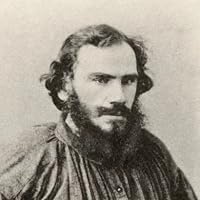
“While half of Russia was conquered, and the inhabitants of Moscow were fleeing to remote provinces, and one levy of militia after another was being raised for the defense of the country, we, not living at the time, cannot help imagining that all the people in Russia, great and small alike, were engaged in doing nothing else but making sacrifices, saving their country, or weeping over its downfall. The tales and descriptions of that period without exception tell us of nothing but the self-sacrifice, the patriotism, the despair, the grief, and the heroism of the Russians. In reality, it was not at all like that. It seems so to us, because we see out of the past only the general historical interest of that period, and we do not see all of the personal human interests of the men of that time. And yet in reality these personal interests of the immediate present are of so much greater importance than public interests, that they prevent the public interest from ever being felt - from being noticed at all, indeed. The majority of the people of that period took no heed of the general progress of public affairs, and were only influenced by their immediate personal interests. And those very people played the most useful part in the work of the time.
Those who are striving to grasp the general course of events, and trying by self-sacrifice and heroism to take a hand in it, were the most useless members of society;
...
In historical events we see more plainly than ever the law that forbids us to taste of the fruit of the Tree of Knowledge. It is only unself-conscious activity that bears fruit, and the man who plays a part in an historical drama never understands its significance. If he strives to comprehend it, he is stricken with barrenness.”
― War and Peace
“The industrialist was horrified to find the fisherman lying beside his boat, smoking a pipe. - Why aren’t you fishing?, said the industrialist. - Because I have caught enough fish for the day. - Why don’t you catch some more? - What would I do with them? - Earn more money. Then you could have a motor fixed to your boat and go into deeper waters and catch more fish. That would bring you money to buy nylon nets, so more fish, more money. Soon you would have enough to buy two boats even a fleet of boats. Then you could be rich like me. - What would I do then? - Then you could sit back and enjoy life. - What do you think I’m doing now?”
― Timeless Simplicity: Creative Living in a Consumer Society
― Timeless Simplicity: Creative Living in a Consumer Society

“He treated Navani—and, well, everyone—as if he knew them intimately. There was a mystery about this Wit that Navani had never noticed during Elhokar’s reign. Perhaps he molded himself to the monarch he served. He stayed in step right behind Jasnah, silvery-sheathed sword on his hip, his lips drawn ever so slightly to a smile. The type that made you think he must be considering a joke about you that no one had the decency to say to your face.”
― Rhythm of War
― Rhythm of War


Eric’s 2025 Year in Books
Take a look at Eric’s Year in Books, including some fun facts about their reading.

533 books
|
48 friends

5,666 books
|
143 friends

272 books
|
176 friends

2,112 books
|
83 friends

1,112 books
|
79 friends

359 books
|
111 friends

847 books
|
176 friends

381 books
|
124 friends
More friends…
Favorite Genres
Polls voted on by Eric
Lists liked by Eric