
Discover new books on Goodreads
Meet your next favorite book




Mimir shook his head. Nobody drank from the well but Mimir himself. He said nothing: seldom do those who are silent make mistakes.




“However, when value is recognised as objective, individual preference (though it need not be utterly eradicated) is relativised, one’s private perspective is shown to be relative to the real value of beautiful things, and therefore one’s appreciation of beauty can be more or less intelligent, more or less attuned to the structures that inhere in nature and that can even sometimes be mathematically discerned (revealing the presence of such measurables as Pi, the Golden Ratio, and the Fibonacci Sequence).”
― After Humanity: A Guide to C.S. Lewis’s The Abolition of Man
― After Humanity: A Guide to C.S. Lewis’s The Abolition of Man
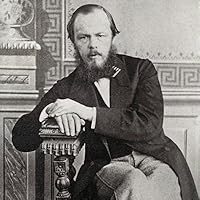
“that the science of this world, which has become a great power, has, especially in the last century, analysed everything divine handed down to us in the holy books. After this cruel analysis the learned of this world have nothing left of all that was sacred of old. But they have only analysed the parts and overlooked the whole, and indeed their blindness is marvellous. Yet the whole still stands steadfast before their eyes, and the gates of hell shall not prevail against it. Has it not lasted nineteen centuries, is it not still a living, a moving power in the individual soul and in the masses of people? It is still as strong and living even in the souls of atheists, who have destroyed everything! For even those who have renounced Christianity and attack it, in their inmost being still follow the Christian ideal, for hitherto neither their subtlety nor the ardour of their hearts has been able to create a higher ideal of man and of virtue than the ideal given by Christ of old. When it has been attempted, the result has been only grotesque. Remember this especially, young man, since you are being sent into the world by your departing elder. Maybe, remembering this great day, you will not forget my words, uttered from the heart for your guidance, seeing you are young, and the temptations of the world are great and beyond your strength to endure.”
― The Brothers Karamazov
― The Brothers Karamazov

“(The sheer delight to be found in reading other readers’ marginalia is unforgettably rendered in Billy Collins’s poem, “Marginalia.”
― On Reading Well: Finding the Good Life Through Great Books
― On Reading Well: Finding the Good Life Through Great Books
“Since therefore the knowledge and survey of vice is in this world so necessary to the constituting of human virtue, and the scanning of error to the confirmation of truth, how can we more safely, and with less danger, scout into the regions of sin and falsity than by reading all manner of tractates and hearing all manner of reason? And this is the benefit which may be had of books promiscuously read.”1”
― On Reading Well: Finding the Good Life Through Great Books
― On Reading Well: Finding the Good Life Through Great Books
“Both skill and virtue are always concerned with what is harder, because success in what is harder is superior.”49”
― On Reading Well: Finding the Good Life Through Great Books
― On Reading Well: Finding the Good Life Through Great Books

Mark’s 2025 Year in Books
Take a look at Mark’s Year in Books, including some fun facts about their reading.

522 books
|
131 friends

479 books
|
43 friends

409 books
|
70 friends
7 books
|
6 friends

31 books
|
4 friends

17 books
|
1 friend

120 books
|
22 friends


Polls voted on by Mark
Lists liked by Mark