Sanjay
622 ratings (3.86 avg)
257 reviews
more photos (5)

#22 best reviewers

Sanjay

Sign in to Goodreads to learn more about Sanjay.

https://www.goodreads.com/sanjaygautam31

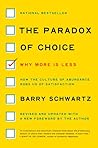
The Paradox of Ch...
Rate this book
Clear rating

progress: 
 
  (page 89 of 0)
Jan 26, 2026 02:21PM

 
Loading...
Edward de Bono
“In problems set at school we are so used to being given only the information that we need for that problem that we actually leave school believing that life will carefully lay out the information we need in every situation. Unfortunately, life does not do that. There are times when we might have to put aside some information in order to move forwards. This requires thinking.”
Edward de Bono, Teach Yourself to Think

“Can we, after all, love someone who seems to us to be perfect, someone who seems to us to have everything? Isn’t it often the case that although we may be fascinated or captivated by someone who appears to have only good qualities, we only begin to love him or her from the moment we suspect that he or she is somewhat (if not deeply) unhappy, quite clueless about something, rather awkward, clumsy, or helpless? Isn’t it in his or her nonmastery or incompleteness that we see a possible place for ourselves in his or her affections – that is, that we glimpse the possibility that we may be able to do something for that person, be something to that person? In this sense, we perhaps love not what they have, but what they do not have; moreover, we show our love by giving what we ourselves do not have.”
Bruce Fink, Lacan on Love: An Exploration of Lacan's Seminar VIII, Transference

“As I said earlier, to admit and verbally declare that we love is to admit that we lack. But this goes further still, for Lacan suggests that we in fact admit that we are lacking in some way whenever we open our mouths to say something. As infants we opened our mouths to convey that we were lacking in food, nourishment, warmth, or attention, and we learned to speak to express our wants in such a way that they would be less at the mercy of the interpretations of those who cared for us, for our caregivers could not always figure out what it was we wanted and their ministrations often left a great deal to be desired. All speech is a request or demand for something we are missing, or at least to be heard and recognized as missing something, as lacking in some respect. Ultimately, as Lacan puts it, all speech constitutes a demand for love. Whenever we speak, we are unconditionally asking to be heard (Lacan, 2015, p. 356), we are asking for our request to be recognized, we are asking to be responded to, we are asking to be loved.
This is one of the reasons why psychoanalysts must not speak too much during sessions, and should even avoid presenting themselves as the authors of the little they do say when possible, preferring to reiterate and punctuate the analysand’s speech. They must not reveal much about themselves, for when they do they are essentially asking or even begging (Lacan, 2015, p. 370) to be loved, which puts the shoe on the wrong foot, as it were; this is one of the many reasons why self-disclosure is such a bad idea. As we shall see, it is not so much in order to refuse to admit to be lacking that analysts must not speak so much, for analysis structurally puts analysts in the position of loving the analysand, and that loving itself reveals their lack. Analysts must not speak much in their own names or talk about themselves so as not to demand to be loved in return by their analysands.”
Bruce Fink, Lacan on Love: An Exploration of Lacan's Seminar VIII, Transference

René Girard
“Man is the creature who does not know what to desire, and he turns to others in order to make up his mind. We desire what others desire because we imitate their desires.”
René Girard

Meg  Josephson
“Perfectionism is the enemy of self-discovery.”
Meg Josephson, Are You Mad at Me?

220 Goodreads Librarians Group — 317083 members — last activity 7 minutes ago
Goodreads Librarians are volunteers who help ensure the accuracy of information about books and authors in the Goodreads' catalog. The Goodreads Libra ...more
1194 Philosophy — 5819 members — last activity Mar 17, 2026 01:22AM
What is Philosophy? Why is it important? How do you use it? This group looks at these questions and others: ethics, government, economics, skepticism, ...more
67384 Human Origins—Explorations and Discussions in Anthropology, Biology, Archaeology, and Geology — 673 members — last activity Nov 27, 2024 11:08AM
An informal on-line “bulletin-board” resource for readers interested in staying abreast of the current state-of-knowledge and the latest books, techni ...more
52739 The Aspiring Polymath's Society — 613 members — last activity Sep 04, 2021 11:15PM

For readers who love to learn for learning's sake, this group features regular group reads of nonfiction from a variety of fields, or fictional reads ...more
year in books
Federic...
2,127 books | 1,247 friends

Selva
741 books | 286 friends

Bill Ke...
3,540 books | 3,766 friends

David S...
2,169 books | 1,143 friends

Rob Baker
3,482 books | 284 friends

Robert
2,659 books | 307 friends

Seemita
1,681 books | 303 friends

Sidhart...
6,985 books | 501 friends

More friends…
The Body Keeps the Score by Bessel van der Kolk
Trauma Wisdom
348 books — 237 voters
Obliquity by John Kay
Rationality
100 books — 3 voters

More…


Polls voted on by Sanjay

Lists liked by Sanjay