
Find & Share Quotes with Friends
Caledonia Quotes
Quotes tagged as "caledonia"
Showing 1-8 of 8

“The rules don't keep us safe Caledonia. We keep one another safe. If you'd trust us to do that, we wouldn't need rules at all.”
― Seafire
― Seafire

“Sometime about the year 117, the IXth Legion, which was stationed at Eburacum where York now stands, marched north to deal with a rising among the Caledonian tribes and was never heard of again... no-one knows what happened to the IXth Legion after it marched into the northern mists.”
― The Eagle of the Ninth
― The Eagle of the Ninth
“So Scotland is to be thought of as a country different from England... the reader and perhaps still more the spectator of Macbeth are made to envisage unmistakably a 'Caledonia stern and wild', a chilly and thinly-populated land of mountains and shaggy woods rather than ploughed fields, of barren moors and battlefields and grim fortresses rather than towns, villages and farms. The elements in this most atmospheric of plays accord with the wild setting and with the wild deeds occurring in it. The weather is unpredictable, more often than not stormy and boistrous... with dark nights or ominous half-light predominant over brief glimpses of the day and the sun.”
― Murder Under Trust, or The Topical Macbeth and other Jacobean Matters
― Murder Under Trust, or The Topical Macbeth and other Jacobean Matters

“A restatement of the primary evidence may therefore be helpful in understanding what the experience of having the Roman Empire on the doorstep may have meant for the early Caledonians. Firstly, no matter how it is framed, this was no mere interlude in Scottish history. The Roman Iron Age in Scotland spanned over 300 years of many recorded episodes of interaction, mostly violent, with one of the world's most powerful and expansionist empires. A third of a millenium that saw the presence of one of the highest concentrations of Roman military personnel - it has been estimated that at the height of occupation, at least one in eight Roman soldiers was serving in North Britain. The building of two great walls, the larger of which was maintained for a 300-year period and both with offensive and defensive characteristics of a magnitude not shared by any other Roman fronteir of its size. Unlike other zones of interaction, there is little evidence of regular trade and no manifestation of any meaningful civic development.”
― The Eagle and the Bear: A New History of Roman Scotland
― The Eagle and the Bear: A New History of Roman Scotland
“If, instead of Wainwright's question, we ask 'What were the Picts?', the answer is very simple. They were a nation created by the union of a number of tribes. This union, formed initially as a military alliance against the common enemy, stood the test of time and long outlived the Roman invasion. For the last seventeen centuries the peoples of this union have been known collectively as the Picts, a name first recorded by the Romans. The name itself is a familiar part of the problem: did Picti really mean 'the painted men, or was it simply the Latin form of a long-forgotten native name? Puting this question on one side for the moment, we might refer to the Picts as 'The United Tribes of Caledonia', or UTC for short, a name which tells us just what they really were.”
― The Age of the Picts
― The Age of the Picts
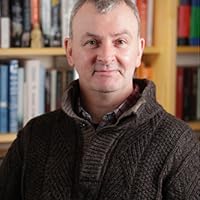
“The Gask Ridge sits like an old frog in a boggy pond edged by hills and mountains. South and east lie the Ochils with their pre-Roman vitrified forts, Gleneagles and, beyond, the Allan Water, which flows away from the Tay through the gap in the hills at Dunblane and into the Forth. To the south and west, due to the sweeping curve of the Highland Line, you look back on the high peaks of the mountains of the Trossachs and into the southern Highlands. Westwards, then to the north, the Perthshire hills with the snow-capped Grampians beyond - their name an erroneously medieval transcription from the Battle o Mons Graupius, which Tacitus describes as the crucial victory of the Roman general Agricola over the united tribes of Caledonia. Led by Calgacus, the first named Scot, Tacitus has him declare in a speech that the invaders 'create desolation and call it peace'. The road, forts and signal towers, and a further large fort at Dalginross, south of Comrie, are integral parts of that Pax Romana, but despite two further incursions into Tayside in the reigns of the emperors Antoninus (AD 142) and Septimius Severus (208), it was over a thousand years before southern influence began to alter this landscape.”
― The Sound of Many Waters: A Journey along the River Tay
― The Sound of Many Waters: A Journey along the River Tay
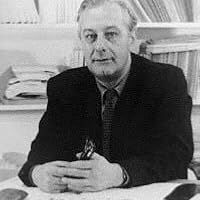
“Celtic cowboys and shepherds, foot-loose and unpredictable”
― Roman and Native in North Britain
― Roman and Native in North Britain
All Quotes
|
My Quotes
|
Add A Quote
Browse By Tag
- Love Quotes 102.5k
- Life Quotes 81k
- Inspirational Quotes 77.5k
- Humor Quotes 45.5k
- Philosophy Quotes 32k
- Inspirational Quotes Quotes 28.5k
- God Quotes 27k
- Wisdom Quotes 25k
- Romance Quotes 25k
- Truth Quotes 25k
- Poetry Quotes 24.5k
- Life Lessons Quotes 23k
- Quotes Quotes 21.5k
- Death Quotes 21k
- Happiness Quotes 19k
- Hope Quotes 19k
- Faith Quotes 18.5k
- Inspiration Quotes 18k
- Relationships Quotes 16k
- Spirituality Quotes 16k
- Motivational Quotes 16k
- Religion Quotes 15.5k
- Life Quotes Quotes 15.5k
- Writing Quotes 15k
- Love Quotes Quotes 15k
- Success Quotes 14.5k
- Motivation Quotes 14k
- Time Quotes 13k
- Science Quotes 12.5k
- Motivational Quotes Quotes 12k