
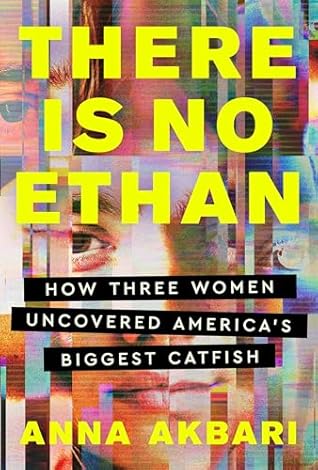
More on this book
Community


Kindle Notes & Highlights
by
Anna Akbari
Read between
June 16 - June 17, 2024

She did not regard me as one of her victims; I was the enemy.

Emily is definitely threatened by Anna A and views her as the ringleader of the group who exposed her
It’s not that I wanted to be friends with Emily—far from it—but any acknowledgment of the pain she caused me would have been some small comfort.
Poor Anna A
But she also reiterated her belief that there was “nothing to help.” Her thoughts and emotional burdens were akin to everyone else’s. She agreed to talk to a therapist, however, because it “could be fun to force someone to listen.” Anna was in shock. There’s nothing to help?
Emily is sick in the head
We know she went on to become an ObGyn physician. ObGyns have possibly the most intimate doctor-patient relationship with women of any medical specialist. I’ll let that sink in.
Wtf
“I want to share the experience with you. I did a horrible thing to you, I know, but I also listened to two years’ worth of your problems.
Fuck off you bitch
Yes, Anna had suffered, but, as Emily reminded her, so had she. They were equal.
No they aren't. Emily is not a victim
“I think sanity is overrated,” Emily told her. “Take it from me, insanity is a lot more interesting. I could have chosen the sane route and just been Emily in Emilyworld. But insanity was a lot more fun.”
Emily tried to explain that she was torn. She knew she should get out of it, but wasn’t sure how, and she didn’t want to. Then she ultimately concluded, “Honestly, I was just bored with my life.”
Sociopath
Yes, I was traumatized by the name Ethan, but that username and message just felt… off. It reeked of a very particular Ethan: Ethan Schuman.
Samantha left an anonymous message on my anonymous blog: “Please contact me. I think this ‘guy’ is back.” I received an email notification of the comment.
Emily referred to British Anna, Gina, and me as “the Baby-Sitters Club” (a categorization I took pride in, despite the amateurish implications; big fan of that series). She told Rachel that she was sure we were saying all sorts of horrible things about her and that Rachel should let her know what we were up to, as if they were allies.
Lol
How could it? They were kindred spirits. They connected intellectually and emotionally. She knew that he, too, lost something when the truth was revealed. They were both victims, both broken.
Oh ffs
I wondered why a man would need to change his voice to speak to the celebrity as Kyle, deepening my suspicion that Kyle, like Ethan, was actually a woman.
This is Emily
What a truly odd thing to say. I deserve answers. He is remorseful. But he’s definitely not Emily. Huh?
And yet, Tim was not Ethan. We needed to loop this in our brains: Tim is not Ethan; Ethan is not Tim.
While psychologists dive into the why, sociologists focus on the how of human behavior.
My academic research and the courses I taught at NYU focused on identity and how we construct and perform it. Specifically, the relativity of it: The ways in which we manipulate our self-presentation affect how we’re perceived and inform our subsequent claim to power in social contexts. This manipulation happens in both real-world and virtual spaces, though the degree to which we can stretch those manipulations extends even further in virtual worlds. In other words, changing your “appearance” can change your reality.
Thus, Ethan was very real and completely manufactured, all at once.
We all aim to create and project our preferred version of ourselves online. Is anyone ever fully honest in how they portray themselves? Where do we draw the line? What qualifies as “authentic” in a mediated world? And when does it become evil?
(Apparently she thinks that her human cost matters, not ours.)
Of course she does
The promise of the modern, technologically mediated age is the chance at an alternative existence. The internet feeds on the art of reinvention—the ability to write and rewrite our stories in a way that feels more like us or better serves our goals.
