Chivalry, or the chivalric code, is a code of conduct associated with the medieval institution of knighthood which developed between 1170 and 1220. The ideals of chivalry were popularized in medieval literature, especially the Matter of Britain and Matter of France, the former based on Geoffrey of Monmouth's Historia Regum Britanniae which introduced the legend of King Arthur, written in the 1130s.
The code of chivalry that developed in medieval Europe had its roots in earlier centuries. It arose in the Holy Roman Empire from the idealisation of the cavalryman—involving military bravery, indiviChivalry, or the chivalric code, is a code of conduct associated with the medieval institution of knighthood which developed between 1170 and 1220. The ideals of chivalry were popularized in medieval literature, especially the Matter of Britain and Matter of France, the former based on Geoffrey of Monmouth's Historia Regum Britanniae which introduced the legend of King Arthur, written in the 1130s.
The code of chivalry that developed in medieval Europe had its roots in earlier centuries. It arose in the Holy Roman Empire from the idealisation of the cavalryman—involving military bravery, individual training, and service to others—especially in Francia, among horse soldiers in Charlemagne's cavalry. The term chivalry derives from the Old French term chevalerie, which can be translated to "horse soldiery". Gautier states that knighthood emerged from the Moors as well as the Teutonic forests and was nurtured into civilization and chivalry by the Catholic Church.
Over time, its meaning in Europe has been refined to emphasise social and moral virtues more generally. The Code of Chivalry, as it stood by the Late Middle Ages, was a moral system which combined a warrior ethos, knightly piety, and courtly manners, all conspiring to establish a notion of honour and nobility.
In origin, the term chivalry means "horsemanship", formed in Old French, in the 11th century, from chevalier (horseman, knight), from Medieval Latin caballārius. The French word chevalier originally means "a man of aristocratic standing, and probably of noble ancestry, who is capable, if called upon, of equipping himself with a war horse and the arms of heavy cavalryman and who has been through certain rituals that make him what he is". In English, the term appears from 1292 (note that cavalry is from the Italian form of the same word).
The meaning of the term evolved over time because the word chevalier was used differently in the Middle Ages, from the original concrete military meaning "status or fee associated with military follower owning a war horse" or "a group of mounted knights" to the ideal of the Christian warrior ethos propagated in the Romance genre, which was becoming popular during the 12th century, and the ideal of courtly love propagated in the contemporary Minnesang and related genres. Thus, chivalry has hierarchical meanings from simply a heavily armed horseman to a code of conduct.
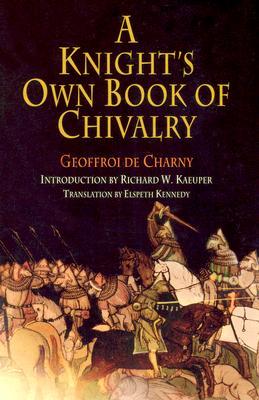
The ideas of chivalry originated in three medieval works: the anonymous poem Ordene de Chevalerie, that tells the story of how Hugh II of Tiberias was captured and released upon his agreement to show Saladin (1138-1193) the ritual of Christian knighthood, the Libre del ordre de cavayleria, written by Ramon Lull (1232-1315), whose subject is knighthood, and the Livre de Chevalerie of Geoffroi de Charny (1300-1356), which examines the qualities of knighthood, emphasizing prowess. Based on the three treatises, initially chivalry was defined as a way of life in which three essential aspects fused together: the military, the nobility, the religion.
The "code of chivalry" is thus a product of the Late Middle Ages, evolving after the end of the crusades partly from an idealisation of the historical knights fighting in the Holy Land, partly from ideals of courtly love....more
“
I stepped forward. Call me old-fashioned, but I wanted to keep his focus on me and not Annabeth. I think it’s polite for a guy to protect his girlfriend from instant incineration.
”
―
Rick Riordan,
The Demigod Files
“
Every man I meet wants to protect me. I can't figure out what from.Every man I meet wants to protect me. I can't figure out what from....more
”
―
Mae West
A group where you can participate in medieval role-plays.
The Kingdom of Lilin is a medium siz…more
[close]
A group where you can participate in medieval role-plays.
The Kingdom of Lilin is a medium sized realm in which fairies, mythical beasts, warriors and sorcerers try to share the same land. But this does not come without conflict, and there are many adventures in Lilin. These include but are not limited to
-swordfights
-wild beast hunts
-invasions
-magic duels
-jousting tournaments
-bloody battles
Enjoy yourselves!
This roleplay group has everything from Animal Rps to Zombies,
and new role-plays are being add…more
[close]
This roleplay group has everything from Animal Rps to Zombies,
and new role-plays are being added all the time.
Don't see a role-play you like? Well just ask and it will be created for you!
This is a group for those that want to read and discuss ancient fiction for fun, whether it be e…more
[close]
This is a group for those that want to read and discuss ancient fiction for fun, whether it be epics, sagas or classics. Anything written and "published" before 1700 goes.



















 A group where you can participate in medieval role-plays.
The Kingdom of Lilin is a medium siz…more
A group where you can participate in medieval role-plays.
The Kingdom of Lilin is a medium siz…more
 This roleplay group has everything from Animal Rps to Zombies,
and new role-plays are being add…more
This roleplay group has everything from Animal Rps to Zombies,
and new role-plays are being add…more
 ᴛʜᴇ ʀᴇᴀʟɪᴢᴀᴛɪᴏɴ ᴛʜᴀᴛ ᴇᴀᴄʜ ʀᴀɴᴅᴏᴍ ᴘᴀssᴇʀʙʏ ɪs ʟɪᴠɪɴɢ ᴀ ʟɪғᴇ ᴀs ᴠɪᴠɪᴅ ᴀɴᴅ ᴄᴏᴍᴘʟᴇx ᴀs ʏᴏᴜʀ ᴏᴡɴ, ᴘᴏ…more
 This is a group for those that want to read and discuss ancient fiction for fun, whether it be e…more