AI Search Optimization: The New Battleground for Visibility (And How to Win It)
Listen up.
If you’re still only optimizing for Google, you’re already behind.
I know that sounds harsh. But it’s the truth.
In 2025, tons of people are skipping Google entirely. They’re asking ChatGPT. They’re querying Perplexity. They’re getting answers from AI—not search engines.
And if your brand isn’t showing up in those AI-generated responses? You’re invisible.
This is the era of AI search optimization. And it’s completely different from the SEO game you’ve been playing for years.
Here’s what most businesses don’t realize: AI doesn’t just make up answers. It cites sources. It pulls information from real websites, real content, real brands.
The question is—will it cite yours?
In this post, I’m going to show you exactly where AI gets its information and how you can position your brand to be one of those trusted sources. Because showing up in AI overviews isn’t just about visibility anymore.
It’s about survival.
SEO Isn’t Dead—It’s the Foundation of AI Search OptimizationBefore we dive into AI search optimization tactics, let’s clear something up.
SEO isn’t dead. Not even close.
But it’s evolved. And if you’re still treating SEO and AI search optimization as separate strategies? You’re doing it wrong.
Here’s the reality: AI doesn’t pull answers from nowhere. It pulls from the web. From content that’s already indexed. From sites that already rank.
Traditional SEO principles—high-quality content, technical optimization, authoritative backlinks, structured data—these are still the foundation.
If you’re ranking well in Google? You’ve got a massive head start in AI search optimization.
AI platforms like ChatGPT and Perplexity rely on structured web data to generate their responses. They favor content that search engines already recognize as valuable.
Think of it this way: SEO gets you in the game. AI search optimization keeps you winning.
You need both.
Strong technical SEO ensures AI can find and understand your content. Schema markup helps AI interpret your data correctly. Entity optimization—making sure your brand is clearly defined across the web—tells AI exactly who you are and what you do.
But here’s where AI search optimization goes beyond traditional SEO:
SEO optimizes for rankings. AI search optimization optimizes for citations.
SEO focuses on one platform (Google). AI search optimization requires multi-channel presence.
SEO rewards keywords. AI search optimization rewards natural language and conversational content.
The businesses winning right now? They’re doing both. They’re maintaining strong SEO fundamentals while adapting their content strategy for AI platforms.
Want to see an example?
Here’s one of our blogs, What Is a First Mover?
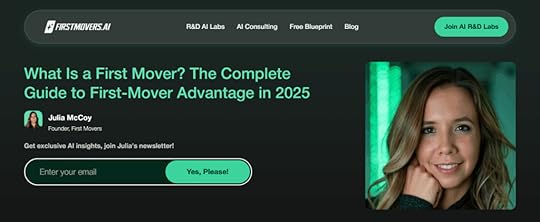
It’s currently ranking on page #1 of Google, in the #1 spot.
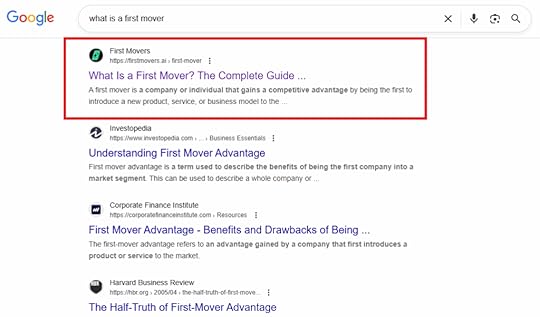
We did everything right the SEO way. Helpful content. Strong focus keyword. Optimized subheads. Schema markup.
But that’s not all.
We also optimized for AI search optimization.
Natural language. Conversational content. Authority.
And guess what?
This blog also appears in Google’s AI Overviews!
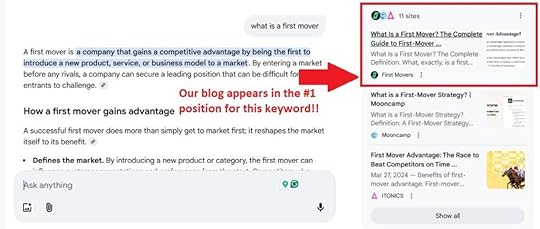
Awesome, right?
You can achieve it too.
So, don’t abandon SEO. Build on it. Because AI search optimization without solid SEO is like building a house without a foundation.
AI Search Optimization Starts Here: Where AI Actually Finds Its SourcesAI search optimization starts with understanding one critical fact: AI isn’t creating answers from thin air.
It’s pulling from specific sources it already trusts.
And if you want to show up in AI-generated answers, you need to be present where AI is already looking.
Here’s what the data shows.
But first—where did this data come from?
These aren’t guesses. These are hard numbers from Surfer’s AI Tracker, which analyzed 36 million AI Overviews and 46 million citations between March and August 2025.
That’s real data on which domains Google’s AI cites most—and how that trust shifts across industries.
So when I tell you where AI is pulling its information? I’m not speculating. I’m showing you exactly what’s happening right now.
The 3 Platforms That Dominate Every AI Search Optimization StrategyAcross almost every industry, three platforms dominate AI citations.
YouTube accounts for about 23.3% of all citations. Wikipedia pulls in around 18.4%. And Google’s own ecosystem—including Google.com and its various subdomains—contributes roughly 16.4%.
Right behind them? Reddit, LinkedIn, and Facebook.
This isn’t random. AI is mirroring how humans actually search for information.
We watch explainer videos on YouTube. We verify facts on Wikipedia. We cross-check with official sources. We read peer discussions on Reddit.
AI is doing the exact same thing at scale.
For AI search optimization, this means one thing: you need to build a presence across multiple platforms. Not just your website.
Why Your AI Search Optimization Strategy Must Be Industry-SpecificHere’s where it gets really interesting.
AI citations vary wildly by industry. What works in finance won’t work in healthcare. What dominates in gaming won’t fly in e-commerce.
Let me break it down.
Finance AI Search Optimization: Why Banks Are Losing to YouTubersIn finance, YouTube dominates with 23% of citations.
People don’t want stuffy banking jargon. They want clear explanations. Video tutorials. Real-world commentary.
For example, here’s Ramit Sethi, a finance influencer, with over 1 million followers on YouTube.

People would rather listen to his videos than read drop-asleep banking jargon.
I mean, wouldn’t you?
After YouTube, Wikipedia, LinkedIn, and Investopedia follow behind. But even Reddit and Quora show up significantly—community advice matters in money decisions.
Here’s the kicker: traditional financial institutions barely register.
AI favors accessible, educational content over corporate marketing. If you’re in finance and you’re not creating YouTube explainers? You’re missing the boat on AI search optimization.
Healthcare Search Optimization: Where Only Institutional Authority WinsHealthcare is different.
NIH leads with 39% of citations. Healthline pulls 15%. Mayo Clinic grabs 14.8%. Cleveland Clinic gets 13.8%.
YouTube still appears at 28%, but only for patient-friendly explanations.
Social platforms? Almost invisible.
In health, E-E-A-T isn’t optional. It’s non-negotiable.
AI prioritizes peer-reviewed sources. Clinician-vetted content. Institutional credibility.
If you’re creating health content for AI search optimization, you need expert authors. Cited studies. Regular updates. And preferably, a doctor on camera.
E-commerce AI Optimization: The Education + Validation FormulaFor e-commerce, it’s a split between education and validation.
YouTube leads at 32.4%. Then comes Shopify at 17.7%, Amazon at 13.3%, and Reddit at 11.3%.
People want to learn how to use products. They want to see unboxing videos. Read real reviews. Check community forums.
For example, check out YouTube channel Unbox Therapy, which has 24 million followers.

AI pulls from all of it.
Traditional ads still show up in dedicated slots. But for AI search optimization in e-commerce, you need guides. How-tos. Product education. And a strong presence in community discussions.
SEO AI Search Optimization: Where Google and Practitioners CollideIn SEO, authority is distributed.
YouTube and Google.com are almost tied at 39% each. LinkedIn pulls 17%. Semrush gets 9.4%.
The sites ranking on Google’s first page?
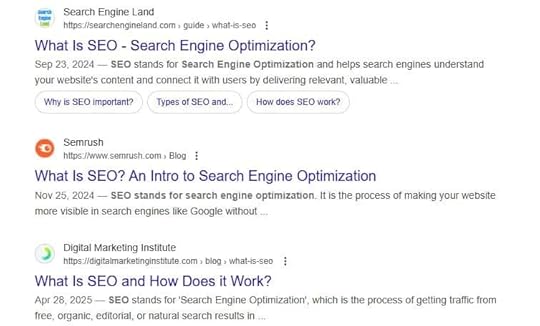
They’re also ranking for AI search optimization.
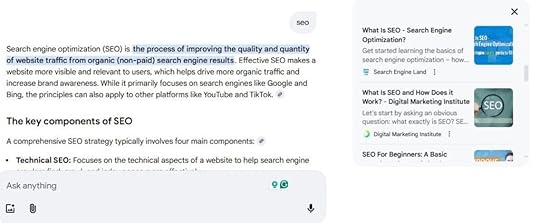
Google sets the rules. But the industry tests them, debates them, and publishes case studies that AI recognizes as valuable.
For AI search optimization in the SEO space, you need to anchor in Google’s official guidance. Then add unique research. Case studies. Videos. And repurpose everything to LinkedIn and YouTube.
Gaming AI Optimization: Why Publishers Can’t Compete with FansGaming is all about user-generated content.
YouTube dominates at 93%. Reddit follows at 78%. Fandom wikis grab 26.7%. Steam Community gets 11%.
Official publisher content? Barely shows up.
Gamers trust other gamers. Walkthroughs. Community wikis. Discussion threads.
If you’re in gaming and trying to improve your AI search optimization, build community authority. Support fan wikis. Engage on Reddit authentically.
The crowd drives citations here—not the brand.
Sports Content Optimization: Speed Beats Depth Every TimeSports queries lean on speed and accessibility.
YouTube pulls 37.5% for highlights. Wikipedia gets 32.4% for quick stats. Facebook, Reddit, and Instagram add fan commentary and short clips.
Check out the Best Football Shorts, with 5 million+ followers.

Long-form sports journalism? It gets cited less.
For AI search optimization in sports, publish fast. Title your videos well. Keep Wikipedia data accurate. Join fan communities.
Travel Content Optimization: The Local Expert with Global ReachTravel combines inspiration, context, and booking.
YouTube leads at 23.5%. Wikipedia gets 12.7%. Agoda grabs 10.2%. Then come TripAdvisor, Booking, and regional players like MakeMyTrip.
AI mirrors the traveler’s journey—from dreaming to booking.
For AI search optimization in travel, be the local expert with global visibility. Maintain listings. Publish destination guides. Share inspirational videos. Ensure presence on regional platforms.
Check out Lonely Planet, which is packed with exciting stories from real people.

Does it show up in AI overviews?
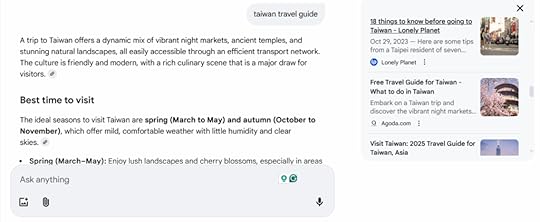
YES.
4 AI Search Optimization Tactics That Actually Get You CitedNow you know where AI looks for information.
The next question is: how do you actually get cited?
Here are the four strategies that work.
1. Why Multi-Channel Presence Is Non-Negotiable for AI Search OptimizationAI doesn’t pull from just one type of source.
It mixes official documentation with video explainers. It combines community insights with social commentary.
If you want better AI search optimization, you need to publish across multiple platforms.
Especially these three: YouTube, Reddit, and LinkedIn.
That’s where AI is already finding authoritative voices. That’s where you need to be.
Don’t try to be everywhere. Pick 2-3 platforms max. But go deep on them.
2. Video Content: The Single Most Powerful AI Optimization AssetVideo is the single most cited content format across every vertical.
YouTube alone accounts for nearly a quarter of all citations.
But here’s what most people miss: AI doesn’t just extract the transcript. It interprets engagement signals, clarity, and tone.
Educational videos that explain, demonstrate, or summarize complex topics in a human way? Those get favored heavily.
For effective AI search optimization, video isn’t optional anymore. It’s essential.
That’s why I’m working hard on my YouTube channel.
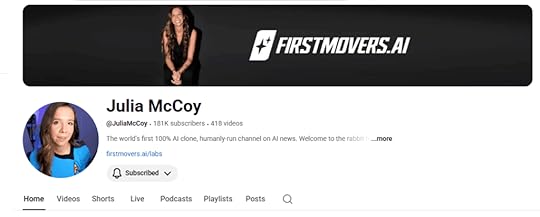
From someone who only did blogs to a YouTube influencer who gets tens of thousands of views on my videos, it has been a crazy journey.
Is it worth it?
100%!
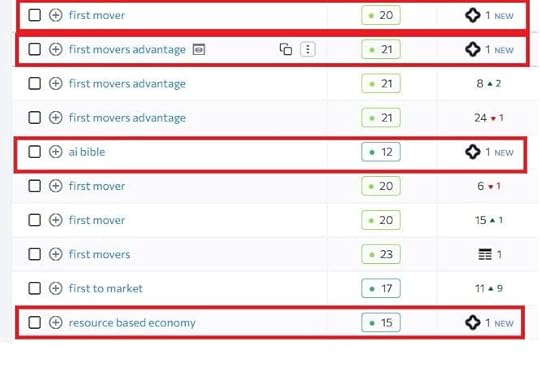
It’s worth it when I see all those new rankings for “AI m popping up on my optimization tool:
 3. E-E-A-T: The Trust Factor AI Search Optimization Can’t Ignore
For topics that fall under YMYL—Your Money or Your Life—experience, expertise, authoritativeness, and trust are deciding factors.
That means health content. Financial content. Legal content. Anything that impacts people’s wellbeing or safety.
AI search optimization in these spaces requires:
Verified authorshipCitations from credible studiesVisible credentialsRegular updatesInstitutional backing where possibleYou can’t fake authority here. AI is too good at distinguishing trustworthy sources from generic content.
4. How to Stay Ahead When AI Search Optimization Rules Keep ChangingAI citation patterns shift as models evolve.
What worked six months ago might not work today. What works today might not work six months from now.
You need to monitor which domains dominate your industry’s citations. Then analyze their content structure, tone, and format.
The goal isn’t to copy them. It’s to out-serve them.
More clarity. More relevance. More accessibility.
That’s how you win at AI search optimization.
Your AI Search Optimization Action Plan: What to Do Right NowAI overviews are changing the rules of visibility.
Ranking on page one still matters. But it’s no longer the final destination.
The real win is being the source AI trusts enough to cite.
That means building content that’s not only optimized for search engines—but also credible, easy to interpret, and genuinely valuable to readers.
The domains showing up in millions of AI overviews have one thing in common: they create content that educates, simplifies, and connects with people. Not just algorithms.
So here’s your takeaway for AI search optimization:
Be present where AI gathers its knowledge. Combine expert-driven articles with helpful videos. Add data-backed insights and community engagement. Structure your content so it’s effortless for both users and AI to extract meaning.
Do this right, and you won’t just show up in AI overviews.
You’ll dominate them.
Master AI Search Optimization Inside First Movers R&D AI LabsLook, I get it.
Reading about AI search optimization is one thing. Actually implementing it? That’s where most people get stuck.
You know you need to adapt. You understand the stakes. But between running your business and trying to keep up with AI changes that happen weekly—it’s overwhelming.
That’s exactly why I created First Movers R&D AI Labs.
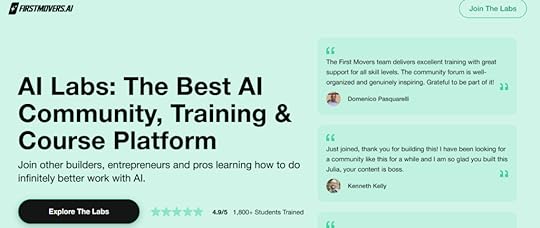
Inside the Labs, you don’t just learn theory. You get the exact frameworks, systems, and playbooks my team uses right now to dominate AI search results.
This isn’t some generic AI course. This is the battle-tested system I used to build a business that hit $100K/month in less than 12 months with just 2 people.
The AI revolution is creating the biggest business transformation in history. You can either watch it happen or position yourself to dominate it.
The window is open right now. But it won’t stay open forever.
Join First Movers R&D AI Labs and learn how to build visibility in the AI age—before your competitors figure it out.