
The Quiet Work of Staying: Healing in Fragments
Before I learned how to write, I learned how to stay. Not the cinematic kind of staying—the triumphant recovery arc, the sudden sunrise after years of darkness—but the quiet, ordinary kind. The kind that happens in fragments: brushing your teeth after days of forgetting due to deep depression, answering one text message, writing a single word. The kind of staying that doesn’t look heroic, but is.
For a long time, I thought healing would feel like a song. Now I know it’s more like static—broken, uneven, but still carrying sound.
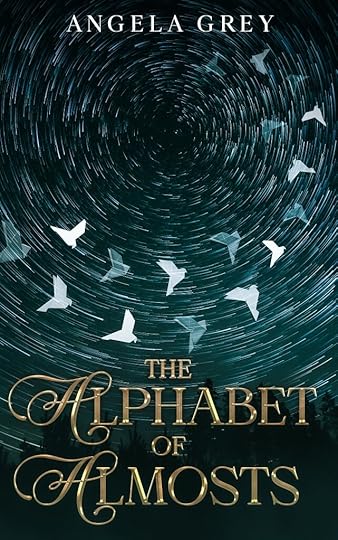
Both The Alphabet of Almosts and Some Species of Outsider-ness were born from that static—from the ache of trying to make coherence out of chaos, from the question that threads through all mental-health narratives: how do you keep living when the story doesn’t make sense anymore?
 1. Fragments as Language
When I began writing The Alphabet of Almosts, I didn’t set out to create a story about illness. I set out to alphabetize survival—to give shape to the words that hovered between diagnosis and hope.
The book unfolds through small vignettes, each one a lettered fragment—A for Admission, B for Breakthrough, C for Control—and together they build something resembling a life. I was living in that in-between place: between recovery and relapse, clarity and confusion. Each fragment became a way of saying, I’m still here, even if I can’t say it all at once.
There’s something deeply honest about fragments. They don’t pretend to be whole. They allow contradiction, misstep, mess. They remind us that language, like healing, doesn’t have to be linear to be true.
For me, fragmentary writing became both mirror and medicine. When the mind fractures, linearity can feel dishonest. The world arrives in flashes—images, memories, unfinished thoughts. Writing in fragments wasn’t an aesthetic choice; it was survival. It was how I could stay.
2. The Work of StayingStaying is not glamorous. It doesn’t get book deals or film adaptations. It doesn’t even feel like progress most days. Staying is brushing your hair. It’s making a list you may never finish. It’s finding small reasons not to disappear.
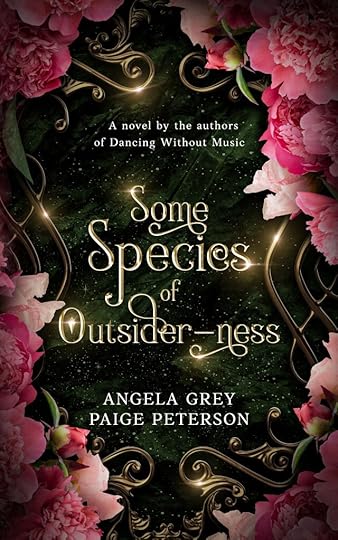
In Some Species of Outsider-ness, I wanted to explore that kind of endurance through two characters—Piper and Slater—whose internal battles are as invisible as they are immense. Piper lives with bipolar disorder, Slater with the lingering paralysis of Guillain-Barré Syndrome. Both are marked by difference in a world that worships sameness.
Their story begins not with love, but with survival: two teens learning that belonging doesn’t mean being fixed, but being seen. The novel’s title comes from the idea that being an outsider is not a condition to be cured—it’s a species to be studied, honored, understood.
The quiet work of staying runs through both their lives. For Piper, it’s managing the cycle of mania and depression without letting either define her. For Slater, it’s learning to move again—physically, emotionally, relationally—after trauma. Neither of them is “better” by the end. But they are still here. And sometimes that’s enough.
Staying is not stagnation; it’s an act of devotion. It’s choosing to keep breathing even when the air feels heavy. It’s sitting in your own skin, even when it doesn’t feel like home.
[image error]Pexels.com" data-medium-file="https://angelagrey.wordpress.com/wp-c..." data-large-file="https://angelagrey.wordpress.com/wp-c..." src="https://angelagrey.wordpress.com/wp-c..." alt="" class="wp-image-3660" style="aspect-ratio:1.4980494148244474;width:425px;height:auto" />Photo by AS Photography on Pexels.com3. Healing in FragmentsThe culture of wellness often sells us a singular image of healing: bright mornings, clear journaling pages, the triumphant “after.” But true healing—especially after mental illness, grief, or trauma—is far less symmetrical.
Healing happens in fragments. In partial sentences. In moments you forget to count as progress: the laugh you didn’t expect, the walk you took without dread, the meal you actually tasted.
In The Alphabet of Almosts, the narrator describes healing as “collecting the scattered glass of myself and learning not to bleed every time I touch it.” I think of that often. Healing is not about gluing the shards back together into what once was; it’s about learning to live among them, to see beauty even in the breakage.
The Japanese art of kintsugi—mending broken pottery with gold—has become almost cliché in self-help spaces, but there’s a reason it endures. It acknowledges fracture as part of the story. The break becomes the illumination.
That’s what I wanted for Some Species of Outsider-ness too: a kind of emotional kintsugi, where characters mend not by erasing their scars but by tracing them in gold.
[image error]Pexels.com" data-medium-file="https://angelagrey.wordpress.com/wp-c..." data-large-file="https://angelagrey.wordpress.com/wp-c..." src="https://angelagrey.wordpress.com/wp-c..." alt="" class="wp-image-3659" style="aspect-ratio:0.666931321953156;width:150px;height:auto" />Photo by Ann H on Pexels.com4. The Myth of WholenessWholeness is overrated. I don’t mean that cynically. I mean that wholeness, as it’s often sold to us, is a myth that keeps us ashamed of our incompleteness. It suggests there’s an endpoint to becoming human. But what if our task isn’t to be whole, but to be honest?
Fragments allow for honesty. They let contradiction breathe. You can be healing and hurting, hopeful and hopeless, all at once. You can love your life and still want to leave it some days. You can laugh and cry within the same minute, and both are true.
When readers tell me they saw themselves in The Alphabet of Almosts, it’s rarely because they relate to every word. It’s because they recognized a single line that felt like their own breath. That’s the gift of fragmentation—it leaves room for others to enter.
And maybe that’s what healing really is: not the restoration of self, but the reconnection to others. To community. To language. To the small rituals that keep us tethered to the living.
 5. What the Outsiders Teach Us
The title Some Species of Outsider-ness came to me during a sleepless night. I was thinking about how often we label difference as deficiency. How quick the world is to exile those whose rhythms don’t match its pace.
But outsiders—those who live at the edge of ordinary—often see what others cannot. They notice the fissures, the unspoken rules, the small violences of normalcy. They remind us that empathy is not a theory but a practice.
Piper and Slater’s story is, in a sense, a love letter to outsiders: to those who feel too much, too loud, too strange. It’s also a call to stay—to resist disappearance. Their survival is not cinematic. It’s quiet. But quiet doesn’t mean small.
The quiet work of staying is the foundation of every great act of love. Because staying—whether in a body, a relationship, or the world itself—requires belief in something beyond the immediate pain. It’s faith in tomorrow’s breath.
6. The Shape of HopeBoth books taught me that hope doesn’t always look like light. Sometimes it looks like a shadow. Sometimes it’s the pause between two heartbeats, the whisper between words. Hope, for me, is found in the act of making: writing, painting, collaging. In taking fragments and saying, You still matter. In creating beauty that refuses to be perfect.
When I wrote The Alphabet of Almosts, I kept a note above my desk that said, Stay in the room. That was my whole goal—not to write a masterpiece, not to heal overnight, but simply to stay. To stay long enough to turn a feeling into a line, a line into a page, a page into something that could keep another person company in their own darkness.
Art doesn’t fix us. It doesn’t erase pain. But it translates it. It gives it a place to rest. It lets others know they’re not alone in the fragments.
7. The Quiet EndingWhen people ask me what The Alphabet of Almosts is “about,” I tell them it’s about learning to live inside unfinished sentences. When they ask about Some Species of Outsider-ness, I say it’s about the kind of courage that doesn’t get applause—the courage to stay.
Healing will never be tidy. It will never be final. But maybe that’s its beauty. Maybe the work of being alive is to keep stitching the fragments together, one breath at a time. There’s a line near the end of The Alphabet of Almosts that still feels like a compass to me:
“Maybe we don’t need to be whole. Maybe we just need to stay long enough to see what else becomes possible.”
Fantasy has its dragons. Romance has its declarations. But healing—real, quiet, ordinary healing—has this: the act of staying. So if you find yourself in pieces, remember this: every fragment is proof that you have not disappeared. You are still here. You are still writing. And that, too, is a kind of wholeness.





![[image error]Pexels.com](https://angelagrey.wordpress.com/wp-content/uploads/2025/10/pexels-photo-8378723.jpeg)
![[image error]Pexels.com](https://angelagrey.wordpress.com/wp-content/uploads/2025/10/pexels-photo-105028.jpeg)
![[image error]Pexels.com](https://angelagrey.wordpress.com/wp-content/uploads/2025/10/pexels-photo-6589270.jpeg)