
Letters Never Sent: The Language of Almost-Love
There are some stories that never make it into envelopes. They live instead in the folds of memory—creased, re-read, and worn thin by time. They’re the letters we write but never send, the words that hover just behind the heart, waiting for a quiet room to finally be heard.
When I think about my first love, I think about the hum of hospital machines, the antiseptic air that tried and failed to scrub out tenderness, and the boy named Timothy who sat across from me in a hospital dayroom in Bismarck, North Dakota, when I was fifteen years old. We met in a place where silence was its own kind of language. There were no dances, no declarations, only the small exchanges that happen when two people recognize in each other a kind of ache they can’t yet name.
Timothy had eyes the color of bright blue mornings. I remember that more than I remember his laugh. I remember the way we traded drawings on napkins, folded them like notes. I remember the way time slowed when we spoke, how the air seemed to listen. It wasn’t the kind of love that blooms; it was the kind that lingers—half-formed, half-forbidden, the kind that teaches you that connection doesn’t always need duration to matter. That’s what I’ve come to call almost-love: the love that teaches you what the real thing feels like, even if it never lasts.
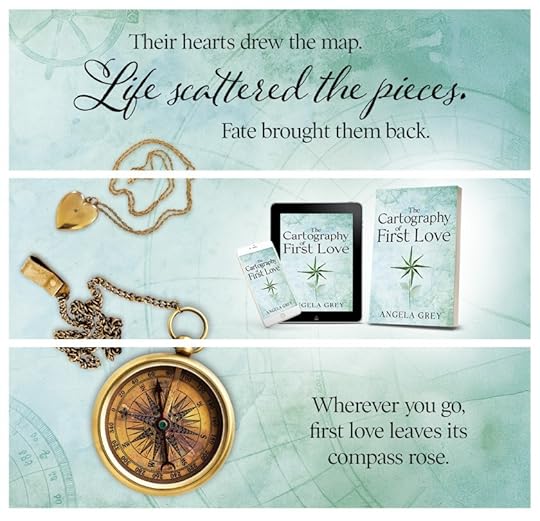 1. Cartography of the Heart
When I wrote The Cartography of First Love, I didn’t know I was writing about Timothy until the story was finished. I thought I was writing about two fictional teens—Zibby and Nico—who meet in an adolescent psych unit and build a map of first love through sketches, letters, and whispered promises. But every line of that book carries a trace of that hospital dayroom in Bismarck—the smell of coffee, the soft buzz of fluorescent light, the way we used humor like a flashlight against fear. The way we bonded with each other and the other teens on the ward. The dreams we had of escaping our broken lives, along with another teen couple, to a dream life in California.
Zibby’s eating disorder, Nico’s depression—those were fictions, but the emotional terrain was real. Both of them were trying to survive themselves, and somehow, in doing so, they found each other. That’s what Timothy and I were doing too: surviving. Learning how to be human in a place built to monitor it.
There’s something profoundly sacred about the love that forms between the broken. It doesn’t need polish or promise; it exists simply because both hearts recognize that the other is still beating. When Zibby says, “I don’t know if this is forever, but it feels like oxygen,” I was really writing what I never said to Timothy. I never told him how, in that sterile, rule-bound space, he made the world feel possible again. That his presence was proof that tenderness can exist even in places designed to contain it.
[image error]Pexels.com" data-medium-file="https://angelagrey.wordpress.com/wp-c..." data-large-file="https://angelagrey.wordpress.com/wp-c..." src="https://angelagrey.wordpress.com/wp-c..." alt="" class="wp-image-3696" style="aspect-ratio:1.7045022194039314;width:364px;height:auto" />Photo by Suzy Hazelwood on Pexels.com2. The Letters We Don’t SendI’ve always believed that letters are a kind of spell—language meant not just to reach someone else, but to reveal the self. When I was fifteen, I started writing letters I never mailed. To therapists. To friends. To Timothy. They weren’t love letters in the romantic sense; they were survival letters. I wrote them to remember what feeling felt like. To tether myself to something human.
Years later, when I began The Cartography of First Love, I found those letters again—folded, smudged, and still breathing. I didn’t copy them verbatim, but their spirit is in every page. Letters, after all, are time machines. They preserve the version of us that dared to speak, even when no one was listening.
Maybe that’s what almost-love does—it leaves us with letters, not outcomes. It gives us language we can’t unlearn.
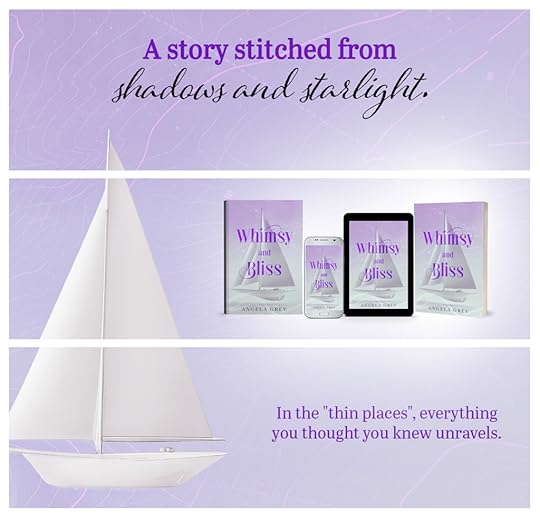 3. Whimsy’s Map of Wonder
In Whimsy and Bliss, I returned to the idea of unsent letters, though in a different form. Abigail Whimsy, the dreamer, writes postcards she never mails—notes to her best friend Lainey Bliss, to her late grandmother, to the lake itself. She believes that words can travel through time if you believe hard enough. Whimsy’s letters aren’t addressed to a boy; they’re addressed to memory, to childhood, to the version of herself that still believes in magic. But they, too, are love letters of a kind. Letters to what’s been lost.
The older I get, the more I understand that love doesn’t always need a recipient. Sometimes it’s enough to write it down, to set it loose like a paper boat and trust the current to carry it where it needs to go.
Timothy never saw my letters, but I think, in some cosmic way, he received them. Maybe they reached him through dream or distance or the invisible threads that connect first loves across decades.
[image error]Pexels.com" data-medium-file="https://angelagrey.wordpress.com/wp-c..." data-large-file="https://angelagrey.wordpress.com/wp-c..." src="https://angelagrey.wordpress.com/wp-c..." alt="" class="wp-image-3702" style="aspect-ratio:1.50044656147663;width:324px;height:auto" />Photo by cottonbro studio on Pexels.com4. The Language of AlmostAlmost-love has its own dialect. It speaks in half-sentences, in glances, in small pauses before parting. It’s the love that never makes it to the altar but still shapes your sense of faith. It’s the song that stops mid-melody but leaves the tune in your head for years.
When I write about first love, I’m not writing about romance so much as recognition—the sacred shock of being seen. Zibby and Nico’s map in The Cartography of First Love isn’t geographic; it’s emotional. It charts the spaces between fear and desire, between what’s spoken and what’s withheld. It’s the same map I’ve been unconsciously drawing since fifteen—the topography of tenderness interrupted. In that way, Timothy is the first coordinate on all my maps. Every love that came after carries his imprint, faint but indelible.
5. What We KeepI never saw Timothy again after that spring in Bismarck. We left the hospital on different days, back to different towns, different futures. I remember watching a late-spring snow swallow the parking lot as I waited for my mother’s car. I thought of how, in the snow, everything looks erased but is only hidden.
That’s how almost-love survives—not by continuation, but by concealment. It hides inside the art we make, the stories we tell, the way we hold someone’s name gently in the mind decades later.
When I look back now, I don’t feel regret. I feel gratitude. For the way that brief connection taught me how to pay attention. How to see the soul beneath the symptom. How to believe that love, in any form, is never wasted.
[image error]Pexels.com" data-medium-file="https://angelagrey.wordpress.com/wp-c..." data-large-file="https://angelagrey.wordpress.com/wp-c..." src="https://angelagrey.wordpress.com/wp-c..." alt="" class="wp-image-3704" style="aspect-ratio:0.718473244355744;width:318px;height:auto" />Photo by cottonbro studio on Pexels.com6. The Cartography of ClosureEvery writer has an origin story. Mine began in that hospital, where letters I couldn’t send became stories I eventually did.
The Cartography of First Love was, in many ways, my way of finally mailing them. Each page was an envelope addressed to the past. Each chapter a way of saying: I remember. I made it. I’m still here.
In Whimsy and Bliss, that same message echoes through Abigail’s summer adventure—her yearning to finish her grandmother’s “map of thin places,” where wonder seeps through the world. It’s the same impulse: to locate the sacred in the ordinary, to find beauty even in what’s unfinished.
Because that’s what almost-love is—it’s unfinished beauty. It’s a comma instead of a period. And yet, sometimes, the sentence feels complete anyway.
7. To Timothy, Across TimeIf I could write one more letter now, it would be simple:
Dear Timothy,
We were just kids. But for a moment, the world stood still. You showed me that connection doesn’t need perfection—it only needs presence. I don’t know where you are now, but a part of me still sends light your way whenever I write a story about first love. Thank you for being the first mapmaker of my heart.
Maybe he’ll never read it. Maybe he’s long forgotten that spring. But the point isn’t whether the letter arrives—it’s that it was written. Because writing, like loving, is an act of faith. We send the words out anyway.
When readers tell me The Cartography of First Love or Whimsy and Bliss reminded them of someone they once loved and lost, I smile. That’s the quiet miracle of almost-love—it continues. Not in the way we expect, but in the way stories and letters do: across time, across silence, between worlds.
The language of almost-love is the language of becoming. It teaches us that some doors never close; they simply turn into windows through which light still enters. And if you listen closely enough—under the hum of memory, under the rhythm of your own pulse—you can still hear it:
The letter, written in the dreaming heart, whispering—I was here. You were too. That was enough.





![[image error]Pexels.com](https://angelagrey.wordpress.com/wp-content/uploads/2025/10/pexels-photo-281962.jpeg)
![[image error]Pexels.com](https://angelagrey.wordpress.com/wp-content/uploads/2025/10/pexels-photo-1157151.jpeg)
![[image error]Pexels.com](https://angelagrey.wordpress.com/wp-content/uploads/2025/10/pexels-photo-6214938.jpeg)
![[image error]Pexels.com](https://angelagrey.wordpress.com/wp-content/uploads/2025/10/pexels-photo-3831887.jpeg)