
IPDW2025—Making the Invisible Visible: New Book Celebrates and Reframes Production Design
Production design is the backbone of screen storytelling. From the grandeur of a fantasy city to the subtle texture of a lived-in kitchen, production designers shape the worlds we see on screen. Yet their work is often overlooked in film discourse, education and even within the industry itself. Our forthcoming open-access collection, Perspectives on Production Design: Practice, Education and Analysis (University of Westminster Press, 2026), seeks to change that. Co-edited by Jane Barnwell, Jo Briscoe, and Juliet John, the book brings together voices from across industry and academia to illuminate the creativity, challenges and cultural impact of production design.
Production design is everywhere, yet often invisible. Every detail of a film or television environment, the architecture of a room, the texture of a piece of furniture, the placement of a prop shapes how we interpret story, character, and emotion. Yet the field remains relatively unexplored compared to directing, cinematography, or performance. Our collection responds to this gap. Drawing on the voices of practitioners, educators and theorists, it reframes production design as central to storytelling and screen culture. The book also serves as the first major output of the Production Design Research and Education Network (PD-REN), an international community founded in 2022 to advance scholarship and pedagogy in this field.
This article signposts some of the book’s central concerns - how production design is practiced, taught, critically analysed, and why it matters to the wider ecology of film and media studies. The book is divided into three sections - Practice, Education, and Analysis, with written chapters interlaced with visual materials that capture and convey the processes of production design. These include original artwork, sketches, photographs and process documentation contributed by our authors. Each editor led one section: I curated Practice, Jo Briscoe Education and Juliet John Analysis. Our collaboration reflects a shared design sensibility; we worked collectively on every aspect of the book, enjoying the creative challenge and finding inventive solutions to the publishing process.
Section 1. Practice: Making Worlds VisibleThe practice of production design is both pragmatic and visionary. Designers translate words on a page into material environments that feel lived-in and emotionally resonant. They collaborate with directors, cinematographers and their art departments, yet retain a distinctive creative voice. The Practice section features stories from working professionals who reveal how ideas emerge, evolve and materialise. Virginia Mesiti foregrounds “natural realism,” showing how everyday environments can carry implicit critique when staged with care. Wynn Thomas, in a sketchbook contribution, invites readers into the design logic of Cinderella Man (2005), where sets were built not only for authenticity but also for narrative affect. Moira Tait reflects on the realist aesthetics of the BBC design department during the 1960s and ’70s; Karen Nicholson considers the evolution of the prop master; Sebastian Soukup and Wim Wenders discuss their creative collaborations; and Inbal Weinberg shares her detailed design notes.
Other contributors explore questions of cultural representation, such as Sarah Mursal’s chapter on authenticity and sensitivity in design, or industry-specific challenges, like May Davies’ examination of low-budget art departments in Europe. Jeannine Oppewall’s reflections on L.A. Confidential (1997) and Sarah Greenwood and Katie Spencer’s sketchbooks for Pride and Prejudice (2005) and Barbie (2023) reveal how sketches, references and imagination map onto finished films. Together, these contributions underscore that production design is never purely decorative. It is the architecture of meaning on screen.
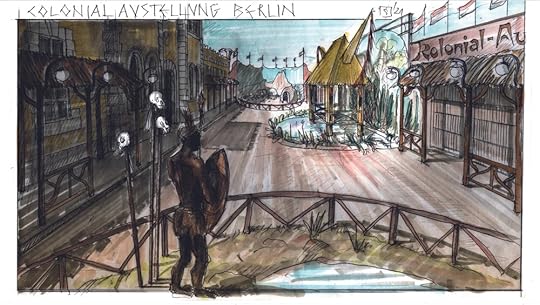
Sebastain Soukup artwork
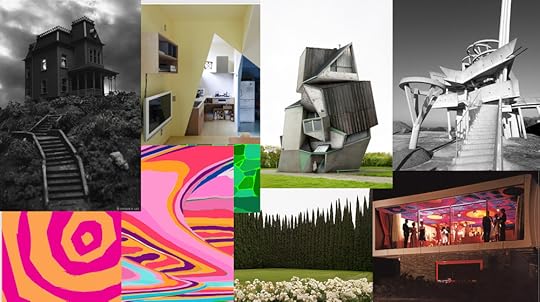
Weird Barbie House images, courtesy of Sarah Greenwood and Katie Spencer
Section 2. Education: Building a Pedagogy of DesignIf practice demonstrates the richness of production design, education reveals the fragility of its foundations. Many film schools worldwide still do not teach production design systematically. Where it does appear, it often emerges from theatre scenography or as an add-on module in generalist film programmes. The Education section begins to redress this absence. Paola Cortés argues that production design training should be core to all filmmakers, not just specialists, since visual storytelling underpins every aspect of cinema. Valérie Kaelin demonstrates how interdisciplinary curricula, blending design, history, technology and practice can provide holistic training. Other contributors address urgent contemporary challenges. Jo Briscoe explores the teaching of collaboration, leadership, and management, skills essential to production design but rarely emphasised in curricula. Emerging technologies are also transforming the classroom. Natalie Beak’s chapter on Unreal Engine and virtual production highlights how pedagogy must adapt to digital workflows without losing sight of the storytelling principles that ground the field. The images below showcase some of these Unreal Engine activities as part of the Master of Arts Screen (MAS) at AFTRS.
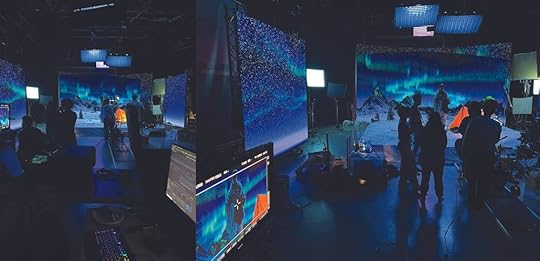
Master of arts screen, Unreal engine workshop at AfTRS (2023)
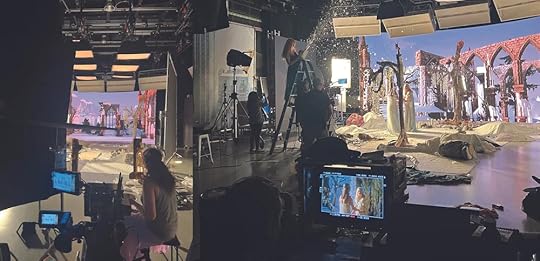
Master of arts screen, Unreal engine workshop at AfTRS (2024)
PD-REN members have generously contributed curriculum outlines and project models, including Anne Seibel (La Fémis, Paris), Anna Solic (University of South Wales), Kerry Bradley (Nottingham Trent University), Angelica Böhm (Film University Babelsberg Konrad Wolf), and Boyana Bucharova (NAFTA). Together, these contributions offer practical resources for teachers worldwide and mark a crucial step toward a shared pedagogical language, one that honours both craft and creativity.
Section 3. Analysis: Bridging Practice, Education and TheoryThe third section, curated by Juliet John, situates production design within broader frameworks of theory and analysis. The aim is to build bridges between practice, educational need and critical understanding. Including vibrant contributions from Deborah Nadoolman Landis, Ian Christie, Lucy Fischer, Geraint D’Arcy, Jakob Ion Wille, Benjamin McCann, Vincent LoBrutto, Abraham Thomas, Liselotte Justesen, Juliet John and Sir Christopher Frayling, the significance of this scholarly intervention becomes clear. Production designers often lack the time or space to reflect on their work, yet analysis can illuminate what practitioners know intuitively. Essays in this section connect visual style to political context, showing how production design registers ideological currents. Others engage with metaphors of space:labyrinths, thresholds, architectural motifs that shape audience perception. Such analysis does not serve academics alone; it also advocates for production design in the public sphere. By making visible the interpretive stakes of design decisions, theory demonstrates why production design matters - not as background, but as the very fabric of cinematic meaning.
PD-REN: A Global Network for a Growing FieldUnderlying this collection is the story of PD-REN itself. Founded in 2022, the network emerged to address the misunderstandings around the role and the structural barriers in industry and education. PD-REN connects researchers, educators, and practitioners on a global scale. It functions as both a professional platform and an academic forum, designed to generate research, foster pedagogy, and advocate for the field. Its emergence reflects a wider shift: production design is no longer content to remain invisible.
Conclusion: Toward a Visible FuturePerspectives on Production Design: Practice, Education and Analysis marks a milestone. By bringing together practitioners, educators, and scholars, it reframes production design as a vital, complex and collaborative field of knowledge. This collection and the network it from which it springs reveals the centrality of production design to visual storytelling, where pedagogy nurtures future designers with rigour and creativity and analysis builds bridges across practice, education, and theory. Perspectives on Production Design advocates for a new understanding of visual storytelling. It positions production design not as background decoration but as a central force shaping character, atmosphere, and meaning in film and television.
On a personal note, it has been a pleasure to work with such a talented and inspiring group of writers and artists, all of whom have been generous with their knowledge and time. It feels as if we have cooked up a delicious feast together and my hope is that readers relish the results as much as we enjoyed making it. For filmmakers, educators, and anyone who loves screen stories, this book offers a rare look behind the scenes and a compelling case for why production design deserves greater recognition. Perspectives on Production Design: Practice, Education and Analysis will be published open access by University of Westminster Press in early 2026.
Special Thanks to collaborators on the project:Juliet John, Jo Briscoe, Virginia Mesiti, Wynn Thomas, Moira Tait, Karen Nicholson, Sebastian Soukup, Wim Wenders, Inbal Weinberg, Sarah Mursal, Fleur Whitlock, May Davies, Jeannine Oppewall, Sarah Greenwood and Katie Spencer, Paola Cortés, Valérie Kaelin, Natalie Beak, Anne Seibel, Anna Solic, Kerry Bradley, Angelica Böhm, and Boyana Bucharova, Deborah Nadoolman Landis, Ian Christie, Lucy Fischer, Geraint D’Arcy, Jakob Ion Wille, Benjamin McCann, Vincent LoBrutto, Abraham Thomas, Liselotte Justesen, Barbara Freedman Doyle, Rose Lagace, Sir Christopher Frayling, Anne Winterink, Romke Faber, Ondrej Lipensky, Kaisa Makinen, and Rauno Ronkainen.
BiographyJane Barnwell is Reader in Moving Image at the University of Westminster. Graduating from the University of Leeds and The Northern Film School she began her career at the BBC, before working freelance in production. Jane has authored articles in a range of forms and genres including popular magazines, periodicals and websites. Her books include Production Design for Screen; Visual Storytelling in Film and TV (2017), Production Design: Architects of the Screen (2004), The Fundamentals of Film Making (2008) and Production Design & the Cinematic Home (2022). She is co-founder of PD-REN and co-editor of the forthcoming collection, Perspectives on Production Design: Practice, Education and Analysis, (UoW Press, Open Access, due 2026) a ground-breaking collaboration with authors drawn from practice, research and education.


Henry Jenkins's Blog

- Henry Jenkins's profile
- 184 followers

