Character Driven #2 — Was Our Beloved Austen Too Severe Upon Lydia Bennet?
How — indeed — how will you be so severe upon this girl? To condemn her to carry and raise infant after infant at the slimy hands of a prolific child seducer — her own abuser — and a gambling addict. That is punishment! Even the adulterous and morally corrupt Maria Bertram is not fated to such a judgment. And what a life must await Lydia’s children — if they survive! And what was her heinous crime? Awful it must have been. Simply, she was very young, very stupid and she was a determined flirt. Put her down, I suppose you will say. She must serve as an example to others.
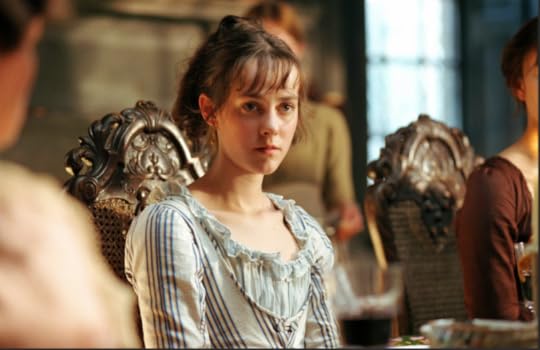 Is it a happy ending for Lydia Bennet?
Worry not. This blog shall not take the form of a dramatic monologue. Though, that would be rather apt; from a modern perspective, Pride and Prejudice is something of a grim tragedy when Lydia’s story is in the spotlight.
Lydia Bennet was very young, even by Regency standards. Although the age of consent was twelve, it seems that girls under the age of fifteen were generally thought too young to engage in relationships with adult men. I suppose, in a modern retelling, Lydia would be eighteen rather than fifteen.
Lydia Bennet has been raised in ignorance. We know from Lizzy’s conversations that their mother and father’s educational provision for their daughters was to provide them with the means to teach themselves.
“Your mother must have been quite a slave to your education.” LOL, thinks Lizzy to herself.
With no particular instruction in literature, theology, or philosophy, Lydia’s only guide for the world is the influences around her (Mrs Bennet et al.) and her own natural disposition.
Lydia Bennet’s behaviour goes on unchecked. This is really when Lizzy comes into her role as the MVP in Pride and Prejudice; she seems to be the only person concerned with Lydia’s behaviour and the consequences that might follow. In fact, rather than attempt to protect Lydia, her own father sends her away to a town filled with young men on the prowl in the hopes that it will teach Lydia a lesson; of course, it does, but it’s not the lesson he was thinking of!
 Oh, Lydia!
Austen presents Lydia as silly, vain and dangerously open in her manners towards men. Yet, Lydia’s being a victim of her neglectful upbringing is also very apparent in the novel; she’s really the perfect candidate to be groomed by a vile man like Wickham. Heck, even Lizzy gets taken in by his charms and she’s five years older and far more sensible!
So, does our beloved Jane Austen deal too harshly with Lydia? I think not. Whoa! Whoa! I know what I said earlier. And I meant it, I really do think that Lydia’s fate is really quite tragic; she’s left married to the man who groomed her, presumably to churn out baby after baby with little money and little support. Lydia will long feel the punishment of the misstep she took at fifteen, as will her innocent children.
In my ideal Pride and Prejudice, Lydia would return home, her parents having learnt their lesson, and she would spend many years educating herself and reflecting on her mistake, learning to be happy with herself beyond the admiration of men, until, fifteen years later, she would meet a sensible man who can look beyond that fateful error of her youth and love her for who she is today.
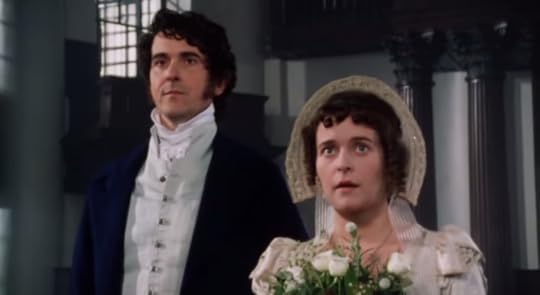
That, of course, would necessarily change many of the events in Pride and Prejudice, and not least, leaving Lydia debauched and unmarried; a troublesome fate for a Regency girl and all associated with her. Reasonably speaking, I believe that having Lydia marry the man who seduced her is the happiest outcome that could have been tolerated by Austen’s contemporary audience. In other literature of the period, there seem to be two common fates for ‘fallen women’ — they either die or marry the man who defaced their virtue — even in obvious cases of rape.
Maria Bertram has the unhappy, though less miserable, fate of going to live in obscurity with her annoying aunt as a punishment for running away with another man. But Maria was already married. She didn’t lose her virginity to Henry Crawford and that, I believe, is the significant factor in Lydia’s case.
Whatever Austen’s personal beliefs, I’m not convinced she could have written an ending for Lydia that didn’t involve her dying or marrying Wickham, not without changing the consequences for the Bennet family (especially Lizzy and Jane) and not that would have been acceptable to her peers. Marrying the man who groomed her as a child was the best outcome for Lydia in her time; something that is a disturbing reflection of the society in which our favourite sparkling romances originate.
I wish Austen could have given Lydia a second chance at making good choices, but the reality was, girls like Lydia didn’t often get second chances.

What are your thoughts? Was there another way for Austen to end Lydia’s tale? Would you like to see a Lydia Bennet retelling? Is there a Lydia Bennet retelling I ought to read? Or do you think that she was a foolish hussy who got what she deserved?
Until next time — adieu, my dears!
[image error]