Write Like It’s Business – Part III
This series of blogposts shows creative writers how business management techniques apply to both the writing process and the storytelling process, and why the corporate world isn’t as alien at it seems.
 (c) Dennis Skley via Flickr
In Part II of this series, we had a closer look the Deming’s “plan-do-check-act” cycle and how that relates to writers and their stories.
In this post, we will explore another indispensable model that every writer should use: James Reason’s model for avoiding disasters.
Swiss Cheese of Plot Holes
One of my favourite models is James Reason’s “Swiss Cheese” model of how accidents happen – and how they can be prevented. It’s standard material in the aviation industry, but it applies to any process where things can go wrong. Writing and storytelling included.
The model consists of various layers of safeguards (the cheese) to protect against hazards. However, no safety precaution is ever foolproof: every layer of protection has its own shortcomings (the holes).
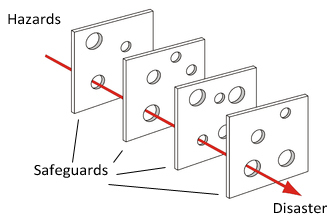
Those inevitable shortcomings are acceptable, because the next safeguard will catch any hazard coming through. If not, then there is a third safeguard, etc. Only when the holes in ALL safeguards line up, a hazard can cause to a disaster.
What do slices of cheese have to do with writing, you ask? Imagine this:
Bad fiction, unfinished projects, devastating critiques, angry readers and heaps of rejection letters are a writer’s worst enemies. Our hazards, so to speak.
Clear theme, consistent plot, thorough research, good characterisations, interesting conflict, proper use of story structure and language – these are a writer’s safeguards to writing superb stories.
No author is perfect. We are all human, so our safeguards will have flaws like poor dialogues, unremarkable characters, blank settings and incredulous plot twists.
Despite a story’s faults, audiences are willing to forgive a lot if a story has other qualities that make up for the flaws. For example, poor dialogue can be forgiven if the conflict is compelling, and superior descriptions or good action can make up for inconsistent characters.
As long as we, the authors, put our safeguards to the best possible use, we run far less risk of our work being rejected or worse, ignored: our disaster.
Trust the cheese
There are many aspects to our writing, our stories, and our storytelling that catch or negate the flaws within each other. Audiences are more forgiving than you may think. How else can books like Twilight and 50 Shades of Grey, or superhero movies with massive consistency flaws be so popular? Whatever their shortcomings, they have sufficient strength to entice and enthral their audience all the same. And that audience loves them.
Writers know their work’s weak spots. Too often that is all they see, and it keeps them from publishing it. But your audience will recognise strengths you never even realised were there.
So next time you’re afraid to push the “send” button on a manuscript, trust the Swiss cheese and take the leap. Your audience will thank you for it.
Next week: cut your losses with Maslow!
Cheers,

Het bericht Write Like It’s Business – Part III verscheen eerst op Chris Chelser.