Write Like It’s Business – Part II
This series of blogposts shows creative writers how business management techniques apply to both the writing process and the storytelling process, and why the corporate world isn’t as alien at it seems.
 (c) Dennis Skley via Flickr
Writers and business people have more in common than we imagine. In Part I of this series, I discussed the merits of production planning for both the process of writing and publishing, but also how to keep the story itself on track.
In this post, we will explore another indispensable model that every writer should use.
Deming Cycle For Writers
When you know what to look for, avoiding a pitfall is easy. You leap across the hole, pat yourself on the back, and as you square your shoulders to continue on your way… you fall down a second pit that you didn’t see.
Fool me once, shame on me. Fool me twice, still shame on me.
Since all people have a tendency to lay back after getting something right, business science employs the Deming Cycle of Continuous Improvement. If you have never heard that name, chances are you will still recognise its four stages:

You make a plan,
You do as you planned,
You check if what you did has the desired results,
You act upon that feedback to stay on the Plan.
People, situations and the world in general change constantly. So whenever you set a plan in motion, sooner or later it will run out of the ruts. Considering driving a car: even when you’re going straight ahead, you need to correct the steering wheel now and then before your run off the road and into something.
For some activities, this cycle comes natural. We do it in our writing, we are taught to apply it to our marketing strategies. Just think about it:
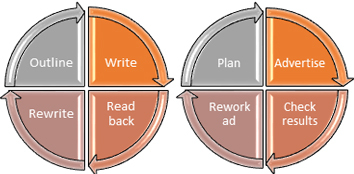
Yet it’s staggering how often people neglect those last two steps:
Writers let people read their book draft, but put off processing feedback they don’t like to hear;
Authors see their advertisement on Facebook didn’t get them new followers, so they abandon the idea of social media altogether instead of working on a formula that does yield results.
I’m guilty of this myself. Everyone is, no exceptions. But if we want to improve, not just as writers but as the entrepreneurs we must also be, then we need to put in the work. Constantly and relentlessly. No shortcuts.
The usefulness of the Deming Cycle doesn’t end there. This extremely versatile model also helps to keep unexpected and undeveloped story ideas from ruining your work in progress:

You have a great idea for a scene/character/story/plot twist.
You try it out: visualise, daydream about how this idea affects your story, plot, characters, etc.
You check if this outcome improves the story.
You decide to implement the idea, amend it or toss it.
This simple four-step process can save you from writing an utterly unsalvageable first draft.
Tinkering with story ideas Deming-style can all take place in your mind. No need to spend hundreds of hours writing a book based on this “great idea” that in the end doesn’t work for your story’s message (also known as “theme”).
Still want to stretch a flawed draft to make it work? Then Reason’s Swiss cheese is your friend. More on that next week. Until then!

Het bericht Write Like It’s Business – Part II verscheen eerst op Chris Chelser.