I never knew I was stupid until I went to school
Stupid is a very broad term for kids. In their minds, it includes their academic performance but also their behaviour and level of social acceptance.

Before I went to school, I just lived my life. I liked myself. Life was good. When I went to school, everything became about levels and scores and grades. Everyone started measuring my performance and comparing me to others. Now I’m the stupidest kid in the class. I’m stupid because I don’t know the answer, but I’m also stupid because I get in trouble.
By the second or third week of school, the honeymoon ends for too many kids – especially boys. I have had a number of calls and emails from mothers who have just received their first “call home” of the year. Their son is “having trouble.”
It’s never the school or the teacher who is having trouble – it’s always the boy.
His behaviour appears as a problem for two reasons – the environment is not hospitable to his nature and the expectations of the adults around him are not realistic. “He should be able to sit still and focus on a worksheet for 15 minutes.” No he shouldn’t. The yardstick I suggest for a child’s natural attention span (for things they are not particularly interested in) is their age in minutes. If a child is interested in the task (think video games) this attention span can go up to hours.
When boys cannot move in appropriate ways, they will move in inappropriate ways.
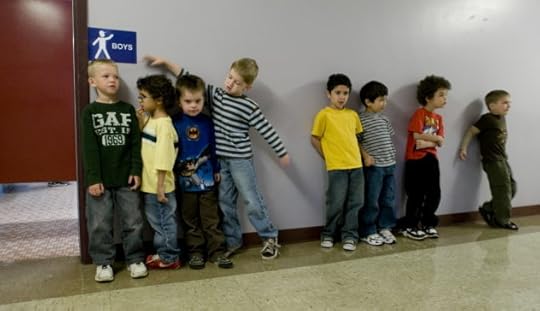
Liam was bored and frustrated by a morning of worksheets, so standing in line, he playfully pushed the boy in front of him – just to have some fun, human connection, stimulation, anything! He ended up standing in the office while the principal called his mother to report on his “bad behaviour.”
“Is he standing there with you now listening to this?” asked the mother.
“Yes,” replied the principal.
“Well, I don’t think it’s appropriate that he be subjected to this humiliation.”
“Well, he’s just got to learn that this kind of behaviour will not be tolerated,” replied the principal.
He will learn that, and he will learn some other lessons as well: I am bad.
This place doesn’t work for me. Everyone else (especially the girls) seem to be able to do all this. I must be stupid.
Adults like to say the child is “making bad choices.” Young boys are naturally impulsive. They act first and think later. The impulse control center develops later in boys than it does in girls – thus making girls appear more compliant.
The other place where the “trouble” comes is in reading and writing – skills which generally develop later in boys than they do in girls. When boys have trouble with reading and writing, they compare themselves to others in the class and conclude “I’m stupid.”
The solutions are simple:
Allow squirming (if it’s not negatively affecting anyone else)
Allow standing up while doing school work
Create opportunities for movement
Anticipate and manage impulsive behaviour
Understand the developmental differences between boys and girls
Show empathy and compassion for boys who are struggling in school
Don’t shame, punish or medicate normal boy behaviour
Tweet

Before I went to school, I just lived my life. I liked myself. Life was good. When I went to school, everything became about levels and scores and grades. Everyone started measuring my performance and comparing me to others. Now I’m the stupidest kid in the class. I’m stupid because I don’t know the answer, but I’m also stupid because I get in trouble.
By the second or third week of school, the honeymoon ends for too many kids – especially boys. I have had a number of calls and emails from mothers who have just received their first “call home” of the year. Their son is “having trouble.”
It’s never the school or the teacher who is having trouble – it’s always the boy.
All behaviour is logical. If you put a squirmy boy in a room and ask him to sit still for long periods of time holding a pencil, he is going to react. His behaviour is normal.
His behaviour appears as a problem for two reasons – the environment is not hospitable to his nature and the expectations of the adults around him are not realistic. “He should be able to sit still and focus on a worksheet for 15 minutes.” No he shouldn’t. The yardstick I suggest for a child’s natural attention span (for things they are not particularly interested in) is their age in minutes. If a child is interested in the task (think video games) this attention span can go up to hours.
Kids’ academic performance suffers when they are frustrated and stressed – not being able to move, not being accepted for who they are and how they naturally act.
When boys cannot move in appropriate ways, they will move in inappropriate ways.

Liam was bored and frustrated by a morning of worksheets, so standing in line, he playfully pushed the boy in front of him – just to have some fun, human connection, stimulation, anything! He ended up standing in the office while the principal called his mother to report on his “bad behaviour.”
“Is he standing there with you now listening to this?” asked the mother.
“Yes,” replied the principal.
“Well, I don’t think it’s appropriate that he be subjected to this humiliation.”
“Well, he’s just got to learn that this kind of behaviour will not be tolerated,” replied the principal.
He will learn that, and he will learn some other lessons as well: I am bad.
This place doesn’t work for me. Everyone else (especially the girls) seem to be able to do all this. I must be stupid.
Adults like to say the child is “making bad choices.” Young boys are naturally impulsive. They act first and think later. The impulse control center develops later in boys than it does in girls – thus making girls appear more compliant.
The other place where the “trouble” comes is in reading and writing – skills which generally develop later in boys than they do in girls. When boys have trouble with reading and writing, they compare themselves to others in the class and conclude “I’m stupid.”
The solutions are simple:
Allow squirming (if it’s not negatively affecting anyone else)
Allow standing up while doing school work
Create opportunities for movement
Anticipate and manage impulsive behaviour
Understand the developmental differences between boys and girls
Show empathy and compassion for boys who are struggling in school
Don’t shame, punish or medicate normal boy behaviour
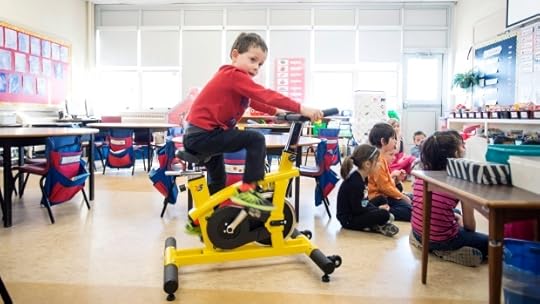
Here’s a simple idea! One School Council made this their fundraising activity.
Stationary Bikes in the Classroom. CBC The Current
Tweet


No comments have been added yet.