
Peter Rollins's Blog, page 11
February 7, 2016
An Exodus Community: Mary Daly and the Church

Another thinker we’ll be reading during Atheism for Lent is Mary Daly. Daly was famously the first woman to speak in Harvard’s Memorial Church in 1971. What made the event so truly momentous was that she used the opportunity to call for an exodus from the church as a whole due to its oppression of woman and “centuries of darkness.” After proclaiming the exodus, she courageously stood down from the pulpit and walked out in full view of the congregation. A local newspaper reported, “More than half the women and some men in the congregation joined her in walking out of the church before the Sunday morning service was finished.”
In the sermon she outlined four ways in which people attempt to blunt the message of liberation for woman: trivialization, particularization, spiritualization and universalization. Four strategies that one can see replicated today in America as it wrestles with racism.
Trivialization refers to the that claim there are more important issues to be concerned with. Issues regarding war, racism, and the environment. Here Daly counters, “One would think, to hear this, that there is no connection between sexism and the rape of the Third World, the rape of the Blacks, or the rape of land and water.
In particularization, people attempt to locate the problem elsewhere saying things like, “that’s a catholic issue, or an issue in the middle east.” For Daly, this is simply an attempt to put the problem on someone else’s back door, rather than seeing it as a problem diffused throughout the world.
By engaging in “spiritualization” she argues that people attempt to shield themselves from concrete facts, and saying things like, “in Christ there is neither male nor female.”
Finally, in the strategy of universalization, Daly notes how people might acknowledge the issue, but then tether it to something that is seen as more universal, such as human liberation, or economic reform.
In Daly’s early theological work (such as Beyond God the Father) she articulates an understanding of God as ground of being, and sees faith as articulated in a concern for concrete liberation, rather than doctrinal affirmation.
Here are the closing words from her famous sermon in Harvard’s Memorial Church,
We cannot really belong to institutional religion as it exists. It isn’t good enough to be token preachers. It isn’t good enough to have our energies drained and co-opted. Singing sexist hymns, praying to a male god breaks our spirit, makes us less than human. The crushing weight of this tradition, of this power structure, tells us that we do not even exist.
The women’s movement is an exodus community. Its basis is not merely in the promise given to our fathers thousands of years ago. Rather its source is in the unfulfilled promise of our mothers’ lives, whose history was never recorded. Its source is in the promise of our sisters whose voices have been robbed from them, and in our own promise, our latent creativity. We can affirm now our promise and our exodus as we walk into a future that will be our own future.
Sisters — and brothers, if there are any here:
Our time has come. We will take our own place in the sun. We will leave behind the centuries of silence and darkness. Let us affirm our faith in ourselves and our will to transcendence by rising and walking out together.
To join the Atheism for Lent course, click here


February 6, 2016
As If God Is Not Given: Bonhoeffer on Religionless Christianity
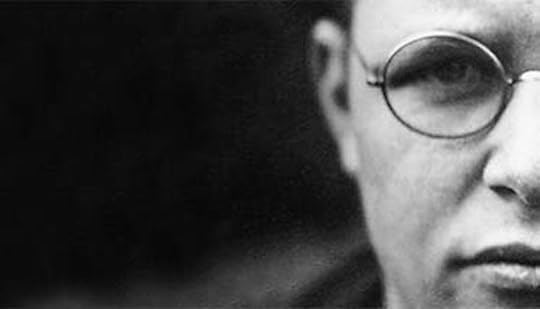
Another one of my favorites will be making an appearance in Atheism for Lent this year: Dietrich Bonhoeffer. Near the end of his life Bonhoeffer famously wrote a series of letters from his prison cell that hinted at a radical form of faith which he called “Religionless Christianity.” Depending on who you talk to, these fragments are either claimed to be compatible with his earlier work, or they signal a shift into very different waters (I’m personally pursuaded by the latter perspective).
There is so much in these letters to savor, and they’ve had a deep impact on my own thinking as I attempt to put into practice a religionless vision of faith via my Transformance Art initiatives.
You can get a compilation of the most important letters here, or sign up for my course. In this post I just want to offer a brief reflection on the following comment,
We cannot be honest unless we recognize that we have to live in the world etsi deus non daretur (as if God is not given). And this is just what we do recognize – before God! God himself compels us to recognize it… The God who lets us live in the world without the working hypothesis of God is the God before whom we stand continually. Before God and with God we live without God. God lets himself be pushed out of the world on to the cross.
In this pregnant passage Bonhoeffer argues that to live as though God is not given to us and instead give ourselves fully to the world, is the way in which we affirm the God of Christianity. Bonhoeffer called the God of religion a type of Deus ex Machina that is brought into the world when there is a problem, a fear or a puzzle to solve. It appeals only to our weakness and ignorance. Instead, Bonhoeffer wrote of a faith that puts such an idea aside to embrace life and work for real transformation. It is this approach which causes him to write,
I often ask myself why a ‘Christian instinct’ often draws me more to the religionless people than to the religious, by which I don’t in the least mean with any evangelizing intention, but, I might almost say, ‘in brotherhood’.
Bonhoeffer never got to expand on his prison thoughts, but others have taken them as the soil in which a radically different understanding of Christianity has taken root.
To sign up for Atheism for Lent, click here.
February 5, 2016
Atheism for Lent: The Reading List

My online Atheism for Lent course is made up of short reflections (podcasts, book excepts, interviews etc.) for each day of lent. In addition to these, you have access to a 60 min video of me introducing the material for each week (with John Caputo joining me on week 4). The time commitment is pretty minimal, especially if you already listen to podcasts and read a little. But for those of you who want to read more deeply into what we are covering, I’ve compiled a reading list here. The books cover the topics of each week,
Pre-event Preparation
Suspicion and Faith: The Religious Uses of Modern Atheism by Merold Westphal
Week 1
The God Delusion by Richard Dawkins
The Portable Atheist: Essential Readings for the Nonbeliever By Christopher Hitchens
God Is Not Great: How Religion Poisons Everything By Christopher Hitchens
Atheism: A Reader Ed. S.T. Joshi
Atheism: A Very Short Introduction by Julian Baggini
The End of Faith: Religion, Terror, and the Future of Reason by Sam Harris
Why I Am Not a Christian and Other Essays by Bertrand Russell
Breaking the Spell: Religion as a Natural Phenomenon by Daniel C. Dennett
The Cambridge Companion to Atheism Ed. Michael Martin
Week 2
Feuerbach and the Interpretation of Religion by Van A. Harvey
The Essence of Christianity by Ludwig Feuerbach
The Essence of Religion by Ludwig Feuerbach
Marx On Religion by John Raines
On Religion by Karl Marx
Week 3
Freud and Freudians on Religion: A Reader Ed. Donald Capps
Nietzsche’s Philosophy of Religion by Julian Young
The Portable Nietzsche by Friedrich Nietzsche
Week 4
Theology of Culture by Paul Tillich
The Courage to Be: Third Edition by Paul Tillich
Waiting for God by Simone Weil
Gravity and Grace by Simone Weil
Come Be My Light by Mother Teresa
God Without Being: Hors-Texte by Jean-Luc Marion
Week 5
Dietrich Bonhoeffer: Witness to Jesus Christ.by Dietrich Bonhoeffer
Radical Theology and the Death of God by Thomas J. J. Altizer
Resurrecting the Death of God Ed. Daniel Peterson
An Introduction to Radical Theology by Trevor Greenfield
Thinking Through the Death of God Ed. Lisa Mccullough
Beyond God the Father: Toward a Philosophy of Woman’s Liberation by Mary Daly
The Church and the Second Sex by Mary Daly
Week 6
The Faith of the Faithless: Experiments In Political Theology by Simon Critchley
The Puppet and the Dwarf: The Perverse Core of Christianity by Slavoj Zizek
The Weakness of God: A Theology of the Event by John D. Caputo
The Insistence of God: A Theology of Perhaps by John D. Caputo
The Folly of God: A Theology of the Unconditional by John D. Caputo
God Is Unconscious: Psychoanalysis and Theology by Tad DeLay
Radical Theology and Emerging Christianity by Katharine Sarah Moody
It Spooks: Living in response to an unheard Call Ed. Erin Schendzielos
It Spooks: Special Edition Ed. Erin Schendzielos
The graffiti above was painted outside The Menagerie Bar, where ikon used to meet
Look at the Work: Mother Teresa and Faith

It might seem a little strange that Mother Teresa makes an appearance in my online Atheism for Lent course. After all, she never appeared to doubt the existence of God. However, she is an important figure to reflect on when attempting to understand a type of faith that problematizes the simple distinction between theism and atheism, and that focuses on material existence.
Near the end of her life, Mother Teresa repeatedly asked those people she had been in correspondence with that her letters (compiled in Come Be My Light) be destroyed. The question is why?
It is well known, after the letters became public, that Mother Teresa had suffered from a sense of divine absence for most of her adult life. It has popularly thought that this was the secret that Mother Teresa wanted to hide from the world. However, the truth would seem to lie elsewhere. In some of her correspondence she makes it clear that she worries people will think that the truth of faith is located in her inner experience, when the truth of her faith is to be located in the orphanages being built and the people being helped. For those interested in the nature of true faith, she felt that a concern with her inner life would just get in the way. Neither her belief in God, her love of Jesus, nor her inner darkness expressed the divine. For her, everything was about “the work,”
With you and Fr. Van Exem I have entrusted my deepest thoughts – my love for Jesus – and His tender love for me – please do not give anything of 1946. I want the work to remain only His. When the beginning will be known people will think more of me – less of Jesus. Please for Our Lady’s sake do not tell or give anything… Let him write about “the work” and our poor suffering people – help me to pay for the schooling of our poor children and give the clever ones a chance in life.
What one confronts again and again in the writings of Mother Teresa is a type of Christianity which takes absolutely seriously the idea that faith, hope and love are virtues that make sense only as they cash out in liberation for the poorest amongst us. This understanding of faith is one that resonates with two other people we’ve looked at previously and who feature in the course: Marguerite Porete when she writes, “I am love, says God,” and Paul Tillich when he speaking of Ultimate Concern.
To sign up for Atheism for Lent, click here.
February 4, 2016
Giving Up Imaginary Flowers: Marx on Religion
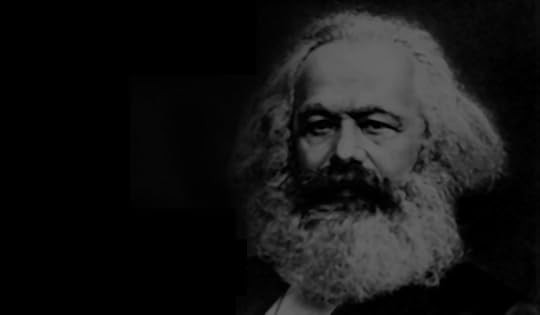
I’d be willing to bet that one of the best known philosophy quotes in the Western World is “Religion is the opium of the people” by Karl Marx. One of the readings for my online Atheism for Lent course will look at this saying in its wider context (which can be found in Marx on Religion). But for those of you not joining us, here is slightly longer excerpt with a few comments along the way,
Religious suffering is, at one and the same time, the expression of real suffering and a protest against real suffering. Religion is the sigh of the oppressed creature, the heart of a heartless world, and the soul of soulless conditions. It is the opium of the people.
Reading this, one can’t help but be struck by the fact that this is anything but a negative assessment of religion. For Marx, religion exists because people experience a deep suffering and want to resist it. Religion gives people consolation and promises that their suffering is neither normal, nor permanent. In religion we hear the sigh of a suffering world, we witness a passion for justice and the affirmation of life.
In this way, religion is like taking opium. It creates its own type of suffering (that is very real), yet it is taken in order to protest against a more fundamental suffering i.e. we start taking drugs because of real problems in our lives – trauma, dead-end jobs, bad relationships etc. It is an attempt to escape it and thus starts off as the solution to a problem. However this solution is a half measure that doesn’t make things better and ultimately generates its own pain.
The abolition of religion as the illusory happiness of the people is the demand for their real happiness. To call on them to give up their illusions about their condition is to call on them to give up a condition that requires illusions. The criticism of religion is, therefore, in embryo, the criticism of that vale of tears of which religion is the halo.
Here Marx is echoing what happens in during a drug intervention. A person is encouraged to drop the illusionary happiness they get from the drugs in order to face the suffering that has led to it. The intervention is not there to make a person unhappy, but to help them find a substantial happiness by providing a space where they can face up to, and address, the issues that have encouraged the drug use. Issues that the drug use has often made worse.
By claiming that the criticism of religion is the criticism of the “Vale of Tears of which religion is the halo,” he is saying that we must not make worldly suffering a sacred trial to endure, but rather confront its horror and actively resist it.
Criticism has plucked the imaginary flowers on the chain not in order that man shall continue to bear that chain without fantasy or consolation, but so that he shall throw off the chain and pluck the living flower. The criticism of religion disillusions man, so that he will think, act, and fashion his reality like a man who has discarded his illusions and regained his senses, so that he will move around himself as his own true Sun. Religion is only the illusory Sun which revolves around man as long as he does not revolve around himself.
He then moves on to claim that we must rid ourselves of the pleasures we gain from the illusion of a better world so that we might fight to make a better world. This is the rejection of a hope which asks us to sit back and wait for a new reality, in favor of a hope that requires we put our shoulder to wheel and fight for it. This second type of hope is analogous to the hope a parent might have that their child might mature into a caring, loving adult. A hope that demands they work hard to create an environment that will help make this a reality.
To sign up for my Atheism for Lent course, click here.
February 3, 2016
The Invisible Gardener: Flew on God
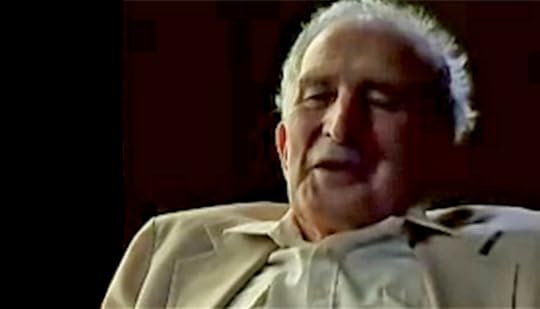
For today’s Atheism for Lent taster I want to introduce you to Anthony Flew. Flew was an analytic philosopher who wrote a famous short essay called “Theology and Falsification” (which can be found in the book New Essays in Philosophical Theology). It has been called the most widely read philosophical publication of the last 60 years… which means that over 100 people have read it!
The essay begins with a fascinating little parable originally crafted by John Wisdom,
Two people return to their long neglected garden and find, among the weeds, that a few of the old plants are surprisingly vigorous. One says to the other, ‘It must be that a gardener has been coming and doing something about these weeds.’ The other disagrees and an argument ensues. They pitch their tents and set a watch. No gardener is ever seen. The believer wonders if there is an invisible gardener, so they patrol with bloodhounds but the bloodhounds never give a cry. Yet the believer remains unconvinced, and insists that the gardener is invisible, has no scent and gives no sound. The skeptic doesn’t agree, and asks how a so-called invisible, intangible, elusive gardener differs from an imaginary gardener, or even no gardener at all.
In many ways this parable captures a move that remains popular in some religious circles, namely the strategy of protecting the claim that God exists from anything that would falsify it. The parable implies that this retreat into a definition that insulates itself from critique, ends up with a God that doesn’t look any different from no God at all.
This essay is located in the first week of the course because it helps to set up many of the readings that come later. Readings which imply that such a position doesn’t mark the end of theology, but rather provides a clearing for a much more interesting theology to grow.
To sign up for Atheism for Lent, click here.
February 2, 2016
The Faculty, Belfast, NI

The Positive Power of Negative Thinking: Finding Redemption from Certainty and Satisfaction
Belfast born philosopher Peter Rollins has become a controversial figure on the international stage with his development of a (pyro)theological practice that celebrates doubt, complexity and ambiguity, that resists secular and saintly promises of wholeness, that transcends the theist/atheist divide, and that preaches the Good News of a life before death. Perhaps the only thing that is stranger than his radical, religionless vision of Future Church is the fact that it’s starting to catch on.Â
Join Peter as he explores how the religious drive for certainty and satisfaction continues unabated in contemporary society, how this drive is ultimately destructive, and how we might find salvation from it by cultivating a life marked by the courage to embrace death.Â
There will be no altar calls.
For God’s Sake Give Up God: Paul Tillich and Atheism
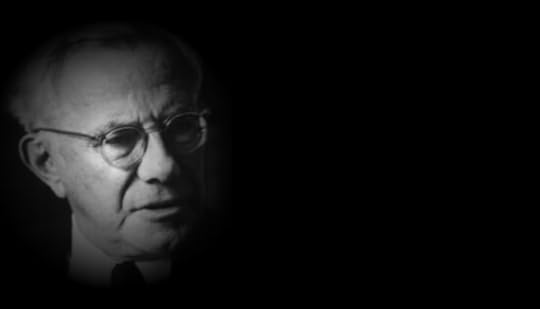
Genuine religion without an element of atheism cannot be imagined. It is not by chance that not only Socrates, but also the Jews and the early Christians were persecuted as atheists. For those who adhered to the powers, they were atheists ~ Paul Tillich
In the run up to Atheism for Lent (beginning 10th February) I am going to try and write a relevant blog post every day. This serves three purposes,
1. Those not doing the course will still get plenty of thoughtful material
2. Those doing the course will get a chance to learn some of the basic ideas we’ll be exploring together
3. Leaders who are integrating the course into their communities might get some inspiration to help them think about sermons
Today I want to introduce to you my favorite reading of the entire event. It’s Paul Tillich’s short essay “Two Types of Philosophy of Religion” (which will be read over two days). Don’t let the rather boring title fool you. It’s a brilliantly lucid and insightful exploration into an understanding of God that affirms the importance of atheism. This is also one of John Caputo’s favorite philosophical essays, and his most recent book, The Folly of God, is a stunning work that is inspired by, wrestles with, and develops this essay of Tillich’s (which can be found in Theology of Culture).
Whether or not you’re doing my course I recommend you track down this article, find you favorite coffee shop, and dig in.
To give you a taste of what you can expect, Tillich offers up a way of understanding faith that fully affirms doubt and that provides a way of thinking about Christianity which transcends the theist/atheist divide. Take two examples. Firstly, imagine someone rejecting the idea of God because of the way this name has provided justification for all kinds of evil. From the tortures and executions of people, through to land theft, condemnations and ecological disaster. Tillich reflects on how the very soil that feeds this sincere and passionate rejection is an ultimate concern in the value of life. In this way the person who rejects God is not only at one with the Hebrew prophets, who vehemently rejected empty religion in favor of justice and righteousness, but with the reality that religious symbols, at their best, invite us into.
Secondly, take a moment to think of someone who has reflectively left their theistic beliefs behind. Someone who has risked losing friends, family members and their community because they can no longer, in good conscience, say that they believe in some Supreme Being. For Tillich, such an individual has not only demonstrated a profound concern for authenticity and truth, but has actually freed themselves from what he calls a “half mythological” and “blasphemous” notion of God. While Tillich was deeply committed to religious symbolism, and affirmed the value of God-talk in church life, he ultimately viewed this as a richly symbolic space designed to draw people into an experience of the depth and density of existence.
For Tillich, faith is ultimately an expression of underlying commitment that transcends the realm of intellectual affirmation. Take the example of two people sincerely arguing about whether or not God exists. The very enactment of the argument reflects a commitment to the importance of the discussion. To argue about whether or not religion is good for the world, shows that they affirm the world as having deep value, while any genuine discussion touching on what is true, shows a concern about truth. Hence, what they both affirm in the very act of stepping up to the podium and engaging in the argument is what Tillich called a affirmation of the God beyond God.
And remember, if you want to join over 200 other people in 40 mind-altering Lenten reflections, click here.
February 1, 2016
I Am Love, Says God: Marguerite Porete on the Simple Soul

In week three of my online Atheism for Lent course we’ll be turning our attention to theological atheism. This will begin by dipping our toe in the waters of mysticism. The greatest of the mystics had a knack of transgressing boundaries and blaring the lines between the sacred and profane as well as between theist and atheist.
One of the mystics we’ll be looking at is the brilliant Marguerite Porete. Porete was a late 13th, early 14th century writer whose most famous work was The Mirror of Simple Souls. The book was considered heretical and she was burned at the stake in Paris in 1310 for refusing to recant.
The Mirror of Simple Souls can be described as a work of theopoetics that is structured as a dialogue between various characters, such as Soul, Love, Reason and Virtue. At its heart, the book presents faith as something reason cannot touch. Instead soul gives itself up completely to love, and in this surrender the “Annihilated Soul” is unified with God and stands beyond all worldly contradictions, demands, and morals. It does not give up on virtue, but virtue becomes as natural to this soul as breathing.
The reason for including Porete in the readings is because of the way that her writings problematize any simple understanding of God. Porete’s God has no resemblance to the type of God we see defended and denied in popular debates. Her work feels like a type of extended koan in which intellectual way of thinking about the divine is constantly frustrated, turned around, and short-circuited. While she constantly references the divine, she stands as far apart from the type of theism we are familiar with as she does from the type of atheism we see on the shelves of Barnes and Noble. For those of us used to watching standard debates on the existence of God, Porete’s work will frustrate us whichever side we take.
In many ways The Mirror of Simple Souls can be seen as a deep and sustained reflection on those words found in 1st John,
Dear friends, let us love one another, for love comes from God. Everyone who loves has been born of God and knows God. Whoever does not love does not know God, because God is love
Whether someone believes in God or not, they generally agree that what they are talking about is a claim concerning the existence of some being “out there” in the world. Thus the phrase, “God is love” must be read as a poetic metaphor (basically meaning that God is supremely loving). However, one could also read the phrase “God is love” literally and then take all talk of God as a being to be a poetic metaphor (like a couple claiming their subjective love has taken objective form in the reality of their child). When reading Porete one finds that neither position beats the other. Instead they swirl together in an intoxicating, often frustrating state of undecidability.
One of the most beautiful lines in the book comes whenever Reason asks, “And who are you, Love? Are you not also one of the Virtues, and one of us, even though you be above us?” In response we read,
I am God, says Love, for Love is God, and God is Love, and this Soul is God through its condition of Love, and I am God through my divine nature, and this Soul is God by Love’s just law. So that this my precious beloved is taught and guided by me, without herself for she has been changed into me. And this is the outcome, says Love, of being nourished by me.
I Am Love, Says God
In week three of my online Atheism for Lent course we’ll be turning our attention to theological atheism. This will begin by dipping our toe in the waters of mysticism. The greatest of the mystics had a knack of transgressing boundaries and blaring the lines between the sacred and profane as well as between theist and atheist.
One of the mystics we’ll be looking at is the brilliant Marguerite Porete. Porete was a late 13th, early 14th century writer whose most famous work was The Mirror of Simple Souls. The book was considered heretical and she was burned at the stake in Paris in 1310 for refusing to recant.
The Mirror of Simple Souls can be described as a work of theopoetics that is structured as a dialogue between various characters, such as Soul, Love, Reason and Virtue. At its heart, the book presents faith as something reason cannot touch. Instead soul gives itself up completely to love, and in this surrender the “Annihilated Soul” is unified with God and stands beyond all worldly contradictions, demands, and morals. It does not give up on virtue, but virtue becomes as natural to this soul as breathing.
The reason for including Porete in the readings is because of the way that her writings problematize any simple understanding of God. Porete’s God has no resemblance to the type of God we see defended and denied in popular debates. Her work feels like a type of extended koan in which intellectual way of thinking about the divine is constantly frustrated, turned around, and short-circuited. While she constantly references the divine, she stands as far apart from the type of theism we are familiar with as she does from the type of atheism we see on the shelves of Barnes and Noble. For those of us used to watching standard debates on the existence of God, Porete’s work will frustrate us whichever side we take.
In many ways The Mirror of Simple Souls can be seen as a deep and sustained reflection on those words found in 1st John,
Dear friends, let us love one another, for love comes from God. Everyone who loves has been born of God and knows God. Whoever does not love does not know God, because God is love
Whether someone believes in God or not, they generally agree that what they are talking about is a claim concerning the existence of some being “out there” in the world. Thus the phrase, “God is love” must be read as a poetic metaphor (basically meaning that God is supremely loving). However, one could also read the phrase “God is love” literally and then take all talk of God as a being to be a poetic metaphor (like a couple claiming their subjective love has taken objective form in the reality of their child). When reading Porete one finds that neither position beats the other. Instead they swirl together in an intoxicating, often frustrating state of undecidability.
One of the most beautiful lines in the book comes whenever Reason asks, “And who are you, Love? Are you not also one of the Virtues, and one of us, even though you be above us?” In response we read,
I am God, says Love, for Love is God, and God is Love, and this Soul is God through its condition of Love, and I am God through my divine nature, and this Soul is God by Love’s just law. So that this my precious beloved is taught and guided by me, without herself for she has been changed into me. And this is the outcome, says Love, of being nourished by me.
Peter Rollins's Blog

- Peter Rollins's profile
- 314 followers

