
Michele Rosenthal's Blog, page 5
June 2, 2015
First Responders and PTSD: Plain Clothes, A Film
 In honor of National PTSD Awareness Day (coming up this month on the 27th) we’re launching our awareness campaign with an interview with actor and film director, Sam Jaeger (who also stars in Parenthood and American Sniper). Sam wrote, directed and starred in Plain Clothes about a police officer with PTSD. Jaeger made this film in honor of his brother who is a cop.
I asked Jaeger a few questions about the film…
MR: What inspired you to make this film and why is it important to you?
SJ: I was having a conversation with an officer I’m close to, and realized there was something there that hasn’t been shared much. We’re well aware of soldiers and PTSD, but what about those who see the horrors of crime and yet go home at the end of every day? How does that eat away at the other side of life? Can a person shake that off so that it doesn’t impact his or her family? Those were compelling questions to me.
MR: What are you trying to say as a filmmaker; what’s the primary message of Plain Clothes?
SJ: For me it’s about our essential need for connection. At the end of our lives, we don’t think back on work, whether we carved out enough overtime to get that raise. We think about the impact we’ve had on our families, and vice versa. With a job as demanding as law enforcement, it’s hard to keep that in focus when dealing with the grim realities of our society. And yet it remains the most important thing.
MR: What do you hope Plain Clothes will accomplish/contribute to the trauma and PTSD world?
SJ: With any suffering, the more it’s discussed, the less alone the sufferer feels. My hope is that “Plain Clothes” is shared, that it becomes part of a conversation. When we don’t feel shame about the things that occupy our thoughts, they lose their potency. The hope is that talking about PTSD becomes a necessary and healthy part of serving. The hope is that our film becomes irrelevant.
Watch the PTSD Film, Plain Clothes:
For further reading: links to a couple of articles with some statistics on police officers and PTSD:
http://www.policemag.com/channel/careers-training/articles/2013/02/police-and-ptsd.aspx
http://www.policesuicidestudy.com/id14.html (this article has statistics)


May 30, 2015
Substitutions for generic ultram
Various types of fresh produce have been implicated in previous outbreak investigations, the CDC said.To find out more about painful menstrual periods, head to ultram hlc Order ultram 100mg online safe 50mg Purchase ultram online fda approved pharmacy tab the U.Researchers at the University of Pittsburgh School of Medicine said their findings should prompt a re-evaluation of the substitutions for generic ultram long-term effects of concussion, Pain relief ultram vs hydrocodone which affects more than 1.One in five of the neurologists said they did not know about any substitutions for generic ultram of these risks.Dizziness or fainting, cheapest tramadol available online nausea or vomiting, fatigue and headache Generic ultram order cod are also potential signs of heat exhaustion.
That effort involved nearly 145,000 women who were between 50 and 70 years old when recruited for the study during the 1990s.And it’s order cheap ultram 100mg australia too early to recommend metformin as a preventive therapy for pancreatic cancer
Related articles:
Buy lexapro online pharmacy
Purchase tramadol online overnight shipping
Buy valium 10mg online
Order xanax australia

May 28, 2015
The Heal My PTSD|Making the Shift Blog has been Hacked
 Heads up, peeps: If you’ve been thinking it’s weird that our blog keeps sending posts about buying medications you’re right — we would never be suggesting what medications you should be taking.
Our blog has been hacked. Please ignore all weird advertisment-like posts. Our IT team is working on an immediate fix.
Thanks for your patience. We hate this as much as you do!

May 19, 2015
How To Cure Insomnia: 6 Tips for Better Sleep
This post was contributed by Jude Bijou MA MFT
 We all know it’s important to get a good night’s sleep. Being well rested is vital to our productivity and value at work and home. A lousy night sleep can have a clear effect on our ability to focus and enjoy the day.
But many of us, especially if we suffer from PTSD take our worries, problems, and anxieties to bed, staying up tossing and turning instead of getting valuable zzzz’s. The (CDC reports) that about 10 percent of Americans suffer from chronic insomnia. And, according to a study by the National Health and Nutrition Examination Survey, at least 8.6 million Americans resort to taking prescription sleeping pills.
But there’s a better way. Here are suggestions for getting that great night’s sleep you need in order to be productive and happy.
Shake and Shiver.
Not being able to sleep is related to having too many unexpressed emotions, especially fear. We experience fear as feeling overwhelmed, anxious, confused, or stressed. Once we realize that fear is a pure physical sensation and deal with it on a physical level, we can move that energy right out of our bodies, allowing ourselves and our mind and spirit to calm down.
Think about it: What does a dog do when it’s scared? It shivers, quivers and trembles. And children: if they’re scared they tremble, if they’re cold, they shiver. It’s the same when we deal with a traumatic event or bad news. Our hands become shaky and we shudder uncontrollably. Our stomach clenches up, or we feel paralyzed. The stress and fear we experience is triggering our primitive survival instincts, and our body is reacting naturally.
We need to allow our bodies to do what is natural. I know most people resist this idea. We like to “keep it together.” Or maybe the idea of shaking away the fear seems too simple. But in my 30-plus years as a psychotherapist, seeing tons of clients, I’ve found that this cure really works. So give it a try.
Ridiculous as it sounds, peel yourself out of bed (or do it before getting into bed), get up, and shiver, quiver, tremble and shudder. It takes less than two minutes. Shudder up your spine, out your arms and hands, down your legs, and around your neck. Do it hard, fast, and with abandon. Really get into it. Feeling inhibited? Make sounds–squeal, whine. Think, “It’s okay. I just feel scared. Everything will be all right.”
Want to see how to “shiver” your fears away before bedtime? Watch a one-minute video ( here.) Give it a wholehearted try. Much to your amazement, you’ll find your body and mind will finally relax. I’ll bet you drift right off to a good night of sleep.
Here are 5 other tips for improving your ability to sleep:
Shut It Down.
At least a half an hour before bedtime, stop all your focused stimulating activity. Shut down those computers. Turn off the television news and scary shows.
Lighten Up.
Don’t have a big meal or a large amount of food less than two hours before you go to bed. A piece of fruit or a glass of milk is all right, but that’s it. Keep it light.
Write It Out.
Prone to lying awake, mulling over tasks for the days and weeks ahead? Write it down and get it out. A half an hour before bedtime, make a to-do list. That way, it’s down on paper and out of your head, and you won’t be preoccupied with it. Then put it aside, and instead of counting sheep, repeat over and over: “I’ll do what I can, and the rest is out of my hands. Now is the time for sleep.”
Make It Sweet.
Create your own pre-bedtime ritual, something sweet and relaxing. Make a list of 11 things you appreciated about the day, or listen to calming music. Take a warm bath or sit in a Jacuzzi. Or, get out the kinks with simple, easy stretches. You’ll feel soothed, and ready for delicious, revitalizing sleep.
Strive for Balance.
Exercising regularly keeps your body functioning well. So make sure you’re making time to move. And learn to handle what’s on your plate in a timely manner so you can arrive at a balance between under activity and overwork, and feel both content in your social life and fulfilled in your work life.
Want to find out more about attitudes and emotions affect your wellness? Take a quick self-quiz here, and then try the coping strategies designed to address them.
 Jude Bijou MA MFT is a respected psychotherapist, professional educator, and consultant. Her theory of Attitude Reconstruction® evolved over the course of more than 30 years as a licensed marriage and family therapist, and is the subject of her multi-award-winning book, Attitude Reconstruction: A Blueprint for Building a Better Life. Learn more at www.attitudereconstruction.com.

May 12, 2015
We Can Do Better Than Desensitization As The Goal of Trauma Treatment, Part 2
This post by Laura Kerr, PhD, is being reprinted from her blog with permission. You can read Part 1 here.

Two Views of the Nature of Traumatic Stress
There seems to be two main views of the nature of traumatic stress guiding the treatment of trauma. One view, which informs treatments such as prolonged exposure therapy, focuses on regulating emotions and sensations. People are seen as needing help with controlling overwhelming feelings and the reactions they cause, such as Morris running out of the movie theatre when engulfed by fear. This is a reasonable view, and partly correct. Most people who deal with ongoing traumatic stress are often overwhelmed by their emotions and body sensations. However, when controlling emotional reactions becomes the sole focus of treatment, the whole person is not considered or addressed. Van der Kolk observed:
“Desensitization may make you less reactive, but if you cannot feel satisfaction in ordinary everyday things like taking a walk, cooking a meal, or playing with your kids, life will pass you by.”
The other main view of traumatic stress focuses on the loss of the integrative capacity of both mind and body that trauma causes. High arousal and shutdown at the time of a traumatic event results in fragmented memories and dissociative splitting. Furthermore, as Pat Ogden and colleagues pointed out in their book, Trauma and the Body, “under conditions of arousal that are either too high or too low, traumatic experiences cannot be integrated.” Consequently, trauma often leads to compartmentalization of experience and a fragmented sense of self.
When integration is the goal of treatment, the split off memories, emotions, and sensations are mindfully brought back into awareness, contributing to a sense of self as whole again. Increasing emotional regulation is central to regaining integrative capacity, although not the primary goal. Rather, treatment begins with modulating arousal, which helps reduce the need to avoid internal and external reactions to traumatic reminders.
The shift in focus from desensitizing emotional reactions to increasing integrative capacity may seem new. Van der Kolk wrote:
“Over the past two decades the prevailing treatment taught to psychology students has been some form of systematic desensitization: helping patients become less reactive to certain emotions and sensations. But is this the correct goal? Maybe the issue is not desensitization but integration: putting the traumatic event into its proper place in the overall arc of one’s life.”
The pioneer of trauma treatment, French psychologist Pierre Janet, identified integration as the focal point of trauma treatment back in the nineteenth century. Janet advocated phase-oriented treatment, which is directed towards integrating traumatic memories in ways that contribute to an integrated sense of self.
Janet identified three stages of phase-oriented treatment, which are still used today:
Phase 1: Symptom reduction and stabilization
Phase 2: Treatment of Traumatic Memory
Phase 3: Personality Integration
Similar to exposure therapy, Phase 1 of phase-oriented treatment addresses emotional regulation. Yet when integration is the treatment goal, emotional regulation is gained by increasing the felt-sense of safety rather than desensitizing a person to feelings and body sensations.
Exposure to memories of past traumas is still a significant part of treatment (Phase 2). However, the goal is to experience these memories within a window of tolerance that increases the likelihood of their integration with non-traumatic memories and non-traumatic self-states.
Phase-oriented treatment decreases the likelihood of dysregulation by helping clients to:
Establish body safety and control of the body
Establish a safe environment
Establish emotional and autonomic (arousal) stability
Central to the integrative approach is the development of mindful awareness of the conditions that contribute to high arousal or shut down, along with identifying resources that can help reduce arousal when hyperaroused, or increase arousal when hypoaroused. Resources include skills, practices (e.g, yoga, mindfulness), objects, relationships, services, etc., that support a sense of stability and safety, regardless of what might be going on. With this approach, a person can direct his energy towards full living and greater self-awareness. This is a fundamentally different outcome than exposure therapy, which as van der Kolk observed, “desensitization to our own or to other people’s pain tends to lead to an overall blunting of emotional sensitivity.”
At times, there are benefits to desensitization. When trauma has been chronic, acute, and under treated (if treated at all), survivors will sometimes try to deal with feelings of overwhelm by avoiding the situations that might trigger them, which depending on the person and the conditions of her or his life, can lead to a very circumscribed existence. Thus, sometimes in the beginning stages of treatment people need to desensitize themselves to overwhelming emotions and sensations as a first step towards a more active life. This level of desensitization is sometimes accomplished with medications — an approach many others and myself generally don’t support. However, I know from experience that people who lack resources and support for an extended period often do well in the beginning stages of treatment with some medications in combination with Phase 1 work. Of course, a better approach than medications is to adapt services to fit the needs of the most vulnerable people, such as providing support in their homes, or through technologies such as Skype that allow for contact without forcing the client to endure conditions that might trigger high arousal or shut down.
Desensitization can also be beneficial when a person is aware her intense reactions are out of proportion to the situation, and she has already identified ways to resource herself when overwhelmed. For instance, in Dialectical Behavior Therapy one exercise, called “Opposite to Emotion Action,” encourages a person to take an action when she can tell her anticipated emotional reaction to a situation is unjustified, otherwise causing her to avoid that circumstance and unnecessarily limit her life. For example, if a person anticipates feeling frightened at the dentist, but knows she will be safe, she is encouraged to override her emotional response and keep the appointment. The goal is not to suppress the emotion, but rather to mindfully be open to the possibility of having a new experience. Nevertheless, the process can potentially activate overwhelming feelings and memories that a person must learn how to tolerate.
Sometimes we have to be less sensitive that we would like, or endure conditions we would rather avoid, to live full, meaningful lives. But the operative word here is sometimes. Most of the time, we should aspire to live a life that is open to a variety of experiences and relationships, and have confidence in our ability to tolerate, adapt, learn, and grow, which is the opposite of fear-based, defensive living. And in the best of worlds, we all feel responsible for developing our capacities for both resilience and compassion. Society should also be held responsible for creating conditions that promote thriving as much as simply surviving. Similarly, we deserve trauma treatments that help us not only tolerate suffering, but also allow us to regain the capacity to live the full measure of our humanity.
References
Ogden, Pat, Kekuni Minton, and Clare Pain. 2006. Trauma and the body: A sensorimotor approach to psychotherapy. New York: W. W. Norton & Co.
Kolk, Bessel van der. 2014. The Body Keeps The Score: Brain, Mind, and Body in the Healing of Trauma. New York: Viking.
© 2015 Laura K Kerr, PhD. All rights reserved.
Laura K. Kerr, PhD is a mental health scholar, former trauma-focused psychotherapist, and soon-to-be “trauma coach.” Read more of her reflections on trauma, healing, and society at her blog, Trauma’s Labyrinth.

May 8, 2015
How to Make PTSD Recovery Easier
 How to make PTSD recovery easier is a quest every survivor struggling with posttraumatic stress disorder is on. One of the things that makes healing so hard is having to be face-to-face, out of your house, and shelling out a lot of cash in order to feel better. Of course, that’s only one way of approaching recovery. There are, of course, many ways to work toward healing. Some actually allow you to remain private, stay home, and reduce the outflow of funds.
Welcome to the busy and wonderful month of May, also known as Mental Health Awareness Month. In the upcoming weeks we’ll be sharing news, tips, and ideas about improving mental health, plus how you can reclaim control in this area.
Your wallet often takes a hit when you’re improving mental health. Each of us has felt the pinch of money going out to therapeutic interventions while not much is coming in due to our often reduced capability to work while managing symptoms. My team and I work very hard to bring you ideas and info about low or no-cost options for healing.
This week we’re excited that some spots have opened up in the small Heal My PTSD telephone (that means you can attend from home!) support groups.
Members of the groups have this to say about their experience:
“Last month I started a job where twice a month I go to the other side of [a] bridge to work and I could not believe it! When I approached the bridge, nothing happened! No sweats, no heart pounding, nothing. I used to almost have a panic attack just thinking about it but the phobia is completely gone! I even had to drive on the wrong side of this 2 lane bridge due to bridge work and I was fine! It has given me such confidence in this healing process. I feel like the healing of the phobia is directly related to the work I’ve been doing with you and the support group. I can feel the heaviness lifting!”
And…
“As Paul McCartney wrote in the song ‘Blackbird’ – – “spread your broken wings and learn to fly” – we have with PTSD all learned to fly with our broken wings and are clearly here because of our determination and want to live. The PTSD support group has helped me on the path to heal my wings so I can live a fuller life.”
If your recovery would benefit from weekly professional, one-on-one coaching about healing and symptoms management, plus connection to others who understand you and are walking a similar path — all from the comfort of your own home and for a small weekly amount — then take a look here for more information. We have one spot left in each of our women-only Friday groups:
http://www.HealMyPTSD.com/ptsd-recovery

May 5, 2015
We Can Do Better Than Desensitization As The Goal of Trauma Treatment, Part 1
This post by Laura Kerr, PhD, is being reprinted from her blog with permission.
David J. Morris, a former Marine infantry officer and a reporter in some of the most violent regions of the Iraq war, blacked out while watching a movie and ran out of the theater, only to regain awareness of himself in the lobby as he anxiously scanned other patrons for improvised explosive devices (IEDs). Morris’ girlfriend later told him an explosion in the movie precipitated his flashback.
While in Iraq, Morris had nearly been killed by an IED, and he saw two National Guardsmen killed by them. He was nearly shot down while riding in a helicopter, and with fellow Marines, withstood shelling for seven days. He had many reasons to be triggered by an explosion, even an imaginary one in a movie.
When Morris sought treatment for posttraumatic stress disorder with the Veterans Administration (VA), they recommended prolonged exposure therapy, a form of trauma treatment that attempts to help people like Morris become desensitized to their trauma triggers. In his New York Times article, Morris gave the following description of prolonged exposure therapy:
“The promise of prolonged exposure is that your response to your trauma can be unlearned by telling the story of it over and over again. The patient is asked to close his eyes, put himself back in the moment of maximum terror and recount the details of what happened. According to the theory, the more often the story is told in the safety of the therapy room, the more the memory of the event will be detoxified, stripped of its traumatic charge and transformed into something resembling a normal memory.”
Morris expected, “given enough time and enough story ‘reps,’ when I opened my eyes again, I wouldn’t feel forever perched on the precipice of a smoke-wreathed eternity. I wouldn’t feel scared anymore.”
Just the opposite happened. Instead of “unlearning” his traumatic stress response, becoming desensitized to reminders of war, he was flooded and overwhelmed by the therapy:
“But after a month of therapy, I began to have problems. When I think back on that time, the word that comes to mind is ‘nausea.’ I felt sick inside, the blood hot in my veins. Never a good sleeper, I became an insomniac of the highest order. I couldn’t read, let alone write. I laced up my sneakers and went for a run around my neighborhood, hoping for release in some roadwork; after a couple of blocks, my calves seized up. It was like my body was at war with itself. One day, my cellphone failed to dial out and I stabbed it repeatedly with a stainless steel knife until I bent the blade 90 degrees.”
Morris was told prolonged exposure therapy worked for about 85 percent of the VA patients who used it. However, in his book The Body Keeps The Score (2014), psychiatrist Bessel van der Kolk discussed a study conducted in the early 1990s that contradicts the VA’s statistics. In this study, led by Roger Pitman, Vietnam veterans were asked to repeatedly talk about their experiences during wartime. However, Pitman had to stop the study prematurely
“because many veterans became panicked by their flashbacks, and the dread often persisted after the sessions. Some never returned, while many of those who stayed with the study became more depressed, violent, and fearful; some coped with their increased symptoms by increasing their alcohol consumption, which led to further violence and humiliation, as some of their families called the police to take them to the hospital.”
Van der Kolk also shared:
“A 2010 report on 49,425 veterans with newly diagnosed PTSD from the Iraq and Afghanistan wars who sought care from the VA showed that fewer than one out of ten actually completed the recommended treatment. As in Pitman’s Vietnam veterans, exposure treatment, as currently practiced, rarely works for them. We can only ‘process’ horrendous experiences if they do not overwhelm us. And that means that other approaches are necessary.”
Personally, I am not a fan of exposure therapy. I think it’s too risky, as these studies suggest. I feel certain it would have caused flooding for me too had it been used to treat my flashbacks of childhood sexual abuse. (Fortunately, I was able to use EMDR instead.) After one session I would have never returned, and sadly, would have lost trust in psychotherapy and the support I needed to heal.
Humans are impressively resilient and adaptive. We can manipulate ourselves and our bodies in extraordinary ways, even detrimentally, and continue to survive. (Think of foot binding of women in China.) At birth, our brains are profoundly underdeveloped, increasing in size by 300 percent over the next two decades of life (Linden, 2007). Maturation involves gaining the biological, psychological, and behavioral capacities that allow us to continually adapt to physical and social environments that are also malleable and ever-changing.
Because we are ‘plastic’ by nature, I think it is safe to assume there are many ways to alter ourselves in our attempts to overcome the fallout of traumatic events. Exposure therapy is one option among many available for dealing with the aftereffects of trauma, albeit one that works for some people. Yet, because we are malleable and adaptable, there are also numerous reasons to use a treatment besides that it ‘works’ for some people — we can have reasons for treating trauma other than just stopping flashbacks.
For example, instead of making the primary criteria for success that a treatment ‘works,’ we could also think about how treatment alters people, and in turn impacts the social fabric of our communities. We might ask what kind of people we become when we are desensitized to traumatic reminders. We might wonder if, from an evolutionary standpoint, it is even safe to become hardened to memories of war, rape, and abuse. We might also wonder if there is an implicit assumption at work here — that overwhelming fear is the central problem to address, rather than the conditions that lead to war, rape, and abuse. We might question, If we become desensitized to our fear, do we also become desensitized to violence? We might ask, What is more powerful than profound emotions and visceral reactions to motivate us to seek meaningful change? How we treat trauma likely has farther reaching impact than ‘just’ reducing individual experiences of traumatic stress.
I strongly believe trauma treatments should protect our capacity for vulnerability and empathy, while also helping us regain the ability to modulate our defense reactions. We are likely most resilient and wise when we can defend ourselves and loved ones when the need arises, and the rest of the time (preferably, most of the time) live peaceful, engaged, and meaningful lives. And we need trauma treatments that can help us regain this full expression of our humanity following traumatic events or conditions.
Tune in next week for Part 2 of this post….
References
Linden, David J. 2007. The accidental mind: How brain evolution has given us love, memory, dreams, and God. Cambridge, MA: The Belknap Press of Harvard University Press.
Kolk, Bessel van der. 2014. The Body Keeps The Score: Brain, Mind, and Body in the Healing of Trauma. New York: Viking.
© 2015 Laura K Kerr, PhD. All rights reserved.
Laura K. Kerr, PhD is a mental health scholar, former trauma-focused psychotherapist, and soon-to-be “trauma coach.” Read more of her reflections on trauma, healing, and society at her blog, Trauma’s Labyrinth.

May 2, 2015
“Take Your Power Back” Summit

This guest post is contributed by Svava Brooks, Founder, Prevention Education.
As an Abuse Survivor Coach, I enjoy helping the victims of child sexual abuse heal and thrive. The first step in their recovery process is to realize they already possess the power to heal and restore themselves. Yet convincing my clients of this can be quite a challenge. Why? Because most don’t believe it.
Children are too young to understand the concept of personal power. They aren’t old enough to claim their power unless someone teaches them how to do it. As you can imagine, sexual abuse teaches them the opposite. It overwhelms them with a sense of powerlessness.
That’s why, when I tell my clients they already have all the power they need, some act as though I’m speaking ancient Greek. It does not compute. Abuse of any kind strips its victims of their personal power. Sexual abuse is particularly damaging. But when it happens to a child, day after day and year after year, the effect is devastating.
So I created my “Take Your Power Back” summit to interview other professionals working with the victims of abuse. I wanted to hear how these experts help their clients process the trauma from abuse and reclaim their personal power.
If you’re an abuse survivor, the truth is you’re not hopelessly broken. You’re not destined to struggle for the rest of your life because of what happened to you.
You can take control of your life and move it in a healthier direction. You can heal your brain. You can heal your body. You can restore your emotional health. You can regain your personal power. You can. You already possess the ability to do this.
Are you ready to take this next step on your healing journey? If so, my FREE “Take Your Life Back” summit might be just what you need to begin.
I’ve interviewed more than twenty professional therapists, coaches, teachers, experts, healers, and trauma specialists, who share their unique approach to healing and thriving after childhood trauma.
This online event is your chance to listen to these knowledgeable people share how they have helped the victims of abuse and trauma heal their lives. Not only is this summit FREE but you’ll also receive a FREE gift from each of these professionals.
Sounds wonderful, doesn’t it? To get started, go here: http://www.takeyourpowerbacksummit.com/
 Svava Brooks is a survivor of child sexual abuse and the co-founder of a nationwide child sexual abuse prevention and education organization in Iceland called “Blátt áfram.” She is also a certified instructor and facilitator for Darkness to Light Stewards of Children in San Diego, California, as well as a certified Crisis Intervention Specialist, a certified Parent Educator, a BellaNet Teen support group facilitator, and an Abuse Survivor Coach.
The mother of three children, Svava has dedicated her life to ending the cycle of child sexual abuse through education, awareness, and by helping survivors heal and thrive. You can learn more about Svava Brooks at her blog at educate4change.com

April 28, 2015
Intergenerational Trauma: What Children Inherit From Parents

Meeting of Leon Slominski (left) with Howard and Sonia Reich. Photo by Zbigniew Bzdak ©2006
The idea that trauma can be handed down from generation to generation is a no-brainer, literally. Children’s brains are full of chemicals and neurotransmitters specifically designed to help them learn — and fast. From a brain science perspective the inheritance of intergenerational trauma can begin Day 1 as neural pathways embed facial expressions, tone of voice, and body language.
Later, as children start to mature they model the adult influences around them. Starting at an incredibly early age what kids learn, see, observe and experience programs them for life. In other words, intergenerational trauma and what children inherit from parents begins immediately and then deepens and becomes thoroughly entrenched throughout childhood.
If a child is raised by someone who’s been traumatised — and has adapted coping mechanisms to get through daily life — then the child is automatically exposed and can unconsciously pick up the same or similar approaches to life that include fear, worry, anxiety, panic, or other post-trauma behaviors. The scientific documentation of intergenerational trauma is vast and irrefutable.
Recently, I spoke with Howard Reich whose mother, Sonia, is a Holocaust trauma survivor ultimately diagnosed with delayed-onset PTSD. When I asked how Sonia’s posttraumatic stress affected him as a child Reich offers,
There’s been a lot of research that shows that behaviors of PTSD get handed down through generations. So, the second and third generations, even the fourth generations can enact some of the behaviors even though some of those subsequent generations did not experience the trauma itself…. The story is always there with me. I think that since I’ve done this research the stories are with me consciously.
The “research” Reich references is work to write a book and make a documentary called, Prisoner of Her Past: A Son’s Memoir.
A Son’s Courage
In his terrifically sensitive book Reich searches for the key to unlock Sonia’s odd behavior: A survivor of extreme childhood trauma Sonia is now an elderly widow who, suddenly one night, evacuates her apartment (carrying a bag of her most essential belongings) and runs down the street to escape the people trying to kill her. There’s just one problem: There’s no one chasing Sonia except the people in her mind.
Thus Reich sets off on a year-long quest of meetings with doctors, psychiatrists, and specialists trying to determine what’s happening to Sonia. Ultimately, she receives a diagnosis of delayed-onset PTSD. The terror in her past of a little girl hunted by Nazis has finally broken through to the present. Reich explains,
Doctors often call Sonia’s symptoms subclinical: She had these symptoms of PTSD but she was managing it and leading pretty much a full and productive life. After 2001 she ceased to be able to manage those symptoms. It became full-blown PTSD with many symptoms. She no longer was able to distinguish between past traumas and current events.
Even today, though she doesn’t think it’s 1942 she acts as if it is. She knows she’s in the United States and that Barak Obama is president but she thinks everyone is trying to kill her and she believes there’s a yellow Star of David on her clothes. So the past and present are totally intermingled in her consciousness and she can’t separate them. And in addition to that, unlike many PTSD patients, she is not self-aware. She does not know she’s having PTSD. She doesn’t know she has any mental illness. If you told her that she would deny it.
This is just how she sees the world. To sum it up, the traumas that she spent so much time trying to suppress and mostly being successful in carrying on now she can’t suppress anymore and she can’t be successful in running her life.
In a bid to help his mother reclaim a functional life (and to better understand his mother and her past) Reich pieces together Sonia’s story by studying the history of both her personal family and journey (even bringing one of her cousins from Poland to the U.S. for a visit), plus the facts surrounding the invasion of her Polish hometown during World War II. Prisoner of Her Past alternates between a view of Reich growing up as the son of Holocaust survivors and the heart-wrenching saga of his parents’ individual search for safety and freedom in a world that threatened both. The book is a moving tribute to how trauma affects generations on many levels. But that’s not all reserved for purely negative effects.
Prisoner of Her Past is also a tribute to the many positive things that intergenerational trauma causes children to inherit from parents, including courage, tenacity, a steely will, and the determination to do what it takes to reclaim control in an out of control world.
Positive Inheritance
Describing why he wrote Prisoner of Her Past and undertook a very emotional trip to Poland and his mother’s childhood village, Reich shares,
I started to write about this subject kind of like a last resort not as a first resort. As I talked to all these doctors, experts, rabbis, lawyers – when there was nothing else I could do for my mother except have her in this safe, secure place near my house where I can visit all the time… When I ran out of all the options that’s when I started to write. It’s as if my whole career up to this was in preparation for this.
This one statement encapsulates so much of the good that can be inherited along with the bad: A strength, creativity, and commitment to making a choice and taking an action — to finding answers when there seem to be none — that is the hallmark of successful survival. Sonia survived horrific experiences and then came to the United States determined to create a loving home, family, and business with her husband. She succeeded and in doing so taught her son not only what it means to carry the wounds of the past but also, for many functional years — and despite her eventual diagnosis, how to create and maintain control in the present.
While the transferred negative weight of family history, PTSD symptoms, and post-trauma coping mechanisms are easy to identify and important to mourn, we must also recognize that there are other aspects of intergenerational trauma that children inherit from parents. There are also terrific elements that traumatized parents can pass on to their kids, and their children can transform into beautiful objects of art, loyalty, support and love.

April 21, 2015
PTSD Self Help: Transforming Survival into a Life Worth Living
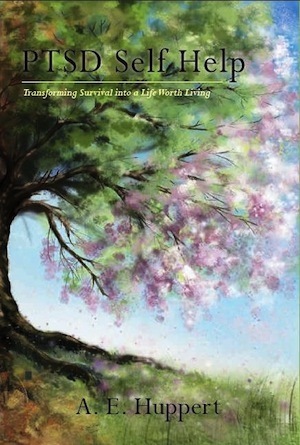 Today’s post is an excerpt from A. E. Huppert’s terrific book (same title as this post) about healing symptoms of posttraumatic stress disorder.
How Long Will It Take?
Before PTSD set in, your amazing brain captured every sensory aspect of the traumatic incident. Like a crystalized snowflake, each thing you smelled, saw, heard, touched, perceived, tasted, thought, or felt emotionally at the moment you experienced the trauma was frozen in time. It was your mind’s way of encapsulating the horror, containing the confusion and protecting you from a life-threatening event. Over time, your mind invented creative ways to keep you from experiencing anything remotely similar to the original trauma, but not always successfully.
Why? Because the mind was so detailed in crystalizing the event, it can’t avoid bumping into any number of sensory elements resembling that original event over your entire lifetime. These are called triggers. When you bump into these triggers, it results in PTSD symptoms. Trust me—making your environment “behave” by forbidding friends and loved ones to trip your triggers doesn’t work. Triggers are everywhere! It would be impossible for anyone to avoid potentially setting off the multitude of triggers connected to your traumatic past. Furthermore, if you’re actively healing from PTSD, what bothers you one week might not bother you the next. However, asking a friend, family member or spouse to temporarily refrain from certain behavior can be appropriate, given the right circumstances. PTSD Self Help online will show you how to ask and when.
Making Sense of . . . TriggersDid you know that traumatic memories are stored differently in the brain from other memories? When images of the traumatic event, feelings, sounds, smells or other bodily states associated with the event pop up to the surface of your daily living, you can be confident you’ve encountered a trigger. Triggers could be described as something that arises in the present that not only reminds you of a past event, but also causes you to feel the feelings associated with that past event. We call the present moment event a trigger because it is the catalyst for a cascade of emotional and sensory memories. That’s how traumatic memories are different from other memories—they’re linked, chained if you will, to emotional and sensory replay. Also, triggers can even happen with traumatic events about which you have partial or total amnesia.
Healing from PTSD is the gradual thawing of that crystalized snowflake, unlocking the sensory clues inside. Just recognizing those clues for what they are is often enough to dissolve the power they have over your mind and body. For this reason, the length of time it will take for you to reach your personal vision for healing from PTSD is unknown. However, you can be sure that for every day, week, month or year you put off healing and addressing the effects of PTSD, is one more day, week, month or year of running from something you can’t quite put your finger on.
Set yourself up for success by keeping these thoughts in mind:
I am headed toward healing.
This is not a race: there is no time limit.
I will do what I can today and leave tomorrow alone.
I don’t have to remember, I just have to listen to what my mind/body is telling me.
The more attention I give to healing and communicating, the sooner I will be well.
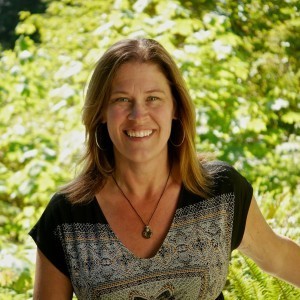 A. E. Huppert (Annmarie Esther Huppert) is an advocate for survivors struggling with Post Traumatic Stress Disorder (PTSD), author of PTSD Self Help: Transforming Survival into a Life Worth Living and visionary of The Center for Hope & Renewal – an experiential learning facility designed to empower people with a holistic approach to healing PTSD.
Annmarie’s practical, self help perspective comes from 20 yrs. studying the disorder, being a survivor herself and enjoying nearly 10 years living 100% symptom free. She partners with health care professionals, government officials and everyday people to provide PTSD education and healing as a motivational speaker, consultant, and strengths-focused healing coach. Find out more at www.PTSDSelfHelp.com.

Michele Rosenthal's Blog

- Michele Rosenthal's profile
- 8 followers


