
Michele Rosenthal's Blog, page 2
November 6, 2015
Intergenerational Trauma: Sometimes The Trauma Isn’t Yours
I’ve written previously about intergenerational trauma and its effects — this is an important area of trauma and PTSD about which we don’t speak enough. I’m very pleased today to share with you this guest post by Karen Carnabucci, LCSW, TEP, about a terrific upcoming conference that addresses this topic in an incredibly comprehensive way and with one of my favorite practitioners keynoting: Edward Tick.
Sometimes the Trauma Isn’t Yours – Family Constellations Tell Us So
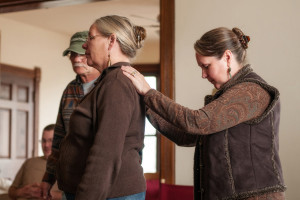 Michael had been suffering with chronically painful feet for quite a long time.
Too long. The doctors diagnosed the tingling and needle-like pain as “sensory neuropathy,” but they could not offer any treatment other than pain medication and antidepressants – neither of which made a difference. Alternative treatments, like acupuncture, bodywork and allergy remedies, did little resolve the pain.
Then, desperate for help, Michael enrolled in a workshop that promoted “Family Constellations,” a new experiential approach that examines multi-generational trauma.
Michael had remembered that his father’s feet had been badly damaged during with frostbite during his service in World War II. At the workshop, the facilitator focused on the relationships between his father, the U.S. commanding officers and the Japanese people.
As the experience unfolded with the help of group members, it became apparent that Michael was unconsciously carrying the guilt, pain and trauma of his father’s war experience.
With this fact coming to consciousness and the interventions of the facilitator, Michael’s condition improved almost immediately. At the end of two months, the pain appeared to have fully faded away.
Family constellations – sometimes called systemic constellations – offer a new dimension to our understanding of trauma. Although much trauma certainly is personal, it appears that traumatic experiences in past generations are passed down to future generations, affecting our physical health, prosperity, relationships, emotional stability and more.
Family constellations were developed during the past 30 years in Germany by Bert Hellinger, a philosopher and family therapist, to address the problems of the children of Holocaust survivors and children of the Nazis after World War II.
Family constellations have become extremely popular in Europe, Russia, China and Latin America as an alternative to talk therapy. They are particularly helpful for people and families who have experienced trauma or want to understand the multi-generational aspects of trauma.
This style of work is now growing rapidly in the United States, with several established training programs and a biennial conference that brings together trainers and facilitators throughout North America to share innovations with the method.
The many faces of trauma will be examined during the 2015 North American Systemic Constellations Conference Nov. 12-15 in San Diego. It is expected to draw a variety of professionals, including mental health professionals, physicians, educators, coaches, organizational consultants, alternative practitioners, body workers and others.
Presenters will discuss, among other themes, trauma as it relates to addiction, love relationships and physical and emotional health. One of the 50-plus presenters is Michael Reddy, the coach who suffered the chronic foot pain and has told his story in his book Health, Happiness and Family Constellations: How Ancestors, Family Systems, and Hidden Loyalties Shape Your Life and What You Can Do About It.
Saturday, Nov. 14, will focus on healing the wounds of veterans from a systemic perspective with Edward Tick, Ph.D., well known for his books War and the Soul: Healing Our Nation’s Veterans from Post-Traumatic Stress Disorder and more recently Warrior’s Return: Restoring the Soul After War.
Although Dr. Tick is not a constellation facilitator, his work takes a systemic perspective and is highly compatible with the constellation approach.
The constellation approach involves an experiential process where ordinary people, without expertise in psychology or any other healing modality, are able to sense the hidden dimensions of persistent and troubling problems within the larger family system. Typically, these are problems that defy resolution with rational analysis.
Once the distorted dynamics are discovered, a trained facilitator will direct changes within the grouping to release trauma and create a greater sense of peace, harmony and resolution.
The growing literature base – as well as numerous anecdotal reports – report unexpected correlations that shift an inner picture of the trauma dynamic. Among them: The woman with the eating disorder who makes the connection between her binge-eating and her Irish ancestors who struggled with starvation. The depressed man who is carrying the huge sadness and grief of his mother’s miscarriages, the would-be siblings who were lost before he was born. The woman who finds the source of her failed business as related to the trauma of immigration and poverty of her grandparents. The list goes on.
Daylong and full-conference options are available for attendees. Veterans, active military and their families will be offered special discounts of $150 for Saturday and $495 if they wish to attend the full conference. Use VETDAY code for one-day ticket and VETFULL code for full conference ticket during the registration process at www.constellateus.com/conference2015.
About Karen
Karen Carnabucci, LCSW, TEP, is a certified facilitator of constellation work, a board-certified trainer, educator and practitioner of psychodrama, sociometry and group psychotherapy, and co-author of Integrating Psychodrama and Systemic Constellation Work: New Directions for Action Methods, Mind-Body Therapies and Energy Healing and other books on mind-body therapies including Healing Eating Disorders with Psychodrama and Other Action Methods.” She is the author of “Show and Tell Psychodrama: Skills for Therapists, Coaches, Teachers, Leaders.” For more information, see www.realtruelife.com.


November 3, 2015
PTSD and Domestic Violence: A Mixed Bag
This post is contributed by Stephanie March.
After living through domestic violence many survivors, myself included, suffer from the crippling grip of PTSD symptoms. The intrusive flashbacks that can ruin even the sunniest of days. The hyper-awareness that makes it almost impossible to relax. The startle response to loud noises. Bouts of anxiety and depression that make day to day functioning a challenge for many and impossible for some. It’s a not so fun mixed bag of things I was left to carry and overcome.
 This mixed bag is different for everyone. As University of New England Professor Dr. David Prichard explains “It is important that social workers remember that no two trauma survivors will handle their abuse in the same way and that different resources will be required for each situation”. It was absolutely crucial in my recovery process that I found the right social workers and therapists. That I surrounded myself with people that understood my particular symptoms and the trauma that caused them. This took quite a bit of time and it was often frustrating.
But I kept searching, knowing that I deserved to have a life with reduced symptoms. I didn’t survive my relationship to become a victim to mental health issues.
Initially I collapsed under the weight of PTSD. I couldn’t get up, I couldn’t fight back. A majority of this was due to the long grieving process that I experienced. Forget the five stages, it felt more like twenty. Ed Shaw of Wake Forest University echoes these sentiments beautifully by stating that “Grief is more of a journey, and everyone’s journey is individual”. It took time to come to a place of peace and healing. It took time to let go.
Once I did, the mixed bag got a little less heavy. I was able to crawl out and get back up. I learned to create my own arsenal of ways to rescue myself when the symptoms inevitably return. Writing, talking to friends, listening to music, being outdoors, practicing yoga are all things that helped me tremendously. I also can’t overlook the healing powers of having a loving pet around. He’s my home base, my security blanket.
I would be lying if I said living with PTSD is easy. I still struggle at times with nightmares and my moods can swing quite a bit. I get nervous in social situations and the inability to control that completely makes me frustrated. But, over time, these things have improved greatly. I am able to put myself out there in situations that before I wouldn’t dare attempt. I challenge my anxiety, and I’m so proud every time I conquer a new challenge.
I also learned how to fight back against the landslide of depression. This has always been quite a problem for me but now I am armed with my arsenal. My own mixed bag of ways to stop the landslide. Self care is crucial for me and that’s the first thing I focus on when I feel the sadness creeping in. When that doesn’t work, although it often does, I grab something else that tends to pull me out.
This is by no means a perfect picture of healing but it’s a pretty amazing one. I still have bad days but I look at how far I’ve come and how much lighter the mixed bag of symptoms I was handed has become. And I’m grateful. So very grateful that I’m not still crushed under its weight. Grateful for every leap that looks to others like a baby step.
Recovery and reduction of symptoms is completely possible. I believe it starts with a tiny word called hope and a giant mixed bag to combat the one you’ve been unfairly handed. It’s an arsenal that only you can create.
I hope you never stop building yours.
Stephanie March is a writer, survivor, and advocate. You can find her on Twitter and at her blog .

October 31, 2015
How to Heal PTSD: The Science + Personal Facts
I love to talk about PTSD recovery. My theory is this: the more we talk about what does — and doesn’t — work the more everyone has the opportunity to find his or her own healing path.
This past week I was a guest on Generation Regeneration, a radio show about wellness. I’m on the air lot and am interviewed weekly about how to heal PTSD. What I loved about this conversation with host, Sandra Malhotra, is how well she laid out the questions and conversation so that it flows clearly from:
the origin of trauma to
the way we experience PTSD to
how trauma affects the brain to
how to heal symptoms of posttraumatic stress disorder
Our chat even included the top three things to add momentum to any recovery process. As always, I like to share useful info with my peeps, so here’s the interview for you, raw and uncut!

October 27, 2015
10 Tips For Understanding Someone With PTSD
Being a trauma survivor with PTSD symptoms means living a life that feels extremely isolated and misunderstood. You know you’re doing the best you can to get through every day with a minimum of meltdown, but to the outside world uncontrolled symptoms of PTSD can look crazy, lazy or just plain weird.
A long time ago I wrote about what I wished my family understood while I was struggling to heal posttraumatic stress disorder. That open letter became so popular that we posted it as a page for caregivers to help open the conversation about how to support a survivor in PTSD recovery. The interest in that page has been so enormous that we decided to turn the info into a graphic so that it’s easy to see, print and share.
And so, today we reveal the artwork…. voila!
Feel free to add your thoughts in the comments. From what you suggest we can create another image and so keep the conversation going.

October 20, 2015
What to Say When There’s Nothing to Say: Responding with Compassion to PTSD
This post was contributed by a trauma survivor.
 Listening to a trauma survivor can be so hard. The stories and pain can be overwhelming and heartbreaking. Despite being a trauma survivor myself, I am sometimes at a loss for words. I don’t want to say the wrong thing. And I often hear friends say the same, that they’re afraid to say or do something that will cause more harm.
Anyone willing to listen to someone else’s hurt is a brave soul, and I don’t know that there truly are “wrong” things to say. But my experience is that some responses are more helpful than others.
So in that spirit, I offer suggestions and experience.
Let the survivor be the guide. I try to keep in mind that my only jobs as a friend are to love and listen. I ask few questions, and I don’t offer unsolicited advice. Of course, we all want our loved ones to heal, but attempts to move someone out of or past their current state of being can cause a lot of pain. These are phrases I find comforting, and ones I use most often in response to my friends’ pain:
Oh, sweetie. That is just awful. I love you. I am here for you. That sounds so painful. Is there anything I can do for you right now?
In cases of adult survivors of childhood trauma, keep your opinions about perpetrators to yourself. This is a hard one. How could we not feel rage at adults who harm children? But these are the facts:
Children are biologically hardwired to love their family.
The minds of abused children work hard to keep them connected to the adults on whom they depend for survival.
Survivors of childhood trauma are often riddled with shame about the complex relationship they have with adult perpetrators.
Adults may well still have strong conditioning to be allied with the people who harmed them. It can take years for this to shift.
Allowing survivors to express the mess of hatred and disgust and longing and love they hold is a precious gift: it provides the space for all of that confusion to be held outside of a child’s mind.
I have learned to let adult survivors express their thoughts and feelings without disagreeing. I trust that these feelings are fluid, and that my friends will arrive at their own truth.
I don’t have to agree with my friends or collude in their denial. But I know that challenging old conditioning too soon will only cause pain. Instead of adding to shame with absolutes, I speak softly and mirror back to the survivor the struggle she or he is expressing:
It must be so confusing to have all of those contradictory feelings. Of course they’re all there. Few people are all good or all bad. I can see that there are things about your uncle/father/mother/aunt that you loved. Holding all that love and all that rage must be so hard.
Avoid the temptation to share your own painful experiences. When someone is really struggling, I know that a long description of my wounds just adds more weight to an already intolerable state of being.
This doesn’t mean I don’t share my experience with other survivors. I just pay attention to my motivation:
Do I think this information will provide help and remind my friend that I’m out here in the sunshine, no matter how bleak it might feel to him or her? If so, I will ask if it’s okay to share it.
Is my own pain wanting attention? If the answer is yes, I call another friend who’s not struggling right now, or I take my struggle to therapy.
Am I triggered? (See suggestion 4.)
Pay attention to what’s going on inside of you. Taking care of myself first isn’t selfish. Falling head first into someone else’s pain doesn’t help anyone. If I find myself blanking out, getting angry or frightened, or wanting to share details about my own suffering, I ask to take a break. I let the person know I love him but there are some things it’s too hard for me to hear.
I keep a running list of things I can hear and things I can’t. It helps me stay clear because I don’t have to make a decision to change the subject when I’m triggered. I have learned to gently say something like this:
“I love you. I want to support you. I can’t hear the specific details about what happened to you because they’re too close to my own pain. But I’d love to know more about how you’re feeling right now/what’s happening in your life right now.”
It helps me remember that I don’t have to abandon myself to help others, and it allows me to provide real help.
Just being willing to listen is an extraordinary gift. As a friend, you don’t have to fix anything. In fact, you can’t. Knowing that, you can help more than you’ll probably ever know.

October 15, 2015
Trauma Research Study — United Kingdom
From time to time I receive requests to post about research projects direct to the PTSD community. This one comes from Emily Godwin at the University of Bristol, UK.

Hello,
My name is Emily and I am a master’s student studying Psychology at the University of Bristol, UK.
I am conducting a research study that may help to aid the recovery of those suffering from post traumatic stress disorder (PTSD), by seeking the perceptions and experiences of support from those who have experienced a traumatic event. Research has frequently reported the importance of social support following trauma, and has emphasised how the type of support provided may influence PTSD symptoms. My study aims to provide a voice for PTSD sufferers, allowing for the perspectives and support preferences of those who have experienced trauma to be taken into account. From this, the support given to individuals following a traumatic even may improve, which may help to aid the recovery of those suffering from PTSD.
The British Psychological Society (BPS) accredits the course I am enrolled on and I have been granted approval by the University of Bristol Ethics committee to go ahead with this research.
The study will be focusing specifically on the views of trauma support available online and offline, and requires volunteers to be interviewed. Interviews will be conducted through the use of ‘Google Hangouts’ (an instant messaging software allowing for online interaction over the internet). The purpose of conducting interviews as opposed to questionnaires is to gain a more meaningful perception of PTSD support preferences in relation to experiences of recovery.
The study is also seeking volunteers to take part in an online focus group. The focus groups will be conducted through the use of ‘Google Hangouts’. The discussion board will be private and the content posted by respondents will only be seen by those taking part in the group. Participants will be asked to discuss their decision in utilising (or choosing not to use) online support. Volunteers may choose to participate in either a focus group or an interview, but will be welcomed to take part in both.
I am seeking participants between the ages of 18 and 25 in particular. However, volunteers who are over 25 are also welcome. It is a requirement that volunteers have experienced a traumatic event that occurred more 1 year ago.
All data will be analysed anonymously, and will be treated with strict confidentiality where possible.
Respondents have the right to withdraw from the study at any point, without justification or penalty.
If you are willing to help and qualify to participate, please contact Emily on the email provided:
Further information regarding the study will then be sent to volunteers to ensure any outstanding questions are answered prior to taking part.
If you have any concerns or complaints about this research project please contact my supervisor:
Thank you for taking the time to read this post. I look forward to hearing from you.

October 13, 2015
My Journey of Healing in Life After Trauma
Books about PTSD and trauma — written by survivors — are so powerful. Beyond the textbook explanation they offer real insights into what it means to live with the effects of the past. This week’s post is an excerpt from just such a book by Steve Sparks…
My Journey of Healing in Life After Trauma
Following excerpt is from: Chapter 3, Parents, Teachers, and Mentors
Author’s transitional note:
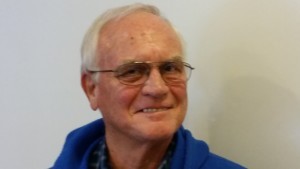 While growing up during the 1950’s and early 1960’s, I felt very lonely and scared most of the time, especially at home. Although I still live with the painful memories, my journey of healing has given me perspective. My mind is at peace and there is joy for the most part in my life in these later years. I now clearly understand that if there had been early childhood and young adult connections that were trusting, the heavy weight of emotional baggage entering the adult world at age 17, would have been much smoother…meaning a healthy growing experience and the challenges that go with maturing as an adult. My trusted mentors came into my life after joining the US Navy in 1963…sooner would have been better. As a result, denial kicked in like a strangle hold that wasn’t released until much later in life.
My goal with this chapter is to help kids, parents, teachers, and mentors come together as a closer community family without fear and with growing trust…it takes time. In the best of circumstances, parents can learn from their children who are building healthy relationships outside of the home, in school, clubs, and at play. As a community, we do this so much better in the 21stCentury, but it is still a work in progress…
Parents and Teachers Help Prevent Childhood Trauma (ACES) Quote from this website article from ACES to High News…
“When parents bring a child who’s bouncing off the walls and having nightmares to the Bayview Child Health Center in San Francisco, Dr. Nadine Burke Harris doesn’t ask: “What’s wrong with this child?” Instead, she asks, “What happened to this child?” and calculates the child’s ACE score.”

While growing up the question of “what happened to me” never came up…it was always “what was wrong with me.” This was a terrible legacy as a child to carry forward as an adult. Even in my later years I have to take a deep breath just about every day and focus on what happened vs. what is wrong. This constructive thought process saves the day…
When I was growing up in the 1950’s and early 1960’s the conversation at home and in school was “what is wrong with your child rather than what happened to this child.” Childhood trauma is not new. We still have toxic homes and neighborhoods, but parents and teachers know more in the 21st Century thanks to the CDC ACES study and testing. “The ACE Study findings suggest that certain experiences are major risk factors for the leading causes of illness and death as well as poor quality of life in the United States.”
As a child advocate and vice chair of Neighbors for Kids , a popular after-school program in Depoe Bay, Oregon, we often have to address all types of special needs of kids, including the effects of trauma. The more we know from collaboration with public school teachers and parents, we are able to pay particular attention to traumatized children and help them effectively. I know from my own traumatic childhood experience that growing up feeling alone, scared, and asking myself “what is wrong with me” or hearing “what is wrong with you” had long term damaging consequences on my ability to build self-confidence and feel connected with other kids and my adult mentors. Eventually, joining the US Navy at age 17 as a young adult saved my life. No child should suffer from emotional neglect and abuse and believe there is something wrong with them…early recognition and special attention is critical!
When you observe a child bouncing off the walls, or looking scared and lonely, please show love and compassion. As a teacher, mentor, and parent you are in a great position to help children heal from a traumatic experience by seeking more information about life at home by asking “what happened” and providing the loving care and attention all children deserve…sooner than later…
The author…
Steve Sparks is a retired information technology sales and marketing executive with over 35 years of industry experience, eventually retiring from Nortel Networks in 2002. Steve served in the US Navy as a Radioman (RM3) and was honorably separated in 1965. He earned a BA in Management from St. Mary’s College, Moraga, California. Steve is married to Judy Lee Sparks and living in Depoe Bay, Oregon. Steve’s family includes 3 adult daughters, 4 grandchildren and 1 great grandchild. His current passion and life work is mentoring and improving the education of K-12 kids, including helping the responsible after-school nonprofit agency www.neighborsforkids.org achieve sustainability. He was elected in 2014 to a four year term as City Councilor, Depoe, Bay, Oregon. Steve is a non-fiction author and blogger who writes about his roots as a post WWII US Navy military child growing up in the 1950’s and early 1960’s. Steve & Judy love to travel America, explore new places, and play golf. Mexico is another favorite destination.

October 6, 2015
Cranial Electronic Stimulation for PTSD

This post is contributed by Jim Ingham.
Treating PTSD is a complicated mental health issue where there is no single cure-all that will work effectively for every patient. Post-traumatic stress will affect every patient differently and due to differences in experience and physiology, different treatment options will be needed to address the concerns of the individual.
Cranial Electronic Stimulation (CES) is one treatment option that has shown great promise for treating many of the symptoms that are related to PTSD. Cranial Electronic Stimulation is a treatment method where low-intensity electricity is applied to the patient with the intention of having an effect on brain function. Most CES devices work by clipping to the individual’s earlobe and the treatment is so mild that it can be used at home and while engaging in other activities.
A doctor may recommend CES treatment in their office or it may be prescribed for use in the home. For home use, the doctor will prescribe an intensity setting for the treatment and the duration of each application along with how many times a day it is to be applied. Generally, the therapist will start their patient with a lower voltage to be applied once or twice daily for about 20-30 minutes per session. The doctor may adjust the treatment schedule and the intensity depending on the results of the first few weeks of the treatment.
While there is a large body of empirical data that demonstrates the efficacy and safety of CES, the mechanism through which change occurs is not completely understood. However, studies have shown that CES affects the production and release of neurotransmitters, which is believed to be one of the key agents toward the restoration of proper brain function with this treatment method.
The FDA has approved CES for treating a range of mental health issues including anxiety, depression and insomnia. Research has also shown that CES is a very promising treatment option for patients that are suffering from PTSD. The military and many private mental health organizations and practitioners are already using CES as a means for treating symptoms related to PTSD.
While drugs have been the primary option for treating many of these conditions, especially in relation to PTSD, it has become apparent that this strategy is not meeting the needs of a significant percentage of PTSD patients. For some, the drugs may simply be ineffective, but for all too many, the side effects of the drugs cause additional problems or further aggravate the existing symptoms. The emergence of these concerns has lead clinicians and researchers to look for ways to treat PTSD sufferers by means that are less dependent upon pharmacological agents.
This is one of the primary advantages that Cranial Electronic Stimulations provides to a PTSD treatment program. It is an effective means of treatment that requires no drugs for it to work and it has no adverse side effects. The devices are also easy to use and while they should be used under the recommendation of a doctor, it is a treatment that can be self-administered by the patient in their home.
When you consider the promise of CES as a treatment option and the fact that is a form of therapy that poses little risk to the patient, it is very likely to expand in its usage in the coming years. It has already helped thousands of individuals to address a range of mental health issues and, as research of the technology advances, it may gain approval for additional treatment applications. For patients that have problems with traditional treatment options, CES should be considered as a possibility and it can offer hope for those who are struggling to deal with many of common issues that come with PTSD.
 For many years, Jim Ingham has researched certain alternative health technologies which have shown to be effective for helping people with their physical and mental needs. Because of his belief that these technologies have proven to be of value, Jim now acts as a distributor for devices using some of these technologies. Living in Boulder, Colorado, he focuses his attention on this role as well as a few other business activities. He enjoys running and hiking in the Colorado mountains. For more information visit, www.pathacross.com

September 29, 2015
PTSD and Brain Science: Why Education is Key in Recovery
 PTSD and brain science are so completely intertwined in the recovery process that if you don’t know about how they interact you could be slowing down your recovery process. Healing PTSD happens in two significant ways:
A percentage of healing PTSD happens through modalities, treatment approaches and recovery techniques practiced and taught by trained professionals.
But an even larger percentage of how to heal PTSD comes from the commitment, dedication and I-won’t-give-up! attitude that each of us survivors has to access and embody.
The more you know about the science behind PTSD symptoms the more you (and those around you — including friends, family, colleagues and healing professionals) can 1) acknowledge and validate your symptoms, and 2) discover and explore brain-specific processes that encourage and facilitate healing symptoms of posttraumatic stress disorder.
Last week I received an email with a link to a heartbreaking story of how the VA treats PTSD. It included this suggestion from a mental health practitioner to a veteran that so many of us — military and civilian alike — has heard a variation of at some point in our own recovery journey:
After listening for a few minutes, [the therapist] told him that she knew he was hurting, but that he would just have to get over the deaths of his friends. He should treat it, he recalled her saying, “like a bad breakup with a girl.”
Shocking that with all we know about how trauma and PTSD affect the brain a paid professional could be so ignorant.
In the spirit of continuing to educate ourselves and those who are appointed to help us heal, I keep writing and speaking about the science behind PTSD symptoms. Recently, PsychCentral published my article, The Science Behind PTSD Symptoms: How Trauma Changes the Brain, a quick read about the Triune (3-part) Brain Model and three specific ways the brain dysregulates after trauma the piece offers the most significant facts to begin understanding about why we behave the way we do.
I also filmed this short impromptu video when my publisher recently asked me about this subject in relation to my new book, Heal Your PTSD.
What facts about PTSD and the brain have you learned that you think everyone should know? Add your knowledge in the comments!

September 26, 2015
PTSD Study: Research on Mother-Infant Interaction after Traumatic Birth
As often as I can I like to let you know of PTSD-related research studies that are open for your participation. This one comes from England for our Brit readers….
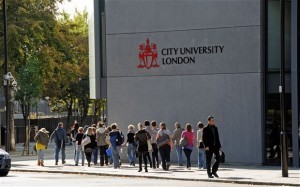 My name is Rebecca Webb and I am a PhD student at City University London under the supervision of Professor Susan Ayers. I am currently looking for volunteers to take part in my PhD research about traumatic birth and mother-infant interaction.
Your participation would involve coming to City University London* with your baby for approximately one and a half hours. You would be asked to complete a few brief questionnaires, take part in 3 computer tasks, and be videoed playing with your baby for a few minutes.
To take part in this study, please fill out this brief questionnaire and I will get in contact with you to arrange a date:
https://cityunilondon.qualtrics.com/SE/?SID=SV_2ldESVOyUh6Y87z
If you would like more information please email Rebecca Webb at: Rebecca.Webb.1@city.ac.uk
For more information visit: http://www.city.ac.uk/people/academics/rebecca-webb
*Travel expenses will be reimbursed.

Michele Rosenthal's Blog

- Michele Rosenthal's profile
- 8 followers

