
Michele Rosenthal's Blog, page 4
July 30, 2015
How to Heal Trauma and PTSD? 9 Critical Steps to Success
How to heal trauma and PTSD depends on creating a uniquely successful PTSD recovery program — one that takes into account all the elements of your personal history, trauma, psychology plus neurophysiology and combines them into a process that feels manageable.
While each of us will see a different path to how to heal symptoms of posttraumatic stress disorder there are some universal steps that every single survivor both benefits from and moves through in the recovery process.
Whether you’re just starting out on your quest or knee deep in the muck these nine phases for how to heal trauma and PTSD will give you ideas about how to jumpstart, progress, or slow down the design of your healing rampage.


July 28, 2015
How to Heal PTSD Through Music
During my PTSD recovery I discovered that the question, “How to heal PTSD?” has many answers. From traditional to alternative therapies, practices and modalities there are a slew of ways to make progress in how to reduce PTSD symptoms, plus how to manage stress and overcome how trauma affects the brain.
My ultimate success in completely healing symptoms of post-traumatic stress disorder came from putting together my own personal healing program that encompassed many traditional and alternative approaches — even including dance, which became a bridge for me from PTSD to The New Me. I still dance today (and fell in love with my dance partner, so you just never know where and how healing will take you from despair to happiness).
All of the books I write about how to heal PTSD have this one theme in common: Create a recovery program that’s uniquely your own. It always excites me when I see survivors doing that, and especially when they do it in a way that can be shared with others. That’s why when I saw this video by my friend and fellow Heal My PTSD forum administrator, Michelle Biehl, I just had to share it with you!
In this video Michelle’s clear, strong and beautiful voice (she’s the one singing on the stool) combines with the music, lyrics and voice of Songwriting Shane from New Jersey to create a survivor redemption song that really strikes a life-affirming and hopeful chord. Check it out….

July 22, 2015
PTSD, Cancer and Grief: Healing Begins with Hope
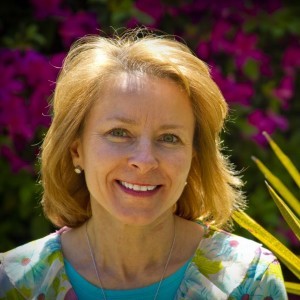
This guest post has been contributed by Because Hope Matters founder, Maryann Makekau.
 Let’s face it. Cancer is a word that conjures up less than positive images. It has the power to stir up emotions we would rather deny. It can easily render us speechless. I’ve often said that unchecked grief is not good grief. I know that may sound contrary to logic and emotions … stay with me. Grief can be good when cancer delivers hope.
I first encountered the ripple effect of cancer through a phone call. For 25 years we’d stood by one another even when stationed worlds apart. Our paths had crossed at my last duty station. During my exit from the military, Vicki Kennedy and I struck up a friendship. There in childbirth classes, accompanied by our husbands, we embraced the excitement of new life. No matter where we went from that point on, a phone call made time and distance feel irrelevant. We could’ve never imagined the relevance cancer would play in our lives.
It was near Christmas 2008 when Vicki called me. Just like always we felt connected as if time had stood still. But this call was different … very different. A routine mammogram had conjured up positive images that were less than favorable. Breast cancer had abruptly knocked at my best friend’s door nearly 30 years after lung cancer had stolen away her mother. To this day, my eyes still well up with tears when I share this story. I gasped over the trauma of her news and the intensity of grief that ran through me. I was speechless. My emotions collided with hers. Momentary silence filled the miles between us. Then, all at once – I felt sad, afraid, confused, angry, scared – and happy, oddly enough. She had called me. That spoke volumes about our friendship, the depth of trust, and the smiles we’d shared.
The ripple effects of cancer arrived unannounced and uninvited. I went from feeling helpless to helpful within that 10-minute phone call. The “little ducklings” in her 2nd grade classroom were of utmost concern. She didn’t want to scare them but she wanted to help them talk about it. I promised to find the “perfect” book. I scoured bookshelves for days at brick and mortars, libraries, and online. I came up empty-handed.
I didn’t want a book that went “around” cancer. I wanted a book that met it head-on, yet gently and honestly. I wanted a book that enveloped grief, to include the happiness that comes in being helpful instead of helpless. You see something missing? Maybe God’s telling you to do it! My pastor’s words ran through my head … and so, the writing began.
Now, let’s flash forward six years to the power of good grief. My friend is free of cancer and still teaching little ducklings. That gift for my friend turned into a series of little pink books and opportunities to heal other people’s grief. Speaking at conferences means I’m available for a line of stories:
My mother died of cancer and no one wanted to talk about it.
I thought I did something wrong. The subject was seemingly off-limits.
So, we are not helpless! The little girl in me just got empowered.
The opportunities for cancer to deliver hope will not stop. I will experience grief every time I hear of another cancer diagnosis, of another life interrupted, of another child wondering and hoping to help. I can’t stop advocating any more than I can erase cancer. Unchecked grief is not good grief.
Children with unchecked grief are like an alarm clock waiting to sound. We must give them a voice, not later, but now, as soon as possible after cancer knocks. Let’s help it be “good grief” – processed enabled grief rather than postponed traumatic grief. Their little hands are capable of helping to make a big difference.
 When I discovered the Little Pink Houses of Hope, I knew our paths would cross somewhere, somehow. The founder, Jeanine Patten-Coble, is a cancer survivor with a vision for wellness. Yes, wellness is possible while going through cancer. The ripple effects of cancer affect our entire sense of being. Medicine doesn’t stop with chemotherapy and radiation. There are “complementary medicines” that nourish our emotional and spiritual selves too. Little Pink Houses of Hope provides that kind of nourishment for families with a week-long FREE retreat for the patient and the family. It is a place to experience wellness inside cancer.
How can I contribute to that blessing? The question had danced through my mind more than once. “We believe a cancer diagnosis does not just affect the patient, but the entire family. The mission is to promote breast cancer recovery by offering opportunities … to reconnect and celebrate life.” When I read that statement on Jeanine’s website, I had an epiphany. I can help families discover the gift of hope through reading!
That inspired a campaign. Little Pink Houses of Hope and Hope Matters joined hands. When cancer delivers hope through reading, we can ease the pain and worry that comes with the diagnosis. We can magnify hope in hurting lives. Our shared passion to make a difference can do even more. Together, we can love them through it.
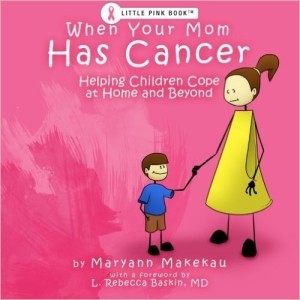
You can help us deliver 100 copies of “When Your Mom Has Cancer” straight into the hands of moms, dads, and kids attending Little Pink retreats this summer. Visit the campaign – magnify hope!
MARYANN MAKEKAU is an author, speaker, and radio co-host with over twenty-five years of mental health expertise. She is also a veteran, spouse of retired military member, and mother of two grown children. She founded Hope Matters to make a difference in hurting lives worldwide – while magnifying hope through her Little Pink Books and Little Patriot Books. Contact Maryann through her website.

July 20, 2015
Healing PTSD Through Writing
The powerful effects of healing PTSD through writing have been well-documented. From the work of James Pennebaker to my own award-nominated PTSD memoir many trauma survivors have discovered the liberating feeling of getting words out of your mind and into the world by putting them down on a page. Whether or not you share what you write the health benefits of writing are enormous.

Author, Dan L. Hays
For those of us in the PTSD community I think one of the reasons that writing can be so instrumental in helping to heal PTSD is because through writing we find our voices long after trauma has stolen them. It’s a way of reclaiming our true identity.
It always excites me to see another PTSD survivor step into the space of reclaiming a sense of self and mastery in the healing process, which is why it excites me to share with you today a snippet from a new book written by my friend (and fellow Heal My PTSD forum administrator), Dan Hays. Today — and today only! — Dan’s new memoir, Healing the Writer: A Personal Account of Overcoming PTSD, is available for FREE on Kindle (you can access it here).
In celebration of this terrific book and the forward motion of another successful PTSD recovery, Dan’s allowed me to post an excerpt from the book’s prologue here….
Healing the Writer: A Personal Account of Overcoming PTSD
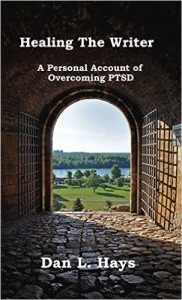 An excerpt by Dan L. Hays
October 2003.
Here I was, a fifty-three-year-old man, about to do something to connect with his inner child. I had done healing exercises before, intended to access the wounded child within me, with a significant level of success. I felt a deep sense something was trying to come to the surface, and through the inner child it would be revealed. I stood in the middle of the library, the one place in the world where I felt safe, with my legal pad and pen in hand. I surveyed the floor for a secluded table. I spotted one in the back corner, where I would not be noticed or disturbed. I lay my legal pad and pen on the table and sat down.
The other times I did inner child work, it was a Gestalt, or empty chair, exercise. I would sit in one chair as the adult, and speak to the inner child. Then I would stand up, go and sit in the other chair, and answer as the child. But this time, since I was in a library, it felt right to do it as a written exercise.
I took a deep breath, quieted my mind, and allowed myself to relax. After a few minutes I felt ready to start, so I picked up the pen and began to write to my inner child, who I had named Little Danny Fear Child. As I wrote from the adult perspective, I sensed that the child answering was around eight years old, and I could visualize a frightened young child sitting in a corner. I was hoping to set him free, so we could let go of the Fear Child part.
******
“Danny. Are you ready to tell me what I can’t see, about why I get locked up with my writing? You know – the thing the therapist said was really buried. Danny, it’s time for me to write. Therefore I must let go of that old block. Can you understand that? You are safe now. I will take care of you. Letting go of this block will lead to great, great joy. Are you all right with all of this? If you are, just tell me – just blurt it out – no shame, no blame.”
Danny spoke. “I was afraid if I wrote something, and someone read it, they might not like me because I said what I saw. People would know what was going on in our family. They would know our family was not all fine, and someone would get mad at me.”
“What else? Go deeper – what’s underneath that?”
“You really want to know?”
“Yes, I do. Please tell me.”
“I always loved to read. I wanted to write stuff like that. I knew I would be good at it.”
“Yes?”
“If I wrote a book and people read it, they might think I was weird or something, and not want to be around me. And I’d be lonely. I wouldn’t be like all the other people who didn’t write – and I’d be alone – again. I’ve been alone too much and I didn’t want that. So I would not write.”
“Why would you be alone?”
“Because writers are crazy – everybody knows that. And nobody wants to be around them.”
“Who told you that?”
“Mamaw did.”
“When?”
“When I went to visit her in Fort Worth. She asked me what I wanted to do when I grew up. I told her I wanted to write books. She said I didn’t want to do that. Writers were crazy and people wouldn’t want to be around me. They might have to put me away – lock me up somewhere. I didn’t want that.”
“Where were you when she told you that?”
“We were in her house.”
“How did it feel when she said that?”
“I felt smothered by her always, but right then I felt killed.”
“What did she look like when she said it?”
“She saw the look on my face, and she smiled. It was a cruel, ‘I won’ kind of smile.”
“What did that feel like, seeing her face?”
“My stomach hurt, and I wanted to cry.”
“Is there anything else?”
“Well, she kept saying it – all that week – until I wanted to go to Big Mommy’s to get away. But I couldn’t tell anyone about it.”
“Why not?”
“Because Mamaw was a nurse, and she had heard it from Doctor Crowder, that creepy old guy she worked for. She said only those kind of people knew about stuff like this. She said don’t tell anyone. They might think you were crazy just for asking and lock you up for that.”
“Danny.”
“Yes?”
“Do you understand that what she said was not true?”
“Kind of. Sort of.”
“Remember what Mom said about writers one time?”
“Sort of.”
“She said that writers were held in the highest regard. That they were revered in the world she grew up in – they were tremendously respected. Remember that?”
“Yes, I remember. But Mamaw was so sure. I didn’t know what to believe.”
“I understand. But it was true, and it is true. You will not be called crazy and get locked up if you are a famous writer. You will be honored, revered, and respected as a person who sees and speaks truth. That is the truth. We’ll take all the time you need for you to get comfortable with that. Alright?”
“Yeah, OK. I like that. Will you remind me?”
“Of course I will. How are you feeling?”
“My stomach doesn’t hurt so much.”
“Why do you think that is?”
“Because I really, really want to write, and it made me very sad when I knew I wasn’t supposed to.”
“So you could write all along, but you thought you should not?”
“Oh yes, I could write any time I wanted to. I had fun with the stuff we wrote in junior high. But there was, you know, the crazy thing. So it was safer not to write, because I didn’t want to get locked up.”
“Danny, you just relax, and enjoy thinking about writing. You and I will release that old belief. So you can write freely and fully – with joy.”
“I can do that. I am happy now.”
Read Healing the Writer: A Personal Account of Overcoming PTSD for free here….

July 14, 2015
Healing PTSD: Childbirth in slow motion
This post is contributed by Birgitta Hadin Lusth.
 I have been to my therapist today. I told her I have got pneumonia and it has been both very tough but at the same time I have also taken some steps in the right direction by listening to my body and telling for a few close. She said during our meeting that it is no strange that I had got pneumonia now when I finally have started talking. The body probably got a shock when it just dropped carrying everything itself. She is so wise. What a symbolism.
She has during a long period of time tried to tell me how my exhausted body feels, and she said that she cannot understand how I have managed to work as usual when at the same time I am going through therapy which it is a full-time job in itself. But I have refused to believe that it would influence all my life, which it is very silly since it does even affect my will to live. It is just to be accepted that it affects all that I am and it has to do that. It has to make a difference.I will return to how the healing process is similar to the birth process. It is an image that gives me hope and confidence, that what I feel is natural and there is a goal. The goal is to be reborn. I get a picture of myself in this birth process. I am at the end of the first stage. I have panted through contraction after contraction and given up a hundred times. I have taken step by step and survived the first panic and fear thanks to good support and guidance.
There have been people who have taught me how to breathe right and face the pain, who got me to relax in between the contractions, and who have told me that I am strong and that I am going to survive when I have thought that I would die of pain.There are people who have trust in the healing ability we all have, the strength that strives for balance and well-being. People who have patience and safely remain, who do not hasten or stress by. The same way it is during childbirth, there are means to diminish the worst pain but it could weaken the contractions which in its turn does not help childbirth process, and it could stress the baby and increase the risks for an instrumental delivery or large ruptures. When I see how the contractions do all the work, then I understand and I feel safe with my own pain which is the one that leads med home, that releases me to freedom.
Anxiety is life´s labor. My anxiety is like contractions of life. I have fought my way through the first stage and I find myself where the women usually say things like, now I want no more, I want to give up. Where women usually become desperate. “There is no way where you came from” (Gardell). There is no turning back and no choices. The pain comes continuously and you cannot believe, not even for your life that you are going to survive, or that anything good is going to come out of it. After many hours of intense labor the body is emptied of all its strength, and it is known, old wisdom that the uterus needs to gather strength before the pushing stage which is the final strength test itself. An exhausted mother who does not have the opportunity to recover or the possibility to listen to her body and wait for the best contractions is not able to do her work.
That is exactly where I am. I am not able to. I want to give up. However I understand that I need to rest in order to catch up. I have been extremely tired for a long time and my thoughts are resigned and hopeless. My first stage has taken me three and a half years. It is like an extremely tedious childbirth. Childbirth in slow motion. I do not know how long I need to rest but when I see it like childbirth, time is less important. I know my body would lead me forward.
I do not know how my pushing stage is going to be but it feels good to know how positive it is usually perceived during childbirth. How the body just takes over and it knows how. It is like throwing up backwards, my colleague usually says. It takes care of itself. Irresistible forces. It is determination, focus, strength and purposefulness, and then the first cry and the new life. If I think that way it would be something to look forward to. It would be a contrast to death which I have been thinking more and more about. It seems like life and death must take each other´s hands before I can finally live again.
Birgitta Hadin Lusth is 39 years old, married for 12 years and has three kids, two daughters 13 and 4 years old and a son 10 years old. She works as a midwife and loves her work! Her healing process started in 2008 and she still has EMDR sessions.

July 1, 2015
How to Develop a Flexible PTSD Recovery Program
 Recently John and I decided to paint the interior of our house. Before painting we had to decide what color(s) we wanted. This meant deciding what kind of feeling we wanted in the house, what kind of accents to highlight, etc.
When John brought home a book of swatches and laid it on the table the amount of choices was dizzying. Rather than go in a million directions at once I checked in with my intuition. What felt good to me? John did the same and we came to a joint conclusion: a color named homesong, which is a beautiful, soothing, healing and (as my mother calls it, ‘refreshing’) soft green.
How to develop a flexible PTSD recovery program is a little like looking at paint swatches and learning how to make a decision that feels good through the maze of overwhelming choices. What I love to see are practitioners who promote our ability to heal through as many options as possible. Courtney Armstrong, in her new book, The Therapeutic “Aha!” , is just the kind of practitioner that helps survivors heal by letting them choose the process(es) that feel most comfortable to them.
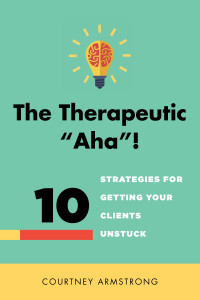 Opening the book with chapters about the emotional brain (and how to engage it), how to engage with yourself and your healing professional, plus the value of specifying healing goals, Armstrong lays a strong foundation for allowing you to be you during your recovery. From there she moves on to offering ideas about how to locate the root of emotional conflict and reversing trauma with memory reconsolidation (a much more gentle process than telling your story over and over and over again!).
Throughout the book Armstrong offers vignettes that illustrate how she applies these concepts with her clients, which offers a slew of ideas for how the reader can do so as well.
Finally, the book moves into my favorite part — the part that is the palette of colors you can choose for your PTSD recovery program. Armstrong, whose training is grounded in the traditional pschotherapy model, has worked very hard to broaden her own vision so that her approach to healing is as varied as all the colors in the rainbow. Part III of The Therapeutic “Aha!” presents such healing options as inspirational imagery, compelling stories, humor, play, rhythm, music, poetry and mindful movement.
While the book is written expressly for clinicians it’s conversational tone and approach to the material is tremendously useful to survivors and caregivers too. In fact, any reader will finish the book with a more open mind, more activated creativity and more empowered sense of how to create a PTSD recovery program that leads to success.
In the end, what we all want (including me during my healing) is a PTSD recovery program — and life — that makes us feel soothed, refreshed, and invigorated in a life-affirming way. Armstrong’s book will help you achieve that. And then, I strongly suggest finding a wall to paint in your own house. Choosing the color that most feels good to you; entering the meditative trance of painting; solving the problems you encounter; enjoying the finished result are all terrific elements of a healing process that allows you to be more in control more often while experiencing new things.

June 30, 2015
K9s For Warriors: Helping Veterans Heal
Wrapping up our campaign to support National PTSD Awareness this month, a look into healing with service doges. This guest post was contributed by Tanya Dvorak of K9s For Warriors….
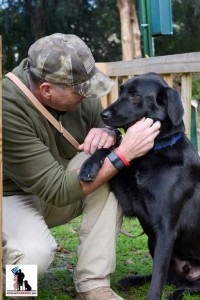 Nestled along a two lane road in St. Johns County, Florida, is a small outpost dedicated to helping warriors heal. Most of them are men. They’re broken and not easily repairable. PTSD is what afflicts all of them. But thanks to a small army of staff and volunteers these warriors are well on their way to becoming whole again. That’s the human side of what’s happening at the place lovingly referred to as “The Doghouse.” Man’s best friend is the other important piece to what has grown into a complicated puzzle.
Dogs, rescued from an unknown fate, are being paired with veterans from all over America at the headquarters for K9s For Warriors. K9s For Warriors is dedicated to providing service canines to warriors suffering from Post-traumatic Stress Disability (PTSD)and/or traumatic brain injury (TBI) as a result of military service post September 11th military service. The organization is also working with those dealing with military sexual trauma (MST). The goal is to give a new leash on life to rescue dogs and military heroes, empowering warriors to return to civilian life with dignity and independence.
Does the program work? Here’s a portion of an email sent to K9s For Warriors from a recent graduate:
“I cannot put into words how I feel about Berkeley (service dog) and the entire path that brought he and I together. You made that possible! His life has been spared and in return he is essentially saving my life by restoring and giving me the support and confidence that I need to weather the storms of life. The time spent at K9s got me out of my house more than I have in the past two years. I actually went to the park downtown and walked with Berkeley to look over me. The bond he and I have developed so far is unbelievable. It will only grow stronger as he strengthens me by helping me regain my confidence and courage to overcome any obstacle that comes my way.” – Rick, K9s For Warriors Graduate
Shari Duval founded K9s For Warriors in 2011. “My son, a veteran K9 police officer, worked as a contractor for the Department of the Army as a bomb dog handler. He served two tours in Iraq and returned home with PTSD. This really hit home to our family. After two years of research on canine assistance for PTSD we decided the best way we could help these deserving warriors was to start a non-profit organization to assist them,” said Duval.
The successes at K9s For Warriors speaks for themselves. Too often prescription drugs are the only answer given to a veteran. Moreover, there are more than 3 million dogs that are euthanized in rescue shelters every year, many are wonderful dogs that can be trained to be service dogs for deserving veterans.
STOP22 is K9s For Warriors latest campaign to raise awareness about the reported 22 Veterans who commit suicide everyday. Everyone is being asked to share their message of #K9sSTOP22. People should be creative and share this message in a Facebook post, a Tweet, or an Instagram post using the number 22. Folks can share their photos on K9s For Warriors website www.STOP22.org and bring awareness to this epidemic.
Since its founding, K9s For Warriors has graduated 154 teams. This is just the tip of the iceberg. A new state-of-the-art headquarters and training facility to help more warriors is scheduled to open in spring 2015. “These dogs work miracles,” said Duval.
She added, “Our program has been successful, with documented recovery from the debilitating horrors of war, but the need is critical and overwhelming. We currently have a year-long waiting list, we must do more. We will continue our goal of serving our Nation’s Greatest Asset, our Military Men and Women.”

June 23, 2015
PTSD Statistics: Military, Domestic Abuse, Children and the World
This Saturday, June 27, is National PTSD Awareness Day. In honor of all those who struggle with symptoms of PTSD, have struggled or will struggle let’s raise awareness together:
The more we share posttraumatic stress disorder information the more we can help reduce stigma by increasing understanding.
The facts are clear: There is science behind PTSD symptoms. And there are millions of people who cope with and manage the long-term effects of the past.
Do your part — share this infographic by posting this page to Facebook, Twitter, LinkedIn, Pinterest and every social media account you have.
We’re all in this together! When we use our power to speak and be heard we heal, one person at a time.


June 16, 2015
PTSD and Veterans: The War At Home
This post is reprinted from Veterans Alliance….
PTSD is a serious problem affecting today’s veterans, and the U.S. Department of Veteran Affairs’ (VA) systemic problems are only adding fuel to the fire.
Did you know that roughly 22 U.S. veterans kill themselves every day? That is one every 65 minutes. These veterans need help, and the VA is failing them.
Our newest infographic analyzes the problem in depth; examining the tragic consequences of PTSD if left untreated, and the VA’s shortcomings when it comes to providing the help and benefits these heroes so sorely need.
This is unacceptable. You fought for your country, you shouldn’t have to fight for your own benefits. If you’re as outraged by these statistics as we are, get the word out and share this infographic. The more we educate the public about this issue, the more likely something will change.


June 10, 2015
What is PTSD? In the Words of Survivors….
Kicking off a month of PTSD Awareness (leading up to June 27th, the national day set aside for PTSD awareness) let’s begin with giving survivors everywhere a VOICE!
How do you define PTSD???
Having a clinical definition of posttraumatic stress disorder and being able to identify ptsd symptoms is important, but the “professional” perspective of PTSD can’t get down to or substantially express what it feels like to live the PTSD lifestyle of anxiety, insomnia, panic, hypervigilance, fear, pain, grief, anger, numbness, dissociation and emotional dysregulation.
To truly answer the question, What is PTSD? you have to ask a survivor. I have asked many; here are the answers they allowed me to share with you.
(Feel free to share your personal definition in the comments.)
PTSD is….
Continuously scanning and evaluating multiple sounds, near and far, day and night, awake or asleep, for anything that might be a threat. Deep exhaustion. Waking up at night in a state of alarm, soaked with sweat from intense dreams with thick clammy atmospheres that stay with me through the next day. In a permanent state of alarm. Like being trapped in a nether-world, or a spider’s web, where normal social functioning has become a distant memory.
For me PTSD is the road to Infinity, once you start there is no end and there is no turning back, all you can do is take the same trip over and over and after enough laps around the same road I realized there is no end and this is something I am just going to have to deal with and I can’t..over and over and over again.
…a completely life shattering event and one which would leave me stranded between life and death, somewhere resembling “no-mans land”. It has far wider implications and complexities than any text book definition or clinical classification can grasp or stranger “looking in” could possibly understand. I liken it to a creeping ivy which is slow to take its hold in the beginning but with time invades every aspect of your life. Left to its own devices and in time, it flourishes and can outcompete its host which is left stranded and slowly diminishes. If left unmanaged it can become quite overwhelming by then you are well and truly under its control. Before you know it your life is totally eclipsed and all that remains is an exterior shell whereby you co-exist but you cease to live.
PTSD is like having a wound that is always open and that certain situation can possibly make worse. You don’t want to get back into the game because you feel so vulnerable. You  feel your psyche being drained by social situations, you feel your soul being dimmed and your spirit being lost. Emotionally, physically, mentally and spiritually if your lucky can just have intense feelings. Other results they may feel like they are dead. You usually feel weak and like a coward because you can’t function and when you do, you feel like a hurt animal waiting to be picked off for good.
I am unable to accept and process what has happened.
PTSD is all about being STUCK. Stuck in the moment of horror, unable to move past it. The feeling is very much like being trapped in a nightmare, unable to wake up; or like a computer that’s “frozen” and incapable of functioning.
A ‘fracture’ in your experience of life, caused by a traumatic event. This fracture is caused in your mind, by you (and no one else). It’s a response for attempting to cope with what happened. But unfortunately, it’s an ill-informed response. And it’s one that makes you feel like something is being done ‘to you’ instead of what’s really going on, which is that your own mind is causing you to re-live your trauma over and over again.
A sense of being STUCK in the trauma, like being in a nightmare and unable to wake up.
Feeling physically and emotionally exhausted, depleted by trauma.
Easily overwhelmed by life, often unable to function, even at performing simple tasks, like a bogged-down or “frozen” computer .
A seriously curtailed life due to instinctive “guarding” behavior, through avoiding situations/people that could cause further trauma or a trigger.
Unbearable emotional pain, i.e.: debilitating depression, overwhelming, paralyzing anxiety, and terrifying rages that may induce fear of “becoming like the abuser.”
A sense of having no personal identity.
Psychological and physical symptoms, such as an extreme Startle Reflex, Recurring Nightmares, Flashbacks, Phobias, and Disturbed Sleep Patterns.
PTSD is, in a nutshell, not being able to differentiate in your mind the past, present and future.
In the present, people, situations, smells and noises merge and trigger into those things from the past.
PTSD… is being frozen and waiting for the sun to rise.
 Being stuck in a fog..and sometimes even like sinking into a dark abyss.
Describing PTSD for me, is like trying to claw my way up and out of the deep hole that I have fallen into. I get so far and then something will happen. I will witness a similar tragedy, I hear sirens, or helicopters, drive by an accident, etc., and I slowly slide right back down into the hole. I then realize that I am safe there and don’t really want to leave.
My experience of PTSD is complete exhaustion, easily overwhelmed by “normal” life and getting through a day. I find that I am angry at most people now because I can’t stand this pervasive sense of entitlement that society seems to have and the selfishness that goes with it. I never felt this way before the traumatic event. I used to be compassionate, understanding and selfless. Now I am hateful, disgusted and intolerant. I feel like I don’t care anymore about anyone but my own immediate family. This is not who I used to be and not who I want to be. I feel as if something pure has been taken from me.
PTSD is like being frozen in the moment the trauma happened. You can not break the cycle. Sleep is impossible, and I became an agoraphobic. I can only hope one day to not relive what happened to me.
Complex PTSD is as close to death as you can possibly imagine; you actually believe you’re not going to make it. It’s like something bigger than the universe stole your identity and soul and your left as a shell, stuck on repeat that beats you down further. Horror. You lose yourself and fight every moment to get her back until you realize she’s gone, you have to create a new life, a new identity. It’s years of soul-depleting loss and then years of soul-nourishing work and patience. Then you realize PTSD is a GIFT for a broken soul, because you become a whole soul. After the despair comes a GREAT FAITH, and you see the world with new eyes. You count your blessings every day and most importantly–you live in and for the moment.
PTSD, to me, is like running away from a bad guy in a dark forest and jumping into the bushes to hide. After the man is gone and you are ready to get out of the bushes, you realize that the bush is full of thorns and is stuck in your clothes and hair and you just can’t escape.
I feel like I am stuck on a roller coaster. Sometimes the ride is smooth and most of the time its rough, too fast, scary and out of control. I can not get off this ride.
PTSD for me is trying to escape a dark power dwelling around me. Then when I am able to step into the light one small thing slows me down. When the darkness catches back up to me I feel like “Why try to escape again?” It’s such a part of me, I don’t even know how to live without it.
I imagine that in my amygldyla, the deepest part of the brain, a highjacker, who has successfully severed communication to the rest of my mind, leaving me in the blinding hell of only FIGHT, FRIGHT or FREEZE. Every part of my body FEELS this message down to smallest hairs covering my skin that have become thousands of little eyes and ears -constantly scanning the environment – translating every “normal” sound and movement into a threat to my life.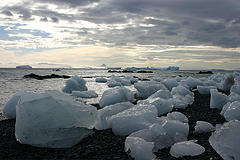
PTSD to me is an echo that seems to follow me wherever I go. It is a solitude that embraces my everyday. A battle that at times I think it is over until I realize it is effecting me again in yet a different way. It is as though the person I once was has vanished and those that surround me do not understand where I have gone. Clouded by misunderstandings, frustration, and a battle that I want to win. Daily life can be a challenge and one day I know that in the end the battle will be worth the journey.
PTSD is like being loaded down with fear, anger, distrust and hypervigilance. Being hypervigilant is the norm, and sleep is non-existent without medicine (in my case). Shell-shocked is a good way to describe it. Reliving movies in my mind of abusive moments, or dreaming of bad things happening to me. Being afraid of just about anything, having no trust, feeling angry over just about everything.
There is a delicate porcelain figure. It is not the beautiful kind you see on a shelf, it is ugly beyond description. The slightest wind will knock it over and break it forever. So it is locked inside a great double-walled brick box. It must never see or be seen. It therefor will not experience pain of any kind. Nor will it, however, experience anything. Not love, affection, the wind in her hair, nothing. To protect this creature is the one and only goal.In spite of being protected from breakage, it is, in fact, already destroyed. And dead.
The world is a hostile, scary place to many of us with PTSD. I spend most of my time at home, where I’m safe and nobody is judging me. I’d love to have friends but as I get older, they are few and far between so I stopped socializing.
Share your definition of PTSD in the comments….
(Photos: Blue Out, vat_i_can, The Mighty Jimbo)

Michele Rosenthal's Blog

- Michele Rosenthal's profile
- 8 followers

