
David Boyle's Blog, page 26
November 19, 2015
A Liberal economic breakthrough. It’s about time.
There may not be any obvious traction that the Lib Dems are bringing to themselves at the moment, no obvious attention from the media or speaking for the nation. But there are shoots emerging.
One of these was the speech on economics that Tim Farron made today at IPPR in London. The most important element of this story is the mere fact that Farron chose economics for his first keynote speech.
But it was also important the way he framed it – the idea of Liberals as the party of challenge, of enterprise and entrepreneurs, as the "party of Small Business, the party of wealth creators, the insurgents, the entrepreneurs".
“The Liberal spirit is the entrepreneurial spirit and entrepreneurs are natural Liberals,” he said. Quite so.
It is important because it is both positive and forward-looking, and rooted in traditional Liberalism – and, because the party has been timid about economics in recent decades, this is for me something of a breakthrough.
He also understood the implications of this stance for the banks. It is indeed extraordinary that the government is not breaking up the failed brontosaur RBS to turn it into an effective regional lending infrastructure – that the enterprise economy so badly needs.
By coincidence, the Welsh Lib Dems have launched an excellent paper on how to rebuild diverse high streets – and Wales has been more wedded to the failed out of town retailing regeneration ‘solution’ than almost anywhere else in the UK.
So this is rather a good day, as far as I’m concerned. It is a long-awaited glimpse of a different approach to economics, understanding for the first time in half a century that the main economic purpose of Liberals is to promote diversity and fight monopoly.
Subscribe to this blog on email; send me a message with the word blogsubscribe to dcboyle@gmail.com. When you want to stop, you can email me the word unsubscribe.
One of these was the speech on economics that Tim Farron made today at IPPR in London. The most important element of this story is the mere fact that Farron chose economics for his first keynote speech.
But it was also important the way he framed it – the idea of Liberals as the party of challenge, of enterprise and entrepreneurs, as the "party of Small Business, the party of wealth creators, the insurgents, the entrepreneurs".
“The Liberal spirit is the entrepreneurial spirit and entrepreneurs are natural Liberals,” he said. Quite so.
It is important because it is both positive and forward-looking, and rooted in traditional Liberalism – and, because the party has been timid about economics in recent decades, this is for me something of a breakthrough.
He also understood the implications of this stance for the banks. It is indeed extraordinary that the government is not breaking up the failed brontosaur RBS to turn it into an effective regional lending infrastructure – that the enterprise economy so badly needs.
By coincidence, the Welsh Lib Dems have launched an excellent paper on how to rebuild diverse high streets – and Wales has been more wedded to the failed out of town retailing regeneration ‘solution’ than almost anywhere else in the UK.
So this is rather a good day, as far as I’m concerned. It is a long-awaited glimpse of a different approach to economics, understanding for the first time in half a century that the main economic purpose of Liberals is to promote diversity and fight monopoly.
Subscribe to this blog on email; send me a message with the word blogsubscribe to dcboyle@gmail.com. When you want to stop, you can email me the word unsubscribe.


November 18, 2015
Time for a bit of economic archaeology
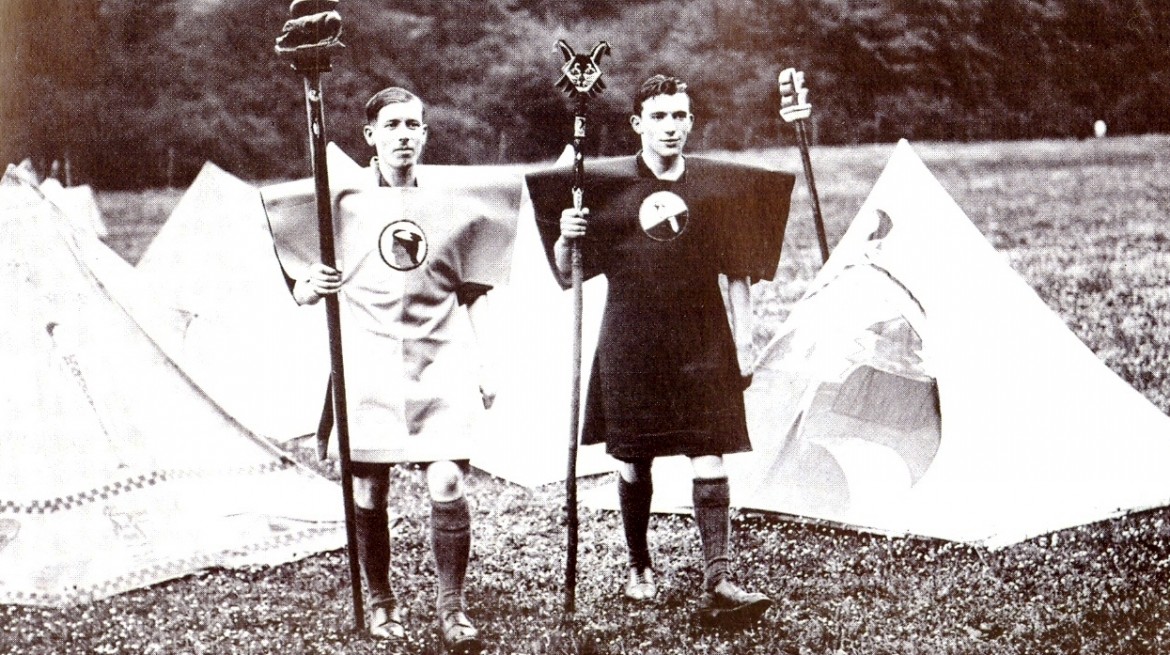
I have always been fascinated by those social movements that rise and fall, leave their mark permanently, and are then forgotten. I have had a soft spot for the 1920s movement Kibbo Kift as a result.
So imagine my surprise when I opened my Guardian last week and found a big feature about them, and their charismatic leader John Hargrave. I dropped everything and read through it immediately.
There are three reasons why I’m especially interested in this peculiar mixture of Scouting, Egyptology, outdoor ritual and back to the land.
First, because it was an early breakaway from the Boy Scouts (Hargrave had been a frustrated head of camping).
Second, because of their amazing sense of design. The logos look modern ever now, with just a hint of Art Deco about them.
Third, because Hargrave changed his mind – transforming Kibbo Kift overnight in 1929 into the militaristic Greenshirts, much more numerous than the Blackshirts, dedicated to changing the money system to prevent banks from creating money, in the way that they do now.
The article did not communicate all of this (this isn’t a criticism). But it is hard to quite recreate what Hargrave meant because, as D. H. Lawrence used to say, he spoke in a kind of sloganising gobbledegook.
It is also, in my book, not exactly ‘back to the land’, which is about growing things. Hargrave was more part of the conservation movement. He wasn’t interested in crops, just – in that rather Germanic, Romantic way – that it was important to be outside.
Being outside is important, but not as a relief from modern, urban life, it seems to me – but as a way of reforming it.
Why am I writing this? Because it seems to me extraordinary that we allow ourselves to forget these movements, because they carry within them important truths which have to be reinvented all over again by the next generation. Especially, it seems to me, in economics.
I hereby dedicate myself to the task of economic archaeology – the exhuming of forgotten innovations which our economics establishment was just too boneheaded to notice or discuss at the time.
Subscribe to this blog on email; send me a message with the word blogsubscribe to dcboyle@gmail.com. When you want to stop, you can email me the word unsubscribe.
November 17, 2015
Buggins turn to bomb?
David Cameron has promised to come up with a strategy for bombing in Syria. This is a peculiar idea in itself: a strategy for defeating IS makes sense - so does a strategy to bring peace to the Middle East - but a strategy to explain the importance of bombing sounds like putting the cart before the horse.
There may, after all, be an overwhelming argument for bombing in Syria, but there are three reasons (at least) why it makes sense to stay sceptical. My test of the present effectiveness of the House of Commons as an institution is about how long it manages to stay sceptical, and to think clearly. We have never depended on the independence of our MPs as much as we do now.
Here are my three reasons to keep an open mind about Cameron's bombing plans:
1. He is actually planning to intervene on a different side. Despite the rhetoric of going back to the Commons for a second time to ask for permission to bomb, the commentators seem willing to forget that - last time - the idea was actually to bomb on behalf of the other side. The plan then was to bomb Assad's government forces. Now the plan is to bomb their enemies. Who will it be next time? Has anyone ever actually thought through this conflict clearly?
2. He says our allies are asking us to intervene. This might be an argument, but it isn't a sufficient one - it is the argument which convinced Tony Blair to intervene in Iraq on a disastrous project. In fact, I suspect this would remain Cameron's argument even if the bombing was counter-productive, was known to be counter-productive, and would never be anything else,
3. We need to act; this is action - it isn't a convincing argument. Yet that is the one that Cameron wielded today. It makes no sense by itself, and when a prime minister falls back on that kind of logic, you begin to wonder if any thinking is going on at all.
It may be that the conclusion is that we should intervene in Syria, but the fact that our allies are asking us to do so is not an argument. It is just evidence that Cameron has caught Tony Blair-Disease: an inability to distinguish between British interests and what our most powerful ally happens to want at any one time.
What would be a strategy to defeat IS and to build peace in the middle east? Is the UK government up to the task of thinking for itself? Is there a strategy that, rather than buggins turn to bomb, might stand some chance of making a difference? I think we should be told.
Subscribe to this blog on email; send me a message with the word blogsubscribe to dcboyle@gmail.com. When you want to stop, you can email me the word unsubscribe.
There may, after all, be an overwhelming argument for bombing in Syria, but there are three reasons (at least) why it makes sense to stay sceptical. My test of the present effectiveness of the House of Commons as an institution is about how long it manages to stay sceptical, and to think clearly. We have never depended on the independence of our MPs as much as we do now.
Here are my three reasons to keep an open mind about Cameron's bombing plans:
1. He is actually planning to intervene on a different side. Despite the rhetoric of going back to the Commons for a second time to ask for permission to bomb, the commentators seem willing to forget that - last time - the idea was actually to bomb on behalf of the other side. The plan then was to bomb Assad's government forces. Now the plan is to bomb their enemies. Who will it be next time? Has anyone ever actually thought through this conflict clearly?
2. He says our allies are asking us to intervene. This might be an argument, but it isn't a sufficient one - it is the argument which convinced Tony Blair to intervene in Iraq on a disastrous project. In fact, I suspect this would remain Cameron's argument even if the bombing was counter-productive, was known to be counter-productive, and would never be anything else,
3. We need to act; this is action - it isn't a convincing argument. Yet that is the one that Cameron wielded today. It makes no sense by itself, and when a prime minister falls back on that kind of logic, you begin to wonder if any thinking is going on at all.
It may be that the conclusion is that we should intervene in Syria, but the fact that our allies are asking us to do so is not an argument. It is just evidence that Cameron has caught Tony Blair-Disease: an inability to distinguish between British interests and what our most powerful ally happens to want at any one time.
What would be a strategy to defeat IS and to build peace in the middle east? Is the UK government up to the task of thinking for itself? Is there a strategy that, rather than buggins turn to bomb, might stand some chance of making a difference? I think we should be told.
Subscribe to this blog on email; send me a message with the word blogsubscribe to dcboyle@gmail.com. When you want to stop, you can email me the word unsubscribe.
November 16, 2015
Liberalism and war
People don’t seem to listen much to Noel Coward these days, but he remains a great favourite of mine and I happened to be listening over the weekend to his wartime song ‘Could you please oblige us with a bren gun’.
I’m not sure when the song was written, but it refers to the Home Guard and their woeful, not to say farcical, lack of equipment.
I suddenly heard the song from the modern point of view, and the obsession with the corporate need to be ‘on-message’, and how often it has the opposite effect.
It struck me that there might be a clue here about how a Liberal society fights a war – with humour, openness, truth. But even so, I don’t suppose there is another nation on earth which would dare allow a song, at that moment, about how badly prepared we were for invasion.
I’ve been asking myself these questions after hearing President Hollande describing the Paris attacks as an “act of war”.
We know that Liberalism is a political creed that thrives in peacetime, but can struggle in war. The First World War disposed of Parliamentary Liberalism almost permanently, dividing it ideologically. It was hard for Edwardian Liberals to contemplate conscription. Nor could Liberals embrace the implications of the Western Front.
But is it really true that Liberalism can only tell us about peaceful societies? Has it got nothing to say now, for example, beyond a hopeful plea to ‘hold together’?
If it means the sort of vacuous relativism of postmodernism, that sometimes passes for Liberalism, then it probably doesn’t. It certainly can’t summon up the ruthlessness that societies need to demonstrate if they are going to defend – I hate to use the meaningless word ‘values’ – what they believe,
But Noel Coward’s song was a clue for me about what makes this Liberal defence possible. Tolerance of human frailty has to be protected, so does humour - not humour for the sake of humour – but the kind of humour that allows us to survive as a nation.
But the other, fiercer Liberalism is represented by the great Liberal philosopher Karl Popper. Liberal societies, as he defines them, are those which make it possible to challenge from below, to question elites, to ask difficult questions. They can learn from mistakes faster, and in the end that makes them effective.
You only have to only to read Anthony Beever’s book Stalingrad to see what happens when two dictators slug it out with millions of men at their personal whim, fighting inefficiently and brutally and inhumanely in the snow.
Put like that, the Second World War was won because one side was Liberal enough to learn from their mistakes. The same I believe will in the end determine victory over IS.
But there is one other lesson from Liberalism implied by Popper. I that if (heaven forfend) one of the Paris terrorists happens to be sheltering in the cellar of my office, then I know – or I think I know – that the government will not sacrifice my life to kill him.
I also know that, if I lived in some parts of Pakistan, those rules are somehow considered not to apply to me. They won’t be happy to sacrifice my life, but they may still do it.
Because it is a long way away? Because human life counts less there? Because they prefer not to think about how counterproductive this sacrifice might be?
But then, we live in a Liberal society where we learn faster because people are allowed to ask difficult questions. That is, paradoxically why we will win, so I'm asking this one. Because, the other Liberal lesson for effective war is that it matters very much - and for practical reasons - how you fight it.
Subscribe to this blog on email; send me a message with the word blogsubscribe to dcboyle@gmail.com. When you want to stop, you can email me the word unsubscribe.
I’m not sure when the song was written, but it refers to the Home Guard and their woeful, not to say farcical, lack of equipment.
I suddenly heard the song from the modern point of view, and the obsession with the corporate need to be ‘on-message’, and how often it has the opposite effect.
It struck me that there might be a clue here about how a Liberal society fights a war – with humour, openness, truth. But even so, I don’t suppose there is another nation on earth which would dare allow a song, at that moment, about how badly prepared we were for invasion.
I’ve been asking myself these questions after hearing President Hollande describing the Paris attacks as an “act of war”.
We know that Liberalism is a political creed that thrives in peacetime, but can struggle in war. The First World War disposed of Parliamentary Liberalism almost permanently, dividing it ideologically. It was hard for Edwardian Liberals to contemplate conscription. Nor could Liberals embrace the implications of the Western Front.
But is it really true that Liberalism can only tell us about peaceful societies? Has it got nothing to say now, for example, beyond a hopeful plea to ‘hold together’?
If it means the sort of vacuous relativism of postmodernism, that sometimes passes for Liberalism, then it probably doesn’t. It certainly can’t summon up the ruthlessness that societies need to demonstrate if they are going to defend – I hate to use the meaningless word ‘values’ – what they believe,
But Noel Coward’s song was a clue for me about what makes this Liberal defence possible. Tolerance of human frailty has to be protected, so does humour - not humour for the sake of humour – but the kind of humour that allows us to survive as a nation.
But the other, fiercer Liberalism is represented by the great Liberal philosopher Karl Popper. Liberal societies, as he defines them, are those which make it possible to challenge from below, to question elites, to ask difficult questions. They can learn from mistakes faster, and in the end that makes them effective.
You only have to only to read Anthony Beever’s book Stalingrad to see what happens when two dictators slug it out with millions of men at their personal whim, fighting inefficiently and brutally and inhumanely in the snow.
Put like that, the Second World War was won because one side was Liberal enough to learn from their mistakes. The same I believe will in the end determine victory over IS.
But there is one other lesson from Liberalism implied by Popper. I that if (heaven forfend) one of the Paris terrorists happens to be sheltering in the cellar of my office, then I know – or I think I know – that the government will not sacrifice my life to kill him.
I also know that, if I lived in some parts of Pakistan, those rules are somehow considered not to apply to me. They won’t be happy to sacrifice my life, but they may still do it.
Because it is a long way away? Because human life counts less there? Because they prefer not to think about how counterproductive this sacrifice might be?
But then, we live in a Liberal society where we learn faster because people are allowed to ask difficult questions. That is, paradoxically why we will win, so I'm asking this one. Because, the other Liberal lesson for effective war is that it matters very much - and for practical reasons - how you fight it.
Subscribe to this blog on email; send me a message with the word blogsubscribe to dcboyle@gmail.com. When you want to stop, you can email me the word unsubscribe.
November 12, 2015
You can't understand Enigma without understanding what went before
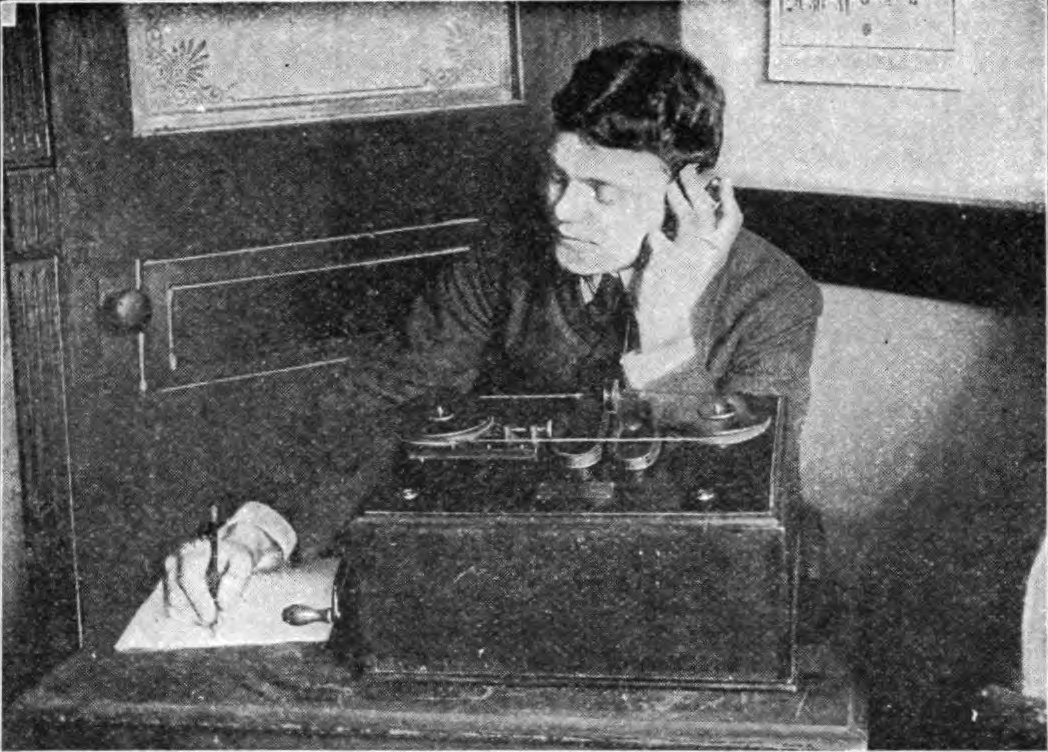 Imagine the scene. It is wartime, and the stakes are high in the Atlantic and the North Sea. At the British fleet anchorage in the Orkneys, known to history as Scapa Flow, the signal lamps flash messages across the dank mist, unaware that they possess the most extraordinary weapon, utterly secret and also unprecedented in modern naval warfare.
Unlike the wartime sailors of other previous generations, they can listen in to the hour-by-hour thoughts and orders of the other side and act accordingly. Not in the ships, perhaps, battling against the salt spray in the moment of battle, but via their own signals to the Admiralty.
They can do so because of the invention of wireless telegraphy, but also because of the efforts of a handful of disparate amateurs who have forged themselves into the most successful team of cryptographers the world had ever known.
It sounds like Bletchley Park in its heyday, during the war of national survival, as Alan Turing, Peter Twinn and their colleagues, wrestled with the complexities of the Nazi’s naval Enigma code – but it isn’t. It is what came before Bletchley, Turing or Enigma, and what made them all possible.
It was the peculiar assortment of people operating together to crack the German naval codes during the First World War, and known collectively as Room 40.
The scale was smaller, of course. Bletchley Park eventually employed tens of thousands. The techniques were less sophisticated – they used logic and literary comparisons rather than mathematics and early computing. But even so, the people who launched Bletchley Park and shaped it, and who managed Turing and Twinn in the first two years of the Second World War, had learned their trade in Room 40 of the Old Admiralty Building in Whitehall, and absorbed their lessons about how codes could be cracked and then used from a man who was, in his own way, a genius of Turing proportions: Captain Reginald ‘Blinker’ Hall.
In that respect Room 40 was the forerunner of Bletchley Park. It involved a series of near-fatal mistakes about how you should use decrypted information – about the best use of information in complex organisations – which were not made again as a result when the same team formed again on a wartime footing in 1939.
They were not made partly because Blinker Hall gave detailed advice to Captain John Godfrey, who occupied his chair as Director of Naval Intelligence in 1939. They were also not made because so many people who were key to Room 40 were there to kickstart a similar operation, in much more difficult circumstances, at Bletchley Park.
I want to set the record straight by writing a short ebook called Before Enigma. So I am crowdfunding the book through the website Byline, and would be enormously grateful for any help – either by donating directly or maybe by copying this article to anyone you know who might be interested.
Thank you so much. We now have two weeks to go, so any help you can give would be very gratefully received!
AND! My ebook Jerusalem: England's National Anthem is on special offer for 99p this week. There is also a conventional print version here.
Subscribe to this blog on email; send me a message with the word blogsubscribe to dcboyle@gmail.com. When you want to stop, you can email me the word unsubscribe.
November 11, 2015
Women and the great housing price inflation spiral
 I was listening to Women's Hour on the way back from the local dump yesterday morning and overheard an interesting item on Sweden - which could have been made exactly the same about the UK. Why - given that feminism is broadly triumphant in the way it has produced life chances for women - are women so stressed?
It is a good question. The women's movement was supposed to be about liberation, and in so many ways it has been. And of course men don't always share the tasks that women were traditionally expected to do. That may explain the imbalance, but it doesn't really explain the stress.
After all, with both partners economically active, there ought to be more money, more resources, more time - more everything. So why isn't there?
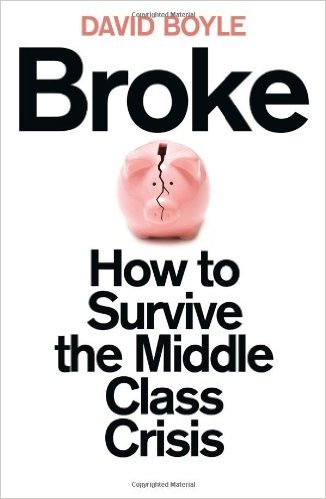
I think the answer is implied in my book Broke: How to Survive the Middle Class Crisis . It is basic economics, but somehow our leaders appear to be innocent of it.
What happens is that the cost of housing rises to take account of the extra income. In fact, you could say that the mass appearance of middle-class women on the jobs market is one of the factors pushing up house prices over the last three decades. They earned money, which meant that bigger loans were available, so the house prices rose to meet them.
That is how it works. Inflation is too much money chasing too few goods, and what we have seen since the deregulation of the mortgage markets is ever more reasons to lend more, so that the house prices rise to take account of it, and so the cycle goes on – in retrospect a terrifying rack for the middle classes. Just as it is a terrifying rack for everyone else.
Terrifying especially if women didn’t want to work, because that freedom is now beyond them. Once lenders had began to calculate the upper limit in multiples of joint salaries, there was another escalation of house prices.
It is part of the far bigger vicious circle that is caused by people desperately stretching to afford the home they want, and which is outpacing their income as they watch – a spiral that keeps on spinning: smaller houses, bigger loans, more salaries, higher prices, smaller houses and so on.
So the loan terms get longer, the multiples get bigger, the houses get smaller, all to eke out a little more affordability - only to have the prices rise to meet the new boundary of affordability.
And really all this stuff about there being too few homes is a drop in the ocean in comparison. That is why women are stressed. It is also, incidentally, why men are stressed. Because they are caught on the housing price inflation spiral and it squeezes them dry.
AND! My ebook Jerusalem: England's National Anthem is on special offer for 99p this week. There is also a conventional print version here.
Subscribe to this blog on email; send me a message with the word blogsubscribe to dcboyle@gmail.com. When you want to stop, you can email me the word unsubscribe.
November 10, 2015
Keep the dinosaurs shut - if you want real competition
As always, when an issue looms large in the House of Commons, the divisions are about the respective claims of capital and labour - though both now seem to be against the government's proposals to relax the Sunday trading laws.
The news that the SNP is going to oppose this opens the possibility that the proposals may be defeated. I'm a localist so there is something to be said for the idea of setting the opening hours locally. But there is still a major reason why large stores should not in fact open for more than six hours on a Sunday.
It comes back to the big, primarily Liberal, question of how we might stitch together a set of policies that are, above all else, pro-enterprise.
Then we have to ask whether letting the big stores open on Sunday, and undermining the slim advantage that small stores have for one day only, would support entrepreneurs or not?
Would it promote competition or not?
Would it promote choice or not, over the medium-term?
The answer to all three questions is: no. In fact, it would actively frustrate competition by embedding the privileges of the big retailers (and don't forget that Tesco, for example, insists that it should pay its suppliers after three months, providing itself with an interest-free loan equal to two months's stock).
No, if we want to encourage challenge from below, and on the high street, then we need to keep the dinosaurs shut.
It is a paradox, but we have designated Sundays as a day when challengers and entrepreneurs can compete on equal terms, and it should stay that way.
There is the usual fatuous research, that is so often commissioned by government departments, showing how much extra revenue would be generated by ending Sunday's differences. But they never seem to evaluate how much is simply moved from elsewhere, or how much is lost by driving the challenging minnows out of business.
Nor can we really believe all this rhetoric about saving the high street. This proposal is about saving the out-of-town shopping centres, and - if the USA is anything to go by - they are the next white elephants to go. So goodbye Bluewater. I'm sorry I never visited...
AND! My ebook Jerusalem: England's National Anthem is on special offer for 99p this week. There is also a conventional print version here.
Subscribe to this blog on email; send me a message with the word blogsubscribe to dcboyle@gmail.com. When you want to stop, you can email me the word unsubscribe
The news that the SNP is going to oppose this opens the possibility that the proposals may be defeated. I'm a localist so there is something to be said for the idea of setting the opening hours locally. But there is still a major reason why large stores should not in fact open for more than six hours on a Sunday.
It comes back to the big, primarily Liberal, question of how we might stitch together a set of policies that are, above all else, pro-enterprise.
Then we have to ask whether letting the big stores open on Sunday, and undermining the slim advantage that small stores have for one day only, would support entrepreneurs or not?
Would it promote competition or not?
Would it promote choice or not, over the medium-term?
The answer to all three questions is: no. In fact, it would actively frustrate competition by embedding the privileges of the big retailers (and don't forget that Tesco, for example, insists that it should pay its suppliers after three months, providing itself with an interest-free loan equal to two months's stock).
No, if we want to encourage challenge from below, and on the high street, then we need to keep the dinosaurs shut.
It is a paradox, but we have designated Sundays as a day when challengers and entrepreneurs can compete on equal terms, and it should stay that way.
There is the usual fatuous research, that is so often commissioned by government departments, showing how much extra revenue would be generated by ending Sunday's differences. But they never seem to evaluate how much is simply moved from elsewhere, or how much is lost by driving the challenging minnows out of business.
Nor can we really believe all this rhetoric about saving the high street. This proposal is about saving the out-of-town shopping centres, and - if the USA is anything to go by - they are the next white elephants to go. So goodbye Bluewater. I'm sorry I never visited...
AND! My ebook Jerusalem: England's National Anthem is on special offer for 99p this week. There is also a conventional print version here.
Subscribe to this blog on email; send me a message with the word blogsubscribe to dcboyle@gmail.com. When you want to stop, you can email me the word unsubscribe
November 9, 2015
What's air pollution and depression got to do with it? A lot.
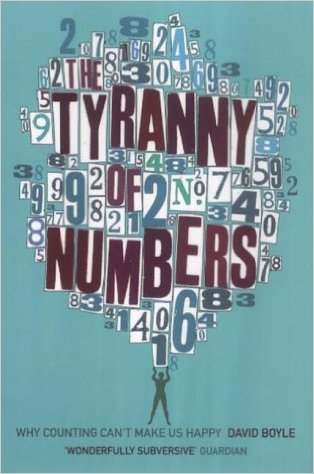 I have mentioned before, perhaps too much, my conversation in 2000 with a prominent minister in Tony Blair's cabinet about my book
The Tyranny of Numbers
. I told him I was writing a book that was sceptical about numbers and counting.
I have mentioned before, perhaps too much, my conversation in 2000 with a prominent minister in Tony Blair's cabinet about my book
The Tyranny of Numbers
. I told him I was writing a book that was sceptical about numbers and counting.But what else can we do, he asked? I remember his look of confusion. It was as if he would have liked to approve but just couldn't.
Since then the controversy about targets has almost left me on the winning side, yet somehow without anyone taking on the basic argument about measuring the unmeasurable with numbers.
It's a paradox, and that is a difficult idea for data-crunchers. How can the data say two opposite things at once? Impossible!
So was delighted to read a prominent and thoughtful article which took the argument further in the Guardian on Saturday, by the writer Andrew Smith, who applied the same argument to the way in which IT systems have so persuaded us that the numbers they generate are real that we have begin to lose the possibility of scepticism about it.
It is worse than that. This is what he said:
"So, converting the world into numbers in order to process and make decisions about it: what does this remind us of? That’s right. We are becoming our computers. An idea that might sound shocking, but will come as no surprise to anyone familiar with the work of the media philosopher Marshall McLuhan..."
That is the frightening side of what is happening to us. We are losing the ability to understand that there is anything beyond the data, any grey areas of ambiguity. We still have a vague sense - especially those of us who don't work in Whitehall or big corporates - that there other realities. But will we understand that still in a decade's time?
Or will we read Dickens' Hard Times with mounting incomprehension - what has he got against Thomas Gradgrind, for goodness sake? He is just measuring success in education...
It is that impoverishment of our intellectual wealth that is the real problem. And in the meantime there is a more immediate problem: those who run the world are more in thrall to the data than anybody else - and consequently have lost the ability to make things happen. They suffer more than they should from unintended consequences, because they don't understand ambiguity. They don't understand human beings.
Unless of course, as Andrew suggests, human beings are also changing.
It's a problem. So stick with me on this: lets keep open to the little boy's question in The Emperor's New Clothes. yes the data says the school is good, but are the children being educated? Yes, the data says the hospital is working, but are the patients getting healthier? Yes, the data says we're getting richer, but are we getting happier?
Richer but not happier? Sorry - brain doesn't compute. You're talking gobbledegook - or so they will say.
This was the crux of the article: those who can no longer distinguish data from reality already are yesterday's economists. They are clever people, but unfortunately pursuing one single bottom line number renders you stupid and ineffective.
And by 2025, if anyone runs across this maverick blog post, let's hope they don't have it evaluated - because 623.6 and I'm afraid I am by definition insane and must be carted off for failing to understand the data. Surely everyone is getting richer aren't they? What's air pollution and depression got to do with it?
AND! My ebook Jerusalem: England's National Anthem is on special offer for 99p this week. There is also a conventional print version here.
Subscribe to this blog on email; send me a message with the word blogsubscribe to dcboyle@gmail.com. When you want to stop, you can email me the word unsubscribe
November 5, 2015
This changes everything. No government can trash entrepreneurs and survive for long
Just occasionally, there is a small event in politics – it seems hardly important in the great scheme of things – but you realise it means that everything has changed. It is one of those clouds no bigger than a man’s hand in the sea stories which turns your expectations upside down.
Then you have to work out why nobody else realises the significance. Are you wrong? Maybe the changes slipped into the Finance Bill withdrawing eligibility for Enterprise Investment Tax Relief from community energy schemes are just what everyone assumes they are – the latest twist in the premature withdrawal of tapering subsidies for green energy.
If that was the case it would be a mistake, part of the government’s overzealous and short-sighted removal of support for renewables. Infuriating and blinkered, yes, but it would hardly compromise their legitimacy as a government.
Part of the problem may be that opposition MPs are seeing this move as if it was familiar. As if they would do that, wouldn’t they...
But I think it is something else. Why would any government, however little interest they might have in renewable energy, deliberately set out to trash a small but growing sector of the economy? Why would they deliberately undermine all the energy and imagination that goes into building a business – which, in the days of Margaret Thatcher, they used to pride themselves in backing. British ingenuity. Private enterprise.
Removing feed-in tariffs, the guaranteed income that renewables get – though less than the vast sums promised to Hinckley Point – could possibly be justified in the need to reduce fuel bills. You can see the point also, if they are still getting feed-in tariffs, that the enterprise already has its guarantee and maybe shouldn't get tax relief too (though community energy has been risky enough until now to still get it).
But you can’t remove both, and Enterprise Investment Tax Relief on community energy schemes is to disappear from 30 November, according to a clause slipped into the Finance Bill only at the end of October at third reading, after it could be debated.
It has meant a ridiculous scramble to get community energy schemes through the hurdle in just a few weeks.
Why, uniquely, should enterprise tax relief to be given to every other new start-up but not to renewable energy?
So this is what I mean about it changing everything. When a government deliberately tries to destroy the efforts of entrepreneurs, for ideological reasons – so that people and investors earn less, and the nation earns less as a result, then you know the writing is on the wall for them. Just as it was on the wall for Labour in the days of Michael Foot.
It is a fundamental principle that governments should not trash the efforts of their entrepreneurs – withdraw subsidies perhaps; they’re not under any obligation to support them, but you can’t unbalance the playing field against them, by denying the tax relief that most investment in new enterprises get. All except the innovative ones devoted to new energy schemes.
And you especially can’t do that – and survive scrutiny by the electorate – if you catapult them, as a result, that much more into the suffocating embrace of the big energy companies, an oligopoly if ever there was one. Or is it – just to raise a scary prospect – part of a secret agreement with the Chinese to make us dependent on their nuclear investments instead?
When a Conservative government torpedoes its own commitment to free and open markets, by setting out to undermine competition and enterprise, you know they are on the way out, intellectually and politically. And when they go, you can remind yourself that you read it here first...
Subscribe to this blog on email; send me a message with the word blogsubscribe to dcboyle@gmail.com. When you want to stop, you can email me the word unsubscribe
Then you have to work out why nobody else realises the significance. Are you wrong? Maybe the changes slipped into the Finance Bill withdrawing eligibility for Enterprise Investment Tax Relief from community energy schemes are just what everyone assumes they are – the latest twist in the premature withdrawal of tapering subsidies for green energy.
If that was the case it would be a mistake, part of the government’s overzealous and short-sighted removal of support for renewables. Infuriating and blinkered, yes, but it would hardly compromise their legitimacy as a government.
Part of the problem may be that opposition MPs are seeing this move as if it was familiar. As if they would do that, wouldn’t they...
But I think it is something else. Why would any government, however little interest they might have in renewable energy, deliberately set out to trash a small but growing sector of the economy? Why would they deliberately undermine all the energy and imagination that goes into building a business – which, in the days of Margaret Thatcher, they used to pride themselves in backing. British ingenuity. Private enterprise.
Removing feed-in tariffs, the guaranteed income that renewables get – though less than the vast sums promised to Hinckley Point – could possibly be justified in the need to reduce fuel bills. You can see the point also, if they are still getting feed-in tariffs, that the enterprise already has its guarantee and maybe shouldn't get tax relief too (though community energy has been risky enough until now to still get it).
But you can’t remove both, and Enterprise Investment Tax Relief on community energy schemes is to disappear from 30 November, according to a clause slipped into the Finance Bill only at the end of October at third reading, after it could be debated.
It has meant a ridiculous scramble to get community energy schemes through the hurdle in just a few weeks.
Why, uniquely, should enterprise tax relief to be given to every other new start-up but not to renewable energy?
So this is what I mean about it changing everything. When a government deliberately tries to destroy the efforts of entrepreneurs, for ideological reasons – so that people and investors earn less, and the nation earns less as a result, then you know the writing is on the wall for them. Just as it was on the wall for Labour in the days of Michael Foot.
It is a fundamental principle that governments should not trash the efforts of their entrepreneurs – withdraw subsidies perhaps; they’re not under any obligation to support them, but you can’t unbalance the playing field against them, by denying the tax relief that most investment in new enterprises get. All except the innovative ones devoted to new energy schemes.
And you especially can’t do that – and survive scrutiny by the electorate – if you catapult them, as a result, that much more into the suffocating embrace of the big energy companies, an oligopoly if ever there was one. Or is it – just to raise a scary prospect – part of a secret agreement with the Chinese to make us dependent on their nuclear investments instead?
When a Conservative government torpedoes its own commitment to free and open markets, by setting out to undermine competition and enterprise, you know they are on the way out, intellectually and politically. And when they go, you can remind yourself that you read it here first...
Subscribe to this blog on email; send me a message with the word blogsubscribe to dcboyle@gmail.com. When you want to stop, you can email me the word unsubscribe
November 4, 2015
The economic destiny of the Lib Dems
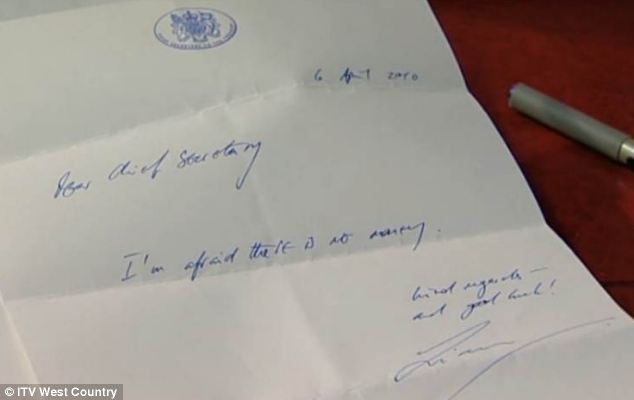 A few weeks ago, I was in Lancashire, interviewing a Labour councillor about the fascinating and pioneering work they have been doing there reshaping their local economy so that it works effectively for the people who live there.
The measures were all in the local Labour manifesto last May and now they are being put slowly into effect. I think I agreed with every word of it.
As it turned out, the councillor I spoke to was a big supporter of Jeremy Corbyn's. What was interesting about this emerging consensus on a new entrepreneurial future is that, actually, it is difficult to pin it unambiguously to any political tradition.
Most of what was in the manifesto could have been in a Conservative one praising enterprise. As a Liberal policy wonk, I could certainly embrace it.
But you know when an idea has emerged because suddenly those who are about five seconds ahead of the zeitgeist - any more than that, as C. P. Snow used to say, and you're considered insane - start talking about it. So that is the future: it is a new entrepreneurial spirit, based on support and facilitation for small business and the training of enterprising people from an early age to make things happen - and certainly at school.
Tim Farron hinted at an approach along these lines at the party conference - and it is certainly a Liberal economic approach, possibly even the Liberal approach - and now Liam Byrne has said much the same.
When the Policy Network organises a speech by a senior moderate Labour type, you can be sure of a couple of things. It will damn Jeremy Corbyn with faint praise. It will hark back to the Blair-Brown years as the era of economic success - rather than the technocratic nightmare that I remember - and it will gargle with a few things they maybe should have done differently.
So we all pounced on Liam Byrne's talk yesterday morning, perhaps not exactly with excitement, but at least the sense of weary predictability.
Byrne was one of the conduits by which Accenture forged such a disastrous alliance between the Blair government and the management consultants. He was also the author of the note on David Laws' computer screen in 2010 saying that the money was all gone.
But he was completeley correct in his diagnosis of the economic challenges we face - institutional short-termism, a new elite which does not see its task to share the rewards, and the growing power of monopoly.
It is interesting, though, that I have been sent details of the speech by so many people - even before it had been made (thank you, Miranda and Joe). I think this was because of his volte face on some of the New Labour embrace of 'neo-liberalism'.
But he remains a social democrat, in the most irritating sense of the term. He condemned 'free trade', as if that was somehow what we have now, and talks up the idea of the common good. And just as an aside, I'm all in favour of the common good myself - just suspicious when politicians start talking about it. In the mouth of the Pope, for example, it is a wholly worthwhile endeavour. In the vocabulary of a former New Labour apparachik, I fear it is likely to involve clamping down on individuals (sorry David, your welfare isn't consistent with the common good, they might say - and probably will).
But the real reason the speech is interesting is the brief but important section on entrepreneurialism:
"As someone who started a successful tech firm before I came into Parliament, I passionately believe that encouraging people to start their own business or social enterprise is quite simply one of the most effective ways of democratising wealth creation – and if we want a fairer, more equal society we should be doing everything in our power. I think that means, introducing enterprise education in every school for every child; expanding the Start-Up Loan programme, and using government procurement to help new businesses scale up..."
This represents the future. The real question is whether Labour can possibly embrace it without unravelling. Even if both sides use it, they will so misunderstand each other when they do. New Labour really believed in big business and never really liked small.
Personally, I believe it is the historic destiny of the Lib Dems to revive small enterprise - not just as a jolly nice idea - but as the solution to monopoly and economic stagnation.
Byrne mentioned four favoured entrepreneurs at the end - William Lever, Anita Roddick, George Cadbury and Spedan Lewis. In fact, though they didn't devote themselves to politics, all four were Liberals. Nor are they entrepreneurs in the flashy loadsamoney Thatcherite style. To quote Anita Roddick - they were people who could imagine the world differently.
Subscribe to this blog on email; send me a message with the word blogsubscribe to dcboyle@gmail.com. When you want to stop, you can email me the word unsubscribe
David Boyle's Blog

- David Boyle's profile
- 53 followers
David Boyle isn't a Goodreads Author
(yet),
but they
do have a blog,
so here are some recent posts imported from
their feed.

