
David Boyle's Blog, page 29
September 24, 2015
Why should the Tories have all the best tunes?
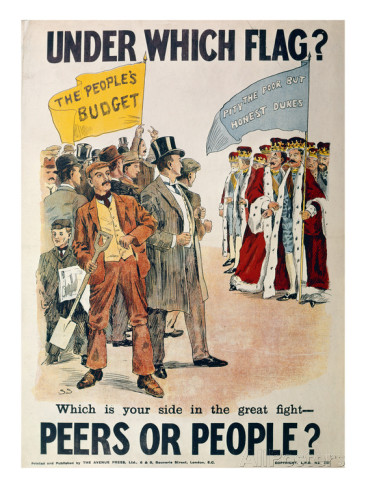 There was a time when evangelists disapproved of singing. The along came William Booth of Salvation Army fame - or so it is said - and famously asked why the Devil should have all the best tunes.
I thought of that yesterday afternoon, as I listened to the new Lib Dem leader's first big speech.
I may have mentioned this before, but I find the Left deeply irritating these days. I don't say this because I am somehow part of the Right. But the rage, the conservatism, the symbolic language derived from the 1917 October revolution - slogans, banners, barricades - is all ferociously off-putting.
It is off-putting in other ways too, which kind of explain why the Left is on the back foot across Europe. They have nothing to say about economics, leaving the field clear for the forces of Conservatism. They are always urging us to 'defend' institutions I know are flawed, sometimes hopelessly so - but so rarely urge us to build new ones.
And heavens, the disapproval. Don't get me started.
It is stultifying, controlling and inflexible. It disapproves of patriotism, so it never appeals to pride in the nation. It disapproves of economics, so it never appeals to the demand for prosperity. Of course it loses and, the angrier it gets, the more it is going to lose.
So I have to say that, in these two respects, I thought Tim Farron's first conference speech as Liberal Democrat leader was not just tremendously well delivered, it was also ambitious. It was ambitious enough to demand to be heard. It was exciting because of that.
Because in both these areas, he broke the barely spoken, rather puritanical, rules of the Left. He accused David Cameron of failing to live up to the tolerant traditions of the nation. He accused the other parties of being unpatriotic in their approach to Europe. "It's pitiful and embarrassing and makes me so angry," he said about the response to the refugee crisis, "because I am proud to be British and I am proud of Britain's values."
And at long last, he made economics - and the urgent need for a new Liberal economics - the centre of his policy pitch, alongside housing, promising "to develop a strong and clear Liberal vision of the British economy well into the future".
He took the fight to the Conservatives in this respect, so busily trashing a sector (renewables) which had been growing at seven per cent a year under Lib Dem rule.
Because I think he's right, and - listening to the speech - I could suddenly see that the battered Lib Dems could play a critical role, and sooner rather than later. If they can build up that vision of an economy that works, based on the power of entrepreneurs and challenging enterprise, rather than the desperate business of keeping a global basket case from teetering over into unrepayable debt every few years.
If they can demonstrate convincingly that the Conservatives are making us poorer - not because they are cutting welfare - but because their economic methods are seriously out-of-date. They are avoiding prosperity because, as Keynes put it, they are "the slaves of some defunct economist".
This new role requires the party to appeal to the enlightened patriotism of the voters. It requires the Lib Dems to become the party - not just of economic competence (not such a good way of phrasing it) - but economic prosperity, rather than rising debt for most of us.
But, yes, it could be done. In fact, I'm not sure there is any other credible challenge coming from anywhere else any time soon. But I also agreed with Tony Greaves, interviewed all too briefly on the BBC PM programme - the Lib Dems can't wait around to get power before we make things happen.
I hope they break the other rule of the Left - don't just sloganise, don't just ask for votes, don't just demand change. Do it, and do it with anyone prepared to help.
Subscribe to this blog on email; send me a message with the word blogsubscribe to dcboyle@gmail.com. When you want to stop, you can email me the word unsubscribe.


September 23, 2015
Clawing Liberalism back from neoliberalism
 It will no doubt come as an unpleasant surprise to my former New Economics Foundation colleagues, perhaps even a shock, but - as far as I can make out - green economics emerged, rather as neoliberal economics did, out of a resistance to conventional Keynesianism.
The early pioneers of sustainable economics, Ralph Borsodi in the USA or Fritz Schumacher in the UK, were in flight from Keynes. Borsodi even wrote a book about what he called the 'coming Keynesian catastrophe'. This resistance was, in some ways, the spark that lit the counter-culture, the resistance to the idea of state planning and conventional 'progress', which led to everything else - the voluntary sector, the hippies, the Liberal revival, Jane Jacobs, the green movement, the New Age and so on and so on.
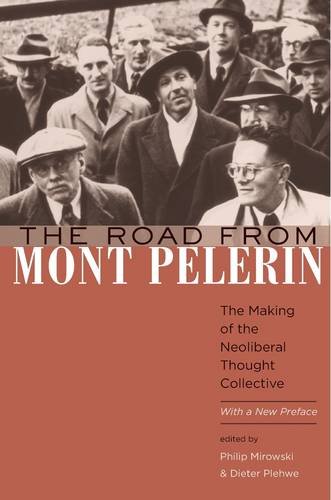
I have been reading (thank you, Tomas) a fascinating academic study about the liberal resistance to Keynes which began in the 1940s, when Friedrich Hayek wrote his enormously influential book The Road to Serfdom. It is called The Road from Mont Pelerin.
What Hayek and Michel Polanyi, Karl Popper, Ludwig von Mises and their friends set out to do, when they met at a hotel in Mont Pelerin in 1947, was to revive liberal economics, to save the possibility of self-determination from the growing threat of totalitarian state planners - and to beat the Nazis, the democracies had borrowed some of the same assumptions about central planning and state power.
I mention this now because, it seems to me, the Lib Dem leader Tim Farron's rhetoric reveals an ambition to hammer out a new kind of Liberal economics. If so, he is absolutely right - but we need a bit of history to see what went wrong before.
Hayek's book was praised by Keynes and Orwell. Yet somehow, Hayek's ideals - and his alliance with the doyen of American Liberalism Henry Simons at Chicago University - led, in a few short decades, to something known as neoliberalism. This is now the deadening orthodoxy of the world and, since it involves the captitulation to naked power, it isn't really Liberal at all.
What happened? Well here, The Road from Mont Pelerin has something fascinating to say.
Simons had teamed up with Hayek to found the Chicago School of Economics, but committed suicide after serious in-fighting in 1946. The funding they had arranged was partly to write a version of The Road to Serfdom for American audience. But neither of the two economists charged with writing it ever managed to do so.
It was eventually finished by Simons' great pupil Milton Friedman in 1962 and published as Capitalism and Freedom. It was in some ways the founding text of American neoliberalism, but it made two changes which seem barely important, but taken together have had a disastrous effect - and which also distanced neoliberalism from Liberalism.
Error #1. He argued that intellectual property was a kind of property, and must be defended as such, rather than - as it actually is - a temporary suspension of free trade to encourage innovation. This has resulted in the disastrous concentration of power and resources, by allowing large corporations to dominate the ownership of intellectual creation so long after it was actually necessary for them to do so.
Error #2. He argued that monopoly didn't matter very much, and - if it did happen - it was the fault of the government for over-regulating.
The first error led to the great heresy of neoliberalism, that corporations should be like human beings in legal terms. It has vested human rights in legal entities that have resources way beyond any human being. At one stroke, human beings had been disempowered.
The second error seems to me to be the critical moment which made neoliberalism deeply illiberal. It was the rejection of the most fundamental element in Liberal economics, the defence against the over-concentration of market power, the very opposite of Liberal free trade.
It explains why the dead hand of neoliberal orthodoxy has ignored monopoly as a problem as the monopolies grow in power over our lives, as we fall into the tyrannical clutches of the likes of Google or Amazon.
If we are going to rediscover Liberal economics, and it is important that we should, then we are going to have to unravel these three gigantic mistakes. It may be that we also need to dust down our view of Hayek's original objectives.
Nobody (except perhaps Jeremy Corbyn) wants to return to the days of central state planning, but - let's face it - monopoly is, in its own way, a pretty certain road to serfdom too.
Subscribe to this blog on email; send me a message with the word blogsubscribe to dcboyle@gmail.com. When you want to stop, you can email me the word unsubscribe.
September 21, 2015
Three places not to position the Lib Dems
I took one of my children to the opening of the Lib Dem conference in Bournemouth on Saturday (we also spent some time on the beach). He is eleven and not keen for me to engage in any conversation beyond about two and a half minutes. But he really followed Baroness Brinton’s opening address.
“Come on,” I kept saying, half way through the party president’s address. “We’ve got to catch a train.”
But no. “Wait; I’m enjoying this,” he said.
I’m not saying I was surprised that Sal Brinton gripped his attention – it was a very good speech – but I was pleasantly surprised that it could have gripped the attention of an eleven-year-old. It wasn’t as if it was studded with jokes or slapstick humour.
It was sunny, a balmy day and I was ready to be inspired. And I’m now back in Bournemouth in the usual heady atmosphere, a peculiarly Liberal combination of hope and mild despair.
But I also found myself mildly exasperated by some of the party’s narrative in the media, and in particular its response to the unexpected elevation of Jeremy Corbyn. There are three big mistakes the Lib Dems appear to be making, and I’m writing this – not to criticise Tim Farron, who is finding a tone of voice – but in the hope that someone thinks a bit more deeply about what a radical centre might mean.
Mistake #1. “Fantasy economics”. That was the phrase which Tim Farron and other Liberals have been using about Corbyn’s economic positions. This is not helpful. Some of Corbyn’s rather vague economic platform is clearly based on fantasy: is it really practical to renationalise the railways? How about we just hold them to their contracts first?
But if this refers to Corbyn's public money supply, then – within some conditions – the idea is backed by Adair Turner and Martin Wolf and the Icelandic government. I suspect that some version of it represents the future. Corbyn’s fantasy is that it can solve all his budgeting problems.
So I hope that the Lib Dems won’t approach the new world, where a new kind of economic orthodoxy is struggling to emerge – by describing every new idea as “fantasy”.
Mistake #2. “Heads and hearts”. No, we haven’t had a repeat of the general election rhetoric, but we also haven’t managed to claw out of its basic dualistic structure – on the one hand, on the other hand.
We need a plausible, moderate economic policy if anyone is going to believe our social policy, or so Tim Farron told Andrew Marr yesterday. That’s true, of course, but it is too close to the old head and heart dualism – we have Osborne’s economics but Corbyn’s ambition.
It doesn’t stack up. It begs all the wrong questions.
Mistake #3. “Moderate vision”. Behind all this is the basic problem. Tim Farron’s Guardian article gargled with both words without closing the gap between then.
It is possible to have a moderate vision, of course, but it isn’t terribly interesting. In fact, I have a horrible feeling that politicians normally use the word ‘vision’ in inverse proportion to the clarity of theirs.
Again, this kind of rhetoric begs the question: what are you NOT moderate about? How are you going to get there? Or is it really your vision to change everything, as Adrian Slade once ribbed Roy Jenkins, “just a little bit”?
I have a feeling that the whole idea of a moderate vision falls foul of the dictum from Revelation Chapter 3 that “if you are neither cold nor hot, I will spew you out of my mouth”.
Luckily, there was an answer – or the very first glimmerings of an answer – in Tim Farron’s rally speech on Saturday night. It is to rethink business, enterprise and entrepreneurialism, as the foundation of a renewed Liberalism.
Not business as stolid bureaucratic privatised providers. Or business as rampaging monopolies or monoliths, but business as an entrepreneurial force to make things happen – “if you have a dream you should be celebrated and supported”, he said.
Quite right. This is an echo of the late, great Anita Roddick, who used to define entrepreneurs as people who could imagine the world differently. It implies the fundamental difference between Farron and Corbyn: between people power and centralised state power.
But for goodness sake, don’t let’s swing the Lib Dems behind a defence of an economic orthodoxy that is now in its final few years. The Financial Times today carries an article on Europe;s centre left which sums up the problem:
"Ultimate crisis of global capitalism was delivered on a plate and they did not know what to do."
Too right. And until they do know what to do, the centre left is going to remain stuck. Corbyn almost certainly won't provide that way out. He may actually get in the way, but don't let's condemn him for the attempt - because, when he fails, the Lib Dems will have to do it instead.
Subscribe to this blog on email; send me a message with the word blogsubscribe to dcboyle@gmail.com. When you want to stop, you can email me the word unsubscribe.
“Come on,” I kept saying, half way through the party president’s address. “We’ve got to catch a train.”
But no. “Wait; I’m enjoying this,” he said.
I’m not saying I was surprised that Sal Brinton gripped his attention – it was a very good speech – but I was pleasantly surprised that it could have gripped the attention of an eleven-year-old. It wasn’t as if it was studded with jokes or slapstick humour.
It was sunny, a balmy day and I was ready to be inspired. And I’m now back in Bournemouth in the usual heady atmosphere, a peculiarly Liberal combination of hope and mild despair.
But I also found myself mildly exasperated by some of the party’s narrative in the media, and in particular its response to the unexpected elevation of Jeremy Corbyn. There are three big mistakes the Lib Dems appear to be making, and I’m writing this – not to criticise Tim Farron, who is finding a tone of voice – but in the hope that someone thinks a bit more deeply about what a radical centre might mean.
Mistake #1. “Fantasy economics”. That was the phrase which Tim Farron and other Liberals have been using about Corbyn’s economic positions. This is not helpful. Some of Corbyn’s rather vague economic platform is clearly based on fantasy: is it really practical to renationalise the railways? How about we just hold them to their contracts first?
But if this refers to Corbyn's public money supply, then – within some conditions – the idea is backed by Adair Turner and Martin Wolf and the Icelandic government. I suspect that some version of it represents the future. Corbyn’s fantasy is that it can solve all his budgeting problems.
So I hope that the Lib Dems won’t approach the new world, where a new kind of economic orthodoxy is struggling to emerge – by describing every new idea as “fantasy”.
Mistake #2. “Heads and hearts”. No, we haven’t had a repeat of the general election rhetoric, but we also haven’t managed to claw out of its basic dualistic structure – on the one hand, on the other hand.
We need a plausible, moderate economic policy if anyone is going to believe our social policy, or so Tim Farron told Andrew Marr yesterday. That’s true, of course, but it is too close to the old head and heart dualism – we have Osborne’s economics but Corbyn’s ambition.
It doesn’t stack up. It begs all the wrong questions.
Mistake #3. “Moderate vision”. Behind all this is the basic problem. Tim Farron’s Guardian article gargled with both words without closing the gap between then.
It is possible to have a moderate vision, of course, but it isn’t terribly interesting. In fact, I have a horrible feeling that politicians normally use the word ‘vision’ in inverse proportion to the clarity of theirs.
Again, this kind of rhetoric begs the question: what are you NOT moderate about? How are you going to get there? Or is it really your vision to change everything, as Adrian Slade once ribbed Roy Jenkins, “just a little bit”?
I have a feeling that the whole idea of a moderate vision falls foul of the dictum from Revelation Chapter 3 that “if you are neither cold nor hot, I will spew you out of my mouth”.
Luckily, there was an answer – or the very first glimmerings of an answer – in Tim Farron’s rally speech on Saturday night. It is to rethink business, enterprise and entrepreneurialism, as the foundation of a renewed Liberalism.
Not business as stolid bureaucratic privatised providers. Or business as rampaging monopolies or monoliths, but business as an entrepreneurial force to make things happen – “if you have a dream you should be celebrated and supported”, he said.
Quite right. This is an echo of the late, great Anita Roddick, who used to define entrepreneurs as people who could imagine the world differently. It implies the fundamental difference between Farron and Corbyn: between people power and centralised state power.
But for goodness sake, don’t let’s swing the Lib Dems behind a defence of an economic orthodoxy that is now in its final few years. The Financial Times today carries an article on Europe;s centre left which sums up the problem:
"Ultimate crisis of global capitalism was delivered on a plate and they did not know what to do."
Too right. And until they do know what to do, the centre left is going to remain stuck. Corbyn almost certainly won't provide that way out. He may actually get in the way, but don't let's condemn him for the attempt - because, when he fails, the Lib Dems will have to do it instead.
Subscribe to this blog on email; send me a message with the word blogsubscribe to dcboyle@gmail.com. When you want to stop, you can email me the word unsubscribe.
September 17, 2015
In praise of the Corbyn look
What was most apparent about the first prime minister’s questions session with the new Labour leader was the sheer dullness of the man.
I don’t mean the unremarkable ‘revolution in beige’, and this is not intended as a criticism. Dullness us a huge political virtue in England. From Lord Hartington to Staley Baldwin, with his slogan ‘safety first’, dullness has propelled people to the very top.
The English trust dull people, as long as they stay unremittingly dull. They know they are never doing to say anything clever, or flashy, never going to pull the wool over our eyes, or put out dodgy dossiers. It may be a delusion of course – Corby and his cronies may turn out to be the very opposite of dull – but eschewing spin to such a large and foolhardy extent does invite trust.
What really struck me about the infamous Battle of Britain service episode wasn’t so much the singing, or non-singing, of the national anthem (and who gets asked to sing the national anthem in normal circumstances – I don’t think I have for years?), it was the top button left undone with a tie.
Just for his complete failure to look at himself in the mirror I found myself trusting the man.
There are some English men who leave their front doors magnificently attired, not a hair out of place, their trousers pressed. There are some – and I count myself among this number – who find this feat quite impossible.
Many journalists (print journalists, the TV journalists all keep combs in close proximity) are the same. Crumpled, unbrushed hair, no mirror. It is a sign, I believe – not of a lack of introspection – but at least a distrust of appearances.
I’m not really an admirer of Corbyn’s opinions, and I deeply distrust those around him. But for his undone top button – a symbol of a certain kind of Englishness – I trust him a little more this morning than I did last week.
In fact, let’s start a small campaign. As a small symbol of resistance to mirrors in general, and the fashion industry in particular, I’m going to leave my top button undone next time I wear a tie. I’m not going to let Corbyn corner the market in Englishness.
Subscribe to this blog on email; send me a message with the word blogsubscribe to dcboyle@gmail.com. When you want to stop, you can email me the word unsubscribe.
I don’t mean the unremarkable ‘revolution in beige’, and this is not intended as a criticism. Dullness us a huge political virtue in England. From Lord Hartington to Staley Baldwin, with his slogan ‘safety first’, dullness has propelled people to the very top.
The English trust dull people, as long as they stay unremittingly dull. They know they are never doing to say anything clever, or flashy, never going to pull the wool over our eyes, or put out dodgy dossiers. It may be a delusion of course – Corby and his cronies may turn out to be the very opposite of dull – but eschewing spin to such a large and foolhardy extent does invite trust.
What really struck me about the infamous Battle of Britain service episode wasn’t so much the singing, or non-singing, of the national anthem (and who gets asked to sing the national anthem in normal circumstances – I don’t think I have for years?), it was the top button left undone with a tie.
Just for his complete failure to look at himself in the mirror I found myself trusting the man.
There are some English men who leave their front doors magnificently attired, not a hair out of place, their trousers pressed. There are some – and I count myself among this number – who find this feat quite impossible.
Many journalists (print journalists, the TV journalists all keep combs in close proximity) are the same. Crumpled, unbrushed hair, no mirror. It is a sign, I believe – not of a lack of introspection – but at least a distrust of appearances.
I’m not really an admirer of Corbyn’s opinions, and I deeply distrust those around him. But for his undone top button – a symbol of a certain kind of Englishness – I trust him a little more this morning than I did last week.
In fact, let’s start a small campaign. As a small symbol of resistance to mirrors in general, and the fashion industry in particular, I’m going to leave my top button undone next time I wear a tie. I’m not going to let Corbyn corner the market in Englishness.
Subscribe to this blog on email; send me a message with the word blogsubscribe to dcboyle@gmail.com. When you want to stop, you can email me the word unsubscribe.
September 16, 2015
Diverse money: an idea whose time has come
There is a great deal of unwarranted glee in Lib Dem circles that Jeremy Corbyn will drive disaffected Labour members into their ranks. Quite the reverse, I would say: Corbyn threatens the Lib Dems in three ways.
First, because we know that people need to feel safe about the opposition before they dare to vote for outsiders. Second, because he risks trapping the party forever in the cul-de-sac of split-the-difference centre politics. Third, because the handful of ideas he has brought now into the mainstream, and which are important, may be undermined as a result.
I count two of these (more on them later): handing over responsibility for energy generation to cities (as in Sweden) and providing a publicly created money supply for infrastructure (as Iceland is discussing).
The second idea is also backed by mainstream commentators like Adair Turner and Martin Wolf, and it certainly makes sense. So far, it has been bogged down in questions about whether it is legal, though quantitative easing is basically the same thing - just funnelled into bankers' bonuses.
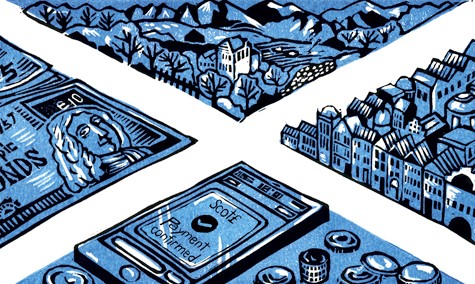
Which is why the detailed proposal about a parallel currency for Scotland, put together by my old colleagues at the New Economics Foundation, is so important.
Their proposal cleverly brings together the idea of publicly created money (the rest is created with interest attached by the banks), issued via a dividend to every individual, with the idea of parallel currencies which are able to seep into parts of the economy which big currencies tend to shun. This is how they describe the features of the ScotPound:
An economic boost: We propose a 250 ScotPound (S£) dividend be given to each Scottish citizen, increasing the overall purchasing power within the economy.Lower costs for business: A new payment system – ScotPay – would provide the world’s first publicly owned, not-for-profit national payment system, enabling Scottish businesses to accept payment for goods and services without being charged fees by banks and global credit card firms.Socially inclusive: The currency would be available to all, with mobile phones the main instrument for making payment via text message or on an app. For those unable or unwilling to use the technology, a voice recognition system would also be implemented to ensure inclusion.Leading by example: The project would demonstrate that a new national currency can be created and implemented. The programme would improve understanding about how money works and its potential uses. Scotland would also position itself as a world leader in financial innovation.A new kind of money, a small dividend and a new payments system independent of the big banks, all in one. It is radical - it isn't backed by Corbyn, and (most important perhaps) it doesn't affect Scotland's commitment to the pound sterling.
But it is the publicly created dividend that is, in some ways, the most interesting feature. There are other ways of injecting spending power into the economy - via green infrastructure, for example - but this option may offer the best way of reaching the parts of the economy that are not currently reached.
And because it is in a parallel currency, it shouldn't be inflationary. When half of the £62bn pounds in circulation are stashed away abroad, it does make sense to have a more diverse system.
Mainstream economists hate the whole idea of parallel currencies. They don't really understand anything that undermines the bottom line, but the age of postmodernism is here (it's nearly over, in fact), and multiple bottom lines - diverse systems and points of view - are the stuff of postmodernity.
Diverse systems are also more resilient. So I hope we don't abandon the idea of a ScotPound entirely to the SNP.
Subscribe to this blog on email; send me a message with the word blogsubscribe to dcboyle@gmail.com. When you want to stop, you can email me the word unsubscribe.
September 15, 2015
We've forgotten we're a naval nation. This matters.
 The wartime anniversaries come with increasing frequency these days. It's the Battle of Britain again this weekend. But whatever happened to the navy?
There has been so much broadcasting devoted to the Western Front, and even the Dardanelles, now that the centenary is upon us, but is there a mention of the sea battles of a century ago? The Battle of the Falkland Isles, the Battle of Dogger Bank and the disastrous attempt to force the Dardanelles by sea, have all gone by without a mention.
Does it matter? Well, actually, I think it does. Because we appear to be forgetting that we are primarily a naval, seagoing nation. When I was growing up, hardly a week went by without a picture of a ship on the front of the newspaper. These days, you just see soldiers.
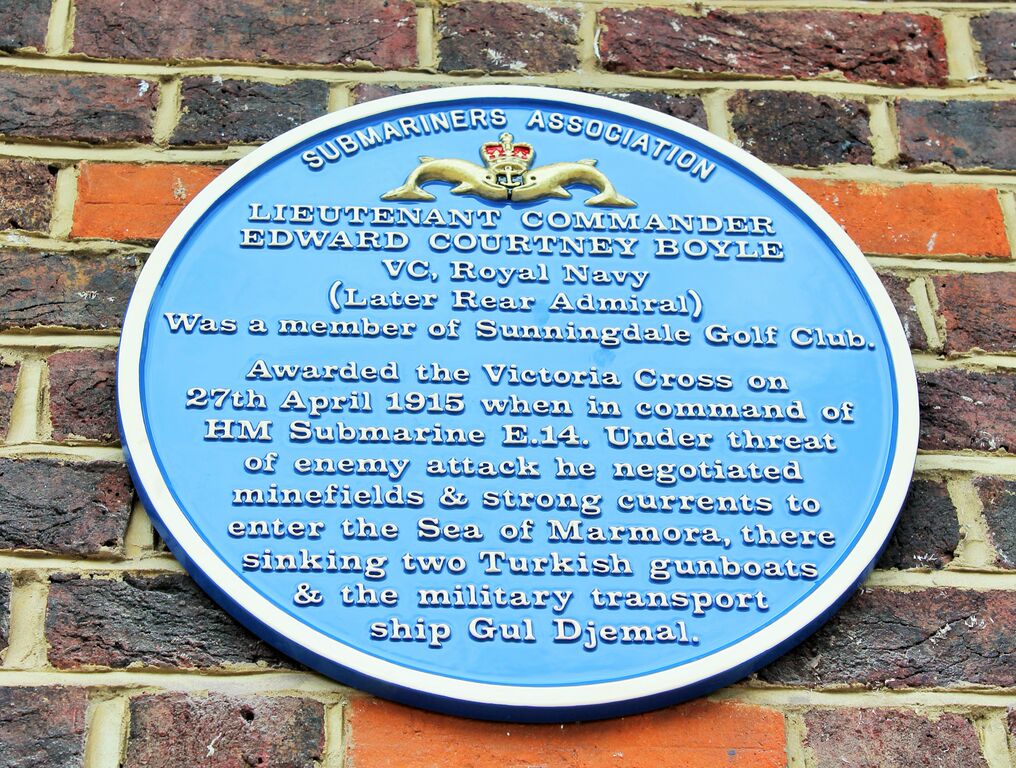
I wondered about this as I went to the unveiling of a plaque commemorating my cousin Courtney Boyle, who won the VC as commanding officer of the submarine E14, going through the Dardanelles and into the Sea of Marmora in 1915. It went up, thanks to the Submariners Association, on the wall of Sunningdale Golf Club last weekend, which is where he spent most of his last years.
I have submarines on both sides of my family, so it was a moving occasion (I'm also called Courtney myself, so I am a kind of walking memorial).
Two reasons floated into my mind during the commemoration why this matters.
First, we start regarding what comes from over the seas with fear and trepidation, though our forebears were at home there and often came from there themselves.
Second, the Royal Navy has a powerful tradition of informality, a Nelsonian strand of disobeying orders. It is the senior service and it would be a pity to lose this vital, energetic understanding that sometimes, to make things work, you have to do it in your own way.
One of the legacies of the Blair years is that we began to regard ourselves, perhaps for the first time in our history, as primarily an army nation. Perhaps it isn't a coincidence that this coincided with the iron, regimented straitjacket that have rendered so much of our public services so much less effective.
You can find out more about Courtney Boyle, E14 and the forgotten naval side of the Dardanelles, in my book Unheard, Unseen.
Subscribe to this blog on email; send me a message with the word blogsubscribe to dcboyle@gmail.com. When you want to stop, you can email me the word unsubscribe.
September 14, 2015
Time to dump the Labour way of campaigning
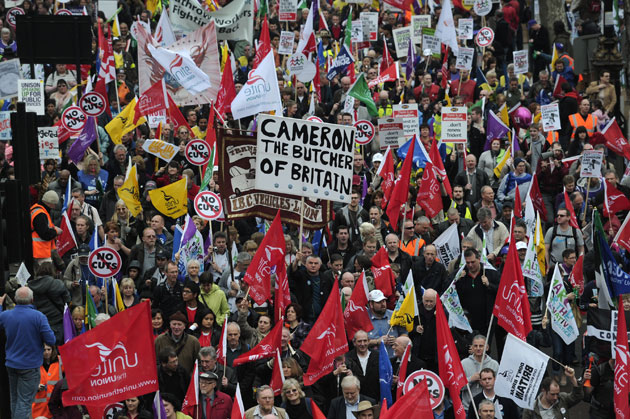 Jeremy Corbyn's election as Labour leader has an end-of-era quality about it, perhaps the first Labour leader with something to say for a good two decades, whether one agrees with him or not.
His first public pronouncements have a strange Miliband-esque quality about them, as if the rhetoric is so much about 'change' that you forget to wonder what kind of change he is talking about, and end up none the wiser.
Most of his reported positions seem pretty retro so far: they remind me of my university days. On the other hand, he does have a number of important contributions which are genuinely new - more on that another day.
The central political problem for the UK - because this affects everyone - is that Labour is too big to kill off, but too futile to take power. Their main role has been to prevent anyone else taking authority away from the Conservatives, and their main policy role - at least under New Labour - has been to prevent new thinking seeping dangerously into the mainstream.
I think I agreed with every word of Martin Wolf's analysis in the Financial Times:
"Land-use planning and land taxation, housing, the finance of local government, taxation of inheritance and the structure of taxation — all cry out for reforms. So does the operation of essential public services, as Mr Blair realised. I would argue, as well, for stronger policies in support of innovation and a focus on the huge risks to the economy of its dependence on soaring private debt. Yet in practice an opposition arguing for such radical reform appears inconceivable. If it were to be radical in such a way, it would probably be as unelectable as Mr Corbyn’s version. It is depressing to accept that a complacent government and an unelectable opposition are what the country must now expect..."
For many people who regard themselves as basically on the Left, as I do, much of what passes for Leftish dialogue is pretty infuriating.
It is always demanding that each and every dysfunctional institution has to be 'defended', though they are so often ineffective or overpaid or both.
It is always analysing who should be 'offended', as if language provided the real threat to civilisation rather than disastrous economics and greed - and grinding out the rage on Twitter or below the line comments in the Guardian.
It is deeply conservative, forever on the back foot, defending the social democratic compromises of the past, but knitting together no practical visions of the future - and especially not economic ones.
So often bitter, so often cross, so often offended, so cynical, so obsessed with the pointless images of generations gone by - meaningless slogans and chanting demonstrators. Yes, I find it hard to warm to the Labour Party's Left, any more than I can warn to their indefensible Right.
But there is one problem above all that we really need to tackle, because it is liable to get seriously in the way of cross-party co-operation. We have to change the way Labour campaigns on issues.
Labour takes up issues because it makes them more electable, not to make things happen. Quite the reverse, the best outcome in a Labour campaign is to lose - and to make people angrier with the government. They don't take up issues to change the world.
That is the debilitating death-grip which Labour holds over the third sector. It means our campaigners have not learned to win, as American campaigners do. Our campaigners model themselves on journalists - they aspire to making a big fuss and getting the opposition to commit to change after the election. American campaigners model themselves on lawyers. They don't just sloganise on demonstrations, as if this was the October Revolution - exercises in futility - they change the world.
It explains just some of the hopelessness and cynicism about campaigning on the Left. The great campaigners, like Des Wilson, campaigned to win. If the Left is going to recover, they are going to have to realise - for more reasons that one - that Labour may never be in government again. We can't wait around for them any more.
If we're going to campaign, we must campaign to make things happen. If we campaign, it must be the antidote to futility, not a cynical embedding of it.
It means an end to the pointless symbolism of revolution. It means consciously and deliberately shifting to campaigning by doing stuff, by making things happen, by encouraging everyone to realise that - even in the way they spend their money - everyone is more powerful than they think.
Subscribe to this blog on email; send me a message with the word blogsubscribe to dcboyle@gmail.com. When you want to stop, you can email me the word unsubscribe.
September 10, 2015
Institutions are like ancient trees
 Isn't it peculiar that, the more the government machine talks about 'evidence-based' policy, and the more the political parties follow suit, the more technocratic they become.
Find out more in my original attempt to intervene in the debate about evidence-based policy (if there is one) in my book The Tyranny of Numbers.
There is now a great deal of evidence about the impact of trees on the lives of people living in cities, mainly from Dutch research (no coincidence there since the Netherlands is probably the most densely populated nation in Europe). This is especially so for people with mental health issues. Trees keep people calm, help them to recover from illness faster. It isn't just a nice but irrelevant aspect of public policy: people need green space around them to stay sane.
One glance at the rising concrete blocks around East Croydon is enough to demonstrate how little this means to policy-makers. Where are the children going to play? Where are people going to see anything green?
The sad truth is that, for all their talk of evidence-based policy, many government institutions seem stuck in the technocratic 1940s, when your average architect swallowed Le Corbusier's mantra that a house is a machine for living in and little more. We are building in the next generation of soulless suburbs and the mental difficulties that will inevitably follow.
Yet when you see a tree that is really ancient, there is a kind of frisson - a connection with the past - that goes way beyond the evidence. Take for example the ancient mulberry tree in Bethnal Green (thank you, Sally!). This is what the website Spitalfields Life says:
"Imported from Persia by James I in the sixteenth century, it is more than five hundred years old and once served to feed the silkworms cultivated by local weavers. The Mulberry originally grew in the grounds of Bishop Bonner’s Palace that stood on this site and an inkwell in the museum of the Royal London Hospital, made in 1915 from a bough, has a brass plate engraved with the sardonic yarn that the Bishop sat beneath it to enjoy shelter in the cool of the evening while deciding which heretics to execute. My visit was a poignant occasion since the Mulberry stands today in the grounds of the London Chest Hospital which opened in 1855 and closed forever last April prior to being put up for sale by the National Health Service in advance of redevelopment..."
Ancient trees have a kind of mystical quality about them, connecting us - via a living thing - to the distant past.
I have no problem with institutions being closed, if they are the wrong ones. But institutions are living things, and they make civilisation possible, in both cases just like trees. And neither trees not institutions are really safe in the myopic and data-driven worlds of the NHS estate departments.
Subscribe to this blog on email; send me a message with the word blogsubscribe to dcboyle@gmail.com. When you want to stop, you can email me the word unsubscribe.
September 9, 2015
Don't devolve drone decisions to the data
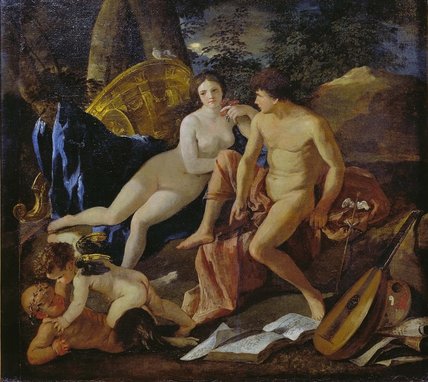 I went to the Dulwich Picture Gallery to see the Ravilious exhibition over the summer (very good it was) and happened to catch my eight-year-old fiddling with their online comments machine.
Creeping up behind him, I saw he had written: "I likd the nacked womens (sic)" (the gallery is known for its acres of seventeenth century flesh). I chuckled a little about this until it struck me that he would have had to sign in with an email to write a comment.
"What email did you use?" I asked, and rather hopefully: "Did you make one up.?"
"It's OK, Daddy," he said. "I used yours."
I mention this slightly embarrassing blot on my otherwise untarnished online record as a way of saying that not everything you find online is necessarily what it seems. It may be, of course, but often it isn't.
So if commenting on 'nacked womin' had somehow some kind of terrorist significance, and I had been in another country at the time, I might have expected to be killed by an RAF drone without further ado.
This is not to cast doubt on whether the extra-judicial execution just carried out by the government in Syria was necessary. It probably was. Certainly, if the security services had known about a threat to the Queen and had failed to act, they would have deserved to have been bundled out of office.
But two things still worry me. Since John Gummer fed a beefburger to his daughter to prove how safe they were, at the height of the Mad Cow Disease epidemic, and since Tony Blair talked about the 45 minutes before Iraqi weapons of mass destruction would land, I have been sceptical about what successive governments have told me.
I believed both those assurances. I now believe very little.
The second thing is the sheer inaccuracy of data and online evidence. So if we devolve our decision making and intelligence to machines, robots, drones and data, then mistakes will be made. If we start bombing people on the basis of data, rather than knowledge, we will eventually reap the whirlwind - as the Americans appear to be doing with their drone strategy.
Years ago, I remember a Punch cartoon with an NYPD plane flying over New York City and dropping bombs. The policeman in the cockpit is saying: "Don't worry, we're bound to be hitting someone who's breaking the law."
What a good thing our own government would never behave like that.
Because we are already rendering our institutions stupid by automating the wrong functions. The purpose of government data policy is too often just to replace professionals, not to improve services. That is one reason why so many of the cost-cutting has led to increased costs, but that's another story.
Data looks objective but, all too often, it depends on definitions which are endlessly malleable. Or worse, it depends on some kind of programmer making these lines of delineation on the fly. One of the most serious defects of public service policy is the over-reliance on wobbly, tweakable data which is busily deluding those at the top of every hierarchy. For some reason, governments are more deluded by data than almost anybody else.
Let's just make sure that the most important decisions - like when to raid and when to pull the trigger - don't get automated in the wrong way. Not just for their sake, but for ours.
Subscribe to this blog on email; send me a message with the word blogsubscribe to dcboyle@gmail.com. When you want to stop, you can email me the word unsubscribe.
September 8, 2015
Big versus small: whose side is Corbyn on?
 I have no idea whether Jeremy Corbyn will transform the great lump we know as Her Majesty's Official Opposition. I know he deserves to - though I expect the energy he has brought to the campaign is as much as a surprise to him as it is to everyone else.
But of course his arrival on the political frontline is a bit of a headache for the Lib Dems, hence the peculiar series of anonymous briefings which Caron Lindsay got exercised about on Lib Dem Voice. Could the Lib Dems really try to outflank Corbyn on the Left? Well, that really begs the key question here - what does it mean to be Left now?
That is going to be the issue between the two competing parties of the Left, even sharper if Corbyn wins. And don't tell me we can solve the problem by "sticking to the centre ground" either. Where is that, exactly, if the definition of 'left' is in dispute?
What is left unsaid, and perhaps implied in this flurry of nerves, is that - actually - Corbyn is rather attractive to some Lib Dems. Partly of course because he's such an outsider, which always appeals to the Liberal romantic spirit. Partly because what he says is so old-fashioned that it appears radically daring.
But let's not beat around the bush. In two very important ways, Corbyn is not talking Liberalism. Maybe we should spell these out, because they may provide a clue about the way forward.
First, he isn't interested in diversity in the Liberal sense. He is talking diversity in the socialist sense, which is a demarcation of uncrossable boundaries between identities - if you are Scots, you can't also be English. If you are gay, you can't really see the world through the eyes of the opposite sex and vice versa.
This is postmodernism and I don't think it is how Liberals think. There is no space for multiple identities - true diversity - in the world of socialist puritans. No idea that you could be English and Scottish and from Sussex and European and carry dual nationality somewhere else, and understand all of them. That is diversity. It is the very opposite of identity politics.
It is also increasingly urgent, as the economy drives out diversity everywhere. Fewer energy suppliers, fewer seed manufacturers, fewer farmers, and all the time we get more and more dependent on the most powerful of them.
And if you don't agree with me, try having a fight with Google and see who wins...
Which brings me to #2. If the twentieth century was spent working out the conflict between capital and labour, between public and private, the twenty-first century seems to be gearing up for a titanic clash between big and small - big institutions against small ones.
It is a battle over the meaning of efficiency, about whether economies of scale outweigh diseconomies of scale, or vice versa. It matters - and it matters to me particularly because it puts the Liberal critique of institutions centre stage again.
Now, ask yourself, whose side would Corbyn be on? The point is that he is on the side of big against small. His rhetoric, and what we know of his policies, imply vast, amorphous and slightly tyrannical institutions, public ones it is true - but really I see very little distinction in practice between the public monsters and the private monsters.
They are all like dinosaurs, self-serving, gently eating their own tails.
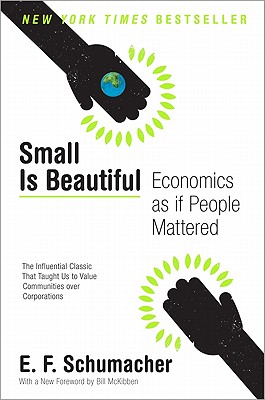
Now, here's the crucial bit. Ask yourself, if Corbyn was genuinely interested in diversity - and if he could swap his giantism for something smaller, and therefore more beautiful (and effective), would he still be a socialist? The answer, it seems to me, is that he would be a Liberal. And he isn't.
I know that there will be problems for Lib Dems puzzling out how to deal with a far left Labour Party. It threatens a fearful re-run of the 2015 election, as fearful floating voters hold their noses and vote for the status quo. But there will be one great benefit: Liberals will have to think a bit more clearly about what Liberalism is.
Subscribe to this blog on email; send me a message with the word blogsubscribe to dcboyle@gmail.com. When you want to stop, you can email me the word unsubscribe.
David Boyle's Blog

- David Boyle's profile
- 53 followers
David Boyle isn't a Goodreads Author
(yet),
but they
do have a blog,
so here are some recent posts imported from
their feed.

