
What's air pollution and depression got to do with it? A lot.
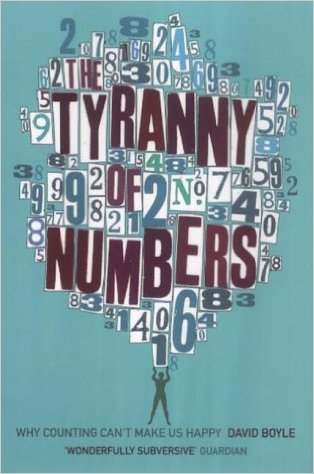 I have mentioned before, perhaps too much, my conversation in 2000 with a prominent minister in Tony Blair's cabinet about my book
The Tyranny of Numbers
. I told him I was writing a book that was sceptical about numbers and counting.
I have mentioned before, perhaps too much, my conversation in 2000 with a prominent minister in Tony Blair's cabinet about my book
The Tyranny of Numbers
. I told him I was writing a book that was sceptical about numbers and counting.But what else can we do, he asked? I remember his look of confusion. It was as if he would have liked to approve but just couldn't.
Since then the controversy about targets has almost left me on the winning side, yet somehow without anyone taking on the basic argument about measuring the unmeasurable with numbers.
It's a paradox, and that is a difficult idea for data-crunchers. How can the data say two opposite things at once? Impossible!
So was delighted to read a prominent and thoughtful article which took the argument further in the Guardian on Saturday, by the writer Andrew Smith, who applied the same argument to the way in which IT systems have so persuaded us that the numbers they generate are real that we have begin to lose the possibility of scepticism about it.
It is worse than that. This is what he said:
"So, converting the world into numbers in order to process and make decisions about it: what does this remind us of? That’s right. We are becoming our computers. An idea that might sound shocking, but will come as no surprise to anyone familiar with the work of the media philosopher Marshall McLuhan..."
That is the frightening side of what is happening to us. We are losing the ability to understand that there is anything beyond the data, any grey areas of ambiguity. We still have a vague sense - especially those of us who don't work in Whitehall or big corporates - that there other realities. But will we understand that still in a decade's time?
Or will we read Dickens' Hard Times with mounting incomprehension - what has he got against Thomas Gradgrind, for goodness sake? He is just measuring success in education...
It is that impoverishment of our intellectual wealth that is the real problem. And in the meantime there is a more immediate problem: those who run the world are more in thrall to the data than anybody else - and consequently have lost the ability to make things happen. They suffer more than they should from unintended consequences, because they don't understand ambiguity. They don't understand human beings.
Unless of course, as Andrew suggests, human beings are also changing.
It's a problem. So stick with me on this: lets keep open to the little boy's question in The Emperor's New Clothes. yes the data says the school is good, but are the children being educated? Yes, the data says the hospital is working, but are the patients getting healthier? Yes, the data says we're getting richer, but are we getting happier?
Richer but not happier? Sorry - brain doesn't compute. You're talking gobbledegook - or so they will say.
This was the crux of the article: those who can no longer distinguish data from reality already are yesterday's economists. They are clever people, but unfortunately pursuing one single bottom line number renders you stupid and ineffective.
And by 2025, if anyone runs across this maverick blog post, let's hope they don't have it evaluated - because 623.6 and I'm afraid I am by definition insane and must be carted off for failing to understand the data. Surely everyone is getting richer aren't they? What's air pollution and depression got to do with it?
AND! My ebook Jerusalem: England's National Anthem is on special offer for 99p this week. There is also a conventional print version here.
Subscribe to this blog on email; send me a message with the word blogsubscribe to dcboyle@gmail.com. When you want to stop, you can email me the word unsubscribe


No comments have been added yet.
David Boyle's Blog

- David Boyle's profile
- 53 followers
David Boyle isn't a Goodreads Author
(yet),
but they
do have a blog,
so here are some recent posts imported from
their feed.

