
Jane Brocket's Blog, page 51
October 19, 2011
what the dickens ii
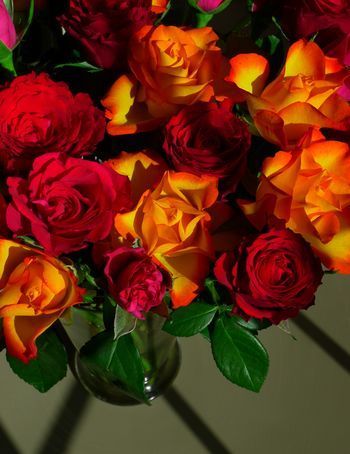
[supermarket roses in the kitchen]
Just so you know, I am standing on a metaphorical soapbox as I write this.
Last night I went to hear Claire Tomalin talk about Dickens, the subject of her latest biography. The event (part of a publicity tour for the book) was at the Southbank Centre which, it turns out, is quite the place to be on a Tuesday evening in October. The place was buzzing, and the room in which the talk was held was full; I admit I was quite surprised to see how many people had turned out for Dickens, as I have often wondered just how many people read the novels these days. It seems to me that there is a great appetite for the TV and films versions - none of which I can ever watch with much enjoyment as nothing ever comes close to the characters and scenes Dickens conjures up in your imagination. It's ironic really, that I find they are all too odd and exaggerated to work well on screen, and yet the Quilps and Squeers and Mrs Jellybys and Gamps are all brilliantly recognisable in the theatre of the mind.
But this was a talk about Dickens' life and it made me realise again that it's old, well-trodden ground which doesn't always yield satisfying or conclusive results. I felt distinctly uneasy when the discussion with questions from the audience turned to unknowable subjects such as Dickens' view of his mother, his sexual relations, his levels of self-awareness. It was uncomfortable listening to the conjectures about the private life of someone who died 140 years ago (I get even more disenchanted with such discussions when the subject is Shakespeare). It's strange that we want to have the answers because these are things we feel we ought to know in order to make a better judgement. Goodness knows what we would find out if Dickens were alive today; the public sense of entitlement to knowledge about a writer's private life exceeds all reasonable boundaries and I doubt he would emerge smelling of roses, no matter how well-behaved he was in reality.
But does all that really matter? When I was studying English literature at school, it was a period when the academic fashion was to disregard the life and concentrate on the work. So we never knew anything about DH Lawrence's torrid love life, we just about knew of Keats' consumption, the link between Ted Hughes and Sylvia Plath was never mentioned, and we were never even told that Thom Gunn was gay. I think maybe the pendulum had swung too far at that time as I agree some background knowledge is useful, but I still feel it's the work that counts. Even Claire Tomalin admitted that she knew the media would concentrate on Dickens' domestic arrangements (yawn) at the expense of the whole picture, and had prepared herself for the inevitable questions.
I also think all this focus on the life is a way of deflecting attention from difficult, demanding books which contain so much more that is of relevance today than the biography (unless someone suddenly comes up with a cache of letters or a hidden manuscript, the story is pretty much closed). The books are vast, fluid, far-seeing, amazingly relevant yet at the same time utterly Victorian, and they deserve a good, new discussion for our times.
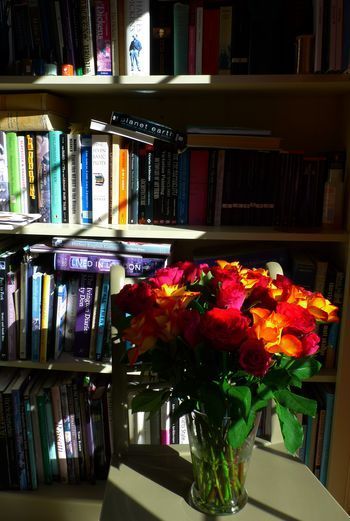
And now I'm jumping down off my soapbox and going to put the kettle on. (Unlike Mrs Gamp, I don't keep spirits in my tea pot, though.)
[Dickens is kept on the bookshelves in the kitchen, with many of my 'best' books on baking and cooking, Antarctic exploration, the Pre-Raphaelites, Gee's Bend quilts, and Stanley Spencer. A heady mix.]


October 18, 2011
north and south
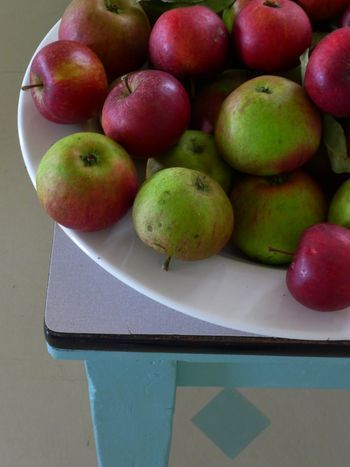
One of the things I like most about living in the south of England is the sunshine. I honestly don't think Keats could have written his Ode to Autumn in Stockport (where I come from). There's not much in the way of 'maturing sun', 'warm days', and 'rosy hues' up there at this time of year, but I think poets with a bleaker vision such as TS Eliot and Larkin would have had a field day with the place. It's grey and damp - so damp that it was ideal for making the felt hats for which Stockport was once famous. (It now has a hat museum.)
It's hard to believe that 200 miles can make such a difference. But anyone who has driven north up the M6 will know that as soon as you get to Staffordshire it always starts raining, the temperature drops, and you need to put on (extra) socks and a cardigan, and find an umbrella in preparation for your arrival. The only time I can remember Stockport in full sun was the summer of 1976, but then the whole of the country was basking that summer.
When I moved down here, I was amazed by the difference in climate. It's just warmer and sunnier, and although we get a good ration of greyness, it's nothing like the seemingly immovable, leaden greyness of Stockport. The last few days bear out why I like the cissy south so much: we have long beams of golden light that show up the spiders' webs and dancing dust, an explosion of nasturtiums and late roses, deep purple grapes and fiery red chillis, and a true feeling of autmnal mellowness.
I'm not saying there aren't many good things about the north; the sense of humour, the brisk, no-nonsense attitude, the fish and chips, the way everyone says 'laff' and does it a lot, the art galleries and theatres, the hills and valleys, are all part of my growing-up years. But these days I'm a southern softie when it comes to the weather, and as I sit here in the Keatsian sun with late flowers outside in the garden, I know I'm still northern in my soul but very southern in my skin.
[I should have said yesterday that the reason the quilt was in a cupboard is that my publishers ask me to keep projects from books in good order for at least a year after publication so that they can be used for events or loaned out to shops and exhibitions. Otherwise, as one of my 'best' quilts (in other words, favourite) it would have been out and about a long time ago.]
October 17, 2011
cover model
Do you remember when you were little, how you used to have 'best' things? Not best as in 'Sunday best' or 'best shoes', but as in 'best' doll, 'best' troll, 'best' sweet, 'best' colouring pencil. In other words, the one you liked most, the one that felt special and had to be kept in a safe place. The Hydrangea Quilt is still one of my 'best' quilts and I keep in a cupboard, though goodness why. When I got it out yesterday to photograph it on the autumnal afternoon sun, I realised that the problem with anything 'bes't, is that you tend not to enjoy it as much as you should because you are so worried about spoiling it.
This is the quilt on the front cover of The Gentle Art of Quilt-Making. It was inspired by the colours of hydrangeas - all shades of pink and plum and turquoise and inky blue - as seen in profusion in Normandy and Brittany, and in single specimens in suburban gardens in the UK.
It was a chance to play with a different colour scheme and to use some Japanese fabrics which were just outside the usual shades of blue. I also used some very large designs which cut up brilliantly; one Philip Jacobs' floral design gave three different types of squares when cut fussily.
I'm delighted that the quilt is featured in issue 7 of the incredibly successful Mollie Makes magazine in a photo I took at the amazing location we used for many of the quilts in the book. I am so impressed with this publication; it would definitely have been my 'best' magazine (on a par with Jackie and later Petticoat) if only it had been out in those days.
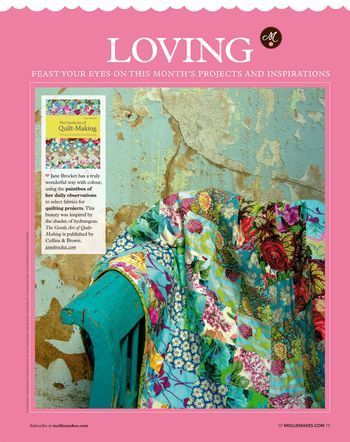
So the quilt is now out of the the cupboard, and is staying out where I can see it. After all, it's the only superstar cover and magazine model quilt we have, so I might as well flaunt it. And it won't be used just for 'best'.
October 12, 2011
capital cake: the v&a café
9. The V&A Cafe
The V&A shot itself in the foot some years ago when it ran its 'ace caff with quite a nice museum attached' poster campaign, especially when it turned out that the caff wasn't very ace at all. All that space, all those uniquely fabulous rooms, all those visitors, yet the catering was bafflingly awful.
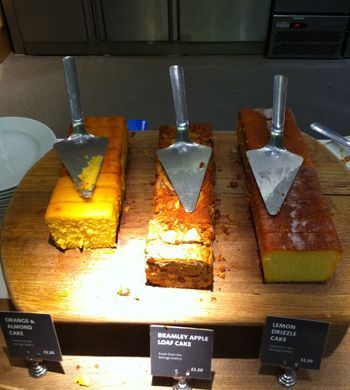
But things have changed, and nowadays it's possible to break up a visit to the ace collections and to rest weary museum-legs in mind-bogglingly beautiful rooms with a decent cup of tea and a slice of fresh, well-made, interesting cake.
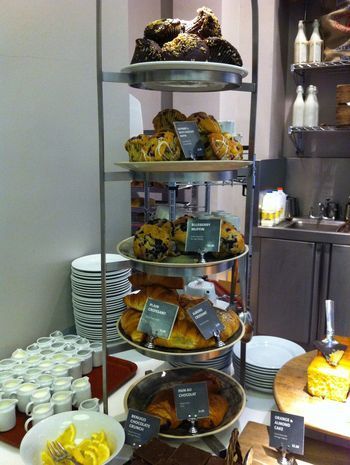
The catering has been taken over by Benugo, a company which hasn't yet reached large empire proportions. It has created what is now almost an entire 'eating wing' and the service area has been transformed into a bright, airy, smart and modern-looking place with tasteful and tasty displays of temptingly good-looking cakes, scones, meringues, cookies and muffins (as well as plenty of healthy and savoury options).
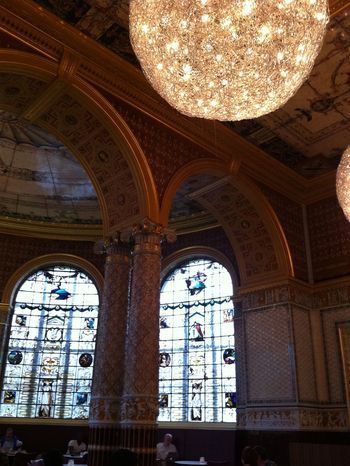
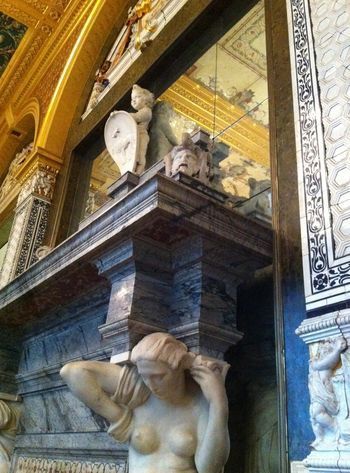
Armed with your tray, you then take your pick and choose your room, because the real icing on the cakes at the V&A are the spectacular surroundings. Leave behind the modernised white area and plunge instead into the time-warp of the three beautifully maintained Victorian rooms. Choose from the rather dour, serious, but absolutely authentic Morris Room, the more cheery, blue-and-white tiled Poynter Room, or go for the all-out over-the-top Gamble Room in the middle which is like a glitteringly-lit Constantinople railway station waiting room whose every available surface is covered with decoration (see here).
The very English slices of loaf cake (Lemon Drizzle, Bramley Apple, Orange and Almond, all £2.20) might seem pale and bland by comparison to the decor, but they hit the cake spot. So too do the classic cakes (Coffee and Walnut, Victoria Sponge, Chocolate Fudge, all £3.50) and the various scones (£1.80) with nicely presented and chilled pats of butter and tiny bowls of clotted cream (extra cost). There are concessions to modern fashions with millionaire's shortbread (£2.20) and Portuguese custard tarts (£1.80), but the V&A has always been a supremely eclectic place, so it's good to see a similar approach to catering.
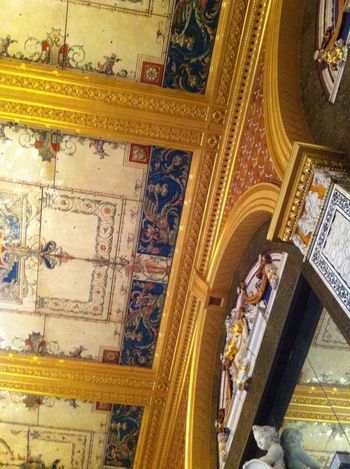
At last, there are plentyof good reasons for sitting down in the famous refreshments rooms, rather than just passing through them.
Cake: £2.20 - £3.50
Cromwell Road
London SW7 2RL
Tel: 020 7942 2000
Website: www.vam.ac.uk
Open: Sat to Thurs 10.00 – 17.15, Fridays 10.00 – 21.30 (closed 24, 25, 26 Dec)
And a bigger slice of culture: the V&A is across the road from the Natural History Museum and round the corner from the Science Museum. It's not far from the Albert Hall and the Albert Memorial, the Serpentine and Serpentine Gallery, Imperial College, and Kensington Palace.
October 10, 2011
what the dickens
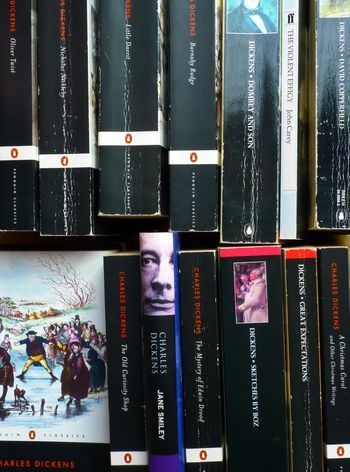
I only discovered Dickens a few years ago, having been seriously scared by the opening chapter of Great Expectations when we had to read it at school, and then not understanding a word of the rest of the book. So before I found out for myself what Dickens really had to say, I was all too familiar with the stock stories about him being the embodiment of Victorian good cheer and sentimentality, the super-energetic father-of-ten, the creator of lots of jolly characters and a fair few soppily angelic women, the stage-manager/entertainer, the man whose main message was often reduced to 'drink punch and enjoy Christmas'.
Now that I am better informed, I am quite surprised that these caricatures and clichés are being trotted out once again in the newspaper reviews of, and articles about, the two new biographies of Dickens by Claire Tomalin and Robert Douglas-Fairhurst. It's really just the same old, same old stuff, but spiced up for modern audiences with a good dash of 'shock-horror-Dickens-had-a-secret-mistress-and-treated-his-wife-badly' (because, goodness knows, when a man writes a whole bookshelf of masterpieces, that's actually all we are expected to be interested in.) The mistress, Nelly Ternan, has been known about for many years, so it baffles me that it's this aspect of his life that is taking up so much space in reviews. What about his phenomenal imagination? What about his incredible output? His amazingly inventive vision? His creation of an enormous cast of strange and often very unlovely characters? His unique sense of humour? His wonderful ability to create word-pictures that stay in the reader's mind for ever?
And another thing, while I'm on the subject. Dickens' books are very far from the jovial, sweet, happy-ending stories of the popular imagination. I was reminded time and again when reading them, that he can be a very dark and sometimes cruel and subversive writer which adds fantastic depth, shading, and contrasts to his books. He self-censored very heavily and wanted to be seen as a family man and family writer, but the novels and journalism are nevertheless full of grotesques, oddballs, villains, and sinister characters and underhand doings. It's these things that makes his books so spectacularly original, not the supposed jollity and Victorian fireside warmth. I suppose it's easier to sell books with sex (Dickens', not his characters') and to subject him to a modern, morally dubious trial by media, but I really do think there's much, much more to him than is he given credit for in the latest fallback retelling of the Dickens story.
*********
I am reading both new books at the moment. While Claire Tomalin's is very readable, and thorough yet brisk, it remains pretty conservative. As though it's the official 2012 commemorative biography (the year of Dickens' bicentenary). Robert Douglas-Fairhurst's book is more experimental, but sometimes loses me in its underlying 'what if' idea. 'What if' isn't always the most productive line of questioning after the event, I find.
For my money, there are three writers who look at Dickens' work (and life) in illuminating ways that do justice to Dickens' amazing imagination: GK Chesterton, John Carey, and Jane Smiley. They did more than any doorstopper biography or erudite journal to open up the Dickens universe to me. As did Adam Roberts.
October 9, 2011
not quite right
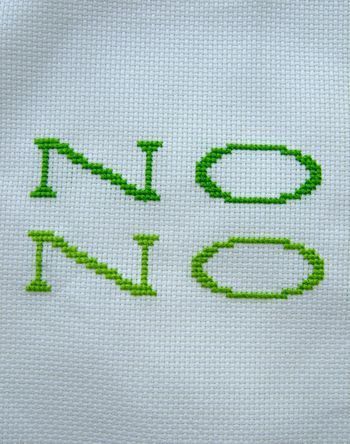
You know how it is. You make or buy something, bring it into the room you had in mind for it, and it just doesn't look right. You leave it there for a day or two, and every time you go back into the room, it's wrongness is staring you in the face. You wonder if it's you or the thing. A day or two later and you're past caring. It's not quite right and it has to be moved.
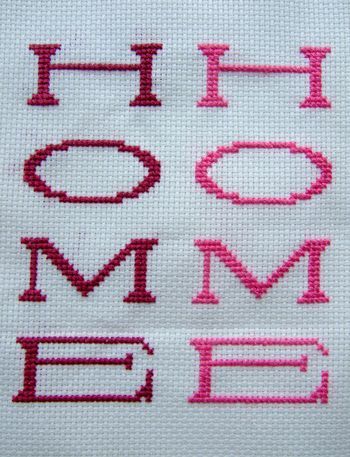
This is what happened with the cross stitch. So I had to rearrange it.
I realised that less is a lot more when it comes to lettering, and I love the designs of these lettersbut don't really care to much for messages and meanings. In fact, they could say anything or nothing and it wouldn't matter, as I just like their shapes.
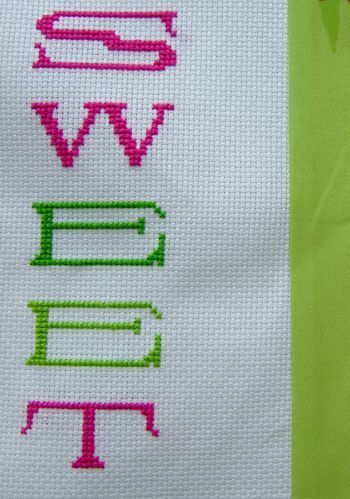
I've been looking for a Russian alphabet to do in cross stitch, but so far haven't found one (the ones I have come across are C19 and therefore slightly different or are actually Ukrainian rather than Russian). They would look particularly striking in this style, with all the little tails and twiddly bits.
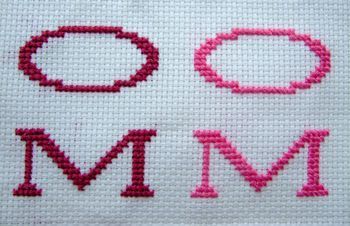
Now the cross stitching here has been simplified, it is looking less wrong, more right to my eyes. That's the kind of girl I am.
[I'm sorry this means your very nice comments were also rearranged; it's a shame I can't import them to this post.]
October 6, 2011
gno, gno
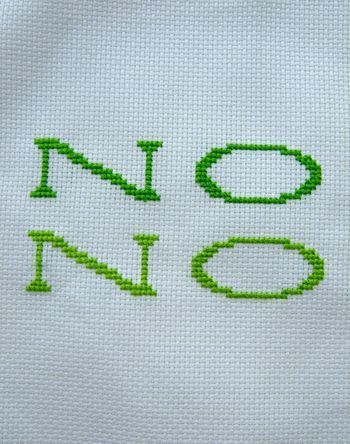
Oh, gno. Gnome, sweet gnome. Spare me.
I told you I can't do sensible cross stitch. This was the obvious follow-on, partly for fun but mostly to use the fantastic Heather Ross gnome design. This is out of print now, but a while ago Spoonflower were offering this and her little Wildflowers design as 'print on demand' fabrics.
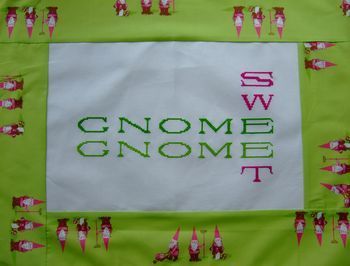
'Sweet' isn't word I often use, but it does suit these fabrics and, especially, the gnomes which don't look at all grumpy or malign; they are definitely first cousins of the common garden gnome.
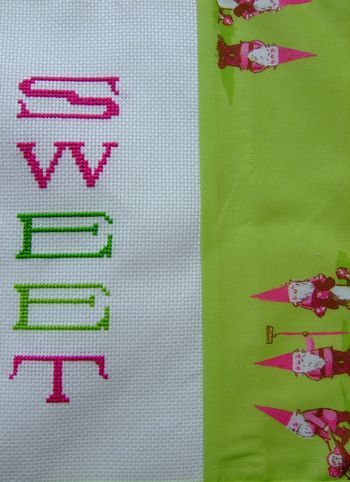
It's the same French alphabet which is probably far too sophisticated for such kitsch surroundings, but I like the idea of the medium not necessarily being the message.
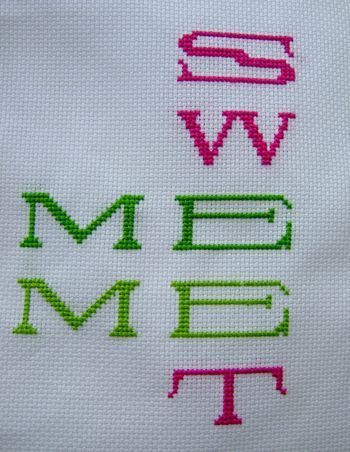
The layout of letters afforded plenty of amusement while stitching (each piece took two or three evenings).
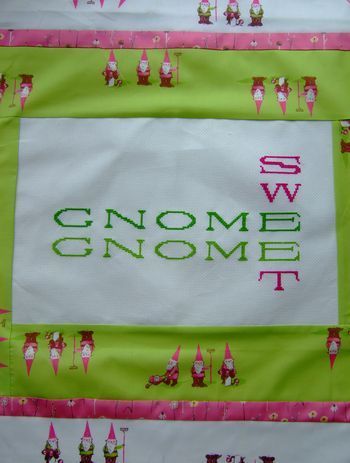
And I framed the piece with the two gnome fabrics and the Wildflowers print.
I wish I could claim this is truly gnomic but I concede that 'gnome, sweet gnome' is nothing of the sort.
October 5, 2011
wordplay
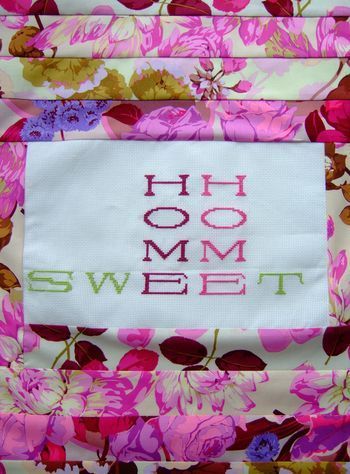
How did this happen? I don't like sentimental stuff, I don't go in for slogans or feel-good, greetings card phrases, and I'm not even that wild about cross stitch. In my defence I will say that I do occasionally like stitching bold cross stitch in bold colours, and I absolutely love beautiful letters. I also like a little wordplay, which is why I coudn't bring myself to stitch 'home, sweet home' in the normal three-line way.
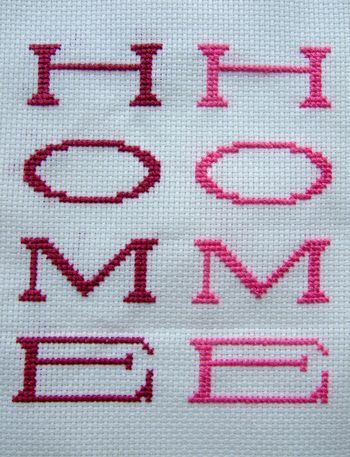
Instead I altered the layout and amused myself with a little game of letters.
So I could read the obvious 'home, home',
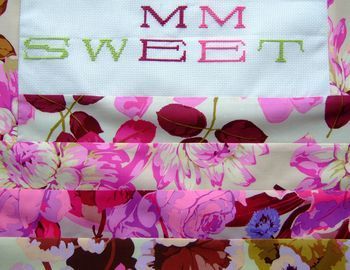
Or think sweet thoughts.
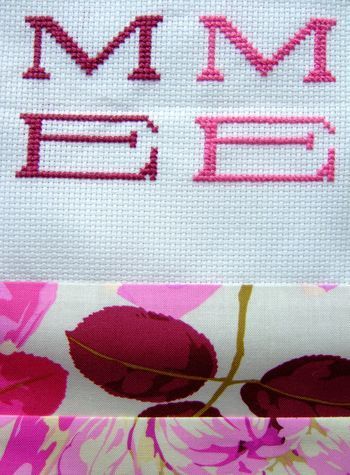
Or feel very egotistical.
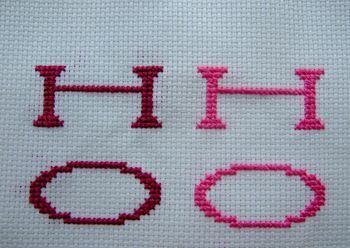
Or laugh at myself and what I was doing.
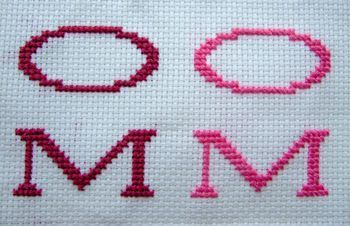
Or meditate.
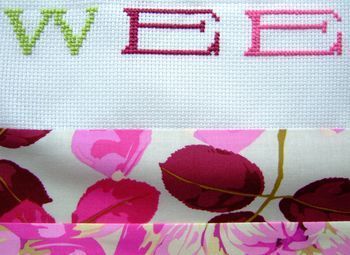
Or think small. (Ha, not what you were thinking.)
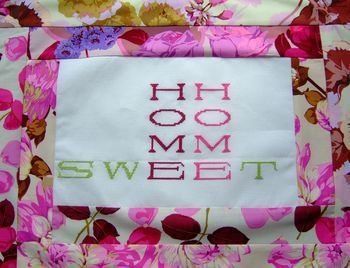
It's quite a large piece of stitching (32cm x 20cm) because the letters are 12 stitches tall and 26 stitches wide. This is done on 14-count Aida canvas with three strands of DMC or Anchor cotton, using what I would describe as a wonderful French 'department store' typeface (very similar to the lettering on the stone exterior of Au Bon Marche in Paris).
I have 'framed' it in a log-cabin quilt style using some of my favourite fabrics. Even now it's almost finished (it's going to be a 60cm x 60cm cushion cover), I don't read 'home, sweet home', I see 'hom, hom, sweet' and it makes me laugh. But the message is still very much that home is sweet, no matter how you spell it.
[Home, sweet home was very much what I was talking about Warwick Words yesterday. It was a very well organised event; I was delighted to see so many people there, and it was lovely to talk to so many interesting readers. Thank you to everyone involved, and thank you for coming. ]
October 4, 2011
blooming heck
Or 'blummin' heck', as Simon says, in what must be some sort of throw-back phrase from his youth in Humberside. Thank you for all your comments, although 'comment' is an unsatisfactory word for the wonderful feedback, stories, requests, suggestions, and commercial nuggets that were left on the previous post. I know it's been a while since I've spoken very directly here as life is very full of real life at the moment and the blog isn't the place I come to talk about that (the kitchen table is), but I am making plans to recover what I feel is missing and what I have been missing. So I am absolutely delighted that so many readers here like The Gentle Art of Domesticity enough to want to see it on the shelves again. And so is Simon, who has read every comment and has barely suppressed the 'I told you so' I do and don't want to hear.
Jane, my agent ('Agent Jane' to my editor at Lerner Books, which makes her sound much more Machiavellian than she is, which she isn't at all) is on the case as well. We are considering different routes (thanks for your advice about rights etc, which are all sorted) and, as I think the world of publishing is changing rapidly, there are now plenty of interesting options and even more to come. This, together with Cherry Cake and Ginger Beer which is another book which some of you also miss and would like to see reprinted (me, too), means Jane and I have our work cut out. Blummin' heck, we need to get cracking.
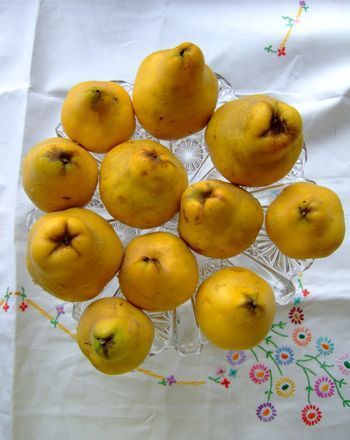
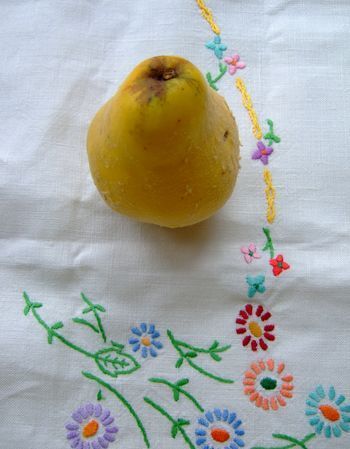
[Quinces from the tree in garden acting as the most fragrant, sweet-smelling air freshener ever. I'm not a fan of pot-pourri or spray fresheners, but would happily bottle the smell of quince and use it liberally round the house. Unfortunately, the real thing only lasts for a few brief weeks in autumn.]
September 30, 2011
gentle art of wondering
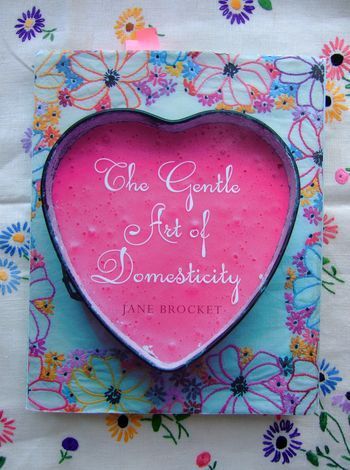
I am just as surprised as anyone else by the current price of good secondhand copies of the UK edition of The Gentle Art of Domesticity. The book is now out of print, and unfortunately the original publisher has no plans to reprint it. The US edition is still available (in the UK, too) but for this the recipes were converted to US measurements and the text was lightly Americanised (whatever your view is on this - and I have a strong one - this is simply what happens sometimes, and the decision to leave alone/Americanise does not lie with the author). It also doesn't have the marshmallow heart on its cover, and it seems that this is something many people like.
So we are wondering what to do. Do we seek a new publisher? Do we publish it ourselves? Do we leave it alone, a one-off book with quite a back-story? Do we guard the few copies we own then speculate madly on the market? Do we wrap them up and save them for the next generation or two who may choose use them to light fires to toast heart-shaped marshmallows? You may notice I say 'we', as Simon is the driving force here. He doesn't like to see the book languishing when there is a demand for it (emails, conversations, price etc tell us this is so) and wants to do something about it it. I wonder. Maybe we should have a new (ad)venture?
Jane Brocket's Blog

- Jane Brocket's profile
- 27 followers


