
Jane Brocket's Blog, page 29
January 7, 2013
back in the jug agane
Tom and Alice would quite happily get on a train to go back to university, weighed down by clean washing, toasters and new hats. But when asked if they'd like a lift and a few groceries to restock bare kitchen cupboards, of course they say yes. And we are delighted to oblige, although I have to admit I still feel too young to be the parent of two university students, and do all I can not to fall into the classic routine of asking inappropriate questions/commenting on the state of the bedroom/kitchen/bathroom when we arrive.
Family life changes all the time, but goodness me the departure to university and the fact/possibility of not seeing your offspring for up to eleven weeks is a big one. Tom and Alice rack up just two or three nights a term back at home; even though they are pretty close (same city, different institutions) they were clear that we all had to behave as if they'd gone to universities miles away, which is absoutely understandable. As time goes by, Simon and I are finding that it gets easier with each departure, and that we simply get used to them not being here, although it helps enormously to know that they are both having a really good time.
At the end of term they return in need of sleep, a full fridge and a washing-machine, fill all available space, strew shoes everywhere, gradually re-adjust to home (sooooo boring), and it's as though they've never been away. Then they are back in the jug agane. The return journey is filled with talk of what they will be doing, what they are looking forward to - and I wouldn't miss that timethe car for the sake of an afternoon at home. We drop them off with rice and pasta and spices and pastes, carefully avoid any mention of domestic arrangements, realise after five minutes that we are no longer needed, and leave. It's a quieter journey back, but it doesn't take long to separate ourselves geographically and emotionally. I'd be more worried if it did, having watched Alice go through a very unhappy first university experience.
It still feels a little odd to have twins somewhere else other than home, but this is what growing up and moving on is all about. It's what you want to happen - you want to get them launched into the world, going off and seeing us and home from afar. We feel a great sense of achievement in getting them this far without any major mishaps (always thankful for this, having seen what can and does go wrong) and we are having to separate ourselves from them, just as much as they are separating from us. It's life, it's the way it goes, it's not a surprise, but when it does happen it makes you realise you have crossed a significant line, and that it's time to look forward. And it's always lovely to see them when we do.
Plus, for a little while, we still have one at home.


January 5, 2013
ls lowry
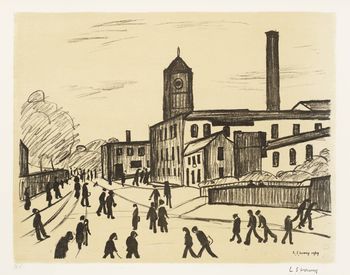
A Northern Town (1969-70)
It could be one of many northern towns, but somehow, with his firm, economical lines, LS Lowry makes it every northern town you have ever known or seen. He manages to capture all the salient details - buildings, greyness, dirt, human activity, street life - in a few strokes of the pencil.
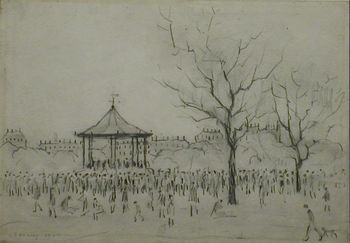
Bandstand, Peel Park
I grew up with these chimneys, immensely tall, thin, blackened church spires, red mills, football grounds (before they became stadiums), flat caps and whippets, corner shops and queues, children playing outside, terraced houses, bare trees, bandstands and boating lakes. It all now sounds cliched and very Monty Python 'Professional Northerner', but Lowry's landscapes and people were those of my childhood, and therefore completely realistic to me. Even now when we drive up to Stockport and see the viaduct ahead of us not much has changed, although the smoke and smog have gone (the grey skies remain).
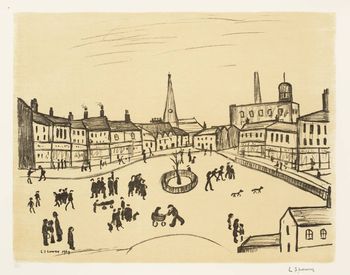
Tree in a Square 1969
I once saw a tiny Lowry drawing in the house of one of my Mum's friends. Before this, I'd only ever seen the paintings and the reproductions, never one of his drawings. I couldn't believe how much character and energy he could compress into a few lines, the fact that this piece of art was bought for very little at all (Lowry and drawing both being pretty unfashionable). He captured the essence of growing up in a northern town, and it was the first time I understood what painting and drawing from life could mean; that was me, my life, my surroundings in those paintings.
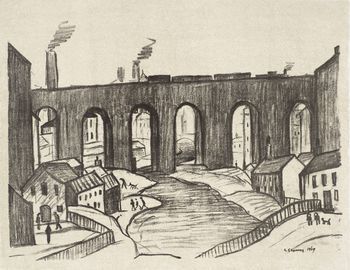
The Viaduct, Stockport 1969
And now, at last, thanks to some high-profile pressure the Lowrys will be coming south to London for an exhibition which will no doubt divide opinion and give rise to plenty of north/south commentary. The anti-Lowry arguments are utterly predictable and over-rehearsed (Brian Sewell will no doubt lead the attack), so it will be interesting to see if anything different, useful and interesting can be said in the mainstream media. I'm not holding my breath.
January 4, 2013
mary fedden
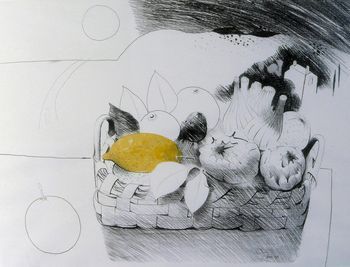
[The Lemon Mary Fedden (1976]
I look at Mary Fedden's paintings, particularly her still lifes, with great pleasure. I can't find any great meaning or depth or symbolism in them; they are simply beautiful. This quality is what causes the critics great consternation; only difficult or shocking or ugly or challenging works are generally considered worthy of attention whereas painting - and looking for pleasure - are activities deemed shallow and worthless. I couldn't disagree more, and thank heaven for artists like MF who celebrate colour, ordinary objects, daily life, and in doing so make them compelling subjects for art.
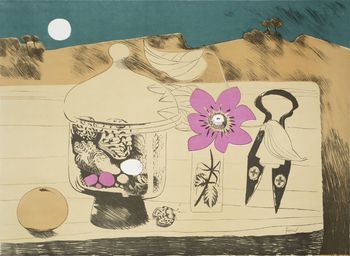
[The Pot of Shells Mary Fedden (1971)]
I've also recently read a big book on Mary Fedden (1915-1912) which is packed with paintings and drawings. The text is good, insightful, and clear but ultimately the author struggles to make a strong argument for greatness precisely because MF refused to make any claims for her art other than to say that painting flowers was one of the most exciting things in the world, and that she simply couldn't not paint. She was a self-effacing, utterly natural painter but this doesn't make for good art history/criticism copy, although it did mean she sold thousands of cards and prints.
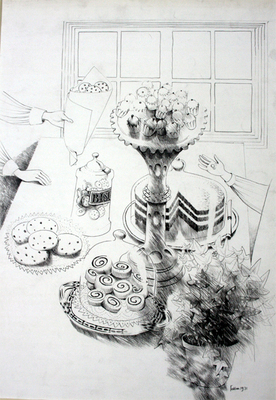
[The Cake Shop Mary Fedden (1971)]
While the book allows for a long, enjoyable wallow in her lovely paintings, it also reveals how brilliant MF was at drawing. I could happily live with several MF paintings on my walls, but a drawing or two might be even better as I know I would examine them closely all the time to see how her hand must have moved over the paper, how she filled in spaces and left other parts quite empty. She has a very spare, very delicate style (you can see how she influenced Hockney when she taught him) which is beautifully fresh and light. Sometimes she coloured in just one object (a lemon, a tulip) almost as a simple, direct colour statement, but it also throws into the relief the simplicity of the combination of dark grey pencil and off-white paper. She makes drawing look like child's play, and that takes huge talent.
January 2, 2013
rex whistler
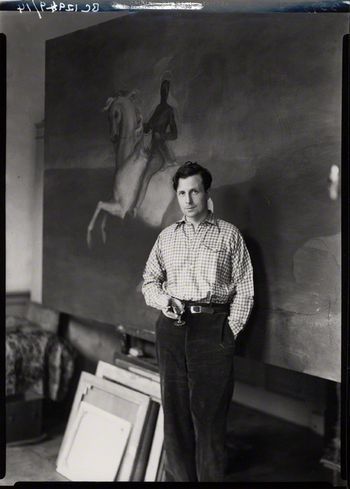
[Rex Whistler in his Fitzroy Street studio in 1936, by Howard Coster]
There are many gifts I would like to possess besides the obvious ones that continue to elude me such as tact, piano-playing, and successful egg-poaching, but above all I would love to be able to draw. If I could draw, I could move onto painting, but without drawing it would just be splashing about with colour. Every artist I admire could/can draw beautifully (I'm thinking immediately of Stanley Spencer, David Hockney, Van Gogh, Mary Fedden, Quentin Blake, Ford Madox Brown), but I've never envied anyone their drawing skills as much as I now envy Rex Whistler (1905-1944) his phenomenal - almost magical - ability with pens and pencils.
I was given the huge, richly illustrated new book about RW for Christmas, and just last night finished it with a feeling of enormous sadness due to the fact that his tremendous talent was lost in the Second World War. He died at the age of 39, had accomplished a huge amount, but never achieved the level of serious recognition he deserved. It seems his fanciful, witty, dandyish C18 style was seen as lightweight, particularly as murals (an art-form funded by rich patrons creating unique interiors in grand houses), theatre design and illustrations were his stock-in-trade before the war.
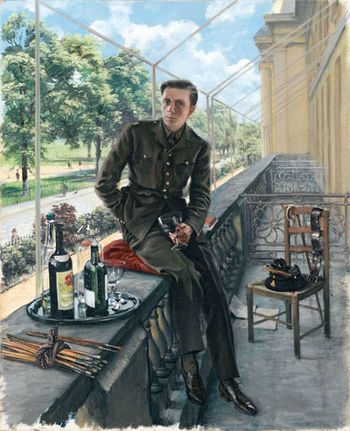
[Self-portrait in Welsh Guards' uniform (1940) Rex Whistler]
However, when you read about his drawing genius, his incredible recall of places and buildings, and his fantastic imaginative landscapes, it's clear that he was a quite unique artist who created an awe-inspiring body of work. But what I enjoyed most was reading about his facility for drawing. He carried a drawing kit wherever he went (he even had a box of paints and canvases welded to the back of his tank) and had a cigarette case which held razors for sharpening pencils - but no cigarettes. He drew non-stop from an early age and could draw even when surrounded by a crowd of people and while holding a long conversation. He drew on letters, bills, walls, any surface that could be embellished, improved, made more beautiful. Of course, he also painted after doing the drawing and sketching, and the details that he included in his huge murals are what make them so fascinating, the tiny personal touches, jokes, inscriptions, initials and coded messages.
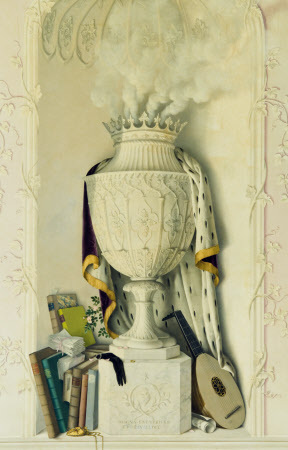
[Smoking urn in the Whistler Room at Mottisfont, painted 1938-9]
The book is excellent on RW the artist but in the end fails to find RW the man, despite the search of the title. In some ways it doesn't matter as his art and his life are captivating, but the true personality behind the work remains something of an enigma; it's not clear why he didn't apply to be an official war artist and why he himself seemed to devalue his own work as he grew older. The end of the book and the end of his life are both reached with tremendous regret: for the lost artist, but also for all the potential great art that was lost when he died.
December 31, 2012
high spots
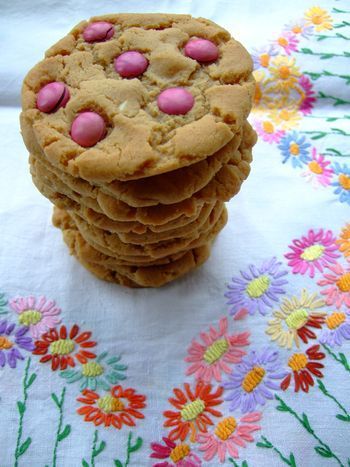
High spots of 2012:
Baking, bulbs, and many good books.
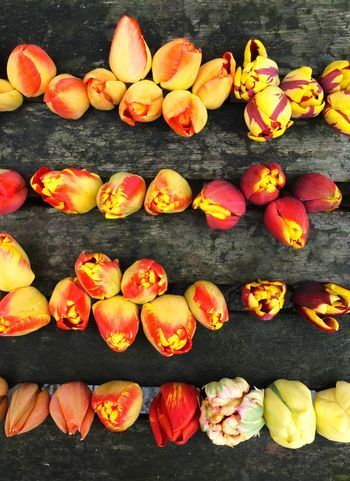
Trips to Helsinki and Holland.
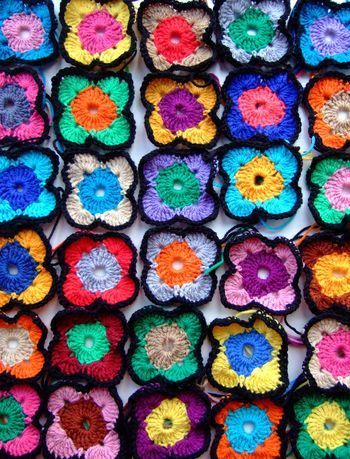
Crochet and colour. Always colour.
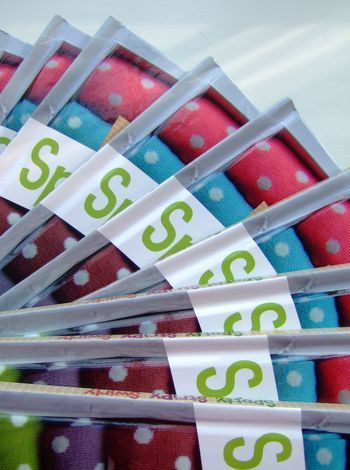
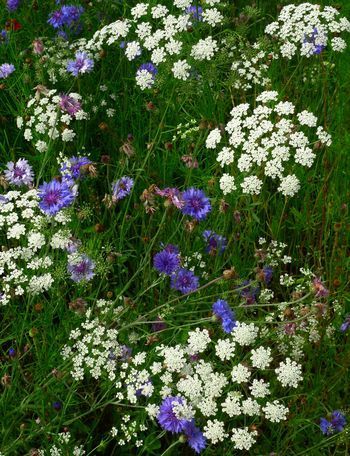
Wild book covers and wild flower meadows.
Aldeburgh. Alice going to university and loving it.
David Hockney at the RA, Hitchcock at the BFI.
Wine tastings, Whitstable, walks. Canals and cottages and quilts.
Changes and adjustments and plans.
A new style of blogging. A new way of working. A new phase of life.
December 30, 2012
windowsills
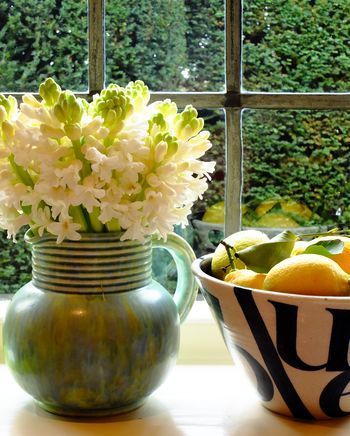
Bought hyacinths with foaming white flowers,
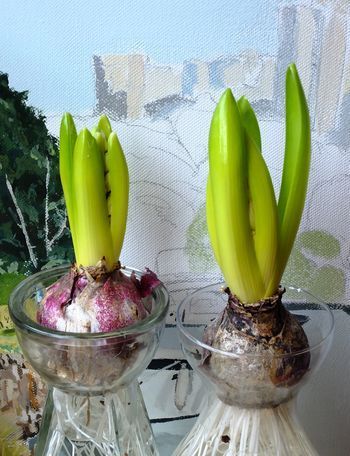
and home-grown hyacinths newly in from the cold, still lime-green and unaccustomed to bright light.
I re-read The Diary of a Provincial Lady recently and have decided I prefer the PL to Mrs Miniver because she is so devastatingly clear-sighted, remarkably well-read, and consistently subversive. If she actually spoke her mind instead of keeping silent and committing her words to her diary, she could have sparked a feminist revolution in the Home Counties. Of course, the hyacinth-forcing/competitive bulb-growing saga is as brilliantly funny as ever. And while I wouldn't take hyacinth tips from the PL, what I do admire is her resolution to try all over again after the year's efforts have failed. It's a triumph of hope over experience - the right way to begin any new year.
December 29, 2012
zest
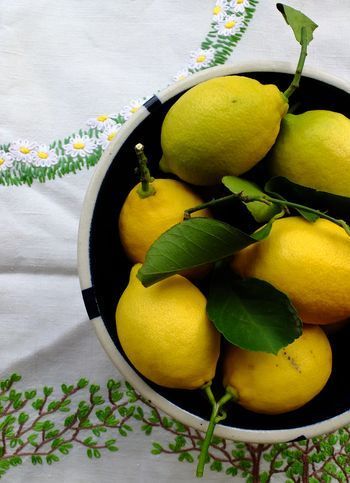
I like the way Nature kindly provides some much-needed zest and zing at this time of year, particularly in the form of fresh, seasonal lemons. Our local supermarket is selling new Spanish lemons with their leaves on and they look and smell marvellous. Handling them reminded me how much I loved Bronnley lemon soaps when I was growing up; every Christmas I was given a box of four (or, occasionally a lemon soap-on-a rope) and thought they were incredibly, exotically realistic and very extravagant, and I never left a lemon soap in the bathroom after a bath as I felt it was far too good for my younger siblings. A couple of years ago I discovered that the pharmacy in Aldeburgh stocks them, and every time I visit I have to go in a smell them and admire the shape and tissue paper wrapping, and sometimes even buy some. I should really set them aside for when they, like real lemons, are most appreciated, which is now.
December 28, 2012
scilly season
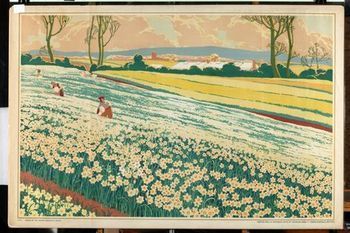
Isles of Scilly AA Moores (poster for the Empire Marketing Board's 'Home Bulbs for Home Gardens' campaign in the 1920s, now in Manchester City Art Gallery)
It may seem a tad early, but in fact it's already narcissi season on the Isles of Scilly. This company sends out beautifully packaged bunches of incredibly pretty yellow and white narcissi in what, for the rest of the UK, are the depths of winter. I've used them several times and seen the flowers that arrive, so know that they are lovely. It's part of the now much-reduced but very traditional seasonal flower business that has been sending flowers from the Isles of Scilly and Cornwall to London ever since the arrival of the railway. There were once flower trains which brought the freshly picked blooms to the city's markets; I like to imagine passengers could sit in compartments surrounded by sweet-smelling spring flowers, but in fact the blooms were - and still are - very skillfully packed in long, elegant boxes.
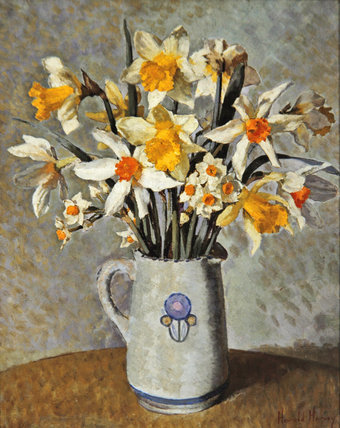
Daffodils Harold Harvey (1874-1941)
Parts of Cornwall were also famous for a range of flowers including violets and anemones, and Harold Harvey (good video in link) often painted them in all their profusion and glorious colours. A little while ago there was a fascinating programme on Radio 4 about the history of bulb and flower-growing in Cornwall and the Isles of Scilly, a business which just about survives despite tough competition from bigger flower-producing countries that sell much more cheaply. It's well worth listening to (it made me want to buy a bunch of violets like the characters in Thackeray's novels) and it can still be heard here.
December 27, 2012
clean and bright
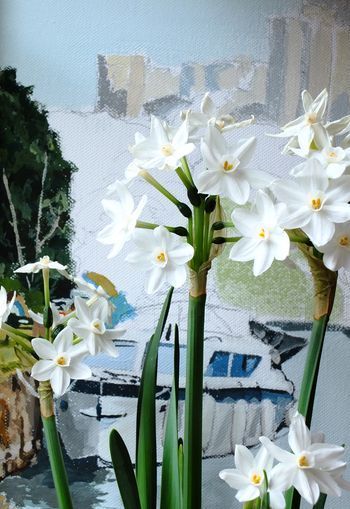
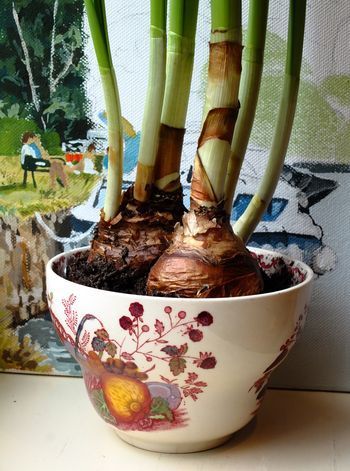
I've said it before, but every 26 December I waking up feeling like a new woman. The world, post-Christmas, is shiny, bright, and full of optimism. And the fresh, clean colours and scent of these 'Paperwhite' narcissi - timed to flowering perfection by the clever friend who gave them to me - are perfect for this brief and enjoyable break-from-routine interlude.
[The backdrop is an unfinished painting by Tom.]
December 15, 2012
lights
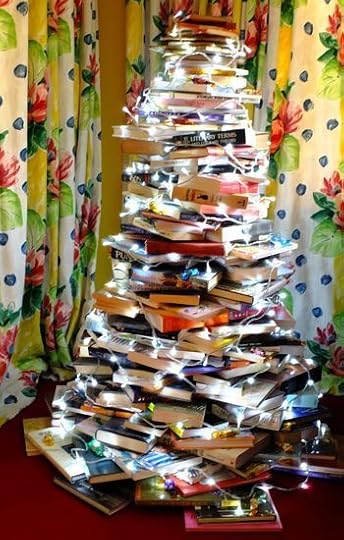
Finally, light itself. On a speedily built book tree; it was intended as a dummy run, but I am quite happy now to leave it as it is, complete with lights and chocolates. All it needs is a book with a star on its cover at the top, and Tom has promised to create a suitable temporary wrapping.
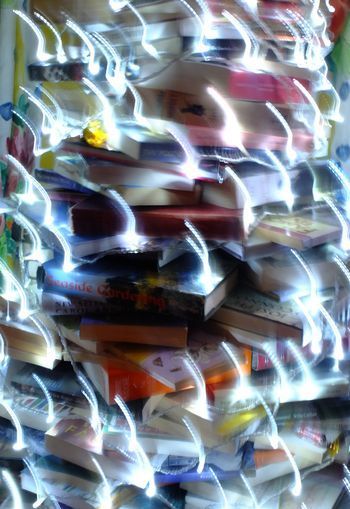
It's also amusing to play with the light effects with a shakily held camera.
Jane Brocket's Blog

- Jane Brocket's profile
- 27 followers

